
Normal view

The Rio-Antirrio Bridge: An Engineering Marvel That Changed Greece

11 June 2026 at 21:46
Rio-Antirrio Bridge
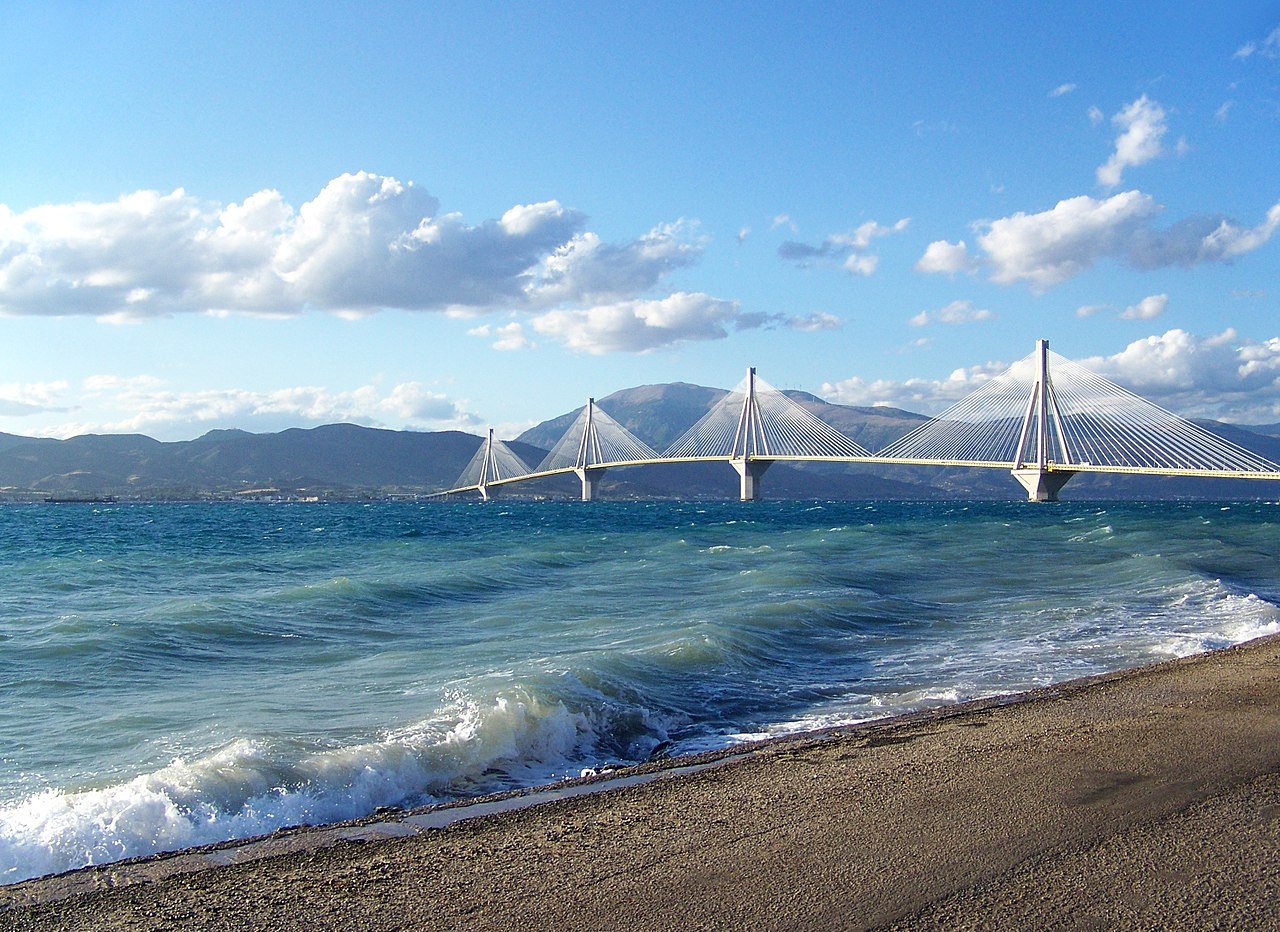
The Rio-Antirrio Bridge in Western Greece is one of the world’s longest multi-span, cable-stayed bridges. Credit: Eusebius, Eusebius CC BY-SA 3.0/ Wikipedia

The Rio-Antirrio Bridge was inaugurated on August 7, 2004, one week before the opening of the 2004 Summer Olympics in Athens.

Within two decades, it changed the economic landscape in Greece. The Rio-Antirrio Bridge, which connects the Peloponnese with Central Greece, had the aim of making the transport of passengers and cargo much easier. That has certainly been achieved.

The opening of the bridge was a celebration, with the first people to officially cross it being none other than the Olympic torchbearers of the 2004 Olympics. One member of that group was Otto Rehhagel, the German football coach who had led the Greek national team to their triumph in the Euro 2004 Cup just a month earlier.

The official name of the bridge is the Charilaos Trikoupis Bridge, named after the nineteenth-century prime minister of Greece, who was the first man to envision such a span connecting the Peloponnese with Central Greece. Unfortunately, state finances at the time did not allow for such a large-scale project.

The 2,380-meter (approximately 1.8-mile) long bridge is one of the longest cable-stay bridges in the entire world. It improves access to and from the Peloponnese, which could previously only be reached by ferry or via the Isthmus of Corinth.

Rio-Antirrio Bridge
The bridge connects Peloponnese with western Greece. Public Domain

According to a recent study by the Observatory of Road Networks in Western Greece and the Peloponnese, the construction of the graceful white cable-stay bridge has already resulted in enormous financial benefits. To date, this amount is estimated to be over 400 million euros.

The experts believe that the total amount of funds the bridge’s construction will bring to the area will be more than one billion euros during the period of 2017 to 2032.

Tourist flows have also improved, which is especially noted with arrivals coming into the area from the north from the port of Patras. Travelers heading for the Ionian Sea islands and areas in Central Greece can now easily and swiftly cross through the central area of the country and back again.

The study also noted that the bridge has already had a positive effect on property values in the northern region, which has led to a significant rise in land prices. This has given added value to an area that had been largely underdeveloped, attracting investment.

Traffic flows have also benefited immensely from the creation of the Charilaos Trikoupis Bridge. It not only connects two major motorways, the Ionian Odos and Olympia Odos, but transport connections between Epirus and Aitoloakarnania have been greatly improved, as well.

Before the construction of the new span, Aitoloakarnania had basically been almost completely cut off from the rest of the country.

Rio-Antirrio Bridge considered an engineering masterpiece

The construction of the imposing cable-stay bridge is widely considered to be an engineering masterpiece, owing to several solutions applied to overcome difficulties caused by its location and the geology of the region.

These difficulties included the especially deep waters of the river, the once-unstable underlying ground under the bases of the bridge, seismic activity, the probability of tsunamis, and the expansion of the Gulf of Corinth due to plate tectonics.

The seabed was first reinforced and stabilized by driving two hundred hollow steel pipes into the ground beneath each pier. The pier footings themselves were not driven into the seabed; they rest on a bed of gravel meticulously leveled to an even surface (a difficult endeavor at this depth).

During an earthquake, the piers are able to move laterally along the sea floor, with the gravel bed absorbing the energy. The bridge decking is also connected to the pylons using special jacks and dampers designed to absorb any movement.

View the fascinating video below to see all the special features of this unique and beautiful cable-stay bridge, which has already contributed immensely to the economy of the country.

Mundial de Futebol 2026 deverá injetar 9,1 mil milhões de dólares no PIB da América do Norte, segundo Allianz Trade

11 June 2026 at 20:10

O Campeonato do Mundo FIFA 2026™, que arranca nos Estados Unidos, Canadá e México, deverá gerar um impacto económico temporário de cerca de 9,1 mil milhões de dólares no Produto Interno Bruto (PIB) da América do Norte durante o período da competição, que decorre entre junho e julho. De acordo com um estudo da Allianz Trade, o crescimento será impulsionado sobretudo pelos setores do turismo, hotelaria, transportes e serviços relacionados.

Tratando-se do maior torneio da história do futebol, com 48 seleções nacionais e 104 jogos distribuídos por 16 cidades anfitriãs, o evento promete atrair milhões de visitantes, concentrando o impulso financeiro em regiões e setores económicos específicos, explica a Allianz Trade.

Os Estados Unidos surgem como o maior beneficiário absoluto do torneio em termos financeiros, uma vez que acolhem a maioria das partidas (78 dos 104 jogos).

A seguradora de crédito projeta um contributo de aproximadamente 6,1 mil milhões de dólares para o PIB norte-americano, o que representa um acréscimo de cerca de 0,1 pontos percentuais no crescimento económico do país. Cidades como Nova Iorque/Nova Jérsia, Los Angeles, Dallas e Miami deverão registar um aumento substancial na procura hoteleira, no retalho e no entretenimento.

No entanto, o documento ressalva que fatores como a exigência na obtenção de vistos, limitações nos transportes e as grandes distâncias a percorrer podem mitigar o impacto total esperado. Em termos proporcionais ao tamanho da respetiva economia, o México será o país com o maior ganho relativo.

A previsão aponta para uma injeção de 1,7 mil milhões de dólares no PIB mexicano, correspondendo a um aumento de 0,3 pontos percentuais no crescimento económico nacional. A Cidade do México, Guadalajara e Monterrey destacam-se como os principais polos de atração de procura interna e externa, beneficiando de uma forte cultura futebolística e de custos competitivos, ainda que o impacto possa vir a ser atenuado por debilidades nas infraestruturas, preocupações com a segurança e a expressão da economia paralela.

Por sua vez, o Canadá deverá registar um incremento de 1,3 mil milhões de dólares no seu PIB (equivalente a 0,2 pontos percentuais de crescimento), com Toronto e Vancouver a liderar os ganhos no setor turístico, enfrentando também o risco de subida acentuada de preços devido a constrangimentos na capacidade de alojamento.

A análise detalhada dos canais de transmissão indica que o investimento associado ao turismo atingirá cerca de 8 mil milhões de dólares na região, divididos entre 6,8 mil milhões de gastos de visitantes internacionais e 1,2 mil milhões de turismo doméstico. Adicionalmente, as despesas governamentais em segurança vão reforçar a atividade económica regional.

Os ganhos setoriais serão, contudo, assimétricos: as companhias aéreas e o alojamento encontram-se na posição mais vantajosa para capitalizar o fluxo de passageiros, ao passo que os negócios de restauração, retalho e entretenimento sentirão uma procura acrescida no decorrer dos jogos.

Em sentido inverso, o setor das infraestruturas terá retornos limitados, dado que os investimentos estruturais mais relevantes ficaram concluídos antes do início do evento desportivo. Mesmo não integrando a organização do torneio, Portugal poderá colher dividendos económicos indiretos através do canal das exportações para o mercado norte-americano.

Tendo como referência o ano de 2025, em que Portugal exportou entre 12 a 14 mil milhões de dólares em bens para os três países anfitriões — com os Estados Unidos a assumirem a liderança como principal destino extracomunitário —, perspetiva-se um acréscimo na procura externa.

Os setores nacionais potencialmente mais beneficiados pelo pico de consumo na América do Norte são o agroalimentar e bebidas (com particular destaque para o vinho), o têxtil, vestuário e calçado, e ainda o mobiliário e artigos direcionados para a hotelaria. Apesar destas oportunidades comerciais, a Allianz Trade sublinha que este efeito na economia portuguesa será circunscrito no tempo, focado em segmentos muito particulares e sem capacidade para alterar significativamente a trajetória de crescimento do PIB nacional.

Trump says he may not renew USMCA with Mexico and Canada

11 June 2026 at 01:13
President Trump on Wednesday said he may not renew the free trade agreement between the U.S., Canada and Mexico six years after he implemented it in his first term to replace the North American Free Trade Agreement (NAFTA). “Well, I’m not looking to renew it,” Trump told reporters in regard to the United States-Mexico-Canada Agreement…

Trump says he may not renew USMCA with Mexico and Canada

11 June 2026 at 01:13
President Trump on Wednesday said he may not renew the free trade agreement between the U.S., Canada and Mexico six years after he implemented it in his first term to replace the North American Free Trade Agreement (NAFTA). “Well, I’m not looking to renew it,” Trump told reporters in regard to the United States-Mexico-Canada Agreement…

❌