Normal view

1,200 Ancient Petroglyphs and Rare Turkic Inscription Found in Kazakhstan

10 June 2026 at 21:29
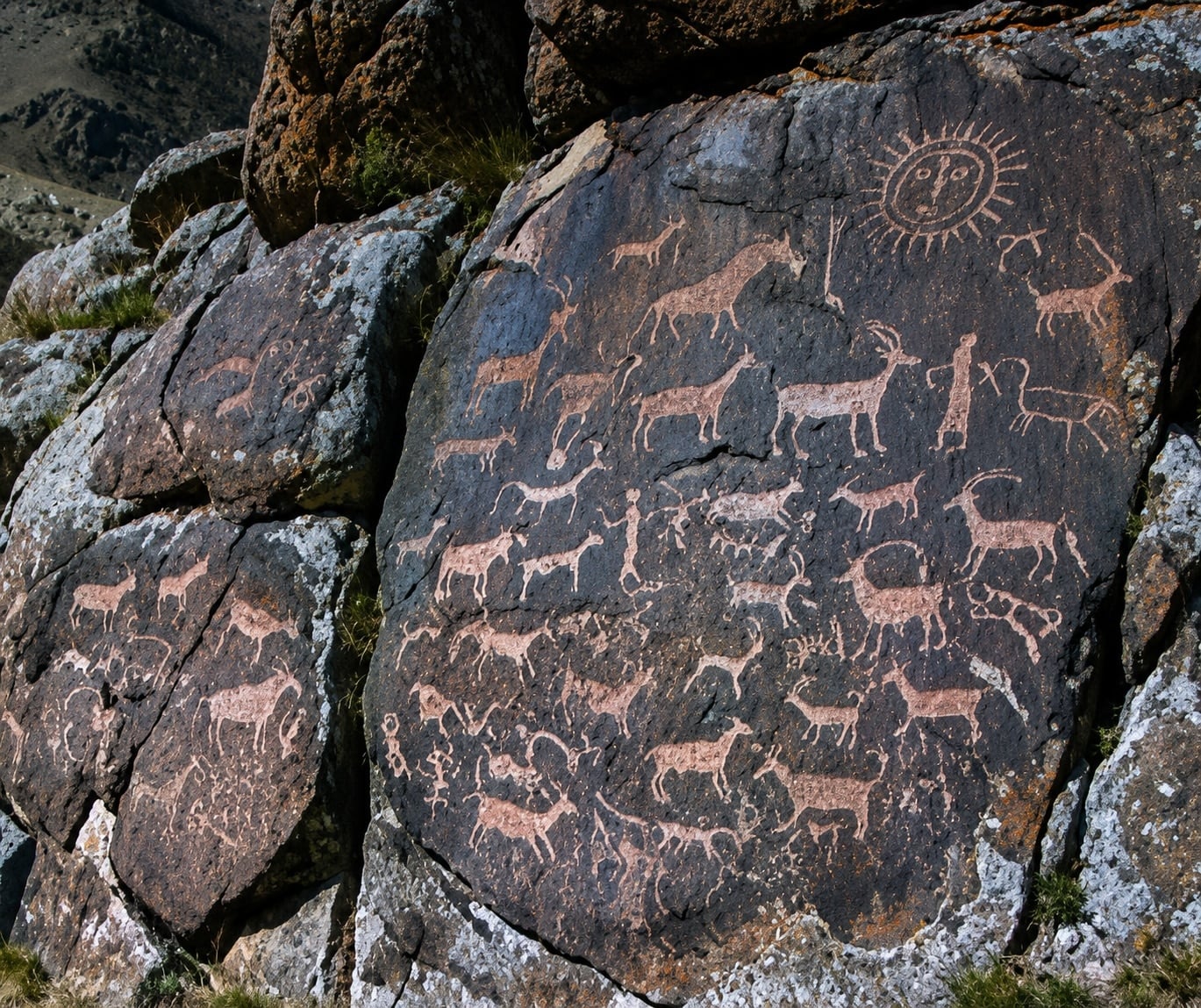
AI reconstruction of ancient petroglyphs at Burkhansai Gorge in Kazakhstan
AI reconstruction of ancient petroglyphs. Credit: Greek Reporter Archive

Archaeologists working in southern Kazakhstan have documented more than 1,200 petroglyphs and a rare Old Turkic runic inscription in Burkhansai Gorge. This discovery sheds new light on ancient pastoral life, cultural traditions, and early writing in Central Asia.

The site lies in the Zhualy District of Kazakhstan’s Jambyl Region. Researchers say the rock carvings span several historical periods, from the end of the third millennium BC through the medieval era and later times. The current count is considered preliminary, and archaeologists expect additional discoveries as surveys continue.

Among the most significant finds is a short inscription written in Old Turkic runiform script. The five-character text has been interpreted as “Er atym Aba,” meaning “My name is Aba.” Researchers believe it may have been carved more than 1,000 years ago.

Rock art reveals a long history of human activity

Researchers say Burkhansai Gorge preserves evidence of human activity across thousands of years rather than representing a single period of occupation.

According to Anatoly Shayakhmetov of the A. Kh. Margulan Institute of Archaeology, the petroglyphs are distributed across five groups that follow the course of a stream through the gorge. The carvings date to different periods, including the Bronze Age, Early Iron Age, Middle Ages, and later historical eras.

Archaeologists have also identified three burial grounds, known as Burkhansai 1, Burkhansai 2, and Burkhansai 3. The cemeteries are believed to date to the Early Iron Age and medieval periods.

The earliest carvings are estimated to be about 4,000 years old. Many depict goats, one-humped camels, and hunting scenes. Researchers say these images reflect communities that relied on herding and hunting while moving through mountain landscapes.

The combination of rock art and burial sites suggests the gorge served as more than a place for carving images. Researchers believe it formed part of a wider cultural landscape used by different communities over many centuries.

Rare inscription preserves a personal message

A rare Old Turkic runic inscription at Burkhansai Gorge
AI reconstruction of Old Turkic. Credit: Greek Reporter Archive

Researchers describe the runic inscription as one of the site’s most important discoveries.

Boris Zheleznyakov of the A. Kh. Margulan Institute of Archaeology said the text was written in the Talas script, a regional form of Old Turkic writing found across parts of Central Asia. He suggested the person who carved the inscription may have been marking his presence or association with the area.

The inscription was later examined by Old Turkic writing specialist Vladimir Tishin, who interpreted the text as “My name is Aba.”

Unlike large royal inscriptions that commemorate rulers or political events, the Burkhansai inscription appears to preserve the words of an ordinary individual. Researchers say that personal quality makes the discovery especially valuable.

The find also contributes to the study of Old Turkic literacy and the spread of writing traditions across Central Asia during the medieval period.

Southern Kazakhstan served as a cultural crossroads

The discovery adds to Kazakhstan’s reputation as one of Central Asia’s richest regions for rock art. Researchers note that mountain gorges and river valleys often acted as long-term cultural archives where generations left carvings, inscriptions, and burial sites.

Southern Kazakhstan was historically connected to the Talas Valley, the Western Tien Shan, and the ancient Silk Road city of Taraz. For centuries, the region served as a meeting point for pastoral groups, traders, and settled communities.

Researchers say Burkhansai’s access to water, shelter, and travel routes may explain why evidence from so many different periods survived in one location.

Researchers plan a further study of the site

Archaeologists are continuing to classify the petroglyphs, investigate the burial grounds, and search for nearby settlements that may help explain how ancient communities used the surrounding landscape.

Researchers also plan to publish a comprehensive study of the site and seek state protection for the archaeological complex.

For now, Burkhansai Gorge stands as a remarkable record of human activity spanning millennia. Its rock carvings reveal how people lived, hunted, and traveled through the region, while a simple inscription preserves the name of one person whose mark on the landscape has survived for more than a thousand years.

Ancient Burial in Scotland Shows Woman’s Brain May Have Been Removed After Death

10 June 2026 at 17:55
Perimortem lesions
Perimortem lesions. Credit: Laura Castells Navarro / CC BY 4.0

Researchers examining the remains of an Iron Age woman in northern Scotland have found signs that her brain may have been intentionally removed more than 2,000 years ago.

The discovery, made at a burial cairn in Sutherland, also revealed long-distance family connections, suggesting prehistoric communities maintained social and cultural ties across wide areas of Scotland.

The findings were published in the journal Antiquity and come from an investigation of two individuals buried in a low stone cairn at Loch Borralie, near the northwestern tip of mainland Scotland. The burial contained the remains of an adult woman and a juvenile boy.

Rare glimpse into Iron Age burial practices

Understanding funerary traditions in Iron Age Britain has long been difficult because human remains rarely survive. Soil conditions often destroy bone over time. North-west Scotland is one of the few regions where environmental conditions have preserved skeletal remains, offering researchers a rare opportunity to study how ancient communities treated their dead.

Researchers from the United Kingdom and the United States examined the remains to determine who the individuals were, where they came from, and whether they were related to each other or other groups in the region.

“We knew that in the north-west of Scotland, including the Northern and Western Isles, the circulation and deposition of human remains were particularly prominent,” said lead author Dr. Laura Castells Navarro of the University of York.

Evidence points to deliberate brain removal

To investigate the burial, researchers combined osteological analysis, isotope testing, and ancient DNA studies.

The most striking discovery involved the adult woman. Researchers found fine cut marks on the inside of her skull and identified unusual modifications to several long bones, including the upper arm, forearm, and thigh bones. The bones had been shaped so that their ends tapered into points.

Evidence of intentional postmortem manipulation
Evidence of intentional postmortem manipulation. Credit: Laura Castells Navarro / CC BY 4.0

According to the researchers, the evidence suggests the woman’s brain was intentionally removed after death, and some of her bones were deliberately carved before burial.

The purpose of these actions remains unclear. However, researchers believe the treatment may indicate that the woman held a special place within her community.

“The motivation behind the extensive manipulation of the skeletal remains of Individual 1 is very difficult to interpret,” Castells Navarro said. “However, the care with which she was reassembled and deposited in the cairn possibly suggests she commanded a level of reverence and respect by her community.”

DNA reveals connections across Scotland

The study also uncovered evidence of extensive mobility among Iron Age communities.

Isotope analysis indicated that both individuals likely spent their childhoods about 80 kilometers southeast of Loch Borralie. Ancient DNA revealed genetic links to people living in Orkney, roughly 175 kilometers northeast of the site, and Applecross, around 225 kilometers to the southwest.

Researchers also determined that the woman and the boy were closely related, most likely maternal second cousins.

The findings suggest that family groups moved regularly around Scotland’s northern coast and islands while maintaining relationships across considerable distances.

“More broadly, our research shows that prehistoric maritime communities periodically moved around the north coast and Northern Isles of Scotland, possibly in small groups,” Castells Navarro said. “This movement allowed for the spread and maintenance of cultural practices and traditions.”

New clues to prehistoric social networks

Taken together, the evidence of possible brain removal, deliberate bone modification, and long-distance family connections points to a complex society linked by shared traditions and social networks.

While researchers cannot determine exactly why the woman’s remains were altered, the burial suggests that some Iron Age communities maintained ongoing relationships with the dead and practiced funerary rituals that extended far beyond simple burial.

The findings provide a rare glimpse into beliefs and customs that shaped life in prehistoric Scotland more than two millennia ago.

22,000-Year-Old Jewelry Reveals Ice Age Social Networks in Spain

10 June 2026 at 02:34
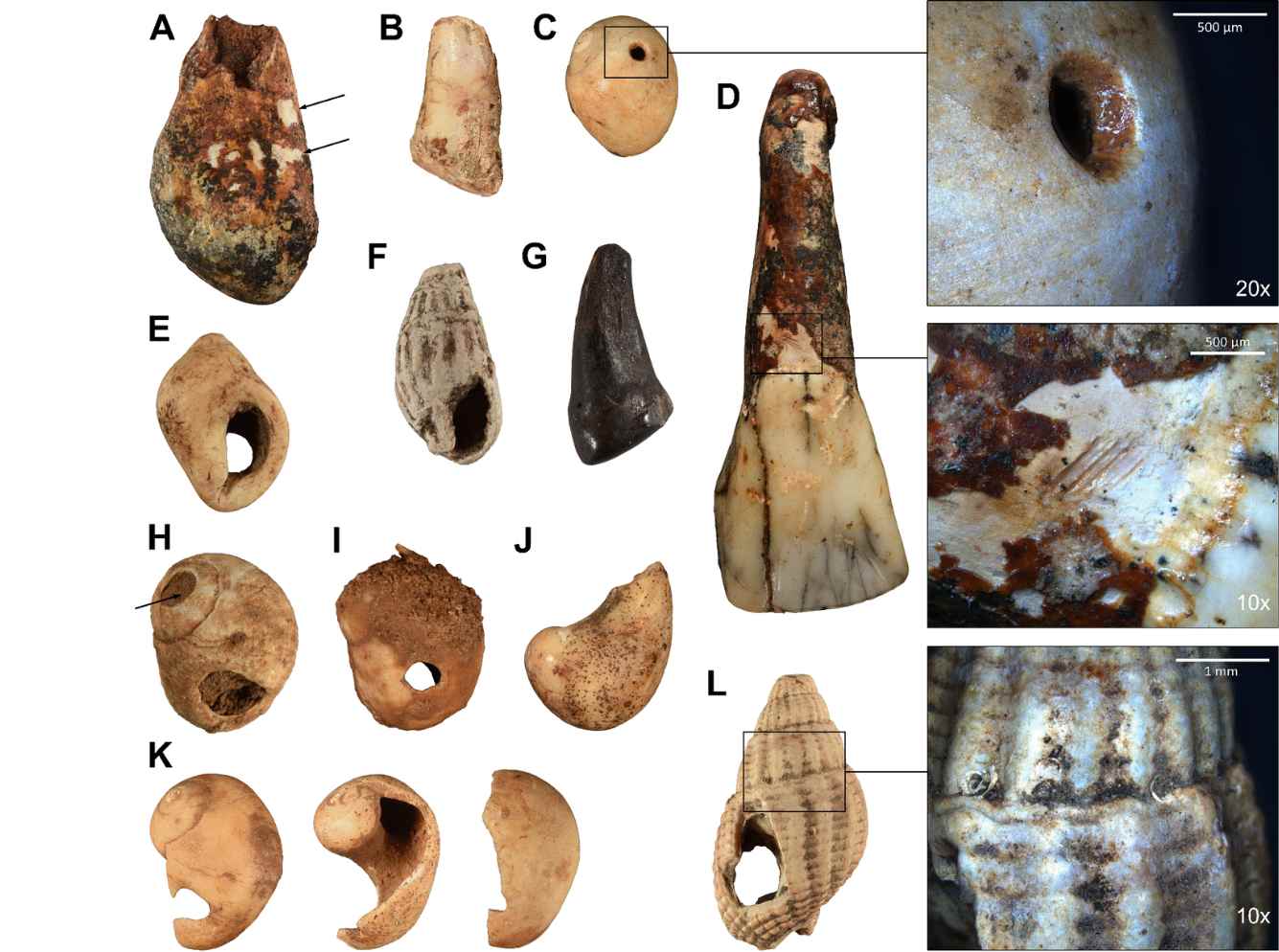
Selected personal ornaments from Llonín Cave in northern Spain
Selected personal ornaments from Llonín Cave in northern Spain. Credit: Daniel Pérez-García de los Salmones et al. / CC BY 4.0

A collection of 22,000-year-old jewelry discovered in northern Spain is offering new insights into how Ice Age hunter-gatherers expressed identity, exchanged ideas, and maintained social networks across vast distances.

Researchers found that people living in and around Llonín Cave used shells, animal teeth, bones, and even fossils to create personal ornaments over thousands of years, revealing changing patterns of social life during the Upper Paleolithic.

The study, led by Daniel Pérez-García de los Salmones and published in PLOS One, analyzed 271 ornaments recovered from Llonín Cave in northern Spain. The cave preserves a long archaeological sequence dating from roughly 23,500 to 11,000 years ago, covering several major cultural periods of the Late Ice Age.

A cave filled with symbolic objects

The ornaments included marine shells, red deer teeth, fish vertebrae, bone fragments, and a fossilized tube worm. Most were intentionally modified and worn as pendants or beads. Researchers identified at least 17 genera and 15 species used in their production. Marine shells made up the largest share of the collection, while red deer canine teeth were the most common animal-derived ornaments.

Microscopic analysis showed that many pieces had been worn for long periods. Friction from cords, clothing, or skin leaves polish marks, grooves, and rounded edges around perforations. More than 90% of the analyzed ornaments displayed signs of use.

A new study from Llonín Cave in northern Spain suggests Ice Age hunter-gatherers used shells, animal teeth, bones, and fossils to create ornaments that expressed identity, marked social ties, and connected communities across long distances.#Archaeology #IceAge #Jewelry #Spain pic.twitter.com/DXcBNuubUJ

— Tom Marvolo Riddle (@tom_riddle2025) June 9, 2026

Researchers also found evidence that some ornaments were made inside the cave. Unfinished deer tooth pendants and partially worked animal teeth suggest that people crafted jewelry on site rather than simply acquiring finished pieces from elsewhere.

Long-distance connections across Ice Age Iberia

One of the most striking discoveries involved shells that likely originated from the Mediterranean coast. The species Tritia mutabilis does not naturally occur along the Cantabrian coast of northern Spain, where Llonín Cave is located.

Its presence suggests that people exchanged objects or maintained contact networks stretching hundreds of kilometers across the Iberian Peninsula.

The cave occupied a strategic position between the Atlantic coast, the Ebro Valley, and routes leading toward the Pyrenees. Researchers argue that these pathways helped facilitate the movement of materials, ornaments, and cultural traditions between distant groups.

From individual identity to group identity

The study found that ornament styles changed over time. During the Upper Solutrean period, around 23,500 to 22,000 years ago, jewelry showed great diversity in materials, manufacturing methods, and designs. Researchers believe these ornaments likely served as markers of individual identity and personal expression.

Later, during the Middle Magdalenian period, ornament production became more standardized. Shell beads were more uniform in size and style, and many appear to have arrived at the cave already finished.

Researchers suggest that this shift reflects larger social gatherings where ornaments may have been used to signal group membership or strengthen alliances among different communities.

A window into Ice Age society

The findings suggest that personal ornaments were far more than decorative objects. They helped communicate identity, social relationships, and cultural connections during a time when hunter-gatherer groups were spread across changing Ice Age landscapes.

According to the researchers, Llonín Cave stands out as an important site for understanding how prehistoric people used jewelry to navigate both everyday life and wider social networks. The collection shows that even 22,000 years ago, people were connected through systems of exchange, shared traditions, and symbolic communication that stretched far beyond their local communities.

8,000-Year-Old Headless Figurines From Anatolia Hint at Neolithic Offering Rituals

10 June 2026 at 01:31
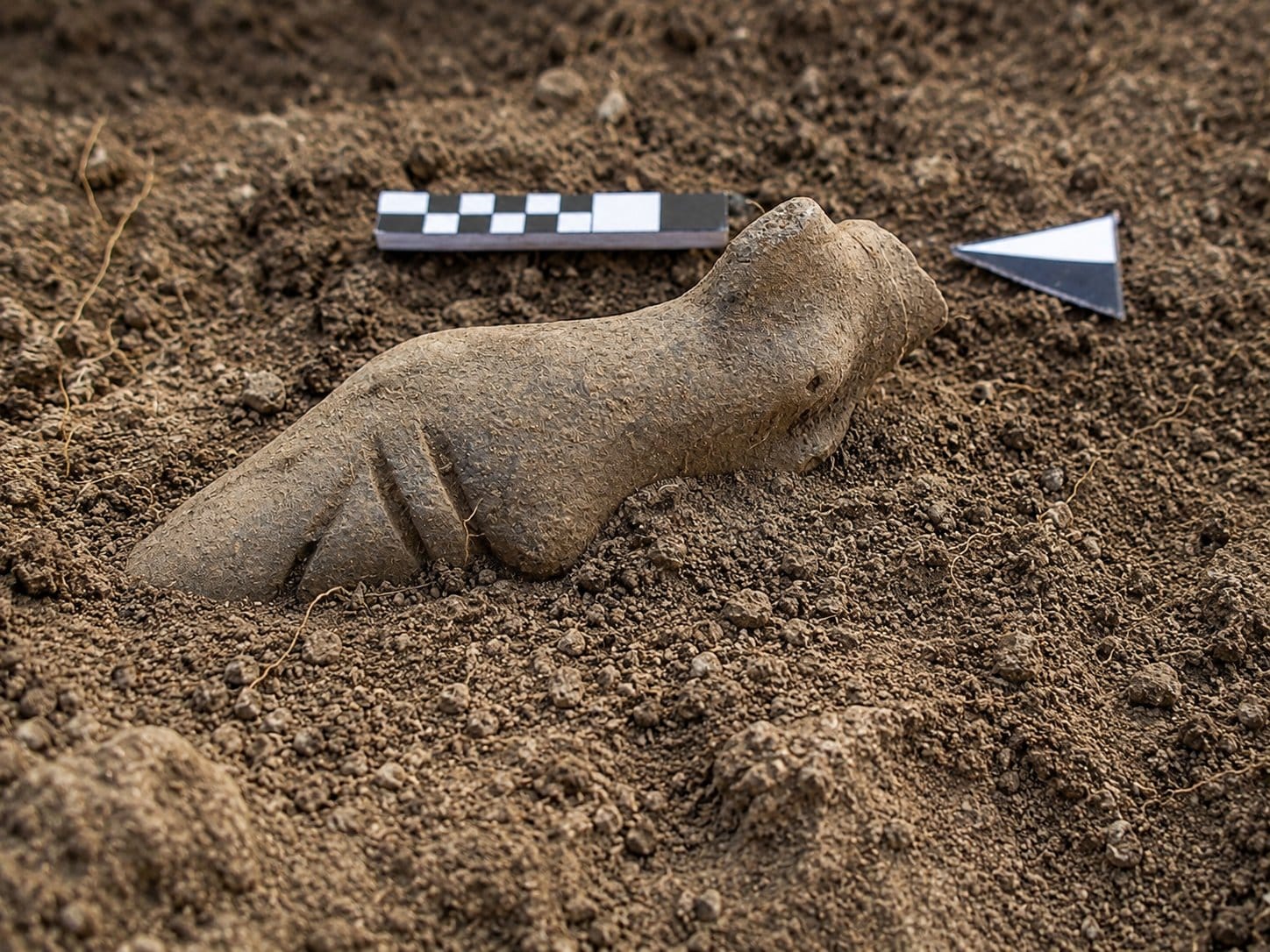
AI reconstruction of a Neolithic female figurine discovered at Kanlıtaş mound
AI reconstruction of a Neolithic female figurine discovered at Kanlıtaş mound. Credit: Greek Reporter Archive

Archaeologists in Turkey have uncovered four headless female figurines dating back about 8,000 years, a discovery that is offering new insight into ritual practices among some of Anatolia’s earliest farming communities.

The terracotta figurines were found at Kanlıtaş mound near the Inönü district of Eskişehir in northwestern Turkey. Excavations at the site have been conducted since 2013 under the direction of Anadolu University.

Kanlıtaş is considered one of the earliest known settlements in the region spanning modern-day Eskişehir, Afyonkarahisar, and Kütahya. Researchers say the site provides important evidence about daily life, settlement patterns, and cultural traditions during the Neolithic period.

Figurines discovered inside ancient structures

Professor Ali Umut Türkcan, who leads the excavation team and teaches archaeology at Anadolu University, said the figurines were uncovered within fill layers at the bases of rectangular buildings.

Researchers determined that the artifacts belong to the final phase of the Neolithic period. All four figurines depict women. The largest measures about 12 to 13 centimeters (5 inches) in length, while the others are approximately 5 to 6 centimeters long.

Although female figurines are common at Neolithic sites across Anatolia, the Kanlıtaş examples stand out because of their condition and context. Several were found with their heads intentionally broken off.

Eskişehir’in İnönü ilçesindeki Kanlıtaş Höyüğü’nde bulunan 8 bin yıllık 4 başsız figürün Neolitik dönem yapı ritüellerinde kullanıldığı tespit edildi. pic.twitter.com/MkBkOCI6Wt

— Punto360 (@punto360tr) June 9, 2026

“The presence of headless or broken-headed female figurines in spaces that appear to have been intentionally sealed suggests they may have been left as offerings during the closure of structures,” Türkcan said.

Researchers believe the figurines were deliberately deposited when buildings were abandoned or taken out of use. Similar practices have been identified at other Neolithic settlements, including Çatalhöyük in central Turkey, one of the world’s most extensively studied prehistoric sites.

Distinctive features set the figurines apart

The Kanlıtaş figurines also display characteristics that distinguish them from many other Neolithic figurines found in Turkey.

Türkcan noted that the figures place unusual emphasis on the hip area. This stylistic feature resembles female figurines discovered in parts of the Balkans, particularly regions once associated with the Neolithic Vinca culture.

The similarity suggests that communities living in different parts of southeastern Europe and Anatolia may have shared artistic traditions or symbolic ideas during the Neolithic era.

Discovery may strengthen evidence of cultural links

Researchers also pointed to possible connections between Kanlıtaş and the broader Porsuk cultural sphere of western central Anatolia. Archaeologists have long debated links between the Porsuk culture and Neolithic communities in the Balkans.

According to Türkcan, radiocarbon dating results indicate that the Porsuk culture may predate some neighboring cultural traditions. The findings could help explain how cultural influences spread between Anatolia and southeastern Europe thousands of years ago.

The discovery adds to growing evidence that Neolithic communities maintained complex social and symbolic traditions. The figurines not only provide clues about ritual behavior but may also help researchers better understand cultural interactions across a wide region.

The excavation team plans to publish the findings in a comprehensive scientific monograph and reference volume in the coming years. Further research may reveal more about the role these Neolithic figurines played in the beliefs and practices of early communities in Turkey.

Peru Geoglyphs Reveal Hidden Links to Ancient Travel Routes

10 June 2026 at 00:01
Nazca Lines, Peru
Nazca Lines, Peru. Credits: Diego Delso, CC BY-SA 4.0, via Wikimedia Commons

Ancient Peru geoglyphs in the Chillón Valley near Lima are offering new clues about how early communities may have used and organized the landscape thousands of years ago.

A new study suggests that some of these large ground markings were placed in ways that cannot be fully explained by chance, although researchers caution that the evidence does not yet prove a direct connection to ancient roads or ritual practices.

The research, led by Christian Mesía-Montenegro and published in PLOS One, examined geoglyphs in two areas of Peru’s middle Chillón Valley known as Huarabí and Pichausa.

The study combined field surveys, drone mapping, and statistical modeling to investigate whether the location of the geoglyphs was related to nearby routes used for movement through the rugged valley landscape.

Geoglyphs are large designs or markings created on the ground. Peru is best known for the famous Nazca Lines, but similar features exist in several other parts of the country. Many remain poorly studied compared with the better-known geoglyphs of southern Peru.

Illustrated and photographed ceramic sherds from Huarabí
Illustrated and photographed ceramic sherds from Huarabí. Credit: Christian Mesía-Montenegro / CC BY 4.0

Researchers examine overlooked geoglyph sites

The geoglyphs documented at Huarabí and Pichausa differ from many of Peru’s famous geometric and animal-shaped figures. Instead, they consist of irregular line patterns located within quebradas, or dry valleys, that cut through the landscape.

Researchers conducted systematic surveys between 2021 and 2022 and recorded geoglyphs across multiple sectors of the Chillón Valley. The study focused on four irregular geoglyph groups, two at Huarabí and two at Pichausa. It also examined six locations near Huarabí where surface pottery fragments from the Formative Period were found.

Ancient geoglyphs in Peru's Chillón Valley are shedding new light on how early communities may have used and organized the landscape. pic.twitter.com/HkbOKhx2Ic

— Tom Marvolo Riddle (@tom_riddle2025) June 9, 2026

The Formative Period on Peru’s central coast spans a time when early ceremonial centers, agriculture, and ceramic traditions were developing. Nearby archaeological sites include several U-shaped ceremonial structures that played important roles in the region’s ancient communities.

Statistical tests challenge simple explanations

Rather than simply measuring distances between geoglyphs and routes, researchers used Monte Carlo simulations. This method allowed them to compare the actual placement of the geoglyphs with thousands of hypothetical random placements across the landscape. The results showed a contrast between the two study areas.

At Huarabí, the geoglyphs differed from what would be expected under the researchers’ chance-placement models. At Pichausa, however, the geoglyphs generally matched patterns that could be produced through random placement. The findings suggest that Huarabí may have followed a different spatial logic than Pichausa.

Even so, the researchers emphasize that the results do not automatically mean the geoglyphs were intentionally built beside roads or movement corridors.

Instead, the analysis shows only that the Huarabí geoglyphs were less easily reproduced by the statistical models used in the study. Other factors, including terrain, visibility, erosion, and landscape features, could also have influenced where the geoglyphs were created.

Pottery provides limited clues about age

One of the study’s most important findings concerns chronology. At Huarabí, researchers identified diagnostic pottery fragments that resemble ceramics from the Formative Period. The pottery suggests human activity occurred near the geoglyphs during that era.

However, the artifacts were found on the surface rather than in sealed archaeological deposits. As a result, they cannot directly date the construction of the geoglyphs.

No comparable pottery evidence was discovered at Pichausa, making the age of those geoglyphs even less certain. Because of these limitations, the researchers avoid claiming that the geoglyphs themselves were definitely built during the Formative Period.

Questions remain about ancient landscape use

Researchers conclude that Huarabí should currently be viewed as a geoglyph locality associated with nearby Formative-period activity rather than as a securely dated Formative geoglyph complex.

They argue that future work should focus on obtaining direct dates, studying visibility across the landscape, and developing more detailed models of how ancient people moved through the valley.

While the findings do not solve the mystery of the Chillón Valley geoglyphs, they provide one of the most detailed examinations to date of how these large ground markings may have related to movement, settlement, and ritual activity in ancient Peru.

Pentagon Cuts Military Religion Categories From 220 to 31

9 June 2026 at 22:32
Pentagon
NATO will continue its support to Europe but will prioritize U.S. security. Photo credit: Touch of Light Wikimedia Commons CC BY-SA 4.0

The Pentagon has sharply reduced the number of religion codes used by the U.S. military, replacing a list of about 220 faith groups and denominations with 31 broader religious categories.

The updated system, which is expected to take effect in July, has sparked debate among veterans, chaplains, lawmakers, and religious groups over its potential impact on faith representation within the armed forces.

The new categories include Buddhism, Hinduism, Baha’i, Islam, Judaism, Sikhism, and a designation for people with no religious affiliation. Christian denominations make up most of the recognized categories.

Pentagon says change is administrative

Military officials said the change is intended to simplify record-keeping and improve data collection for military chaplains. The Pentagon explained that the revised list is not meant to determine which religions are officially approved or recognized by the government.

Service members whose faiths are not among the 31 listed categories will still be able to identify their religion and include it on military dog tags, officials said.

Critics question the impact on religious diversity

The policy change has drawn criticism from some veterans, former chaplains, and religious groups who argue that the consolidation could reduce the visibility of minority faiths within military records.

The Office of the Secretary of War is announcing a significant change to the Department’s categorization of religious affiliation. In a long overdue move, we reduced the list from over 200 unmanageable categories to 31. With this move, we are returning to the original intent of… https://t.co/dgHX5ytzjJ pic.twitter.com/eho537O08J

— Sean Parnell (@SeanParnellASW) June 5, 2026

A former U.S. Army chaplain said that the move raises concerns about the military’s commitment to religious diversity.

“When I raised my hand to become an Army chaplain, I swore that I would support and defend the Constitution,” the former chaplain said. “The First Amendment is the free exercise of religion for everybody. That’s what I was buying into.”

The update also arrives amid broader debate over Defense Secretary Pete Hegseth and his public use of Christian prayers while discussing military operations. Some critics have questioned whether such expressions blur the line between personal faith and official government leadership.

Latter-day Saints’ designation draws attention

The revised system has also sparked concern among members of the Church of Jesus Christ of Latter-day Saints. Under the new classification structure, the church appears as a separate category rather than being included among the military’s Christian denominations.

That decision prompted criticism from Mike Lee, a Republican senator from Utah and a member of the church.

“Can anyone tell me why The Church of Jesus Christ of Latter-day Saints was left out of the list of Christian churches?” Lee wrote on X.

Can anyone tell me why The Church of Jesus Christ of Latter-day Saints was left out of the list of Christian churches? pic.twitter.com/t4u6PI29ON

— Mike Lee (@BasedMikeLee) June 6, 2026

Smaller faith groups lose separate classifications

According to an analysis, the consolidation removed separate classifications for numerous faith traditions, spiritual movements, and nonreligious belief systems. Those no longer listed individually include Eckankar, Heathen, Native American spiritual traditions, Rosicrucianism, Druidism, Deism, Asatru, Paganism, Humanism, Unitarian Universalism, Wicca, Shamanism, and Atheism, among others.

Defense Department officials have emphasized that the changes are administrative rather than ideological. Sean Parnell, a Defense Department official, said the military continues to place a high value on the First Amendment and the free exercise of religion for all service members.

❌