Normal view

Ukraine created drone army one year ago. It already destroyed $40 billion worth in Russian targets

10 June 2026 at 19:53

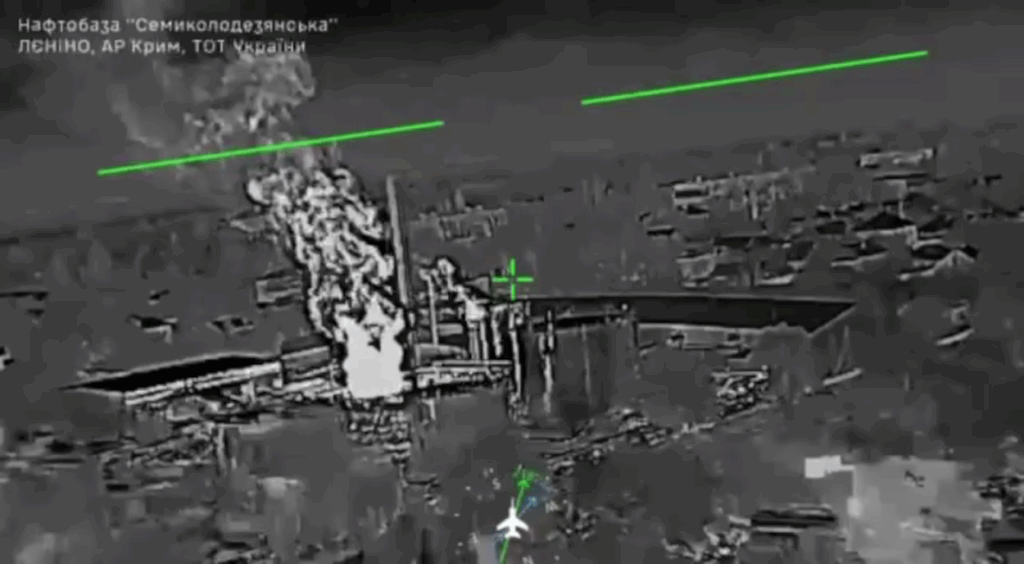
Semikolodezyanska oil depot in Yedi-Quyu (Lenine), occupied Crimea, amid a Ukrainian drone attack. Screenshot from video: Ukraine's Special Operations Forces

Ukraine's Unmanned Systems Forces (SBS) have struck Russian targets worth nearly $40 billion in the year since the branch's creation, Volodymyr Zelenskyy said. On 10 June, the Ukrainian president signed a decree establishing the Day of Unmanned Systems Forces (SBS Day).

The $40 billion cumulative damage figure Zelenskyy cited represents a 57% increase over the $25.5 billion in cumulative Russian losses that Commander-in-Chief Oleksandr Syrskyi reported in April 2026.

The SBS Day decree institutionalizes the unmanned forces as a permanent feature of Ukraine's military doctrine, alongside the army, navy, and air force.

What Zelenskyy said about SBS's achievements

"Only a year since the creation of the SBS group, Russian targets at various levels worth nearly $40 billion have already been hit," Zelenskyy said in his evening address.

He added that SBS is really a model for many other armies, and "these months we are especially grateful for middlestrikes."

"Russian military logistics across the entire depth of the temporarily occupied territory is now accessible to Ukrainian drones. The Russian border zone also experiences our impact," he stated.

The president added that Russia already feels the effect of these strikes, and Ukraine will continue to scale them.

"The most important thing is that these are different types of strikes, and each one adds to our ability to save lives," the Ukrainian president added.

What does middlestrike mean operationally? 

The middlestrike concept Zelenskyy invoked refers to Ukrainian drone strikes against Russian military logistics in the depth of occupied territory and across the Russian border zone. The depth zone covers Donetsk, Luhansk, Crimea, and parts of Zaporizhzhia and Kherson Oblasts. The Russian border zone reaches Belgorod and Kursk. Middlestrikes sit between the very-long-range deep strikes against strategic Russian infrastructure, such as the Volgograd refineries, and the tactical frontline FPV operations. The SBS is led by Brigadier General Robert Brovdi, call sign "Madiar".
IAEA documents military activity near all Ukraine’s nuclear sites

10 June 2026 at 19:20

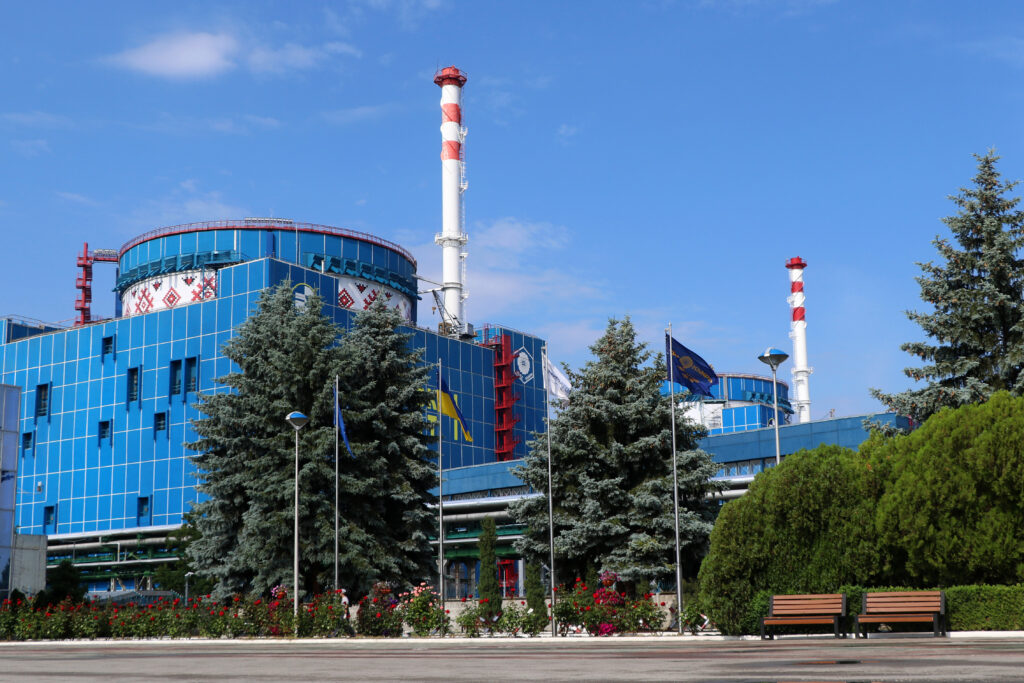
Khmelnitskyi nuclear power plant, 1st block

Military activity has been reported near all Ukraine’s operating nuclear power plants: Khmelnytskyy, Rivne, and South Ukraine, and the Chornobyl site, according to the International Atomic Energy Agency (IAEA). IAEA teams recorded more than 100 drones within observation zones around nuclear facilities over the past two weeks, with some as close as 2 kilometers from the facilities.

The Chornobyl drone strike landed at a centralized spent-fuel storage facility in the exclusion zone, just hundreds of meters from where spent nuclear fuel from Ukrainian operating reactors is kept in containers.

“Attacking a facility with large amounts of nuclear material is extremely dangerous. It must not happen,” IAEA Director General Rafael Grossi said.

What happened at Zaporizhzhia NPP on 30 May 

On 30 May 2026, a drone struck the turbine hall of Unit 6 at the Russian-occupied Zaporizhzhia NPP.

During subsequent inspections, IAEA specialists documented a hole in the wall and local damage to the metal cladding of an empty pipe located several meters from the impact point.

Experts are continuing to assess the condition of the affected area and the potential consequences of the incident.

“This is the first time since April 2024 that military activity has directly impacted the ZNPP site,” Grossi said.

ZNPP has been under Russian military occupation since March 2022 and remains a continuous focus of IAEA monitoring. The IAEA statement does not attribute the drone strike to either Russia or Ukraine.

Legal frame: Geneva Convention Article 56 protection

Nuclear power plants and similar installations containing dangerous forces are explicitly protected under Article 56 of Additional Protocol I to the Geneva Conventions, which prohibits attacks that may release dangerous forces and cause severe losses among the civilian population.

The IAEA does not formally categorize incidents at Ukrainian nuclear sites as war crimes within this framework, which would require a UN Commission of Inquiry or ICC finding. The IAEA's role is technical and monitoring-focused. 

Trump shares ‘West Wing’ clip dismissing ‘proportional response’ after strikes on Iran

10 June 2026 at 12:57
President Trump late Tuesday shared a clip from the series “The West Wing” dismissing the concept of a “proportional response” after the U.S. launched a new round of strikes on Iran in retaliation for an attack on an Apache helicopter. The president first shared on Truth Social the statement issued by U.S. Central Command (Centcom)…

Trump shares ‘West Wing’ clip dismissing ‘proportional response’ after strikes on Iran

10 June 2026 at 12:57
President Trump late Tuesday shared a clip from the series “The West Wing” dismissing the concept of a “proportional response” after the U.S. launched a new round of strikes on Iran in retaliation for an attack on an Apache helicopter. The president first shared on Truth Social the statement issued by U.S. Central Command (Centcom)…

Russia’s full-scale war against Ukraine has now lasted exactly as long as World War I — 1,568 days

10 June 2026 at 08:32

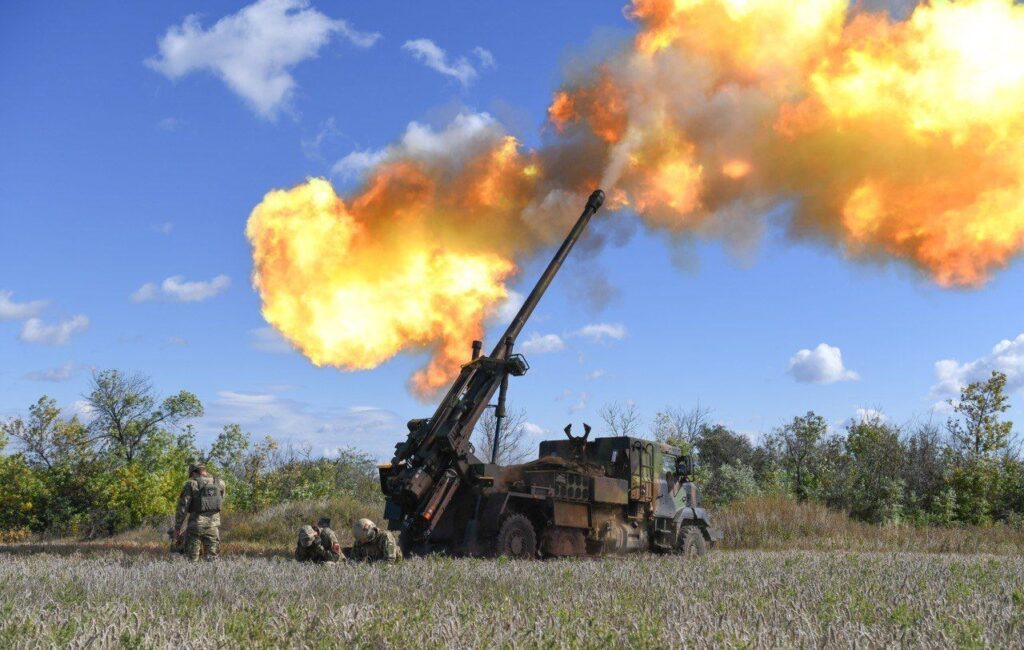
Ukrainian troops fire a CAESAR self-propelled howitzer. Autumn 2022, Ukraine. Photo: ArmyInform

Today, 10 June 2026, marks the 1,568th day of Russia's full-scale war against Ukraine — exactly the same number of days that World War I lasted, ArmyInform observes. Russia has not achieved its strategic objectives to eliminate Ukraine, with the Kremlin's original "Kyiv in three days" planning now four years and three months past.

Russian losses across that period, as documented by Ukraine's General Staff, total more than 1.3 million Russian military personnel killed and wounded, tens of thousands of tanks, armored vehicles, and artillery pieces destroyed, and 33 Russian ships and boats sunk or destroyed.

The Black Sea Fleet is now operating only in a land-support capacity after Ukrainian strikes forced its retreat from operating bases in temporarily occupied Crimea.

The total cost of destroyed Russian equipment over four years is estimated at approximately $153 billion. May 2026 alone saw more than 31,500 Russian troops killed and seriously wounded, according to Ukrainian Defense Minister Mykhailo Fedorov. These figures are Ukrainian estimates. Russian casualty data is not publicly released.

Strategic ledger after four years

Russia's stated strategic objectives at the start of the February 2022 full-scale invasion, including the capture of Kyiv, the change of Ukrainian government, the demilitarization and "denazification" of Ukraine, and the establishment of a Russian-aligned regime in the Ukrainian capital, have not been reached.

Russian forces retreated from the northern Kyiv and Chernihiv axes in spring 2022, and although Russia has incrementally occupied additional territory in Donetsk, Luhansk, Zaporizhzhia, and Kherson Oblasts since then, the pace of advance has been limited. 

Ukrainian fire control and deep-strike expansion

On the Ukrainian operational side, the past 12 months have seen a significant expansion of Ukraine's ability to strike targets across occupied territory and Russian rear areas.

The Ukrainian Defense Forces have established fire control over key logistics nodes in temporarily occupied Donetsk and Luhansk oblasts and in Crimea, including bringing Donetsk Airport within range of regular strikes and striking the Chonhar Bridge. 

In Crimea specifically, where Russia has concentrated air defense systems, 12 Russian Pantsir-S1 systems have been destroyed since the start of 2026. 

Logistics Lockdown and 1,800-kilometer deep-strike envelope

These operations are conducted within Ukraine's $113 million "Logistics Lockdown" program announced in May, which provides for systematic strikes on Russian warehouses, equipment, command posts, and supply routes deep behind the front line. A separate Ukrainian Deep Strike track targets critical infrastructure inside Russia itself, with Ukrainian deep strikes reaching up to 1,800 kilometers into Russian territory and recent operations hitting Russian oil-logistics nodes from Volgograd to Novorossiysk. 

❌