
Normal view

Germany was late to grasp Russian hybrid attacks, Bundeswehr colonel tells defence forum

10 June 2026 at 18:23

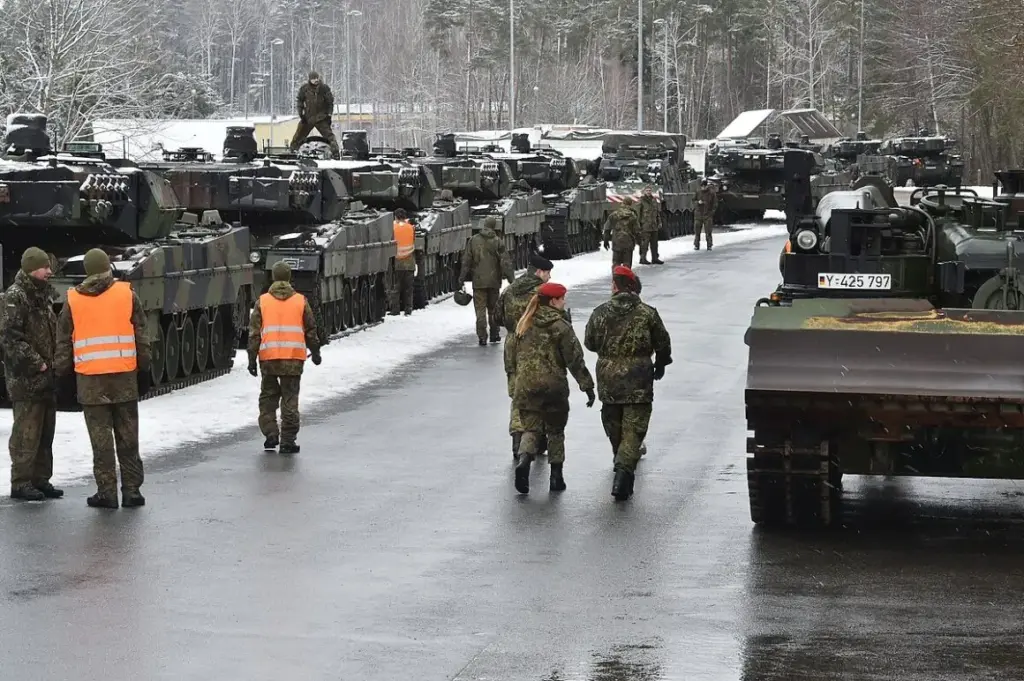
Bundeswehr troops and armored vehicles support NATO's eFP Battlegroup in Lithuania, part of Germany's posture against Russian hybrid attacks.

Hybrid threats span both hardware and politics, said Colonel Sönke Marahrens. The list of methods includes overflights, the cutting of undersea cables, and a concerted disinformation campaign. It also reaches into political and judicial systems, including what he called the "disposable agent" model —civilians recruited online for one-off sabotage or surveillance. As a model for how the state should respond, Colonel Marahrens pointed to Finland. Authorities there detained a suspected sabotage vessel within an hour of Baltic Sea cable damage.

Russian hybrid attacks: a political shift acknowledged late

Recognition had arrived slowly, Marahrens told the New Age Defence forum in Berlin on 8 June, Ukrinform reported. "Germany recognized rather late that we are being attacked by such hybrid methods," the colonel said. "But I would say that in the last year and a half to two years, we see a shift at the political level as well."

The colonel heads a department at the Bundeswehr's Center for Digitalization and Capability Development. The center reports to the Cyber and Information Domain Command in Bonn. German intelligence services and state institutions are increasingly informing citizens of the changing security environment, he said.

Drones, cables, and courts

Russian pressure now reaches beyond physical sabotage, Marahrens said. "It's not just drones and not just undersea cables, it's also disinformation within our society. It's the use of the political and judicial systems, the concept of 'disposable agents,'" he said.

Unidentified drones over European critical infrastructure, including German sites, had a primarily psychological effect, the colonel said. The impact was not military. Germany's National Security Council should receive real powers for rapid decision-making, he argued. The colonel cited Finland's response time of less than an hour after the Baltic Sea cable damage.

"Creating societal resilience is something we in Germany have yet to learn." — Col. Sönke Marahrens, Bundeswehr Center for Digitalization and Capability Development

Kyiv's resilience is something Berlin lacks

Germany draws on Ukrainian wartime experience through financing, joint training, and front-line exchanges, Marahrens said. "We support Ukraine financially," he said. "We also adopt the experience gained from the battlefield. We provide training for them, and we also adopt experience from them during joint exercises at our training grounds."

The most important Ukrainian lesson, the colonel said, is societal resilience under wartime conditions. "Creating societal resilience is something we in Germany have yet to learn," Marahrens said. The Kremlin coordinates large-scale hybrid operations across Europe, the agency added. These campaigns aim to discredit Kyiv and inflame internal conflicts in EU states amid Russia's war on Ukraine.
Germany adds €300 million to Czech ammunition drive, about 50,000 long-range rounds for Ukraine

10 June 2026 at 12:05

Ministry of defense of Germany

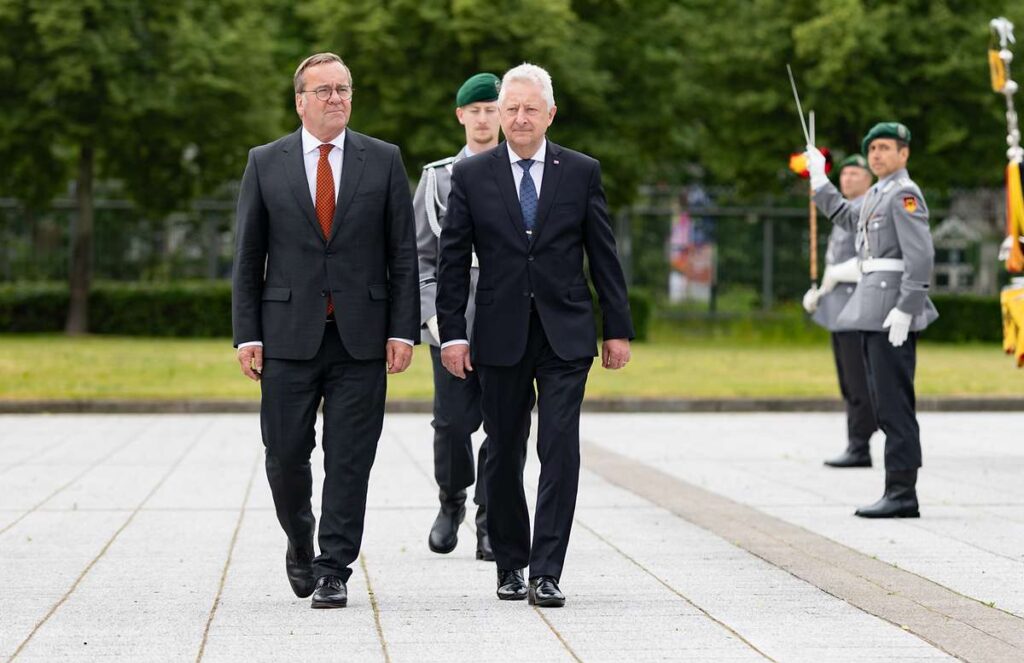
German Defense Minister Boris Pistorius announced an additional €300 million ($345 million) for the Czech-led ammunition initiative for Ukraine on 9 June 2026. The funds will purchase roughly 50,000 rounds of long-range ammunition, Pistorius said after meeting new Czech Defense Minister Jaromír Zůna in Berlin.

The pledge keeps Germany positioned as the initiative's largest foreign backer at a moment when donor numbers are thinning and Prague's new government has retreated on several other Ukraine fronts. The Czech-led channel has delivered 4.4 million large-caliber shells since early 2024 — more than half of all such ammunition Ukraine has received over that period, according to Czech President Petr Pavel.

What the pledge buys

The new commitment lifts Germany's total share of the initiative past €1.2 billion, building on roughly €900 million already disbursed. Pistorius called the Czech channel an essential contribution to Ukraine's ammunition supply and said Berlin would continue to back it.

"Germany will contribute an additional €300 million to this initiative — that's approximately 50,000 rounds of long-range ammunition," Pistorius said.

Prague's new government holds the channel

The Berlin session was Pistorius's first in-person meeting with Zůna, who took office in December 2025 as part of Andrej Babiš's coalition government. Zůna, a retired lieutenant general, was nominated for the post by the center-left SPD party.

Babiš has cut planned Czech defense spending for 2026 and secured a Czech opt-out from the European Union's €90 billion Ukraine funding package. The new government also put on ice a previously discussed transfer of L-159 combat aircraft to Ukraine.

The ammunition initiative is the major exception. Zůna confirmed in December that the channel would continue, and the Berlin meeting was his first public reaffirmation of that position to a NATO partner.

"Germany plays an important role as a supplier of military equipment and ammunition and, together with our defence industry, makes a significant contribution to European security," Zůna told reporters at the Bendlerblock.

Donor base thins as need grows

The initiative needs €5 billion in 2026 but had raised only €1.4 billion by February, Reuters reported. Pavel said last month that the number of contributing countries has dropped.

The channel has firm contracts to deliver about 1 million rounds to Ukraine in 2026, the Czech Defense Ministry said — well below the 1.8 million delivered in 2025 and the 1.5 million in 2024. Russia continues replenishing its own stockpiles, including through North Korean deliveries that NATO officials estimate at 9 million rounds since 2023.

Portugal is EU state most open to taking on debt to finance defence

10 June 2026 at 10:28
Portugal to increase defence spending to 2% this year 'if possible'

Portugal is the European country most in favour of taking on debt to fund defence, and the one where public support for investment in this sector has risen the most

The post Portugal is EU state most open to taking on debt to finance defence appeared first on Portugal Resident.

❌