Normal view

Ravenstorm At The Center Of Airbus’s New Combat Drone Portfolio

9 June 2026 at 19:05

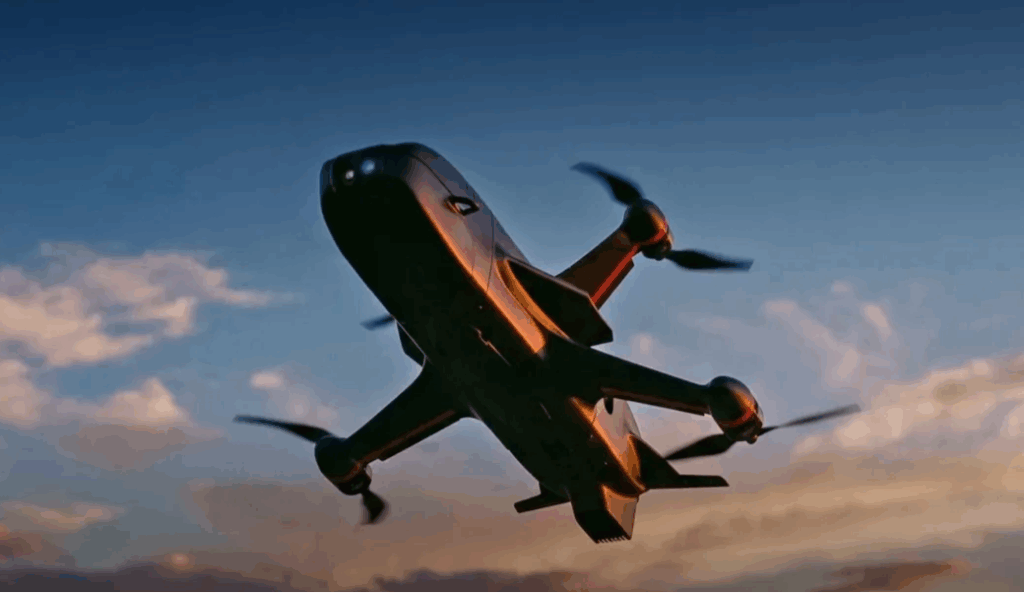
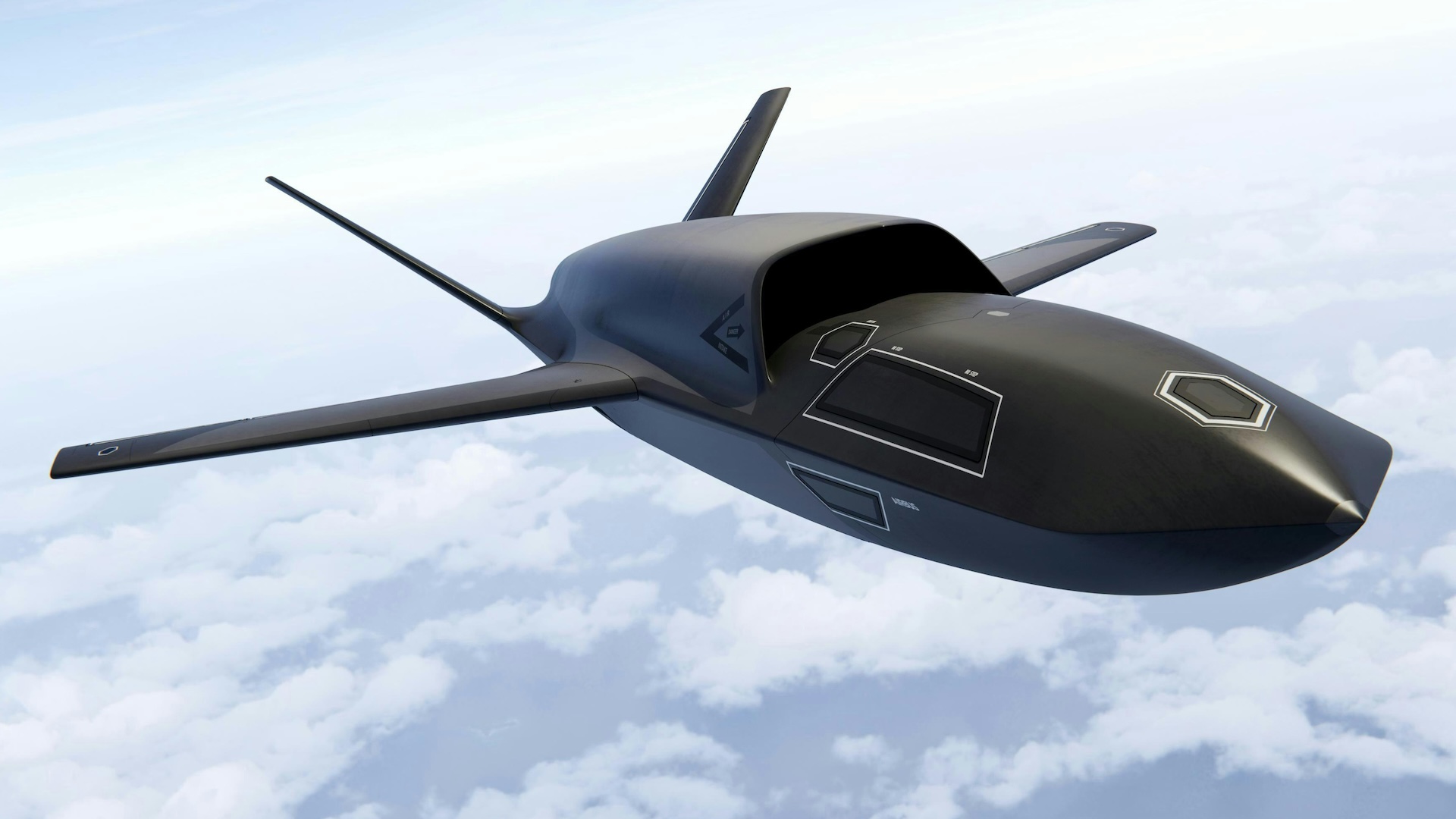
Airbus has pulled the wraps off the U760 Ravenstorm, a combat drone designed to operate alongside fighter aircraft in air-to-air combat, strike missions, and electronic warfare roles. The new uncrewed aircraft is part of a revamped drone portfolio from the company, which also includes a Europeanized version of the stealthy XQ-58A Valkyrie, a medium-altitude long-endurance (MALE) platform, various tactical solutions, counter-drone systems, as well as the U145 uncrewed helicopter that you can read more about here.

The timing of the announcement — and the unveiling of the Ravenstorm, in particular — is especially notable given the recent collapse of the Franco-German-led plan to build a crewed New Generation Fighter (NGF) aircraft, as part of the broader, pan-European Future Combat Air System (FCAS) initiative. You can read more about this development here.

Concept artwork of the NGF, the crewed combat jet once intended to operate alongside various classes of drones. Dassault Aviation

On the eve of the ILA Berlin airshow, starting in the German capital tomorrow, Airbus showcased what it describes as “Europe’s most versatile drone portfolio.” The various products have been newly assigned a “U” prefix for uncrewed systems. This reflects the company’s policy of prefixing with an “A” for crewed fixed-wing aircraft, and an “H” for crewed helicopters.

“Whatever uncrewed or ‘drone’ capability our customers need to strengthen sovereign air power, we deliver,” said Mike Schoellhorn, CEO of Airbus Defence and Space, in a company press release. “Our portfolio ranges from rapid-response drone interceptors and various tactical drones, autonomous cargo helicopters to uncrewed fighter aircraft UCCAs (uncrewed collaborative combat aircraft) operating co-operatively with crewed fighter jets.”

A graphic showing the new Airbus drone portfolio includes a Eurofighter (at far left) controlling examples of the U740 Valkyrie and U760 Ravenstorm. Airbus

“On the other side of the spectrum we have the Eurodrone, our very high payload and very long endurance ISTAR (intelligence, surveillance, target acquisition, and reconnaissance) platform,” Schoellhorn continued. “Airbus provides the entire envelope of uncrewed capabilities required for modern multi-domain warfare. All our systems come with open architectures and a European mission system compatible with the wider European and international defence ecosystem.”

The most significant new arrival in the “U”-product line is the Ravenstorm combat drone, or U760.

A 1:1 model of the Ravenstorm will be on display at ILA. The drone is approximately 43 feet long and has a wingspan of 33 feet. In terms of rough size and general appearance, the drone strongly recalls General Atomics’ YFQ-42A ‘fighter drone’ prototype, now flying under the first phase of the U.S. Air Force’s Collaborative Combat Aircraft (CCA) program. Like the U.S. drone, the Ravenstorm features a swept, mid-wing configuration optimized for stealth and maneuverability. It also has the same twin-tail configuration. Like the YFQ-42, the Ravenstorm has a dorsal inlet, although this is closer to that which appeared on the EADS Barracuda demonstrator that flew for the first time 20 years ago. The drone is clearly optimized with low-observable (stealthy) characteristics, although the inlet is notably large and lacks the trapezoidal shape found on the YFQ-42.

Ground crew working on the Barracuda technology demonstrator. Airbus

At the same time, it should be noted that, when it comes to combat drones in general, many of them take on a relatively familiar form driven by similar requirements.

Airbus describes the Ravenstorm as “the next evolution” in its “roadmap towards a scalable family of uncrewed collaborative combat aircraft.” It is not clear how many related designs might be planned, and in what kinds of sizes they may come, but the company has highlighted the kinds of missions they will be expected to fly. These include air-to-surface strikes using precision-guided munitions, air-to-air defense with long and medium-range air-to-air missiles, and electronic warfare for suppressing enemy air defenses. Further offensive counter-air missions will involve UCCAs providing non-kinetic jamming.

Ravenstorm will be available in the early 2030s, according to the manufacturer, which is, interestingly, offering the new design alongside a version of the XQ-58. In Airbus parlance, the Valkyrie is designated U740 and combines the Kratos-designed airframe with Airbus’ proprietary Multiplatform Autonomous Reconfigurable and Secure (MARS) Mission System.

A U.S. Air Force XQ-58A deploying an ALTIUS-600 UAV from a Common Launch Tube. U.S. Air Force

For the U740, Airbus provides a notably precise planned date of service entry: 2029, with the German Air Force. This would appear to reflect a specific Luftwaffe requirement for a drone in this class, although it remains unclear if the Valkyrie has been formally selected by the German military. Airbus furthermore expects the U740 to be used in operational experimentation teamed with the Luftwaffe’s Eurofighter combat jet, including demonstrating initial air-to-ground capabilities.

The U740 Valkyrie on its launcher. Airbus

Returning to MARS, this is Airbus’ sovereign mission system, consisting of an AI-supported software core to enable platform autonomy. The system is scalable so that it can be used across the entire Airbus drone portfolio. It is also planned for use on the U950 Eurodrone — the new designation for the Eurodrone MALE platform. This twin-turboprop drone is now in development for missions including ISTAR, early warning, and anti-submarine warfare, and is planned to make its first flight in 2029.

A rendering of the Eurodrone MALE conducting a maritime mission. Airbus

As for Airbus’s two-track approach to UCCAs — U740 Valkyrie and U760 Ravenstorm — the thinking behind the two offerings, also of broadly similar sizes, likely reflects different cost points. The Valkyrie was designed from the ground up as a lower-cost aircraft and is runway-independent in its original form (since then, Kratos has announced a version with wheeled landing gear and there also exists the ability to launch the Valkyrie from a wheeled launch trolley, if required). Meanwhile, the Ravenstorm appears to be a more capable and costly platform, making it a closer match to Increment 1, the first phase of the U.S. Air Force’s CCA program.

The Anduril YFQ-44, produced for Increment 1, the first phase of the U.S. Air Force’s CCA program. U.S. Air Force

It could be that the company has already identified specific national or service requirements (such as the Valkyrie for the Luftwaffe) that it aims to capitalize on. There could also be a plan to use the Valkyrie more for operational experimentation of the UCCA concept before focusing more on the fully sovereign Ravenstorm, including potentially scaling it up or incorporating other significant airframe changes — like higher performance, larger payload, improved low-observable characteristics.

Also unclear is the status of Airbus’s stealthy Wingman, a CCA-like concept that was unveiled at the last ILA Berlin airshow in 2024. This was also presented in the form of a 1:1 model, with a length of 51 feet and a wingspan of 39 feet. The drone was planned to be powered by the same Eurojet EJ200 turbofan as the Eurofighter, providing a proven powerplant and useful commonality.

The Airbus Wingman concept aircraft, which Airbus leadership said should provide a unit cost that’s equivalent to one-third that of a modern crewed fighter. Thomas Newdick

At the time, Airbus noted that the German Air Force had “expressed a clear need” for a drone that would be able to operate in conjunction with crewed fighters before the arrival in service of the NGF, which was then slated for some time in the 2040s.

Whether the Wingman has now been abandoned entirely is unclear, but the Luftwaffe still has a requirement for an uncrewed companion that can work alongside its forthcoming Eurofighter EK electronic warfare jets. This is a role for which Airbus is earmarking the Ravenstorm, in particular, although it should be noted that the U.S. Marine Corps is also focusing heavily on the electronic warfare mission for the Valkyrie drone.

A rendering of a Eurofighter EK for the German Air Force. Airbus

All of these Airbus efforts are being informed by experience testing the Barracuda, work on which began in 2003, initially as a ‘black program.’ After six test campaigns, the Barracuda was retired.

The company will also be leveraging prior work from the Airbus Low Observable UAV Testbed (LOUT) program. A stealthy demonstrator, LOUT was not flown but was run by the company in strict secrecy until finally it was publicly disclosed in 2019, as you can read about here.

A four-ton LOUT model used for aerodynamic and anechoic chamber testing. Airbus

Undoubtedly, the significance of Airbus’s new-look drone roster, and above all the appearance of the U760 Ravenstorm alongside the U740 Valkyrie, is greater now that the FCAS program’s crewed New Generation Fighter is seemingly defunct.

It was always anticipated that the NGF would be operated as part of a wider ecosystem that also included CCA-like drones — what Airbus now refers to as UCCAs. Indeed, there were already efforts in place to start integrating combat drones with crewed fourth-generation-plus fighters like the Eurofighter and Rafale. Now that FCAS, or at least the NGF component of it, has been thwarted, Ravenstorm and Valkyrie offer a glimpse of where Europe’s combat aviation ambitions may be headed instead.

Collaborative combat aircraft like these emerged as a higher-mass, force-multiplying capability for current and future crewed fighters. In the interim, at least, the demise of the NGF means that these kinds of combat drones could be in even greater demand within Europe, where there is already a pressing need for larger tactical air combat fleets, while resources are limited. At the same time, CCA-like drones promise to make existing fourth- and fifth-generation fighters even more potent, further driving demand both in Europe and elsewhere.

Contact the author: thomas@thewarzone.com


The post Ravenstorm At The Center Of Airbus’s New Combat Drone Portfolio appeared first on The War Zone.
SBU names 10 Russians tied to “human safari” drone hunt on civilians in Kherson

9 June 2026 at 14:18

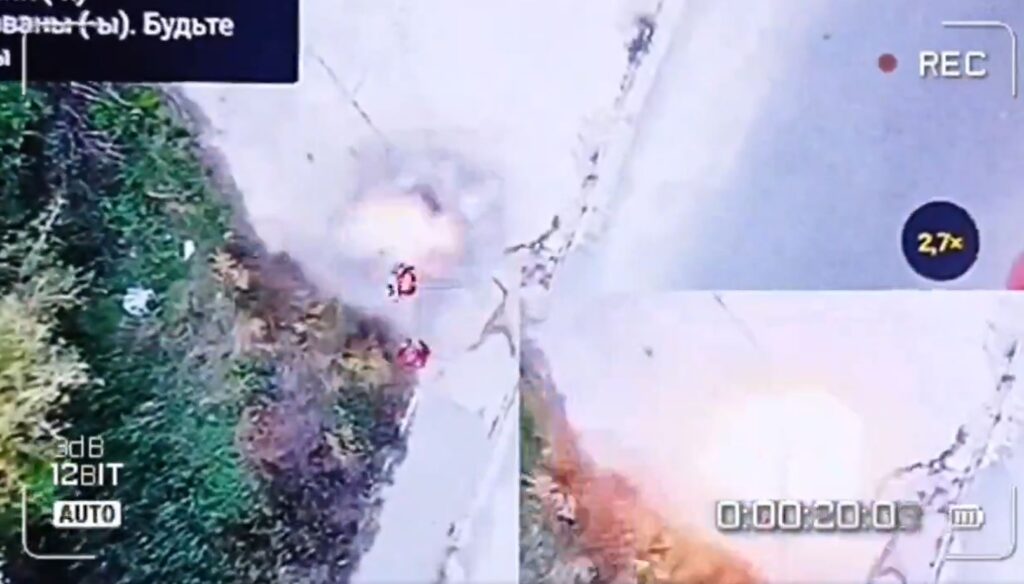
sbu names 10 russians tied human safari drone hunt civilians kherson · post munition dropped russian explodes near two 2024 explosion civilian khersoners telegram channels ten soldiers single regiment accused

Ten Russian soldiers from a single regiment are accused of hunting civilians in Kherson with attack drones, and now face war-crimes charges filed in absentia, the Security Service of Ukraine (SBU) reported. Investigators say the operators tracked people through the streets and struck ambulances and rescue crews. The 10 are among those participating in a Russian long-lasting terror campaign against Khersoners known as a "human safari." 

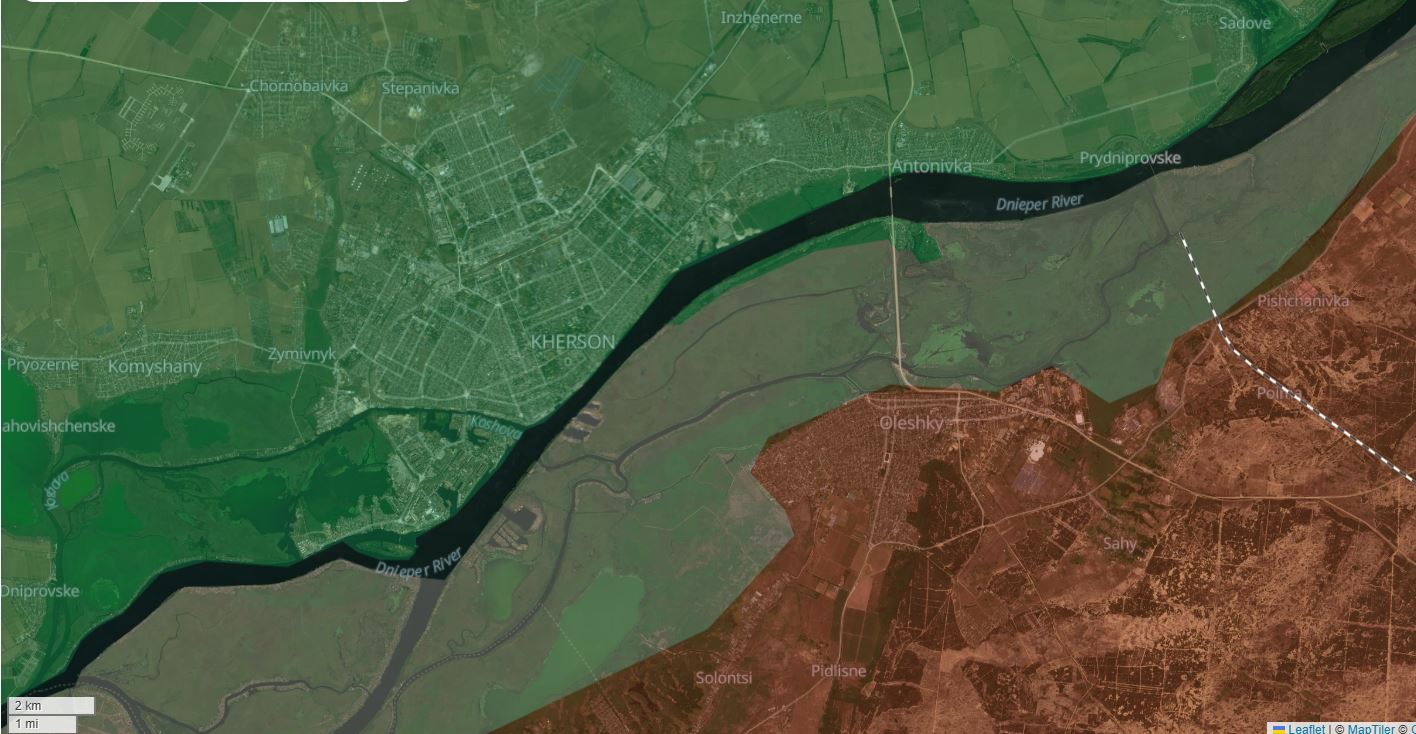
Kherson lies on the Dnipro River's west bank, with Russian-occupied land directly opposite, and the invading force has made it among the deadliest places to live in Ukraine by deliberately hunting civilians across the city for years.

The drone hunters of one regiment

Counterintelligence officers built a case against 10 drone operators from the 404th Motorized Rifle Regiment, a territorial-defense unit in Russia's "Dnepr" Group of Forces, the SBU reported. The investigation found that the men tracked residents as they moved along Kherson's streets and launched drones at them. The drones carried shaped-charge and high-explosive fragmentation munitions.

Kherson city (Russian-occupied area in red). Map: Deep State

Residents and rights monitors call this campaign a "human safari," the hunting of people going about their ordinary days.

Kherson: human safari rages.

A Russian fiber optic FPV drone chases a car in a residential area; after civilians cut the cable, the drone falls, catches fire.

More drones hit cars.

10 injured as a drone attacks a bus.

Drones attack high rises, flying inside the windows. pic.twitter.com/eeaeyyJdz5

— Zarina Zabrisky 🇺🇸🇺🇦 (@ZarinaZabrisky) May 13, 2026

The 10 named operators

The SBU published each suspect's name and military call sign:

  • Tsolak Grigoryan, call sign "Boroda"
  • Nikita Gubar, "Drovosek"
  • Nikolai Denisenko, "Gami"
  • Vladimir Klimov, "Klim"
  • Vyacheslav Kornenkov, "Skif"
  • Viktor Nizhnikov, "Flyaga"
  • Ruslan Nugaev, "Dok"
  • Vladimir Orlov, "Yakut"
  • Ivan Prusachenko, "Prus"
  • Oleg Pukhlyakov, "Pulya"

russians continue their human safari in Ukraine.

They’re not just killing.

They’re hunting unarmed people like animals — from drones, to cheerful music.

This is not war. This is pure evil.

Anyone still justifying russia is standing on their side.

We will never forget. pic.twitter.com/GtrjNfaU0w

— UAVoyager🇺🇦 (@NAFOvoyager) June 8, 2026

Ambulances and a double strike on rescuers

The documented episodes include attacks on civilian cars and residential blocks, the SBU said. Operators dropped explosives on ambulances at a city hospital. They also carried out a "double" strike on State Emergency Service (DSNS) rescuers who were clearing the aftermath of an earlier Russian shelling. 

UN investigators have described this Russian method in Kherson: a first strike, then a second aimed at the people who come to help. Victims suffered shrapnel wounds, burns, and concussions, and civilian infrastructure took significant damage.

Russian soldiers attacked an ambulance in Kherson with a drone.

Three medics were injured.

Another deliberate war crime. pic.twitter.com/xu3WFUQ2H0

— Денис Казанський (@den_kazansky) June 4, 2026

Charged in absentia

Based on the evidence, SBU investigators notified all 10 of suspicion under Article 438 of Ukraine's criminal code, which covers war crimes. The notices were issued in absentia. SBU officers in Kherson Oblast led the investigation with the 79th Border Detachment of the State Border Guard Service (DPSU), under the oblast prosecutor's guidance. The agency said efforts to hold the operators accountable continue.

The case fits a wider pattern Ukrainian prosecutors have documented across the oblast in thousands of proceedings. 

Newly-announced Litavr interceptor is a model microcosm of Ukraine’s drone innovation programs

9 June 2026 at 12:50

Litavr interceptor drone F-drones

If you want to understand how Ukraine’s interceptor drones are evolving and improving but don’t have a lot of time, you can just take a look at the Litavr interceptor announced by the Ministry of Defense on 8 June. 

F-Drones’ Litavr has been in serial production since the fall but its specs have been classified until now. While its capabilities do not appear to be brand new or exclusive to itself, the features list reads like a map of all the ways Ukrainian engineering and battle testing of the past few years made their various interceptors so highly sought-after.  

That includes autonomous last-mile guidance, non-GPS navigation, radar integration, and the ability to control the drone from thousands of kilometers away. The company reportedly manufactures most of its own components, reducing dependence on China. 

All these things are instrumental to Ukraine’s goal of “closing the sky” to Russian weapons. The Defense Ministry set a goal of shooting down no less than 95% of Russian drones and missiles and has been steadily climbing towards that goal: from just over 80% shot down late last year, to 92% shot down in May. 

Last-mile autonomy

According to the MoD, the Litavr's key ability is the automatic pixel lock last mile guidance, in which a pilot controls the speed, while the drone does the rest. 

Semi-autonomous weapons are one of the major achievements of Ukraine’s military-industrial ecosystem. Defense Minister Mykhailo Fedorov emphasized autonomy as a key technology. 

“Autonomy is one of the key areas of development of modern air defence,” he said in a 8 June statement.

“Technologies like this enable faster responses to large-scale attacks and more effective protection of Ukrainian cities. We are scaling solutions that have already proved their effectiveness in combat conditions.” 

Fedorov claimed that a Brave1 company has already created tech that automates 95% of the "entire interception process, from launching a drone to destroying a Shahed," which has been battle-tested in Kharkiv Oblast. 

AI-assisted navigational and target lock tools are present in a plethora of Ukrainian drones: from deep and middle strike UAVs, to FPVs, to interceptors, which were reportedly getting anti-Shahed modules in December.

Across Ukraine and around the world, companies and volunteer cooperatives are using the country’s archive of battlefield footage to train models to become progressively more accurate and deadlier in combat. 

Navigation and controls

Besides its daytime and thermal cameras, the Litavr has its own non-GPS navigation tools and integrates into existing radar systems through a proprietary software package. 

The announcement was light on details, but this is another demonstration of Ukraine creating solutions to the realities of Russia’s war. The skies and battlefields are full of jamming and spoofing, which makes GPS a highly-unreliable solution. 

Adaptations have included visual-inertial odometry, like the kind NASA's Mars drones use, beacon-based systems, AI that image matches preloaded terrain data, and tapping into nearby radar systems, like the Litavr does. 

The drone also incorporates a system that allows operators to steer them from hundreds or thousands of kilometers away. 

This system has been in development for over a year and announced in April, with more than 10 manufacturers integrating it into their systems. Wild Hornets made a splash online with their announcement that an operator took down a target from outside Ukraine's borders.

Speed and range

The Litavr has a reported top speed of 350 kilometers per hour. This isn’t the first drone with such a claim—the MoD said the same thing of the JEDI Shahed Hunter presented in March—and other drones before it had similar claims made about them, like the Furia.  

However, 350 km/h is on the upper end of most interceptors in use these days. The more famous drones of this class like SkyFall’s P1-SUN has a reported top speed of 310 km/h and Wild Hornets’ Stinger reportedly hit 315 km/h in tests, though the website says it tops out at 280 km/h. This was a massive upgrade from earlier Sting, which could reportedly go up to 160 km/h.

Ukraine is pushing that ceiling higher. As early as December, the Brave1 Defense Cluster announced that Ukraine can now mass-produce a motor that can accelerate an interceptor to 400 kilometers per hour. The manufacturer, Motor G, makes more than 100,000 motors per month, according to the announcement.

Geran-3 jet-powered Russian attack drone. (Photo: Wild Hornets)

The growing speed is needed to combat jet-powered Shaheds, whose speeds can climb up to 600 kilometers per hour, which is a drum MoD adviser Serhiy “Flash” Beskrestnov has been beating constantly. Ukrainian devs are working on the problem: for example, General Cherry and STRIX are reportedly integrating chemical boosters into their Bullet interceptors.

Litavr’s operational range of 40 kilometers appears to be comparable to the Sting, though the MoD claimed a record flight of 80 km for the former. The flight ceiling of 9 kilometers appears to be higher than many interceptors of Litavr’s type, which range from 3 to 7 km.

Reducing reliance on China

The manufacturing is also indicative of what Ukraine is trying to accomplish. F-Drones reportedly builds most of its own electronics, engines and flight controllers.

Ukraine's government has a stated goal to reduce its dependence on Chinese parts, which, while cheaper, also pose a security risk. If China stops the flow of parts for whatever reason, Ukraine's entire weapons industry can be in trouble. China also supplies many of the parts for the very Shaheds these interceptors are meant to stop. 

According to a December report by Zmiinyi (Snake) Island Institute, Ukraine's domestic manufacturers covered 70% of the need for communication systems for controlling drones, and 55% for analog video transmitters. The institute believes that Ukraine has the potential to cover 100% of the market in these three categories. 

At the time of the report, Ukrainian manufacturers produced just 25% of flight controllers for domestic FPV drones, 14% of the thermal cameras and 12% of the electric motors. However, the Institute projected that Ukraine can produce as much as 75% of flight controllers, 90% of thermal cameras and 50% of electric motors over 2026.

Russian missiles kill three and wound six in Chuhuiv as drones injure 15 in Kharkiv, including a one-year-old

9 June 2026 at 10:57

russian missiles kill three wound six chuhuiv drones injure 15 kharkiv including one-year-old · post fire burns amid rubble destroyed building after strike oblast 9 2026 fdd39292-265f-4a90-a09d-e1288a16f6ae ukraine news ukrainian

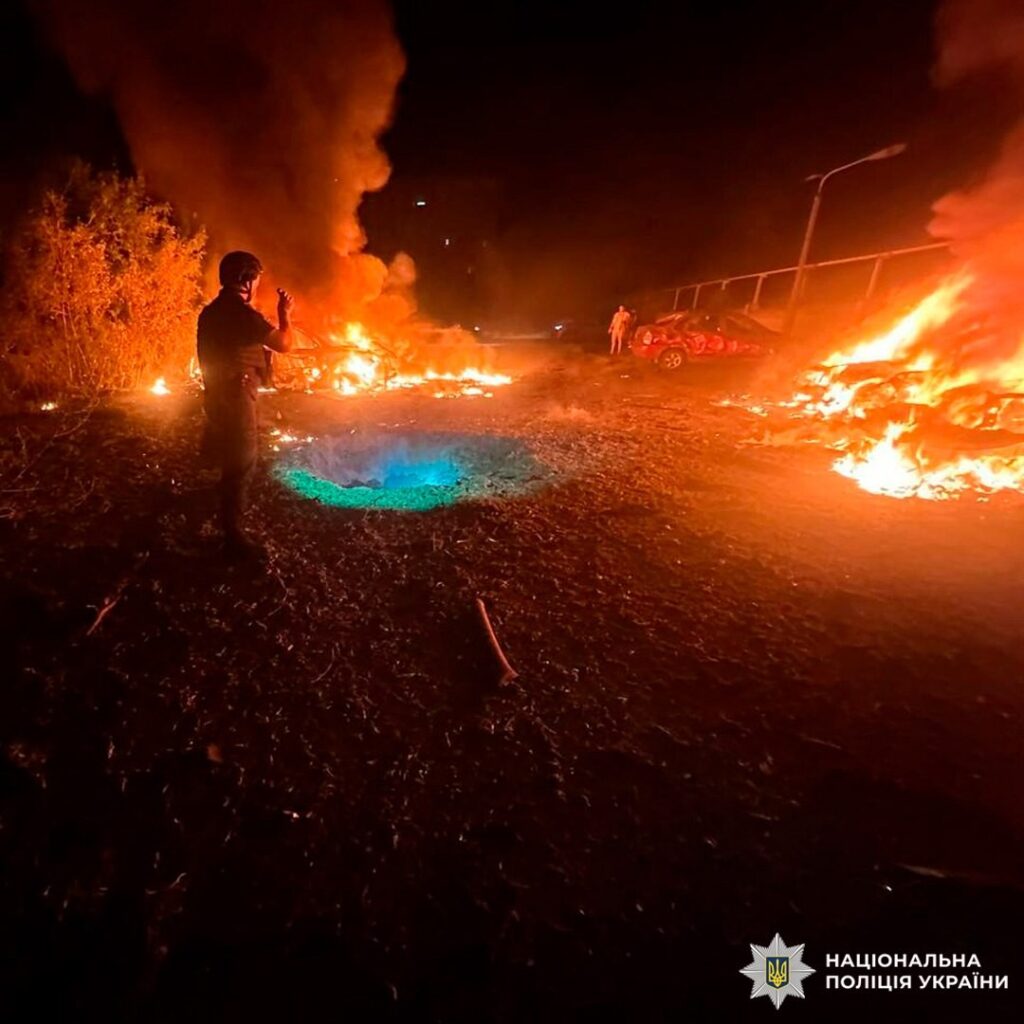
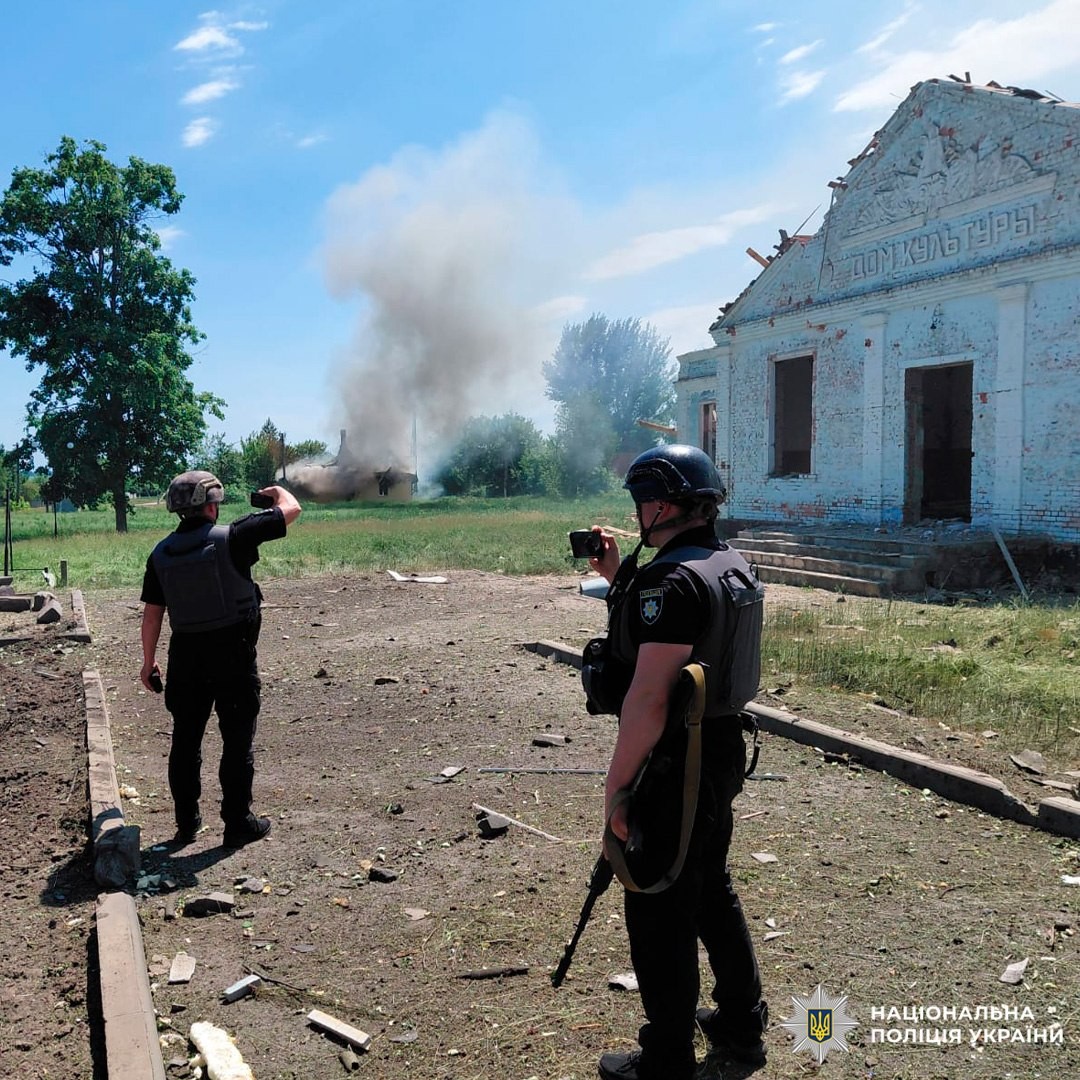
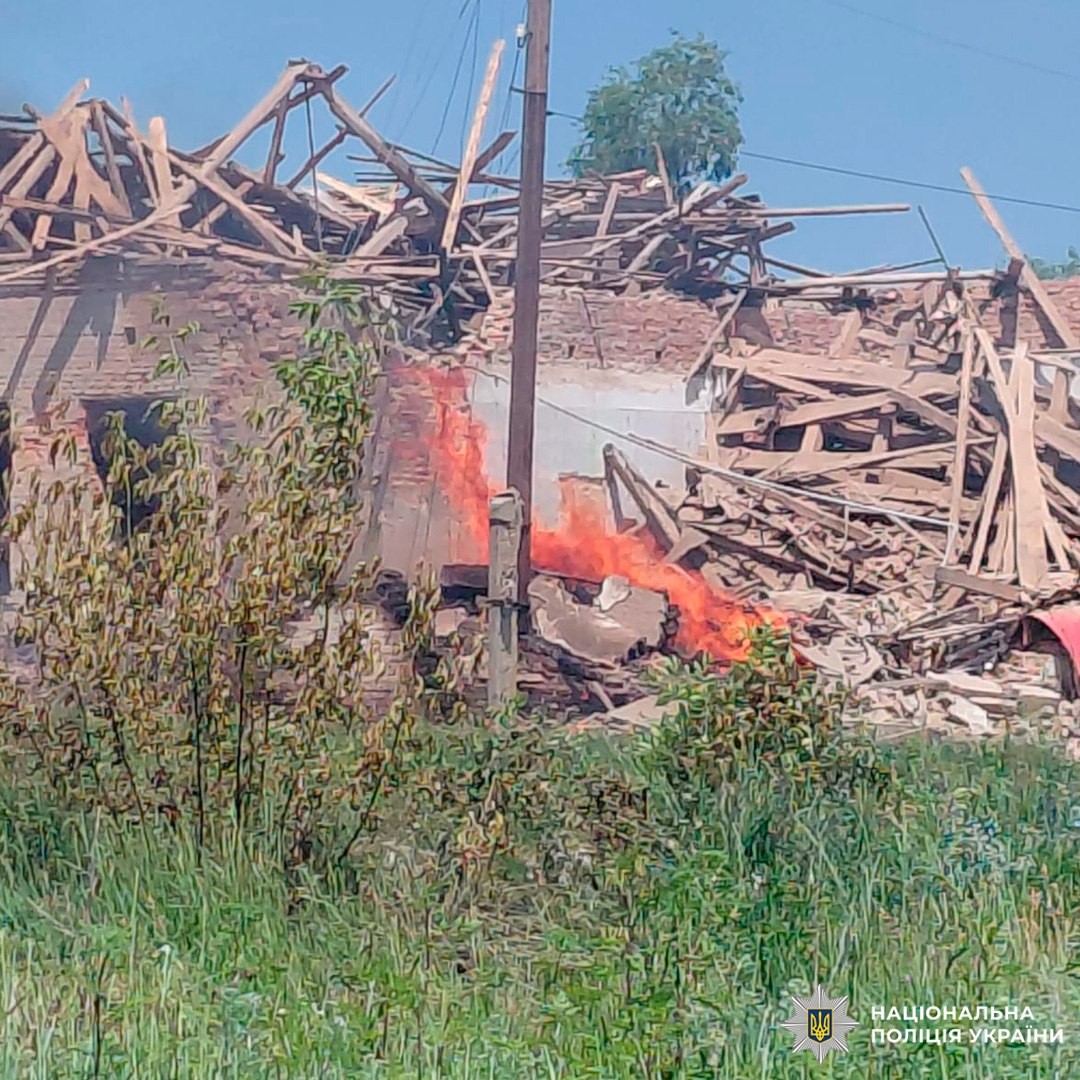
Russia's overnight drone and missile barrage on 9 June killed and wounded civilians in the Kharkiv Oblast cities of Chuhuiv and Kharkiv, regional officials reported. More strikes over the past 24 hours left several people dead and dozens wounded elsewhere in Ukraine. Ukraine's Air Force said air defense stopped most of the drones, though missiles and others still reached homes.

Russia has pounded Ukrainian cities with nightly aerial barrages since 2022, sending waves of drones and missiles that air defenses can thin but not fully stop. Such daily attacks mainly target residential areas and civilian infrastructure.

Chuhuiv and Kharkiv bear the brunt

A series of Russian missile strikes on Chuhuiv overnight on 9 June killed at least three people and wounded six, the city's mayor, Halyna Minaieva, reported. Fire crews stayed at the impact sites as emergency services worked, she wrote, and the strikes damaged about eight apartment buildings and more than ten detached houses.

russian missiles kill three wound six chuhuiv drones injure 15 kharkiv including one-year-old · post police officers film aftermath strike oblast 9 2026 b8d379e4-6e28-40e3-8f78-aabbdd235e3e ukraine news ukrainian reports
Police officers film the aftermath of a Russian strike in Kharkiv Oblast, 9 June 2026. Photo: National Police of Ukraine

In Kharkiv—the regional capital—Russian drone strikes set off fires, damaged at least 18 cars, and blew out windows and facades in residential high-rises, Kharkiv Oblast head Oleh Syniehubov reported.

russian missiles kill three wound six chuhuiv drones injure 15 kharkiv including one-year-old · post police officers film aftermath strike oblast 9 2026 3ddd3d71-89b5-4771-8e78-a7d9f5512ce8 ukraine news ukrainian reports
Police officers film the aftermath of a Russian strike in Kharkiv Oblast, 9 June 2026. Photo: National Police of Ukraine

He said 15 people were hurt, among them three children, including a one-year-old boy, and three women were hospitalized

russian missiles kill three wound six chuhuiv drones injure 15 kharkiv including one-year-old · post multi-story residential building wrecked strike oblast 9 2026 8f58a8d8-9c07-4f40-bc34-494323214028 ukraine news ukrainian reports
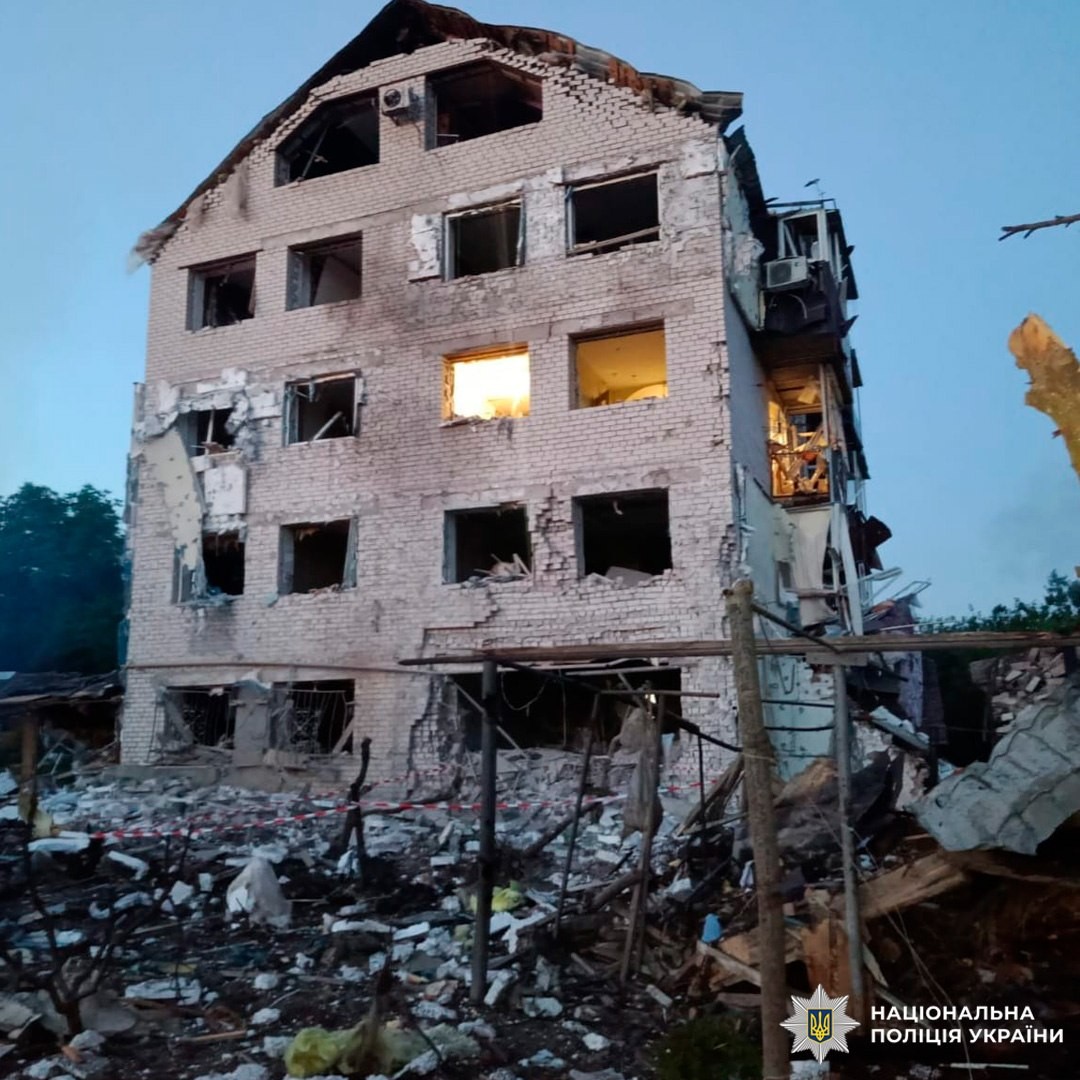
A multi-story residential building wrecked by a Russian strike in Kharkiv Oblast, 9 June 2026. Photo: National Police of Ukraine

Both cities sit dozens of kilometers from the Russian border and have been struck repeatedly through the war.

A barrage of two missiles and 166 drones

Russia launched two Kh-59/69 guided air missiles from Voronezh Oblast and 166 strike drones overnight, Ukraine's Air Force reported. The drones included Shahed types, some jet-powered, along with Gerbera, Italmas, "Banderol" loitering munitions, and "Parodiya" decoys, launched from Oryol, Kursk, Bryansk, Primorsko-Akhtarsk, and Millerovo in Russia, occupied Donetsk, and Hvardiiske in occupied Crimea.

By 08:00, air defense had downed or suppressed 146 of the dronesTwo missiles and 17 drones struck 18 locations, and debris from intercepted drones fell at eight more

moscow's drone hits 10-story apartment block romania injuring two russia fires 232 uavs ukraine · post fire top-floor residential building galați after russian crashed 29 2026 пожежа у квартирі багатоповерхівки
Explore further

Moscow’s drone hits 10-story apartment block in Romania, injuring two as Russia fires 232 UAVs at Ukraine

Zaporizhzhia counts the damage from the day before

A Russian drone attack the previous day damaged 11 residential buildings across three districts of Zaporizhzhia, the city council reported. Six apartment blocks and five detached houses in the Khortytskyi, Zavodskyi, and Kosmichnyi districts lost windows, balconies, doors, and roofs to blast waves and debris. No one was hurt, and priority repairs were finished.

A nationwide wave

  • Russian attacks over 8 June killed two people in Sumy Oblast and wounded 13 across 21 hromadas, the regional police reported. A 78-year-old woman died in the Konotop hromada and a 71-year-old man in Seredyna-Buda, with a two-year-old boy and an eight-year-old boy among the injured.
  • In Donetsk Oblast, Russian forces killed two residents, in Bilozerske and Druzhkivka, and wounded 11 more, nine of them in Sloviansk, Oblast head Vadym Filashkin reported. Police recorded 1,309 attacks on the oblast's front line and residential areas, damaging 53 civilian sites. Hours later, Russia dropped three FAB-250 glide bombs on Sloviansk's outskirts, destroying one home and damaging more than 20.
  • In Kherson Oblast, drone and artillery attacks killed one person and wounded 13, including a child, Oblast head Oleksandr Prokudin reported
  • Drone strikes in Dnipropetrovsk Oblast wounded three people
  • Russian forces also hit 12 villages in four border hromadas of Chernihiv Oblast, the local border detachment told Suspilne.
  • The Russians also attacked communities in Mykolaiv Oblast with drones, where the administration reported no casualties. 
❌