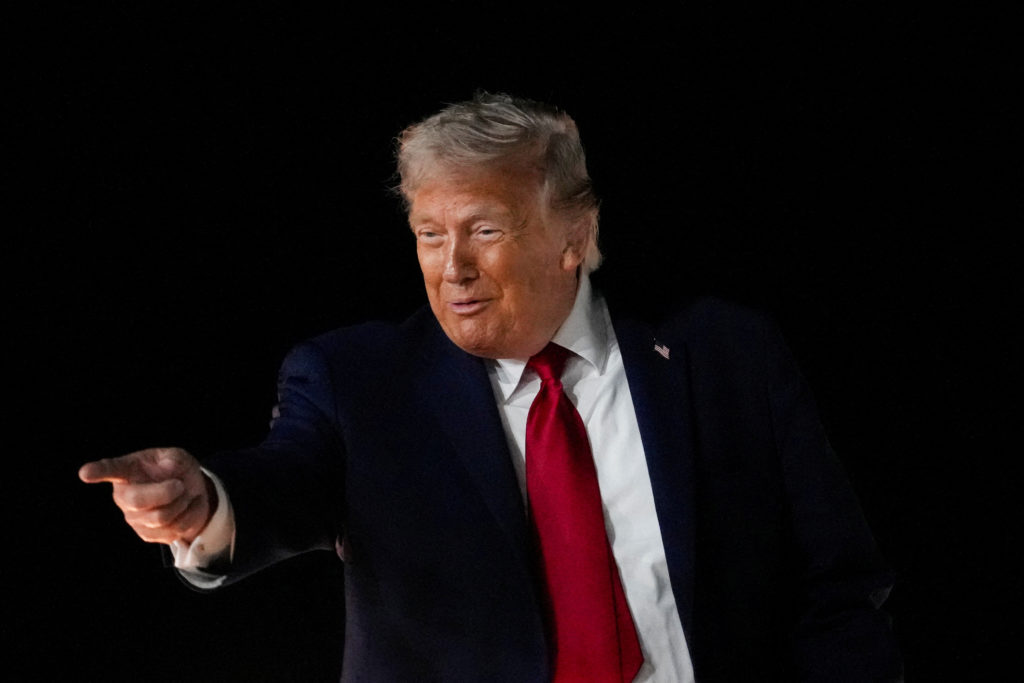
The US has launched strikes against Iran after Donald Trump blamed Tehran for downing a US army helicopter near the strait of Hormuz, imperilling a shaky ceasefire that was announced by the two countries in April.
The attacks triggered a wave of retaliatory strikes from Iran on Wednesday morning, with Tehran saying it had targeted Kuwait, Bahrain and Jordan.
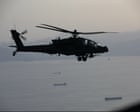
Trump said in a social media post that military officials told him "the Iranians shot down one of our highly sophisticated Apache Helicopters." He added that both service members "are safe and uninjured."
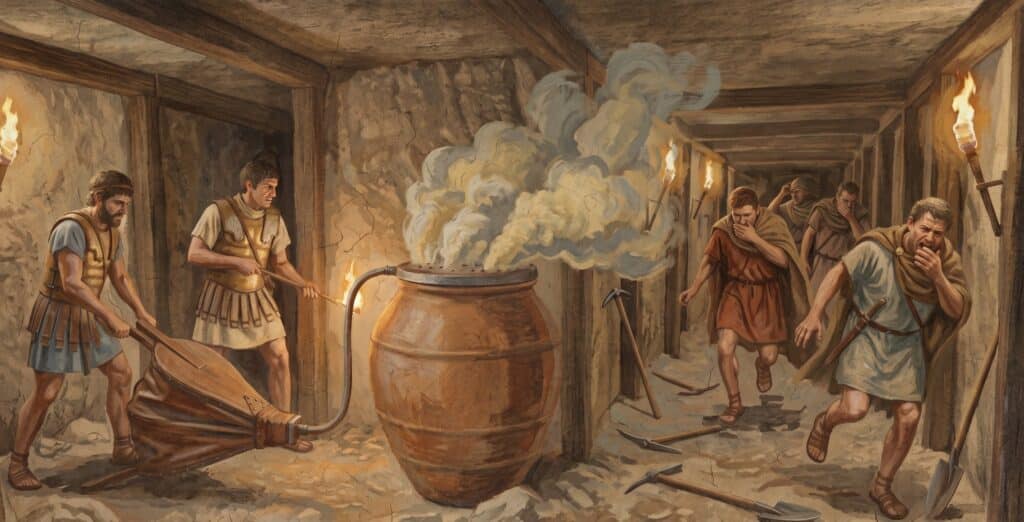
The burning feathers tactic used by the Ancient Greeks is considered one of the first chemical weapons in human history. Credit: Greek Reporter archive
In 189 BC, Ancient Greeks defending the city of Ambracia used an early form of chemical warfare against Roman forces during a siege, deploying a clay jar filled with burning chicken feathers.
At first, the story sounds almost absurd, but it becomes far more striking once the details are unpacked and we understand what was happening beneath the city walls—and, more importantly, why this moment even matters in the history of ancient warfare.
Ancient Greeks turn to chemical warfare and burning feathers as siege intensifies
The Romans arrived in Ambracia with overwhelming force. Consul Marcus Fulvius Nobilior deployed battering rams under a two-hundred-foot covered gallery, a massive mobile shed designed to protect his engineers from arrows and boiling pitch as they hammered away at the walls. The Ambraciot defenders held firm. The walls didn’t collapse.
Frustrated and running out of options above ground, the attackers eventually turned underground. Their plan was straightforward enough: tunnel beneath the city, collapse the foundations, and force the stubborn Greeks to surrender. For a while, the effort proceeded in silence. Then the Greeks noticed the piles of excavated earth building up outside the camp and understood exactly what was going on. Locating the tunnel was another matter. The Greeks solved it with one of the most clever pieces of field engineering in ancient history.
They placed thin bronze vessels against the ground at various points inside the city and then pressed their ears to them to listen. The vibrations traveling through the earth from the pickaxes told them exactly where the tunnel was heading. It functioned as an early acoustic detection system, and it worked brilliantly. They then dug a counter-tunnel and broke through into the mine. What followed was the kind of close-quarters underground fighting where normal weapons become useless. Spears are too long, shields too wide, and you can’t even see the man you’re fighting, so they built something new.
The Greeks took a large clay jar, a pithos, sized to precisely fit the tunnel, capped it with an iron lid drilled with holes, inserted an iron tube connected to a blacksmith’s bellows, and filled the jar with glowing charcoal covered in a dense layer of fine feathers, creating what can be described as an early chemical warfare device. When it was pushed into the tunnel and activated with the bellows, it produced a thick cloud of acrid, choking smoke that billowed forward into the darkness.
The Roman miners couldn’t breathe, couldn’t see, and had nowhere to go. They abandoned their tools and fled to the surface to escape the choking fumes. The Greeks had driven off a superior Roman force solely with clay, iron, fire, and feathers. Military historian Adrienne Mayor has pointed to this episode as evidence of just how sophisticated ancient weapons technology really was.
This deliberate act of chemical engineering would be remembered in later accounts of ancient warfare. The pithos was matched to the tunnel width specifically to prevent blowback. The feathers were chosen for the particular quality of smoke they produced when burned at high temperatures. Someone thought this through. The parallels to later warfare are hard to ignore. The same basic horror—an invisible, suffocating enemy in a dark enclosed space—would define trench warfare on the Western Front more than two thousand years later.
The psychology hasn’t changed even if the chemistry has. Ambracia ultimately surrendered. Cut off and outnumbered, the city eventually negotiated terms rather than fight on indefinitely, but the defenders had already shown what was possible. Historians now regard what happened in those tunnels as one of the earliest documented uses of asphyxiating chemical weaponry in a tactical military context—a genuine milestone in the history of warfare.
During the Roman siege of Ambracia in 189 BC, the defenders deployed what is one of the earliest recorded uses of a chemical weapon in history — and they used it underground. Rome was besieging the Greek city, held by the Aetolian League. When the walls held and the siege artillery failed, the Romans turned to mining — digging a tunnel beneath the walls, concealed behind a two-hundred-foot covered walkway, worked in relays day and night. For days the defenders didn’t notice. Then the pile of excavated earth grew too large to hide. Unable to see the tunnel, the defenders pressed bronze vessels against the ground to detect the vibration of digging, located the Roman mine, and dug a counter-tunnel straight toward it. The two tunnels met. Soldiers fought face to face in darkness too cramped to swing a sword. When direct combat failed, the defenders built a device described in detail by the historian Polybius: a clay jar fitted to the tunnel’s width, packed with feathers over burning coals, sealed with a perforated iron lid, and connected to a blacksmith’s bellows. They pumped the choking smoke directly into the Roman tunnel. The Romans were driven out of their own mine. According to Polybius, it was among the first uses of toxic smoke in the history of war. Further reading — Polybius, The Histories: https://amzn.to/4uWM9wN #AncientHistory#RomanEmpire#Ambracia#Shorts#HistoryShorts#ChemicalWarfare#TimelineHistory#history#shorts#ancientrome#education
Rights groups and some locals worry that program to ‘track illicit activity’ could become a data collection project
The Great Lakes have rarely ever been considered a hotbed of illicit drug activity or center for illegal immigration.
But that hasn’t stopped US government agencies and the company behind surveillance sailing drones from treating the region as such. The US Coast Guard recently announced it has launched an armada of at least six sailing drones in the Great Lakes this summer in an attempt to, in part, “track illicit activity”.
Sources say much delayed Dip is close to sign-off but only after some of the Labour government’s worst infighting
Cabinet relations have been left badly damaged by the protracted row over the defence investment plan (Dip), according to Whitehall sources who say the standoff has led to some of the worst infighting since Labour took power.
Ministers are putting the final touches on the plan, which is expected to be published in the coming weeks after departments agreed to cut their capital budgets by about 1% to pay for additional military spending.
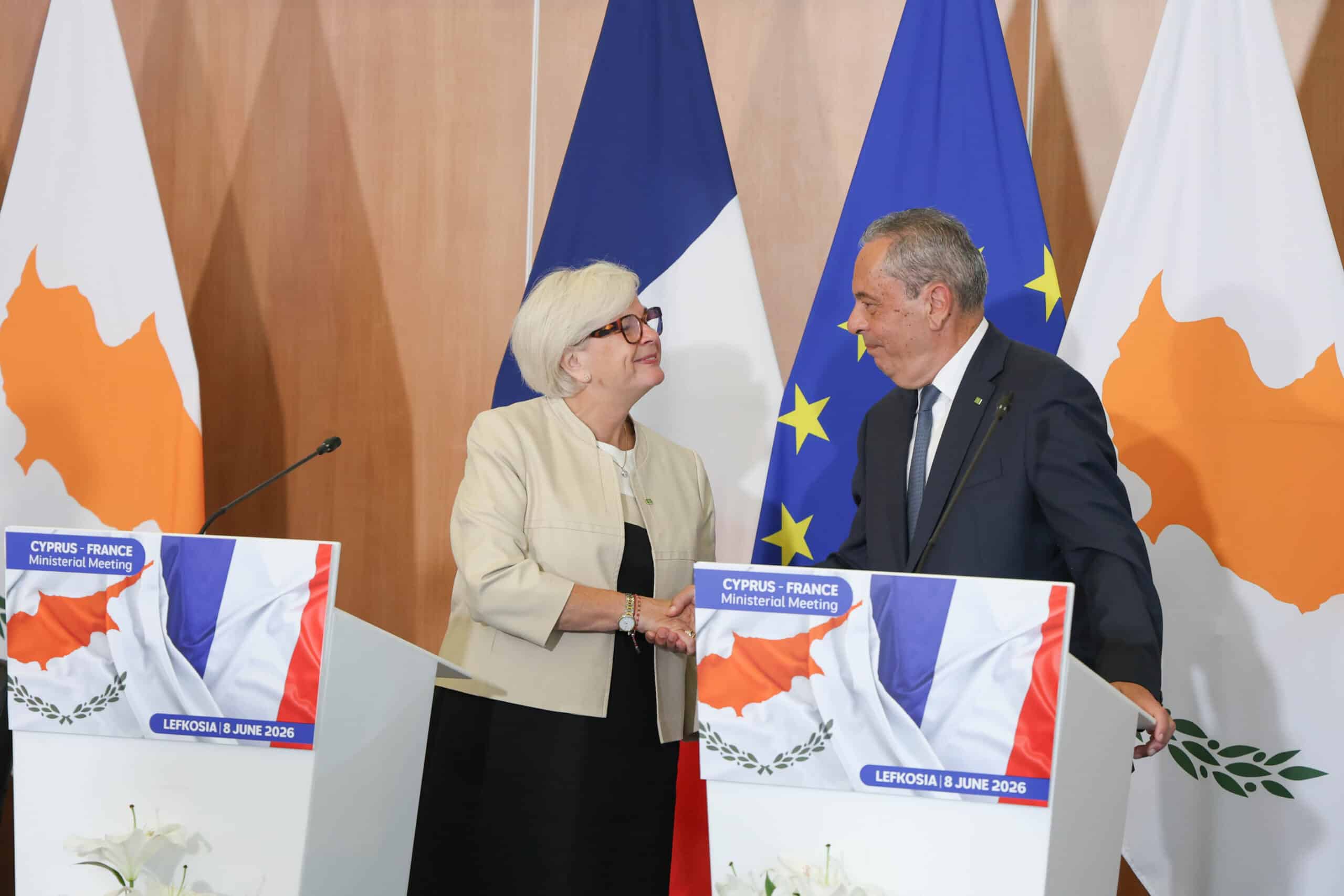
Defense Minister Vasilis Palmas and his French counterpart, Catherine Vautrin, signed the defense agreement on Monday. Credit: European Council
Cyprus and France signed a Status of Forces Agreement (SOFA) on Monday that strengthens defense cooperation between the two nations and allows for the conditional deployment of French troops on the island nation.
The agreement was signed in Nicosia by Defense Minister Vasilis Palmas and his French counterpart, Catherine Vautrin, on the sidelines of the informal meeting of EU defense ministers, hosted by Cyprus.
Vautrin described Cyprus as a key strategic partner for France and an essential hub for French military operations in the Eastern Mediterranean and the Middle East. “Cyprus is an essential support point for the conduct of our military operations in the Eastern Mediterranean and the Near East,” she said.
She noted that the ports of Larnaca and Limassol host around thirty French naval visits annually, with twenty-one already recorded since the beginning of this year. The French Minister highlighted the extensive cooperation between the two countries’ armed forces, pointing to joint naval exercises, including Argonaut and Eunomia, aimed at strengthening maritime security, freedom of navigation, and crisis response capabilities.
According to Vautrin, cooperation has also expanded in recent years to include land and air operations, military mobility, air defense, operational readiness, and logistical support.
Provisions of the Cyprus-France defense agreement
Cyprus President Nikos Christodoulides announced the agreement’s entry into force on his official social media accounts, stating that the signing and implementation of the SOFA contribute to the shared European objective of strengthening the European Union’s strategic autonomy.
Όταν ο Γάλλος Προέδρος Emmanuel Macron επισκέφθηκε την Κύπρο στις 23 Απριλίου 2026, είχαμε αναφερθεί δημόσια, κατά τη διάρκεια της διάσκεψης τύπου, στην πολυεπίπεδη στρατηγική μας συνεργασία, ειδικότερα στους τομείς της Άμυνας και της Ασφάλειας. Μέσα σε αυτό το πλαίσιο, είχα… pic.twitter.com/E3Gk5IZgX8
— NikosChristodoulides (@Christodulides) June 8, 2026
Under the SOFA, which was discussed during French President Emmanuel Macron’s visit to Nicosia on April 23 and subsequently negotiated between the two sides, the military assets of France may be deployed in southern Cyprus under certain conditions. The agreement also provides a legal framework for the presence of French military forces in Cyprus in support of various activities in the Eastern Mediterranean and the Middle East.
Furthermore, the SOFA, whose entry into force was announced by Christodoulides, grants France access to military bases and infrastructure in Cyprus. The agreement is reported to also include provisions on military technology sharing, joint exercises, and strategic dialogue between France and Cyprus.

 Login
Login