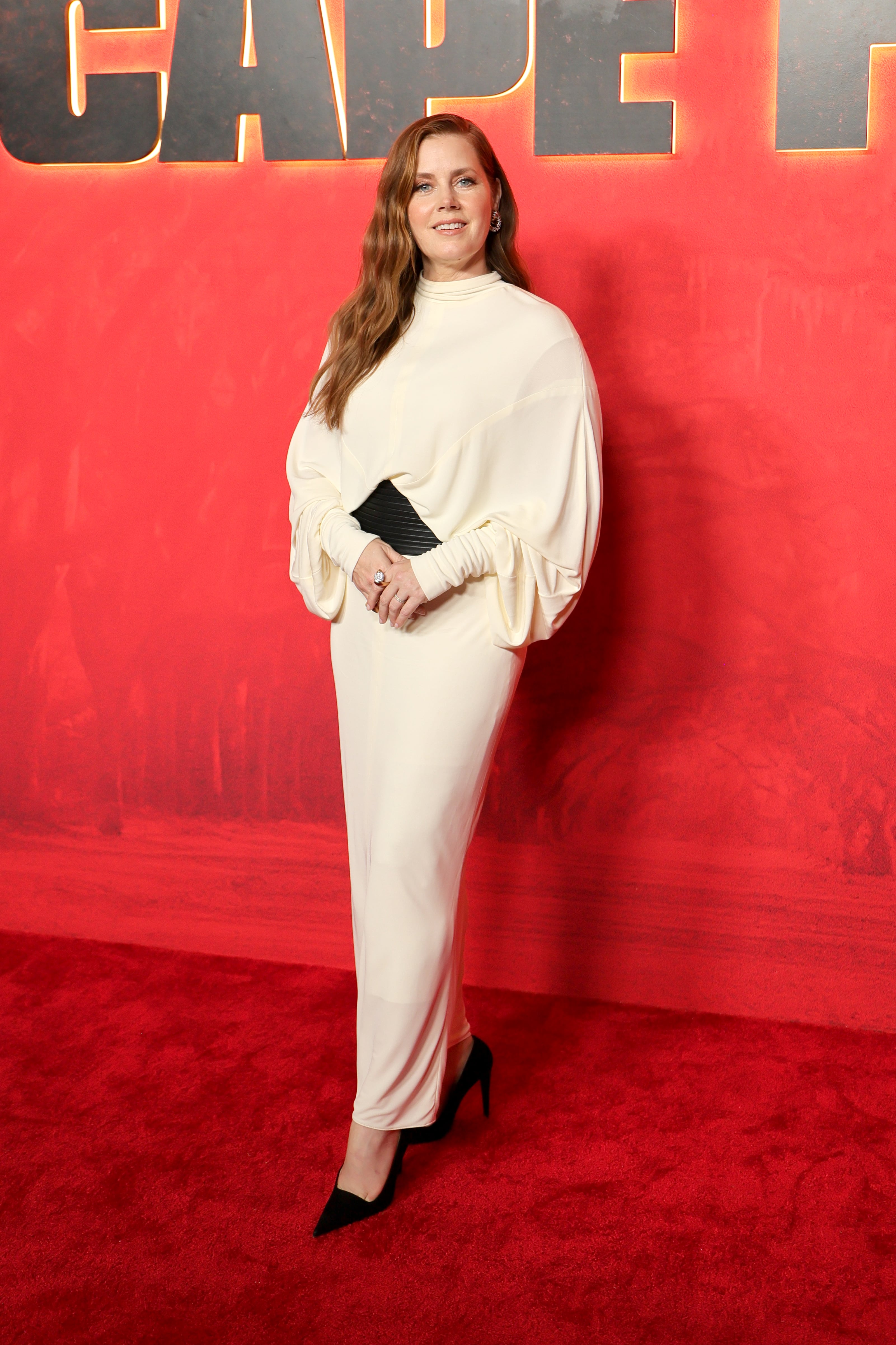
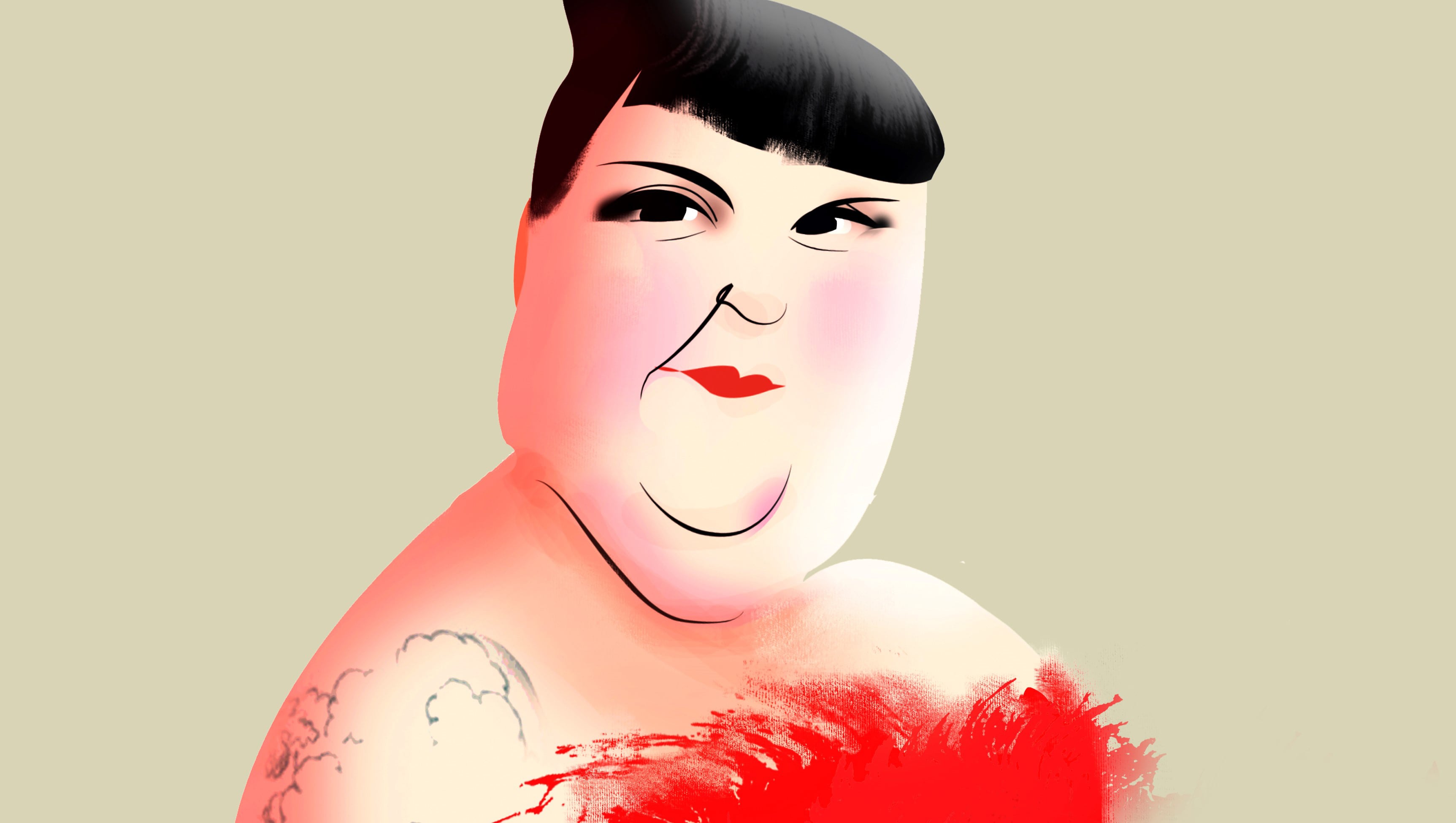
In the new adaptation of Cape Fear, a notorious convict returns years later to settle the score with those who ruined his life; the series’ protagonist also returns with a mission that is less violent, but not so different. After several years of setbacks, failed projects, and uncomfortable conversations about her supposed “slump,” Amy Adams returns to the spotlight to prove why she was unanimously considered one of the best actresses of her generation and to turn the tide once again in favor of one of Hollywood’s favorite redheads. Pictured here at the series premiere (an Apple TV production) in Los Angeles on June 2.
Amy Adams was Hollywood’s safe bet. The actress who elevated any film, the perennial Oscar contender—with six nominations in 13 years—the performer who seemed incapable of making a wrong choice when it came to projects. Versatility was her most notable quality: she could do drama, musicals, comedy, or action, and in the same year, she could act opposite both Kermit the Frog in The Muppets and Joaquin Phoenix in The Master. Her name was a guarantee of quality. But like legends such as Glenn Close or Annette Bening, Adams joined the club of perennial favorites who never quite manage to win the statuette, and her star seemed to be fading. Pictured here at the presentation of Louis Vuitton’s 2027 cruise collection in May in New York.
Social media, always so quick to spin narratives, coined a term for Amy Adams—“the flop era”—which is used to describe the period when a celebrity experiences a string of disappointments or failed projects. Adams had fully entered this phase after releasing box office flops like Hillbilly Elegy, The Woman in the Window, Dear Evan Hansen, Disenchanted, and Nightbitch. There are entire articles, tweets, and podcasts dedicated to debating the actress’s supposed career slump and how long it would take her to get out of it. Much like a pop star whose albums no longer debut at the top of the charts, unmet expectations fueled a sense of lost momentum because her projects weren’t making as much noise as her previous ones. Pictured here at one of the 2017 Oscar parties.
'Cape Fear' has all the ingredients to turn around the bad luck associated with its main star. A story with a distinguished cinematic pedigree, a compelling character—a lawyer whose peaceful life is threatened by the return of a criminal she sent to prison—a major network behind it, Spielberg and Scorsese as executive producers, and an antagonist of the caliber of Javier Bardem. These are, in fact, what critics consider the best aspects of the series. “Brilliant, incredible,” notes ‘The Guardian’ about the actress, who appears in the photo alongside the Spanish actor and Patrick Wilson, her on-screen husband.
The actress took advantage of the premiere of ‘Cape Fear’ to publicly introduce her only daughter, Aviana, who posed on the red carpet alongside her and her husband, director and artist Darren Le Gallo. The 16-year-old outshone her famous parents in a turquoise mini-dress with a sweetheart neckline and her mother’s signature red hair, but above all, because of her striking resemblance to a young Scarlett Johansson—a detail neither the press nor Twitter users failed to notice.
Many have blamed Adams’ career slump on Hollywood’s chronic ageism, which sidelines actresses or relegates them to more minor roles as they get older. However, at 51, she says she feels “more centered and relaxed” than she ever has. “I try to welcome opportunities with open arms and not fight too hard. For me, at least, that’s a very liberating part of getting older: just letting things go,” she revealed in a recent interview.
For more than a decade, Adams achieved something rare: she earned critical acclaim for films like Arrival (the 2016 film directed by Denis Villeneuve, pictured) and Doubt, while also starring in major franchises. Her portrayal of Lois Lane in the ‘Superman’ superhero universe and her wonderful performance as a modern Disney princess in ‘Enchanted’ further cemented her place in popular culture.
Adams’s first audience consisted of diners at a chain of restaurants in Minnesota that featured live music, where she worked for three years. She then faced a crossroads: move to New York to pursue her dream of becoming a dancer, or head to the other coast and try her hand at acting in Los Angeles. An injury ended up making the decision for her, and Hollywood gained one of its greatest ambassadors. Pictured here in 2002.
Adams is an anomaly in this age of hyper-exposure. She doesn’t use social media—she tried Instagram but quit because “my routine is too boring”—she isn’t involved in personal scandals, nor does she make inflammatory statements in the few interviews she grants, and her red-carpet appearances are limited to the premieres of her own projects or award shows that request her presence among the nominees. Perhaps this lack of dazzlement by the lights of the movie capital has to do with the fact that she came into the spotlight late: her breakthrough role, in the indie comedy ‘Junebug,’ came when she was 31.
The praise for her has always been unanimous. “Amy has the ability to convey her thoughts just by looking at you. An actress must move people, and she’s brilliant at that. Plus, she’s completely believable,” said Tom Ford, who cast her as the lead in his 2016 film Nocturnal Animals (pictured, in a scene from the film). “She maintains a certain mystery on purpose. That’s why she surprises us and draws us in,” added the late Philip Seymour Hoffman.
The actress’s style is one of the most consistent in Hollywood. She knows how to perfectly pair her icy beauty with designs that flatter her figure and align with her career. She’s never the most daring on the red carpet, but she’s always one of the best-dressed. Rather than following trends, she opts for flattering designs like this Valentino gown she wore to the 2014 Golden Globes. Adams won Best Actress in a Comedy or Musical for her role in American Hustle.
While she certainly rocks plunging necklines, her signature style is the strapless look. She has worn it on countless red carpets, especially in understated, monochromatic dresses. This one, which she wore to the 2014 Oscars, is by Gucci and perfectly embodies her approach to major events: with elegance, without fanfare, staying true to what she knows suits her, and, it’s also true, without taking big risks.
Her approach to fashion also draws heavily on classic Hollywood. It’s not just her hair—sometimes styled in Veronica Lake-inspired waves or pulled back into elegant buns—that evokes those years; her wardrobe is also filled with elegant dresses that have a certain retro flair and sensuality. A good example was this Alexandre Vauthier dress she wore to the Oscars afterparty hosted by Vanity Fair in 2019.
The actress’s early years in Hollywood weren’t easy. Her career seemed stuck in small, almost interchangeable roles; not even a part in Catch Me If You Can, opposite Leonardo DiCaprio, helped her break through. So Adams, desperate, decided to dye her hair red. “When you’re blonde, people associate it with being flirty or mischievous. When you’re a redhead, suddenly you’re eccentric and quirky,” she confirmed. And it worked.
Amy Adams met Darren Le Gallo in an acting class in Los Angeles when neither of them was well-known. For months, she saw him only as a fellow actor, and both of them were in relationships. Everything changed when they crossed paths on the set of a short film and she discovered a side of him she hadn’t known before: that of a man willing to go after what he wanted. “I know you’re getting over another guy, but I’m going to take you out to dinner on Wednesday,” he told her. More than two decades later, they’re still together. Pictured here at the 2025 Golden Globes.
Those who think Amy Adams is past her prime might want to take a look at her schedule. Following Cape Fear, the actress will star in Klara and the Sun, the adaptation of Kazuo Ishiguro’s acclaimed novel. In it, she will play the mother of a teenager who forms a relationship with an artificial intelligence designed to combat loneliness (Jenna Ortega). Next up is another of Hollywood’s most coveted projects: the new Star Wars universe film, Starfighter, where she’ll share the screen with Ryan Gosling. It doesn’t exactly look like the schedule of a star on the decline.
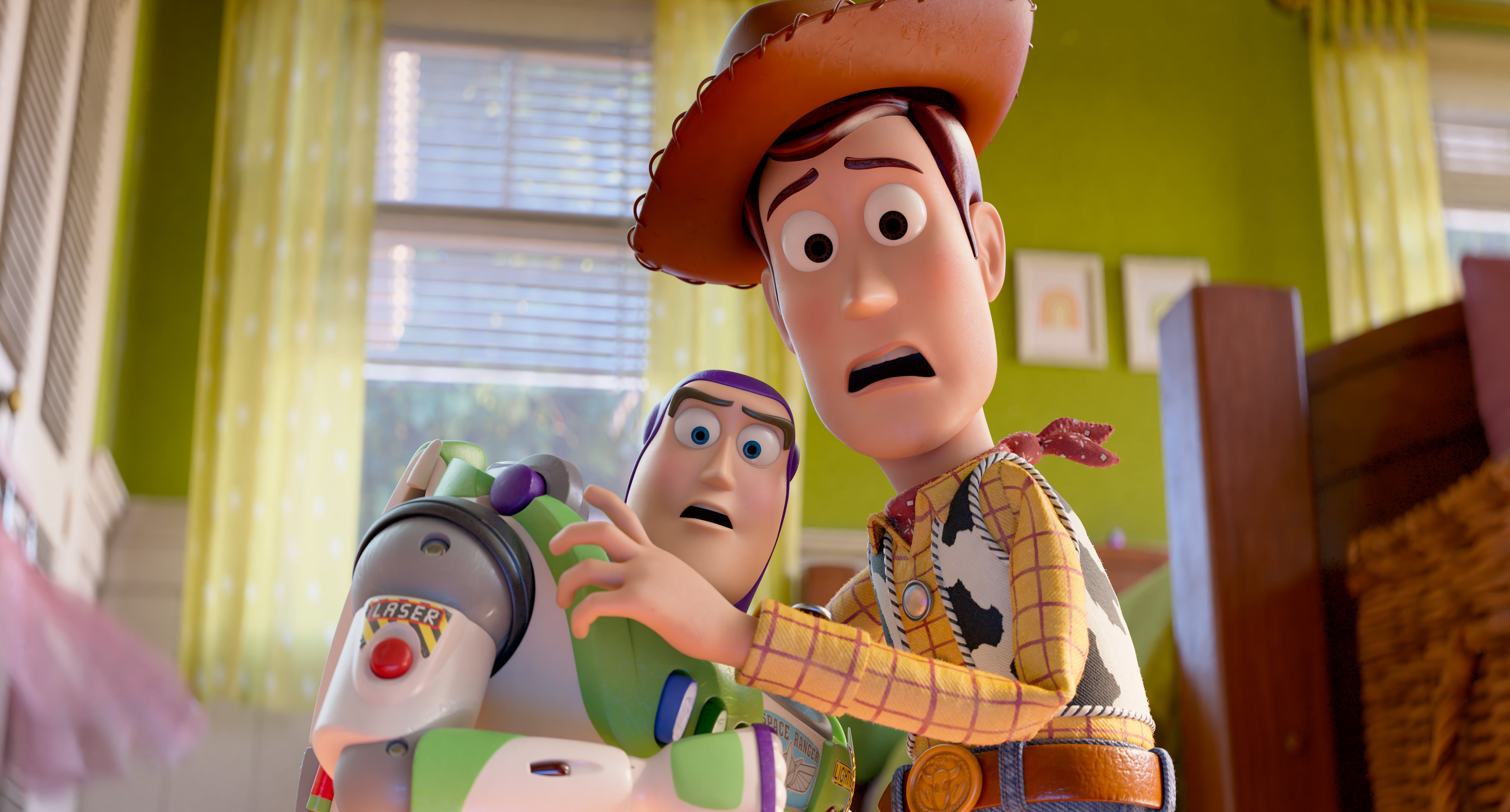
A life without imagination is not a life. Without fantasy, without creation, without daydreams or fairy tales. But how are we going to develop our imagination if we do not do so from childhood, playing with our toys, if we are instead dazzled by the bright screens of our phones? Thirty years ago in November 1995, when Toy Story premiered, that question was unthinkable. Today, after three sequels, half a dozen shorts, a handful of mini-shorts, a series and television specials, and with Toy Story 5 about to open in movie theaters, the question is unavoidable.
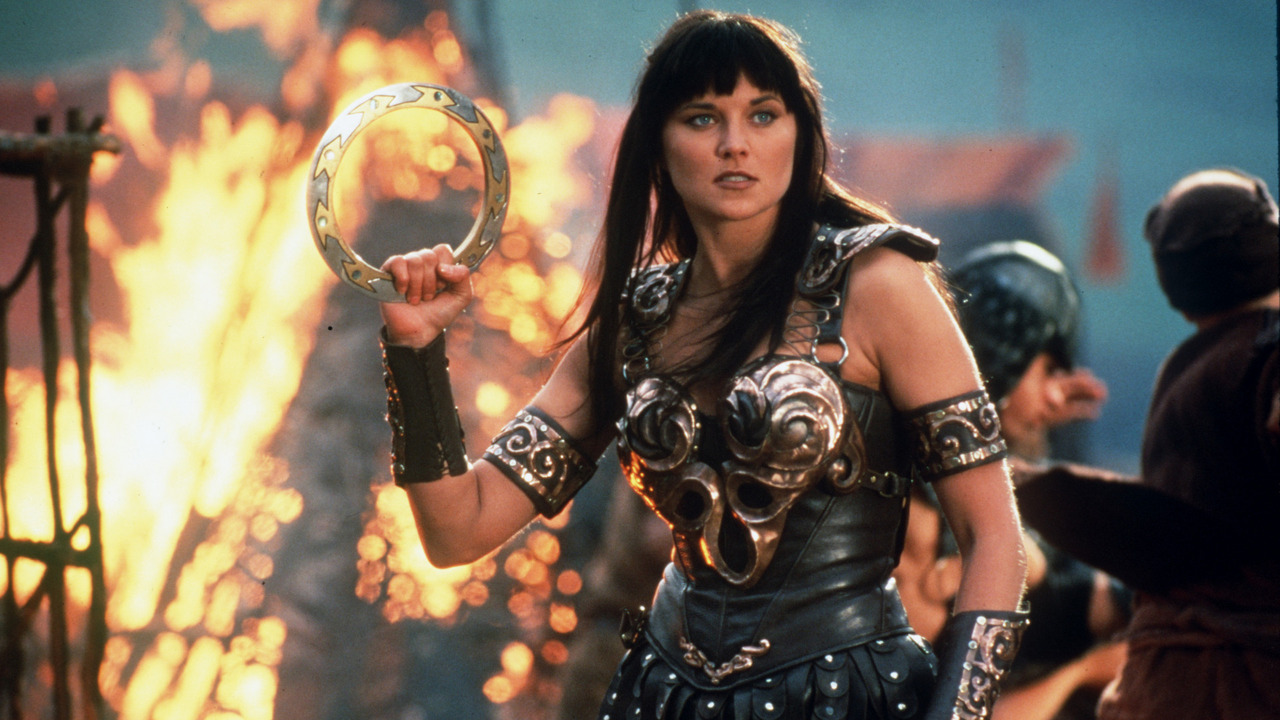
Xena, played by Lucy Lawless. Photo: Screenshot from Season 2, episode “Return of Callisto.” Courtesy: Studios USA Television
Xena the Greek warrior princess, who started as an antagonist of Hercules, captivated audiences around the world more than twenty years ago. One of the joys of looking back at Xena is its playfulness. It features some badass female characters and at times offers a serious message about female solidarity and feminism.
By Amanda Potter
Xena the fictional Warrior Princess, played by Lucy Lawless, captivated audiences around the world for six series with her high kicks, sword skills, and distinctive war cry. The series followed her as she fought her way through armies, monsters, and gods alongside her soul mate and moral compass, Gabrielle (Renee O’Connor).
Xena travelled across space and time, taking us from ancient Greece to Rome, Egypt, Britain, China, India, Scandinavia, and finally to Japan, where it all came to an end twenty years ago on June 18, 2001.
Starting life as an antagonist of Hercules in three episodes of Hercules: The Legendary Journeys, Xena was so popular as a character that she was given her own spin-off series that ran from 1995 to 2001. At the time, Xena: Warrior Princess was considered groundbreaking, as it starred a strong female action heroine and was the only popular adventure, action, science fiction, or fantasy show that featured female leads without male counterparts.
On the twentieth anniversary of the final episode, it is worth revisiting this great show and exploring why it was loved by a broad spectrum of viewers, from young girls drawn in by an active female role model to ancient history buffs, sci-fi fans and the LGBTQ community.
The Fictional Greek Warrior Princess and the Amazons
A reformed warlord from ancient Greece, Xena was not an Amazon but a friend to the tribe of warrior women. To ancient Greek writers, the Amazons were women who fought and behaved like men and were unnatural barbarians. They have since been adopted as positive female role models who break with misogynistic stereotypes of womanhood—they live in a self-sufficient, female-dominated society as warriors and intellectuals. The term “Amazon feminism” is now used to describe a branch of feminism that promotes female physical prowess as a way to achieve gender equality.
Before Xena, the Amazons featured in the 1970s Wonder Woman television series. Not quite the feminist icons we expect today, these women wore pastel-colored negligees as they adopted a peaceful life—without men—on Paradise Island.
In Xena, while the Amazons may also have been attired in revealing costumes made of furs and skins, their separatist society valued martial, as well as academic, skills. An Amazon tells Gabrielle that the Amazon world is based on “truth and an individual woman’s strength.”
The Amazons from Greek mythology lived apart from men at the edge of the known world and fought bravely against male heroes such as Hercules, Theseus, and Achilles. In Xena, the Amazons also lived in a matriarchal society and were skilled fighters who could hold their own against men.
The Amazons in Wonder Woman (2017) can be seen as Xena’s big-screen descendants. The costumes and fighting prowess of Penthesilea (Nina Milner) in the BBC drama Troy: Fall of a City (2018) has tinges of Xena. The leadership ability of the immortal Amazon Andy (Charlize Theron) in the Netflix film The Old Guard can also be seen as inspired by Xena.
But while Troy: Fall of a City and The Old Guard are aimed at older audiences, Xena was popular across all age groups. For instance, episodes of Xena were broadcast in the UK on Channel Five’s Milkshake! Saturday morning slot in the ’90s and early 2000s for young viewers. This led many young girls to adopt Xena as their role model.
The Xena subtext
Xena was also popular with gay and lesbian viewers. In the 1990s, openly gay relationships were mostly missing from popular US television series. However, Xena’s relationship with Gabrielle was interpreted as friends and lovers as much as hero and sidekick. Series producers began to play with this idea, for example, putting Xena and Gabrielle together in a sexy bath in season two fan-favorite episode “A Day in the Life,” so that for many, the subtext became the main text.
Although a lot of fans were dismayed that Xena died in the final episode, they were treated to a long goodbye kiss between Gabrielle and Xena’s ghost. Series producers never openly made Xena and Gabrielle a lesbian couple. But LGBTQ+ fans championed their relationship, which is believed to have paved the way for the openly gay relationships we see in television series today.
One of the joys of looking back at Xena twenty years afterward is its playfulness when compared with dark sci-fi fantasies like Game of Thrones. It features some badass female characters and at times offers a serious message about female solidarity and feminism, but doesn’t take itself too seriously. Some of the special effects may now seem dated, but the storylines still ring true, and the characters of Xena and Gabrielle can continue to be inspirational for a new generation of young female viewers.
Amanda Potter is a Visiting Research Fellow at The Open University. The article was published in The Conversation and is republished here under a Creative Commons License.
Un’escursione serale lungo i sentieri del Runyon Canyon, una delle aree naturalistiche più battute e frequentate sulle colline di Hollywood a Los Angeles, si è conclusa in tragedia. Sabato scorso, un uomo di 78 anni è stato rinvenuto privo di sensi lungo il tracciato. L’allarme ha fatto scattare l’intervento immediato dei soccorritori del dipartimento dei vigili del fuoco di Los Angeles, supportati dall’impiego di un elicottero per raggiungere rapidamente la zona impervia. Nonostante le manovre di assistenza medica prestate sul posto, l’escursionista non ha mai ripreso conoscenza ed è stato dichiarato clinicamente morto. Dopo oltre 24 ore di procedure e accertamenti, le autorità hanno confermato ufficialmente l’identità della vittima: si tratta di William Hasley, celebre sceneggiatore televisivo noto a livello globale per aver firmato numerosi episodi del cartone animato cult “I Puffi”.
Come riportato dal quotidiano statunitense New York Post, le cause cliniche del decesso restano al momento ignote e sono in corso gli accertamenti medico-legali per stabilire se a stroncare l’autore sia stato un malore improvviso o una fatale caduta accidentale.
Da Hanna-Barbera a Oliver Stone: la carriera di Hasley
Nato a Pittsburgh, in Pennsylvania, nel 1948, Hasley si era formato alla Marshall University prima di farsi strada nell’industria dell’intrattenimento americano. I suoi primi passi di successo sono avvenuti proprio nel settore dell’animazione, dove ha consolidato collaborazioni continuative con colossi della produzione come Hanna-Barbera e Filmation. Oltre al lavoro dietro le quinte de “I Puffi”, la sua firma è apparsa anche tra i crediti della serie animata “Alberone”.
La sua produzione non si è limitata ai prodotti per l’infanzia, estendendosi alla serialità live-action e a progetti per i network nazionali. Hasley ha infatti sviluppato numerosi episodi pilota per le emittenti statunitensi e scritto sceneggiature per produzioni televisive come “I ragazzi della prateria” e “Swift Justice”. Negli anni, il suo bagaglio tecnico gli ha permesso di collaborare con figure di primo piano del panorama hollywoodiano e culturale, affiancando il regista premio Oscar Oliver Stone e lo scrittore Gerald Green.
L’impegno nella scrittura ha toccato anche il settore dell’editoria: Hasley è stato infatti co-autore di “Chasing the Wind”, l’autobiografia ufficiale del celebre pioniere dell’aviazione Steve Fossett. Alla prolifica attività professionale, l’autore ha affiancato per anni la carriera accademica, trasmettendo le basi della sceneggiatura alle nuove generazioni come docente di scrittura presso l’Università della California di Los Angeles (UCLA).
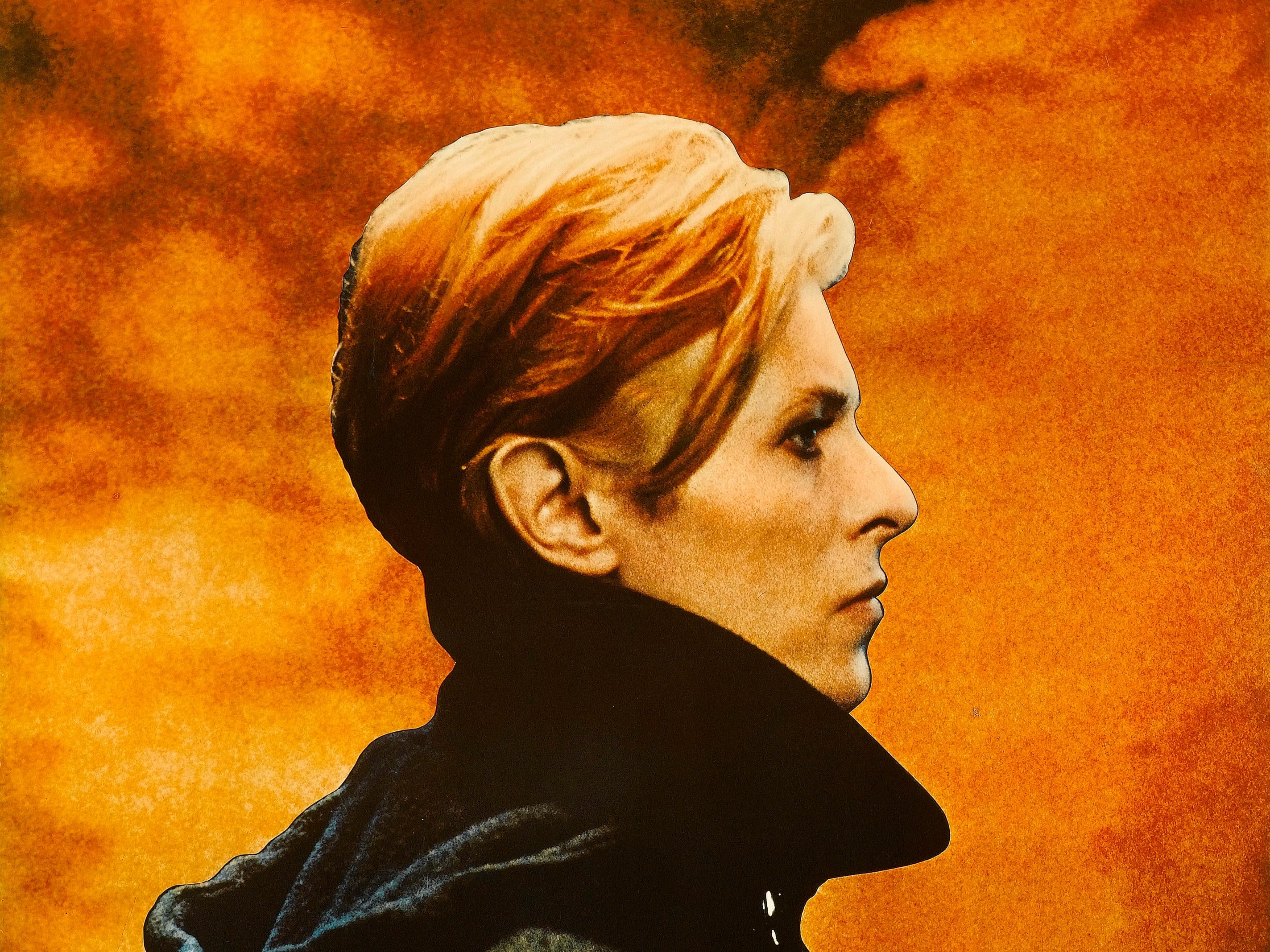
In the early days of 1975, David Bowie was a broken toy. Holed up in his grotesque Los Angeles mansion, the British musician spent his days reading obscure essays on Nazi esotericism, watching television sprawled across a wide Victorian four‑poster, and performing black‑magic rituals inspired by his new hero, the crackpot charlatan Aleister Crowley.
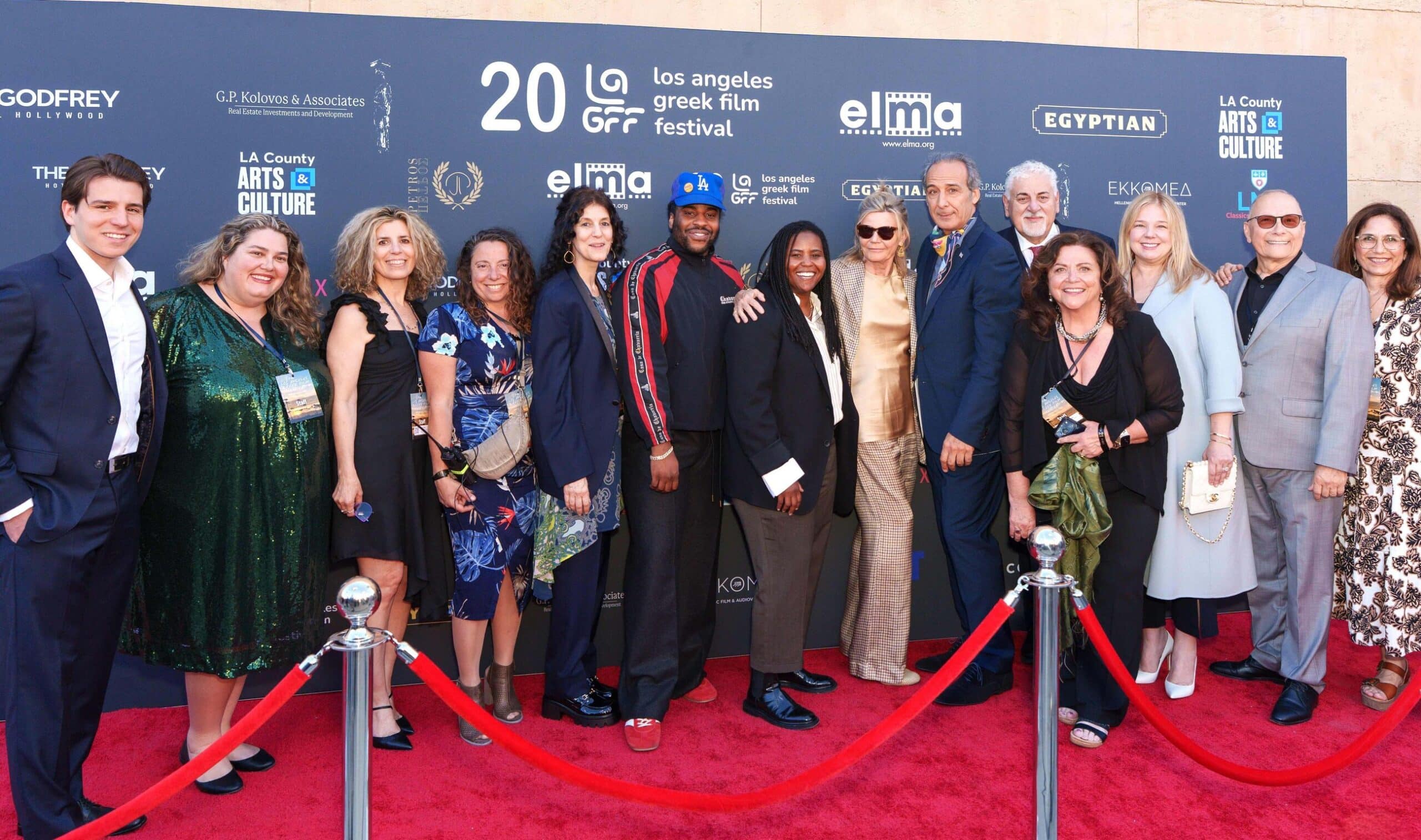
Guests and honorees gather on the red carpet during the 20th Los Angeles Greek Film Festival Closing Night and Orpheus Awards Ceremony at the Egyptian Theatre in Hollywood. Photo: UrbaniteLA
The Los Angeles Greek Film Festival marked its 20th edition in Hollywood with the Orpheus Awards Ceremony, honoring Greek and Cypriot filmmakers and paying tribute to Oscar-winning composer Alexandre Desplat.
The festival’s Closing Night Film and Orpheus Awards Ceremony took place on May 31 at the Egyptian Theatre, in collaboration with the American Cinematheque. This year’s edition brought together filmmakers, artists, industry professionals, and supporters of Greek cinema for a week of screenings, red carpet events, tributes, and awards. The festival’s virtual film program continues through June 14.
Founded in 2007, LAGFF has grown into one of the most important platforms for Greek and Cypriot cinema outside Greece. Over the past two decades, it has screened more than 800 films, hosted over 700 filmmakers, and reached an audience of more than 50,000.
Alexandre Desplat honored at closing night
One of the evening’s major highlights was the presentation of the Honorary Orpheus Award to Alexandre Desplat, one of the most acclaimed film composers working today.
Desplat, who won Academy Awards for his scores for The Grand Budapest Hotel and The Shape of Water, received the honor for his contribution to contemporary cinema. Filmmaker Malcolm Washington presented the award during the Closing Night ceremony, while Fay Lellios produced the tribute.
The evening also included a remembrance tribute to George Kolovos of G.P. Kolovos & Associates, a longtime benefactor of the Los Angeles Greek Film Festival.
“The 20th celebratory edition of LAGFF left indelible memories,” said Aristotle Katopodis, Artistic and Festival Director of LAGFF. “Feting Alexandre Desplat, remembering Dean Tavoularis, and paying respects to our 20-year-long benefactors, the Kolovos family, are images deeply etched in our hearts and souls.”
Katopodis also congratulated the filmmakers whose work was celebrated this year and thanked the festival’s supporters, sponsors, and team for championing Greek cinema.
Oscar-winning composer Alexandre Desplat and Solre Desplat attend the 20th Los Angeles Greek Film Festival Closing Night and Orpheus Awards Ceremony in Hollywood. Photo: UrbaniteLA
Hold onto me wins best feature film
The Closing Night Film, Hold Onto Me, directed by Myrsini Aristidou, won the Orpheus Award for Best Feature Film.
The film, which previously won the World Cinema Audience Award at Sundance, was one of the leading titles of this year’s festival. Following the screening, actor Michael Grant hosted a Q&A with Aristidou.
KNX Radio’s Vivianne Linou hosted the Orpheus Awards Ceremony.
2026 orpheus awards winners announced by the Los Angeles Greek film festival
In the animation category, Dream by Semiramis Mamata won the Orpheus Award for Best Animation Film. The Special Jury Award for Animation Film went to Poppy Flowers by Evridiki Papaiakovou.
The Orpheus Award for Best Short Film went to Prelude to a Supernova by Christos Artemiou, while the Special Jury Award for Short Film went to Gekas by Dimitris Moutsiakas.
In the feature film categories, Hold Onto Me by Myrsini Aristidou won Best Feature Film. Krysianna Papadakis and Stergios Dinopoulos received the Orpheus Award for Best Director for Bearcave, while Amerissa Basta received the Special Jury Award for Best Director for Life in a Beat.
The Orpheus Award for Best Performance went to Denise Fraga for Dreaming of Lions. Niovi Charalampous received the Special Jury Award for Best Performance for Smaragda – I Got Thick Skin and I Can’t Jump, while Vangelis Mourikis earned an honorable mention for Patty Is Such a Girly Name.
Audience awards and social justice honors
The Audience Award for Feature Film went to Best Friends Forever by Konstantinos Mousoulis. The Audience Award for Short Film went to The Smoker by Alexa Economacos.
The festival also presented its Social Justice Awards in partnership with Loyola Marymount University’s Bellarmine College of Liberal Arts, Department of Classics and Archaeology.
The Social Justice Award for Short Film went to The Wolves Return by Stelios Moraitidis, while the Social Justice Award for Feature Film went to Maysoon by Nancy Biniadaki.
Award presenters included animator Aliki Theofilopoulos, actor and author Patricia Kara, music composer George Kallis, and film distributor Bill Vergos.
The jury panel included Leo Behrens, Nora Bernard, Karen Cifarelli, Cheng Guo, Harrison James, Chieh-Chih Liao, Eric Nazarian, and Irene Soriano Saxon.
Honorary Orpheus Award recipient Alexandre Desplat with LAGFF Artistic and Festival Director Aristotle Katopodis at the 20th Los Angeles Greek Film Festival Closing Night in Hollywood. Photo: UrbaniteLA
Los Angeles Greek film festival celebrates orpheus awards at the Egyptian theatre
This year’s Closing Night continued LAGFF’s collaboration with the Egyptian Theatre, Netflix, and the American Cinematheque.
The Egyptian Theatre, one of Hollywood’s most historic movie palaces, opened in 1922 and helped shape the early history of film premieres in Los Angeles. Restored through a partnership between Netflix and the American Cinematheque, the venue now combines its historic character with modern projection capabilities.
For LAGFF, the setting offered a symbolic backdrop for a festival that has spent two decades connecting Greek and Cypriot cinema with the wider Los Angeles film community.
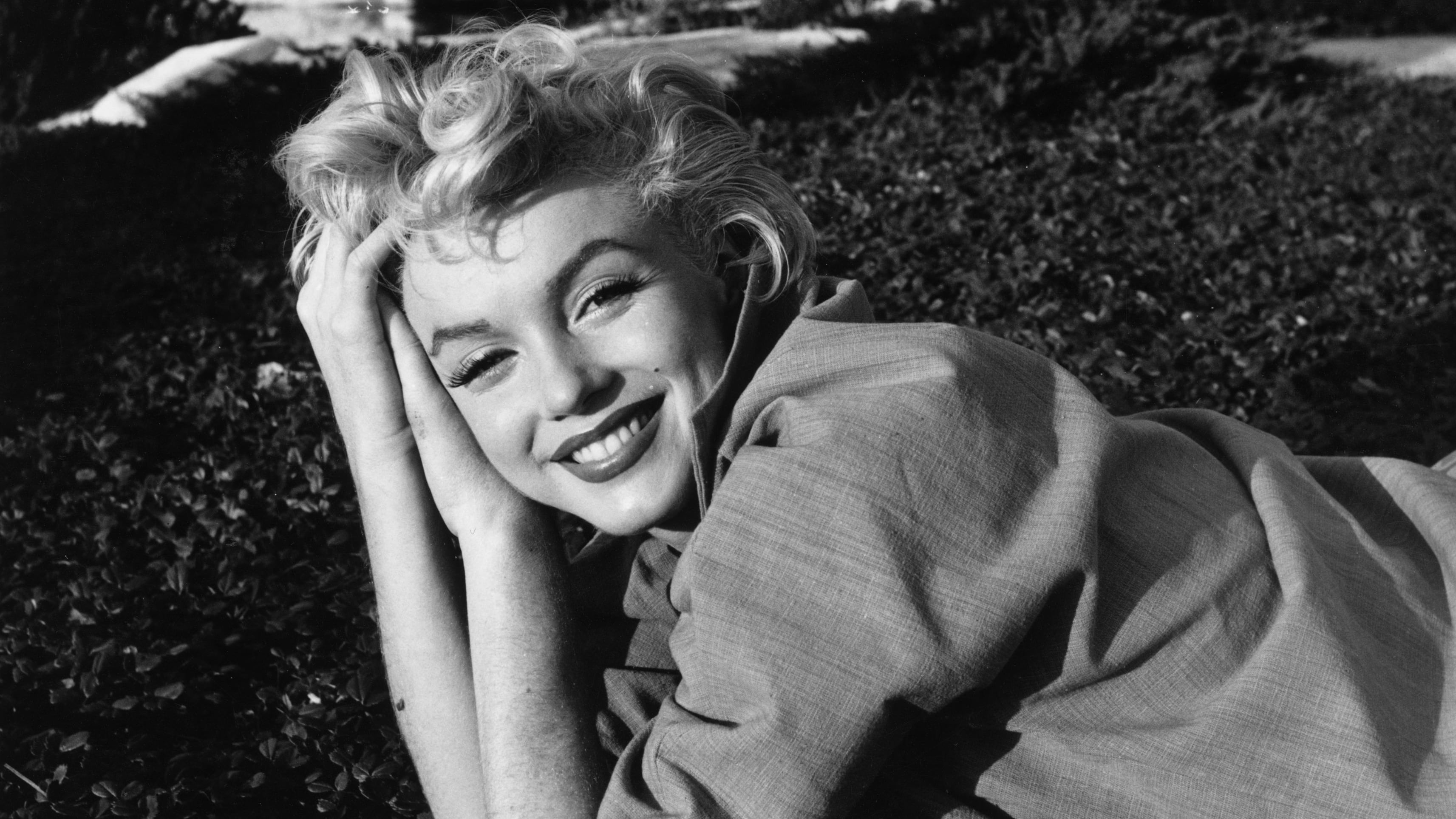
It’s only an imaginary birthday, one that was never meant to happen, but the celebrations say a lot about Hollywood’s eternal myth‑making. This Monday, June 1, Marilyn Monroe would have turned 100. And although she died more than 60 years ago, the world remains utterly fascinated by that perfectly imperfect blonde screen icon.
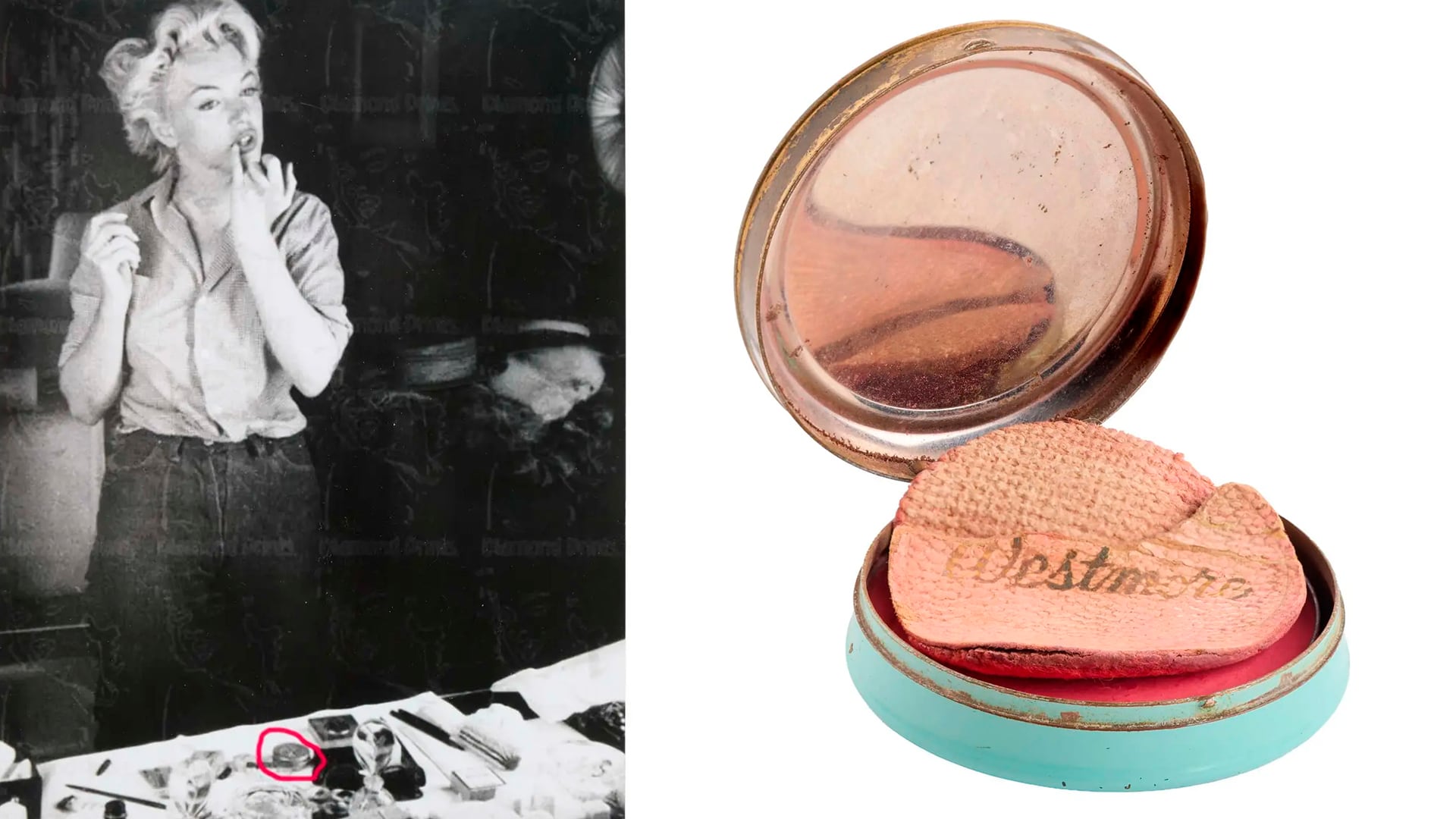
On the left, Marilyn Monroe applying her makeup. She used the partially used pink powder blush compact and its original applicator (right), which was sold at auction on June 4, 2026.
“Sono il figlio dell’uomo, ho appena ucciso l’uomo del peccato”. È iniziata con questa frase, pronunciata al telefono con il numero di emergenza 911 intorno alle 9:30 del mattino di mercoledì 3 giugno, la vicenda che ha portato all’omicidio dell’attore statunitense James Handy. L’interprete, 81 anni, volto noto in blockbuster globali come “Top Gun: Maverick” e “Jumanji”, è stato ucciso all’esterno della sua abitazione nel quartiere di Tarzana, a Los Angeles.
La scena del crimine e i soccorsi
Giunti sul posto dopo la segnalazione, gli agenti del Dipartimento di Polizia di Los Angeles (LAPD) hanno individuato Handy nel giardino antistante la casa. L’uomo era privo di sensi e presentava una grave ferita da arma da taglio al torace. I paramedici dei vigili del fuoco di Los Angeles lo hanno soccorso e trasportato d’urgenza in ospedale, dove i medici lo hanno dichiarato morto poco dopo l’arrivo a causa della gravità della lesione.
L’arresto del 44enne
Sul luogo del delitto la polizia ha arrestato Michael Gledhill, 44 anni. L’uomo è il figlio della compagna di Handy e risiedeva nella stessa villa insieme alla madre e alla vittima. Secondo quanto verbalizzato dalle autorità, al momento dell’arrivo delle pattuglie, Gledhill è andato fisicamente incontro agli agenti, dichiarando apertamente di essere la persona che stavano cercando. Gledhill è stato preso in custodia e trasferito nel carcere di Van Nuys con l’accusa formale di omicidio. Secondo i registri carcerari pubblici, la cauzione è stata fissata a 2 milioni di dollari. Al momento non risulta l’assegnazione di un avvocato difensore per il 44enne e i messaggi lasciati all’ufficio del difensore d’ufficio della contea non hanno ricevuto risposta. In un comunicato, gli investigatori hanno chiarito che si tratta di un episodio domestico isolato e che non sussistono ulteriori pericoli per la comunità.
Una vita tra grande e piccolo schermo
Nato a New York, James Handy ha costruito una solida carriera decennale come caratterista. Nel 1995 il pubblico lo ha conosciuto per l’interpretazione del disinfestatore in “Jumanji”, mentre nel 2022 era tornato al cinema recitando la parte del barista Jimmy nel successo “Top Gun: Maverick”. La sua filmografia include anche pellicole come “Arachnophobia” (1990) e “The Rocketeer” (1991). Particolarmente attivo sul piccolo schermo, Handy ha lavorato in numerosi drammi polizieschi e serie televisive che hanno fatto la storia del palinsesto. Tra i suoi crediti figurano “NYPD – New York Police Department”, “Beverly Hills 90210”, “Law & Order”, “Profiler – Intuizioni mortali”, la soap opera “Febbre d’amore”, “NCIS: Los Angeles”, “The Closer”, “Cold Case” e, in tempi più recenti, “9-1-1” (2021). L’agenzia che lo rappresentava ha confermato la notizia esprimendo il proprio cordoglio. Pam Ellis-Evenas, della Ellis Talent Group, ha inviato una dichiarazione all’Associated Press: “Non avrei potuto chiedere un cliente e un amico più talentuoso, umile o gentile di James Handy”.
James Handy, an 81-year-old New York actor who had small roles in films such as Jumanji and the more recent Top Gun: Maverick, was killed outside his Los Angeles home. The confessed killer is his girlfriend’s son, a 44-year-old man named Michael Gledhill, who remains jailed on $2 million bail.
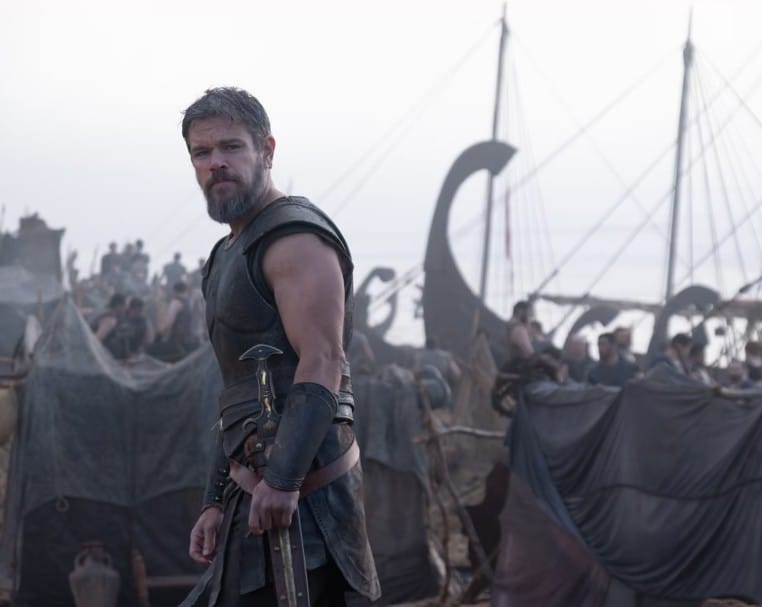
Matt Damon as Odysseus. Credit: Melinda Sue Gordon/Universal Pictures
In an insightful opinion piece published in The Guardian on June 3, 2026, titled “What the Hellenic! Why is Christopher Nolan’s new Greek epic entirely devoid of Greeks?”, author Chris Cotonou critiques the conspicuous lack of Greek actors in the director’s highly anticipated blockbuster, The Odyssey.
With an all-star ensemble featuring Matt Damon as Odysseus, alongside Zendaya, Charlize Theron, and Tom Holland, the film’s production team has repeatedly championed the cast as being meticulously chosen to “represent the world.” However, Cotonou points out a glaring irony: in the race to achieve universal global representation, the very country from which the story originates has been entirely unrepresented.
Cotonou highlights that while far-right culture warriors, including Elon Musk, have leveled bad-faith attacks against the casting of Black actor Lupita Nyong’o as Helen of Troy on the grounds of “authenticity,” they are focusing on the wrong target.
For the Greek community, both domestically and across the global diaspora, the frustration stems from a deeper cultural erasure. Cotonou notes that dinner-table debates from Patras to London have been flooded with alternative, Greek-inclusive casting ideas, with many left wondering why beloved diaspora stars like Billy Zane were bypassed entirely. To contextualize this frustration, Cotonou references Greece’s leading film critic, Thodoris Koutsogiannopoulos, who laments that Hollywood continues to perpetuate a “lazy cliché” that views Greekness through the simplistic lens of “Zorba rather than Achilles.”
Greeks secondary to their own story of Odyssey
More significantly, Cotonou argues that this complete omission carries a troubling broader implication. It suggests that Ancient Hellenic stories are viewed by Hollywood as part of a generic “shared Western inheritance,” rendering the actual Greek people incidental or secondary to their own history.
Cotonou draws a poignant parallel to the enduring geopolitical battle over the Parthenon Marbles, noting that the erasure feels as though modern Greeks are no longer viewed as worthy custodians of their ancestral mythology. While acknowledging that international audiences might dismiss the controversy under the guise that The Odyssey is merely fiction, Cotonou emphasizes how intimately interwoven these Homeric epics are with the modern Greek subconscious, identity, and sense of self.
He argues that excluding Greeks from The Odyssey is culturally equivalent to shutting out Hindus from an adaptation of the Mahabharata or stripping Polynesians from a film like Moana.
Ultimately, Cotonou connects the casting dispute back to the timeless, central theme of Homer’s poem: nostos, the deeply human yearning for homecoming after surviving grueling trials. In a Hollywood landscape that increasingly values diversity, Cotonou elegantly concludes that the Greek people are simply asking not to be written out of the journey.
Val Kilmer, scomparso il primo aprile 2025 a causa di una polmonite, era una figura controversa nel mondo del cinema. Il regista Adam Marcus lo ha definito pubblicamente, attraverso un post sui social media, “la peggiore persona” con cui avesse mai collaborato. Lo stesso Kilmer, nel suo documentario autobiografico del 2021 intitolato “Val”, aveva riconosciuto di aver tenuto comportamenti scorretti nel corso della sua carriera, pur dichiarando di non nutrire alcun rimpianto per le proprie azioni.
Il regista Adam Marcus ha ricordato Val Kilmer a più di un anno dalla scomparsa. I due hanno lavorato assieme nel thriller d’azione del 2008 “Conspiracy”.
Il 31 maggio scorso sui canali social di Marcus è apparsa la scritta”#MicroIntellectMonday (insulto sarcastico per definire una persona di scarsa intelligenza, ndr) a quel periodo in cui ho diretto quel tizio. Quello che interpretava Iceman e Doc Holliday. Sapete chi è”, ha scritto Marcus su Threads, secondo quanto riportato da Entertainment Weekly. “Ecco me e quel cretino che lavoriamo insieme sul set di Conspiracy. Quindi sì, è successo davvero”, ha concluso.
In “Conspiracy”, Kilmer interpretava William “Spooky” MacPherson, un veterano disabile della guerra in Iraq che si reca in Arizona per far visita a un vecchio amico. Quando scopre che l’amico e la sua famiglia sono misteriosamente scomparsi (e che gli abitanti del luogo negano la loro esistenza), MacPherson scopre un complotto aziendale ai danni di immigrati clandestini.
On June 1, Norma Jeane Mortenson would have turned 100. She died at the age of 36, on August 4, 1962, but her artistic alter ego, Marilyn Monroe, became a film legend. The Bombshell Blonde façade concealed a very harsh childhood during which she lived in as many as 12 foster homes, a torturous romantic life, and a career marked by artistic self-doubt and very poor health (she never carried a pregnancy to term).
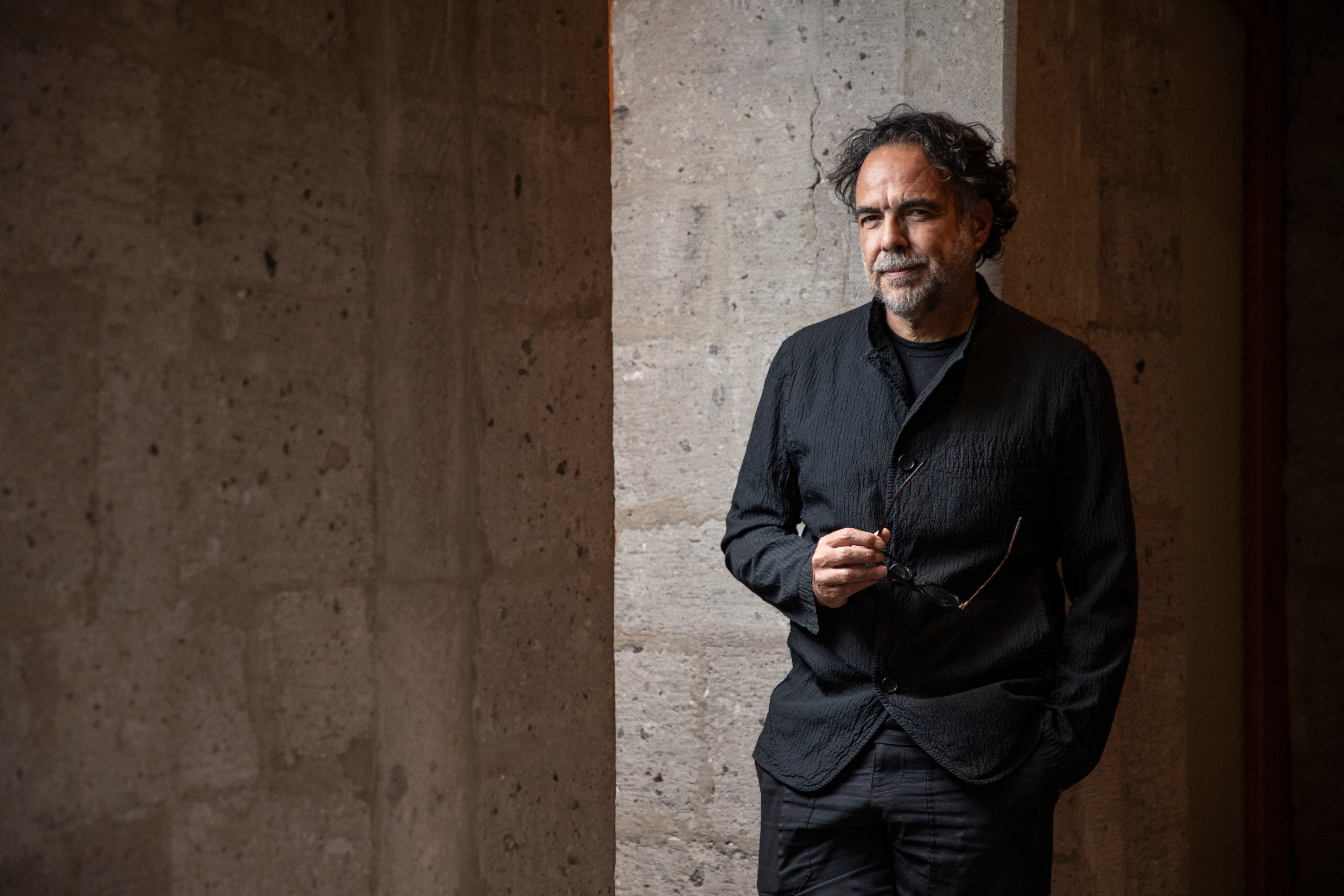
With five Academy Awards to his name, Alejandro González Iñárritu, 62, had few things left to achieve, and this week he crossed one off. The award-winning Mexican director, who will release his ninth film this fall — the dramedy Digger, starring Tom Cruise — has returned to his native city to join the Colegio Nacional de México, one of the most prestigious academic institutions in the Spanish-speaking world. As its new 38th member and the first filmmaker ever asked to join the honorary academy, his entire craft is also entering the institution: an art that has historically played different roles, he says, from “its use by governments for ideologies and repression” to “poetry and inspiration,” and also “entertainment.”
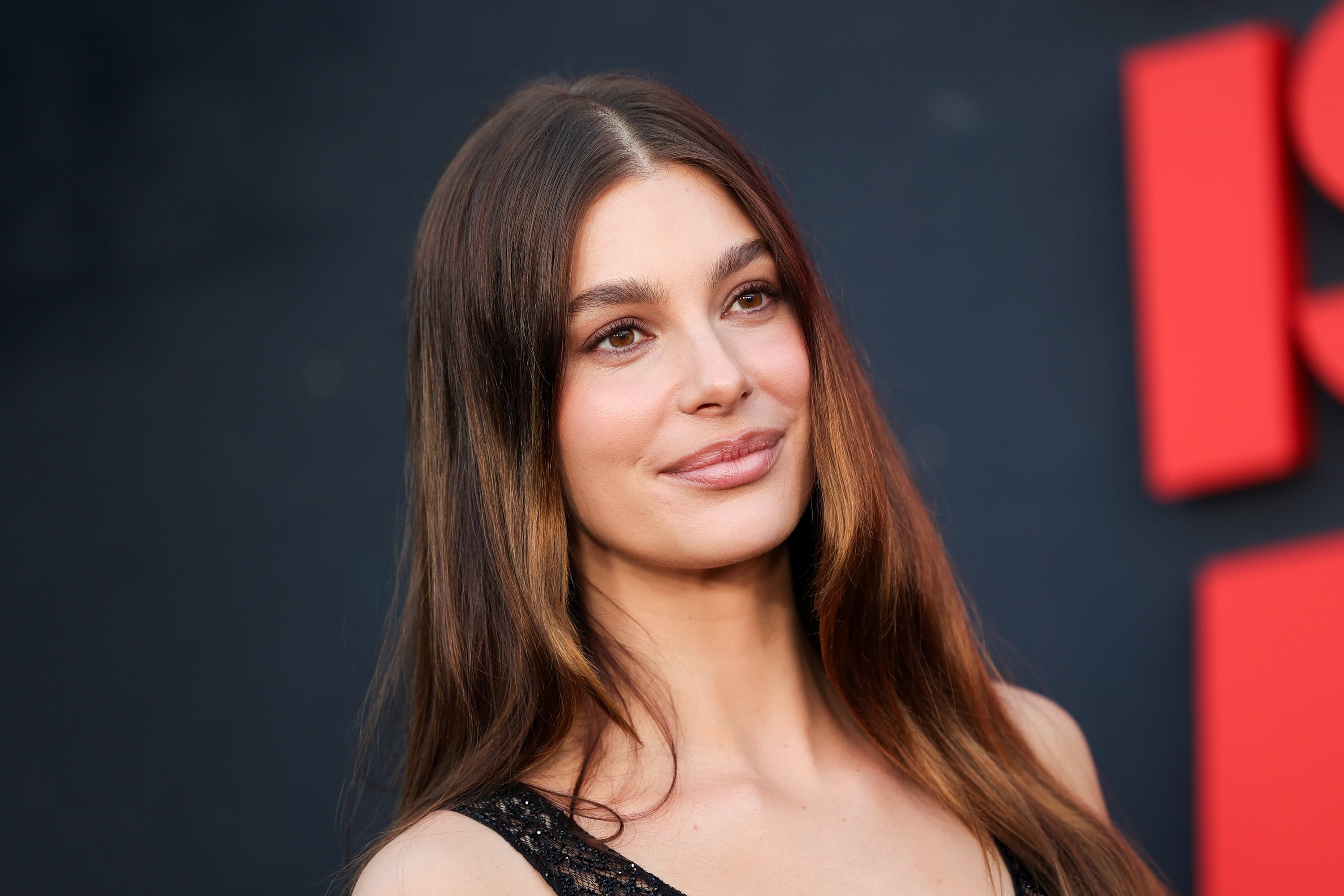
As a child, Camila Morrone (Los Angeles, 28) found it odd when she heard her mother and father arguing and repeating the same lines over and over in her family living room. She later understood that her parents’ profession — they are both actors — required long hours of learning lines, rehearsing scripts, and attending auditions that did not always have the hoped-for outcome. The actress has said she grew to feel some aversion to acting during her teens, though deep down she knew it was the path she would follow.
In 2011, Karl von Randow and Matt Buchanan, two tech-loving New Zealand film buffs, launched Letterboxd, a movie review and rating app inspired by Goodreads, the platform that does the same for books. For several years, they juggled this small project with their work at a web design studio. Then came the Covid-19 pandemic. In March 2020, they hired their first full-time employee, and with the world confined to their homes, their user base exploded. In 2023, the company was acquired by the Canadian company Tiny and today boasts over 26 million user profiles. While this figure seems insignificant compared to companies like Instagram (with around three billion active users), it reflects the cultural power of film as a source of conversation. Those who love movies enjoy watching them as much as discussing and analyzing them in detail, and Letterboxd is aimed at that community — including famous filmmakers and performers.
In the world of television, Girls marked a before and after when it premiered in 2012. If Sex and the City, which debuted 14 years earlier, reminded women of their power and their right to have fun and take control of their lives, Girls — the quintessential millennial series, written, directed, and starring Lena Dunham — delved much deeper into the realities of everyday life, far less glamorous for ordinary people.

 Login
Login