Login
Login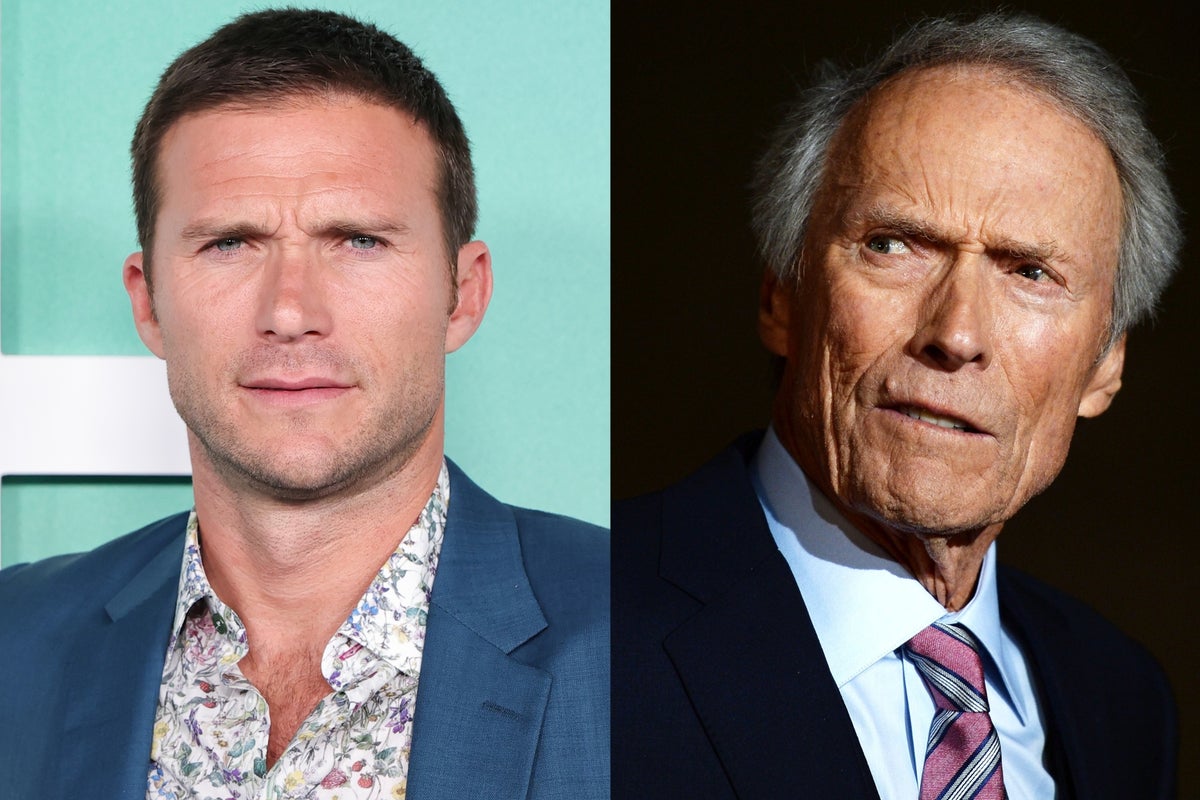
Clint Eastwood’s son Scott casts doubt on reports of his father’s retirement at 96
11 June 2026 at 21:19
‘I have not heard that from his mouth at all,’ the actor said

© Getty Images

‘I have not heard that from his mouth at all,’ the actor said
© Getty Images
Although not all of the relevant details are yet clear, according to U.S. Central Command, an Army AH-64 Apache helicopter crashed off the coast of Oman; the two crew members on board were rescued and are now in stable condition. Whether the incident was the result of a deliberate Iranian attack is the subject of some debate.
One day after the developments, Donald Trump spoke to The Wall Street Journal and downplayed the importance of the incident. In fact, according to the Journal, the president “repeatedly” said the downing of the helicopter “wasn’t a big deal.” Hours later, the Republican did a 180-degree turn, decided it was a very big deal after all, and approved a new military offensive against Iranian targets.
Trump offered additional insights on his perspective with a pop culture reference that he didn’t appear to fully understand. The Washington Post reported:
President Donald Trump on Tuesday night appeared to defend his latest military strikes on Iran by posting a short clip from “The West Wing,” the popular NBC television drama about a fictional U.S. president, in which the show’s characters debate their own military action.
In the video Trump promoted on his social media platform, he referred to an episode from the show’s first season in which Syria downed a U.S. military plane. The clip, which ran about a minute and a half, showed the fictional American president in the White House Situation Room, expressing his dissatisfaction with the idea of a “proportional response.”
Voicing support for a “disproportional response,” the fictional president declares, “Let the word ring forth from this time and this place, gentlemen — you kill an American, any American, we don’t come back with a proportional response. We come back with total disaster.”
This evidently resonated with Trump, who promoted the excerpt late Tuesday. What the incumbent president neglected to do, however, is to watch the rest of the episode.
In the show, the president eventually concedes his initial reaction was reckless and overly emotional, and that the kind of “disproportional response” he initially envisioned would lead to civilian casualties. Indeed, the whole point of the episode was that responsible global superpowers reject the very idea of a “disproportional response.”
Trump, in other words, got it backward.
It wasn’t the first time. Exactly one year ago, my MS NOW colleague Hayes Brown noted that Trump had touted “Les Misérables” while clearly missing the point of the production. A month earlier, the Republican tried to have a little fun with “Star Wars” day, but he inadvertently promoted an image that presented him as a villain.
These weren’t isolated incidents. In 2019, for example, the Republican White House tried to use “Game of Thrones” as part of a clumsy argument about the president’s border wall project, and the whole thing fell apart rather quickly. A year later, Trump talked about the Capt. William Bligh character from “Mutiny on the Bounty,” though it wasn’t altogether clear whether the president realized that Bligh is the villain of that story.
After his defeat in 2020, Trump talked obsessively about fictional character Hannibal Lecter, including a weird instance in which he referred to the infamous cannibal from “The Silence of the Lambs” as “the late, great Hannibal Lecter” and “a wonderful man.”
Maybe the president should just steer clear of making pop culture references? He’s clearly not good at it.
This post updates our related earlier coverage.
The post Still struggling with pop culture, Trump whiffs on point of ‘West Wing’ clip appeared first on MS NOW.
The medical drama, set in the Sherlock Holmes universe, was canceled after production wrapped on season two
© CBS


Researchers once dismissed ancient face pots and battle axes from northern Europe as purely local creations, with no broader significance. A new study published in the Danish Journal of Archaeology challenges that view. It finds that these objects from the fourth millennium BC were part of a wider cultural movement linking societies across Europe.
Sebastian Schultrich, an archaeologist at the ROOTS Cluster of Excellence at Kiel University in Germany, studied pottery and stone weapons from the late Funnel Beaker Culture, roughly 3300 to 2600 BC.
His findings suggest communities in northern Germany and southern Scandinavia were far more connected to the rest of the prehistoric world than previously recognized.
The face pots rank among the most striking artifacts of the period. Made primarily on the Danish islands around 3000 to 2900 BC, they feature raised eyebrow arches, a central nose, and circular eye markings.
Most have come from collective burial sites. For decades, researchers treated them as a uniquely local art form.
Schultrich argues they were a local response to a pan-European cultural impulse. Around the same period, anthropomorphic art was emerging in southern France, northern Italy, and the Paris Basin.
Stone carvings and stelae depicted human figures alongside daggers and axes. The near-simultaneous appearance of human imagery across such distant regions suggests a shared “spirit of the age,” one that each society expressed in its own distinct way.
Battle axes reveal a parallel story. The double-headed stone axes found across northern Germany and Scandinavia carry a distinctly regional character. But battle axes as a broader category spread across Western, Central, and Northern Europe during this period.
Schultrich draws comparisons between these axes and weapons like daggers and halberds found in Italian graves. Both types used copper or stone, appeared in rock art, and showed up increasingly in burial contexts from the mid to late fourth millennium BC.
The study also uncovers early signs of an Atlantic exchange network that predates the Bell Beaker phenomenon. Battle axes resembling French designs appeared in Galicia. Scandinavian flint axes reached the British Isles.
Pottery styles in Brittany echoed those developing in the Lower Rhine region. Schultrich describes these as loosely connected networks along the Atlantic coast, ones that would eventually grow into the broader Bell Beaker exchange system of the third millennium BC.
The Danish face pots and the eye motifs on Iberian pottery are most likely unrelated directly, Schultrich notes. But both reflect a broader cultural shift toward human representation in material objects.
The study adds to growing evidence that pre-Beaker societies built wide-reaching connections long before the migrations and cultural upheavals of the third millennium BC reshaped prehistoric Europe.
BBC foreign correspondent Lyse Doucet picks up the award for non-fiction with her ‘excellent reporting’ on the human story behind Kabul’s InterContinental hotel
© Autin Joffe / Paula Bronstein
All games will be broadcast across two US channels
© AP
Speculation has swirled over Zoe Kravitz and Harry Styles’ relationship in recent months
© AFP/Getty

Largest comeback in NBA finals history galvanizes city and inspires morning-after chants of ‘Knicks in five!’
New Yorkers woke up on Thursday morning – those who had even slept in the city that never sleeps – still jubilant after the Knicks men’s basketball team had made history the night before.
The team staged the largest comeback in NBA finals history to overcome the San Antonio Spurs in the dying seconds of the fourth game of the finals – and put themselves 3-1 up and within one game of a rare championship win.
Continue reading...
© Photograph: Olga Fedorova/EPA
© Photograph: Olga Fedorova/EPA
© Photograph: Olga Fedorova/EPA
‘They have a limit. That’s all they’re ever going to be,’ Morgan said about educators
© Getty

Responding to an incident in which she was verbally abused, the actor said that ‘evil forces are rising everywhere’, as well as expressing support for MobLand co-star Tom Hardy
Helen Mirren has commented on being called an “evil Zionist bitch” while being harassed in the street in London, saying she was “attacked by mistake by a man who was maybe a little over passionate or maybe mentally not quite stable”.
Footage circulated last month of an incident, believed to have taken place last year, while Mirren was walking with her husband, film-maker Taylor Hackford. They were approached and filmed by an unidentified person, who commented on Mirren’s support of Israel and then launched a volley of abuse at her.
Continue reading...
© Photograph: Daniele Venturelli/Getty Images
© Photograph: Daniele Venturelli/Getty Images
© Photograph: Daniele Venturelli/Getty Images
The American actor shot to global prominence alongside Jennifer Lawrence and Liam Hemsworth in the 2012 film
© Rex

Swift sat courtside as the Knicks made the biggest comeback in NBA history to beat the San Antonio Spurs during Game 4
© Getty Images

The Oscar-winning star added she has complicated feelings about Israel: ‘I always thought it was a country that would never do wrong’
© Getty Images
© Sony Pictures Entertainment