Normal view

“Heroes of UPA” unit will keep its name, Budanov’s office says despite Polish pressure

11 June 2026 at 15:16

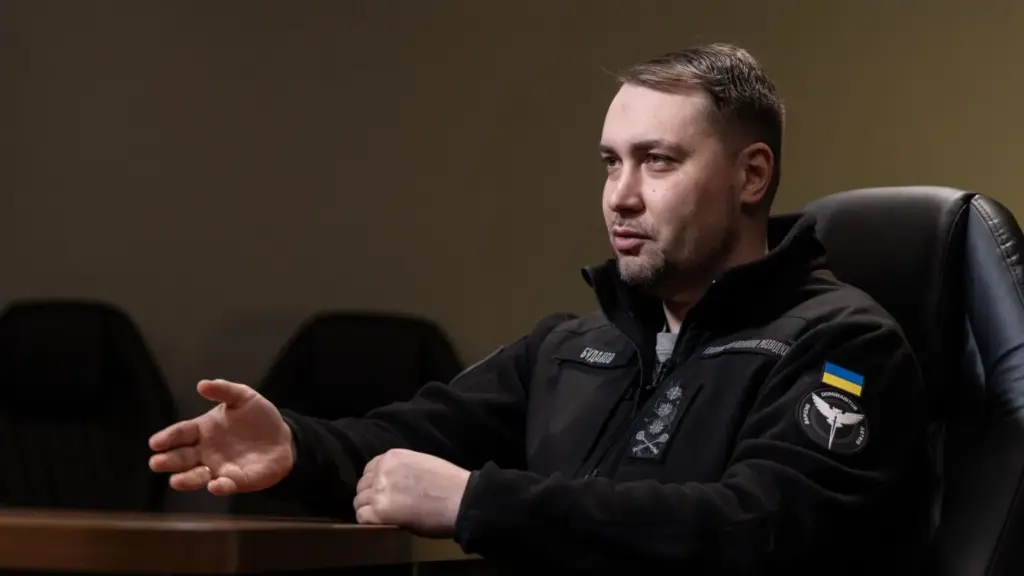
Kyrylo Budanov, head of Ukraine's Office of the President, gestures while speaking during an interview, wearing a black fleece marked with his name and the HUR insignia.

Kyiv has no intention of renaming the "Heroes of UPA" Special Operations Forces unit despite more than two weeks of escalating Polish pressure, a source close to the head of the Office of the President, Kyrylo Budanov, told LIGA.net on 11 June.

The denial closes the most public off-ramp that has been floated since President Volodymyr Zelenskyy signed Decree 440/2026 on 26 May. The Polish outlet Wirtualna Polska, citing its own sources, reported that during Budanov's 5–6 June visit to Warsaw, Ukrainian representatives offered a compromise that would narrow the honor to UPA members who fought only the Soviet Union—with the final call resting with Zelenskyy. "The information the Polish press conveyed does not correspond to reality," the source said.

Two weeks, four Polish escalations

Zelenskyy's decree honored the Separate Center for Special Operations "Pivnich" of Ukraine's Special Operations Forces. Within 72 hours, President Karol Nawrocki moved to strip Zelenskyy of the Order of the White Eagle, Poland's highest distinction, which had been conferred on him by then-president Andrzej Duda in April 2023. On 8 June, the order's Chapter delivered its opinion; Nawrocki's spokesman, Rafał Leśkiewicz, said the president would decide "in due time".

On 1 June, former Polish ambassador Bartosz Cichocki—who stayed in Kyiv through Russia's 2022 invasion—returned his Ukrainian Order of Merit. A day later, Sejm Deputy Speaker Krzysztof Bosak called for blocking Ukraine's EU accession until Kyiv "moves away from the cult of criminals." Foreign Minister Andrii Sybiha replied on 3 June that the unit's name was the choice of Ukrainian soldiers who, "at the cost of their health and often their lives," hold the front line against Russia's war on Ukraine.

"The information the Polish press conveyed does not correspond to reality." —Source close to Budanov, LIGA.net, 11 June

Bartosz Cichocki, Poland’s wartime ambassador to Ukraine. Credit: Vikna Novyny

A cool reception in Warsaw

The Warsaw visit, initiated by Kyiv, did not produce a public breakthrough. Budanov, accompanied by first deputy Serhii Kyslytsia and deputy Iryna Vereshchuk, met Defense Minister Władysław Kosiniak-Kamysz, Bureau of International Policy chief Marcin Przydacz, and Deputy Foreign Minister Marcin Bosacki. Foreign Minister Radosław Sikorski declined to meet the Ukrainian delegation.

Kosiniak-Kamysz posted afterward that "the memory of the victims of Volhynia is not up for negotiation." Prime Minister Donald Tusk added that Ukraine had "brought this problem upon itself" and should resolve it.

Kielce councilors target Vinnytsia's Bandera street

Even as Kyiv held the line, the dispute spread into sister-city relations. On 10 June, the Law and Justice (PiS) faction of the Kielce city council sent a resolution to council chair Maciej Jakubczyk calling on Vinnytsia mayor Serhii Morhunov to rename the city's Stepan Bandera street. The councilors invoked the 70-year Kielce–Vinnytsia partnership and described the street name as "a stain" linked to "mass atrocities against the defenseless civilian population".

A day earlier, Vinnytsia had withdrawn a request for 15 decommissioned Kielce buses after Jakubczyk and PiS councilor Marcin Stępniewski opposed the donation over the same street.

Poland refuses to send 20-year-old buses to Ukrainian city under Russian strikes because of street name

10 June 2026 at 15:11

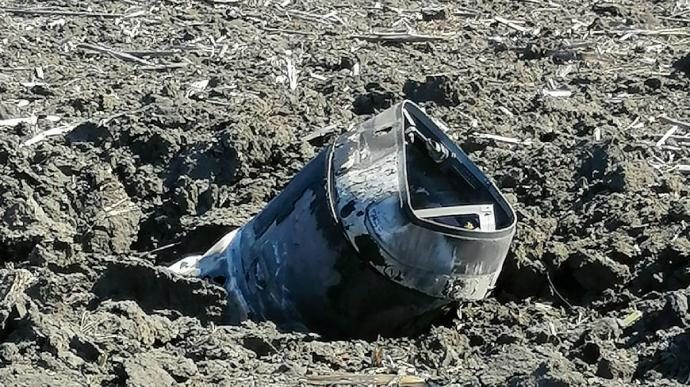
downed iskander missile vinnytsia oblast

Vinnytsia has withdrawn its request to transfer 15 old buses from its Polish sister city, Kielce, following a wave of hostility and contempt from local politicians and on social media. This followed the city's recent renaming of a street to Stepan Bandera Street, Kielce Mayor Agata Wojda announced.

Vinnytsia Mayor Serhii Morhunov rejected the request not because Vinnytsia's transport needs disappeared amid the war, but to prevent the aid from becoming a political issue. 

Russia actively uses the image of Stepan Bandera, the Ukrainian nationalist leader who led the Organization of Ukrainian Nationalists (OUN) and the Ukrainian Insurgent Army (UPA), in its propaganda, referring to Ukrainians as “Banderites” and portraying Ukrainian statehood as a continuation of Nazism.

At the same time, attitudes toward Bandera in Poland are also largely negative because of the events in Volhynia in 1943–1944. Historical interpretations of these mass killings differ: in Poland, they are often described as a genocide of the Polish population, with primary responsibility attributed to the UPA. 

In Ukraine, many historians emphasize the more complex nature of the conflict, pointing to mutual violence between Ukrainians and Poles, as well as the role of the Nazi occupation authorities and Soviet structures. The Polish position plays into the Kremlin's hands amid Russia's war. 

The buses, which are roughly 20 years old and being decommissioned by Kielce in any case, would otherwise have been sold for parts or scrapped, Wojda said.

Why Vinnytsia needed buses

Vinnytsia's municipal transport is primarily powered by trams and trolleybuses — both dependent on electricity. Russian strikes on Ukrainian electrical infrastructure since 2022 have caused recurring power outages across Ukrainian cities, during which Vinnytsia's tram-and-trolleybus network cannot operate, resulting in transport disruptions for residents.

Backup diesel buses, like the 15 Kielce was prepared to donate from its decommissioning fleet of 40 vehicles, would have provided the city with an alternative during electricity outages.

"Precisely in such situations, the decommissioned buses from Kielce were supposed to help," Wojda said.

Polish opposition

The donation was opposed by Kielce city council members, including Maciej Jakubczyk and Marcin Stempniewski of the Law and Justice party (PiS), per Polish media, including Slawa.

According to Jakubczyk, the timing of the transfer "was not appropriate," and the donation "would have worsened already strained Polish-Ukrainian relations."

Jakubczyk specifically cited the Stepan Bandera street renaming in Vinnytsia: "In Vinnytsia, one of the streets was renamed Stepan Bandera Street. And it is precisely on this street that one of the 15 buses from Kielce, which were to be transferred free of charge to the city, would drive."

A wave of hostile commentary followed on Polish social media, with "hundreds of posts full of insults, accusations, and aggression," in Wojda's description.

Kielce mayor's response

Wojda strongly defended the donation and criticized its opponents. She said Morhunov refused its request not "because the needs of his city suddenly disappeared," adding that the war continues to be a daily reality.

"He did this because he did not want the question of help to a city living under wartime conditions to become an instrument of political dispute and the cause of further divisions. It is a gesture that deserves respect," Wojda said of Morhunov's decision to withdraw.

She noted that Kielce buys new buses partly thanks to European funds from partner countries, implying that solidarity flows in multiple directions.

"This story is a test of our decency and solidarity. The solidarity that we ourselves have felt for many years," she said.

❌