
 Login
Login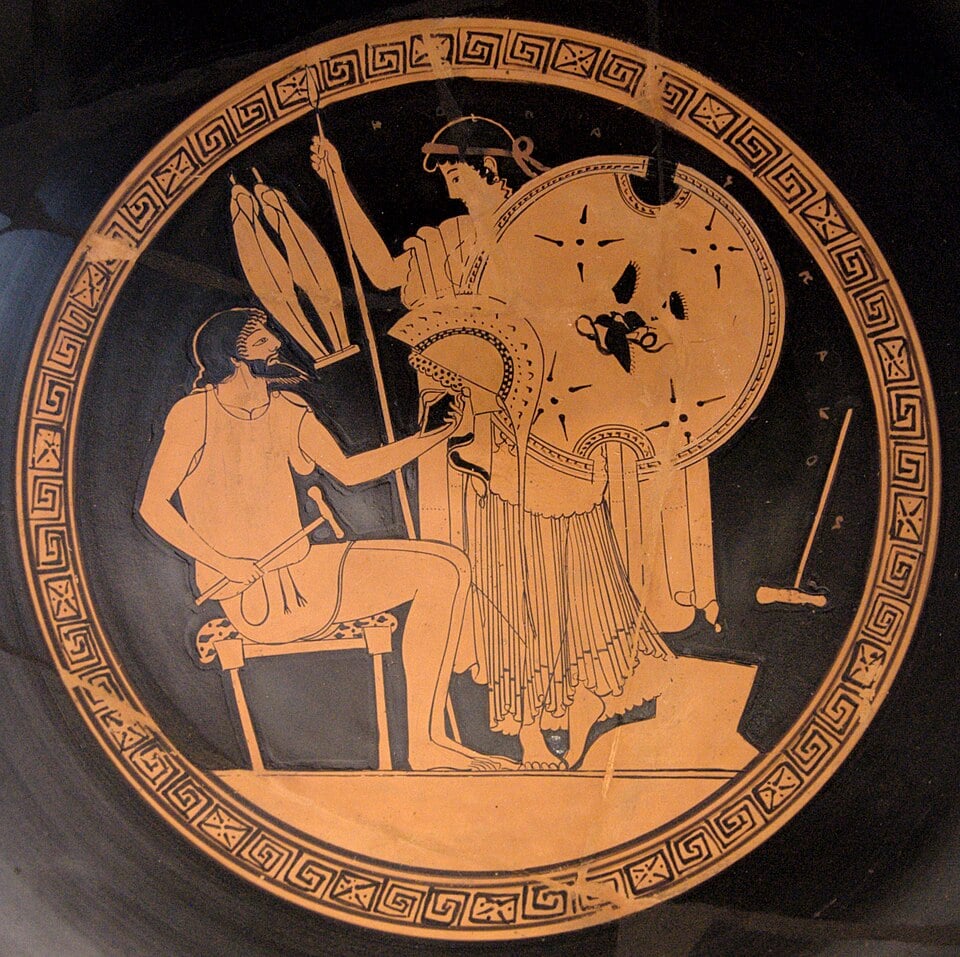

Thetis and Achilles: How a Divine Mother Shaped the Greek Hero’s Fate

In Homer’s Iliad, Thetis plays an important role in shaping the destiny of her son, Achilles. As a goddess, she intervenes at key moments in the epic, pushing the Greek hero to alter the course of events.
Although Thetis appears less frequently than many of the warriors and gods who dominate the battlefield at Troy, her actions influence some of the most significant developments in the poem. As a sea goddess and the mother of the greatest Greek warrior, she occupies a unique position between the divine and mortal worlds. She cannot prevent Achilles from dying, since the Fates have already decreed it, yet she repeatedly intervenes to protect his honor, ease his suffering, and ensure that his glory endures.
Through Thetis’ character, Homer explores themes of maternal love, fate, mortality, glory, and divine power. The first major instance of Thetis helping Achilles occurs in Book 1. After Agamemnon captures Briseis, a captive woman awarded to Achilles as a war prize, the Greek hero feels deeply dishonored and withdraws from battle. In his grief and anger, Achilles calls upon his mother. Thetis immediately rises from the sea to comfort him and listen to his complaint.
This scene reveals the extraordinary bond between mother and son. Unlike many divine figures in Greek mythology, Thetis responds with sympathy and tenderness. She understands Achilles’ suffering because she is painfully aware of his short lifespan. Her lament for him reflects a mother’s helplessness in the face of fate.
Thetis petitions Zeus to turn events in favor of Troy
After hearing Achilles’ request, Thetis undertakes one of the most consequential actions in the epic. She travels to Olympus and petitions Zeus to punish the Greeks by granting success to the Trojans. Her aim is not simply revenge but the restoration of Achilles’ honor. Zeus eventually agrees, and his decision alters the course of the war. The Trojans begin to gain the upper hand, while the Greeks suffer devastating losses. Through this intervention, Thetis helps Achilles achieve the recognition he believes Agamemnon has denied him.
This episode demonstrates the extent of Thetis’ influence among the gods. Although she cannot alter fate itself, she is capable of shaping the chain of events that leads toward it. Her appeal to Zeus succeeds in part because of a previous favor she had done for him. In this sense, her assistance rests not only on maternal devotion but also on her standing within the divine order. Achilles’ withdrawal from battle would have remained a private grievance without Thetis’ intervention. Instead, it escalates into a crisis that engulfs the entire Greek army.
The second major instance of Thetis helping Achilles occurs after the death of Patroclus. Patroclus, Achilles’ closest companion, enters battle wearing Achilles’ armor and is killed by Hector. When Achilles learns of his friend’s death, he is overwhelmed by grief and rage. Once again, Thetis hears her son’s cries and goes to him. This scene is among the most emotional in the Iliad. Thetis is aware that Achilles’ decision to return to battle will lead directly to his own death, yet she does not attempt to stop him. Instead, she offers comfort and practical assistance.
Hephaestus forges the invincible shield of Achilles
Achilles cannot immediately rejoin the fighting because Hector has confiscated his armor. Recognizing his need, Thetis travels to the forge of Hephaestus and requests new armor for her son. Hephaestus responds by crafting the magnificent shield of Achilles, one of the most celebrated objects in world literature. The shield depicts scenes of war and peace, labor and celebration, and life and death. With this armor, Thetis enables Achilles to return to battle and fulfill his heroic destiny.
This act of assistance is particularly significant because it highlights the limits of divine power. Thetis can secure the finest armor ever made, but she cannot save Achilles from mortality. Her help therefore reflects the tragic paradox that every action she takes to aid her son also brings him closer to the fate she most fears. The armor allows Achilles to defeat Hector, but it also marks the final stage of his journey toward death.
Thetis’ role after Hector’s death further underscores her importance. Achilles becomes consumed by grief and rage, dragging Hector’s body around the tomb of Patroclus. The gods disapprove of this behavior and decide that Hector must be returned to his family. Zeus sends Thetis to deliver his command to Achilles. She successfully persuades her son to release the body in exchange for ransom, helping restore moral balance and preparing the tale for closure.
This final intervention reveals another dimension of Thetis’ assistance. Earlier, she helped Achilles gain honor through vengeance; now she helps him regain humanity through compassion. Her influence guides him from destructive rage toward acceptance. The reconciliation between Achilles and Priam, one of the most moving scenes in ancient literature, would not have occurred without Thetis serving as the messenger between gods and mortals.
The complexity of Thetis, the mother of Achilles
Modern scholars have emphasized the complexity of Thetis’ character. Rather than portraying her simply as a nurturing mother, recent studies highlight her power and agency. Thetis is more than a grieving parent. She is a divine force capable of influencing both Olympus and the battlefield for the benefit of her son. This is evident in actions such as her request to Hephaestus to forge an impenetrable suit of armor for Achilles.
At the same time, scholars frequently stress the tragic nature of her motherhood. Classicist Emily Wilson observes that she has come to view the Iliad as “a poem about the pain of a goddess mother who adores her mortal child and can’t protect him.” This insight captures the emotional core of Thetis’ role in the epic. Despite her divine status, she remains powerless as a mother in the face of fate. Her interventions can shape events, but they cannot prevent the loss she knows is imminent.
Other scholars have also noted that grief defines Thetis’ presence throughout the epic poem. Classicist Serena Cannavale describes Thetis in the Iliad as “a figure of grief,” emphasizing that her sorrow is present long before Achilles actually dies. Her laments anticipate the tragedy that hangs over the entire narrative.
Ultimately, Thetis helps Achilles in three essential ways: she restores his honor by persuading Zeus to favor the Trojans, she equips him for revenge by obtaining new armor from Hephaestus, and she guides him back toward humanity by conveying Zeus’s command to release Hector’s body to Priam. These actions shape the central events of the Iliad and reveal the profound connection between mother and son. Yet the tragedy of Thetis lies in the fact that her power cannot overcome destiny. She can comfort Achilles, protect his reputation, and secure his everlasting glory, but she cannot save his life.
For this reason, Thetis embodies the tension between divine power and human mortality. Every time she helps Achilles, she demonstrates her love, yet every act of assistance also reminds readers that fate is stronger than even the gods. Through Thetis, Homer presents a moving portrait of maternal devotion in the face of inevitable loss, making her one of the emotional centers of the Iliad.

