Researchers have developed an AI-designed vaccine that could protect against a broad range of coronaviruses, including future strains that have not yet emerged.
Scientists at the University of Cambridge say the project marks the first time an Artificial Intelligence-designed vaccine antigen has been tested in human volunteers. They believe the technology could eventually help protect against entire families of viruses rather than individual strains.
AI designs a vaccine for multiple coronavirus threats
Most vaccines are built using versions of viruses that are already circulating. As those viruses mutate, vaccines often need updating to remain effective. The new approach aims to overcome that challenge.
Researchers collected genetic information from a wide range of coronaviruses identified through surveillance programs that monitor viruses with pandemic potential. Artificial intelligence then analyzed the data and designed a “super-antigen,” a vaccine component intended to train the immune system to recognize many related coronaviruses at once.
Antigens are the parts of vaccines that teach the immune system what to attack. Researchers say the AI-designed antigen could potentially protect against current coronavirus variants as well as animal viruses that may one day spread to humans.
Professor Jonathan Heeney of the University of Cambridge described the research as a major shift in pandemic preparedness. He said the goal is to develop vaccines that protect against future threats rather than reacting after outbreaks occur.
Early human trials show encouraging results
The first human trial involved 39 volunteers and was designed to evaluate safety. Researchers reported no major safety concerns. A larger study involving about 200 participants is now underway to better understand how effectively the vaccine stimulates immune responses.
Scientists at the University of Cambridge say AI developed a vaccine’s ‘key component’ for the first time
The vaccine was engineered to work on all coronaviruses, but is in its early stages of work pic.twitter.com/YYt5SGDe5v
Results published in the Journal of Infection showed that the vaccine generated a measurable, though modest, immune response. Despite the early-stage findings, researchers and independent experts say the technology shows significant promise.
Professor Saul Faust of the University of Southampton, who helped conduct some of the trials, said the approach has strong potential, particularly for rapidly changing viruses that can spark future pandemics.
Researchers expand the technology to other diseases
Researchers are already applying the technology to other diseases. Animal studies are underway on a universal influenza vaccine that could eliminate the need for yearly updates. Scientists are also developing vaccines targeting H5N1 bird flu and viral hemorrhagic fevers, including Ebola.
Professor Andy Pollard, director of the Oxford Vaccine Group, said the findings add to growing evidence that artificial intelligence could transform vaccine research. He noted that future AI systems may help predict how the immune system will respond to vaccine candidates, potentially accelerating development.
Experts see a new era for vaccine development
Professor Marian Knight, scientific director at the National Institute for Health and Care Research, called the trial an important step toward broader and longer-lasting protection against viral diseases.
UK Science Minister Patrick Vallance said the early results demonstrate how artificial intelligence and scientific research can work together to create new medical tools.
Researchers caution that much larger studies are needed before the vaccine can be widely used. However, they believe the technology could help the world prepare for future pandemics before they begin.
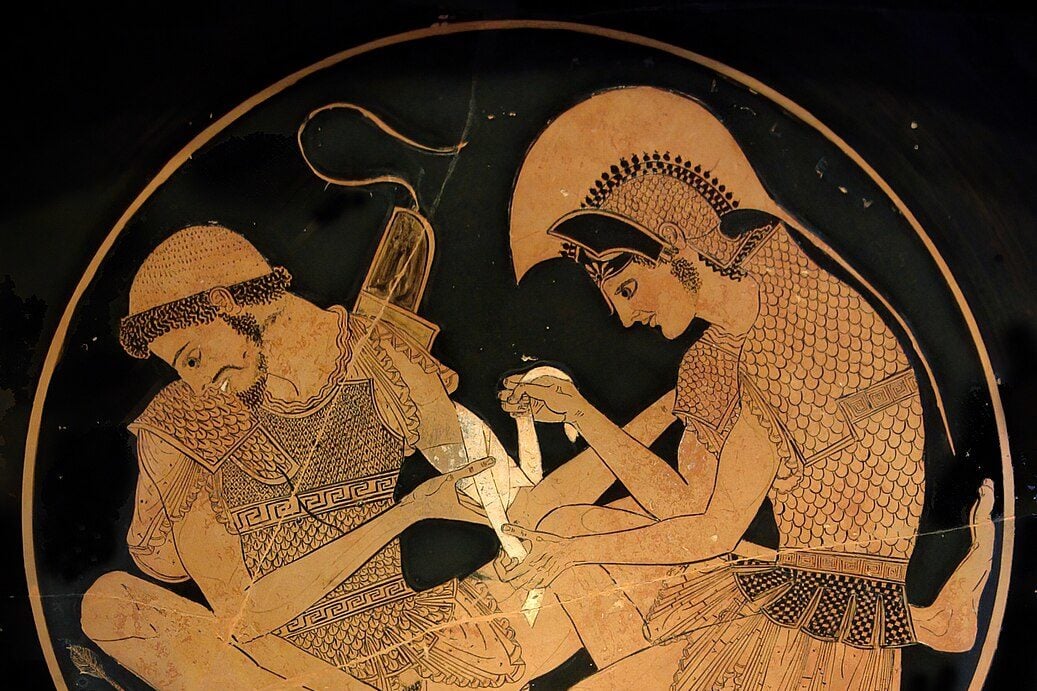
Ancient Greeks and Romans used spiderwebs in medicine, believing their natural fibers could stop bleeding and protect wounds from infection. Credit: Wikimedia Commons, public domain
Among the most intriguing practices in Ancient Greek medicine was the use of spiderwebs—and even live spiders—in healing treatments. Ancient medicine often surprises modern readers with remedies that seem unusual at first glance, yet many of these traditional approaches contained a practical logic beneath layers of symbolism and inherited belief.
Greek and Roman physicians placed particular emphasis on controlling bleeding, especially in the context of warfare and surgery. Soldiers frequently sustained deep wounds from swords, spears, and arrows, while physicians had no access to modern antiseptics or advanced surgical instruments. In response, healers continuously experimented with natural materials that could help stop blood flow and protect exposed tissue. One of the more unusual solutions they turned to was spiderwebs.
Ancient Greek and Roman medical writers do, in fact, refer to the use of spiderwebs in medicine. Spider silk was observed to have properties that made it unexpectedly effective for wound care. Physicians noted its ability to absorb blood, cover injuries, and support the clotting process. While they lacked any understanding of modern biochemistry, their meticulous attention to such effects often led them to surprisingly effective medical practices.
Pliny the Elder and natural remedies, such as the use of spiderwebs, in the medicine of Ancient Greece and Rome
The Roman author Pliny the Elder offers some of the clearest references to spider-based medicine in his encyclopedic work Natural History. He describes a range of remedies involving both spiderwebs and actual spiders, noting that the former could help stop bleeding and support healing when applied directly to wounds. He also made mention that spiders were believed to serve as effective remedies for a variety of diseases and injuries in antiquity.
For Ancient Greek healers, spiderwebs appeared naturally suited for wound treatment. Their soft, fibrous texture allowed them to cover cuts with ease, while their adhesive qualities helped seal damaged tissue and protect it. Ancient warfare produced particularly severe injuries. Greek hoplites and Roman soldiers fought in brutal close combat, where swords and spears regularly tore flesh open. Even relatively minor wounds could turn fatal due to blood loss or infection. Physicians accompanying armies therefore required treatments that acted quickly and could be easily carried onto the battlefield.
The use of spiderwebs among the Ancient Romans and Greeks provided several practical advantages in medicine. They were lightweight, widely available in nature, and naturally adhesive when applied to skin. Healers thus collected cobwebs and preserved them for medical use, and soldiers are sometimes described as carrying small containers filled with spiderwebs during military campaigns.
Long before the development of modern antibiotics, healers frequently relied on natural substances that appeared to reduce infection risk and support faster healing.
Galen and Ancient Greek traditions in medicine
The great Greek physician Galen likewise discussed spider cobwebs in his work On the Powers of Simple Remedies in which he refers to their Ancient Greek medicinal applications in the treatment of injuries and the control of bleeding. Because gladiators suffered frequent injuries, Galen gained extensive experience treating wounds and preventing infection. Greek medicine placed strong emphasis on observation and practical effectiveness, so physicians often tested remedies repeatedly under real and demanding conditions.
This connection makes historical sense. Ancient doctors valued materials that combined absorbency, flexibility, and ease of application. Spider silk possessed all three qualities. Furthermore, physicians in antiquity often preferred natural substances that were readily available in military environments, where medical resources were limited.
Modern science helps explain why ancient healers valued spiderwebs. Spider silk is composed of strong protein fibers capable of forming protective coverings over wounds. The silk also absorbs moisture effectively and creates a temporary barrier against dirt and contaminants. Additionally, spiderwebs may exhibit mild antiseptic properties due to natural compounds present within the silk. Although ancient physicians could not observe bacteria, they recognized through experience that some treatments reduced infection more effectively than others.
Many people also associate spiderwebs with clotting because webs can contain traces of vitamin K from insect remains and environmental material. Vitamin K is a nutrient that contributes to blood coagulation in the human body. Most importantly, however, the web itself functions physically as a mesh. When pressed against a wound, the fibers help gather blood and support clot formation.
Modern medicine even studies spider silk for advanced surgical materials due to its exceptional strength and biocompatibility. Ironically, contemporary science now investigates properties that ancient healers observed intuitively thousands of years ago. Thus, ancient healers may have developed practical wound-care techniques through centuries of observation rather than theoretical science.
Galen, the pioneering Greek physician who influenced Western medicine through the 1700s. Portrait by Pierre-Roch Vigneron. Credit: Wikimedia Commons Public Domain
Ancient medicine and empirical knowledge
The use of spiderwebs highlights a central feature of ancient medicine, namely that Greek and Roman physicians often relied on empirical observation rather than formal scientific theory. They closely observed which remedies appeared effective and preserved those methods within medical tradition.
Greek physicians, in particular, placed great value on careful observation. The Hippocratic tradition encouraged doctors to study symptoms, environments, diets, and physical responses in detail. As a result, treatments survived not because they were theoretically justified but because they produced visible and consistent results. In this context, spiderwebs were valued because their silk fibers formed a natural covering over wounds while also helping to control blood flow. Folk medicine across many cultures likewise used cobwebs as anti-fungal and antiseptic remedies for cuts and open injuries.
Spiderwebs likely entered medical practice through precisely this kind of experiential process. Healers observed reduced bleeding and improved healing following their application, and over time, the practice spread across regions and generations. Cobwebs were part of a much broader landscape of natural medicine in antiquity. Ancient healers regularly used honey, wine, herbs, oils, vinegar, and minerals in wound care and general treatment.
Many of these substances also possessed genuine antibacterial or medicinal properties. Honey, for instance, inhibits bacterial growth and is still used in certain modern wound treatments. Wine and vinegar functioned as early disinfectants due to their alcohol and acid content. Within this framework, spiderwebs would not have seemed unusual to ancient physicians. Instead, they represented another readily available natural material with observable healing potential. Greek and Roman medicine thus consistently explored the relationship between nature and health, making use of natural resources, including even something so peculiar to modern eyes as spiderwebs.
Honey was used by the Ancient Greeks in medicine as well. Credit: The Drug Users Bible, CC BY SA, 2.0
The symbolic dimension of spiderwebs and their silk in Ancient Greece
Ancient cultures attached rich symbolic meaning to spiders and the act of weaving, and in Greek tradition, these associations carried particular weight. Mythology linked weaving to intelligence, fate, and skilled craftsmanship through figures such as Athena and Arachne, embedding it within a broader cultural framework that connected material creation with order, skill, and even divine influence. Spider silk itself likely appeared mysterious and almost otherworldly, given its delicate structure and surprising strength—qualities that blurred the boundary between natural substance and something almost magical.
This symbolic dimension may have reinforced confidence in cobweb-based remedies, since ancient medicine often operated at the intersection of practical treatment and cultural meaning. In battlefield contexts especially, where speed and improvisation were essential, surgeons had to remove arrows, close wounds, cauterize bleeding, and stabilize fractures under extreme conditions with limited equipment, relying heavily on whatever materials were immediately available. Spiderwebs fit this environment well, both practically and symbolically, as soldiers or assistants could gather them quickly from camps, caves, or buildings, requiring no preparation and allowing for rapid application under pressure.
Even when cobwebs were not perfectly effective, they could still provide a basic protective layer that was often better than leaving wounds exposed, which would have only allowed dirt and uncontrolled bleeding to pose immediate risks to survival. In many cases, this simple barrier alone may have made a meaningful difference in outcomes. Today, the same material that once carried symbolic and practical value in antiquity is again attracting scientific interest, as researchers explore spider silk for potential applications in surgery, tissue engineering, and regenerative medicine.
The natural, abrasive components used by Ancient Greeks to maintain oral hygiene, such as crushed oyster shells, charcoal, and mint. Credit: Greek Reporter archive
Most of us assume that looking after our teeth is a modern habit shaped by supermarket shelves, mint-flavored ads, and childhood dentist scares, but a surviving Ancient Greek toothpaste recipe suggests otherwise.
Sitting quietly in the Austrian National Library in Vienna is one of the most remarkable documents in the history of medicine: a small, faded papyrus from the fourth century AD containing what is widely considered the world’s oldest surviving, precise toothpaste formula.
The existence of this Ancient Greek toothpaste recipe points to something larger at work. By the time it was copied onto papyrus, Greek had long since become the language of science, medicine, and intellectual life across the Mediterranean. This linguistic dominance was a legacy of the conquests of Alexander the Great and, above all, of Alexandria, the city his successors transformed into the ancient world’s foremost hub of knowledge. Even in Roman Egypt, centuries after the Ptolemies had given way to the Caesars, Greek remained the language a physician used when he wanted to be taken seriously.
When was the toothpaste recipe written in Ancient Greek discovered?
The papyrus first came to the attention of modern researchers in 2003, when curators at the Austrian National Library in Vienna identified it while preparing for an international dental congress. It had likely been sitting in the collection for years, its significance unnoticed and largely forgotten. Once translated, however, scholars quickly realized what they were looking at—a toothpaste formula that predates the first commercially marketed toothpaste, Colgate, launched in 1873, by well over fifteen hundred years.
The formula itself is strikingly systematic. The scribe prescribes “a powder for white and perfect teeth” composed of four ingredients: one drachma of rock salt, two drachmas of mint, one drachma of dried iris flower, and twenty grains of pepper. The drachma in this context was a standard unit of Greek medical weight, roughly equivalent to one-eighth of an ounce (about 3–4 grams), part of the same measurement system used throughout the major pharmacological texts of the ancient world. Taken together, the recipe reads less like folklore and more like a physician’s deliberate prescription, carefully calibrated for a patient.
But one might wonder if it actually worked. In 2003, Austrian dentist Dr. Heinz Neuman decided to test it for himself by recreating the formula. His conclusion was cautious but intriguing: the mixture was mildly abrasive and caused slight gum bleeding, yet it also produced a noticeable sensation of cleanliness and freshness. Modern dental science helps explain why. Dried iris flower, or orris root, is now known to contain antibacterial compounds that target the pathogens responsible for gum disease. What might once have looked like ancient guesswork increasingly appears to be empirical knowledge derived through observation and practice. In this sense, modern pharmaceutical science is only now arriving at conclusions the Greeks and Egyptians had already explored more than a thousand years earlier.
Dioscorides is considered the father of pharmacology. Painting of unknown artist depicting Heuresis (the personification of discovery) presenting Dioscorides with a mandrake root. Credit: Unknown artist. Wikipedia Public Domain
None of this should entirely surprise us when we consider the world from which this recipe emerged. Ancient Greece had produced Pedanius Dioscorides, whose monumental work on medicinal plants shaped medical practice for more than a millennium. It had also produced physicians, botanists, and scholars who approached the human body with a level of rigor and curiosity that few ancient traditions matched. The anonymous scribe who recorded this formula was working squarely within that intellectual lineage, effectively encoding practical medical knowledge in Greek because it was the language in which serious medicine was conducted at the time.
The paste itself would have been applied without anything resembling a modern toothbrush. A folded linen cloth or a frayed chew stick—a fibrous twig worn soft at the tip through repeated use—would have served the purpose well enough. The tools were simple, but the intention was essentially the same as ours.
There is a quiet continuity in that detail. The next time you reach for mint toothpaste in the morning, you are participating in a ritual that a Greek-speaking scribe in Roman Egypt thought important enough to preserve on papyrus seventeen centuries ago. The ingredients have been refined, the packaging has changed beyond recognition, and no one is applying the mixture with linen anymore. Still, the impulse behind it—the very human desire for clean, white teeth—remains as old as the ancient world itself, and in many ways, the Ancient Greek world had already put the first working version of the answer into writing.

 Login
Login