Normal view

X-Rays Reveal Nazi Symbols Hidden Beneath Postwar Painting

9 June 2026 at 19:16
Erich Mercker’s pre-1945 “Die Stätte des 9. November” is shown beside a postwar version from a private collection
Erich Mercker’s pre-1945 “Die Stätte des 9. November” is shown beside a postwar version from a private collection. Credit: Ioanna Mantouvalou et al. / CC BY 4.0

A painting found in a German family home has revealed how Nazi-era imagery may have been hidden beneath a more acceptable postwar scene. The work is linked to Erich Mercker, a Munich painter who lived from 1891 to 1973. Mercker had a successful career and painted several works during the Nazi period. Some included hidden Nazi symbols and political themes.

One of his known works, “Die Stätte des 9. November,” showed the Feldherrnhalle in Munich. The site carried strong meaning for the Nazi Party. It was tied to Adolf Hitler’s failed 1923 coup, also known as the Beer Hall Putsch.

Postwar versions removed Nazi symbols

After World War II, Mercker continued to paint the same Munich scene. But later versions appeared different. He removed soldiers, wreaths, and Nazi symbols. He also replaced the Nazi flag with the blue-and-white flag of Bavaria.

The works appeared under less politically charged titles, including “Feldherrnhalle” and “München am Odeonsplatz.”

Filmmaker and producer Dr. Thomas Schuhbauer found one version in his parents’ home. They had received it as a wedding gift in 1966.

At first, the painting looked like a postwar version of the scene. It showed the Bavarian flag and no clear Nazi symbols. But some details raised questions. The Nazi memorial at the Feldherrnhalle was still partly visible. That memorial was destroyed after Germany’s surrender in 1945. Reddish paint traces also appeared near the flag.

X-ray scans reveal hidden image

Schuhbauer contacted Helmholtz-Zentrum Berlin, known as HZB. He began working with Dr. Ioanna Mantouvalou, a physicist at TU Berlin and HZB. Mantouvalou specializes in X-ray fluorescence spectroscopy, or XRF.

X-ray scans have revealed Nazi symbols hidden beneath a postwar painting linked to Munich artist Erich Mercker.

Researchers found a red Nazi flag, wreaths, soldiers and raised arms painted over beneath a later Bavarian scene. pic.twitter.com/qrkIfazLhm

— Tom Marvolo Riddle (@tom_riddle2025) June 9, 2026

The method lets researchers identify chemical elements in materials without damaging them. It can also reveal paint layers beneath the surface.

The XRF scans showed that Nazi imagery had been painted over. A red Nazi flag lay beneath the Bavarian flag. Researchers also found covered wreaths on the monument, soldiers in the scene, and raised arms of passersby.

The overpainted areas contained high levels of titanium white. That pigment did not appear elsewhere in the painting. A tube of oil paint labeled “Titanium White 10103 Schmincke” was later found among Mercker’s paint tubes.

Evidence points to later alteration

Researchers said the evidence suggests that Mercker may have altered the painting himself. Some changes appeared rushed or careless.

The study, published in npj Heritage Science, also situates the painting within a broader postwar context. The authors noted that many artists faced little public criticism for their Nazi-era collaboration until well into the 1960s.

The painting now belongs to the Munich Documentation Centre for the History of National Socialism. The case shows how science, art history, and family memory can work together. It also shows how political symbols can disappear from view without fully leaving the historical record.

England’s Cerne Abbas Giant Fades Under Changing Weather Conditions

8 June 2026 at 22:32
Cerne Abbas giant
Cerne Abbas giant. Credit: richie rocket. CC BY-2.0.

For more than 1,000 years, the Cerne Abbas Giant has stood on a hillside in Dorset, England, surviving wars, epidemics, and centuries of social change. Now, conservationists say increasingly unpredictable weather is threatening the famous chalk figure and forcing an earlier-than-usual restoration effort.

The 55-meter-tall (180-foot) giant, carved into a hillside above the village of Cerne Abbas, is one of Britain’s most recognizable landmarks. The figure depicts a naked man carrying a large club. For generations, residents helped maintain its bright white appearance by filling its outline with fresh chalk.

Today, the site is managed by the National Trust, which has traditionally re-chalked the giant about once every decade. However, conservation teams say changing weather conditions are making that increasingly difficult.

Weather speeds up restoration work

Around 300 staff members and volunteers are taking part in the latest restoration project. The effort involves carrying nearly 17 tons of fresh chalk up the steep hillside and packing it into the giant’s trenches by hand.

Workers first remove old and discolored material before mixing fresh chalk with water to create a paste. The new chalk is then pressed into the outline, helping restore the figure’s distinctive appearance.

The need for faster restoration became clear in 2019 when heavy autumn rainfall washed away much of the newly applied chalk shortly after conservation work had been completed.

England's famous Cerne Abbas Giant has survived for more than 1,000 years. Now, heavier rainfall, algae growth and erosion are forcing conservationists to restore the massive chalk figure earlier than planned. pic.twitter.com/0ShiLZzOYt

— Tom Marvolo Riddle (@tom_riddle2025) June 8, 2026

Conservationists also have concerns about algae growth. Mild, damp winters and warmer summers can create conditions that allow algae to spread across the chalk surface, causing the giant’s bright white outline to appear green and faded.

“In recent years, we’ve noticed algae growth starting to dull the giant’s bright white outline,” National Trust ranger Luke Dawson said.

Dawson cautioned against directly linking the changes to climate trends at a single site. “It’s one of these things we cannot really prove,” he told BBC News. “It is more just observation of what we are seeing up there.”

Researchers continue to debate the Giant’s origins

The Giant’s origins remain one of England’s enduring archaeological mysteries. Over the years, researchers suggested it could represent a prehistoric fertility symbol, the Roman hero Hercules, or even a satirical image of Oliver Cromwell.

Scientific dating has narrowed the timeline considerably. Researchers believe the figure was likely created between 700 and 1100 CE during the late Saxon period.

The Saxon dating has renewed interest in the Hercules theory. In a 2021 study published in the journal Speculum, researchers from the University of Oxford argued that the giant was originally carved as an image of Hercules.

They suggested it may have served as a landmark and gathering point for West Saxon forces during Viking attacks in southern England.

Conservation efforts expand beyond the hillside

The National Trust is also working to protect the landscape surrounding the Giant. A recent fundraising campaign helped secure 130 hectares of nearby grassland containing rare wildlife and important archaeological remains.

“The Giant was never meant to exist in isolation,” National Trust archaeologist Steve Timms said in a press release. He said protecting the surrounding landscape will help researchers better understand how people used and understood the area over thousands of years.

Artists find a miracle in the Algarve

8 June 2026 at 15:54
Sofia Costa (second from left) with her staff at Arco Íris

If you love art, color, design, beautiful stationery, tools for visual creation, and artist materials of all kinds, in all shapes and sizes, you are in luck. In the central

The post Artists find a miracle in the Algarve appeared first on Portugal Resident.

Walmart diz aos trabalhadores que a IA vai melhorar os seus empregos, não roubá-los

8 June 2026 at 15:51

O maior empregador privado dos EUA e gigante do retalho está a mergulhar de cabeça na Inteligência Artificial para apoiar uma série de tarefas, desde a criação de vestuário à gestão de frotas de camiões, numa aposta que os executivos transmitiram a milhares de funcionários que se deslocaram à sede da empresa no Arkansas no início desta semana. A Walmart anunciou que qualquer funcionário nos EUA pode agora obter certificação na utilização da OpenAI.

De acordo com o Financial Times (FT) a adoção da IA pela empresa surge em meio à ansiedade gerada pelo potencial da tecnologia para tornar certos trabalhadores redundantes. A IA tem sido a principal razão apontada pelas empresas norte-americanas para o corte de postos de trabalho em cada um dos últimos três meses, de acordo com a Challenger, Gray and Christmas, uma empresa de recolocação profissional.

Na assembleia geral anual de quinta-feira, os acionistas tentaram sem sucesso que a Walmart elaborasse um relatório sobre o impacto da IA nos trabalhadores da empresa. As equipas de tecnologia e design de produto da empresa anunciaram no mês passado centenas de despedimentos, sem os associar à IA.

A FT indica que os executivos presentes na Associates Week da Walmart traçaram um futuro em que a IA vai mudar a forma como as pessoas trabalham, não necessariamente quantas trabalham. “A tecnologia vai impulsionar o nosso futuro. Mas os nossos colaboradores vão liderá-lo”, disse Donna Morris, diretora de recursos humanos da Walmart, numa intervenção recebida com grande entusiasmo numa arena de basquetebol, na sexta-feira.

A Walmart acelerou a adoção da IA no ano passado com a contratação, em agosto, de Daniel Danker, proveniente da empresa de tecnologia alimentar Instacart, para o cargo de vice-presidente executivo para a aceleração da IA, produto e design. Foi-lhe paga uma remuneração de 44 milhões de dólares no ano passado (38,2 milhões de euros) , incluindo ações condicionadas, um valor superior ao do CEO cessante Doug McMillon.

McMillon passou o leme ao novo presidente John Furner, referindo que o seu sucessor estava “de forma única capacitado” para liderar a empresa numa transformação impulsionada pela IA. Na sexta-feira, Furner atribuiu um prémio a dois engenheiros da Walmart que desenvolveram uma plataforma de “vibe coding” atualmente em uso em toda a empresa, que permite a funcionários com salário horário criar código para resolver problemas de negócio.

O número total de funcionários da Walmart a nível global diminuiu ligeiramente ao longo dos últimos cinco anos, mesmo com as receitas a dispararem 151 mil milhões de dólares para 713 mil milhões em 2025. «Não sabemos o que o futuro reserva, mas temos sido um grande empregador e continuaremos a sê-lo», disse um porta-voz ao FT.

Lo Stomski, diretora de talentos da Walmart, elogiou um gestor de transporte de mercadorias que tinha programado uma forma de encontrar as melhores cargas para os motoristas perto do fim da sua semana de trabalho. “Reduz as quilometragens em vazio. Poupa dinheiro à empresa e ajuda a Walmart a cumprir o compromisso de fazer com que os motoristas cheguem a casa”, disse Stomski.

Danker, em entrevista, disse que a IA poderia transformar o processo de armazenamento, agrupamento e expedição de mercadorias, passando de “determinístico” a “preditivo” e capaz de antecipar picos de procura. “O que espero, a espécie de estrela-guia que imagino, é que, se houver uma vaga de calor repentina, de repente todos os artigos de que precisaria numa vaga de calor estejam ali, disponíveis para entrega em 30 minutos ou menos”, disse Danker.

Os gestores falaram também de usar a IA para sintetizar opiniões dos consumidores com vista ao desenvolvimento de novos produtos e para apoiar os terminais de self-checkout na identificação de produtos frescos sem código de barras.

Notte di musica in Cadorna con i componimenti di Arvo Pärt e Pasquale Corrado

8 June 2026 at 14:49

Nella notte tra sabato 6 giugno e domenica 7 giugno la stazione di FERROVIENORD di Milano Cadorna ha ospitato un concerto con le musiche di Arvo Pärt, maestro della musica sacra contemporanea e tra i principali esponenti del minimalismo sacro, e il Requiem di Pasquale Corrado. L’evento gratuito, promosso da FNM in occasione delle celebrazioni ufficiali per gli 800 anni del Cantico delle Creature, ha visto la partecipazione di 200 persone che hanno riempito l’atrio della stazione.

Il programma, ideato dal Direttore Artistico Francesco D’Orazio, ha messo in scena due visioni diverse ma complementari del sacro e della sua espressione musicale: la ricerca della sottrazione e dell’essenziale nella musica di Arvo Pärt e le dinamiche contrastanti e la stratificazione armonica e la suggestione dei video nel Requiem di Pasquale Corrado. Il Coro Filarmonico “Ruggero Maghini” diretto da Claudio Chiavazza ha interpretato le opere di Arvo Pärt “Solfeggio per coro”, “Da pacem Domine per Coro”, “Magnificat per coro”, “Most Holy Mother of God per coro”, “Bogoroditse Djevo per coro”. Il brano “Fratres per violino e pianoforte” è stato eseguito da Francesco D’Orazio al violino e Anna D’Errico al pianoforte. A seguire il direttore Pasquale Corrado ha diretto Il suo “Requiem per voce. Ensemble, sintetizzatori e video. Introito, Sanctus, Libera me” eseguito da Syntax Ensemble. Lo spettacolo è stato ripetuto in due momenti successivi, alle ore 1.15 e alle ore 2.45, coinvolgendo gli spettatori in un percorso musicale che li ha aiutati a immedesimarsi in un’esperienza spirituale.

Per FNM aderire alle celebrazioni ufficiali per gli 800 anni del Cantico delle Creature significa prendere parte a un anniversario che tocca la storia civile del Paese e una tradizione di bene comune, prossimità e attenzione alle fragilità che l’eredità francescana ha saputo generare nel tempo. La scelta di Milano Cadorna non è casuale: le stazioni non sono soltanto snodi di mobilità, ma possono diventare spazi di incontro, di ricucitura urbana e di nuove relazioni. Luoghi insomma capaci di accogliere storie e fragilità, anche attraverso formule innovative di prossimità e solidarietà.

L'articolo Notte di musica in Cadorna con i componimenti di Arvo Pärt e Pasquale Corrado proviene da Affaritaliani.it.

‘Historic’: Canadian warehouse workers sign first-ever union deal with Walmart

Union says collective agreement is just the start of a broader fight to unionize major employers across the country

Canadian warehouse workers have signed the first-ever collective agreement with Walmart, a breakthrough labour organizers are calling a “historic and powerful step”.

But the union says the deal with a corporation long hostile to organized labour is only an opening salvo in a broader fight to unionize major employers across the country.

Continue reading...

© Photograph: Unifor Canada

© Photograph: Unifor Canada

© Photograph: Unifor Canada

Iris, the Greek Goddess of the Rainbow

6 June 2026 at 05:01
Iris Greek goddess rainbow
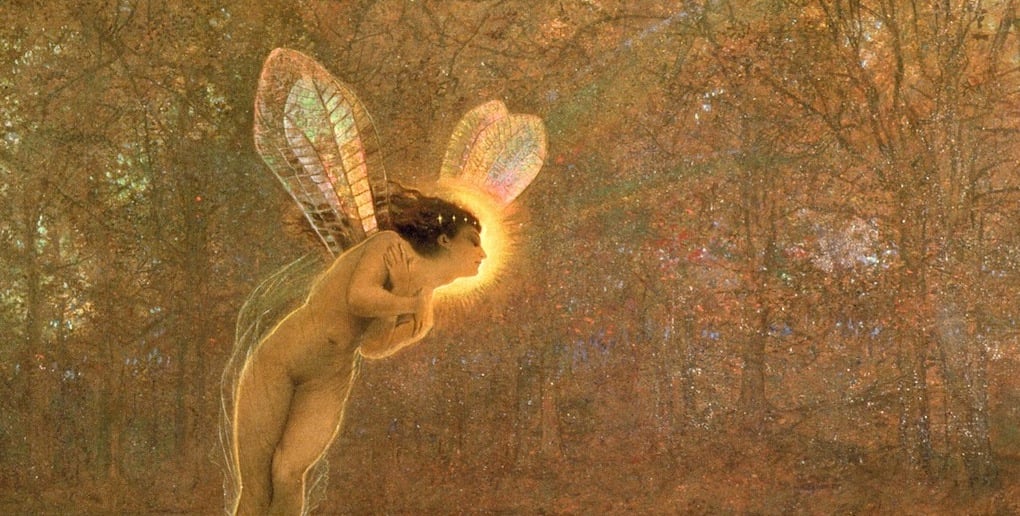
“Iris” by John Atkinson Grimshaw. The Greek goddess of the rainbow is often depicted with wings. Credit: Public Domain

Iris, the Greek goddess of the rainbow, also served as a messenger of the gods. Although now a little known member of the pantheon, Iris was a prominent figure in many ancient myths and is even a character in Rick Riordan’s “Lightning Thief” book series.

The Greek goddess was the daughter of Thaumas, whose name means “miracle” or “wonder” in Greek, an old and powerful sea god who was linked to the wonders of the sea, and Elektra, a sea-dwelling nymph.

Her sisters were the terrifying Harpies Ocypete and Aello—fearsome creatures that were half-women, half-birds, who represented the storm winds.

During the Titanomachy, when the Olympian gods fought against the Titans, the old gods, Iris became the messenger for the Olympians and her sister, Arke, delivered messages for the Titans. Arke betrayed the Olympian gods and became the her sister’s rival.

From this point on, Iris served as messenger to the gods, making her the female counterpart of Hermes, who is more widely known for the role.

Iris, Greek goddess of the rainbow and messenger to the gods

While Iris is found throughout Homer’s Iliad, an epic poem that details the story of the Trojan War, and serves as a divine messenger, she is not mentioned in the Odyssey, Homer’s later poem which tells the story of Odysseus’ return home from the war.

Hermes is the messenger of the gods in the Odyssey.

In addition to her role as messenger, Iris is known to serve the gods their nectar from a large chalice she is often depicted holding.

Much like a rainbow, Iris was linked to the sea and sky and serves as a link between the gods and humanity.

vase
Iris shown on pottery from the 5th century BC. Credit: Public Domain

In myth, she frequently travels to the ends of the world using the speed of the wind on her wings and even ventures to the depths of the sea and through the underworld, often taking the trips to deliver important messages.

In antiquity, when one saw a rainbow, it was also believed that they were witnessing Iris traveling across the world or through the sea to deliver a divine message to a mortal.

The goddess of the rainbow was described and depicted either as a rainbow or as a stunningly beautiful winged woman, often carrying a staff with wings, as well.

Along with her winged staff, Iris was said to carry water from the River Styx, or the river that led to the underworld, at the command of Zeus. She was to use this water to put anyone who lied to her to sleep. This was the custom when gods made solemn oaths to each other.

iris greek goddess rainbow
One of the few sculptural depictions of Iris, the Greek goddess of the rainbow, on the west pediment of the Parthenon. Credit: Public domain

In some myths, Iris is considered one of the most beautiful of all of the Greek goddesses.

She conceived a child with Zephyrus, one of the Anemoi, or the Greek gods of the winds. The child was Pothos, the god of sexual desire and longing.

Despite her prominent role as divine messenger, there were no known temples built to Iris, and experts suspect there was little cult activity to the goddess, apart from records of Delians offering cakes made of wheat, honey, and figs to her.

Although described as extremely beautiful, there were also very few statues created depicting Iris. She was frequently portrayed in vase paintings, however. One of the few ancient Greek sculptures of Iris is found on the west pediment of the Parthenon.

17,100-Year-Old Cave Paintings in Wales Rewrite Britain’s Ancient History

4 June 2026 at 01:05
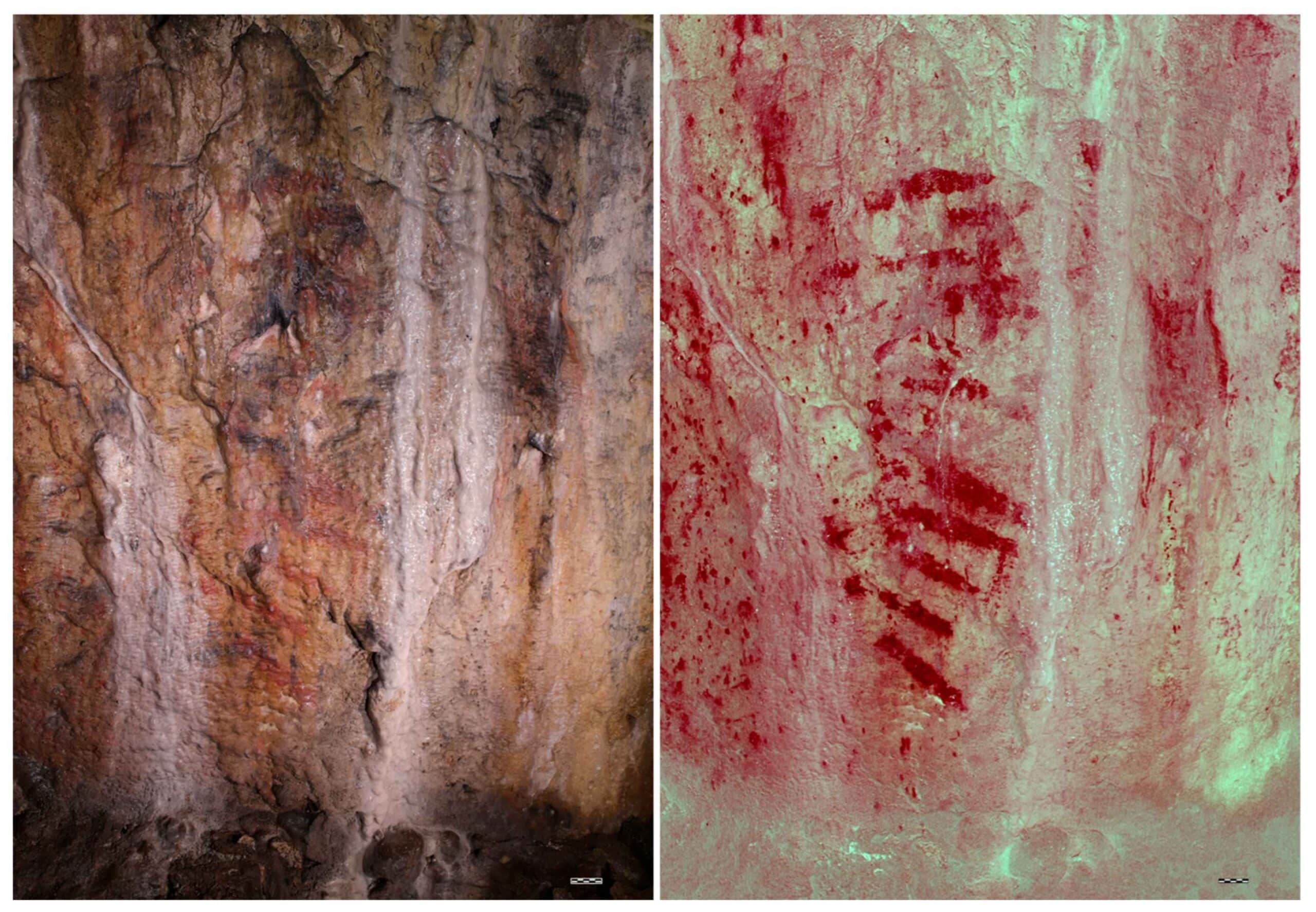
Red pigment markings at Bacon Hole Cave in Wales
Red pigment markings at Bacon Hole Cave in Wales. Credit: George H. Nash / CC BY 4.0

A series of red markings inside a cave in south Wales has been confirmed as the UK oldest cave art, ending decades of debate over whether the images were created by humans or formed naturally.

Researchers determined that the markings at Bacon Hole Cave near Mumbles were painted about 17,100 years ago during the Upper Paleolithic period. The discovery makes them the oldest known rock art in Britain and northwestern Europe. The findings overturn a conclusion that had stood since 1928, when experts dismissed the markings as natural mineral stains rather than prehistoric artwork.

Discovery revisited after more than a century

The markings were first reported in 1912 by professors William Sollas and Henri Breuil, who identified the red bands as prehistoric cave paintings. At the time, the discovery was described as the first example of Paleolithic cave art found in Britain.

A substantial breccia deposit is located around the current entrance area of the cave
A substantial breccia deposit is located around the current entrance area of the cave. Credit: George H. Nash / CC BY 4.0

That interpretation was later rejected. Researchers concluded that the red streaks were caused by iron-rich minerals seeping through the limestone walls, and the site gradually lost its significance as a prehistoric art location.

More than a century later, an international team led by prehistoric art specialist George Nash reexamined the markings using scientific methods unavailable to earlier researchers. The team’s findings, published in the journal Quaternary, confirmed that the red pigment was intentionally applied by humans around 17,100 years ago.

Scientific analysis confirms human origin

Researchers used uranium-thorium dating and archaeometric analysis to study the pigment and surrounding cave deposits. Laboratory tests identified a mixture of calcite and clay residues within the paint, indicating that the material had been deliberately prepared. Analysis also showed that the pigment was applied directly with a finger.

The painted lines appear as evenly spaced horizontal bands arranged in a structured pattern. Researchers said the design is inconsistent with natural geological processes and supports the interpretation originally proposed in 1912.

Part of the artwork may have been overlooked for decades because a local fisherman painted graffiti on a nearby section of the cave chamber in 1894, making the markings more difficult to interpret.

Life in Wales during the Ice Age

Eastern view of the cave entrance and the Bristol Channel
Eastern view of the cave entrance and the Bristol Channel. Credit: George H. Nash / CC BY 4.0

The artwork was created as Wales emerged from one of the coldest phases of the last Ice Age, known as the Devensian glaciation. At the time, the landscape around Bacon Hole was a cold, largely treeless environment. Researchers believe the area surrounding what is now the Bristol Channel attracted large grazing animals during seasonal migrations.

The cave and other nearby shelters along the Gower coastline would have provided suitable living spaces for hunter-gatherer groups moving through the region.

A significant addition to Britain’s prehistoric record

Bacon Hole Cave lies within the limestone cliffs of the Gower Peninsula overlooking the Bristol Channel. Although the area is recognized for its natural beauty, the cave is not currently protected as a scheduled monument.

Researchers argue that the site’s newly confirmed status as the UK oldest cave art strengthens the case for greater protection. The study was conducted by researchers from First Art, the University of Southampton, Swansea University and other institutions, with support from the National Trust and the Bradshaw Foundation.

The discovery adds to a small number of known examples of Upper Paleolithic rock art in Britain and provides rare evidence of artistic activity in the region more than 17,000 years ago.

❌