This is part 2 of a two-part series examining the U.S.’s efforts to begin deep-sea mining in federal waters. Part 2 examines the regulations that would govern the industry. Part 1 explored the process behind proposed lease sales in U.S. federal waters and reactions to those plans. The deep-sea mining industry could launch in the near future in U.S. federal waters. Yet legal experts and former government officials warn that the regulations that would govern this industry are outdated and lack important oversight provisions. In April 2025, the Trump administration signaled its intention to enter the global race to mine the deep sea when it released an executive order calling for the development of the industry. Following the administration’s direction, in April 2026 the U.S. Department of the Interior (DOI) announced its plans to hold a series of seabed lease sales over the course of this year and into early next. The first one is slated for August in American Samoa, with subsequent lease sales planned for the Commonwealth of the Northern Mariana Islands (CNMI) and Alaska. If these go forward, they could mark the first commercial lease processes for deep-sea mining anywhere in the world. Critics say deep-sea mining could cause large-scale and irreversible damage to the marine environment, and some governments in areas slated for leasing have even taken steps to ban deep-sea mining. In 2024, the governor of American Samoa enacted a moratorium on seabed mining from its territorial waters, which extend 3 nautical miles (5.6 kilometers)…This article was originally published on Mongabay
Cities are expanding faster than at any point in human history, and wildlife is adapting in remarkable ways. We often talk about visible changes like animals becoming bolder, shifting their diets, or altering their daily rhythms to avoid people. But there is a deeper transformation happening inside their bodies, one that conservation science has barely begun to address: The reshaping of the gut microbiome. Urban ecosystems expose animals to a completely different set of pressures than their natural habitats. Artificial light, chronic noise, pollution, and human-derived food sources all interact to shape the physiology of wildlife rapidly. These pressures don’t just influence behavior from the outside, they alter the microbial communities that regulate digestion, immunity, stress responses, and even cognition, making key components of how animals evolve and adapt as “pressure cookers,” reducing diversity and decreasing overall health. When the microbiome becomes disrupted, a state known as dysbiosis, animals may become more anxious, more risk-taking, or more susceptible to disease. Urbanization is forcing this rapid adjustment of species not just through habitat loss, but by fundamentally changing their microbiota, and with that, things like foraging patterns and predator avoidance. In other words, urbanization may be shaping wildlife behavior from the inside out. Mule deer in Banff, Alberta. Image by Sharon Hahn Darlin via Wikimedia Commons (CC BY 2.0). Yet conservation strategies rarely consider this internal dimension. We focus on green spaces and habitat restoration, which are essential, but overlook how environmental stressors affect the microbial health of the animals we…This article was originally published on Mongabay
TANGGAMUS, Indonesia — When Sri Atmiatun arrived in the hills of the Batutegi region in southern Sumatra’s Lampung province in 2017, the coffee trees were already there, overgrown and neglected, slowly fading back into scrub. Her uncle had asked her to take over the plot. Sri agreed, trading years of labor on oil palm plantations in the central Sumatran province of Riau. Nearly a decade later, she still walks the same uphill path each morning. Now 45, Sri manages more than 3 hectares (7.4 acres) of land within the 1,400-hectare (3,460-acre) Sumber Makmur social forestry area. Sumber Makmur itself sits on the edge of the more than 80,000-hectare (198,000-acre) Batutegi forest landscape, where some areas are strictly protected while others are managed by communities through agroforestry systems. Under the social forestry program, the land remains state-owned, but local communities like Sri’s are granted the right to manage it for their livelihoods under rules designed to protect the forest and its ecological functions. “I stayed because this land feeds us,” Sri told Mongabay in early March. “If I leave, who will take care of it?” Sri’s story reflects a broader shift. Across the Batutegi landscape, land that was once cleared for coffee is now being restored and managed under Indonesia’s social forestry program. Legal recognition has given farmers access to support and training from the government and private organizations. In return, forest clearing and expansion into protected core areas have been reduced, allowing the forest to remain a safe habitat for…This article was originally published on Mongabay
In Bangladesh, poor oversight of unlawful cross-border trade in hazardous electronic waste continues, turning the country into a net importer of electronic waste. The country has rules to control e-waste. It is also a party to the Basel Convention and has introduced its own laws, like the Hazardous Waste (E-waste) Management Rules (2021). However, enforcement of these frameworks remains weak. Mongabay obtained and reviewed the document outlining Bangladesh’s import and export of e-waste, revealing key details on trade flows and regulatory gaps. The document, by the National Board of Revenue (NBR), shows that 40 companies imported e-waste under HS code 8549 — the international customs code for trading e-waste — at various times between 2022 and 2025, in apparent violation of the Basel Convention, an international treaty to reduce the movements of hazardous waste between nations. The textiles and apparel industry leads at 27%, or about one quarter, of all e-waste importers. No response from importers Mongabay reached out to Unilever Bangladesh Limited, one of the 40 e-waste importing companies and the only one that responded. Shamima Akhter, director of corporate affairs, partnerships & communications of Unilever Bangladesh Limited, said in an email on May 21, “We confirm that we have not imported any e‑waste or restricted items. The product concerned is a load cell, which is a precision measuring instrument, and the correct HS Code for this item is 90318, as declared in our import documentation. Any change to HS Code 8549 during the clearance process was made independently…This article was originally published on Mongabay
Not since the notorious 2012 National Defense Authorization Act (NDAA) provided for indefinite detention of American citizens, has the annual funding bill been as misused as this year. Embedded in the bill is an insult to every American who values our national sovereignty. The NDAA’s Section 224, the “United States-Israel Defense Technology Cooperation Initiative,” would […]
Reprinted with permission from Trita Parsi’s Substack. Israel has now responded militarily to Iran, defying Trump’s publicly expressed wishes. Israeli commentators have been explicit that Israel could not allow Iran to establish a new regional equation – one in which Tehran successfully extended deterrence over Lebanon. But by defying Trump, Israel has done more than […]
From above, an intact forest can look reassuringly complete. A satellite image may show an unbroken canopy, a block of green still standing amid plantations, roads or logged land. For many conservation programs, that view has become the starting point for measurement. If the canopy remains, the forest is often treated as if much of its ecological value remains as well. The forest itself may tell a more complicated story. Birds, insects, frogs and primates divide the day among them. Some call at dawn, others at night. Some occupy narrow frequency bands; others fill the background with a steady rasp. A forest that looks intact can still lose part of this living structure. The canopy may close after logging. Carbon may remain on a balance sheet. The animal community may not return in the same form. Garnet Pitta. Photo by Hanyrol Hanyzan Ahmad Sah A new paper in Global Change Biology, by Zuzana Buřivalová and colleagues, examines that problem through sound. The study describes the Soundscape Baselines Project, an effort to record the acoustic signatures of some of the world’s remaining intact forests before those reference points become harder to find. The idea is straightforward. To know whether a forest has changed, one needs to know what it sounded like before the change. That baseline is not only a technical convenience. It is a guard against a familiar problem in conservation: each generation tends to accept the nature it first encountered as normal. Daniel Pauly called this shifting baseline syndrome…This article was originally published on Mongabay
Deep in Taiwan’s misty mountains, researchers have confirmed the tallest tree in the country: a thousand-year-old fir tree higher than a 20-story building, which they’ve named “the heaven sword of the Da’an River.” Climbers scaled the tree and dropped a measuring tape from the top to the forest floor during the Lunar New Year holiday in January 2023. The tree measured 84.1-meters (276-feet). The findings have been published in Frontiers in Forests and Global Change. A team of ecologists, geologists, remote-sensing specialists, professional climbers and Indigenous people that calls itself the “Taiwan tree seekers” began the search in 2014. “The common characteristics [of the team] are probably that we are all tree lovers and like adventures,” Rebecca Chia-Chun Hsu, lead author from Division of Forest Ecology, Institute of Taiwan Forestry Research, told CNN. ‘The Heaven Sword’, Taiwan’s tallest tree, measures 84.1 meters. Photo courtesy of Steven Pearce. Taiwan is one of the few places on Earth where trees can grow this tall. The island sits where the tropics meet the subtropics, and its mountains host several giant conifer species. The species behind the new record, Taiwania cryptomerioides, is known to the Indigenous Rukai people as “the tree that hits the moon.” Although nearly 60% of Taiwan is covered in forest, loggers cleared much of the island’s old-growth forest between 1912 and 1991. However, its steep slopes were too dangerous to reach, and pockets of ancient forest survived. Still, finding the tallest tree amid the rugged terrain was a task. Taiwan…This article was originally published on Mongabay
COLOMBO — Sri Lanka banned the purchase and use of single-use plastic water bottles in all government institutions effective May 31, under a new government circular that targets reduction of wasteful plastic consumption within the state sector. The move is the latest in a long line of attempts by the island nation to reduce plastic pollution — a crisis that clogs waterways, pollutes beaches, harms marine life, and overwhelms the country’s fragile waste management systems. But environmentalists say the real question is not whether Sri Lanka can announce another ban, but whether it can be enforced. The new directive applies to public institutions and is expected to reduce the routine use of disposable plastic water bottles during government meetings, events, offices and official functions. Authorities are encouraging reusable alternatives and better drinking water infrastructure within public institutions, says Kapila Rajapaksha, the director-general of the Central Environmental Authority (CEA), the state agency mandated to address plastic pollution. Sri Lanka’s plastic problem is growing exponentially. The National Plastic Waste Inventory (NPWI) published in 2024 has estimated the island’s municipal plastic waste generation to be approximately 250,000 metric tons per year. Sri Lanka recycles only about 27,000 metric tons of plastic waste annually, roughly 11% of total plastic waste generated. An estimated 68,000 metric tons, or 27% of plastic waste, remain uncollected and are often burned, buried or illegally dumped. Approximately 101,000 metric tons or 41% of the plastics go unaccounted from the waste management system during collection, transport, sorting and disposal. According…This article was originally published on Mongabay
PORT HUGHES, Australia — Situated midway along the Great Southern Reef that spans Australia’s southern coastline, the waters off Port Hughes typically teem with life. The coastal hamlet northwest of Adelaide plays host to a multitude of coral, bivalve and fish species. But in late March, the largest and longest harmful algal bloom (HAB) in Australian history arrived to Port Hughes, depleting its waters’ rich biodiversity. The bloom had first appeared elsewhere off the state of South Australia’s coast a year earlier, causing eye and skin irritation and respiratory symptoms among beachgoers. Then, along with waves of acrid-smelling sea foam, scores of dead marine animals began washing ashore. In Port Hughes, the HAB’s impacts were most visible below the surface. The town’s wooden jetty had previously been one of the most consistent locations in South Australia to observe temperate species, said Stefan Andrews, co-founder of the Great Southern Reef Foundation, a conservation advocacy group. But by mid-April, when Mongabay joined Andrews on a dive, the site was drab compared with vibrant photographs taken in February and March. Under the jetty, sponges and corals that had previously adorned its pylons in a brilliantly hued mosaic appeared colorless. Apart from a short-headed seahorse (Hippocampus breviceps) — a “sign of hope,” Andrews called it — little life was visible in the murky waters. The reef, he said, had become quieter, lacking the sounds of snapping shrimp and other creatures that once played in the underwater soundtrack. “There’s a sense of loss when you…This article was originally published on Mongabay
JEJU ISLAND, South Korea — In April 2025, I zipped myself up into a thick wetsuit and inched down a steep, rocky ledge toward the gray-blue water encircling Beomseom, a small island off the southern coast of Jeju Island in South Korea. Then I leapt into the chilly sea and wriggled into my scuba gear while floating on the surface. In the water with me was Sanghoon Yoon, an adviser for Paran Ocean Citizen Science Center, a South Korean civil society group that advocates for the protection of the ocean. That day, Yoon was my scuba dive buddy. Yoon and I sank beneath the dangling legs of snorkelers into a watery realm of rocks and kelp. Once in deeper water, I encountered gelatinous stalks of soft coral. The polyps appeared purple, pink, red, and even orange, depending on the light. The islet of Beomseom off South Korea’s Jeju Island hosts colorful gardens of soft coral. Image courtesy of Paran. Sanghoon Hoon, an adviser to the Paran Ocean Citizen Science Center, dives among soft corals in the waters off Jeju, South Korea. Image courtesy of Paran. The soft corals I saw that day were healthy. But in 2024, soft corals around Beomseom Island and other parts of Jeju experienced what scientists are calling a “slumping” event — and what Yoon describes as “melting” — which saw soft corals losing their shape, drooping, and even dying. The event was widely reported in local media and attributed to marine heat as Jeju waters…This article was originally published on Mongabay
When most people think of Portuguese wine, their minds drift inland to the rolling plains of the Alentejo or north to the terraced vineyards of the Douro. Yet some of
ELEPHANT MARSH, Malawi — At 5:30 am, trader Flora Kumilai is squatting before a heap of smoked catfish at Sorjin Market in southern Malawi’s Elephant Marsh, haggling with sellers over the price. “I found gold in fish,” she chuckles as she fills a third cardboard box. “And Elephant Marsh is the mine.” Kumilai, who has traveled here from Malawi’s commercial capital, Blantyre, will spend a week in the area, visiting other fish markets around the marsh until she has 12 of these boxes, around 900 kilograms (1,990 pounds) of smoked fish. Then she will band together with other traders to hire a truck to transport their goods back to Blantyre, 140 kilometers (87 miles) to the north. But for Kumilai, the final destination for her goods is more than 1,500 km (930 mi) away, at a market in Kasumbalesa on the border between Zambia and the Democratic Republic of Congo. She’s been in business for more than a decade now, mostly trading in produce within Malawi and sometimes importing clothes from Tanzania and South Africa for customers in the city. In October 2024, she changed course, when fellow traders introduced her to the cross-border trade in fish. In Kasumbalesa, most of Kumilai’s customers are from the DRC, she tells Mongabay in Chichewa. “They pay in [U.S.] dollars. When we change it on the black market to Malawi kwacha, it gives us a lot of money. That’s how I’m able to pay for my son’s education [at Chandigarh University in India].”…This article was originally published on Mongabay
As South Africa transitions away from coal-fired electricity, hundreds of former coal mines are turning into abandoned dumping sites for waste and polluted water, which a new report warns will continue to contaminate surrounding land and waterways for decades. Nor is the South African government taking action to force mine owners to clean them up, environmentalists told Mongabay. South African law requires mining companies to set aside money to clean up and restore the land after mining ends – either in trusts or through bank or insurance guarantees. But a report by the Centre for Environmental Rights found that none of the 412 coal mines that closed between 2006 and 2023 had enough money set aside to pay for the full cost of rehabilitation. The full extent of the problem is unknown as the government has failed to keep any records of mines that closed in 2008, 2010, 2012, 2013, and 2021, the report said. Mining companies must clean up and rehabilitate mines, pay for the damage, and remain responsible until the government officially signs off on the closure, according to the regulations. But most mines do not keep enough money aside to cover even a fraction of the rehabilitation costs, according to the report, titled “No More Ghost Towns : Lessons From Mpumalanga’s Mine Closure Crisis” and released May 22 in Johannesburg. With more than 100 coal mines and most of the country’s aging coal-fired power stations, the Mpumalanga region is the center of South Africa’s fossil fuel-based power…This article was originally published on Mongabay
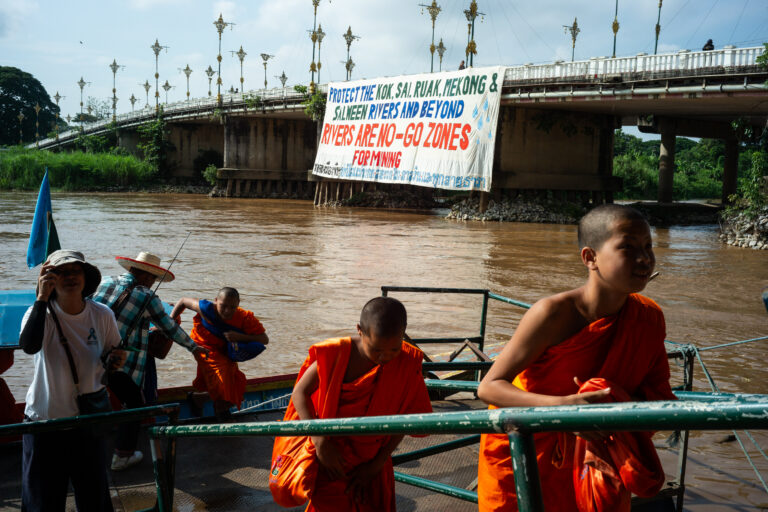
BANGKOK — More than 600 residents of Chiang Mai and Chiang Rai provinces embarked May 31 on a roughly 68-kilometer, six-day ‘peace walk’ to demand the Thai government take action on the river pollution crisis that has seen Thai rivers polluted with heavy metals. The ensemble of affected residents, civil society groups, monks and students marched from Tha Ton subdistrict in Chiang Mai to the city of Chiang Rai in northern Thailand, reaching their destination on June 5, World Environment Day. For more than a year, Thailand’s Pollution Control Department has reported dangerous levels of arsenic, mercury, cadmium and other heavy metals in rivers across northern Thailand, with mining operations across eastern Myanmar suspected to be responsible for the pollution. “We are walking because our rivers are slowly dying,” Pianporn Deetes, executive director of the Rivers and Rights Foundation, which helped to organize the peace walk, told Mongabay by phone. “Toxic contamination from unregulated mining upstream is already affecting water, fish, food, livelihoods, and public health. We do not want to wait until more people become sick. This is an emergency.” Pianporn said the walk (42 miles) was about taking collective action to share information, document impacts and build public pressure in a bid to force the government to address the issue, which Pianporn said has, so far, been lacking. “Monitoring has improved, but action has not matched the scale of the crisis,” she said. “We need urgent diplomatic engagement with neighboring countries, stronger health monitoring, transparency, and action to…This article was originally published on Mongabay
Editor’s Note: Tom Engelhardt has been an important part of Antiwar.com for 22 years. His TomDispatch site has contributed 1,469 articles to our site. His list of authors includes many of the best in the antiwar movement. The presence of TomDispatch articles helped make Antiwar.com what it is today. The staff of Antiwar.com sends […]
In his highly-regarded podcast, Judging Freedom, on June 1, Judge Napolitano asked British diplomat Alastair Crooke if the Israelis really cared if the Strait of Hormuz remained closed and the U.S. economy, and by extension the world economy, suffered. Crooke replied that the billionaires who support Israel so strongly have so much wealth that many […]
The images that have emerged from Gaza reveal the anatomy of a desolate landscape that defies human comprehension. Nothing can prepare the conscience for the sheer suffocating scale of a seemingly endless treeless terrain overwhelmed with millions of tons of concrete and rebar. There is a distinct agonizing geometry to the destruction of buildings folded […]
Global oil giant Shell continued operating a compromised pipeline in Nigeria’s Niger Delta despite knowing it posed a pollution risk in the surrounding coastal wetland environment, newly disclosed internal company communications reveal. The emails and memos, reviewed by Mongabay, show senior leadership knew of the poor conditions of the 97-kilometer (60-mile) Nembe Creek Trunk Line as early as 2008. Despite concerns it was operating outside technical integrity standards and proposals to shut it down, a top executive decided to keep pumping oil through the line. Carrying 150,000 barrels of oil per day to the export terminal at Bonny Island Rivers state, the Nembe Creek Trunk Line is a critical oil artery in Nigeria. Throughout the years, theft from the pipeline using illegal connections caused spills into the vast mangrove ecosystem of true (Rhizophora sp.) and flowering black (Avicennia sp.) tree species. An internal 2013 Shell document coded such tampered lines as “red,” requiring either their immediate shutdown or immediate action to remove all illegal connections. Locals from the nearby riverine Bille community said the oil spills killed about 2,000 hectares (4,900 acres) of mangrove swamps around the village while impacting an area of 13,200 hectares (32,600 acres). The contaminated waterways and degraded ecosystem, they told Mongabay, killed fish and other aquatic life. Satellite imagery surrounding the village shows massive degradation of the mangroves. “The aquatic life is gone. Our people can no longer go to the river and catch reasonable fish — they can’t even find the fish in the…This article was originally published on Mongabay
Leoncia Ramos has lived her 65 years in the lush Dominican Republic town of La Piñita, but now says she is fearful for her health and wants to leave. She’s among 450 families asking the government and the company behind the Pueblo Viejo gold mine to be relocated because of concerns of pollution from the nearby mine. They allege the site, controlled by Canadian giant Barrick Mining Corp., is harming their health and the environment, and fear that if a tailings dam about a kilometer away were to collapse, it would be disastrous. Ramos’s community has spent 15 years fighting to have its concerns addressed and now says Canada, where Barrick Mining is headquartered, could play a role. In 2019, the Canadian government created an office of an ombudsperson to handle complaints from communities like Ramos’s. But the government has left the role vacant for the past year, and its work has seemingly come to a standstill. Canada is home to about half of the world’s publicly traded mining and mineral exploration companies, with operations both in Canada and overseas, including some of the world’s largest miners, like Barrick Mining. The government created the office of the Canadian Ombudsperson for Responsible Enterprise (CORE) in 2019 to address human rights complaints about Canadian companies’ operations overseas. But the office has now been without an ombudsperson since May 2025, and advocates say its work has stalled at a critical moment, as demand for transition minerals and a changing geopolitical climate are driving…This article was originally published on Mongabay

 Login
Login