Holiday bookings for early summer have been hit by uncertainty around the conflict in the Middle East and the rising cost of living, the travel industry has said.
Mark Tanzer, chief executive of the UK travel association Abta, said that while people still wanted to go on holiday, the industry was bracing for a difficult summer.
Bringing Greece home: 10 traditional keepsakes with a century of soul. Credit: Greek Reporter
Greece is a goldmine for souvenirs because the best things to bring home are deeply rooted in centuries of culinary, agricultural, and artistic traditions. Skipping the generic plastic keychains, here are the top 10 authentic souvenirs to bring back.
Greece consumes more olive oil per capita than any other country, and its liquid gold is world-renowned. Look for oils from Crete, Kalamata, or Mani. For easier travel packing, skip the glass bottles and buy the tightly sealed tin canisters found in local supermarkets or specialty shops.
2. Greek Thyme Honey
Image of Greek honey. Credit: Greek Reporter
Because Greek bees feed on wild herbs under intense sunshine, the honey here is thick, rich, and distinctly aromatic. Thyme honey (particularly from Crete or the Aegean islands) is considered the gold standard.
3. The Mati (Evil Eye) Amulet
Mati. Credit: Greek Reporter
The distinctive blue-and-white eye charm is designed to ward off bad energy or jealousy (to mati). You can find it on beautifully crafted silver jewelry, ceramic wall hangings, or simple glass beads. It’s light, cheap, and undeniably Greek.
4. Ouzo, Tsipouro, or Mastiha
Mastic from Chios. Credit: Anastasios Papapostolou/Greek Reporter
Bring the taste of a Greek summer back home:
Ouzo: The famous anise-flavored, clear spirit that turns milky white when you add water or ice
Tsipouro: A strong, unaged grape distillate (similar to grappa)
Mastiha: A sweet, incredibly refreshing liqueur flavored with resin harvested exclusively on the island of Chios
5. Dried Greek Oregano & Mountain Tea
Greek oregano (rigani) grows wild on rocky hillsides, giving it a much more intense, peppery flavor than supermarket varieties back home. Pair it with a bunch of Greek Mountain Tea (tsai tou vounou), a dried herb brewed for centuries to boost the immune system and soothe digestion.
6. Olive Wood Kitchenware
From salad bowls and cutting boards to honey dippers, items made from Greek olive wood are gorgeous and incredibly durable. The tight grain of the wood means it doesn’t absorb odors or bacteria easily, and each piece features entirely unique natural patterns.
7. Handmade Leather Sandals
Handmade leather sandals of Greece. Credit: Efi
If you pass through Athens (especially the Monastiraki neighborhood) or certain islands such as Crete and Rhodes, you can buy genuine, handmade leather sandals. They are styled according to Ancient Greek designs, crafted to last for years, and mold comfortably to your feet over time.
8. Greek Ceramics & Pottery
From museum-quality replicas of ancient black-and-figure vases to modern, minimalist, blue-and-white tableware handmade on islands such as Sifnos, Greek pottery is a beautiful addition to any home.
9. Natural Sea Sponges
Kalymnos sponges. Credit: Nabokov, CC3/Wikipedia
Harvested for generations by traditional divers (most famously on the island of Kalymnos), genuine Greek sea sponges are entirely natural, hypoallergenic, and far softer and longer-lasting than synthetic alternatives. They are fantastic for skincare and bathing.
10. Spoon Sweets (Glyka tou Koutaliou)
These are traditional fruit preserves served on a small spoon alongside Greek coffee or dolloped over Greek yogurt. They are made by boiling wild fruits (like sour cherries, figs, or bitter oranges) in sugar syrup, preserving the firm texture and vibrant flavor of the fruit.
10+1. The Komboloi
Greek worry beads. Credit: Greek Reporter
The Komboloi, or worry beads, may be one of the most typical symbols of Greece’s easy-going mentality that has been widely established in Greece since the middle of the 20th century. Whether on the street, on an airplane, or in a busy kafeneion downtown, you will find people playing with their worry beads in various manners, even doing flips and tricks with them, letting go of their stress and worries as one bead moves deliberately towards the other. The repetitive action and clicking of the beads turn this pastime into an easy motion reported to help ease tension.
Packer’s Tip: If you’re traveling with carry-on luggage only, you won’t be able to take liquid souvenirs such as honey, olive oil, or alcohol past airport security. Buy these items at the airport duty-free shops after security—the quality is still highly authentic, and the prices are surprisingly fair!
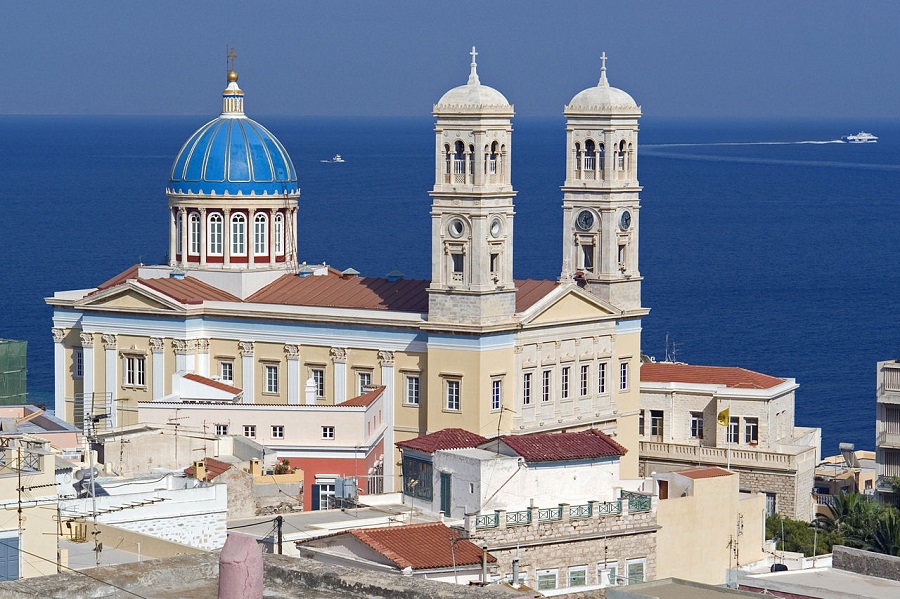
Saint Nicholas dominates the skyline in Ermoupoli, the capital of the island of Syros. Credit: Hans Peter Schaefer, CC BY-SA 3.0/Wikipedia
The Church of Saint Nicholas, a magnificent church in Ermoupoli, the capital of Syros, took twenty-two years to build.
Overlooking the Cycladic island, Saint Nicholas’ construction began in 1848, following the designs of a Greek architect named G. Metaxas. They were personally approved by King Otto, the Bavarian prince who ruled Greece from the establishment of the monarchy in 1832. The church was finally completed in 1870.
Saint Nicholas, the patron saint of seafarers, is also the patron saint of Ermoupoli. The cathedral dedicated to him stands out even to this day for its impressive architectural structure. The two-story monumental church has marble bell towers, an imposing marble staircase and marble propylaea, Ionic columns, archaic motifs, arcades, and an array of sculpted decorations.
It has lavish interiors including its icon of Saint Nicholas, which was plated in silver in Moscow. Its marble throne, pulpit, and marble iconostasis are also very unusual in Greek ecclesiastical architecture.
Saint Nicholas Church one of the finest in Greece
St. Nicholas was constructed between 1883 to 1899 by Tinian sculptor G. Vitalis and is considered one of the finest churches of the nineteenth century in Greece.
The Church of Saint Nicholas. Credit: Hans Peter Schaefer, CC BY-SA 3.0/Wikipedia
The church’s icons were created by some of the best hagiographers of the time while many Greeks from abroad, including shipowners, contributed funds toward the construction of the temple.
Internally, arches divide the church into three aisles; places for female congregants run along its three sides.
The imposing church is known as Agios Nikolaos “the rich,” to distinguish it from “Agios Nikolaos of the poor” another church on Syros.
Syros has a long history that began three millennia ago
Syros’ long history explains the many different styles of architecture and the many government buildings in the capital, Ermoupoli. It has also led to the establishment of a wealth of museums and cultural events that take place there in the summer.
On Syros, one will find City Hall, comprised of the remains of the castle in Ano Syros and the Theater Apollon—all buildings atypical of Cycladic architecture.
Syros was never under Ottoman occupation since it was protected by the French, and there is a strong Catholic element on the island due to the Venetian influence there as well.
Nowadays, the island is world-renowned for its rich cultural tradition with events that take place in Ermoupolis, such as the International Classical Music Festival of Cyclades, ANIMASYROS International Animation Festival, Ermoupoleia Cultural Festival etc that offer a range of options for every visitor to experience.
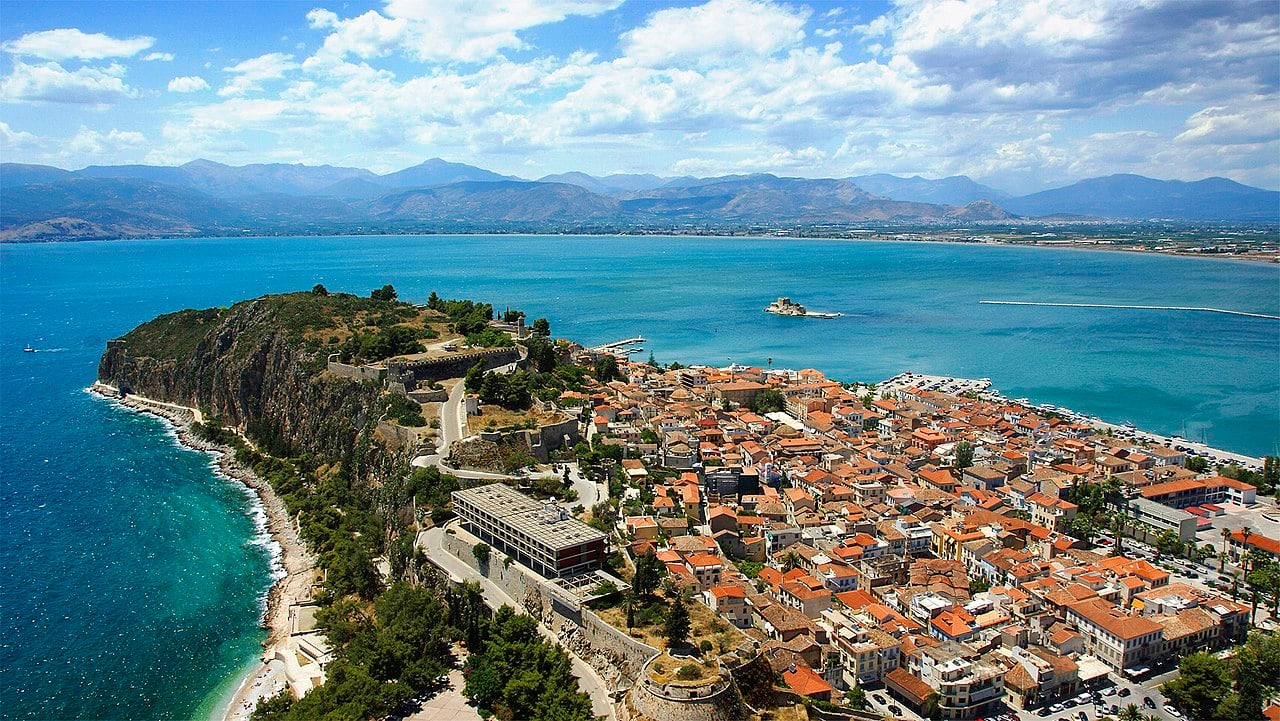
Nafplio at Peloponnese Region, Greece. Credit: Mtale/Wikimedia Commons/ CC BY 2.0
Located at just about a 1-hour drive from Athens, the Peloponnese region offers a plethora of historical sites, culture, and beauty to tourists looking for a spectacular trip in Greece; there are many reasons why this region of Greece is one that you do not want to miss! Let’s take a look at 10 reasons you will have an unforgettable trip in the Peloponnese this summer.
1. Nafplio
Bourtzi Castle, Nafplio. Credit: Wikimedia commons cc by 4.0
The first capital city of modern Greece was Nafplio, and until this day, you will see ruins of the fortress walls up high overlooking the town from the mountain side. This charming and romantic town has small streets that wrap around neoclassical buildings and squares and is the perfect place to visit any time of the year.
2. Epidavros
Ancient Theatre of Epidavros. Credit: Wikimedia Commons, Olecorre
From ancient ruins and an impressive ancient theater to a quaint town with tavernas serving up local treats, Epidavros is a must-see on any trip through the Peloponnese. During summer months, there are weekend shows at the ancient theater that draw in crowds of thousands of spectators. It is simply an amazing experience!
3. Beaches
– Aerial view of Zogeria Beach on Spetses with Peloponnese in the background, Greece. Crédit: By dronepicr CC BY 2.0
Check out the unspoiled beaches that this region has to offer! There is such diversity in terrains surrounding the sea in this region. The seas are clean and the beaches might have either pebbles or soft sand, and you can jump off of cliffs. There is something for everyone in the Peloponnese!
4. Ilia
Ilia Theater. Crédit: Kritheus – Own work, CC BY-SA 4.0
This is where the mountain meets sea and provides tourists with the amazing experience of staying in a quaint, beautiful village with sandy beaches and clear blue waters outlined by forests of pine trees reaching down to the sea. There are also some significant archaeological sites you should check out while in Ilia, such as the Temple of Epicurios Apollo.
You will find Arcadia in the center of the Peloponnese Region. This area is famous for its huge mountains, such as Mainalo and Parnonas, as well as its natural landscapes. It was first settled by the Arcadians who are considered to be one of the oldest people in the Peloponnese and are purported to have been responsible for the establishment of numerous significant cities throughout the region.
6 &7. Olives and Kalamata
The Old City of Kalamata. Crédit: G Da, CC BY-SA 3.0
You can find 65 percent of Greece’s 132 million olive trees in the Peloponnese with the black Kalamata olives being the most well-known variety. So why not stop by Kalamata, enjoy some olives, try great local Greek dishes with fresh olive oil, and enjoy the villages and beaches in this beautiful part of the Peloponnese? You can purchase souvenirs, such as olive oil or sculptures made from olive tree wood that are locally hand-crafted.
8. Wine Tours and Vineyards
A vineyard in Peloponnese. Credit: Robert Wallace, Flickr
A perfect way to get to know the beautiful Peloponnese region of Greece is to enjoy an amazing wine tour during your visit. Greece is one of the oldest wine-producing regions in the world, having begun cultivating vineyards and producing wine over 6,500 years ago.
9. Achaia
Rio, as seen from the Antirrio ferry. Patras, Acaea, Greece.Crédit: LBM1948 – Own work, CC BY-SA 4.0
Home to the port city of Patras, the biggest city in the Peloponnese, Achaia is the place to go for beautiful mountain and seaside landscapes, including some of the most desirable beach destinations in the region along the Corinthian Gulf. Achaia is considered Greece’s “seaside gate” to Western Europe and is one of the most historic sites in the Peloponnese. On the way to Patras from Athens, you will also pass the iconic Rio-Antirrio Bridge.
10. Something for Everyone
Dafnon valley, Leonidio. Crédit: Natalia Mostova – Own work, CC BY-SA 4.0
The Peloponnese Region is known for its variety of activities as well quite diverse landscape. From hiking to wine tours, there really is something for everyone in this region of Greece! Enjoy the breathtaking waters of the gulfs of Corinth, Patras, Saronic, Messinia, Argolida, and Laconia and the Peloponnese’s diverse climate, ranging from the less humid east to the colder climate with snow and rich vegetation in the central and more mountainous parts of the region and the rain and hot weather of the west.
The Temple of Apollo at Delphi was one of the most common travel destinations in Ancient Greece, as people were travelling from all over the country to consult the oracle. Credit: Greek Reporter
The Ancient Greeks were active travelers, despite the dangers of land travel and the fear of highwaymen. Sea travel required ample supplies and means.
A fascinating archaeological find exhibited in the Agora Museum in Athens is rectangular clay tablets with inscribed names and occupations that purportedly served as travel documents in antiquity.
Most travelers were aristocrats and well-to-do citizens who traveled to witness and experience the wonders of the ancient world, and other famous places and sights.
Others traveled for pilgrimage; healing in sanctuaries such as the Sanctuary of Asclepius in Olympia, the Sanctuary of Apollo on Delos Island, or to attend religious festivals and monumental athletic events like the Olympic Games at Olympia or the Panathenaic Games in Athens.
Merchants also traveled to other parts of Greece, or across the Mediterranean and beyond to promote and sell their goods to destinations such as Egypt, Asia Minor, the Middle East, and the Black Sea.
The Ancient Greeks were curious about the world and had a great desire to learn. For that reason, they held travel in high regard. The most famous epic journeys, such as Homer’s Iliad and Odyssey or Jason’s expedition to retrieve the Golden Fleece, had protagonists who had to travel far and undergo trials to achieve their goals.
In their long journeys. They experienced great adventures, encountered grave dangers, and saw things and, above all, places they would never see if confined in their birthplace all their lives. These epics celebrated heroic adventures through travel.
Then people from all over Greece and beyond would travel far to consult the oracle at Delphi and plan their future.
Also, it was through travel that ancient Greeks discovered places worth exploring and exploiting, such as uninhabited fertile lands or seaside areas with great potential, where they established trading colonies.
Overall, the accounts of travelers provided valuable information about the contemporary world. In modern day, these accounts help us understand the world during that period.
Practical issues of traveling in antiquity
Travel in ancient times required means that not all people could afford. Travelling by land meant using carriages and horses for people with means and walking for the rest. Pack animals, like mules and donkeys, were necessary. Greece had a widespread road network connecting even remote settlements, but there was always the danger of being robbed by highwaymen.
Traveling by sea was considered a safer and more comfortable means. Most major cities were located near a shore. Yet, there were no passenger ships back then, so those willing to travel by boat had to be next to the cargo, and at a price, too.
To take long journeys, overall, required a lot of money. Baggage porters and other attendants were necessary, along with armed bodyguards. The presence of security was important because the traveler could face highway robbers who could also abduct them. Similarly, when traveling by sea, there was the danger of being attacked by pirate ships.
Since there were no maps, natural landmarks such as mountains and rivers were used. In sea travel, similar landmarks across the shoreline served as guides to the destination.
Friends or social peers usually provided hospitality at the destinations for free. However, there were specific businesses that provided basic food and accommodation, especially in the larger cities, and for significant events such as the Olympic Games or religious festivals.
In the Archaic period, there was the additional legal danger of unknowingly being in another city-state territory without permission while trying to arrive at one’s destination. However, by the Classical period, relations between states were more regulated, and interstate travel was facilitated. In addition, systems of communication had improved by then. Nevertheless, the travel hazards remained.
Greek goods were found all over the then-known world
There is ample evidence that ancient Greeks traveled. Archaeological finds show contacts with other peoples and civilizations. Greek coins and goods such as amphorae have been found all over the Mediterranean. Artifacts emulating artistic styles and evidence of the adoption of rituals originating in Ancient Greece also indicate long and close contact with different peoples and cultures.
In addition, Greeks who traveled frequently brought back new ideas, Eastern tastes in clothing, jewelry, and foods, as well as architectural trends.
The ancient Greeks discovered new lands and established trading colonies across the Mediterranean, Asia Minor, and the Black Sea from the 8th through the 6th centuries. Many of these have evolved into the great cities that still stand today.
The most famous of the colonies were those in Magna Graecia, in today’s southern Italy and Sicily (Calabria, Apulia, Basilicata, Campania, Syracuse, Tarentum, Sybaris, and Croton), where the Greek element is still alive today, especially in the language.
Other important ancient Greek colonies were Massalia (modern-day Marseilles in France), Cyrene in Libya, and Byzantium on the Bosporus Strait, which later became Constantinople.
Greek philosophers on travelling
Several ancient Greek philosophers valued travelling as a means to gain knowledge and experience. Encountering different cultures and experiencing new environments broadens one’s perspective. Great figures like Thales and Pythagoras traveled to Egypt and other regions to study and acquire knowledge.
Aristotle believed that empirical observation and practical experience are good sources of knowledge. Provided, though, that one had the foundations in reason and virtue through formal education. Otherwise, one could not learn simply by travelling. The philosopher is known as saying, not in the exact words, that travel is education for the young and experience for the old.
For those who are older, Aristotle believed that they accumulate experience and wisdom by travelling. They reflect on their lives, gain new insights into the world, and may appreciate life more profoundly.
“Those who wish to know about the world must learn about it in its particular details,” said Heraclitus, the Greek philosopher from Ephesus. The quote implies that a man should travel to learn about the world with his own eyes. Heraclitus believed that the world is constantly changing: “The only thing that is constant is change,” is one of his famous quotes.
With his phrase “τα πάντα ρεί” (everything flows), Heraclitus said that the world is in perpetual motion; therefore, man should be constantly moving as well.
Plato is known for having traveled extensively, visiting Italy, Sicily, Egypt, and Libya. The reason he traveled so much was his disappointment with Athenian society. He was exposed to new cultures and ideas during his travels, which influenced his philosophical development and his Theory of Forms.
Other philosophers who traveled extensively were Thales of Miletus, who visited Egypt to study science and mathematics. Pythagoras traveled to Egypt, Israel, Babylonia, and possibly India. Democritus traveled in Asia, Egypt, and possibly India and Ethiopia.
Socrates, on the other hand, was against travelling and he never left Athens, his hometown. The father of philosophy, for many, believed that man should only make internal journeys. He emphasized self-knowledge and ethical development, which he believed were best pursued through internal reflection and dialogue.
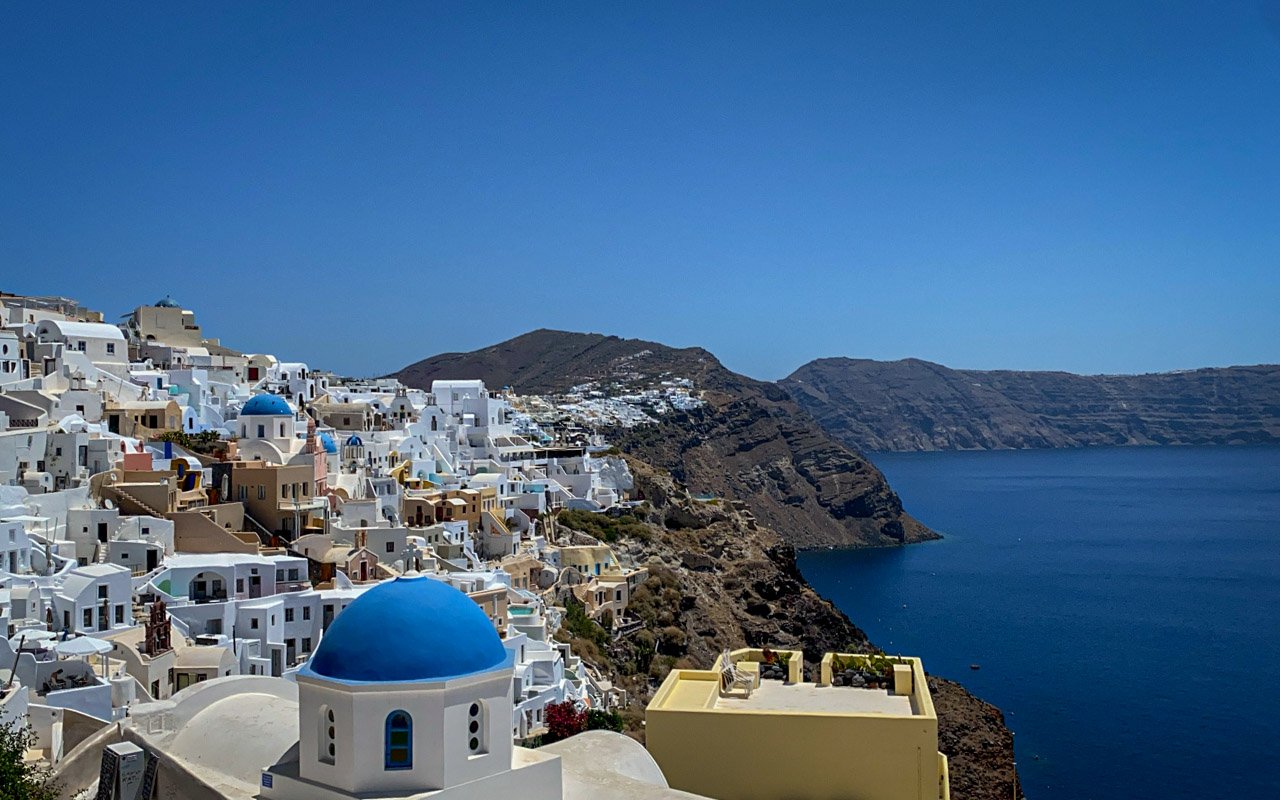
Greece has about 6000 islands, 230 of which are inhabited. Here is a map explaining all of the Greek island groups. Image: Santorini, part of Cyclades Island Group. Credit: Dimitra Damian/Greek Reporter
You have probably seen the postcard of whitewashed houses gathered together overlooking the endless blue waters of the Aegean Sea countless times, and rightly so. Greece is known for its abundance of unique islands, which every summer offer visitors a chance to unwind like nowhere else in the world.
Greece has more than 6000 islands and islets under its name. Of these islands, 227 are inhabited. All of them, nevertheless, are clustered in the Greek island groups.
Each has its own character. Some reflect a unique history or influences from antiquity to the middle ages, to modernity. Others combine Greek tradition with a sophisticated atmosphere. Yet most have bewitching beaches, coastal caves and world class cuisine. Without a doubt therefore, the Greek islands are the most unique on earth.
The main Greek island groups
There are six island groups in Greece to keep in mind:
The Cyclades, the Sporades, the Ionian islands, the Dodecanese, the Saronic Islands and the North Aegean Islands.
Each of these groups is unique in character, architectural style, influences and things to do.
Map of Greek Island Groups. Credit: Dimosthenis Vasiloudis / GreekReporter
The most famous Greek islands are the Cyclades, known as the jewel of the Aegean Sea
The Cyclades group is in the center of the Aegean Sea and is well-known for the iconic white houses and churches with blue domes that adorn its architecture.
This island group is comprised of around 220 islands. The main ones are Amorgos, Anafi, Andros, Antiparos, Delos, Ios, Kimolos, Kythnos, Milos, Mykonos, Naxos, Paros, Folegandros, Serifos, Sifnos, Syros, Tinos, Thera or Santorini, Irakleia, Koufonisia, Schoinousa and Donousa.
The perfect way to explore the region is through ”island hopping”. That is because the islands are close together, even if distinct in character. Mykonos, for example, is a cosmopolitan island globally famous for its party vibes and modern hospitality businesses. On the other hand Tinos, only a hop, skip and jump away, offers a religious feel. Despite the differences however, everyone who visits succumbs to the island’s peace and tranquility.
A blend of mythology and adventure
The name “Cyclades” refers to the islands forming a circle (the name in English means: “circular islands”) around the sacred island of Delos.
For the history and culture lovers, Delos , which is in its entirety a UNESCO World Heritage site, is a living archaeological museum, with the ancient temple of Apollo well worth visiting!
The island, referred to as “the sacred island of Delos,” is where, as Greek mythology tells it, Leto gave birth to Zeus’ twins Artemis and Apollo. Mythological history has it that because of Hera’s jealousy of Zeus and Leto, she ordered all lands to shun Leto, making it difficult for her to find a place to give birth. Zeus however asked Poseidon to find a secret, safe place for Leto to give birth. To that end, she sought out the island of Delos, where she was able to ensure the life of her twins, Artemis and Apollo.
In view of this, the small, rocky island was declared by Callimachus in the third century BC to be “the most sacred of all islands” of Ancient Greece, and was dedicated to Apollo.
One of the most popular islands of the Cyclades is Santorini. This popular destination is known for its colorful volcanic stone backdrops and its white houses and winding streets climbing the cliffs, leading you to villages and breathtaking views.
For the adventurous at heart, something you want to be sure to check out is a tour of the volcano and caldera. Another tip for those visiting is to hike the path between the main towns Fira and Oia, and of course visit the Red Sand Beach that looks like a landscape on Mars.
Much can also be said about the Cycladic cuisine, of course. The San Mihali cheese of Syros or the Naxos version of gruyere are world famous, while the fava of Santorini is a unique local delicacy, as are the mouthwatering fried tomato balls of the island. Mykonos has great sausages, while the xynotyri (sour cheese) of Ios is not to be missed.
The Sporades islands: the ”scattered” islands
Skiathos old town. Credit: dronepicr / CC-BY-2.0 / Wikimedia Commons
The name Sporades translates to “scattered”, which can broadly be applied to all islands outside of the Cyclades. The group is in the north-east of the Aegean.
This particular group consists of 24 islands. Four – Alonnisos, Skiathos, Skopelos and Skyros – are permanently inhabited.
Vast pine forests, huge olive groves and tall cypresses cover the small islands. According to legend, the islands were formed after the brothers Otus and Ephialtes of the Titans threw rocks.
Skiathos and Skopelos: the most popular
Two of the most well-liked islands in this group are Skiathos and Skopelos.
Skiathos is only 4 miles wide and no more than 7 miles long. Still, there are over 60 beaches to explore in that small space, the most popular being Koukounaries and Lalaria. The island is easily accessible, in contrast to the others, thanks to its small airport.
Another, Skopelos, is one of the many places across Greece that have never failed to enchant visitors throughout the decades. With its hilly, verdant landscapes and sparser crowds, it is a perennial draw for travelers from all over the world.
A beach on the stunning island of Skopelos, where the blockbuster movie Mamma Mia was filmed. Credit: Long lasting memories / Wikimedia Commons / CC BY-SA 4.0
Skopelos is full of the traditional architecture of Greece, with whitewashed houses, terracotta-tiled rooves, blue-hued shutters and wooden balconies. Among its loveliest beaches are Kastani, Stafilos, and Panormos, all easily reachable from Skopelos Town.
This stunning Greek retreat was also the setting for one of the most engaging films of the last few years, “Mamma Mia!.” The universally beloved movie, with an iconic soundtrack by the band ABBA, turned it into the fictional island of “Kalokairi” for the original film in 2008.
The Greek Islands Of The Dodecanese
Lindos, Rhodes. Credit: Jebulon / Public Domain
The Dodecanese island group is in the south-east of the Aegean, between the Cyclades and Turkey. It consists of 165 large and small islands, of which 26 have permanent residents.
The Dodecanese serve as a bridge between the East and the West, as the islands are very close to the Turkish coast. They have long, dry summers and lots of sunlight all year round.
The major islands in the group are Agathonisi, Astypalaia, Chalki, Kalymnos, Karpathos, Kasos, Kastellorizo, Kos, Lipsi, Leros, Nisyros, Patmos, Rhodes, Symi and Tilos.
Medieval architecture, romance and history
These islands are famous for medieval architecture, as well as their blend of history and romance, which permeates their small alleys.
Rhodes is the “medieval island” of Greece best known for its fortified port, seven gates, characteristic stag statue, and palace of the Grand Master. The Old Town lies inside ancient walls, but once outside them, you will find a more modern town which has cosmopolitan restaurants, shops, and bars.
Kos is also famous for its medieval architecture. On this island full of history, you can visit the ancient plane tree under which Hippocrates, the father of western medicine, used to teach. It is one of the oldest trees in Europe at more than 2500 years of age.
The castle of Kos island, Greece. Credit: Chris Vlachos / CC-BY-3.0 / Wikimedia Commons
Patmos is a smaller and less busy island, though of great historical and religious importance. St John the Apostle was exiled here, and it is where he wrote the Revelation of Jesus Christ, the final book of the Bible.
Kalymnos, Prerimos and Karpathos are paradise islands, with beautiful beaches, seaside villages and breathtaking vistas. They each offer unforgettable hiking adventures, and picturesque villages that will take visitors on a journey back in time.
Saronic islands: the most sophisticated of all Greek island groups
Hydra, where the Modern Greek Merchant Marine began. Credit: dronepicr/ Wikimedia commons CC BY 2.0
This Greek island group is the most accessible from Athens. Many wealthy Athenians as well as Greek and international artists prefer to visit the islands of this group. Hydra, in particular, is a famous sanctuary for poets, writers and filmmakers, including Leonard Cohen and Axel Jensen. This group consists of the islands of Aegina, Salamina, Poros, Hydra, Spetses, Agistri, and Dokos.
One of the best thing about them is that they’re untouched by mass international tourism. That is perhaps because places like Hydra, for example, is car-free. Everyone who visits gets around by boat, on foot or even by mule, giving you a truly old-fashioned feeling. It provides one with the opportunity to escape the hustle and bustle of modern everyday life.
Mules at Hydra port. Credit: Gabi Ancarola
Quaint alleys and 18th and 19th-century mansions typify the architecture, and the islands offer many beautiful bays and stunning beaches.
Hydra: where poets go to write
Hydra has been the most popular destination of the group since the 1960s. During that time, the island became a hub for international artists. One reason is that it combines elegance with a slow-paced lifestyle in a traditional setting. It was also the muse and longtime home of poet and songwriter Leonard Cohen.
Without a doubt, Hydra’s port is ideal for history lovers. Many of the critical battles of the War of Independence in 1821 occurred there. In fact, scars from some battles are still visible in the architecture.
Hydra’s beaches make it a great destination for summer trips, but its natural beauty and cosmopolitan town, filled with artisans’ shops, museums, and boutiques, make it the perfect spot for a short trip throughout the year.
Similarly, Spetses attracts visitors who seek to immerse themselves in the elegant and traditional setting of the island.
Ionian islands: the tropical islands
Zakynthos’ famous Navagio beach. Credit: Jimzoun Wikimedia Commons
This group consists of Corfu, Zakynthos (Zante), Kefalonia, Lefkada, Paxos
Kythira, ithaki (Ithaca).
Their natural setting is the main factor that makes the islands of the Ionian completely different from any of the other Greek islands. Here, the rich greenery blends harmoniously with the turquoise of the sea and the blue of the sky, creating beautiful natural scenery reminiscent of a painting.
The most photographed beaches in Greece
The beaches are characterized by limestone rock formations, sand and smooth pebbles. Visitors who have traveled extensively around the world say that the turquoise, cool, crystal-clear waters beat those of the Caribbean. While the beaches are surrounded by pine trees rather than palm trees, one could still say that these are the “tropical islands” of Greece.
The Ionian Sea’s beaches are numerous and have been photographed countless times. Shipwreck Beach on Zakynthos, the impressive Egremni Beach, the turquoise Porto Katsiki Beach of Lefkas, and Myrtos Beach of Kefalonia, are just some of the sandy stretches of heaven that make a holiday here unforgettable.
Porto Katsiki, Lefkada, Ionian Inslands. Credit: Antone Adi / Pexels
Yet there is more, of course. For example, the unbelievable “white” waters of Antipaxos, the lush greenery of Paxos with the little-known beaches of Ithaca that were the subject of Homer’s Ulysses. In addition, there is Marathonissi in the bay of Laganas on Zakynthos. Those are just a few of the sites that most deserve mentioning.
Strong Venetian influence
Another great characteristic of the Ionian islands is the Venetian presence in the architecture, the mellifluous speech of many locals, the musical influences, and even the food. For centuries, the islands of the Ionian belonged to the Venetians, and the western Mediterranean influence is still strong.
In terms of food, the Corfu pastitsada and sofrito are memorable dishes along with the island’s famous kumquat liqueur. Overall, all Ionian islands have cuisines influenced by their Venetian ancestors.
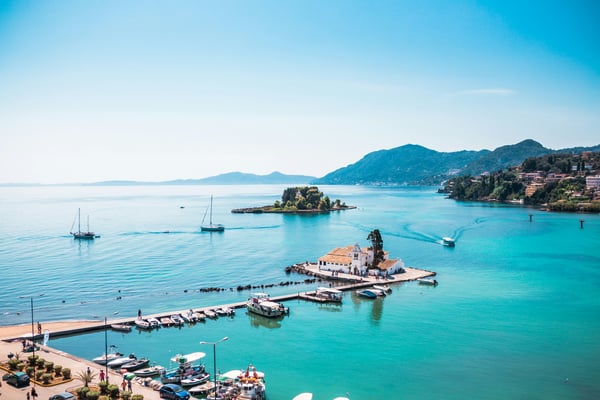
Corfu is one of the most famous islands, and it has a lot of history to its name. The old Corfu Town that is a World Heritage site is one of the most sophisticated towns in the Ionian island group.
Old Town of Corfu credit: metrogogo/Flickr CC BY-NC-SA 2.0
Locals call the island Kerkyra, perhaps because according to mythology, it was the home of Kerkyra, the daughter of Asps, the river God. Kerkyra gave birth to Poseidon’s child, and from then, the Phaeacian race was born. Nevertheless, there is more to Corfu than mythology. Its history and architecture are also worth discovering.
Ithaca is another island that is famous for its mythology. This is reputed to be the birthplace of Odysseus, but it also has impressive beaches.
North Aegean islands: Stunning beaches, strong local flavors
Seychelles beach, Ikaria, Greece. Credit: Leeturtle/Wikimedia Commons/CC BY-SA 4.0
The North Aegean island group includes Thassos, Lesbos, Samos, Lemnos, Chios, Samothrace and Ikaria. They make up some of the largest islands in Greece. Many visitors skip these islands because of their distance, which helps them to retain a strong local character and tradition.
Chios, Ikaria and Samos are the most visited. Chios is popular for its unique cultivation of “Mastica” (Greek: μαστίχα) a gummy resin that seeps out of the Pistacia lentiscus tree. The island is also home to an abundance of traditional villages.
For the adventure seekers, Lemnos is an excellent spot for hiking and biking. Worth seeing is the rugged Terran, a volcanic island which, according to legend, is the Walden belonging to Hephaestus, the God of fire.
Ikaria belongs in the Blue Zone list, a collection of spots around the world where people are said to live longer and healthier lives.
Another island worth visiting is Lesbos, in particular for fans of the popular Greek drink Ouzo, as it is the home of the spirit.
Finally, we can’t leave out Samos, a picturesque location which is ideal for history and culture lovers as it is birthplace of Pythagoras, the famous Ancient Greek philosopher and mathematician. The island is also home to many traditional taverns and provides visitors with traditional local dishes to die for.
Crete: a Greek island group on its own
The spectacular harbor of Heraklion, Crete. Credit: Greek Reporter
Crete is Greece’s biggest island and one of the largest in the Mediterranean.
There are many unique things to enjoy in Crete, from two beautiful pink-sand beaches (out of the less than twelve that exist in the world) to ancient cities, medieval castles and culinary experiences.
Crete is famous for its ancient Minoan palaces of Knossos and Phaistos. Yet various other sites and museums also depict the island’s rich history.
The island also offers to visitors a delicious local cuisine to experience. It revolves around olive oil, special herbs and local cheeses, and grilled seafood and meat.
Heraklion, the capital of the Greek island of Crete, is an ancient city that perhaps is under-appreciated for its many attractions for the international traveler. From first-rate hotels with swimming pools and rooftop bars that look out over the city and the many villages around the ancient city, the Heraklion area has much to offer.
Perhaps best known for its stunning cathedrals, picturesque old towns, and first-class restaurants and boutiques, Crete is in the midst of the sea and at the heart of Greece’s ancient history. This was the place where the Minoan civilization flourished, and it boasts traditions that go back into time immemorial.
Balos beach, Crete. Credit: Olaf Tausch / CC-BY-3.0 / Wikimedia Commons
Europe’s oldest known civilization, which flourished on Crete between 2,700 BC and 1,450 BC, served as a trading center for gold, ceramics, and the precious spice and dye saffron.
The Koules (Greek: Κούλες) or Castello a Mare, (“Fort on the Sea” in Italian) a fortress located at the entrance of the old port of Heraklion, is another must-see place for anyone who visits this ancient city. It was built by the Republic of Venice in the early 16th century, and is still in good condition today.
Finally, anyone who visits Crete can experience its folklore and traditions, as performances of local dances take place all year round, as well as festivals and cultural events lasting for days.
 Login
Login








.jpg)



.jpg)