Abu Dhabi’s state-owned investment firm Mubadala is preparing a bid for the operator of Burger King in Portugal and Spain, which has been owned by British private equity group Cinven
The island of Skiathos in Greece, renowned for its picturesque beaches and vibrant atmosphere, is reviving its ancient wine production as it gains recognition as a gastronomic destination in the Sporades.
Mayor Thodoris Tzoumas has highlighted the island’s unique culinary identity, emphasizing the harmonious blend of fresh seafood and local produce. In speaking to Greek Reporter, he mentioned dishes such as shrimp with wild greens, octopus with zucchini, and distinctive soups featuring foraged greens. The island’s beloved “pita,” both oven-baked and fried, also holds a special place in its culinary heritage.
The return of wine to Skiathos
Skiathos vineyards. Credit: Greek Reporter
A pivotal development in Skiathos’ burgeoning gastronomic scene is the establishment of its first modern winery, Parissi Winery. This enterprise signifies a profound reawakening of the island’s long-dormant winemaking tradition.
Historically, Skiathos boasted a flourishing viticultural landscape, with vineyards thriving until the mid-20th century. However, a combination of prolonged drought and shifting economic priorities led to a decline in wine production, with many locals turning to olive cultivation instead.
According to Maria Koutseri, co-owner of Parissi Winery, a key element defining Skiathos wines is the island’s unique terroir. Many of their vineyards are strategically situated in secluded areas in close proximity to the sea. This coastal influence imparts a subtle yet distinctive salty, savory characteristic to their wines. This intriguing quality echoes historical accounts of “Stratis,” an ancient Skiathian wine rumored to have incorporated seawater during its production, a practice believed to have enhanced its flavor and appeal among the Romans.
Parissi Winery is dedicated to reclaiming this forgotten legacy. Despite the inherent challenges of cultivating vineyards on a highly tourist-driven island, they are demonstrating the immense potential for producing high-quality, distinctive wines.
The winery operates on a small scale, meticulously cultivating 45 strains of exclusively Greek grape varieties. Their focus is unwavering on showcasing the indigenous flavors of Greece, including Roditis, Assyrtiko, Malagouzia, Alexandria Muscat, Xinomavro, and Limniona. From these, they craft a select range of offerings: four dry whites, one rosé, one red, and a sweet wine, all of which are sold exclusively on Skiathos.
An assortment of wines. Credit: Greek Reporter
A wine-making legacy reclaimed
Perched at one of the island’s highest points, Parissi Winery not only offers a taste of its unique wines but also commands breathtaking panoramic views of Skiathos town. Visitors are invited to embark on an immersive experience, beginning with a guided tour of the vineyards, where they learn about the cultivation process and specific grape varieties.
The journey continues into the production area, providing firsthand insight into the meticulous winemaking journey. The experience culminates in a dedicated tasting session, allowing guests to savor the distinctive flavors of Skiathos and take home a piece of its revitalized wine heritage.
Maria Koutseri expresses her heartfelt hope that Parissi Winery will serve as a catalyst, encouraging others to join in this revival. She envisions a future where Skiathos’ rich winemaking tradition is fully restored and celebrated, thereby adding a lasting and sophisticated dimension to the island’s growing reputation as a premier gastronomic destination.
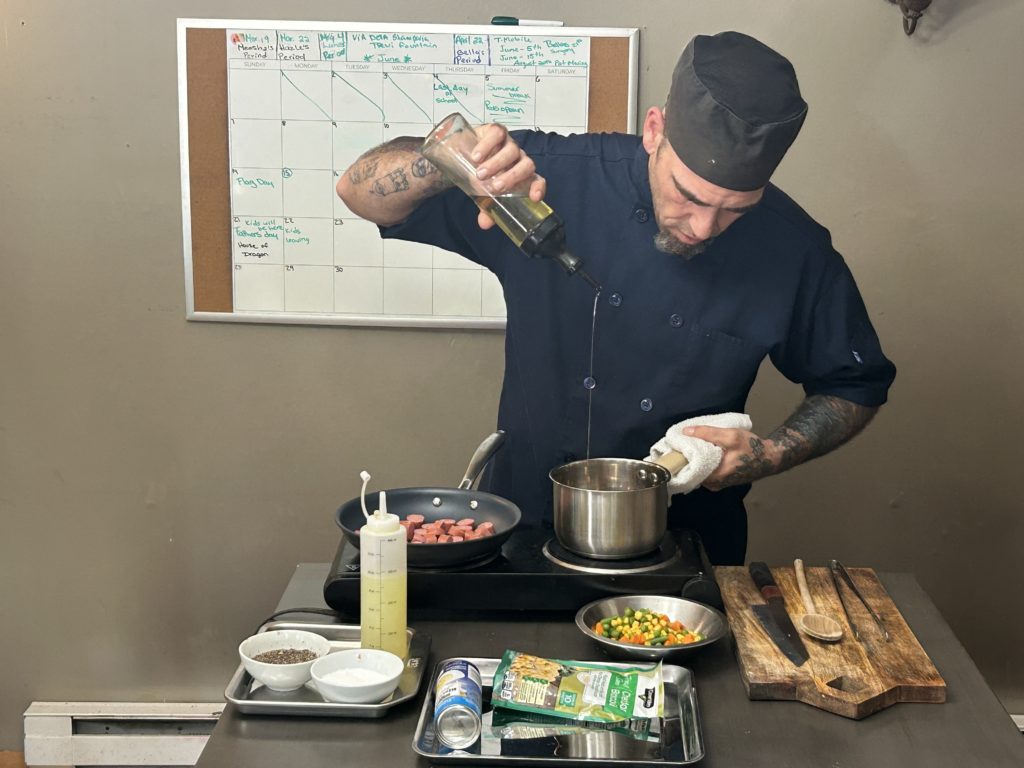
With rising grocery prices, many Americans are struggling to provide healthy, complete meals for their families. One chef is teaching his TikTok followers how to eat well on a budget, one $5 meal at a time. Deema Zein reports.
An ancient Greek grill for souvlaki from Akrotiri, Santorini. Credit: Wikimedia Commons/ Public domain
The beloved souvlaki has been around since ancient times. Archaeologists have found skewers dating back to the Bronze Age, and recent research looks at the functioning of early grills. In particular, “souvlaki trays” have been discovered dating all the way back to Mycenaean culture.
Therans and Mycenaean cultures were known for their luxurious lifestyles, ornate and colorful clothes, exquisite art, and sea trade with other cultures, such as Egypt. People developed these cultures on the islands of Crete and Santorini.
World’s oldest Bronze Age souvlaki on Santorini
The oldest souvlaki skewers found seem to be those discovered by archaeologists on Santorini dating back as far as 2000 BC. There are traces of the popularity of souvlaki on Santorini and Crete through the Bronze Age, and both Theran and Mycenean cultures made use of this method of cooking.
Ancient bronze skewers and a vase. Credit: diffendale/CC BY-NC-SA 2.0.
Ancient Greek texts such as the Iliad and the Odyssey describe a spit (Greek: ὀβελός) being used to roast meat, but the exact functioning of the souvlaki trays was unknown until recently. The works of great poets and writers describe the same obeliskos being popular. Sophocles, Aristophanes, Xenophon, and Aristoteles all mention or describe the popular dish in their works.
Mycenean cooking and culture
It seems that ancient Mycenaeans did not have a large variety of foods available to them. Despite this, they developed various types of cooking methods, fostering innovation. Part of that innovation was souvlaki trays, as was cooking in jars, among other techniques. At the time and for most of ancient history, cooking was mostly done on hearths with few ingredients. The portable and lightweight souvlaki trays changed this for Mycenaeans around 1400 to 1050 B.C.
Academics suggest that an important historical force behind these contraptions was status. While the Myceneans had incredibly rich art and fashion, their diet lacked diversity, though a marker of status was drinking wine. On the other hand, one can imagine poorer Mycenaeans drank beer.
As they were skilled sailors, Therans on Santorini island had begun brewing beer in the II millennium B.C., possibly learning the skill from Egypt or the Near East, where beer had been brewed since the III and IV millennium B.C. Accounts of the 5th and 4th centuries B.C. tell of an Athenian bias against beer. It was considered a drink of barbarians, Egyptians, or even women. Beer brewing was never seen as valuable.
By the Classical period, this all changed. Wine had become readily available to all, pushing elites in later Greek societies to seek other ways to distinguish themselves — for instance, through the use of specific gadgets and kitchen appliances, echoing earlier innovations like the Mycenaean souvlaki trays.
The souvlaki tray
The souvlaki trays found in Gla, Pylos, and Crete added something to the age-old tradition. Similar to modern-day outdoor grills, they were designed to be portable and good for travel or entertainment. Meat cuts seem to have been similar to the ones popular for souvlaki today, made from either lamb, pork, or mutton, and the meal was accompanied by bread made of various cereals.
The clay trays had placeholders for the skewers and, until recently, how they actually functioned was unknown. Researchers at Dartmouth College have recreated the trays using original ancient pottery techniques, tools, and ingredients. They realized the trays were not meant to be put on a hearth as originally thought. Rather, embers were placed in the tray and the skewers were grilled. They were practical, portable, and delicious!
Il solido sistema agricolo moderno è vecchio, non moderno, è fragile, non solido. È questa la trave che la guerra in Iran e la conseguente chiusura dello stretto di Hormuz ci serve nel piatto. Il modello di produzione agricola vigente è dipendente dal fossile: poiché dallo stretto di Hormuz passa un quarto del petrolio mondiale, ma soprattutto un terzo del commercio marittimo di fertilizzanti e dei componenti necessari per produrli (ammoniaca, urea, zolfo). Questo porta molti agricoltori a temere sulle prossime semine. Secondo le Nazioni Unite, a rischio fame 45 milioni di persone in più nel mondo, se la situazione non si sblocca rapidamente. Tra l’altro una criticità simile legata ai fertilizzanti si era presentata già nel 2022, dopo l’aggressione russa all’Ucraina, essendo quest’ultima un esportatore di fertilizzanti azotati. Ma i cicli stagionali agricoli mal si adattano alle variabili imprevedibili come quelle belliche, geopolitiche e speculative; pertanto, il danno è già effettivo e serviranno mesi prima che quei due milioni di tonnellate di fertilizzanti bloccati nel Golfo possano raggiungere i paesi di destino. Nell’UE il prezzo dei fertilizzanti azotati è cresciuto del 60% rispetto al 2024, e solo in Italia ogni anno se ne usano 300 mila tonnellate. Se la media europea di fertilizzanti inorganici si attesta tra 70 e 72 kg per ettaro, in Italia i dati mostrano un uso tra 110 e 130 kg per ettaro, nonostante si stimi che gli agricoltori applichino circa 67 kg di azoto in più rispetto alle capacità di assorbimento del terreno.
Tutto questo evidenzia come quel modello agricolo e alimentare stia lavorando contro e non con la natura: gli ecosistemi agricoli sono concepiti come luoghi artificiali in cui il vivente si deve adeguare alle esigenze del mercato globale. Paradossalmente, ma prevedibilmente i colossi dell’agrobusiness propongono come soluzione gli stessi strumenti che hanno in larga parte portato al collasso e alla fragilità attuale: più dipendenza tecnologica, più input energetici, nuove generazioni di Ogm e sementi brevettate. E le misure tampone proposte dall’Europa – sospendere i dazi sui fertilizzanti, elargire fondi agli agricoltori, promuovere stoccaggi strategici, fertilizzanti alternativi – non tendono a quel necessario e urgente cambio paradigmatico che i tempi ci impongono. Dobbiamo compiere delle rotture rispetto alla dipendenza di un sistema globalizzato inevitabilmente verticale, concentrato nelle mani di pochissimi e potentissimi attori. Se crediamo davvero in un cibo buono pulito e giusto come reale diritto di tutte e tutti, se crediamo nella sovranità alimentare, allora appare urgente valorizzare i sistemi locali del cibo che restituiscono centralità a contadini e biodiversità nella cornice di un approccio agroecologico. L’agroecologia non è solo una soluzione “tecnica”: non si tratta infatti solo di un insieme di pratiche agronomiche, si tratta di una prospettiva politica.
L’agroecologia, infatti, è un approccio “dal basso”: permette un governo dei territori da parte delle comunità locali, da dignità al sapere diffuso e orizzontale dei popoli, consente la rigenerazione del tessuto sociale lacerato e intende le risorse naturali come beni comuni da custodire, rigenerare e condividere. L’agroecologia applica principi ecologici alla gestione di sistemi agricoli e si basa su alcuni fondamentali: riciclo dei nutrienti (quindi non avremo più bisogno di comprare fertilizzanti chimici), rotazione delle sostanze organiche, conservazione dell’acqua e della fertilità del suolo ed equilibrio microbiologico. L’agroecologia concepisce i campi coltivati come ecosistemi nei quali si verificano relazioni naturali sinergiche tra colture, alberi e animali. Lavora con e non contro la natura. Secondo un’analisi della Agroecology Coalition, i governi globalmente spendono ogni anno più di 600 miliardi di dollari in sussidi agricoli, di cui quasi 400 miliardi sostengono quello stesso modello intensivo che devasta clima e biodiversità. La stessa analisi stima che la transizione globale verso sistemi agroecologici richiederebbe tra i 250 e i 430 miliardi di dollari l’anno: quindi meno di quanto già si spende per tenere in piedi l’agricoltura imperniata sul fossile. L’agroecologia, dunque, rappresenta una rottura: rimette i semi nelle mani dei contadini superando la logica dei brevetti; accorcia le filiere a tutela del reddito degli agricoltori; promuove la sovranità alimentare rendendo i popoli responsabili e indipendenti perché il cibo non sia sommesso alle crisi belliche ma alle reti di solidarietà tra comunità. Il modello agroecologico non è solo un’alternativa teorica, si tratta di un paradigma produttivo già sperimentato e applicato positivamente in molti territori: in attesa che la politica si attivi mettendo la transizione agroecologica al centro dell’agenda politica, le comunità stanno già costruendo e dando vita ad un modello di sviluppo realmente sostenibile che ha a cuore il presente e il futuro del vivente tutto.
That first sip of the cocktail washes away the heat and leaves you feeling cool and invigorated. Credit: Greek Reporter
Mastic or mastiha from the Greek island of Chios is getting traction on social media as the basic ingredient for summer cocktails.
Many bartenders and amateur connoisseurs are uploading videos of how to use the “white gold” of Chios to make flavorful and refreshing cocktails ideal for the summer.
Until recently, Greece’s mastiha liqueur hasn’t been as popular as other aperitifs. Thanks to new brands’ premiumization of the category and further education on its benefits, however, mastiha is starting to gain a cult following.
According to the following video by Nikki’s Modern Mediterranean, apart from one ounce of mastiha, you will need the following ingredients to make a summer cocktail: One ounce of peach vodka, peach nectar juice, grenadine, ice, and orange and cherry for garnish.
Another version is the rum, mastiha, and coffee cocktail:
Until recently, mastiha was actually considered a peasant spirit or liqueur often sipped after meals in Greece. This reputation is partly due to how it was made and the fact it wasn’t highly consumed outside of Greece.
Now, with society’s growing interest in niche global spirits, mastiha spirit has come into the spotlight, and it’s becoming more common on menus at high-end Greek beach clubs as well as restaurants and global cocktail bars from New York to Los Angeles.
Here is yet another version of mixing mastiha with liquor:
Mastiha, often referred to as the “Tears of Chios” or the “White Gold of Greece,” is a product made exclusively on the Greek island of Chios. Since antiquity, this sticky resin, which seeps from the bark of mastic trees, has been harvested not only for its flavor but its therapeutic value.
Although the mastic tree, also called “lentisk,” is native to many areas in the Mediterranean, its bark only “bleeds” mastic on the island of Chios, making it a truly unique and nearly miraculous product.
Mastic is used as flavoring in many sweets and drinks, most famously in Mastiha, a digestive liquor from Chios. The mastic “tears,” or small bits of hardened tree sap, can also be chewed like gum, a practice dating back thousands of years. Its healing properties include prevention and treatment of stomach pains and gastric disorders as well as rejuvenation of the skin.
Its rarity has made mastic highly sought-after throughout history. Even to this day, mastic is considered a precious commodity not to be wasted. The European Union has designated it a “protected designation of origin” product, confirming that only Chios may produce authentic mastic.

 Login
Login