Normal view

Empresas terão energia 15% mais barata com comunidade energética

As empresas instaladas no parque empresarial vão passar a beneficiar de energia cerca de 15% mais barata graças à criação de uma nova comunidade de autoconsumo energético, revelou Roberto Varela, administrador da Factor Energia.

Empresas terão energia 15% mais barata com comunidade energética

As empresas instaladas no parque empresarial vão passar a beneficiar de energia cerca de 15% mais barata graças à criação de uma nova comunidade de autoconsumo energético, revelou Roberto Varela, administrador da Factor Energia.

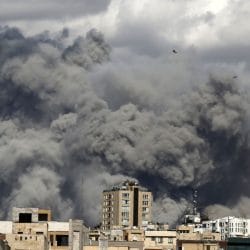
As Iran burns, a new age of nuclear proliferation begins

13 March 2026 at 13:04

As the Iran war pushes oil prices over $100 a barrel, and ships are attacked and mines are being laid in the Strait of Hormuz, a taboo has been broken and nuclear energy is back in fashion. European Commission president Ursula von der Leyen acknowledged that “the current Middle East crisis is a stark reminder” that it was “a strategic mistake for Europe to turn its back on” nuclear energy. 

She was speaking at an International Atomic Agency summit hosted by France. Just days before the summit, French president Emanuel Macron spoke — a nuclear submarine looming behind him — of the need to increase the country’s stockpile of nuclear warheads for the first time in several decades. “In this dangerous and uncertain world,” Macron said, “you have to be feared if you want to be free.” 

In February, the ‘New START treaty’, a mutual agreement between Russia and the U.S. to reduce and limit their nuclear arsenal, officially expired. The U.S. said China had conducted secret tests and that Beijing had to be part of any future non-proliferation agreement. For its part, the Chinese accused the U.S. government of seeking to mask its own expansionist ambitions. In the wake of the Iran war, started apparently because the Iranian regime was just days away from securing a bomb, other countries have spoken openly of their nuclear ambitions. After the start of the Iran war, North Korean leader Kim Jong Un spoke pointedly about preparing a nuclear-ready navy while inspecting a new destroyer and observing the testing of nuclear-capable cruise missiles. Even Polish prime minister Donald Tusk said Poland “will not want to be passive when it comes to nuclear security in a military context.”

On X, Tusk posted that Poland is in talks with France about joining its nuclear deterrence program. “We are arming together with our friends,” he wrote, “so that our enemies will never dare to attack us.” France is the only nuclear-capable European country, its systems (unlike the UK’s) completely independent of the U.S. and its new deterrence framework will include collaborations with Germany, Poland, Greece, Sweden, Denmark, the Netherlands and Belgium. Macron is calling France’s new strategy “advance deterrence,” a willingness to spread French nuclear armaments across the continent. A senior Pentagon official said the U.S. would “obviously at a minimum strenuously oppose” European countries seeking to acquire nuclear weapons. The U.S., as part of a NATO agreement, already deploys over 100 nuclear weapons in Europe — in Germany, Belgium, Italy, the Netherlands, and Turkey. 

Europe’s anti-nuclear tradition grew out of grassroots movements in the 1970s. In West Germany, protests against a planned nuclear plant in the small wine-growing town of Wyhl began when local farmers feared pollution would destroy their land and crops. By the 1980s, millions of Europeans were protesting nuclear weapons and the deployment of NATO missiles across the continent, bringing nuclear security debates into the public arena and pushing governments toward disarmament efforts. The political impact of those protests were long-lasting. Across Europe, nuclear energy programs were curtailed or abandoned entirely. Denmark banned nuclear power plants in 1985, Germany shut down its last nuclear reactors in 2023, and several countries imposed strict limits on nuclear development. Nuclear technology, whether for energy or weapons, remained politically toxic in much of Europe. But, as Denmark’s Mette Frederiksen said European deterrence “is necessary because the military threat from Russia is expected to increase,” and its reliance on U.S. military support can arguably no longer be taken for granted.

At the Paris summit, China, Brazil, Belgium and Italy all signed up to a pledge to triple global nuclear capacity by 2050. South Africa signed the pledge earlier this month. The war in Iran has once again made clear that the world must wean itself off fossil fuels. The U.S. — which imposed additional tariffs on India for buying Russian oil and thus helping to finance the continuation of the war in Ukraine — has, since the start of the attack on Iran, told India it can continue to buy Russian oil. Delhi promptly bought 30 million barrels of Russian crude oil. But this month India also signed a deal with Canada to receive uranium to expand its nuclear energy program. But in 1974, Canada provided India with nuclear technology for peaceful uses that were promptly put towards the building of nuclear weapons. Nuclear collaborations between the two countries were suspended for decades. It’s not a coincidence that those ties are once again being revived in the current geopolitical context. A growing clamor for nuclear energy has clear proliferation risks.

While France has been talking about greater nuclear deterrence, most European states are speaking about a revival of nuclear energy as an alternative to fossil fuels and as a means to achieve climate goals. The vast energy requirements of AI and data centres is also prompting nations to adopt an “atoms for algorithms” strategy, to be, as Macron said, “at the ​heart ​of ⁠the artificial intelligence challenge.” But to talk about energy alone is to ignore the appeal nuclear deterrence has for nation states trying to navigate dangerous geopolitical straits. Iran was attacked ostensibly because it was on the verge of having a bomb. Favored nations such as Saudi Arabia are able to sign nuclear pacts that remove non-proliferation guardrails, but the actions of the U.S. and Israel in Iran will make the bomb attractive to many more as a national security strategy.

A version of this story was published in this week’s Coda Currents newsletter. Sign up here.

The post As Iran burns, a new age of nuclear proliferation begins appeared first on Coda Story.

Piscinas Naturais do Porto Moniz renovam Bandeira Azul pela 31.ª vez

As Piscinas Naturais do Porto Moniz voltaram a hastear a Bandeira Azul, distinção atribuída pelo 31.º ano consecutivo e que reconhece a excelência da qualidade da água, a segurança, a gestão ambiental e os serviços disponibilizados aos utilizadores.

Piscinas Naturais do Porto Moniz renovam Bandeira Azul pela 31.ª vez

As Piscinas Naturais do Porto Moniz voltaram a hastear a Bandeira Azul, distinção atribuída pelo 31.º ano consecutivo e que reconhece a excelência da qualidade da água, a segurança, a gestão ambiental e os serviços disponibilizados aos utilizadores.

Israel ignora apelo de Trump, retalia contra Irã e enterra cessar-fogo

8 June 2026 at 02:39
Em retaliação a um ataque de mísseis lançado pelo Irã, Israel bombardeou o país persa neste domingo (7), madrugada de segunda-feira (8) no Oriente Médio, ignorando o apelo do presidente dos Estados Unidos, Donald Trump, para que não houvesse resposta israelense a fim de limitar uma nova escalada na guerra. Leia mais (06/07/2026 - 22h39)

Jéssica Rodrigues vai ser operada ao cotovelo após grave queda nos Prazeres

Jéssica Rodrigues continua internada no hospital depois da grave queda registada ontem na pista dos Prazeres, na Calheta, onde decorre o Campeonato Nacional Individual de Absolutos de Patinagem de Velocidade.

Despite oil spills in Nigeria’s mangrove forests, Shell continued operations, documents show

Global oil giant Shell continued operating a compromised pipeline in Nigeria’s Niger Delta despite knowing it posed a pollution risk in the surrounding coastal wetland environment, newly disclosed internal company communications reveal. The emails and memos, reviewed by Mongabay, show senior leadership knew of the poor conditions of the 97-kilometer (60-mile) Nembe Creek Trunk Line as early as 2008. Despite concerns it was operating outside technical integrity standards and proposals to shut it down, a top executive decided to keep pumping oil through the line. Carrying 150,000 barrels of oil per day to the export terminal at Bonny Island Rivers state, the Nembe Creek Trunk Line is a critical oil artery in Nigeria. Throughout the years, theft from the pipeline using illegal connections caused spills into the vast mangrove ecosystem of true (Rhizophora sp.) and flowering black (Avicennia sp.) tree species. An internal 2013 Shell document coded such tampered lines as “red,” requiring either their immediate shutdown or immediate action to remove all illegal connections. Locals from the nearby riverine Bille community said the oil spills killed about 2,000 hectares (4,900 acres) of mangrove swamps around the village while impacting an area of 13,200 hectares (32,600 acres). The contaminated waterways and degraded ecosystem, they told Mongabay, killed fish and other aquatic life. Satellite imagery surrounding the village shows massive degradation of the mangroves. “The aquatic life is gone. Our people can no longer go to the river and catch reasonable fish — they can’t even find the fish in the…This article was originally published on Mongabay

China foi o país que mais executou por pena de morte em 2025, segundo Anistia Internacional

6 June 2026 at 03:00
A China foi o país que mais executou por pena de morte em 2025, segundo dados da Anistia Internacional. A organização afirma que a nação asiática determinou execuções de milhares de pessoas e utiliza o instrumento como forma de enviar mensagens políticas de que o Estado não tolera ameaças à segurança pública, à estabilidade ou à ordem social. Leia mais (06/05/2026 - 23h00)

Whale strike risk rises as international shipping reroutes around South Africa

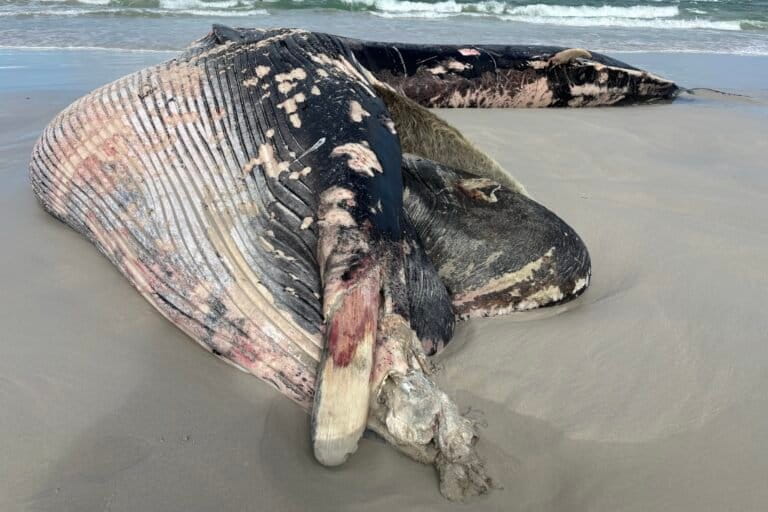
In April this year, two Bryde’s whales washed-up dead-on Dyer Island, a small nature reserve located a few kilometers off the coast of Gansbaai in South Africa’s Western Cape province. Both whales carried severe injuries; their vertebrae had been shattered. “It was very clear that it was [vessel] strikes, because both those whales were snapped in half, and you can also see the propeller marks,” Loraine Shuttleworth, head of research at the Dyer Island Conservation Trust, told Mongabay. Two whale strandings linked to ship strikes in one month alone is an unusually high number, Shuttleworth said. A new risk assessment has linked the increase in risk of ships striking whales to the rerouting of maritime traffic around South African coast. Due to the Houthi rebels attacks on ships traversing the Red Sea, which started in 2023, and the more recent fallout from the blockade of the Strait of Hormuz, many cargo companies have rerouted their vessels around the Cape of Good Hope. With greater shipping traffic comes a growing threat to marine species inhabiting the region: collisions with large, fast-moving vessels. Between December 2023 and December 2024, the number of large vessels traveling through South African waters at average speeds above 15 knots (28 kilometers per hour) has quadrupled, satellite data show. The scale of the increased maritime traffic struck scientist Els Vermeulen from the University of Pretoria’s Mammal Research Institute Whale Unit, on a flight into Cape Town in 2025. “It was a beautiful day, and there were just…This article was originally published on Mongabay

Israel ignora cessar-fogo, bombardeia Líbano e diz ter aval dos Estados Unidos

4 June 2026 at 13:19
Apesar de um cessar-fogo anunciado entre Israel e Líbano na véspera, as Forças Armadas israelenses voltaram a bombardear posições no sul do país vizinho nesta quinta-feira (4), com Tel Aviv dizendo ter apoio dos Estados Unidos para atacar Beirute e afirmando que a trégua depende da interrupção de ataques do Hezbollah. Leia mais (06/04/2026 - 09h19)
❌