
Normal view

Alexander the Great’s Encounters With Sea Monsters

6 June 2026 at 09:04
sea monster
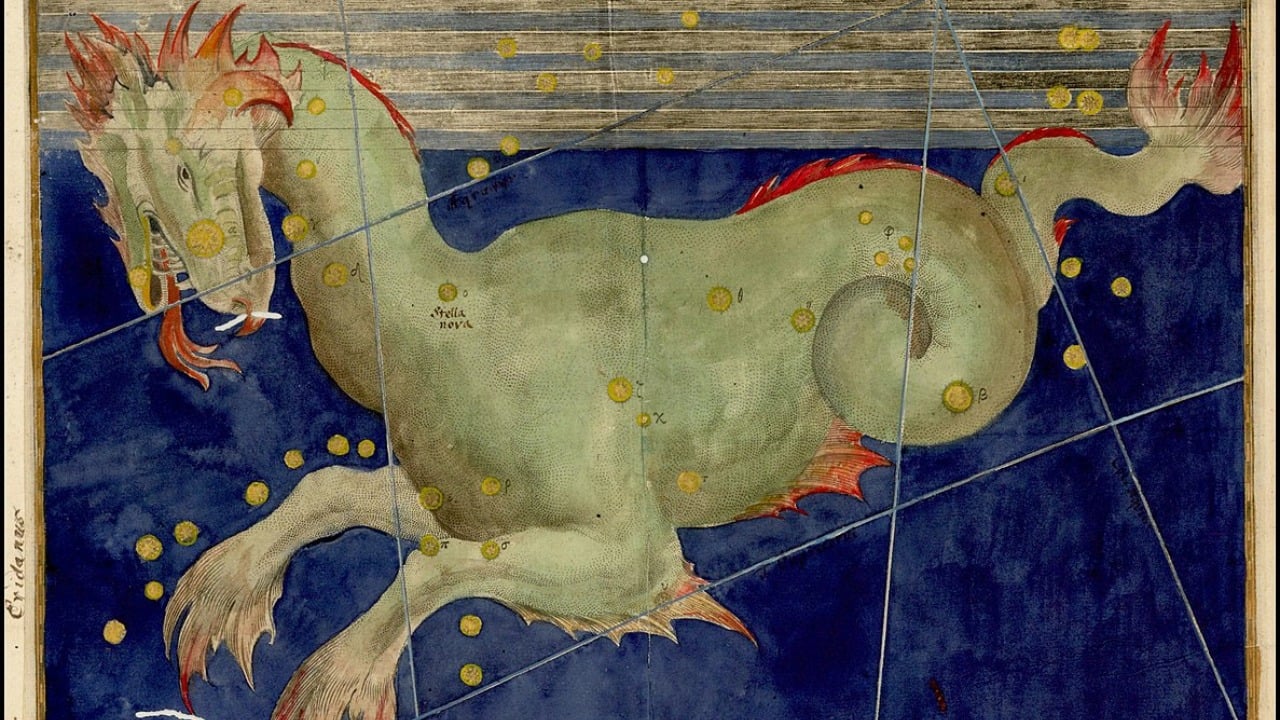
Alexander the Great is said to have encountered sea monsters during his campaigns. Credit: Johann Bayer / Public domain / Wikimedia Commons

As one of the most famous figures in human history, it comes as little surprise that the life of Alexander the Great is tied to several legends of mythic proportions, of which several concern the conqueror’s encounters with sea monsters.

Alexander’s armies traversed much of the known ancient world, leaving their native Macedon far behind them. Over the course of their long campaigns, they encountered many strange sights, some of which may have inspired later myths and legends.

At least two historians, from the ancient and medieval periods, described Alexander the Great and his encounters with sea monsters. The first was Diodorus Sciulus, a Greek historian of the 1st century BC and the Arab scholar Ibn Khaldun of the 14th century AD.

The sea creature at the siege of Tyre, 332 BC

In 323 BC, the intrepid Macedonian king laid siege to Tyre, a well-fortified Phoenician city-state on the coast of the Mediterranean. The city was extremely difficult to penetrate because it was located on an island and was defended by high walls that came right up to the sea.

Nevertheless, it was necessary to capture Tyre to deny the Persians access to a strategically important naval base. Thus, Alexander ordered his engineers to prepare artillery pieces and siege works for an assault on the city.

However, whilst this effort was underway, a strange event in which the army of Alexander the Great encountered a sea monster in the waters around Tyre occurred, according to the writings of Diodorus Siculus.

hippocamp
Late 5th century ancient Greek red-figure pottery depicting a hippocamp, a mythical creature with a horse’s body and the tail of a fish. Credit: Metropolitan Museum of Art / CC0, / Wikimedia Commons

“As the Macedonian construction came within range of their missiles, portents were sent by the gods to them in their danger,” wrote Diodorus Siculus.  “Out of the sea, a tidal wave tossed a sea monster of incredible size into the midst of the Macedonian operations.”

“It crashed into the mole but did it no harm, remained resting a portion of its body against it for a long time and then swam off into the sea again,” continued the Greek historian. “This strange event threw both sides into superstition, each imagining that the portent signified that Poseidon would come to their aid, for they were swayed by their own interest in the matter.”

A less fantastical explanation for this incident is possible than a mythical sea monster sent by Poseidon. The creature in question may have been a shark, dolphin, whale, or other entirely normal aquatic inhabitant.

Alexander the Great and the sea monsters of Alexandria

The siege of Tyre was not the only time Alexander is said to have encountered a sea monster. According to the Arab scholar Ibn Khaldun, he saw several mythical aquatic beasts in Egypt.

In fact, Ibn Khaldun claimed that sea monsters initially halted the construction of Alexandria until Alexander devised a way to scare them away from the area.

“Sea monsters prevented Alexander from building Alexandria,” wrote the scholar. “He took a wooden container in which a glass box was inserted, and dived in it to the bottom of the sea. There he drew pictures of the devilish monsters he saw.”

According to Ibn Khaldun, “He then had metal effigies of these animals made and set them up opposite the place where building was going on. When the monsters came out and saw the effigies, they fled. Alexander was thus able to complete the building of Alexandria.”
Draco: The Harshest Lawgiver of Ancient Athens

5 June 2026 at 08:11
Greece parthenon made by Greeks
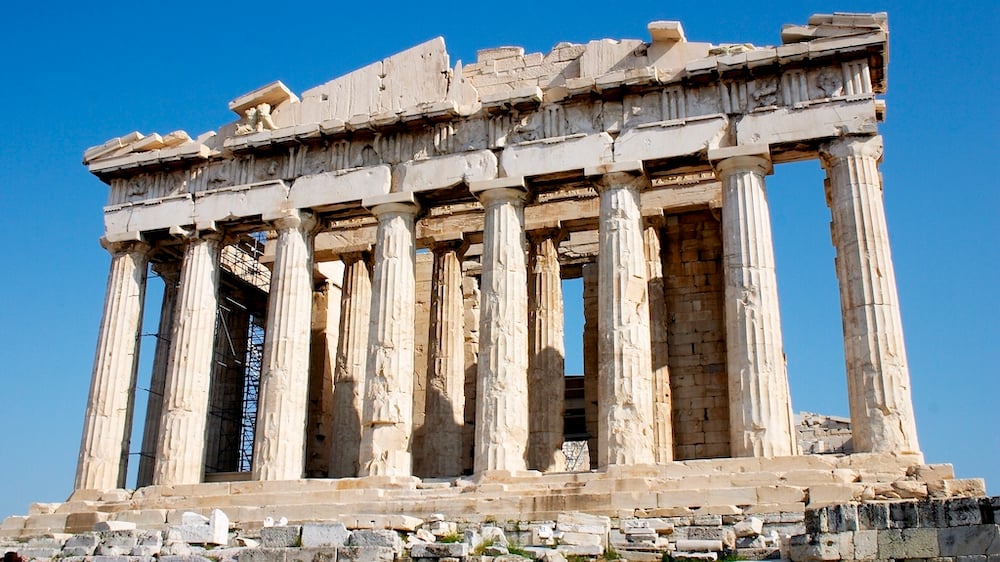
The Parthenon of Athens. Credit: Barcex/Wikimedia Commons/ CC BY-SA 3.0

Ancient Athens is renowned to this day as the birthplace of democracy and cradle of philosophical debate, but few know the story of the city state’s harshest lawgiver.

Draco, also spelled Drako or Drakon, was Athens’ first recorded democratic legislator. Draco was called upon by his fellow Athenian citizens to establish a comprehensive legal code for the city.

Many Athenians were surprised by the harshness of the laws introduced by Draco and baulked at the Draconian constitution that bore his name. Nevertheless, the Draconian constitution introduced several important innovations, namely the transition from oral laws to written laws.

Who was Draco?

Draco was an Athenian aristocrat born sometime during the 7th century BC. Despite his importance to the city’s history, Draco’s biographical details remain incredibly sketchy and little is known about his life beyond the laws that he imposed.

Indeed, as the historian Chis Carey points out in an academic paper published in The Cambridge Classical Journal, “Already for Greeks of the Classical period, Drakon was a shadowy figure. We get no patronymic, no biography; he simply emerges fully formed as a legislator.”

“He may be wholly or in part a fiction,” Carey continues. Crucially, however, Carey sees no reason to dispute the dates given by the ancient Athenians for the introduction of Draco’s laws between 624 and 620 BC.

So, whether or not Draco was a real individual, or perhaps a mythologized stand-in for a specific Athenian lawgiver or collective of legislators, the Draconian institution itself was introduced in the 7th century BC as recorded by the Athenians in the view of modern historians.

Draco’s new Athenian laws

Draco’s most important contribution as a legislator was the introduction of Athens’ first written constitution, the so-called “Draconian Constitution”.

This was an important legislative and legal innovation because the laws had previously been recorded orally. This meant that there was far too much room to arbitrarily interpret or apply the laws. A written system meant that the law was much fairer and more universally interpreted.

So that everyone would be made aware of the new laws – or at the very least, those who were literate – the laws were made visible in the city on wooden tablets called axones. These were presented on rotatable four-sided pyramids called kyrbeis.

One of Draco’s chief aims as a legislator was to bring an end to the blood feuds plaguing the city. He introduced laws that differentiated between homicides and accidental killings and specified punishments for each crime. The translations below provide some perspective:

  • “He who kills another Athenian, without a purpose or by accident, should be banished from Athens forever. If the killer apologizes to the family of the murdered man and the family accepts the apology, then the murderer may stay in Athens.”
  • “A relative of a murder victim, can hunt and take into custody the murderer and thus hand him to the authorities where he will be judged. If a relative kills the murderer he will not be allowed to enter the Athenian Forum (agora), or participate in competitions or set foot into sacred places…”

Athens’ harshest lawgiver?

As a lawgiver Draco was innovative and his changes made the legal system in Athens clearer and more consistent. However, his laws were also deemed to be excessively harsh and were subsequently repealed by Solon in the early 6th century BC.

Severe punishments were often dealt out for relatively minor crimes. For example, a thief might be sentenced to death for stealing a cabbage.

The lawgiver and his code also attracted infamy for its bias in favor of the elite over commoners in Athens. For instance, a debtor unable to honor his debts to a higher-class creditor could be sold into slavery, whereas punishments for higher-status individuals indebted to lower-status creditors were more lenient.

The English word “draconian”, meaning “excessively harsh” or “very severe” is derived from the Draconian Constitution, which is remembered for its severity.

❌