Finland’s parliament on Wednesday voted to lift a decades-old ban on nuclear weapons, approving a major defense policy shift aimed at aligning the country more closely with North Atlantic Treaty Organization (NATO) deterrence strategy.
Defense Minister Antti Häkkänen said a strong majority backed the amendment to the Nuclear Energy Act, calling it a "historic reform" that strengthens Finland’s security and that of the alliance.
"The Parliament approved the amendment to the Nuclear Energy Act with a strong 2/3 majority," Häkkänen said in a post on X. "This historic reform strengthens the security of Finland and of NATO as a whole.
In April 2023, Finland joined NATO in response to Russia’s full-scale invasion of Ukraine, ending decades of military non-alignment. The move, aimed at securing Finland’s collective defense, roughly doubled NATO’s border with Russia.
"The overall nuclear weapons policy has been one of the most challenging issues in the Ministry of Defence during this parliamentary term. Years of study, discussions with nuclear-weapon states and other allies, and assessments of how Finland's security can best be strengthened in NATO," Häkkänen said.
The measure repeals provisions in Finland’s 1987 Nuclear Energy Act that banned the import, production, possession and detonation of nuclear explosives.
If enacted, the legislation would allow nuclear weapons to be transported, supplied or possessed in Finland where the country’s military defense requires it.
According to Euro News, 125 deputies backed the government proposal, 61 voted against it and 13 abstained.
The bill now moves to the president for final approval.
"I thank all the Members of Parliament who supported our legislative proposal for their strong backing," Häkkänen said. "Thank you to the defense administration professionals at home and abroad for their high expertise also in this project."
Despite the bill passing, the proposal has drawn criticism from opposition lawmakers, who warned it could escalate tensions, make Finland a potential primary target, and break from regional norms, noting that several neighboring countries have rejected hosting or permitting nuclear weapons.
The introduction of the proposed law also provoked a strong reaction from Russia last March, according to Reuters.
"This is a statement that leads to an escalation of tensions on the European continent," Kremlin spokesman Dmitry Peskov said.
"This statement adds to Finland's vulnerability, a vulnerability provoked by the actions of the Finnish authorities. The fact is that by deploying nuclear weapons on its territory, Finland is beginning to threaten us. And if Finland threatens us, we take appropriate measures."
TEL AVIV, Israel: Reactions in Israel to the Memorandum of Understanding reached by President Donald Trump and Iran on Sunday have been a mix of wait-and-see-the details and outright criticism.
Iran’s Supreme National Security Council confirmed on Sunday that Tehran and Washington had finalized a memorandum of understanding ending the war after months of negotiations. In a statement, the council said all military operations across multiple fronts, including in Lebanon, would cease "immediately and permanently."
Talks on a comprehensive final agreement will reportedly begin only after both sides have implemented their obligations under the framework and are expected to continue for up to 60 days.
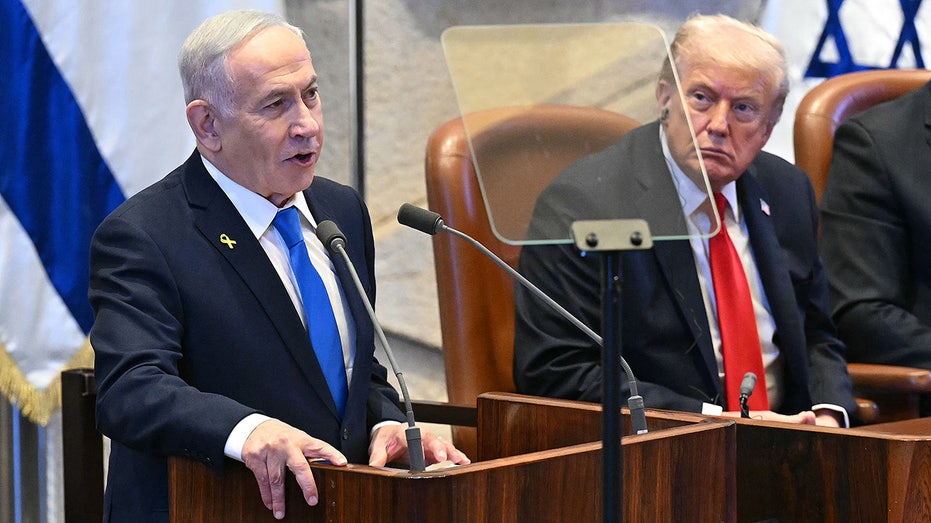
On Monday night, Prime Minister Benjamin Netanyahu addressed the nation, saying he had spent decades fighting Iran’s efforts to acquire a nuclear weapon. "I can define it as the mission of my life," he said. "I stood by it until now, and I will stand by it in the future. With or without a deal, Iran will not have a nuclear weapon."
He continued, "Not today and not tomorrow. As long as I am the prime minister of Israel, it will not happen."
Responding to reporters' questions, Netanyahu acknowledged that he was not familiar with the exact details of the memorandum of understanding reached between the Trump administration and the Iranian regime but lauded the joint U.S.-Israel operation against the regime.
Netanyahu said the campaigns had spared Israel from the threat of nuclear annihilation. "If we had not acted when we did... and with the force we demonstrated in a historic partnership with President Trump and the U.S. military, Iran would already possess atomic bombs," Netanyahu said.
Earlier on Monday, Defense Minister Israel Katz, held back from directly criticizing the deal but said that the IDF would not withdraw from southern Lebanon, warning that if Iran attacks Israel in response to the fighting against Hezbollah, "we will strike it with full force."
He said, "The IDF will remain in the security zones in Lebanon, Syria, and Gaza, without any time limit, to protect the border and Israeli communities against jihadist elements."
Katz described the security zones as "among the IDF’s greatest achievements" in the multi-front war since the Hamas-led Oct. 7, 2023 massacre, adding that Israel therefore opposes an IDF withdrawal from Lebanon despite all the pressures that will still come.
Katz said he and Prime Minister Benjamin Netanyahu had conveyed these positions to U.S. President Donald Trump and other senior American officials, including U.S. Secretary of War Pete Hegseth.
"We will not compromise on Israel’s security interests and the protection of our citizens," he concluded.
Yossi Kuperwasser, head of the Jerusalem Institute for Strategy and Security and former chief of the research division in the Israel Defense Forces’ Military Intelligence Directorate, told Fox News Digital that the details of the agreement remain sketchy.
"There was a debate within the Iranian leadership over whether to accept the deal," he said. "It appears that the information we are hearing is coming from those who opposed it. Maybe they are right, maybe they are wrong, but it raises major concerns in Israel. If this is the deal, it is a disaster. If one listens to President Trump, the deal is probably something different."
Kuperwasser defined a "good deal" as one in which Iran gives up all components of its nuclear program, grants access to enriched uranium and establishes a robust monitoring system capable of reaching anywhere at any time, including military facilities likely being used for atomic purposes. He added that such an agreement should also prohibit production of missiles capable of carrying nuclear warheads.
"Lebanon’s fate is a matter to be discussed between Washington, Jerusalem, and Beirut," Kuperwasser said. "Iran is not a party to those talks and should not be according to the Lebanese government. If Lebanon is to be part of a deal with Iran, it means Tehran has a say in Lebanese matters."
Kuperwasser noted that Israel has lived under the shadow of Iran’s nuclear program since 1998, while noting that Prime Minister Benjamin Netanyahu is uniquely positioned to assess the issue given his decades of involvement. He said it remains unclear whether Netanyahu is satisfied with the outcome or what his final assessment will be.
Former Israeli Prime Minister Yair Lapid, now leader of the opposition, referred Fox News Digital to his comments on X.
"The emerging agreement achieves none of Israel’s war goals. The regime survives, the missile program exists, and Iran can rebuild its nuclear program. This is a complete failure by Netanyahu, and in the process, he is turning us into a client state that takes orders about its national security," he wrote.
On March 19, Prime Minister Netanyahu outlined three war objectives for the U.S.-Israel joint operation against Iran: "One, removing the nuclear threat. Second, removing the ballistic missile threat and removing both of these threats before they're buried deep underground and become immune from aerial attack. And third, this means creating the conditions for the Iranian people to grasp their freedom, to control their destiny," the premier stated at the time.
Dr Meir Javedanfar, Iran lecturer at Reichman University, told Fox News Digital that Israel’s most immediate concern regarding the deal is the clause dealing with Lebanon.
"There is genuine concern that this could tie Israel’s hands," he said. "An additional concern is that Hezbollah could use this clause to regroup and strengthen its armed forces and positions along the border with Israel."
Javedanfar said it is too early to assess whether the deal would leave Israel in a significantly stronger position than the 2015 Obama-era nuclear agreement, citing the fate of Iran’s stockpile of 60% enriched uranium and its atomic infrastructure.
"Will Iran be allowed to continue enriching uranium on its soil? If yes, at what percentage? And how will the international community oversee Iran’s nuclear program? What kind of inspection program will they have? How intrusive will they be?" he added.
Israel’s controversial National Security Minister Itamar Ben-Gvir on Monday insisted that the MOU does not bind the Jewish state. "Israel is not subject to the United States, and we are an independent and sovereign nation," he tweeted, adding that Jerusalem’s duty is to its citizens, its soldiers and the Jewish people."
He stated, "My position is clear: we are not partners to this agreement that does not ensure our security, and it does not bind us in any way," he said, adding that while Israelis "love" the United States and "are grateful" to Trump, "the State of Israel is not a banana republic."
On Friday, Netanyahu's office stated that "Even though Israel is not a party to the memorandum of understanding, the Prime Minister expressed his appreciation for President Trump's commitment that the final agreement at the conclusion of negotiations will include the removal of enriched material, the dismantling of enrichment infrastructure, limits on missile production, and the cessation of Iran's support for its terrorist proxies in the region."
Quoting the prime minister, the statement added that "As long as I am the Prime Minister of Israel – Iran will not have nuclear weapons. President Trump and I are in full agreement on this issue. For over 30 years, I have been at the forefront of the international struggle against Iran's nuclear program. Were it not for this struggle, Iran would have long ago possessed atomic bombs to destroy Israel. Iran is working to destroy the Jewish state, and I am dedicating my life to preventing them from doing so. As long as I am the Prime Minister of Israel, this will not happen."
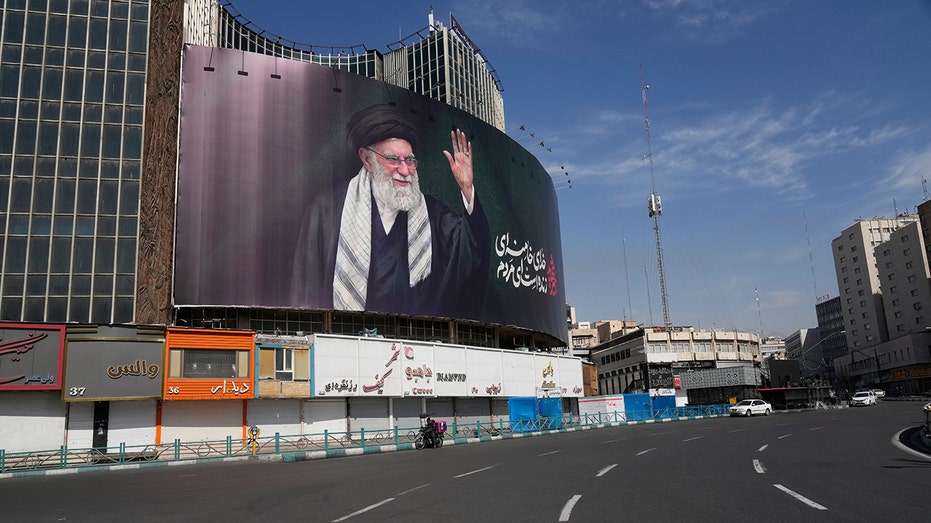
The Islamic Republic of Iran’s state-controlled media is promoting the memorandum of understanding with the U.S. to re-open the Strait of Hormuz and address Tehran’s illicit nuclear weapons program as its triumph over the U.S. and Israel.
The major diplomatic breakthrough, known as by its initials MOU, is slated to be sealed at a signing ceremony on June 19 in Switzerland. Iranian state-controlled TV boasted that the "U.S. is forced to sign agreement to end the war."
The State Department has classified Iran as the world’s worst state-sponsor of terrorism and its state-controlled media apparatus is notorious, according to Iran experts, for spreading anti-U.S. propoganda.
Iran's Deputy Foreign Minister Kazem Gharibabadi said, according to the country's Tasnim News Agency, "This memorandum does not mean trusting the enemy; it has been written with active distrust. We will monitor the implementation of U.S. commitments."
Iran’s Islamic Republic News Agency (IRNA) reported that the nation’s Foreign Minister, Abbas Araghchi, "emphasized that national cohesion and the active presence of the people serve as important capital and a primary pillar of Iran’s diplomatic authority."
Araghchi said, according to IRNA," that the true image of Iran’s power on the global stage stems not only from its military capabilities but also from national cohesion, resilience, and the active involvement of its people."
Tehran's top diplomat stated that the,"Iranian nation achieved not only tactical victories during the 12-day imposed war in June last year and the recent war, but also important strategic accomplishments whose impact can be observed in both regional and global equations."
President Trump announced some of the elements of the MOU on Sunday. He wrote on social media. "The Deal with the Islamic Republic of Iran is now complete." He noted that "I hereby fully authorize the toll free opening of the Strait of Hormuz, and, simultaneously herewith, authorize the immediate removal of the United States Naval blockade. Ships of the World, start your engines. Let the oil flow!"
There are additional components of the MOU that have not been confirmed, including the timetable for sanctions relief and the end of Iran’s enrichment of uranium for the construction of nuclear weapons.
Iran’s Supreme National Security Council said in a Sunday statement that all military operations across multiple fronts, including those in Lebanon, will cease "immediately and permanently" starting Sunday night.
Lisa Daftari, the founder and editor-in-chief of The Foreign Desk told Fox News Digital that, "Inside Iran, state media is selling this as a victory, not a compromise. The message on Iranian television is that a ‘strong and proud’ Islamic Republic has forced Washington to recognize its control over the Strait of Hormuz and to ease military pressure, while Tehran supposedly gives up very little in return."
Daftari, a leading expert on the Islamic Republic, added "The Islamic Republic’s very DNA is built on delay, deceit and deniability. Every agreement it has signed has been treated as a tactical pause on the way to more missiles, more proxies and more leverage, not a real change in behavior. So while it’s important to read the fine print of this new deal, it’s even more important to remember who is signing it. A system that survives by holding deadly weapons over its neighbors and by lying to its own people is not suddenly going to become a trustworthy partner."
She concluded, "The Trump administration should assume from day one that Tehran will test every loophole, hide every capability it can, and resume its nuclear program, amass its drones and missiles, fund its deadly proxies while continuing to torture the Iranian people at home."
Vice President JD Vance told Fox News' "The Big Weekend Show" Sunday that "I think it's a big moment for the United States of America. Thanks, of course, to the President's leadership and the hard work of the entire team. Three things that I think are important for the American people just to appreciate about what this deal does for all of us as Americans."
He stressed that" Number one, this is the immediate opening of the straits of Hormuz and, of course, the lifting of the naval blockade that we've had on Iran along with it. The number two thing that it means is that Iran will never have a nuclear weapon and not just pursue a nuclear weapon for procure or try to buy a nuclear weapon as well."
Cameron Khansarinia, the chief of staff for Reza Pahlavi, the leader of the Iranian democratic opposition and exiled former crown prince of Iran, wrote on x: "Deal or no deal, the people of Iran will not stop the fight for freedom. Iran’s future has always been for Iranians for determine. And they will. With or without help, Iranians will topple the Islamic Republic. The fight continues. Prince Reza Pahlavi will lead Iran to freedom."
Another leading Iranian opposition group's leader, Maryam Rajavi, President-elect of the National Council of Resistance of Iran (NCRI), said in a statement that, "The Iranian Resistance, which for nearly five decades has sought freedom and peace, welcomes any understanding to end the war and the suffering of the Iranian people. In Iran, no one except the remnants of the mullahs and the Shah has wanted or wants war."
She added that "The effort to produce nuclear weapons, warmongering, and meddling in the countries of the region are part of the survival strategy of the religious fascism ruling Iran, and it will not abandon them as long as it can. War is this regime’s shield against popular uprisings, while peace and a ceasefire are, as Khomeini put it, like "poison" for it. The overthrow of the regime is the responsibility of the Iranian people and their organized Resistance. I reiterate once again that any international agreement to end the war must include an end to the execution of political prisoners and the killing of protesters."

 Login
Login