
Normal view

Diaspora Academics Urge Amazon’s Kindle to Restore the Greek Language

12 June 2026 at 05:55
Greek language Amazon's Kindle
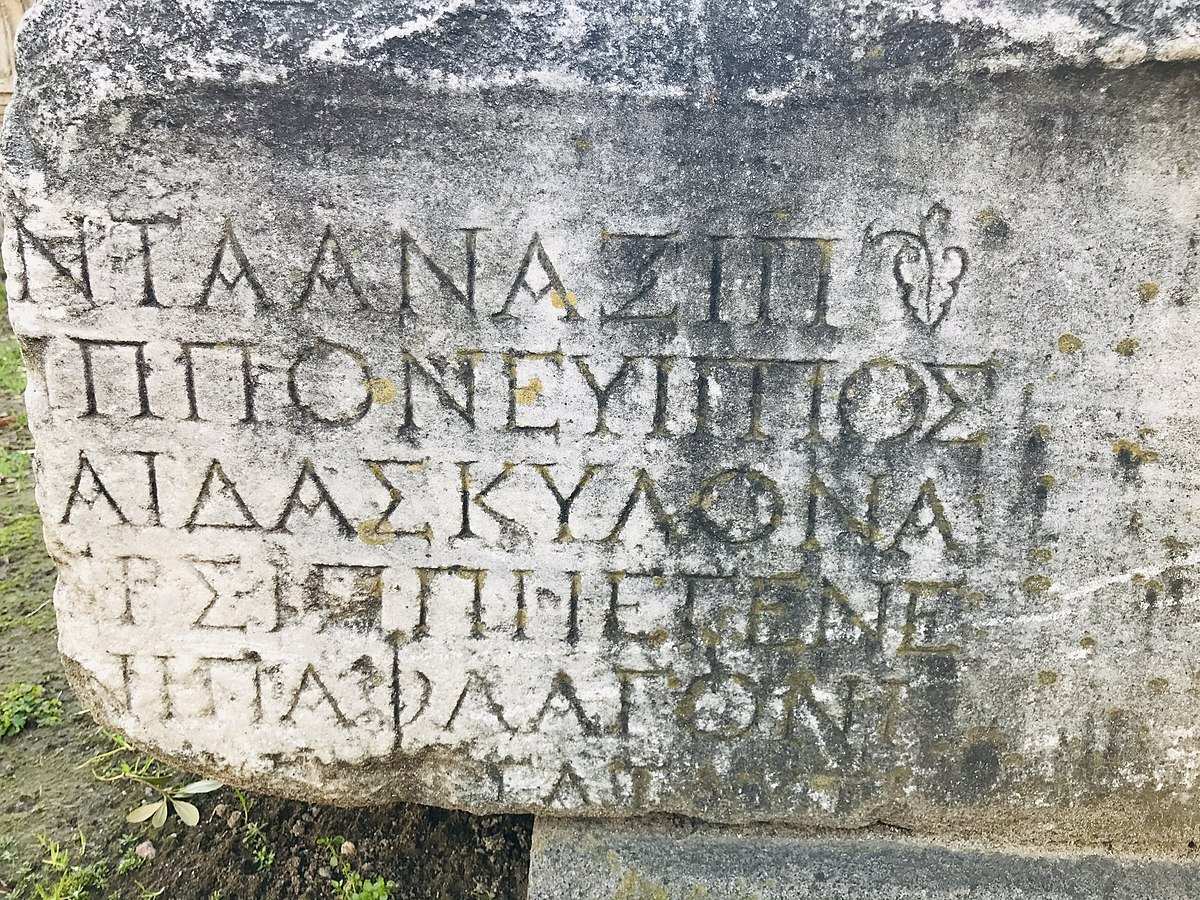
Ancient Greek is among the oldest languages in the world. Credit: Maurice Flesier / CC BY-SA 4.0 / Wikimedia Commons

Hundreds of diaspora academics are calling on Amazon Kindle Direct Publishing (KDP) to reverse its exclusion of the Greek language. In an open letter, hundreds of professors, academics, authors, educators, researchers, publishers, and members of the global intellectual community expressed their deep concern. They urged Amazon to “reconsider its current policy and demonstrate leadership in protecting linguistic and cultural diversity in the digital age.”

The signatories brought together by the International Hellenic Association (IHA), point out that Amazon ironically derives its name from Greek mythology and language. They emphasize that “the exclusion of Greek—one of the foundational languages of global intellectual history—is not merely a technical omission, but a cultural loss whose consequences extend far beyond the Greek-speaking community itself.”

Why the Greek language should be restored by Amazon’s Kindle

The letter, bearing the signatures primarily of Greek diaspora academics mobilized by the IHA, highlights several critical points regarding Amazon KDP, a self-publishing platform allowing authors to distribute digital and print books globally:

  • A striking contradiction: Amazon KDP currently supports publishing in numerous regional and minority languages with significantly fewer speakers than Greek (e.g., Cornish, Manx, North Frisian, Romansh, Corsican). Meanwhile, Greek, a language spoken by an estimated 13 to 15 million people worldwide, remains excluded. Therefore, this policy cannot be justified by commercial or demographic metrics alone.
  • A continuous legacy: Greek occupies a unique position in human history. With over 3,400 years of uninterrupted written tradition, it is one of the world’s oldest living languages. It is the language of Homer, Plato, Aristotle, Hippocrates, Archimedes, and the New Testament—the very bedrock of philosophy, democracy, medicine, mathematics, political thought, theology, literature, and the sciences.
  • A living vessel of values: Greek is not just a historical relic. It is a vibrant language and a living intellectual tradition. For millennia, it has served as the matrix for human-centric values. Words such as democracy, philanthropy, politics, ethics, dialogue, philosophy, history, and theory are not just linguistic artifacts but represent monumental achievements of human civilization.
  • The language of democratic principles: Greek articulates the foundations of civic life with unparalleled precision. Terms like demokratia (democracy), isegoria (equal right to speak), isonomia (equality before the law), and isopoliteia (equal civic rights) embody the principles of citizen participation and political inclusion. These concepts carry a specific original context that remains fundamentally untranslatable, serving as cornerstone concepts for modern societies.
  • A language of moral resistance: Hellenic literature and thought gifted humanity a vocabulary of moral resistance against arbitrary power. In Aeschylus’s Prometheus Bound, the concept of philanthropos tropos (the philanthropic way) stands in defiance of tyranny, presenting the love for humanity as a moral and political choice. This legacy remains deeply relevant in the digital era, wherein access to language also equates to access to memory, education, and cultural dignity.

Greek Language Day

Consequently, Greek is far more than a tool for communication or commerce; it is a treasury of wisdom, virtue, and beauty. Its global significance has been internationally recognized by UNESCO, which officially declared February 9th as World Greek Language Day, honoring its timeless contribution to global civilization.

Excluding Greek-language publishing from one of the world’s most influential digital platforms creates artificial barriers for Greek-speaking authors, educators, students, and publishers worldwide. Simultaneously, it undermines the broader principle of linguistic diversity in the global digital landscape.

For years, Greek authors and publishers have relied on Amazon for the international distribution of literature, academic research, and educational materials. In turn, Greek consumers have consistently supported Amazon’s products and services throughout every stage of its technological evolution, the open letter by Greek academics says.


The Lost Letters of the Greek Alphabet

6 June 2026 at 16:12
Ancient Greek vase with early Greek aphaber
Early Greek alphabet painted on the body of an Attic black-figure cup. Today, there are missing letters in the Greek alphabet. Credit: flickr / Dan Diffendale CC BY-SA 2.0

The Greek alphabet has changed in many ways over the course of its existence. This is hardly surprising, given that the Greeks have been using it for nearly three millennia. One way in which it has changed is that some letters that used to exist in the Greek alphabet are now missing. Which letters were these, and what do we know about them?

The first letters of the Greek alphabet

To start, let us establish how the Greek alphabet acquired its letters in the first place. According to ancient Greek historians, the Greeks adopted the Phoenician alphabet after the arrival of a Phoenician prince named Cadmus. Archaeology confirms that this occurred at some point in the ninth century BCE.

The Phoenician alphabet was composed of only consonants. When the Greeks adopted it, they modified it to include vowels as well. This was a major step forward in the development of writing.

According to Plutarch, a Greek historian of the first century CE, there were originally sixteen Greek letters. However, Hyginus, an earlier writer, reports that there were originally eighteen.

In reality, it appears that neither version is correct. Physical evidence in the form of ancient inscriptions reveals that the earliest Greek inscriptions made use of all twenty-two letters in the Phoenician alphabet. However, four of these were for sounds which did not exist in Greek, so they were modified into vowels.

Perhaps this is where Hyginus’ idea of eighteen original letters comes from, being a distorted memory of the eighteen original consonants. In any case, the total number of letters in the Greek alphabet increased over time.

Why are there some missing letters?

Some of the letters used in ancient Greek inscriptions are simply not in the modern Greek alphabet. Why is this? Simply put, the reason is that the Greek language itself has evolved over time, and the alphabet exists to comply to the needs of the language rather than vice versa.

Additionally, different dialects of the Greek language existed within the Greek world at the same time. Therefore, the needs of each dialect would not necessarily be covered by the same letters.

In the late fifth century BCE, the alphabet used by the Ionian Greeks became the official, standardized alphabet of Athens. Over the following century, it then replaced the local alphabets of other Greek regions. By that time, the dialect of the Ionian Greeks was such that their alphabet did not make use of all the letters that had once been in use. Rather, their alphabet used just twenty-four letters. Hence, what were the letters that the Greek alphabet used to have but no longer does?

Digamma

One of the most famous lost letters of the Greek alphabet is Digamma. This had the following form:

Ϝ

It is superficially very similar to the modern F, but the sound was completely different. It was essentially the modern w sound. In fact, the original name for this letter was ‘wau’, taken directly from the Phoenician name for this letter.

San

Another lost letter is San. This had the following form:

Ϻ

Like Digamma, this looks almost identical to a more familiar letter. In this case, it looks just like the modern letter M. However, like with Digamma, the sound indicated by this ancient letter was completely different. Unlike the modern M, the ancient San, or Ϻ, was used to indicate an s sound. This fell out of use in favor of the alternative letter Sigma, written as Σ.

Koppa

Another letter that is no longer in use is Koppa, which had the following written form:

Ϙ

This is similar to the modern Q in the English alphabet, and that is no coincidence. Koppa was still part of the Greek alphabet when the Latins adopted it, which led to this letter eventually becoming the Q in English. The English alphabet originated from the Romans. The sound Koppa indicated was a k sound. It eventually fell out of favor in Greek, being replaced by the alternative letter Kappa, written as Κ.

Sampi

This next letter is called Sampi. It was written as:

Ͳ

This is very similar to the modern T, but it is unrelated. That modern letter comes from the ancient Greek Tau which, of course, had a t sound. In contrast, the ancient Greek Sampi had some kind of s or sh sound, although the exact vocalization is unknown. In any case, it fell out of favor when this sound was no longer used.

❌