Normal view

Fuel shortages reach Moscow and St. Petersburg as Ukraine’s strikes squeeze Russian refining

16 June 2026 at 09:52

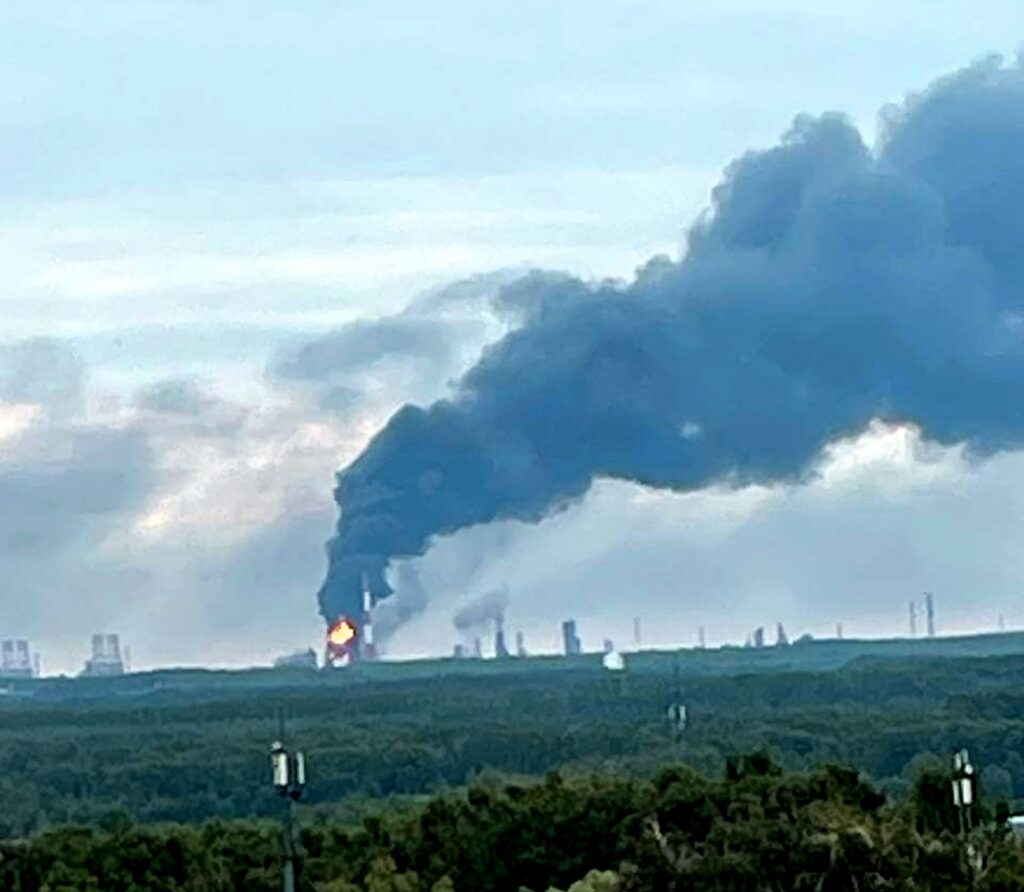
ukraine confirms strikes two tatarstan refineries rocket-fuel rubber plant tolyatti · post black smoke rises over burning oil refining facility after ukrainian strike nizhnekamsk russia 12 2026 0b9bde49-e761-4e4b-9abe-9bd2dd867a7d ukraine's defense

Ukraine’s drone war on Russian refineries has reached the gas pump in Moscow and St. Petersburg. Restrictions on gasoline sales hit the two capitals in mid-June, part of a shortage that the independent outlet The Moscow Times says now spans more than 25 Russian regions.

Its drones hit Russian refineries at least 16 times in May, eight of the country’s ten largest among them.

The strikes have squeezed Russian refining for months. What is new is that the shortage has spread to the two largest cities and into the cost of living.

Kyiv has struck the refineries to cut the oil revenue funding the war and deny Moscow the windfall from this year’s Iran-war price spike, a Bloomberg report found. Its drones hit Russian refineries at least 16 times in May, eight of the country’s ten largest among them, with at least 30 strikes on Russian oil assets overall—the most of any month since the full-scale invasion.

What the shortage looks like

The deficit started in occupied Crimea and spread inland, The Moscow Times reported. Tatneft now sells no more than 20 liters of gasoline per customer in at least six regions. At the same time, outages have hit stations in Kuzbass, Tatarstan, and the Ulyanovsk and Nizhny Novgorod oblasts.

Six cities, including Nizhny Novgorod and Krasnodar, limited the refueling of passenger aircraft in mid-June.

Farmers report diesel delivery gaps across southern Russia, the Central Black Earth zone, and the Volga region at the start of the planting season.

Aviation is the newest casualty. Six cities, including Nizhny Novgorod and Krasnodar, limited the refueling of passenger aircraft in mid-June, after airports in St. Petersburg, Yekaterinburg, and Ufa ran short of jet fuel in late May. Moscow has banned jet-fuel exports until the end of November to protect domestic supply.

russian wholesale fuel prices jump up
Russian wholesale fuel prices have jumped in 2026, with diesel up 43% on the exchange since January—wholesale figures, not pump prices.Russian wholesale fuel prices have jumped in 2026, with diesel up 43% on the exchange since January—wholesale figures, not pump prices. Chart: The Moscow Times / Euromaidan Press. Made with Claude

What “lost a third” really means

One figure circulating about the campaign needs care. Energy Intelligence estimates that almost a third of Russia’s refining capacity, about 2.14 million barrels a day, sat idle in early June, The Moscow Times reported. That number is idle capacity at a single moment, not lost output, and it changes whenever a damaged unit restarts.

Russian refinery runs averaged 4.58 million barrels a day in May, down about 13% from a year earlier and the lowest since 2009.

Actual throughput has fallen by less. Russian refinery runs averaged 4.58 million barrels a day in May, down about 13% from a year earlier and the lowest since 2009, the analytics firm OilX estimates, a Bloomberg report found. By the first week of June, The Moscow Times wrote, runs had slipped below 4 million barrels a day, a 21-year low.

The difference this round is where the drones land. Earlier strikes hit primary distillation units, which Russia repaired quickly. Ukraine is now striking secondary units, the equipment that turns crude into gasoline and diesel, which take months to fix and depend on imported parts that sanctions choke off, Sergey Vakulenko told Bloomberg. Vakulenko ran strategy at Gazprom Neft until February 2022 and now studies the industry at the Carnegie Endowment.

Russia has absorbed strikes before, rerouting crude to export and so blunting the hit to domestic supply.

The caveat runs the other way, too. Russia has absorbed strikes before, rerouting crude to export and so blunting the hit to domestic supply in April.

moscow's fuel supplier under fire ukrainian drones strike rosneft's ryazan refinery · post black smoke rises over oil hours after drone 15 2026 ryazan-supernova+-5204027262443918426 ukraine news reports
Explore further

Russian refining output fell 9.2% in April as Ukrainian drone strikes hit fuel plants

Energy Intelligence’s warning of the worst fuel crisis in Russia’s history is a forecast, not a verdict; Bloomberg’s early-June read was that Russia was still short of its 2023 crisis levels.

Moscow trades quality for quantity

The government is spending and bending rules to keep fuel moving. Oil companies received 700 billion rubles (about $9.7 billion) in subsidies across April and May. In June, the authorities allowed the sale of lower-grade Euro-3 gasoline in place of Euro-5—trading fuel quality for fuel quantity.

Prices are climbing regardless. On the exchange this year, diesel is up 43% and jet fuel 40%, The Moscow Times reported. Retail gasoline rose 3.93% over the month to early June, its sharpest jump since 2018, and headline inflation could pass 6% year on year for the first time in 2026, the forecasting center TsMAKP found.

Dmitry Peskov said on 21 May that supply and demand were balanced and blamed lower output on seasonal maintenance.

TsMAKP tied the fuel-price rise to a mix of higher world oil prices, the summer travel and farming season, and the fallout from drone strikes in southern Russia. It stressed that the jump is concentrated in a few categories rather than systemic, and still judged a 5% year-end inflation rate achievable.

The Kremlin denies a problem. Spokesman Dmitry Peskov said on 21 May that supply and demand were balanced and blamed lower output on seasonal maintenance.

Yaroslav Kabakov, a strategist at the Russian brokerage Finam, reads it differently. The shock is coming from the supply side, he argued, and the crisis is only beginning, with peak demand in August and September still ahead.
Ukrainian drone strike kills 1 and injures 3 in southern Russia

13 June 2026 at 20:59
A Ukrainian drone attack killed one person and injured three in Russia's southern Krasnodar region, local officials said Saturday. Drone debris also sparked a fire at a sea terminal, local Gov. Veniamin Kondratyev said.

Ukraine’s drone commander says his branch killed or wounded 102,000 Russians in 12 months. It started with a grenade taped to drone that filmed weddings

11 June 2026 at 15:59

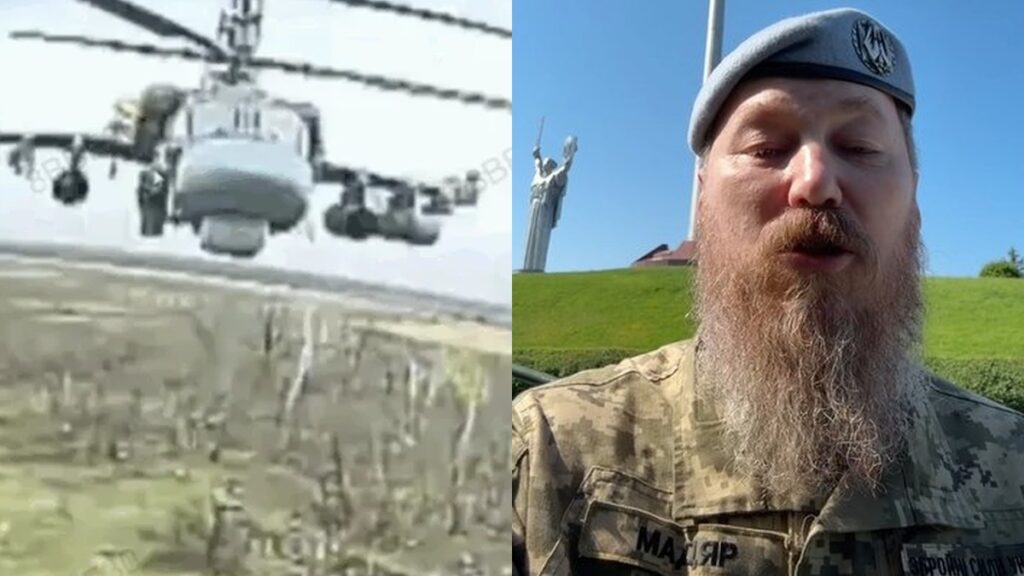
Collage. Left: Russian Ka-52 helicopter at low altitude seen through a Ukrainian FPV drone camera. Right: Major Robert "Magyar" Brovdi in fatigues and beret, speaking to camera with the Motherland Monument in Kyiv visible behind him.

Major Robert "Madiar" Brovdi marked Ukraine's first official Day of Unmanned Systems Forces on 11 June 2026 with a single number. His drone branch claims 102,000 Russian soldiers killed or wounded over twelve months, alongside 360,000 enemy targets hit and 1.7 million combat sorties flown, the commander said in a Telegram address.

The number translates four years of homemade weaponry into industrial output. By Brovdi's own reckoning, drones from his Unmanned Systems Forces (SBS) now account for one in every three Russian soldiers falling on the battlefield, and at a unit cost he prices in hundreds of dollars apiece.

"We exchange the plastic and metal of a drone worth a few hundred dollars for the carcass of an occupier. And that is the best exchange rate in the world," Brovdi said. 

"Birds changed both plan and course"

Brovdi narrated the four-year arc of Ukrainian drone warfare in a single Telegram thread. In 2022, he said, the starting slogan was "artillery, shovel, drone" to locate, correct, hide. Then, in spring 2022, he taped a grenade to a commercial quadcopter and pushed video of the drop to social media.

"No weapon in human history has evolved so quickly. A wedding drone, no joke, performed well at the front, fundamentally and forever changing world doctrine," he revealed. 

The unit he founded that month — Madiar's Birds — has since grown from platoon to brigade to a separate branch of the armed forces. The 414th brigade tripled in size in late 2024. On 3 June 2025, President Volodymyr Zelenskyy made Brovdi commander of the entire SBS, replacing Colonel Vadym Sukharevskyi.

Four targets, 2,000 kilometers deep

Madiar listed four target priorities for the year ahead: enemy manpower, sources of war financing, weapons production, and Russian air defense. The branch's reach now extends from frontline FPV strikes to deep-strike platforms confirmed beyond 1,700 kilometers inside Russia.

"The birds changed both the plan and the course," Madiar said. 

Art-collecting commander

Russian state TV calls him a "terrorist." A Russian court sentenced him in absentia to life in prison in March 2026 on charges of organizing a terrorist attack. Russian prosecutors have filed 46 counts against him in total.

The Center for European Policy Analysis calls him "a bearded talisman of Ukraine's defense" — a "swashbuckling, plain-spoken" commander whose journey ran from "besuited grain trader" to the top of the world's first dedicated drone branch.

Madiar's biography reads like Carpathian Tony Stark's: an ethnic Hungarian from Uzhhorod who ran one of Ukraine's largest grain traders, served on the Zakarpattia Regional Council from 2010 to 2015, and funded contemporary Ukrainian art through his BrovdiArt Foundation before walking into a recruitment office at the start of the full-scale war.

He closed his anniversary speech in his usual register: "And now to work, ladies and gentlemen, at all available depths, across all the hated enemy. The way we know how, with what we have, where we are."

“Fourth house. Blue doors”: Four years ago three Ukrainians changed global warfare forever (VIDEO)

11 June 2026 at 10:04

Screenshot

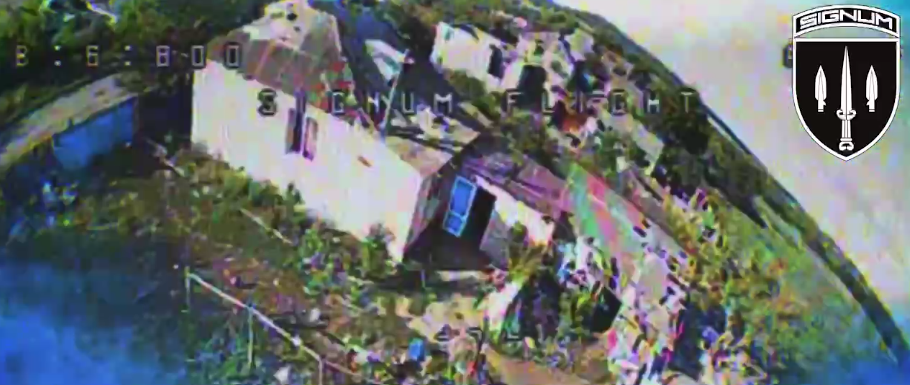
On 10 June 2022, the world's first successful FPV drone combat strike was carried out by Ukrainian Armed Forces fighters from the SIGNUM battalion. The three operators with call signs "Turyst," "Shvaiger," and "Bagdad" fired the strike against a Russian target, an advisor to the Defense Minister, Serhii Sterneko, recalls

The footage of the strike has become a defining artifact of the Russo-Ukrainian war. Four years later, Ukraine's Unmanned Systems Forces (SBS) has struck nearly $40 billion worth of Russian targets and grown into a full branch of the Armed Forces with its own doctrine and eleven combat units.

The 10 June 2022 FPV strike is recognized as the moment that changed not only the Russo-Ukrainian war but the broader rules of armed conflict. The combat application of a commercial-grade quadcopter against a moving Russian target opened a new category of warfare that has since been replicated by militaries worldwide.

Ukraine remains the operational pioneer in this category, with the SBS now leading the Logistics Lockdown program targeting Russian rear-area logistics, deploying $113 million in mid-strike drones.

"Fourth house. Blue doors" 

The footage of the 10 June 2022 strike captures Ukrainian SIGNUM battalion fighters operating an FPV drone against a Russian target on the frontline.

The radio call "Fourth house. Blue doors." — used by the operators to identify the target — has become one of the most recognizable phrases from the early war.

The day that changed military doctrine worldwide: On 10 June 2022, Ukraine carried out the world's first FPV drone combat mission

As a result, Ukraine established Unmanned Systems Forces, helping save thousands of Ukrainian lives
📹Sternenko pic.twitter.com/kbk5KphZBG

— Euromaidan Press (@EuromaidanPress) June 11, 2026

From battlefield improvisation to separate branch of armed forces

The 10 June 2022 strike was an act of battlefield improvisation. Ukrainian forces were using commercial drone technology adapted for combat, with no formal doctrine, no procurement pipeline, and no command structure for FPV operations.

Three years later, on 11 June 2025, Ukraine formally established the Unmanned Systems Forces (SBS) as a dedicated grouping within the Armed Forces.

SBS now has eleven combat units and its own military doctrine. President Volodymyr Zelenskyy on 10 June 2026 signed a decree establishing the Day of Unmanned Systems Forces as an annual commemorative day, to be observed each 11 June.

Robert "Madiar" Brovdi: from volunteer to branch commander

The SBS commander is Major Robert Brovdi with a call sign "Madiar". Brovdi is a Hero of Ukraine, the founder of the "Madiar's Birds" unit, and one of the originators and leading practitioners of innovations in unmanned systems for combat applications.

He traveled the path from volunteer to commander of a separate branch of the Armed Forces. The trajectory is consistent with the SBS's broader institutional history, which began with battlefield improvisation in places like the 10 June 2022 SIGNUM strike, and has developed into a formal military structure with doctrine, procurement, and command.

The footage of the strike has become a defining artifact of the Russo-Ukrainian war. Four years later, Ukraine's Unmanned Systems Forces (SBS) has struck nearly $40 billion worth of Russian targets and grown into a full branch of the Armed Forces with its own doctrine and eleven combat units.

Flat steppe: Ukraine is strangling Crimea’s supply lines from air. Melitopol-Chonhar road is latest target

6 June 2026 at 15:52

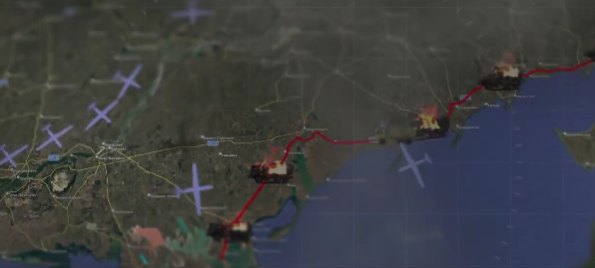
The Russian vehicles are burning on the route to Crimea. Source: The 3rd Separate Special Purpose Regiment

Ukrainian Special Operations Forces drone operators have established aerial control over part of the Russian land supply route from occupied Melitopol to Chonhar. The path is the entry point to Crimea, and they are destroying Russian equipment and disrupting Russian military logistics on the road, the 3rd Separate Special Purpose Regiment announces.

Russian forces on the peninsula already depend on a constrained set of supply lines: the Kerch Bridge (under sustained Ukrainian threat since 2022), the rail and road corridor through occupied Donetsk Oblast, and the Melitopol-Chonhar bottleneck. Ukrainian aerial denial of any one of these links compounds pressure on the others. 

Squeezing land corridor from both ends

The new operation puts pressure on the land corridor's western end. On 31 May, Mariupol residents reported in local group chats that Russia shut down part of its land corridor from Crimea to occupied Donetsk because of Ukrainian drones.

The Melitopol-Chonhar segment crosses flat steppe with limited cover and funnels Russian convoys through narrow bridge crossings over the Syvash to reach the peninsula, the terrain optimal for drone operators to deny the air with persistent surveillance and strike capability. 

SSO drones as the strangulation instrument

The 3rd Separate Special Purpose Regiment is one of Ukraine's veteran Special Operations Forces units, named after the tenth-century Kyivan Rus prince.

The regiment's deployment of drone operators against Russian logistics on the Melitopol-Chonhar route fits within Ukraine's broader "logistics lockdown" approach to occupied territory. Ukraine's Defense Ministry has recently committed $113 million to medium-strike drones designed to target Russian rear logistics.

"Drones of the Special Operations Forces unit are destroying equipment and breaking the enemy's logistics routes on the Melitopol-Chonhar route," the 3rd Regiment said.

What does this change for Russia on peninsula? 

Russia's military presence in Crimea depends on a continuous supply of fuel, ammunition, and food, as well as on personnel rotation. 

"As a result, the already-difficult logistics for supplying the Russian army and fuel to the peninsula have grown harder," the SSO said.

❌