Le congé de naissance pour les agriculteurs évolue. Dès le 1er juillet 2026, ils pourront bénéficier de deux mois financés par la MSA, avec service de remplacement. Une avancée attendue pour l’équilibre des familles...
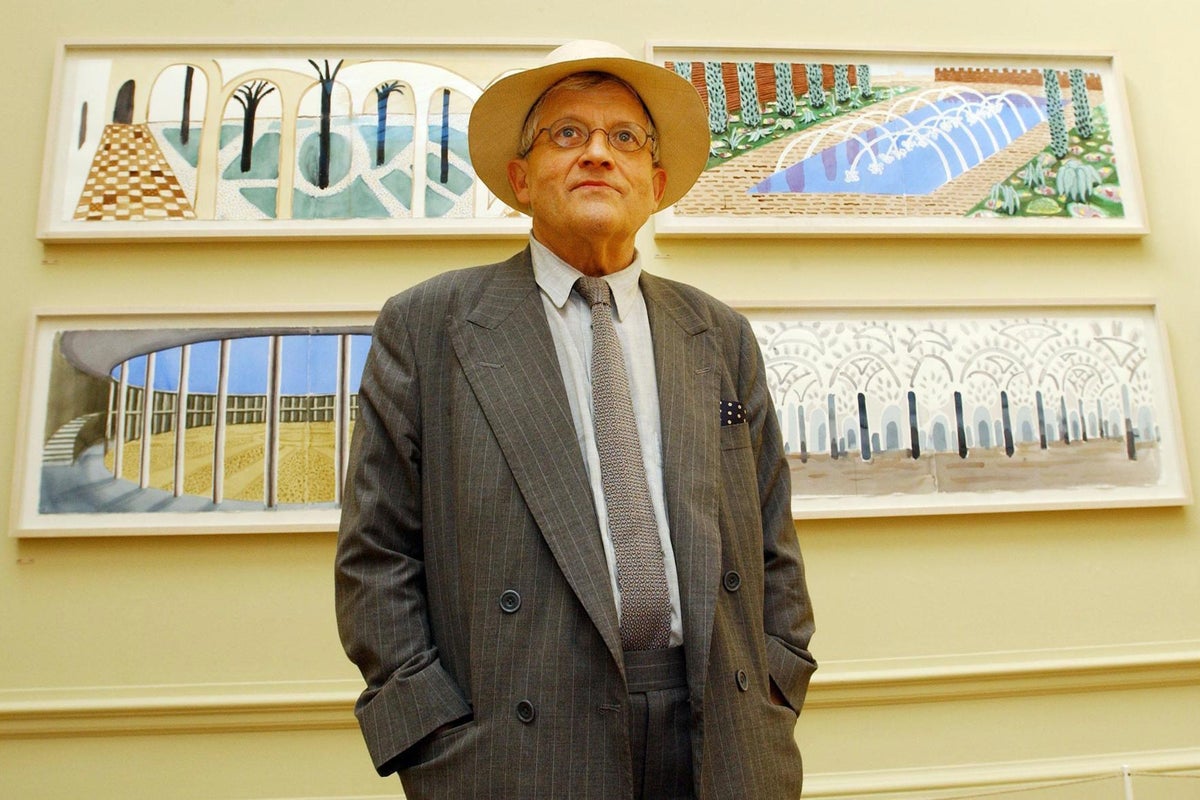
British artist David Hockney, who died at the age of 88 on Thursday, fell in love with the French countryside in the last few years of his life. He settled in Normandy in 2019, where he lived during the Covid-19 lockdown and was able to rededicate himself to nature over a year of solitude.
La prévention des risques dans les chais viticoles franchit un cap à Nogaro (Gers). Lauréate du Trophée de la prévention 2026, la coopérative des Hauts de Montrouge expérimente un système inédit de captation du CO₂,...
Other western acts have attempted to crack country’s music scene since singer’s breakout success in 2018
One week after announcing she was “cancer free”, the British pop star Jessie J did what any recovering patient would do and travelled thousands of miles around the world to perform for an audience of more than a billion people.
On 29 May, the singer-songwriter, whose real name is Jessica Cornish, belted out a stage-rattling rendition of Frank Sinatra’s My Way on the stage of Singer, a hugely popular Chinese singing competition similar to The Voice. She also performed her new song, California, briefly adapting the lyrics to change California to Changsha, the Chinese city where Singer is hosted.
The star of cult blockbuster ‘Alita: Battle Angel’ speaks to Louis Chilton about swapping Hollywood for the West End, her ‘very chaotic upbringing’, and why the Old Vic’s new all-female revival of ‘Glengarry Glen Ross’ is doing more than ‘putting lipstick on it’
Beloved movie critic and arts reporter was known for bushy hair and mustache and affection for groan-inducing puns
Gene Shalit, a movie critic and arts reporter for the Today show over four decades who was known for his puffy hair, oversized handlebar mustache and affection for groan-inducing puns, has died. He was 100.
Shalit’s family announced the death Friday to NBC News, saying in a statement that he “passed away peacefully today after 100 years of an amazing life”.
Ukrainian heavyweight boxing champion Oleksandr Usyk met with U.S. President Donald Trump at the White House on June 12, according to a post shared by presidential communications adviser Margo Martin on X.
La nomination du communiste Jean-Jacques Mirande en tant que vice-président du conseil départemental charge de l’agriculture risque de surprendre un terroir dominé de la tête et des épaules par une Coordination rurale...
Screwworms are on their way to becoming a billion-dollar international problem but can be contained if ranchers are vigilant, watch their herds and other wildlife, and quickly treat any infestations, U.S. Agriculture Secretary Brooke Rollins said.
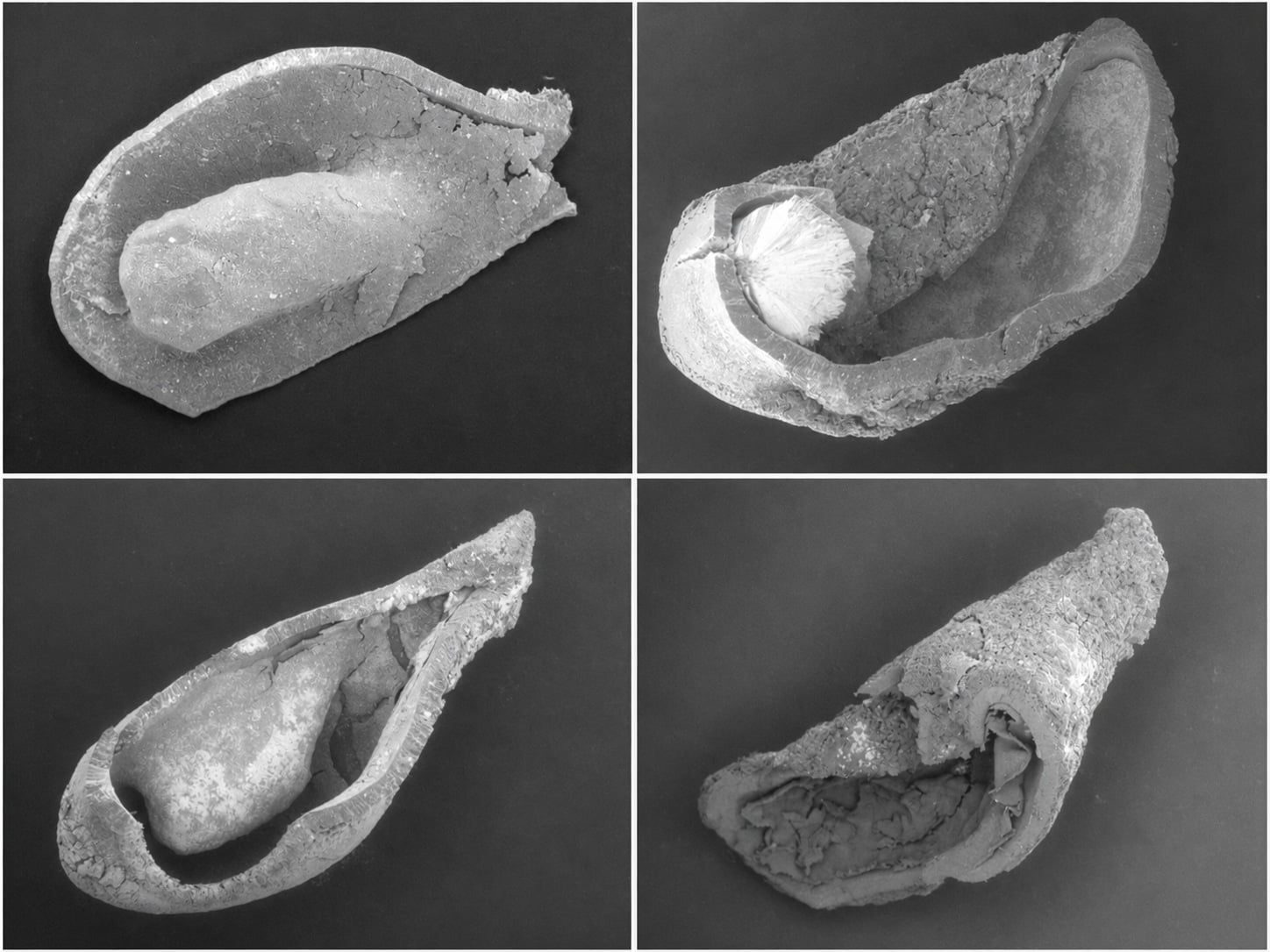
Analysis of grape seeds from ancient wells in Tuscany. Credit: Oya Inanli / CC BY 4.0
Researchers have used ancient DNA from grape seeds to trace the origins of wine-making traditions that still shape modern viticulture, finding a direct genetic thread connecting an Etruscan settlement in Italy to wine regions across Europe today.
Oya Inanli of the University of York led a team that studied 80 waterlogged grape seeds from two wells at Cetamura del Chianti, a site in Tuscany dating to around 300 BC.
The seeds span the Etruscan and Roman periods up to roughly 1200 CE. The study was published in the Journal of Archaeological Science.
More than a quarter of the seeds belonged to a single variety, identical in genetics, and maintained without change for at least 362 years. Direct radiocarbon dating confirmed this variety was present from the Etruscan period through Roman occupation.
Researchers identified it as a clonal lineage, meaning winemakers repeatedly propagated the same vine without allowing it to reproduce sexually. This practice remains common among winemakers today.
One grape variety survived unchanged for over three centuries
The DNA of the dominant variety also pointed to a significant discovery. Genetic markers associated with berry color showed a 92 percent likelihood that the clonal variety produced white grapes.
A new study decodes ancient grape DNA, tracing a single wine variety through over 362 years and connecting Roman-era viticulture to modern European winemaking traditions. pic.twitter.com/mRRzkTyCuF
— Tom Marvolo Riddle (@tom_riddle2025) June 12, 2026
This makes Cetamura del Chianti one of the earliest known sites with genetic evidence for white wine production in the pre-Roman Mediterranean. Two other seeds showed markers linked to dark berries, suggesting red wine was also part of life at the settlement.
Researchers found genetic links stretching well beyond Tuscany. A Cetamura seed closely matched a grape seed recovered from a first-century Roman farm in Mont Ferrier, France. This points to the Romans moving specific vine varieties deliberately across their empire.
A separate Cetamura seed from the transitional Etruscan-Roman period showed a sibling-level genetic relationship with a modern Hungarian variety called “Baratcsuha szurke.” That variety belongs to a broader family of old European grapes, including a vine in Slovenia said to be more than 400 years old.
Ancient grape DNA traces modern wine’s origins across Europe
The team applied multiple methods, including ancient DNA analysis, near-infrared spectroscopy, geometric morphometrics, and radiocarbon dating.
Seeds from deeper layers of the wells preserved more genetic material, pointing to stable, waterlogged conditions as a key factor in DNA survival.
The research provides concrete evidence that agricultural traditions of the Etruscans and Romans laid the groundwork for wine culture across Europe.

 Login
Login