Normal view

Ukraine knew 37th Russian Brigade was waiting for fuel via Chonhar. It struck bridge and trucks still haven’t arrived

10 June 2026 at 08:56

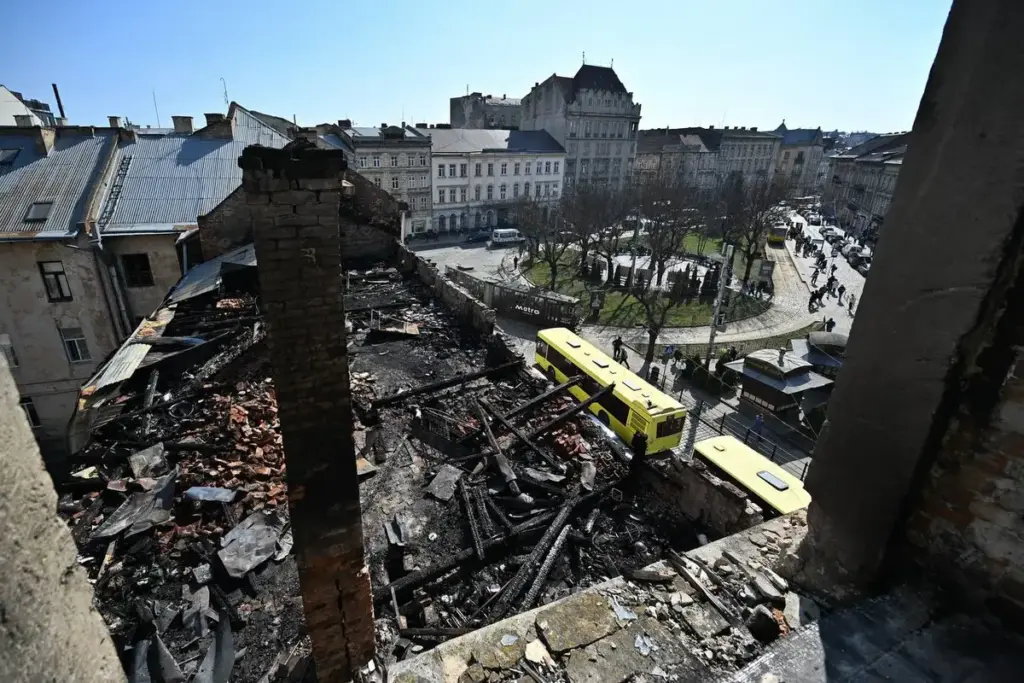
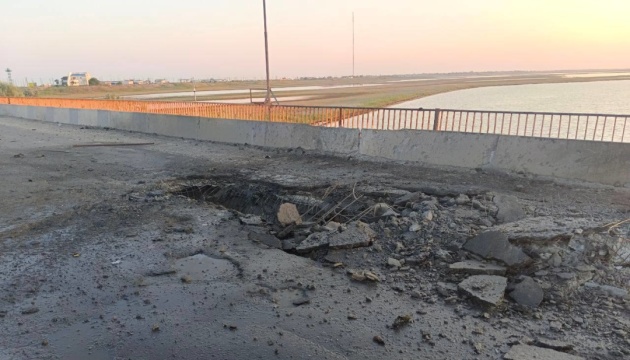
The Chongar Bridge has a hole from strikes. Source: UkrInform

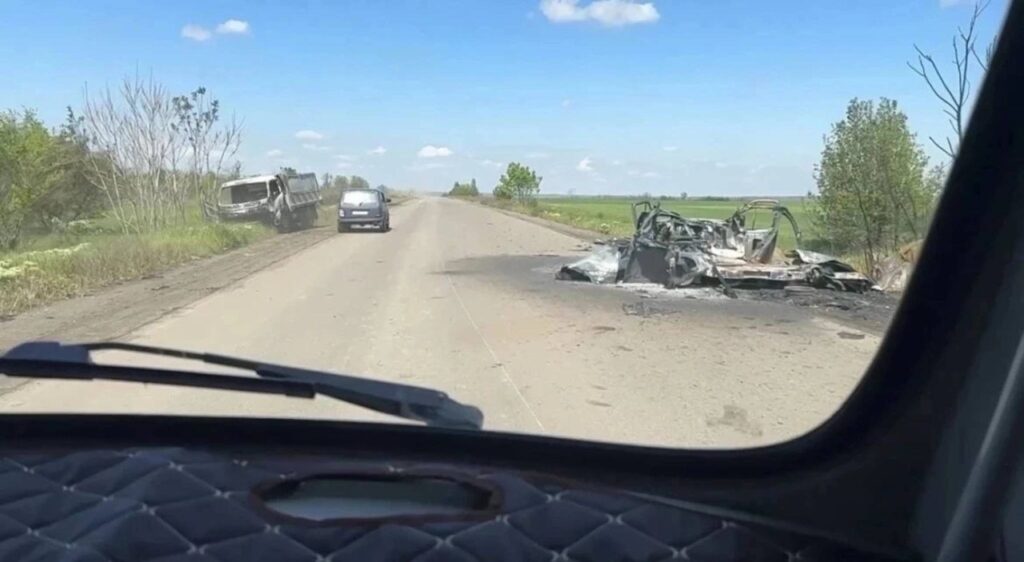
The Ukrainian strike on the Chonhar Bridge, the road bridge connecting Russian-occupied Crimea to Russian-occupied mainland Ukrainian territory, halted all traffic across the crossing, Commander of Ukraine's 1st Separate Assault Regiment Dmytro Filatov, call sign "Perun," told Army TV. The bridge was not fully destroyed, but damage to the roadway proved sufficient to fully halt traffic.

According to Filatov, Ukrainian assault units have built a cyber-intelligence network that provides real-time data from inside the Russian military environment, enabling Ukraine to strike Russian logistics nodes when the units are most dependent on them.

The Chonhar strike falls under Ukraine's broader "Logistics Lockdown" program, which was funded with $113 million in May to carry out systematic strikes against Russian rear-area infrastructure.

Strike worked

"The bridge has sustained damage such that movement on it has fully stopped," Filatov said.

Russian forces are now forced to seek bypass routes through Armyansk and other crossings, while Ukrainian forces watch where the enemy redirects supply flows.

The 37th Motor Rifle Brigade, operating on the Ukrainian-defined direction targeted by the strike, was specifically waiting for fuel via the Chonhar route on the day of the operation.

"On the day of the operation, they expected two trucks with fuel. We know exactly that those vehicles have still not arrived," Filatov said.

The commander emphasized that the targeting was not random: Chonhar was chosen because the 37th MRB depended on that route at that moment.

"No matter how the enemy tries to hide its movements or accumulation of forces, thanks to cyber-intelligence we have built such an active network that we have enough information for decision-making," Filatov explained.

Russian logistics network disclosed

Filatov also disclosed new information about the Russian fuel-logistics network supporting Russia's southern front. Russian fuel cargo, he said, is NOT being transported across the Crimean Bridge. Instead, it is delivered by ferry to occupied Crimea and then sent across the peninsula to the front, including to the Huliaipole direction.
Russia’s full-scale war against Ukraine has now lasted exactly as long as World War I — 1,568 days

10 June 2026 at 08:32

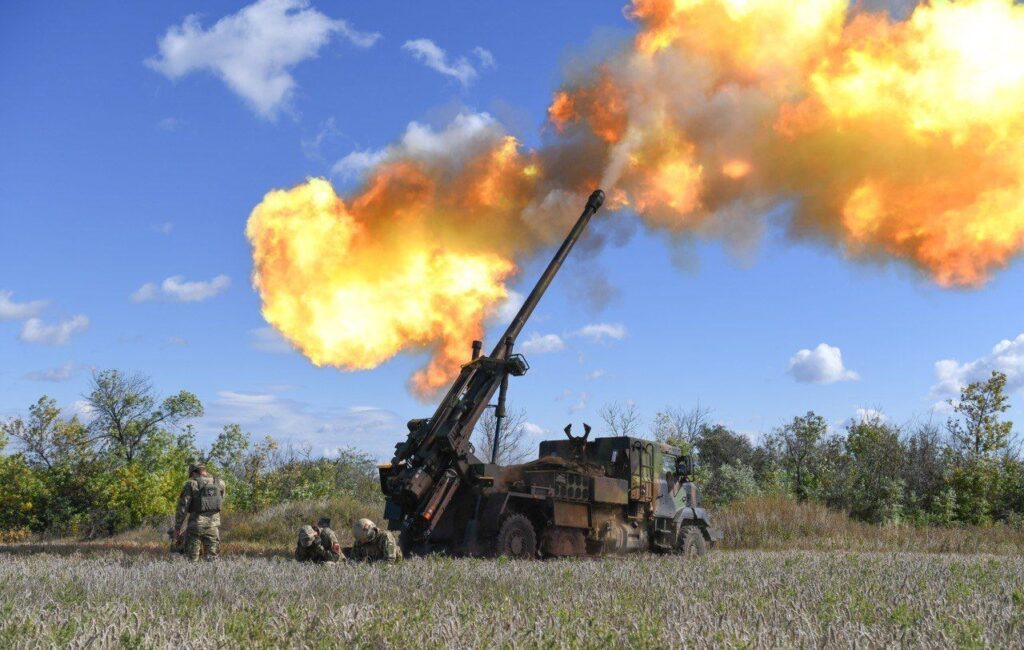
Ukrainian troops fire a CAESAR self-propelled howitzer. Autumn 2022, Ukraine. Photo: ArmyInform

Today, 10 June 2026, marks the 1,568th day of Russia's full-scale war against Ukraine — exactly the same number of days that World War I lasted, ArmyInform observes. Russia has not achieved its strategic objectives to eliminate Ukraine, with the Kremlin's original "Kyiv in three days" planning now four years and three months past.

Russian losses across that period, as documented by Ukraine's General Staff, total more than 1.3 million Russian military personnel killed and wounded, tens of thousands of tanks, armored vehicles, and artillery pieces destroyed, and 33 Russian ships and boats sunk or destroyed.

The Black Sea Fleet is now operating only in a land-support capacity after Ukrainian strikes forced its retreat from operating bases in temporarily occupied Crimea.

The total cost of destroyed Russian equipment over four years is estimated at approximately $153 billion. May 2026 alone saw more than 31,500 Russian troops killed and seriously wounded, according to Ukrainian Defense Minister Mykhailo Fedorov. These figures are Ukrainian estimates. Russian casualty data is not publicly released.

Strategic ledger after four years

Russia's stated strategic objectives at the start of the February 2022 full-scale invasion, including the capture of Kyiv, the change of Ukrainian government, the demilitarization and "denazification" of Ukraine, and the establishment of a Russian-aligned regime in the Ukrainian capital, have not been reached.

Russian forces retreated from the northern Kyiv and Chernihiv axes in spring 2022, and although Russia has incrementally occupied additional territory in Donetsk, Luhansk, Zaporizhzhia, and Kherson Oblasts since then, the pace of advance has been limited. 

Ukrainian fire control and deep-strike expansion

On the Ukrainian operational side, the past 12 months have seen a significant expansion of Ukraine's ability to strike targets across occupied territory and Russian rear areas.

The Ukrainian Defense Forces have established fire control over key logistics nodes in temporarily occupied Donetsk and Luhansk oblasts and in Crimea, including bringing Donetsk Airport within range of regular strikes and striking the Chonhar Bridge. 

In Crimea specifically, where Russia has concentrated air defense systems, 12 Russian Pantsir-S1 systems have been destroyed since the start of 2026. 

Logistics Lockdown and 1,800-kilometer deep-strike envelope

These operations are conducted within Ukraine's $113 million "Logistics Lockdown" program announced in May, which provides for systematic strikes on Russian warehouses, equipment, command posts, and supply routes deep behind the front line. A separate Ukrainian Deep Strike track targets critical infrastructure inside Russia itself, with Ukrainian deep strikes reaching up to 1,800 kilometers into Russian territory and recent operations hitting Russian oil-logistics nodes from Volgograd to Novorossiysk. 

Received — 8 June 2026 Euromaidan Press

Russia’s closest ally says its new AI military system can detect drones, jam signals, and adapt in real time

8 June 2026 at 21:07

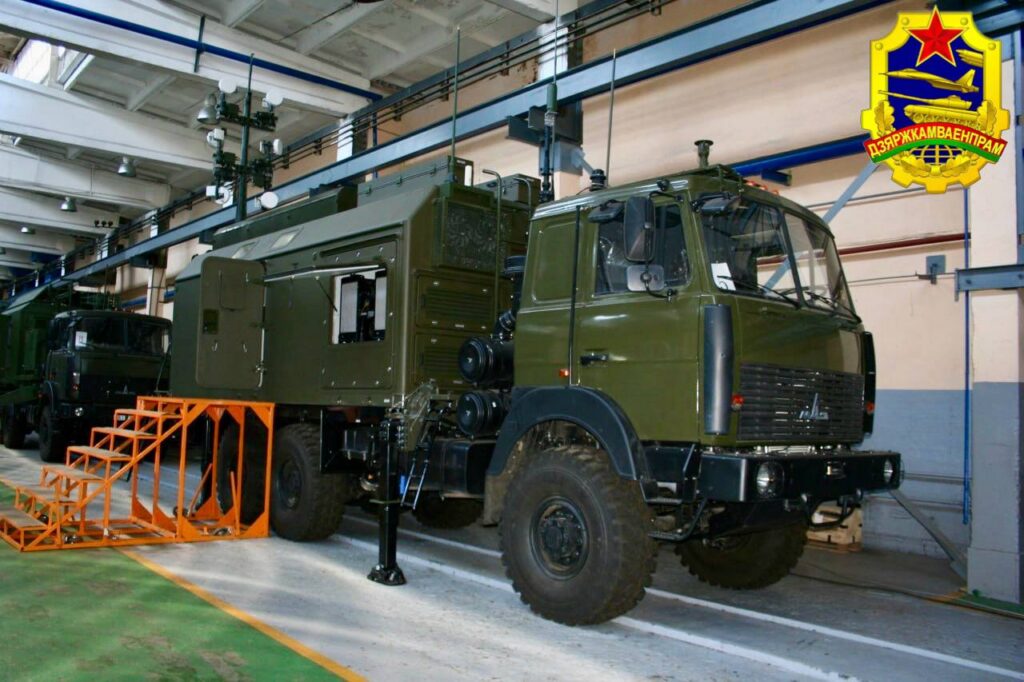
Belarusian AI-driven automated control system named "Ross". Source: The Belarusian State Military-Industrial Committee

Belarus is finishing development of an AI-driven automated control system named "Ross", the Belarusian State Military-Industrial Committee announces, publishing the photos of the system developed by Belarusian state defense enterprise KB Radar. It is designed to integrate electronic warfare, radio monitoring, and counter-drone capabilities into a single unified network. 

The announcement sits within a documented Ukrainian and Western assessment of Belarusian-Russian military integration that has shifted in recent months. Institute for the Study of War analysis in May concluded that a 2022-style Belarusian ground invasion of Ukraine is "very unlikely" given how the war has evolved. However, Ukrainian defense ministry advisor Serhii "Flash" Beskrestnov has separately warned that Russia could continue using Belarusian territory to launch missiles or Shahed drones at Ukrainian cities.

An AI-driven counter-drone EW capability in Belarus is consistent with — though not proof of — the latter scenario: Belarus building infrastructure that may enable or protect Russian drone and missile operations against Ukraine.

What does Belarus say system does? 

According to the Belarusian State Military-Industrial Committee announcement, the "Ross" system is designed to provide automated and manual control of radio-monitoring assets and complexes for suppressing communication channels, data transmission, and satellite navigation.

KB Radar's developers say the integration of AI algorithms is the principal innovation. The AI is said to help operators assess changes in the electromagnetic environment more quickly, detect radio emission sources, analyze the situation, predict its further development, and automatically select radio-suppression modes while minimizing impact on friendly communications.

Counter-drone system

A separate capability block within "Ross" is specifically focused on counter-drone operations, per the Committee. According to the developers, the system is intended to receive data from radio-frequency monitoring of airspace, detect UAVs, predict their flight routes, and determine the most effective countermeasures.

Belarusian officials state that the use of intelligent algorithms automates a significant share of analytical and computational processes, reducing operator workload and allowing personnel to focus on decision-making.

The system is also said to adapt to changes in the electromagnetic environment in real time and effectively distribute resources between suppression assets.

The unverified-claims caveat

The "Ross" announcement is a Belarusian state defense industry announcement, with KB Radar functioning as a state-controlled defense enterprise. Independent verification of the stated technical characteristics is absent, and the AI algorithms' actual capabilities have not been disclosed. 

Ukraine codifies armored vehicle with dome of 10 electronic-warfare modules designed to kill FPV drones before they hit

8 June 2026 at 19:58

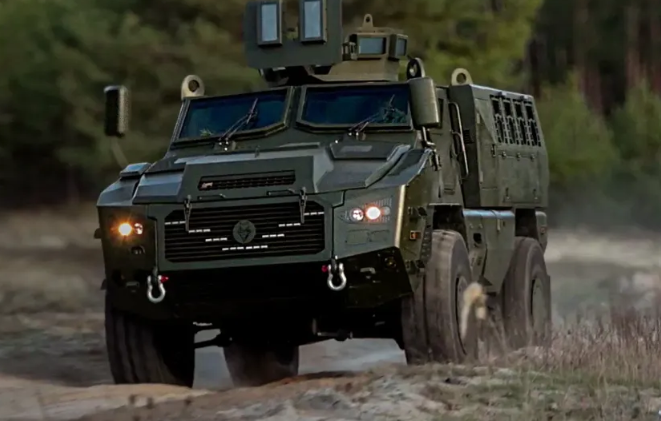
MAC OWL "Sova" armored vehicle. Source: Ukraine's Defense Ministry

Ukraine's Defense Ministry has codified and approved the domestically produced MAC OWL "Sova" armored vehicle. It has a V-shaped armored hull, 16 mm-thick side armor, and a capacity for up to 10 electronic-warfare modules forming a defensive dome against Russian FPV kamikaze drones, Oboronka reports, citing the Defense Ministry.

MAC OWL "Sova" is a joint Ukrainian-European product developed by Ukrainian company MAC HUB together with Paramount Greece, a European subsidiary of South African defense manufacturer Paramount Group.

It is rated to STANAG 4569 4a/4b, which is the highest mine-protection class, withstanding explosions of up to 10 kilograms of TNT equivalent.

MAC OWL "Sova" addresses the two most operationally lethal threats to Ukrainian troops in 2026: anti-vehicle mines and Russian FPV kamikaze drones.

Design philosophy and origins

The MAC OWL "Sova" is built on the armored body of the South African Mbombe 4 MRAP, which has been substantially adapted for the realities of the Russo-Ukrainian war.

Work on the project lasted more than a year. Ukrainian engineers, together with the military, including representatives of Ukraine's Defense Intelligence Directorate (HUR), refined the construction, increasing the number of firing ports, improving ergonomics, optimizing the chassis for Ukrainian operating conditions, per Espresso.

"Designers together with the military implemented 30 years of experience from local conflicts... The result was an armored vehicle with the highest level of crew protection," the Defense Ministry said.

Depending on configuration, MAC OWL "Sova" weighs 14.2 to 15 tonnes

It is equipped with an 8.9-liter turbodiesel engine producing 450 horsepower, which is the most powerful among all Ukrainian special armored vehicles. The vehicle has a 45-centimeter ground clearance, comparable to that of heavy military trucks, with a total height not exceeding 2.8 meters.

The cabin accommodates two crew members plus six or eight troops. The vehicle's 16-mm-thick side armor is reportedly the thickest among Ukrainian and foreign analogs in this class.

The FPV-defense dome and the 2025 procurement scaling

The 10-EW module capacity is the most operationally distinctive feature of the MAC OWL relative to earlier Ukrainian armored vehicles. Russian FPV drones, operated by individual pilots and used against Ukrainian vehicles, infantry, and frontline infrastructure, have become the dominant tactical threat in 2025-2026, with Ukraine documenting more than 11,000 Russian FPV attacks on civilians alone.

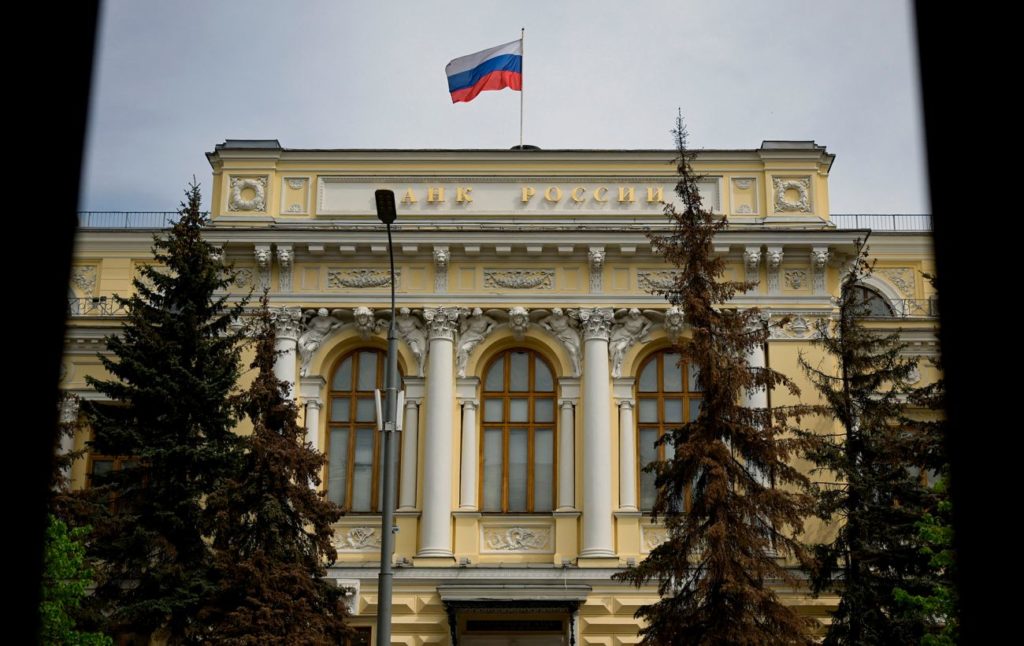
Russians pulled 30-year record of cash from banks in May. Central Bank now tracks monthly cash limits, can freeze “suspicious” withdrawals

8 June 2026 at 17:40

isw russia burning candle both ends—bankers quietly brace bailouts central bank russia’s top financial execs reportedly fear growing debt crisis despite claims stability ukraine news ukrainian reports

Russians pulled a record 381.2 billion rubles (approximately $5.2 billion) in cash from the banking system in May 2026. It is the largest May cash outflow since the Russian Central Bank began publishing such data in 1995, The Moscow Times reports, citing RBK's analysis of Russian Central Bank data. 

The 30-year record adds to a sustained 2026 pattern of Russians pulling cash from banks: April saw $9.2 billion in cash outflows, and March saw $4.1 billion.

The cumulative $14.8 billion in banknotes added to circulation since January reflects what Russian financial analysts describe as a confluence of geopolitical and macroeconomic uncertainty, internet outages limiting access to online banking, and the Central Bank rate cuts that have made deposits less attractive.

The Central Bank itself responded on 1 June by tightening controls on ATM cash withdrawals, with banks now able to track monthly withdrawal limits and may suspend "suspicious" operations, such as large withdrawals after long pauses or multiple operations in short timeframes.

2026 cash-flight progression

The monthly Russian cash-circulation data published by the Central Bank of Russia shows a sustained increase in cash held outside the banking system across 2026. Lead analyst Natalia Milchakova of Freedom Finance Global, quoted by The Moscow Times, explained that Russians are increasingly choosing cash due to uncertainty and a desire to have money for unplanned expenses "here and now."

Milchakova also warned that the cash shift may signal small and medium businesses moving into the shadow economy. The Central Bank itself identified business adaptation to the new 2026 tax rules as a primary driver, alongside internet outages. Sberbank's deputy chair, Aleksandr Vedyakhin, said Russians worry that digital transfers make their transactions visible to tax authorities.

Internet outages and the banking system

Russian internet outages have played a significant role in the cash-flight pattern, depriving Russians of access to online banking and cashless payment systems, Milchakova said.

The outage pattern is part of a wider disruption to Russian mobile internet across 2025-2026, in which Russian authorities have repeatedly shut down regional mobile internet.

Those shutdowns cut Russians' access to banking apps, fuel purchases, navigation, and messaging, with watchdog estimates of economic losses of $290 million in July 2025 alone. Russian Central Bank rate cuts also factor in: lower deposit rates have reduced the attractiveness of leaving money in banks, pushing households toward cash holdings as a default.

Central Bank's response

The Russian Central Bank's 1 June 2026 tightening of ATM withdrawal controls marks an acceleration of Russia's wartime capital controls. Under the new rules, Russian banks will track each customer's monthly cash withdrawal limit. "Suspicious" operations, defined to include large withdrawals after extended pauses, or multiple withdrawal operations conducted in short timeframes, may now be blocked or suspended pending review. Such administrative friction on cash withdrawals is being deployed at the same time the central bank is cutting interest rates, suggesting the regulator's primary concern is bank-system stability rather than monetary tightening.

61% of Ukrainians reject ceasefire without security guarantees. Same 61% would accept one with European troops on frontline

8 June 2026 at 17:18

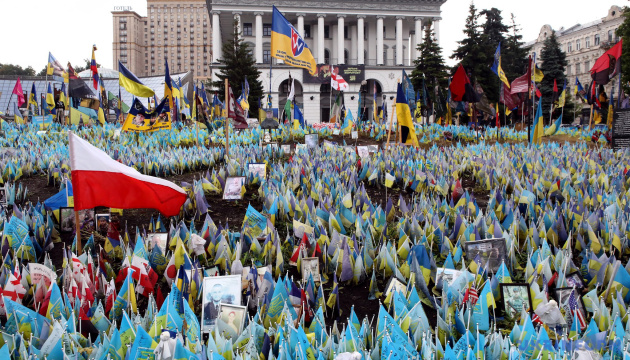
The photo shows a Memorial on the Independence Square in Kyiv, where families of fallen defenders leave thousands of flags with the names, photos, and dates of death of their relatives who gave their lives in the Russian-Ukrainian war. Source: UkrInform

More than 60% of Ukrainians categorically reject a ceasefire along the current frontline if Ukraine receives no security guarantees. The same share would approve a ceasefire if European troops were stationed near the frontline and would defend Ukraine against renewed Russian aggression, according to a new Kyiv International Institute of Sociology (KIIS) poll, conducted between 7 May and 3 June 2026.

The poll quantifies the substantive Ukrainian public position on the ongoing diplomatic process: the ceasefire itself is not the disputed question, but security guarantees are.

Across the four scenarios KIIS tested, the lowest level of support (32%) is for a ceasefire without guarantees. Mid-range support corresponds to mid-range guarantees: 42% for European troops deep in Ukraine that would not fight, and 53% for security guarantees in the form of large-scale financial and weapons support.

Four scenarios in detail

Scenario 1 — ceasefire without security guarantees, money, or weapons: 61% categorically reject, 32% willing to approve (mostly reluctantly). This is the substantive Ukrainian public position on the unconditional ceasefire that Russian negotiators have repeatedly framed as a starting point: the offer falls short by roughly two-to-one.

Scenario 2 — ceasefire with European troops deployed deep in Ukraine, NOT participating in combat if Russia attacks again: 49% categorically reject, 42% willing to approve. A passive Western presence is closer to acceptance but does not yet command majority support.

Scenario 3 — ceasefire with security guarantees in the form of large-scale money and weapons supply: 37% categorically reject, 53% willing to approve. Material guarantees alone gain majority support, but with significant skepticism remaining.

Scenario 4 — ceasefire with European troops near the frontline who WOULD defend Ukraine against renewed Russian aggression: 33% categorically reject, 61% willing to approve. Active defense by European forces commands the highest support, with a clear majority in favor of a ceasefire under conditions that make Russian re-invasion materially riskier.

Methodology and coverage

KIIS conducted the survey by computer-assisted telephone interview (CATI), using random sampling of mobile phone numbers. The sample of 2,007 Ukrainian citizens aged 18 and older was drawn exclusively from territory controlled by the Ukrainian government, meaning the data does not include displaced Ukrainians abroad or Ukrainians in Russian-occupied territories.

The polling period of 7 May through 3 June 2026 covered the full month of the current phase of US-mediated diplomatic activity, during which Russia continued striking Ukrainian cities with Shahed drones and missile attacks.

Ukraine approves 80 km/h electric motorcycle that defeats thermal imaging and acoustic detection. It carries two soldiers in full gear

8 June 2026 at 16:55

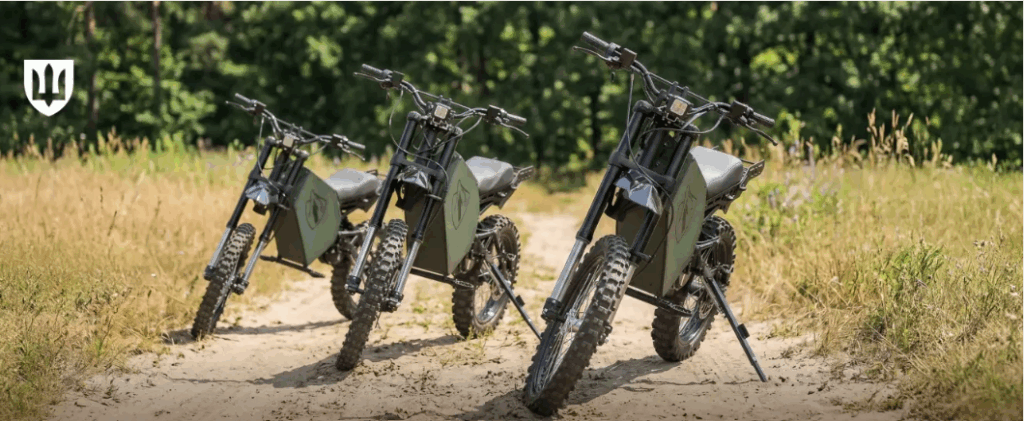
Ukrainian-made WOLFSTORM electric motorcycles. Source: Ukraine's Defense Ministry

Ukraine's Defense Ministry has announced that it has codified and approved the Ukrainian-made WOLFSTORM electric motorcycle for military use. The 105-kg, 8 kW vehicle reaches 80 km/h, travels up to 100 km on a single charge, carries two soldiers with full gear, and operates with near-silent movement and no thermal signature.

The codification is part of a broader push by the Ukrainian Defense Procurement Agency to scale motorcycle deliveries to frontline units in 2026, with the agency having contracted for 1,500 motorcycles. It is three times last year's volume.

Motorcycles have become one of the most operationally critical vehicle classes on the Ukrainian frontline, where small mobile groups, reconnaissance teams, and casualty-evacuation crews need to move quickly through terrain impassable to heavier vehicles.

Technical specifications

The WOLFSTORM weighs 105 kilograms and reaches a top speed of 80 km/h, with a range of up to 100 kilometers without recharging and a maximum load capacity of 200 kilograms.

The 8 kW electric motor is placed at the center of the frame, providing better balance and steadier performance on difficult terrain.

Power is transmitted to the rear wheel via a chain, as on conventional motorcycles, and the design includes a reverse gear.

Full battery charge takes approximately four hours, and the battery can be quickly swapped for a spare. 

The frontline use cases

On the front, electric motorcycles like the WOLFSTORM can be used for reconnaissance, sapper operations, cargo delivery, casualty evacuation, transport of drone operator crews, patrol, and facility security, according to the Defense Ministry.

The combination of thermal-signature reduction and near-silent operation addresses two specific battlefield vulnerabilities that have shaped Ukrainian frontline mobility tactics: Russian thermal imaging used to target moving Ukrainian vehicles, and acoustic detection of vehicle engines by Russian observation drones.

The modular construction is designed to operate in temperature extremes and complex weather conditions, the Defense Ministry said.

Procurement scale-up

The 1,500-motorcycle contract volume for 2026 reflects the Defense Procurement Agency's broader effort to scale frontline transport supply through competitive procurement.

The approximately $270,000 in savings achieved through supplier competition is a small absolute figure, but the structural signal that competitive procurement saves the state money while increasing volume threefold.

One click from operator: Ukraine just shot down Russian Shahed with AI drone that automated 95% of kill

8 June 2026 at 16:36

Lviv shahed attack Russian drones Ukraine

Ukrainian Defense Forces successfully tested the combat use of an AI-driven autonomous drone interceptor against a Russian Shahed in Kharkiv Oblast. The interceptor automated 95% of the engagement process, from drone launch to Shahed destruction, Defense Minister Mykhailo Fedorov announces.

The combat trial is a measurable step in Ukraine's developing technological response to Russia's escalating Shahed campaign, in which jet-powered Geran-4 variants now reach 500-600 km/h, and Russian manufacturers have begun bolting electronic-warfare jammers onto attack drones to defeat Ukraine's cheaper interceptors.

AI-driven autonomous interception collapses the human reaction time that bottlenecks conventional air defense against fast, swarmed targets.

How does system work? 

"The operator selects the target in software, one click, and the drone flies to intercept. As the drone approaches, AI automatically recognizes and guides toward the enemy target," Fedorov said.

Brave1 cluster and rapid development cycle

The interceptor was developed by a participant in Ukraine's Brave1 defense-tech cluster, the state-supported acceleration platform launched in 2023 to consolidate funding, certification, and procurement pathways for Ukrainian defense-tech startups.

According to Fedorov, the manufacturer went from prototype to successful combat use in less than a year, with iterations validated or rejected by frontline use rather than peacetime test cycles.

"Autonomy is one of the key directions for the development of modern air defense. Such technologies make it possible to respond faster to mass attacks and more effectively protect Ukrainian cities," Fedorov added.

Technological context

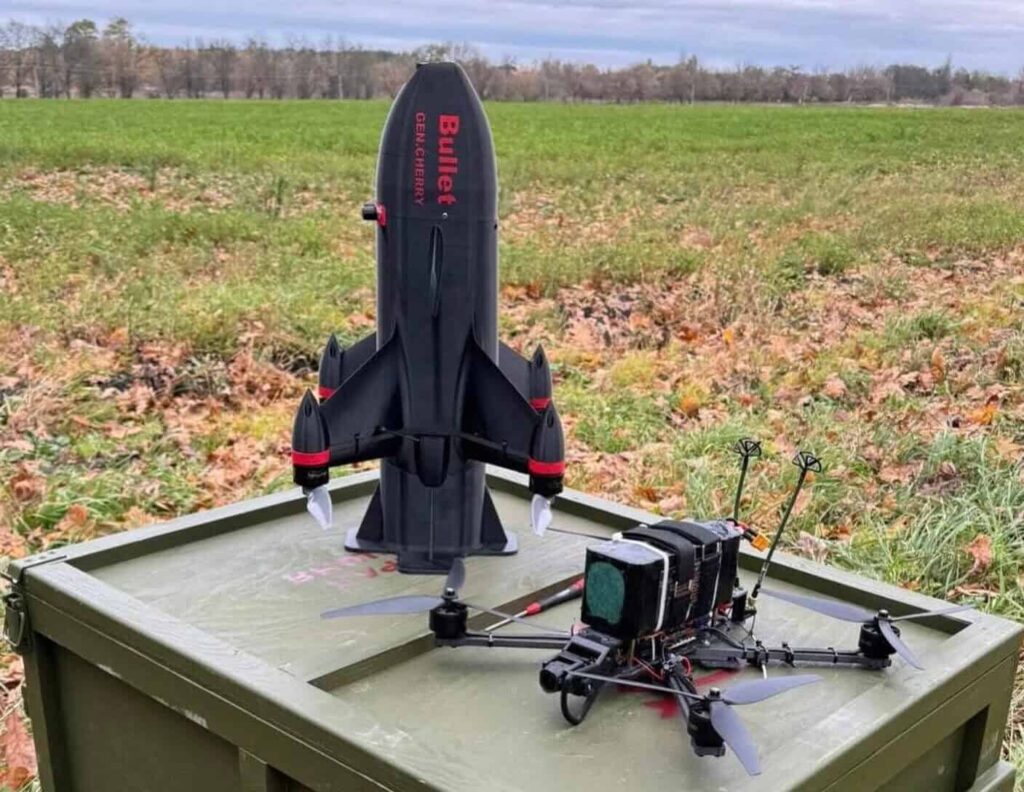
The autonomous interceptor announcement sits alongside several Ukrainian air-defense developments in 2026: General Cherry's Bullet interceptor recently received a chemical-accelerator upgrade for chasing Russia's jet-powered Geran-4 Shaheds at up to 500-600 km/h, while Russia has begun installing electronic-warfare jammers on its Shaheds to survive Ukrainian cheap-interceptor swarms.

Ukraine’s Bullet interceptor gets speed upgrade. It now has chemical accelerator to chase down Russian 500 km/h Geran-4

Ukraine has demonstrated rising interception rates against Russian Shaheds, with Russia now losing 95% of its Shaheds to Ukrainian interception, prompting the jet-powered variant and border-area targeting response. 


Ukrainian defense official sent 300,000 pairs of useless gloves to front line. He’s now going to trial

8 June 2026 at 16:15

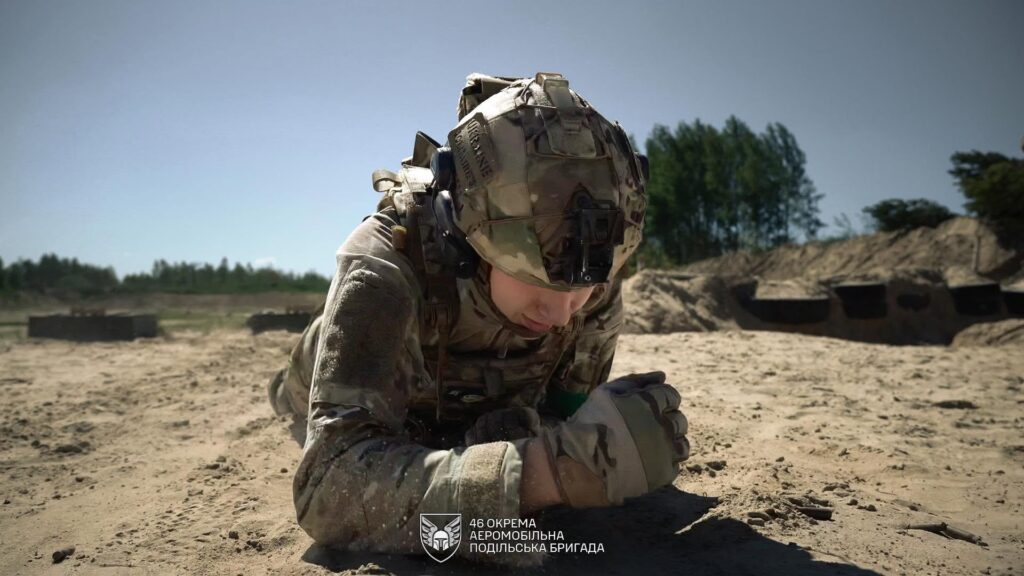
A Ukrainian soldier. Source: The 46th Airmobile Brigade

A former Ukrainian Defense Ministry official has been indicted and sent to trial for organizing the procurement of 300,000 pairs of tactical gloves valued at approximately $5.2 million that failed to meet the contracted specifications. They could not perform their basic function of protecting soldiers' hands in combat, the Office of the Prosecutor General of Ukraine announced.

300,000 pairs of combat gloves delivered to Ukrainian troops on the frontline that, expert analysis later showed, used ordinary rubber instead of the thermoplastic rubber required by technical specifications and failed cut- and puncture-resistance tests.

The gloves were intended for use in assault operations, casualty evacuation, and work under fire, which are the exact combat environments where hand protection matters most.

How did fraud work? 

According to the investigation, the official organized the procurement after manipulating both the contract documentation and the technical specifications. Investigators found that the requirement for mandatory compliance with Defense Ministry product standards was removed from the procurement documentation. The product's technical characteristics were altered.

Advance payments were approved without proper justification. The combined effect of the acts created the procurement conditions under which the manufacturer substituted cheaper materials and delivered a product that did not meet the original technical requirements.

Accountability process

The former Defense Ministry official was notified of suspicion in August 2025. Following the completion of the SBU's pre-trial investigation, the indictment has now been transferred to the court.

The case is one of multiple Ukrainian defense-procurement fraud prosecutions that have progressed through the system since 2024, when Ukrainian authorities began aggressive prosecutions of procurement officials over the delivery of substandard military equipment to frontline troops.

Earlier, a medic in a Ukrainian mechanized battalion based in Donetsk Oblast was charged with stealing 16 FPV drones manufactured by Ukrainian defense-tech company General Cherry. He also tried to sell these drones, worth approximately $12,600, for $2,370, the Eastern Region Specialized Defense Prosecutor's Office said.

NATO shot down drone over Latvia. Russia’s electronic warfare sent it there

8 June 2026 at 16:00

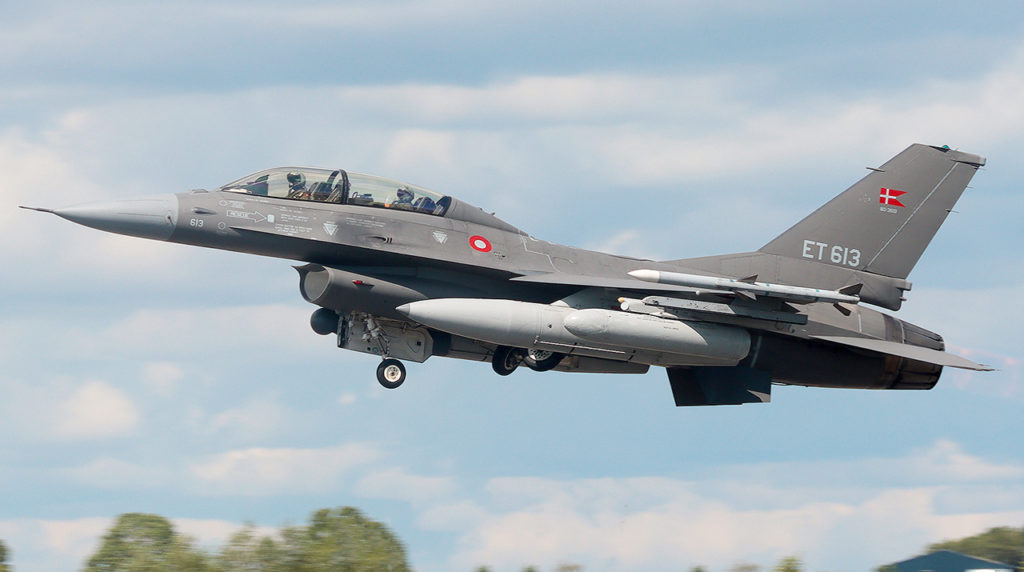
A Danish Air Force F-16BM combat trainer aircraft during a training flight. Photo via mil.in.ua

NATO fighters from the Baltic Air Policing mission shot down a foreign unmanned aerial vehicle over Latvia's Latgale region this morning, after the drone entered Latvian airspace as a result of Russian electronic warfare action, the Latvian Ministry of Defense says. It is the most direct documented NATO engagement of a drone over Latvian territory tied to Russia's war against Ukraine to date.

The shoot-down comes against a backdrop of repeated drone incursions over NATO territory along the eastern flank in 2026. In May, a Russian drone crashed into a residential building in Galați, Romania.

What did Latvia say? 

"NATO Baltic Air Policing mission shot down a foreign unmanned aerial vehicle (drone) that had entered Latvia as a result of Russian electromagnetic warfare," the Latvian Ministry of Defense statement said.

The ministry stressed that the Latvian Armed Forces and NATO allies continuously monitor Latvian airspace to enable an immediate response to potential threats, and that the Latvian Armed Forces have reinforced air defense capabilities along the eastern border by deploying additional units.

"As long as Russia's aggression in Ukraine continues, the recurrence of incidents where a foreign unmanned aerial vehicle enters or approaches Latvian airspace remains possible," the ministry added.

Baltic context: Estonia's months of frustration

Latvia's incident comes after months of similar incidents in Baltic airspace. In May 2026, Estonia's Foreign Minister Margus Tsahkna and Defense Minister Hanno Pevkur publicly told Ukraine to control its drones better after months of airspace breaches across the Baltic states and Finland.

In March 2026, Tsahkna said, several drones breached Estonian airspace. One hit a chimney at the Auvere Power Plant, two kilometers from the Russian border, and another crashed in Tartu County, with debris washed up along Estonia's northern coast.

A drone also struck a fuel storage depot near the Latvian border. Russia has claimed the Baltic states are allowing Ukraine to use their airspace for attacks.

Ukraine has accused Russia of deliberately directing drones into Baltic airspace through electronic warfare. Today's Latvian statement that "Russian electronic warfare action" caused the intrusion aligns with Ukraine's reading of the pattern rather than Russia's.

Medic stole 16 FPV from firm that entered $1.1 billion Pentagon competition and hid them for four months. Ukraine arrested him when he tried to sell them for 19% of their value

8 June 2026 at 15:05

interceptor drones General Cherry (Chereshnia)

A senior combat medic in a Ukrainian mechanized battalion based in Donetsk Oblast was charged with stealing 16 FPV drones manufactured by Ukrainian defense-tech company General Cherry. He also tried to sell these drones, worth approximately $12,600, for $2,370, the Eastern Region Specialized Defense Prosecutor's Office said on Facebook.

General Cherry is the same company that recently developed the Bullet interceptor drone's chemical-accelerator upgrade for hunting Russia's jet-powered Geran-4 Shaheds, and that entered Phase I of the Pentagon's $1.1 billion Drone Dominance Program.

The sergeant's theft removed 16 FPV drones from frontline combat operations for nearly 5 months, from the January 2026 theft to the May 2026 sale.

Case mechanics

The stolen drones were on the military unit's balance sheet and had been issued specifically for combat operations. On 30 May 2026, the sergeant sold the stolen drones for $2,370, which is roughly 19% of their actual value, to an undisclosed buyer.

The officers arrested him immediately after the funds transfer under Article 208 of Ukraine's Criminal Procedure Code, recovering the cash, all 16 drones, and their components.

Charge and bail

The sergeant has been charged under Part 4, Article 410 of Ukraine's Criminal Code, for theft of military property during wartime, the most serious classification of the offense. A Ukrainian court ordered detention with the option of release on bail of $6,009.

General Cherry's response

General Cherry thanked Ukraine's Prosecutor General Ruslan Kravchenko and the Specialized Defense Prosecutor's Office for "principled action against the theft of military property" in a statement on social media.

"FPV drones are a property of critical necessity, used daily along the entire line of combat contact. The availability of such weapons directly affects the ability to defend positions and preserve the lives of military personnel," the company said.


Earlier, General Cherry and Croatia's ORQA signed a memorandum of cooperation. They agreed to jointly develop and manufacture interceptor drones and counter-drone systems, including an underground factory under the Build in Ukraine localization program, the companies announced.

Ukraine recaptured 100 square kilometers in May. Its deep strikes cost Russia $1 billion

8 June 2026 at 14:36

russian crude reaches sea through tunnels under mountain ridge—and ukraine hit storage end near novorossiysk · post smoke fire rise over after ukrainian drone strike grushovaya oil depot krasnodar krai

Ukraine recaptured a net 100 square kilometers in May 2026 and struck 111 Russian military-industrial, energy, and fuel infrastructure objects with Deep Strike systems. In addition, for the first time, it conducted coordinated multi-target strikes on Moscow and Moscow Oblast under a unified operational plan, Ukraine's Commander-in-Chief General Oleksandr Syrskyi reports.

The Deep Strike operations caused approximately $1.058 billion in economic damage to Russia in May alone, per Syrskyi's estimates.

The monthly summary describes a Ukrainian force that, while still under heavy pressure across multiple frontline sectors, is producing measurable strategic returns: territorial recapture, sustained deep-strike pressure on Russian industrial and energy infrastructure. 

Ukrainian forces had already liberated more than 400 square kilometers in southern Ukraine since winter and retaken much of Kupiansk in the east, per ISW data and Syrskyi's earlier briefing.

Frontline directions and territorial change

The most intense fighting in May took place along three Ukrainian-defined directions: Pokrovsk, Oleksandrivka, and Huliaipole. The ratio of recaptured to lost territory for the month was approximately over 100 square kilometers in Ukraine's favor, Syrskyi said, with year-to-date recapture exceeding 600 sq km of Ukrainian territory.

The recapture totals are based on Ukrainian General Staff documentation of village-level and small-position retake operations, often conducted by Ukrainian special operations units, drone-supported infantry assaults, and small mechanized actions.

Unmanned systems and the 88,000-target month

Ukraine's Unmanned Systems Forces (SBS) units struck more than 88,000 targets across the front in May, and SBS Command estimates that more than 30,500 Russian military personnel were neutralized by drone strikes during the month, Syrskyi said.

Ukraine's "Front" and "Middle" classes of strike drones continued to systematically destroy Russian command posts and ammunition arsenals. These are the target categories that have become central to Ukraine's broader "logistics lockdown" campaign, funded with $113 million for medium-strike drones against the Russian rear. 

Air defense and naval forces

Ukrainian air defense forces destroyed more than 59,000 aerial targets in May, including kamikaze drones, cruise missiles, ballistic missiles, and reconnaissance UAVs, and repelled 25 combined Russian missile-and-aviation strikes, Syrskyi said.

Ukraine's Naval Forces conducted approximately 1,500 measures during the month to ensure the safety of civilian shipping in the war zone, enabling 633 vessels to transit to and from Ukraine's "Greater Odesa" ports and Danube River ports.

Putin warned former Soviet republic of “Ukrainian scenario” over EU ties. Its pro-EU party wins elections with 49.81% anyway

8 June 2026 at 08:29

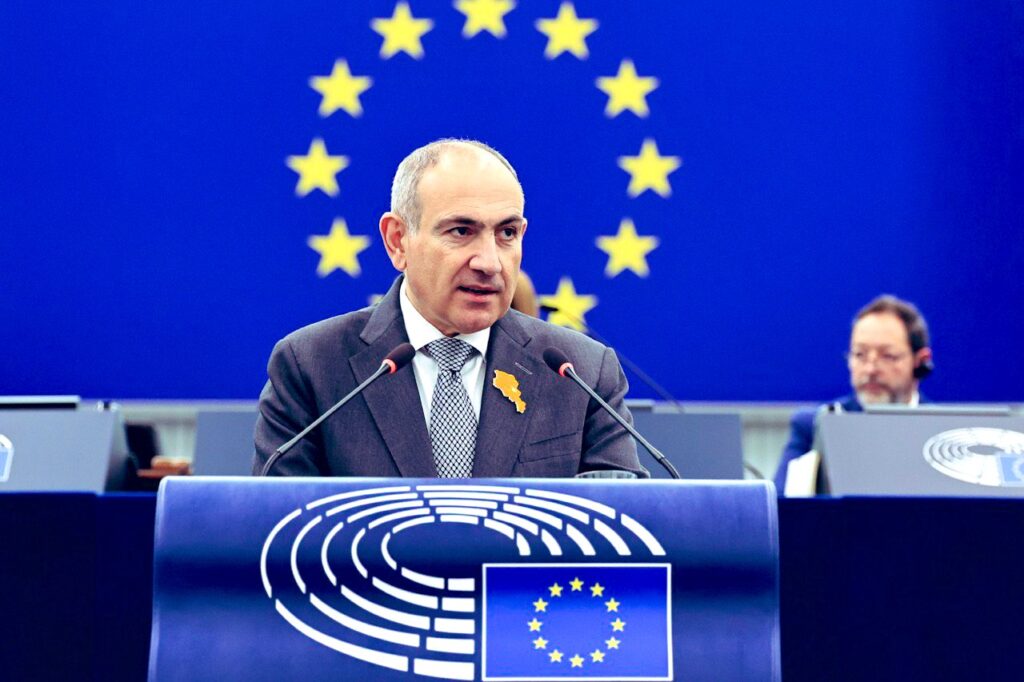
Armenian Prime Minister Nikol Pashinyan delivering a speech at the European Parliament. Source: NikolPashinyan X

Armenian Prime Minister Nikol Pashinyan's pro-EU Civil Contract party has won the country's parliamentary elections with 49.81% of the vote. The result came despite pro-Russian opposition and Russian electoral pressure, with 100% of ballots processed, according to News.am and the Central Election Commission. 

The victory is a clear public endorsement of Pashinyan's turn toward European integration and away from the post-Soviet Russian sphere — a turn that has placed Armenia, like Ukraine before it, in the position of a former Soviet republic actively choosing the EU over Moscow's preferred order.

Previously, Russian President Vladimir Putin warned Armenia of a "Ukrainian scenario" over its EU push at the recent EAEU summit. 

Vote breakdown

Four political forces enter the new Armenian parliament. Pashinyan's Civil Contract leads with 49.81%, followed by Samvel Karapetyan's pro-Russian "Strong Armenia" alliance at 23.29%, the "Armenia" electoral bloc at 9.94%, and the Prosperous Armenia party as the fourth force in parliament.

Karapetyan, a Russian-Armenian oligarch and founder of the Tashir Group, ran on a platform to restore closer ties with Moscow.

Post-Soviet context and EU push

Armenia, a former Soviet republic that gained independence in 1991, has been a member of the Russian-led Collective Security Treaty Organization (CSTO) and the Eurasian Economic Union (EAEU).

The relationship cooled sharply after the 2023 Azerbaijani military operation that ended Armenian control of Nagorno-Karabakh, with Yerevan accusing Russia and its CSTO of failing to deliver promised security guarantees.

Pashinyan's government has since suspended Armenia's participation in CSTO meetings, signed a bilateral strategic partnership charter with the US, and accelerated EU integration efforts.

The EU announced a €50 million support package for Armenia on 4 June, days before the election.

Russia's response and "Ukrainian scenario"

Putin's "Ukrainian scenario" warning, delivered at the EAEU summit shortly before the election, was a direct threat that Russia would consider treating Yerevan's EU pivot the way Moscow has treated Ukraine's: economic pressure, hybrid operations, military threats.

Despite both, Armenia voted for Pashinyan and the EU path by a roughly two-to-one margin over the largest pro-Russian alternative.

Russo-Ukrainian war, day 1564: Ukraine’s long-range drones reach Kronstadt

7 June 2026 at 07:31

Russo-Ukrainian war (daily review)

Exclusives

Ukraine's drones got bigger warheads. A Russian corvette in the Baltic just found out.. The Fire Point FP-1 that struck Boikiy at Kronstadt on 3 June crossed 1,100 km to get there — and arrived with a heavier warhead than the model that started Ukraine's deep-strike campaign.
"It was never formulated as Ukraine winning"—NATO's ex-military chief on the missing strategy. It was also not formulated, "We're doing this so that Russia can lose this war." So the formulation became, "We're going to support Ukraine for as long as it takes," Admiral Bauer tells EP
EU urgency to dump Rosatom is growing but Russia will use every lever to prevent it. This is part three of a series of three articles exploring Rosatom, its role in the war in Ukraine, and Moscow's international influence.
Russia more than doubles production of converted SAMs to make ballistic missile strikes even harder to defend. Missiles add few qualitative improvements but do add mass to Russia's terror attacks

Military

Russia reportedly restricts bus and private car movement on main arteries through occupied territories, capping two weeks of land-corridor breakdown. The stated reason is protection against Ukrainian "attacks on civilian transport." The actual reason is visible in the two-week sequence of events that produced the closures.

Flat steppe: Ukraine is strangling Crimea's supply lines from air. Melitopol-Chonhar road is latest target. The operation extends the squeeze on Russia's land corridor to the occupied Crimean peninsula.

Kronstadt, Russia's major naval base after Black Sea Fleet losses, gets hit by Ukrainian drones (VIDEO). Russia was in the middle of hosting foreign investors.

Intelligence and technology

What do Ukrainian drone makers have to accept to win Pentagon contracts? Experts document "draconian conditions". Below 50% foreign ownership triggers a Security Control Agreement under which the company must be led by a US citizen.

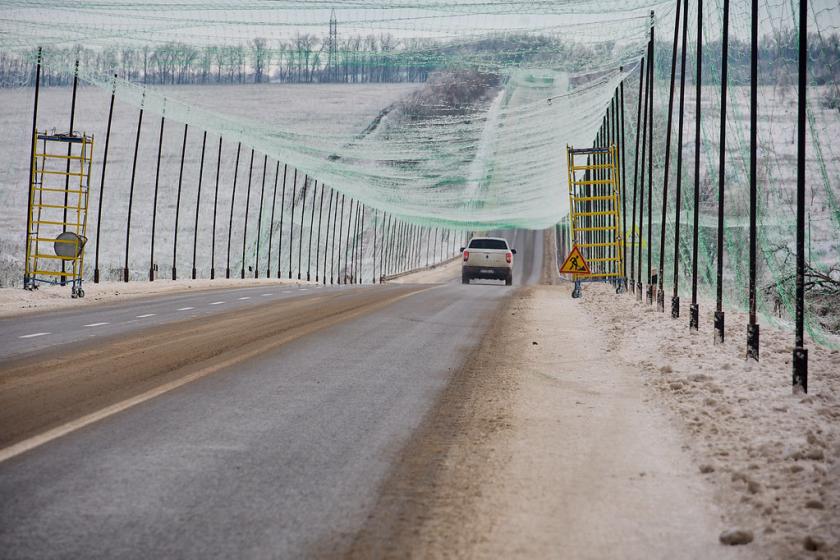
Ukraine has built 822 kilometers of anti-drone road tunnels. Each kilometer means safer evacuations and faster supply. In May alone, the State Special Transport Service rebuilt 115.5 km of conventional road, Defense Minister Mykhailo Fedorov said.

International

Russia is already causing harm to UK. Britain may not be prepared for what comes next, says former top general. Lord Peach, the former UK Chief of the Defence Staff said the hybrid war is already happening.

US warned Russia it would "be very, very sorry" over 2022 nuclear use, NATO ex-military chief confirms. Russian forces in Ukraine would be "taken out conventionally" by the Americans, the Kremlin was warned amid Kherson retreat, Admiral Bauer says

"Ukraine might have won" if NATO had acted in 2022, ex-top chief says. Admiral Rob Bauer says the West armed Ukraine too slowly to win—and never had a strategy for victory at all

Humanitarian and social impact

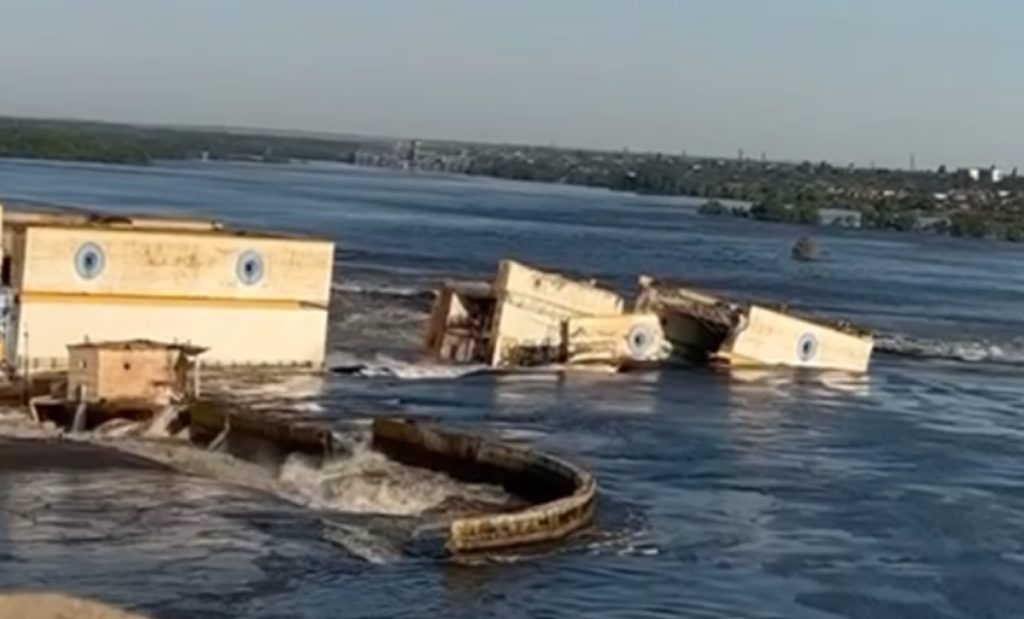
"The worst environmental catastrophe since Chornobyl disaster": Three years after Russia destroyed Kakhovka Dam, real death toll is still unknown. On 6 June 2023, Russian forces destroyed the Kakhovka Hydroelectric Power Plant while occupying the dam, flooding 80 settlements, forcing nearly 4,000 people to evacuate, and killing at least 34.

Russian pilot saw man in Ukraine's Kramatorsk and chose to kill him. FPV drones are operated in real time. The UN Independent International Commission of Inquiry on Ukraine has formally classified these strikes as crimes against humanity.

Read our earlier daily review here.

“The worst environmental catastrophe since Chornobyl disaster”: Three years after Russia destroyed Kakhovka Dam, real death toll is still unknown

6 June 2026 at 19:56

Kakhovka dam HPP destroyed

Three years after Russian forces destroyed the Kakhovka Hydroelectric Power Plant on 6 June 2023, the real death toll remains unknown. At least 34 people were killed, 80 settlements were flooded, and nearly 4,000 people were evacuated according to official figures, Ukraine's Vice Prime Minister for Reconstruction Oleksii Kuleba says.

Kuleba calls the destruction "one of the largest war crimes of Russia against people and the environment."

Who blew up Kakhovka dam? 

Russian forces occupied the dam complex at the moment of the explosion. According to the investigation by The New York Times, the destruction required substantial quantities of explosives placed inside the dam structure — access that only Russian forces had. Ukraine's Prosecutor General referred the case to the International Criminal Court within days, but no ICC determination has been issued specifically on the Kakhovka HPP.

The downstream effects of the destruction — flooded villages, lost Black Sea ecosystems, drinking-water crises across Kherson and Mykolaiv oblasts, and the disappearance of the Kakhovka Reservoir itself — continue to shape life across southern Ukraine.

Immediate human cost

"Three years ago, Russian forces destroyed the dam and the Kakhovka Reservoir. At least 34 people died, but the true number of victims is still unknown," Kuleba says.

Death toll estimates vary significantly across sources, in part because Russian forces continue to control the left-bank Kherson Oblast areas most devastated by the flooding.

In the days following the destruction, Ukrainian emergency services, police, medics, and volunteers worked around the clock to evacuate civilians from flooded settlements. Over 500 municipal workers from various Ukrainian regions assisted with the recovery alongside energy and gas utility crews.

$14 billion in damage and Black Sea consequences

The Kakhovka Reservoir was the largest on the Dnipro River, holding 18 cubic kilometers of water, which was released over 3 to 4 days through the breach. A Post-Disaster Needs Assessment jointly prepared by Ukraine's Cabinet of Ministers and the United Nations originally estimated total losses at over $11 billion.

Former Ukrainian Deputy Foreign Minister Andrii Melnyk called the destruction "the worst environmental catastrophe in Europe since the Chornobyl disaster," per CBC News.

This triggers the tooltip

Russian pilot saw man in Ukraine’s Kramatorsk and chose to kill him. FPV drones are operated in real time

6 June 2026 at 19:23

Russian FPV drone operator.

A Russian FPV drone strike near a residential building in Kramatorsk on the morning of 6 June killed a man born in 1976, the Kramatorsk City Council reports. These types of drones are operated in real time, so the Russian pilot saw the target before launching the weapon at the person. 

The strike fits a documented pattern of Russian FPV-drone targeting of Ukrainian civilians in frontline cities that the UN Independent International Commission of Inquiry on Ukraine formally classified as crimes against humanity in May 2025 in its findings on Kherson Oblast, and that Ukrainian authorities continue to document across other frontline regions, including Donetsk Oblast.

Ukraine has documented more than 11,000 Russian FPV attacks on civilians, including "double-tap" strikes that hit the same site after medics and firefighters arrive at an initial attack. 

Terrorism: no justification

"Each such crime will be documented, and the guilty parties will sooner or later answer for what they have done. No justification can explain the murder of civilians. This is not how military forces act — this is how terrorists act, for whom human life has no value," the Ukrainian authorities said.

UN findings: from Kherson to three-oblast pattern

In May 2025, the OHCHR-supported UN Commission of Inquiry on Ukraine concluded that Russian drone attacks against civilians in Kherson Oblast were "widespread, systematic, and conducted as part of a coordinated state policy" and constitute crimes against humanity of murder, as well as war crimes.

The Commission documented Russian targeting across more than 100 kilometers of the right bank of the Dnipro River, basing its findings on more than 300 videos, 600 Telegram posts, and 91 interviews with victims, witnesses, and local officials.

In its October 2025 follow-up report to the UN General Assembly, the Commission found that the same pattern had expanded across more than 300 kilometers covering Dnipropetrovsk, Kherson, and Mykolaiv Oblasts. Russian FPV operators have systematically pursued specific civilians along defined routes, including at bus stops, supermarket entrances, pension queues, and residential courtyards. 

The Kramatorsk frontline context

Kramatorsk has been a focus of Russian targeting throughout the war, with repeated strikes including double-tap drone attacks on civilian infrastructure and first responders. The city's location near the contact line in Donetsk Oblast places it within FPV drone range. 

What do Ukrainian drone makers have to accept to win Pentagon contracts? Experts document “draconian conditions”

6 June 2026 at 17:41

interceptor drones General Cherry (Chereshnia)

Ukrainian defense companies entering the US market face draconian US protectionist conditions, including the formation of a US legal entity and partial disclosure of technical documentation, Defense Express analyzes. The analysis comes as two Ukrainian companies — F-Drones, via the US-registered Ukrainian Defense Drones Tech Corporation (UDD), and General Cherry Corp — compete in the Pentagon's $1.1 billion Drone Dominance Program. 

The reality check is stark: reports of Ukrainian drones winning Pentagon contracts obscure the fact that the Pentagon's procurement framework does not allow direct sales from Ukrainian suppliers.

Bureaucratic and ownership requirements

US defense procurement requires that the contractor be a US legal entity. To register, that entity must be registered with the US Defense Counterintelligence and Security Agency (DCSA) as a defense manufacturer, demonstrate non-use of prohibited Chinese components, satisfy cybersecurity requirements, and meet classified-information access standards.

Foreign ownership thresholds shape what's possible. A 100%-foreign-owned entity faces approval timelines measured in years and is unlikely to receive DCSA approval for classified contracts.

A foreign-ownership share below 50% triggers a Security Control Agreement (SCA) regime, under which the company must be officially led by a US citizen, foreigners are barred from classified information, and registration takes months. The only foreign-ownership level that avoids these additional procedures is below 5%.

What Ukrainian companies must accept

For Ukrainian drone makers targeting US government contracts, the practical implications are stark. The right to sign contracts and conduct correspondence with the US Department of Defense may pass to US-citizen executives.

The "no Chinese components" verification requires at least partial disclosure of technical documentation to US authorities. Production must be relocated or duplicated on US soil, creating American jobs.

And, critically, none of this happens without significant lobbying, often through partnership with a large US prime.

Kongsberg-Raytheon working model, and its Drone Dominance Program echo

Norway's Kongsberg has faced the same procedure. The weapon producer used the partnership model to sell its Naval Strike Missile in the US. Rather than entering the US market directly, Kongsberg paired with Raytheon.

Raytheon handled the procurement promotion, particularly positioning NSM as the armament for the Littoral Combat Ship (LCS) class, in exchange for technology transfer, US localization, and final assembly on American soil.

Ukraine has built 822 kilometers of anti-drone road tunnels. Each kilometer means safer evacuations and faster supply

6 June 2026 at 17:14

fishing nets used mediterranean millennia — now italy wants turn drone shields over ukrainian cities · post workers install anti-drone above road kharkiv's ring 2026 2daykhua sitka6 italy's senate has

Ukraine has built 822 kilometers of anti-drone protection along frontline logistics routes since the start of 2026 and has restored more than 170 kilometers of damaged regular roads in frontline oblasts, Defense Minister Mykhailo Fedorov says. In May alone, Ukraine's State Special Transport Service built 211 km of new anti-drone protection. 

Russian FPVs and reconnaissance UAVs hunting Ukrainian vehicles within 15-30 km of the front have forced Ukraine to build a permanent national infrastructure for drone-protected movement on its own side.

How does protection work? 

Anti-drone protection on Ukrainian frontline roads typically takes the form of overhead netting tunnels, wire-mesh canopies, and reinforced barriers along sections of road within reach of Russian FPV drone operators.

The structures intercept FPVs before they strike vehicles, allowing supply trucks, casualty-evacuation vehicles, and personnel rotations to move along otherwise lethal stretches of road.

The May 2026 build-out

In May 2026, Ukraine restored 38 km of previously damaged protected segments and rebuilt 115.5 km of standard frontline roads.

The combination of new construction, maintenance, and regular road repair reflects the operational reality that Russian strikes constantly attrit the network even as Ukraine extends it.

"Each protected kilometer means safer logistics, faster supply, casualty evacuation, and safer military movement even under constant threat of drone attacks," Fedorov said.

Mirror campaigns

Meanwhile, Ukraine's offensive logistics campaign has driven Russia to restrict civilian transport on its main occupied-territory highways. Russia is reportedly banning regular bus services on the R-280 "Novorossiya" route and the R-150 Belgorod-Mariupol highway after Ukrainian drones.

Ukraine, on its own side, is building physical infrastructure, such as netting, wire, and barriers, to keep its own logistics moving under the same drone pressure that Russia is failing to manage on the other side of the line. 

Meanwhile, Russia has installed anti-drone nets at its facilities, such as the Velikolukskaya oil depot in Velikiye Luki, Pskov Oblast. 

Russia is already causing harm to UK. Britain may not be prepared for what comes next, says former top general

6 June 2026 at 16:43

eu's 21st russia sanctions package target shadow fleet banks firms selling stolen ukrainian grain—politico · post altura vessel f5e0350f09933f86b813143d8314ece5e124eab757d855543e066b8431273664152698jpg ukraine news reports

Russia "intends to harm" the UK through economic disruption, sabotage, and "dark arts", and the evidence is clear, former UK Chief of the Defense Staff Stuart Peach told The Independent. His claims came in a joint interview with the chair of the House of Lords Select Committee on National Resilience, Baroness Coussins, who called for greater urgency from government and citizens.

The intervention is one of the most direct public warnings from senior UK figures on Russian hybrid operations against Britain. Peach is now making the case publicly that the threat has shifted from speculative to operational.

Baroness Coussins, whose committee was appointed in January 2026 and is due to report in November, framed it more bluntly: "It is not a question of 'what if?’ It's a question of 'these things are happening now.' We know we’re under cyber attack daily." 

"The evidence is clear"

“The fact that Russia intends us harm – whether it's economic disruption or the ‘dark arts’, as you might call them – I think the evidence is clear," Peach said.

He warned that the UK is not prepared for the scale of scenarios that could result, including widespread power cuts and full-scale war. 

Baroness Coussins added that British intelligence services regularly identify and disrupt potential violent threats inside the country and pointed to the activities of so-called proxy structures linked to Russia and Iran. 

Undersea cables and European pattern

Peach said the threat to the UK posed by undersea cable disruption, which carries internet connectivity, financial transactions, and essential data, was an issue he had raised as Chief of the Defense Staff and one that has only sharpened since.

He pointed to a politically motivated arson attack in Berlin in January 2026 that caused a widespread power cut affecting 45,000 households and 2,200 businesses, including internet and heating.

The recent fire at an electrical substation that forced the closure of London's Heathrow Airport, causing mass flight cancellations and power disruption, was raised as a UK precedent showing how single-point sabotage can cascade across critical systems.

Lord Peach warned that malicious attacks “can have real damage.” 

Russia reportedly restricts bus and private car movement on main arteries through occupied territories, capping two weeks of land-corridor breakdown

6 June 2026 at 16:19

ukraine launches logistics lockdown program $113 million middle-strike drones against russian rear · post destroyed military vehicles mariupol-melitopol road occupied southern telegram/@ukraine_context deep behind lines трасою маріуполь-мелітополь tg ukraine_context news

Russian occupation authorities are restricting regular bus traffic and private car movement on two main transport routes through occupied Ukraine, starting 6 June, due to what they call Ukrainian "attacks on civilian transport," Espreso reports, citing Russian media. 

The restrictions cover the R-280 "Novorossiya" highway connecting Rostov-on-Don through Mariupol, Berdiansk, and Melitopol to Simferopol, and the R-150 highway connecting Belgorod through Starobilsk, Luhansk, and Donetsk to Mariupol, the two main arteries through Russian-occupied territory in Ukraine.

Russia uses these routes to supply its occupation forces. The invaders' framing of the closures as protection against Ukrainian "attacks on civilian transport" comes the same week Ukraine's partisan units documented Russian forces using ambulances, bread vans, and postal trucks to deliver military fuel to the front line on those same routes.

What do restrictions cover? 

The R-280 highway is the main land artery connecting Russia to occupied Crimea, running from Rostov-on-Don to Mariupol, Berdiansk, Melitopol, and Simferopol.

The R-150 highway covers the northern arc: Belgorod to Starobilsk, Luhansk, Donetsk, and Mariupol.

Russian occupation authorities in the occupied Luhansk Oblast recommended that local residents not travel these routes, while noting that internal bus services would continue along altered routes.

Transport of organized groups of children through the region is temporarily banned, and suburban train service is suspended. 

Two-week breakdown of land corridor

The 6 June restrictions cap a two-week sequence of corridor breakdown driven by Ukraine's "logistics lockdown" campaign.

On 29 May, Ukraine's Main Intelligence Directorate (HUR) released a video of drone strikes on Russian fuel tankers along the Berdiansk-Melitopol-Crimea section of the same R-280.

By 31 May, Mariupol residents were reporting in local group chats that Russia had closed the Manhush-Berdiansk highway, which is the eastern segment of the same artery.

By 3 June, Russia's gasoline crisis had spread to St. Petersburg, Belgorod, Kursk, and the occupied Luhansk Oblast, with 40% of Russian refining capacity offline.

On 5 June, Russia ordered fuel drivers to wear civilian clothing. On 6 June, Russia closed civilian transport on the R-280 and R-150.

What do closures mean? 

The closures reshape daily life across Russian-occupied southern Ukraine. Civilians can no longer travel between major occupied cities on regular buses. Meanwhile, private cars are restricted on the main arteries. 

❌