The Molopo Regional Court in Mahikeng, South Africa, sentenced two wildlife traffickers, Edward Motlatsi Phiri, 46, and Tlhoriso France Ralph, 51, to eight years in prison. They were convicted of smuggling a Temminck’s pangolin, a vulnerable species native to Southern and Eastern Africa, according to a statement released by the North West province’s environment agency. The judgment, delivered on May 26, 2026, followed the arrest of four suspects on June 2, 2023, when law enforcement authorities, acting on a tip, intercepted a vehicle in which they were traveling and seized a live female pangolin (Smutsia temminckii) intended for sale. During the court hearing three years later, charges against two accused traffickers were withdrawn while Phiri and Ralph were found guilty. “This sentence sends a strong message that wildlife crime is a serious offense with devastating environmental consequences,” said Bitsa Lenkopane, with the Economic Development, Environment, Conservation and Tourism in the North West province, in a statement. “Every operation, every investigation, and every successful prosecution strengthen our collective fight against illegal wildlife trafficking.” Pangolins are trafficked for their scales, worth thousands of dollars on the black market. They are falsely believed to have medicinal qualities in East Asia. The demand has driven steep declines in pangolin numbers worldwide: Six of the eight species are classified as endangered or critically endangered today. Pangolins are also consumed as bushmeat in parts of Africa. These mammals are protected under South African law, which prohibits their possession, sale, display or transportation. Their international commercial trade…This article was originally published on Mongabay
In October 2015, Indigenous activists from Indonesia, Malaysia, the Philippines, Cambodia, Brazil, the United States, and Honduras, together with delegates from longhouse communities throughout the Malaysian state of Sarawak, gathered at Tanjung Tepalit, an Indigenous Kenyah village on the Baram River on the island of Borneo. They called the gathering WISER: the World Indigenous Summit on Environment and Rivers. Tanjung Tepalit hosted the gathering because the village, along with more than two dozen others along the river, was scheduled to be drowned. The Baram Dam, a 1,200-megawatt hydroelectric mega project backed by the Sarawak state government and aligned with a regional industrial development scheme called the Sarawak Corridor of Renewable Energy (SCORE), would have flooded an area of more than 400 square kilometers (more than 150 square miles) and displaced an estimated 20,000 Kenyah, Kayan, and Penan people. Muslims, Catholics, Evangelicals, Buddhists, agnostics, and people who followed traditional Indigenous religions were among the attendees. As we gathered, Peter Kallang, the Kenyah founder and chair of the local advocacy group SAVE Rivers, addressed the assembly: “We are people of many faiths,” he said, “but we are united in one mission. To protect our forest homes and our ways of life.” In one sense the WISER gathering was a strategy meeting to coordinate an international coalition against a state-corporate project. In another, and perhaps deeper sense, WISER was rooted in something older. It was an assertion that the values that hold communities to their land across generations — the sanctity of the…This article was originally published on Mongabay
Even as President Donald Trump boosts coal over clean energy, solar power is hitting new milestones in the U.S. and remains the leading source of new power. New reports released Wednesday by global energy think tank Ember and the Solar Energy Industries Association show the continued growth of solar and decline of coal in the United States despite federal policy. Ember says in May, for the first time, solar supplied more of the nation’s electricity than coal, or 12.8%. Coal supplied 12.2%, its fourth-lowest monthly share ever. The Republican president has been helping the struggling U.S. coal industry while curtailing solar and wind. A Democratic California congressman says the coal industry is dying. By Jennifer McDermott, Associated Press Banner image: Solar panels operate on a farm with cattle Tuesday, April 28, 2026, in Christiana, Tenn. Image by Joshua A. Bickel via Associated PressThis article was originally published on Mongabay
A new study published in the journal Nature shows that Ethiopia’s protected areas successfully slowed deforestation, limited agricultural expansion and helped maintain grasslands. But the study also suggests the same conservation gains may also be linked to declines in food security and wellbeing for nearby communities — while underlining some caveats in their findings. The study, conducted through collaboration between researchers in Ethiopia and the UK, and the Ethiopian Wildlife Conservation Authority, assessed both environmental and social outcomes across 25 protected areas in Ethiopia during the period 2000–2020. They measured forest cover, agricultural expansion, grasslands, food security, dietary diversity and material wellbeing. While protected areas were broadly effective at reducing environmental degradation despite mounting pressures from population growth, agricultural expansion, and land demand, the researchers found “trade-offs” between environmental and social outcomes in their assessments. Twelve of these protected areas experienced positive environmental performance at the cost of social wellbeing. Meanwhile, five of the protected areas had “win-win” outcomes for biodiversity and social outcomes and three protected areas had “lose-lose” outcomes. “Ethiopia is exceptionally biodiverse, but also faces major challenges around poverty, food security and demand for land,” said Sophie Jago, lead author of the study and research assistant at the Royal Botanic Gardens, Kew in the UK. “The fact that protected areas are delivering measurable benefits for nature in this context is important … The difficult finding is that these environmental gains have come with costs for nearby communities, particularly around food security.” A ranger discusses with community members…This article was originally published on Mongabay
When Catherine Craig first went to Gombe in 1972, she was not thinking about silk. She was an undergraduate in a four-seat plane with Jane Goodall, flying over the Tanzanian forest where Goodall’s work on chimpanzees was changing how scientists understood animals. Craig spent six months there, learning to recognize individual chimpanzees and helping track mothers and infants through the steep woodland above Lake Tanganyika. The forest stayed with her. So did the sight of people living nearby with few choices, and the later realization that even forests thought to be protected could disappear. Her path back to conservation was indirect. Craig became a biologist of spiders and silk, earning a Ph.D. in ecology and evolution from Cornell and later joining the biology faculty at Yale. For two decades, she studied webs, foraging behavior, insect flight, and the properties of silk. It was work at the level of fibers, mechanics, and evolution. Yet the question that had formed at Gombe remained: how could habitat be protected where people had few ways to earn money? The answer she pursued was both plain and difficult. If farmers could earn income from native silk-producing caterpillars and the plants that fed them, then habitat might become something worth tending. The idea drew on her scientific expertise, but it also required skills that science had not taught her: product design, marketing, patience, and the ability to listen across languages, cultures, and expectations shaped by past disappointments. Borocera cajani Vinson, 1863 family Lasiocampidae. Adult moth, caterpillar…This article was originally published on Mongabay
DEDURU OYA, Sri Lanka – On April 16, eight members of Priyantha Kumara’s family including his wife, son, brother, father-in-law, and four other relatives were swept away by strong currents in the Deduru Oya, a river in Sri Lanka’s North Western province. Sri Lanka Police reported more than 30 drowning deaths between April 12 and 21 this year, underscoring the risks posed by flooding rivers. Sri Lanka Police media spokesperson Udaya Kumara Wootler told Mongabay that 376 individuals have died due to drowning in rivers last year while 595 fatalities were reported in 2024. Buddhika Sampath, spokesperson for the Sri Lanka Navy told Mongabay that the Navy Diving Unit recovered 148 bodies of people between May 2022 and May 2023. While the police are yet to disclose official statistics of deaths due to drowning from January to May 2026, the number of reported incidents show over 50 fatalities. Kumara is a resident of Gopallawa in the northwestern district of Kurunegala. His son had requested that they all go for a bath in the river. The group had been bathing at a popular spot named Kuriyagas Mankada when they met the tragedy. “My son was only 13 years old, and he was a bright student,” Kumara told Mongabay. “My brother was about to hold a housewarming ceremony at his newly built house. But all these dreams were shattered within seconds. My father used to take us to this same spot to bathe when we were young. But the river has changed…This article was originally published on Mongabay
An undercover operation by Guinean authorities in the capital Conakry caught four men in possession of more than 2,000 dried seahorses and 26 kg (57 lbs) of shark and ray fins on May 22, 2026. According to a press release, the seizure was supported by the Guinea branch of the anti-wildlife trafficking NGO Eco Activists for Governance and Law Enforcement (EAGLE). EAGLE identified the arrested men as Daouda Camara, Thierno Sadou Bah, Sekou Soumah, and Abdoulaye Camara, all Guinean nationals aged between 20 and 55 years old. The NGO told Mongabay they are believed to be part of a transnational criminal network operating across West Africa. The network has been involved in smuggling wildlife for more than four decades, but none of those arrested were previously known to law enforcement authorities. Antonia Gustafsson, coordinator of EAGLE Guinée, said the alleged traffickers were trying to sell dried seahorses to Chinese nationals in the country, who would then illegally ship them to China. When authorities searched a storage facility linked to the traffickers, they found the stashed shark and ray fins. Shark and ray fins are key ingredients in shark fin soup, a delicacy in much of China and Southeast Asia. Dried seahorses are in high demand in China as they are used in traditional Chinese medicine preparations. Both products are high-value seafood and a highly lucrative trade: Prices for dried seahorses have peaked as high as $600/kg. Seized shark and ray fins, which were destined for export to China, where they…This article was originally published on Mongabay
One of the busiest highways in the western U.S. is I-25, a concrete artery that runs north to south across the state of Colorado, funneling roughly 100,000 cars per day through the fast-growing exurbs south of the capital, Denver. While I-25 facilitates human journeys, it disastrously truncates the movements of another set of commuters. For decades, mule deer, elk, black bears and other species have wandered onto the highway — with fatal consequences. Over a two-year period, from 2018 to 2020, the Colorado Department of Transportation (CDOT) tallied collisions with 76 deer, 15 bears and 10 pumas along a 14-mile (22.5-kilometer) stretch of asphalt. Moreover, the interstate’s walls of traffic deter many animals from even attempting to cross, preventing them from roaming between alpine forests and Colorado’s eastern prairies. Lately, however, this once-dangerous barrier has become far more accommodating to four-legged travelers. In 2021, Colorado completed the construction of five capacious, dirt-floored underpasses, flanked by more than 25 mi (40 km) of roadside fencing, to allow wildlife to meander safely and freely beneath I-25. A black bear approaches a vehicle on the Alcan (Alaska-Canada) Highway, possibly indicating how habituating animals to human food can lead to road conflicts. Image by Ben Goldfarb. And in December 2025, CDOT finished construction of an overpass, 200 feet wide by 209 long (61 by 64 meters), that arcs over six lanes of traffic near the town of Greenland. That makes it one of the largest human-made wildlife crossings on Earth. All told, CDOT says…This article was originally published on Mongabay
As the Democratic Republic of Congo grapples with another Ebola outbreak, bats have once again come under scrutiny as a possible reservoir for the virus. But according to bat ecologist Paul Webala, there is no conclusive scientific evidence linking bats to Ebola and the natural reservoir remains unknown. The current Ebola outbreak is caused by the Bundibugyo strain, a variant for which there are currently no approved vaccines or treatments, according to the World Health Organization. In this interview with Mongabay, Webala discusses why bats are often misunderstood, details the important ecological services they provide, and explains why habitat destruction may pose a greater risk for zoonotic diseases that spill over between animals and humans than bats themselves. Webala is a wildlife biologist at Maasai Mara University in Kenya who has studied bats for more than two decades. Rousettus aegyptiacus, commonly known as the Egyptian fruit bat, a widespread species found across much of Africa. Photo courtesy of Paul Webala. Mongabay: Many people immediately think of bats whenever there is an Ebola outbreak. Are bats unfairly stigmatized? Paul Webala: Bats are the second-largest group of mammals after rodents. Roughly 25% of all mammal species are bats. They play extremely important roles in ecosystems and are an integral part of biodiversity. Remove them, and entire ecological systems could begin to collapse. Unfortunately, bats are associated with many myths and misconceptions. Some communities associate them with death, evil spirits or bad omens. Because of these longstanding beliefs, bats have often been persecuted.…This article was originally published on Mongabay
Manas National Park in India’s Himalayan foothills was once home to some 100 Indian rhinos, almost all of which were wiped out by poaching by the late 1990s. After a campaign to reintroduce them, the population is growing and several calves have been born. But their recovery still needs active support, reports contributor Sneha Mahale for Mongabay India. Researchers followed the fate of 42 greater one-horned rhinos (Rhinoceros unicornis) reintroduced to Manas in the state of Assam from 2006-2021. The rhinos arrived there in one of two ways: 22 wild rhinos were translocated from other protected areas in Assam, and 20 injured or orphaned rhinos were rescued and rehabilitated at a center, then released into Manas. The rhino reintroduction program is showing hopeful signs, the decade-long study found. Between 2012 and 2022, the researchers recorded 35 rhino births in Manas: 19 calves from translocated females, and nine from rehabilitated individuals. First-generation rhino females, born in Manas, also birthed five calves; the mothers of two more calves remained unidentified. “Breeding and calving are among the most important indicators that reintroduced rhinoceroses have adapted well to their new environment,” study lead author Deba Kumar Dutta, a wildlife biologist and member of the Asian Rhino Specialist Group at the IUCN, the global wildlife conservation authority, told Mongabay India. The study also found the two groups of rhinos settled in different parts of the national park. Translocated rhinos spread out over a larger area, often using remote or less-disturbed parts of the park, while…This article was originally published on Mongabay
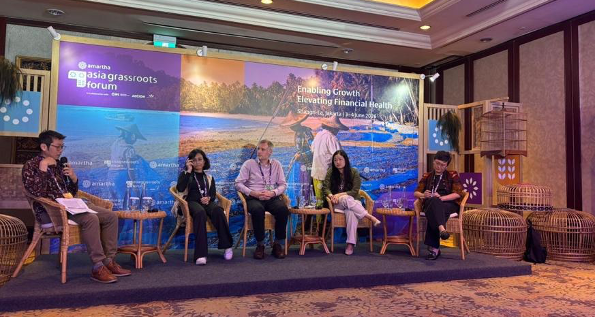
The intersection of environmental breakdown, climate change and economic instability has emerged as a primary threat to the resilience of smallholder farmers in Indonesia, according to researchers and local entrepreneurs who spoke at a recent convention. During the 2026 Asia Grassroots Forum, held in Jakarta on June 3 and 4, Alex Arnall, an associate professor for environment and development at the University of Reading, U.K., said climate change has become an “agent of exclusion,” creating a “double exposure” for farmers who must simultaneously navigate global market volatility and erratic weather. The Asia Grassroots Forum focused on building sustainable business ecosystems for smallholders. Previous research showed extreme weather events can affect farmers in southeast Asia by damaging crops, agricultural infrastructure like irrigation systems and farm equipment, and by increasing operational costs and reducing revenues. A 2024 report found that every 1% increase in average temperature raises the price of food production by 1% to 2% across Indonesia, Thailand, Vietnam, Malaysia and the Philippines. Researchers have also noted that smallholder farmers in the region face a massive financing gap, with less than one-third of the $100 billion needed annually for climate-smart adaptation, leaving them in urgent need of better access to credit, insurance and targeted financial support Drawing on his work with salt farmers in Thailand, Arnall described how even highly-skilled, traditional producers are seeing their knowledge “undermined” by sea-level rise and coastal change. “Farmers in many places … are losing trust in the weather patterns as they become more unpredictable,” Arnall…This article was originally published on Mongabay
Over the past decade, the U.S. Department of Defense (DoD) spending for critical minerals transformed from virtually nonexistent into a major revenue stream, with the last five years delivering a dramatic surge in both contract volume and dollar value. The Pentagon and other defense-adjacent agencies’ growing appetite for these projects is already visible in affected communities. Several of these communities impacted by DoD-funded projects told Mongabay that state backing has fast-tracked approvals without essential environmental safeguards or meaningful consultation by companies. For this research, Mongabay aggregated information from the USAspending database — an official open data source of federal spending information — about U.S. Department of Defense grants spending on critical mineral projects for military purposes between 2015 and 2025. This figure excludes Pentagon contracts, which is a major way that the Department of Defense (DoD) spends its money. The actual amount is likely larger given that some projects may not be public due to national security reasons, according to the Congressional Research Service (CRS). We decided to focus only on grants, as other types of contracts are generally non-binding and do not guarantee federal spending. Mongabay found that the federal agency provided an estimated $621 million on grants for critical mineral projects for defense purposes over the period, according to the USAspending database. Between 2021 and 2025, the DoD secured 24 agreements worth nearly $550 million (549.7 million) — up from just $31.3 million for three contracts in the previous five-year period. It poured the most funding into lithium…This article was originally published on Mongabay
Among the many inhabitants of Southeast Asia’s dense rainforests are hornbills — a group of birds that stand out with their raucous call, large, ostentatious beak and colorful feathers. Indonesia harbors 13 species, the most of any country in Asia, three of which are found nowhere else. Hornbills are rapidly losing their homes as large swaths of Indonesian forests are cut down to make way for plantations, mining, dams, cities and other development, or are scorched by wildfires. Trade in these birds also poses another serious threat. Hundreds of hornbills are entering the illegal trade in Indonesia, according to a new study published in the journal Wild, some of which are offered for sale online. They’re sold alive as pets or killed for their casques, the ivory-like appendages above their beaks, and their taxidermied heads, which are displayed as home décor. To understand the scope of this trade, researchers analyzed police and customs confiscation data and surveyed online ads from 2015 to 2025. They learned that this illegal commerce is widespread and involves every Indonesian hornbill species and some from Africa and the Philippines as well. Most birds were sold alive, suggesting they’re bought as pets. Facebook was the preferred online marketplace. “The scale of the hornbill trade in Indonesia is probably greater now than I’ve seen it in the past,” said study author and wildlife trade researcher Chris Shepherd from the U.S.-based Center for Biological Diversity. “It’s becoming, perhaps, trendier to keep hornbills.” Indonesia is infamous for its songbird…This article was originally published on Mongabay
Katharine Wilkinson has a Ph.D. in geography and the environment, is well known for being a co-author of the book Drawdown and co-founder of The All We Can Save Project. She joins the Newscast this week to discuss her latest book Climate Wayfinding: Healing Ourselves and the Planet We Call Home. As a journalist, it’s unhelpful for me to divorce myself from the topic of this interview, as I have experienced, time and again, the sense of “murky overwhelm” this book is specifically designed to address. But Wilkinson didn’t just write this book for journalists like myself who cover ecological crises for a living. She wrote it for readers and listeners like you. “I think we’re all in our own ways grappling with this increasingly mapless time, right? And that is quite literally true,” Wilkinson says. “‘Is there hope?’ and ‘What can I do?’ I think these are fundamentally navigational questions as much as they are questions of action.” What Climate Wayfinding does that I think is unique is it directly addresses the reader and takes them through a process of self-examination. Of sitting with the uncomfortable emotions one feels about our ecological crises, without judgment. And from that self-compassion, asking the reader to imagine the world they want to see instead and encouraging them to map out how they see themselves working to achieve it. It sounds relatively simple, but the work is real and, from my own experience, not unlike therapy. In my opinion, it’s a brave piece…This article was originally published on Mongabay

 Login
Login