Manas National Park in India’s Himalayan foothills was once home to some 100 Indian rhinos, almost all of which were wiped out by poaching by the late 1990s. After a campaign to reintroduce them, the population is growing and several calves have been born. But their recovery still needs active support, reports contributor Sneha Mahale for Mongabay India. Researchers followed the fate of 42 greater one-horned rhinos (Rhinoceros unicornis) reintroduced to Manas in the state of Assam from 2006-2021. The rhinos arrived there in one of two ways: 22 wild rhinos were translocated from other protected areas in Assam, and 20 injured or orphaned rhinos were rescued and rehabilitated at a center, then released into Manas. The rhino reintroduction program is showing hopeful signs, the decade-long study found. Between 2012 and 2022, the researchers recorded 35 rhino births in Manas: 19 calves from translocated females, and nine from rehabilitated individuals. First-generation rhino females, born in Manas, also birthed five calves; the mothers of two more calves remained unidentified. “Breeding and calving are among the most important indicators that reintroduced rhinoceroses have adapted well to their new environment,” study lead author Deba Kumar Dutta, a wildlife biologist and member of the Asian Rhino Specialist Group at the IUCN, the global wildlife conservation authority, told Mongabay India. The study also found the two groups of rhinos settled in different parts of the national park. Translocated rhinos spread out over a larger area, often using remote or less-disturbed parts of the park, while…This article was originally published on Mongabay
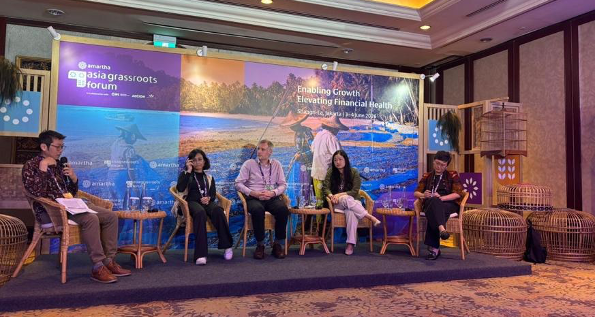
The intersection of environmental breakdown, climate change and economic instability has emerged as a primary threat to the resilience of smallholder farmers in Indonesia, according to researchers and local entrepreneurs who spoke at a recent convention. During the 2026 Asia Grassroots Forum, held in Jakarta on June 3 and 4, Alex Arnall, an associate professor for environment and development at the University of Reading, U.K., said climate change has become an “agent of exclusion,” creating a “double exposure” for farmers who must simultaneously navigate global market volatility and erratic weather. The Asia Grassroots Forum focused on building sustainable business ecosystems for smallholders. Previous research showed extreme weather events can affect farmers in southeast Asia by damaging crops, agricultural infrastructure like irrigation systems and farm equipment, and by increasing operational costs and reducing revenues. A 2024 report found that every 1% increase in average temperature raises the price of food production by 1% to 2% across Indonesia, Thailand, Vietnam, Malaysia and the Philippines. Researchers have also noted that smallholder farmers in the region face a massive financing gap, with less than one-third of the $100 billion needed annually for climate-smart adaptation, leaving them in urgent need of better access to credit, insurance and targeted financial support Drawing on his work with salt farmers in Thailand, Arnall described how even highly-skilled, traditional producers are seeing their knowledge “undermined” by sea-level rise and coastal change. “Farmers in many places … are losing trust in the weather patterns as they become more unpredictable,” Arnall…This article was originally published on Mongabay
Over the past decade, the U.S. Department of Defense (DoD) spending for critical minerals transformed from virtually nonexistent into a major revenue stream, with the last five years delivering a dramatic surge in both contract volume and dollar value. The Pentagon and other defense-adjacent agencies’ growing appetite for these projects is already visible in affected communities. Several of these communities impacted by DoD-funded projects told Mongabay that state backing has fast-tracked approvals without essential environmental safeguards or meaningful consultation by companies. For this research, Mongabay aggregated information from the USAspending database — an official open data source of federal spending information — about U.S. Department of Defense grants spending on critical mineral projects for military purposes between 2015 and 2025. This figure excludes Pentagon contracts, which is a major way that the Department of Defense (DoD) spends its money. The actual amount is likely larger given that some projects may not be public due to national security reasons, according to the Congressional Research Service (CRS). We decided to focus only on grants, as other types of contracts are generally non-binding and do not guarantee federal spending. Mongabay found that the federal agency provided an estimated $621 million on grants for critical mineral projects for defense purposes over the period, according to the USAspending database. Between 2021 and 2025, the DoD secured 24 agreements worth nearly $550 million (549.7 million) — up from just $31.3 million for three contracts in the previous five-year period. It poured the most funding into lithium…This article was originally published on Mongabay
Among the many inhabitants of Southeast Asia’s dense rainforests are hornbills — a group of birds that stand out with their raucous call, large, ostentatious beak and colorful feathers. Indonesia harbors 13 species, the most of any country in Asia, three of which are found nowhere else. Hornbills are rapidly losing their homes as large swaths of Indonesian forests are cut down to make way for plantations, mining, dams, cities and other development, or are scorched by wildfires. Trade in these birds also poses another serious threat. Hundreds of hornbills are entering the illegal trade in Indonesia, according to a new study published in the journal Wild, some of which are offered for sale online. They’re sold alive as pets or killed for their casques, the ivory-like appendages above their beaks, and their taxidermied heads, which are displayed as home décor. To understand the scope of this trade, researchers analyzed police and customs confiscation data and surveyed online ads from 2015 to 2025. They learned that this illegal commerce is widespread and involves every Indonesian hornbill species and some from Africa and the Philippines as well. Most birds were sold alive, suggesting they’re bought as pets. Facebook was the preferred online marketplace. “The scale of the hornbill trade in Indonesia is probably greater now than I’ve seen it in the past,” said study author and wildlife trade researcher Chris Shepherd from the U.S.-based Center for Biological Diversity. “It’s becoming, perhaps, trendier to keep hornbills.” Indonesia is infamous for its songbird…This article was originally published on Mongabay
Katharine Wilkinson has a Ph.D. in geography and the environment, is well known for being a co-author of the book Drawdown and co-founder of The All We Can Save Project. She joins the Newscast this week to discuss her latest book Climate Wayfinding: Healing Ourselves and the Planet We Call Home. As a journalist, it’s unhelpful for me to divorce myself from the topic of this interview, as I have experienced, time and again, the sense of “murky overwhelm” this book is specifically designed to address. But Wilkinson didn’t just write this book for journalists like myself who cover ecological crises for a living. She wrote it for readers and listeners like you. “I think we’re all in our own ways grappling with this increasingly mapless time, right? And that is quite literally true,” Wilkinson says. “‘Is there hope?’ and ‘What can I do?’ I think these are fundamentally navigational questions as much as they are questions of action.” What Climate Wayfinding does that I think is unique is it directly addresses the reader and takes them through a process of self-examination. Of sitting with the uncomfortable emotions one feels about our ecological crises, without judgment. And from that self-compassion, asking the reader to imagine the world they want to see instead and encouraging them to map out how they see themselves working to achieve it. It sounds relatively simple, but the work is real and, from my own experience, not unlike therapy. In my opinion, it’s a brave piece…This article was originally published on Mongabay
This is part 2 of a two-part series examining the U.S.’s efforts to begin deep-sea mining in federal waters. Part 2 examines the regulations that would govern the industry. Part 1 explored the process behind proposed lease sales in U.S. federal waters and reactions to those plans. The deep-sea mining industry could launch in the near future in U.S. federal waters. Yet legal experts and former government officials warn that the regulations that would govern this industry are outdated and lack important oversight provisions. In April 2025, the Trump administration signaled its intention to enter the global race to mine the deep sea when it released an executive order calling for the development of the industry. Following the administration’s direction, in April 2026 the U.S. Department of the Interior (DOI) announced its plans to hold a series of seabed lease sales over the course of this year and into early next. The first one is slated for August in American Samoa, with subsequent lease sales planned for the Commonwealth of the Northern Mariana Islands (CNMI) and Alaska. If these go forward, they could mark the first commercial lease processes for deep-sea mining anywhere in the world. Critics say deep-sea mining could cause large-scale and irreversible damage to the marine environment, and some governments in areas slated for leasing have even taken steps to ban deep-sea mining. In 2024, the governor of American Samoa enacted a moratorium on seabed mining from its territorial waters, which extend 3 nautical miles (5.6 kilometers)…This article was originally published on Mongabay
Colombia passed a landmark law June 4 aimed at improving traceability of its cattle supply chain to ensure beef isn’t sourced from deforested land. The law hopes to enhance existing traceability systems and make it easier to identify when cattle have grazed in protected areas and forests that were illegally cleared for pasture. “This is the most powerful tool for determining whether the meat people consume comes from deforested areas,” said representative Juan Carlos Losada, one of the law’s sponsors, in a post on X. About 54% of Colombia’s total land area is covered by forest, that’s roughly 60 million hectares (148 million acres). Deforestation has ebbed and flowed in recent years, declining in 2023, spiking in 2024 and then declining again in 2025. Cattle are always one of the main drivers. The country has over 29.7 million heads of cattle, according to last year’s estimates from the Colombian Federation of Cattle Ranchers. To better regulate the industry, lawmakers tried to pass traceability legislation in 2021 and 2022 but failed to move it through Congress. Another version took too long to reach a final debate in the senate, and expired in 2024. The effort began around the same time that the European Union Deforestation Regulation (EUDR) was passed. Once implemented, the law will require that companies trading with the EU demonstrate their cattle and other commodities weren’t sourced from deforested land. The law allows officials to establish “high surveillance zones” in deforestation hotspots. It includes the ability to implement special…This article was originally published on Mongabay
NAIROBI, Kenya (AP) — Kenya’s former Chief Justice David Maraga said he was arrested Monday alongside other activists protesting planned construction inside Nairobi National Park. Police fired tear gas canisters at the protesters who were marching outside the park while carrying banners with messages denouncing land grabs. Maraga was detained and later released while staging a sit-in on a major road outside the national park’s main gate. He was wearing a green T-shirt similar to those worn by other activists. The police have yet to comment on the reason for his arrest. Maraga wrote on X that he was arrested while heading to present a petition to the Kenya Wildlife Service. “Our national heritage and environment must be safeguarded from greed and unnecessary destruction without public participation,” he said. Hundreds of activists joined the protest against the planned construction inside the park and the relocation of an orphanage, calling it an attempt to grab public land. Kenya has experienced incidents of land grabbing in the past, and environmentalists have often spoken out when parks and other green spaces are encroached upon. Amnesty International in Kenya expressed solidarity with the protesters and called for members of the public to be included in decisions affecting the country’s environmental heritage. “We want to categorically state that Nairobi National Park is not for sale; our public spaces, our environment, and our rights cannot be traded away behind closed doors,” the rights group said. The Kenya Wildlife Service on Sunday defended the construction as part of a plan to…This article was originally published on Mongabay
Cities are expanding faster than at any point in human history, and wildlife is adapting in remarkable ways. We often talk about visible changes like animals becoming bolder, shifting their diets, or altering their daily rhythms to avoid people. But there is a deeper transformation happening inside their bodies, one that conservation science has barely begun to address: The reshaping of the gut microbiome. Urban ecosystems expose animals to a completely different set of pressures than their natural habitats. Artificial light, chronic noise, pollution, and human-derived food sources all interact to shape the physiology of wildlife rapidly. These pressures don’t just influence behavior from the outside, they alter the microbial communities that regulate digestion, immunity, stress responses, and even cognition, making key components of how animals evolve and adapt as “pressure cookers,” reducing diversity and decreasing overall health. When the microbiome becomes disrupted, a state known as dysbiosis, animals may become more anxious, more risk-taking, or more susceptible to disease. Urbanization is forcing this rapid adjustment of species not just through habitat loss, but by fundamentally changing their microbiota, and with that, things like foraging patterns and predator avoidance. In other words, urbanization may be shaping wildlife behavior from the inside out. Mule deer in Banff, Alberta. Image by Sharon Hahn Darlin via Wikimedia Commons (CC BY 2.0). Yet conservation strategies rarely consider this internal dimension. We focus on green spaces and habitat restoration, which are essential, but overlook how environmental stressors affect the microbial health of the animals we…This article was originally published on Mongabay
In the mountain villages of Guatemala’s Western Highlands, farmers are combining ancient Maya knowledge with modern sustainable farming techniques to protect their crops from pests and disease. Smallholders are creating homemade biopesticides using plants with strong smells and flavors to deter pests on their family plots. This is helping to cut back on the use of increasingly expensive agrochemicals, many of which have been labeled as dangerous to human health and linked to soil degradation. About 60 Guatemalan communities in the Western Highland departments of Sololá and Huehuetenango, as well as Chiquimula in the east, are working to revive these traditional techniques with support from the international development organization World Neighbors. Their focus is to restore and strengthen traditional knowledge, combining it with agroecological practices that help families produce surplus food they can sell to boost household incomes. “Traditional farming techniques are becoming popular because they are simple practices to apply, use local resources, and have proven to be effective,” Dayani Roche, a program associate at World Neighbors, told Mongabay via email. Rather than a single ancient recipe, farmers are using “a living combination of ancestral knowledge, local experimentation and more recent agroecological practices,” he said, which are “safer for families, soil, water and biodiversity than many chemical alternatives.” The Maya civilization, which once stretched across modern-day Central America, had a rich history of farming dating back to 2000 B.C.E. Its most celebrated agriculture system is the milpa, a form of intercropping that involves a mix of maize, beans and…This article was originally published on Mongabay
CHIRADZULU, Malawi — In Chiradzulu district in southern Malawi, 60 women who are members of the Rural Women’s Assembly grow fruits and vegetables alongside their staple crop, maize. In recent years, there’s been growing demand for their organically produced crops from buyers in the nearby city of Blantyre, Malawi’s commercial capital. The assembly’s chair in Chiradzulu, Diana Sitima, runs a 3.5-hectare (8.6-acre) organic farm here. She says when she started the farm in 1993, she used to take the produce to consumers in Blantyre. “Now they are coming to us. They say our produce has a good taste,” Sitima says. According to the women, the biggest obstacles they face as farmers is that they lack land titles and capital to invest in their farming. As members of the RWA, these are the issues they discuss at their meetings and bring to their local council and central government for solutions. Ester Samuel spreads maize to dry in Balaka, Malawi. Image by CIMMYT via Flickr (CC BY-NC-SA 2.0) In 1998, not long after she got married, RWA member Lonely Kholowa’s parents gave her a piece of land to cultivate. But after her father passed away in 2009 — her mother had died seven years earlier — her father’s older brother grabbed the land, arguing that according to their culture, she belonged to the family of her mother who came from Machinga district in the east of the country. Today, Kholowa farms land in her husband’s village elsewhere in Chiradzulu. “I don’t have…This article was originally published on Mongabay
TANGGAMUS, Indonesia — When Sri Atmiatun arrived in the hills of the Batutegi region in southern Sumatra’s Lampung province in 2017, the coffee trees were already there, overgrown and neglected, slowly fading back into scrub. Her uncle had asked her to take over the plot. Sri agreed, trading years of labor on oil palm plantations in the central Sumatran province of Riau. Nearly a decade later, she still walks the same uphill path each morning. Now 45, Sri manages more than 3 hectares (7.4 acres) of land within the 1,400-hectare (3,460-acre) Sumber Makmur social forestry area. Sumber Makmur itself sits on the edge of the more than 80,000-hectare (198,000-acre) Batutegi forest landscape, where some areas are strictly protected while others are managed by communities through agroforestry systems. Under the social forestry program, the land remains state-owned, but local communities like Sri’s are granted the right to manage it for their livelihoods under rules designed to protect the forest and its ecological functions. “I stayed because this land feeds us,” Sri told Mongabay in early March. “If I leave, who will take care of it?” Sri’s story reflects a broader shift. Across the Batutegi landscape, land that was once cleared for coffee is now being restored and managed under Indonesia’s social forestry program. Legal recognition has given farmers access to support and training from the government and private organizations. In return, forest clearing and expansion into protected core areas have been reduced, allowing the forest to remain a safe habitat for…This article was originally published on Mongabay
In Bangladesh, poor oversight of unlawful cross-border trade in hazardous electronic waste continues, turning the country into a net importer of electronic waste. The country has rules to control e-waste. It is also a party to the Basel Convention and has introduced its own laws, like the Hazardous Waste (E-waste) Management Rules (2021). However, enforcement of these frameworks remains weak. Mongabay obtained and reviewed the document outlining Bangladesh’s import and export of e-waste, revealing key details on trade flows and regulatory gaps. The document, by the National Board of Revenue (NBR), shows that 40 companies imported e-waste under HS code 8549 — the international customs code for trading e-waste — at various times between 2022 and 2025, in apparent violation of the Basel Convention, an international treaty to reduce the movements of hazardous waste between nations. The textiles and apparel industry leads at 27%, or about one quarter, of all e-waste importers. No response from importers Mongabay reached out to Unilever Bangladesh Limited, one of the 40 e-waste importing companies and the only one that responded. Shamima Akhter, director of corporate affairs, partnerships & communications of Unilever Bangladesh Limited, said in an email on May 21, “We confirm that we have not imported any e‑waste or restricted items. The product concerned is a load cell, which is a precision measuring instrument, and the correct HS Code for this item is 90318, as declared in our import documentation. Any change to HS Code 8549 during the clearance process was made independently…This article was originally published on Mongabay
From above, an intact forest can look reassuringly complete. A satellite image may show an unbroken canopy, a block of green still standing amid plantations, roads or logged land. For many conservation programs, that view has become the starting point for measurement. If the canopy remains, the forest is often treated as if much of its ecological value remains as well. The forest itself may tell a more complicated story. Birds, insects, frogs and primates divide the day among them. Some call at dawn, others at night. Some occupy narrow frequency bands; others fill the background with a steady rasp. A forest that looks intact can still lose part of this living structure. The canopy may close after logging. Carbon may remain on a balance sheet. The animal community may not return in the same form. Garnet Pitta. Photo by Hanyrol Hanyzan Ahmad Sah A new paper in Global Change Biology, by Zuzana Buřivalová and colleagues, examines that problem through sound. The study describes the Soundscape Baselines Project, an effort to record the acoustic signatures of some of the world’s remaining intact forests before those reference points become harder to find. The idea is straightforward. To know whether a forest has changed, one needs to know what it sounded like before the change. That baseline is not only a technical convenience. It is a guard against a familiar problem in conservation: each generation tends to accept the nature it first encountered as normal. Daniel Pauly called this shifting baseline syndrome…This article was originally published on Mongabay
Deep in Taiwan’s misty mountains, researchers have confirmed the tallest tree in the country: a thousand-year-old fir tree higher than a 20-story building, which they’ve named “the heaven sword of the Da’an River.” Climbers scaled the tree and dropped a measuring tape from the top to the forest floor during the Lunar New Year holiday in January 2023. The tree measured 84.1-meters (276-feet). The findings have been published in Frontiers in Forests and Global Change. A team of ecologists, geologists, remote-sensing specialists, professional climbers and Indigenous people that calls itself the “Taiwan tree seekers” began the search in 2014. “The common characteristics [of the team] are probably that we are all tree lovers and like adventures,” Rebecca Chia-Chun Hsu, lead author from Division of Forest Ecology, Institute of Taiwan Forestry Research, told CNN. ‘The Heaven Sword’, Taiwan’s tallest tree, measures 84.1 meters. Photo courtesy of Steven Pearce. Taiwan is one of the few places on Earth where trees can grow this tall. The island sits where the tropics meet the subtropics, and its mountains host several giant conifer species. The species behind the new record, Taiwania cryptomerioides, is known to the Indigenous Rukai people as “the tree that hits the moon.” Although nearly 60% of Taiwan is covered in forest, loggers cleared much of the island’s old-growth forest between 1912 and 1991. However, its steep slopes were too dangerous to reach, and pockets of ancient forest survived. Still, finding the tallest tree amid the rugged terrain was a task. Taiwan…This article was originally published on Mongabay
COLOMBO — Sri Lanka banned the purchase and use of single-use plastic water bottles in all government institutions effective May 31, under a new government circular that targets reduction of wasteful plastic consumption within the state sector. The move is the latest in a long line of attempts by the island nation to reduce plastic pollution — a crisis that clogs waterways, pollutes beaches, harms marine life, and overwhelms the country’s fragile waste management systems. But environmentalists say the real question is not whether Sri Lanka can announce another ban, but whether it can be enforced. The new directive applies to public institutions and is expected to reduce the routine use of disposable plastic water bottles during government meetings, events, offices and official functions. Authorities are encouraging reusable alternatives and better drinking water infrastructure within public institutions, says Kapila Rajapaksha, the director-general of the Central Environmental Authority (CEA), the state agency mandated to address plastic pollution. Sri Lanka’s plastic problem is growing exponentially. The National Plastic Waste Inventory (NPWI) published in 2024 has estimated the island’s municipal plastic waste generation to be approximately 250,000 metric tons per year. Sri Lanka recycles only about 27,000 metric tons of plastic waste annually, roughly 11% of total plastic waste generated. An estimated 68,000 metric tons, or 27% of plastic waste, remain uncollected and are often burned, buried or illegally dumped. Approximately 101,000 metric tons or 41% of the plastics go unaccounted from the waste management system during collection, transport, sorting and disposal. According…This article was originally published on Mongabay
PORT HUGHES, Australia — Situated midway along the Great Southern Reef that spans Australia’s southern coastline, the waters off Port Hughes typically teem with life. The coastal hamlet northwest of Adelaide plays host to a multitude of coral, bivalve and fish species. But in late March, the largest and longest harmful algal bloom (HAB) in Australian history arrived to Port Hughes, depleting its waters’ rich biodiversity. The bloom had first appeared elsewhere off the state of South Australia’s coast a year earlier, causing eye and skin irritation and respiratory symptoms among beachgoers. Then, along with waves of acrid-smelling sea foam, scores of dead marine animals began washing ashore. In Port Hughes, the HAB’s impacts were most visible below the surface. The town’s wooden jetty had previously been one of the most consistent locations in South Australia to observe temperate species, said Stefan Andrews, co-founder of the Great Southern Reef Foundation, a conservation advocacy group. But by mid-April, when Mongabay joined Andrews on a dive, the site was drab compared with vibrant photographs taken in February and March. Under the jetty, sponges and corals that had previously adorned its pylons in a brilliantly hued mosaic appeared colorless. Apart from a short-headed seahorse (Hippocampus breviceps) — a “sign of hope,” Andrews called it — little life was visible in the murky waters. The reef, he said, had become quieter, lacking the sounds of snapping shrimp and other creatures that once played in the underwater soundtrack. “There’s a sense of loss when you…This article was originally published on Mongabay
A North Korean man is set to face trial in Tanzania this week following his arrest in April while in possession of 500 elephant tusks. Un Hyok Ra was arrested April 19 at a hotel in Dar es Salaam, and is scheduled on June 9 to answer to charges of unlawful possession of the ivory and intent to trade it. Tanzania is a signatory to CITES, the global wildlife trade convention, which requires parties to conduct forensic analysis of ivory seizures of 500 kilograms (1,100 pounds) or more to determine where it came from. This is intended to support investigations that go beyond the typically low-level traffickers who are caught in possession. Tanzanian police did not respond to questions from Mongabay about the origins of the seized ivory or who Ra allegedly planned to sell it to. During an administrative hearing on May 28, prosecutor Florida Wancelaus told the court only that investigations are ongoing. Chris Morris, founder of wildlife crime monitoring group Saving Elephants through Education and Justice (SEEJ), based in neighboring Kenya, estimated that 504 tusks would weigh roughly 2,500 kg (about 5,500 lbs). In an email to Mongabay, he said law enforcement in the region does not always meet the CITES requirement to conduct DNA analysis on confiscated ivory. “It remains to be seen if Tanzania will comply with this directive,” Morris wrote. Morris, a former war crimes investigator, said Tanzanian authorities have often withheld information that would help sister agencies in the region and beyond trace…This article was originally published on Mongabay
World Oceans Day is celebrated every June 8 to raise awareness about the conservation of Earth’s oceans. In honor of World Oceans Day 2026, the United Nations is focused on marine protected areas (MPA), and the goal of protecting 30% of the world’s oceans by 2030. The world collectively reached a third of the goal in April 2026, MPAs now cover 10% of oceans. Another 20% will need to be protected over the next four years to reach the 30% goal. New Marine Protected Areas The latest additions of MPAs included 284 marine or coastal protected areas in Indonesia and Thailand. This year, Ghana also declared its first MPA, the Greater Cape Three Points MPA, after more than 15 years of efforts. And in September 2025, Pakistan protected the key biodiversity hotspot of Miani Hor Lagoon, home to dalmatian pelicans (Pelecanus crispus) and great black-headed gulls (Ichthyaetus ichthyaetus). French Polynesia, a Pacific territory controlled by France, declared the world’s largest MPA in June 2025. It covers the archipelagos’ entire exclusive economic zone; 4.8 million square kilometers (roughly 1.9 million square miles) of ocean gained official protection with overwhelming local support. Some MPAs allow bottom trawling While there has been progress, experts have also highlighted that some MPAs do not have enough protection. Throughout Europe, many MPAs still allow bottom trawling, a damaging fishing practice that drags weighted nets across the seafloor. Though bottom trawling targets just a few commercially viable species, a recent study found such nets collect roughly 3,000 distinct…This article was originally published on Mongabay
JEJU ISLAND, South Korea — In April 2025, I zipped myself up into a thick wetsuit and inched down a steep, rocky ledge toward the gray-blue water encircling Beomseom, a small island off the southern coast of Jeju Island in South Korea. Then I leapt into the chilly sea and wriggled into my scuba gear while floating on the surface. In the water with me was Sanghoon Yoon, an adviser for Paran Ocean Citizen Science Center, a South Korean civil society group that advocates for the protection of the ocean. That day, Yoon was my scuba dive buddy. Yoon and I sank beneath the dangling legs of snorkelers into a watery realm of rocks and kelp. Once in deeper water, I encountered gelatinous stalks of soft coral. The polyps appeared purple, pink, red, and even orange, depending on the light. The islet of Beomseom off South Korea’s Jeju Island hosts colorful gardens of soft coral. Image courtesy of Paran. Sanghoon Hoon, an adviser to the Paran Ocean Citizen Science Center, dives among soft corals in the waters off Jeju, South Korea. Image courtesy of Paran. The soft corals I saw that day were healthy. But in 2024, soft corals around Beomseom Island and other parts of Jeju experienced what scientists are calling a “slumping” event — and what Yoon describes as “melting” — which saw soft corals losing their shape, drooping, and even dying. The event was widely reported in local media and attributed to marine heat as Jeju waters…This article was originally published on Mongabay

 Login
Login