Normal view

Received — 8 June 2026 GreekReporter.com

The Ring of Legendary King Minos: A Tale of Intrigue and Deception

8 June 2026 at 19:31
Ring King Minos
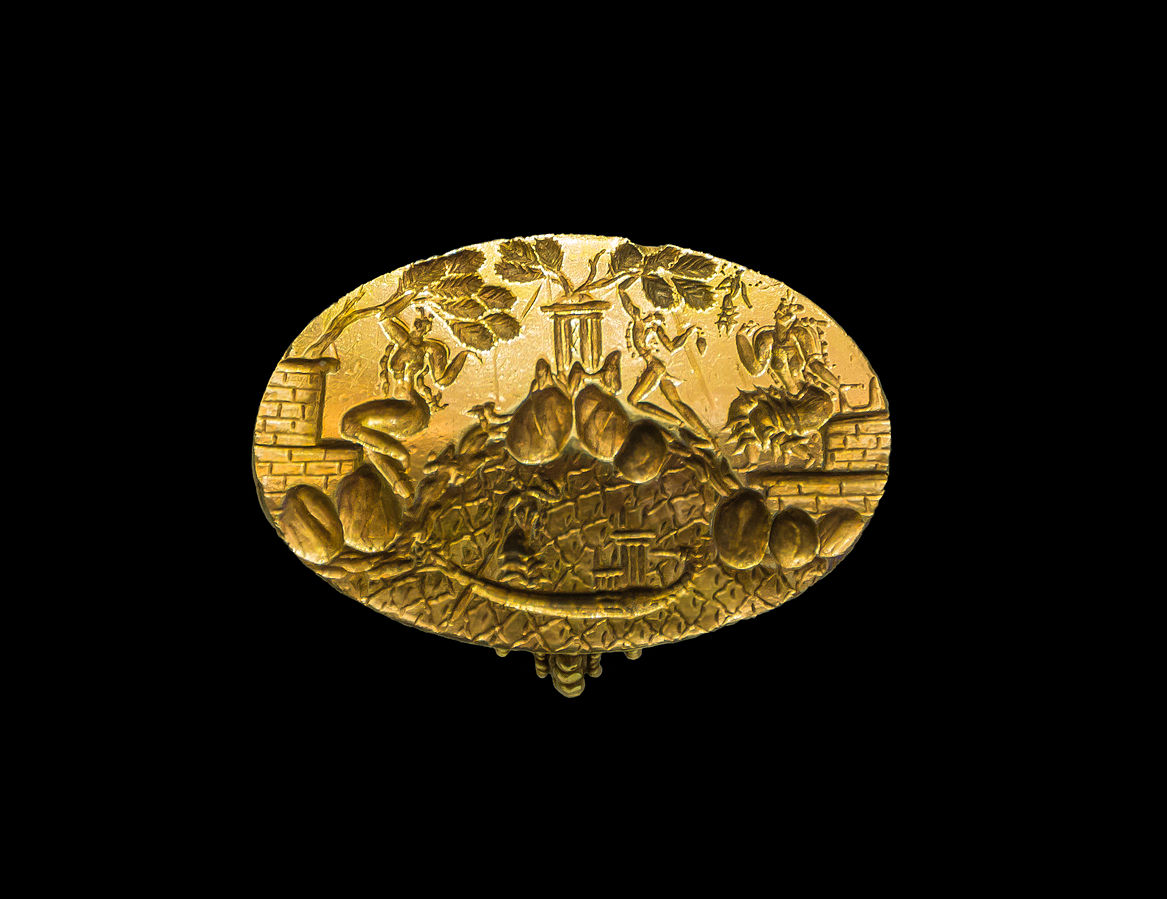
Ring of Minos Heraklion. Credit: Wikipedia/Jebulon/Public domain

The story of the ring known as the “Ring of King Minos” sounds like a tale made in Hollywood. It is a mix of ancient Greek history, mythology, and a plot involving a poor boy, a cunning priest, an English archaeologist, and hidden treasure.

The story begins in 1928, when a boy, Michalis Papadakis (1918-1974), accidentally found a ring at the archaeological site of Knossos. The place of discovery alone meant that the ring certainly had a very long history attached to it probably even going back to the Minoan civilization.

Indeed, several decades later, the shiny, gold, seal ring proved to be 3,500 years old (1,500 to 1,400 BC), as archaeologists assured him, and his was the most significant discovery of Minoan Civilization.

The boy’s father, a destitute farmer named Emmanouil, for some unknown reason, hid the ring from his wife and, for another unknown reason, two years later, he handed it over to the village priest, Father Nikolaos Polakis. Yet, before giving it away, he carved a line on the ring with his knife in order to mark its originality.

Father Polakis initially presented it to English archaeologist Sir Arthur Evans with the intention of selling it. However, there was no deal struck between the two since the priest demanded an astronomical amount of money.

In 1933 or 1934, Father Polakis decided to take the ring to the Heraklion Museum. At the time, the distinguished archaeologists, Nikolaos Platon and Spyridon Marinatos, were on the staff of the institution. Platon decided that the ring was genuine while Marinatos believed the ring was a fake.

Since the two archaeologists could not come to an agreement, they decided it was best to return the ring to the priest.

Ring King Minos
The King Minos Ring at the Heraklion Archaeological Museum. Credit: Twitter/Bokeras

However, Platon kept a copy of the ring by casting it in plasticine. The cast was later located in Platon’s archive. Several years later, he manifested a new interest in the ring and returned to the priest to ask for it. Father Polakis told him that he had given it to his wife for safekeeping, but she had lost it.

Minos ring depicts three themes

Platon wrote a treatise on the ring saying that it depicts three themes: the Minoans’ rule of the seas (“thalassocracy”), tree worship (dendrolatry), and a goddess descending from heaven to earth and getting into a row boat.

There are other, more recent interpretations of the depictions of the ring including the worship of goddesses, such as Mother Dimitra, and offerings to the Great Mother Rhea and the Great Mother Artemis.

For some time, the ring remained lost. The only information about the ring came from the copies that had been made and a number of archaeological reports which were associated with those copies.

Many years later, when Father Polakis was in his final days, he felt great regret about the “disappearance” of the precious ring. He called Evangelia Papadakis, the wife of the farmer Emmanouil, and apologized for lying to her family. He admitted that he had actually sold the ring to Evans, the English archaeologist, for 100,000 drachmas back in 1938.
However, that was one last lie by the cunning priest. What he had actually sold to Evans was a fine replica of the ring.

Evans had returned to England with the belief that he had bought the actual ring, along with a copy, and donated both, along with other precious artifacts, to the Ashmolean Museum. Today, two replicas of the legendary ring continue to be exhibited at the Ashmolean.

The story of the ring was forgotten for decades, but in the early 2000s, Giorgos Kazantzis, a retired police officer, inherited the house of the priest who was the last person in Greece who had had possession of the priceless artifact.

During renovation work, Kazantzis found a jar hidden inside the wall next to the fireplace. Inside the jar was a ring, which indeed proved to be the original Ring of King Minos. It even had the scratch made by Papadakis over seventy years ago.

Kazantzis delivered the precious artifact to the state, and in 2002, the Central Archaeological Council and a panel of expert archaeologists confirmed the authenticity of the ring. The actual monetary value of the ring was estimated to be €400,000 although its cultural value is incalculable.

Yet, for finding the ring and promptly delivering it to the appropriate authorities, Kazantzis was given a measly finder’s fee of €440.

Today, the priceless, gold Minoan ring is exhibited in all its splendor at the Heraklion Archaeological Museum.
Thetis and Achilles: How a Divine Mother Shaped the Greek Hero’s Fate

8 June 2026 at 16:04
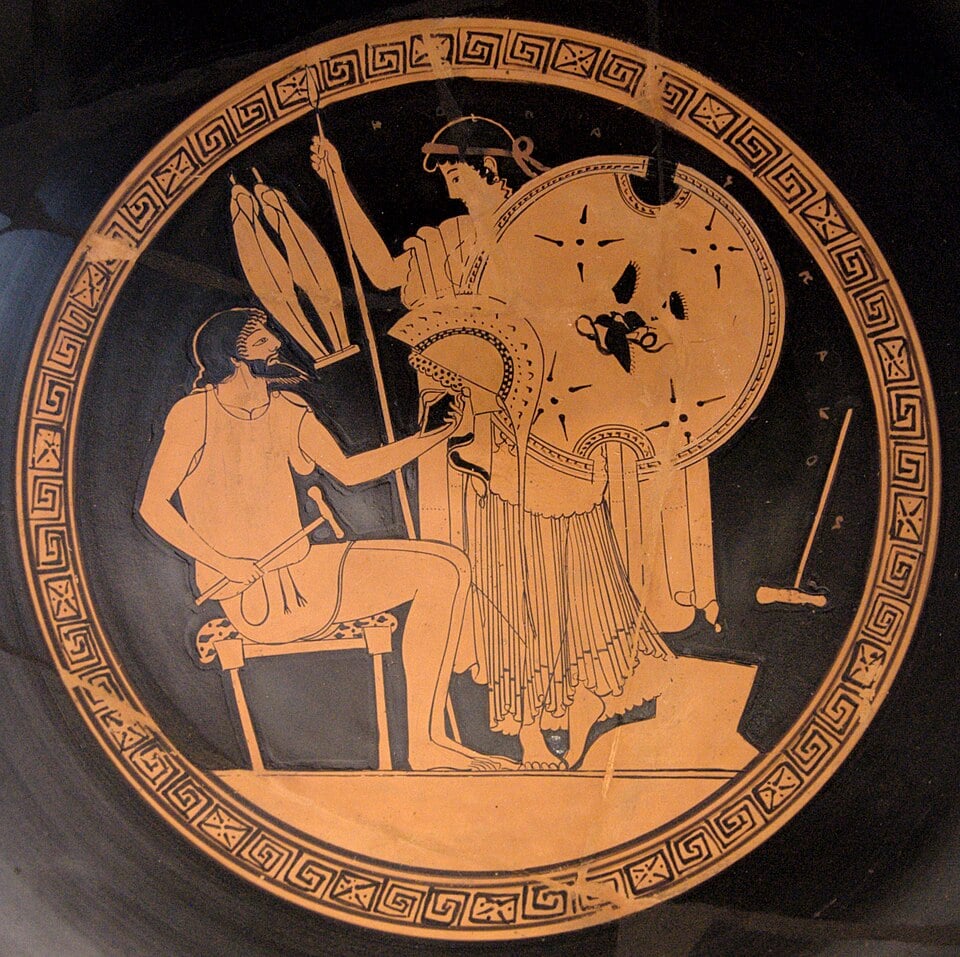
Attic red-figure Kylix, 490–480 BC, featuring Achilles and Thetis
Thetis takes the magical shield for Achilles from Hephaestus. Attic red-figure Kylix, 490–480 BC. Credit: Public Domain

In Homer’s Iliad, Thetis plays an important role in shaping the destiny of her son, Achilles. As a goddess, she intervenes at key moments in the epic, pushing the Greek hero to alter the course of events.

Although Thetis appears less frequently than many of the warriors and gods who dominate the battlefield at Troy, her actions influence some of the most significant developments in the poem. As a sea goddess and the mother of the greatest Greek warrior, she occupies a unique position between the divine and mortal worlds. She cannot prevent Achilles from dying, since the Fates have already decreed it, yet she repeatedly intervenes to protect his honor, ease his suffering, and ensure that his glory endures.

Through Thetis’ character, Homer explores themes of maternal love, fate, mortality, glory, and divine power. The first major instance of Thetis helping Achilles occurs in Book 1. After Agamemnon captures Briseis, a captive woman awarded to Achilles as a war prize, the Greek hero feels deeply dishonored and withdraws from battle. In his grief and anger, Achilles calls upon his mother. Thetis immediately rises from the sea to comfort him and listen to his complaint.

This scene reveals the extraordinary bond between mother and son. Unlike many divine figures in Greek mythology, Thetis responds with sympathy and tenderness. She understands Achilles’ suffering because she is painfully aware of his short lifespan. Her lament for him reflects a mother’s helplessness in the face of fate.

Thetis petitions Zeus to turn events in favor of Troy

After hearing Achilles’ request, Thetis undertakes one of the most consequential actions in the epic. She travels to Olympus and petitions Zeus to punish the Greeks by granting success to the Trojans. Her aim is not simply revenge but the restoration of Achilles’ honor. Zeus eventually agrees, and his decision alters the course of the war. The Trojans begin to gain the upper hand, while the Greeks suffer devastating losses. Through this intervention, Thetis helps Achilles achieve the recognition he believes Agamemnon has denied him.

This episode demonstrates the extent of Thetis’ influence among the gods. Although she cannot alter fate itself, she is capable of shaping the chain of events that leads toward it. Her appeal to Zeus succeeds in part because of a previous favor she had done for him. In this sense, her assistance rests not only on maternal devotion but also on her standing within the divine order. Achilles’ withdrawal from battle would have remained a private grievance without Thetis’ intervention. Instead, it escalates into a crisis that engulfs the entire Greek army.

The second major instance of Thetis helping Achilles occurs after the death of Patroclus. Patroclus, Achilles’ closest companion, enters battle wearing Achilles’ armor and is killed by Hector. When Achilles learns of his friend’s death, he is overwhelmed by grief and rage. Once again, Thetis hears her son’s cries and goes to him. This scene is among the most emotional in the Iliad. Thetis is aware that Achilles’ decision to return to battle will lead directly to his own death, yet she does not attempt to stop him. Instead, she offers comfort and practical assistance.

Hephaestus forges the invincible shield of Achilles

Achilles cannot immediately rejoin the fighting because Hector has confiscated his armor. Recognizing his need, Thetis travels to the forge of Hephaestus and requests new armor for her son. Hephaestus responds by crafting the magnificent shield of Achilles, one of the most celebrated objects in world literature. The shield depicts scenes of war and peace, labor and celebration, and life and death. With this armor, Thetis enables Achilles to return to battle and fulfill his heroic destiny.

This act of assistance is particularly significant because it highlights the limits of divine power. Thetis can secure the finest armor ever made, but she cannot save Achilles from mortality. Her help therefore reflects the tragic paradox that every action she takes to aid her son also brings him closer to the fate she most fears. The armor allows Achilles to defeat Hector, but it also marks the final stage of his journey toward death.

Thetis’ role after Hector’s death further underscores her importance. Achilles becomes consumed by grief and rage, dragging Hector’s body around the tomb of Patroclus. The gods disapprove of this behavior and decide that Hector must be returned to his family. Zeus sends Thetis to deliver his command to Achilles. She successfully persuades her son to release the body in exchange for ransom, helping restore moral balance and preparing the tale for closure.

This final intervention reveals another dimension of Thetis’ assistance. Earlier, she helped Achilles gain honor through vengeance; now she helps him regain humanity through compassion. Her influence guides him from destructive rage toward acceptance. The reconciliation between Achilles and Priam, one of the most moving scenes in ancient literature, would not have occurred without Thetis serving as the messenger between gods and mortals.

The complexity of Thetis, the mother of Achilles

Modern scholars have emphasized the complexity of Thetis’ character. Rather than portraying her simply as a nurturing mother, recent studies highlight her power and agency. Thetis is more than a grieving parent. She is a divine force capable of influencing both Olympus and the battlefield for the benefit of her son. This is evident in actions such as her request to Hephaestus to forge an impenetrable suit of armor for Achilles.

At the same time, scholars frequently stress the tragic nature of her motherhood. Classicist Emily Wilson observes that she has come to view the Iliad as “a poem about the pain of a goddess mother who adores her mortal child and can’t protect him.” This insight captures the emotional core of Thetis’ role in the epic. Despite her divine status, she remains powerless as a mother in the face of fate. Her interventions can shape events, but they cannot prevent the loss she knows is imminent.

Other scholars have also noted that grief defines Thetis’ presence throughout the epic poem. Classicist Serena Cannavale describes Thetis in the Iliad as “a figure of grief,” emphasizing that her sorrow is present long before Achilles actually dies. Her laments anticipate the tragedy that hangs over the entire narrative.

Ultimately, Thetis helps Achilles in three essential ways: she restores his honor by persuading Zeus to favor the Trojans, she equips him for revenge by obtaining new armor from Hephaestus, and she guides him back toward humanity by conveying Zeus’s command to release Hector’s body to Priam. These actions shape the central events of the Iliad and reveal the profound connection between mother and son. Yet the tragedy of Thetis lies in the fact that her power cannot overcome destiny. She can comfort Achilles, protect his reputation, and secure his everlasting glory, but she cannot save his life.

For this reason, Thetis embodies the tension between divine power and human mortality. Every time she helps Achilles, she demonstrates her love, yet every act of assistance also reminds readers that fate is stronger than even the gods. Through Thetis, Homer presents a moving portrait of maternal devotion in the face of inevitable loss, making her one of the emotional centers of the Iliad.

Ancient Greeks Traveled a Lot, Even Used Clay ‘Passports’

8 June 2026 at 08:44
Ancient Greeks travel
The Temple of Apollo at Delphi was one of the most common travel destinations in Ancient Greece, as people were travelling from all over the country to consult the oracle. Credit: Greek Reporter

The Ancient Greeks were active travelers, despite the dangers of land travel and the fear of highwaymen. Sea travel required ample supplies and means.

A fascinating archaeological find exhibited in the Agora Museum in Athens is rectangular clay tablets with inscribed names and occupations that purportedly served as travel documents in antiquity.

Most travelers were aristocrats and well-to-do citizens who traveled to witness and experience the wonders of the ancient world, and other famous places and sights.

Others traveled for pilgrimage; healing in sanctuaries such as the Sanctuary of Asclepius in Olympia, the Sanctuary of Apollo on Delos Island, or to attend religious festivals and monumental athletic events like the Olympic Games at Olympia or the Panathenaic Games in Athens.

Merchants also traveled to other parts of Greece, or across the Mediterranean and beyond to promote and sell their goods to destinations such as Egypt, Asia Minor, the Middle East, and the Black Sea.

The Ancient Greeks were curious about the world and had a great desire to learn. For that reason, they held travel in high regard. The most famous epic journeys, such as Homer’s Iliad and Odyssey or Jason’s expedition to retrieve the Golden Fleece, had protagonists who had to travel far and undergo trials to achieve their goals.

In their long journeys. They experienced great adventures, encountered grave dangers, and saw things and, above all, places they would never see if confined in their birthplace all their lives. These epics celebrated heroic adventures through travel.

Then people from all over Greece and beyond would travel far to consult the oracle at Delphi and plan their future.

Also, it was through travel that ancient Greeks discovered places worth exploring and exploiting, such as uninhabited fertile lands or seaside areas with great potential, where they established trading colonies.

Overall, the accounts of travelers provided valuable information about the contemporary world. In modern day, these accounts help us understand the world during that period.

Practical issues of traveling in antiquity

Travel in ancient times required means that not all people could afford. Travelling by land meant using carriages and horses for people with means and walking for the rest. Pack animals, like mules and donkeys, were necessary. Greece had a widespread road network connecting even remote settlements, but there was always the danger of being robbed by highwaymen.

Traveling by sea was considered a safer and more comfortable means. Most major cities were located near a shore. Yet, there were no passenger ships back then, so those willing to travel by boat had to be next to the cargo, and at a price, too.

To take long journeys, overall, required a lot of money. Baggage porters and other attendants were necessary, along with armed bodyguards. The presence of security was important because the traveler could face highway robbers who could also abduct them. Similarly, when traveling by sea, there was the danger of being attacked by pirate ships.

Since there were no maps, natural landmarks such as mountains and rivers were used. In sea travel, similar landmarks across the shoreline served as guides to the destination.

Friends or social peers usually provided hospitality at the destinations for free. However,  there were specific businesses that provided basic food and accommodation, especially in the larger cities, and for significant events such as the Olympic Games or religious festivals.

In the Archaic period, there was the additional legal danger of unknowingly being in another city-state territory without permission while trying to arrive at one’s destination. However, by the Classical period, relations between states were more regulated, and interstate travel was facilitated. In addition, systems of communication had improved by then. Nevertheless, the travel hazards remained.

Greek goods were found all over the then-known world

There is ample evidence that ancient Greeks traveled. Archaeological finds show contacts with other peoples and civilizations. Greek coins and goods such as amphorae have been found all over the Mediterranean. Artifacts emulating artistic styles and evidence of the adoption of rituals originating in Ancient Greece also indicate long and close contact with different peoples and cultures.

In addition, Greeks who traveled frequently brought back new ideas, Eastern tastes in clothing, jewelry, and foods, as well as architectural trends.

The ancient Greeks discovered new lands and established trading colonies across the Mediterranean, Asia Minor, and the Black Sea from the 8th through the 6th centuries. Many of these have evolved into the great cities that still stand today.

The most famous of the colonies were those in Magna Graecia, in today’s southern Italy and Sicily (Calabria, Apulia, Basilicata, Campania, Syracuse, Tarentum, Sybaris, and Croton), where the Greek element is still alive today, especially in the language.

Other important ancient Greek colonies were Massalia (modern-day Marseilles in France), Cyrene in Libya, and Byzantium on the Bosporus Strait, which later became Constantinople.

Greek philosophers on travelling

Several ancient Greek philosophers valued travelling as a means to gain knowledge and experience. Encountering different cultures and experiencing new environments broadens one’s perspective. Great figures like Thales and Pythagoras traveled to Egypt and other regions to study and acquire knowledge.

Aristotle believed that empirical observation and practical experience are good sources of knowledge. Provided, though, that one had the foundations in reason and virtue through formal education. Otherwise, one could not learn simply by travelling. The philosopher is known as saying, not in the exact words, that travel is education for the young and experience for the old.

For those who are older, Aristotle believed that they accumulate experience and wisdom by travelling. They reflect on their lives, gain new insights into the world, and may appreciate life more profoundly.

“Those who wish to know about the world must learn about it in its particular details,” said Heraclitus, the Greek philosopher from Ephesus. The quote implies that a man should travel to learn about the world with his own eyes. Heraclitus believed that the world is constantly changing: “The only thing that is constant is change,” is one of his famous quotes.

With his phrase “τα πάντα ρεί” (everything flows), Heraclitus said that the world is in perpetual motion; therefore, man should be constantly moving as well.

Plato is known for having traveled extensively, visiting Italy, Sicily, Egypt, and Libya. The reason he traveled so much was his disappointment with Athenian society. He was exposed to new cultures and ideas during his travels, which influenced his philosophical development and his Theory of Forms.

Other philosophers who traveled extensively were Thales of Miletus, who visited Egypt to study science and mathematics. Pythagoras traveled to Egypt, Israel, Babylonia, and possibly India. Democritus traveled in Asia, Egypt, and possibly India and Ethiopia.

Socrates, on the other hand, was against travelling and he never left Athens, his hometown. The father of philosophy, for many, believed that man should only make internal journeys. He emphasized self-knowledge and ethical development, which he believed were best pursued through internal reflection and dialogue.

The History of Wine in Ancient Greece

8 June 2026 at 00:30
wine Ancient Greece
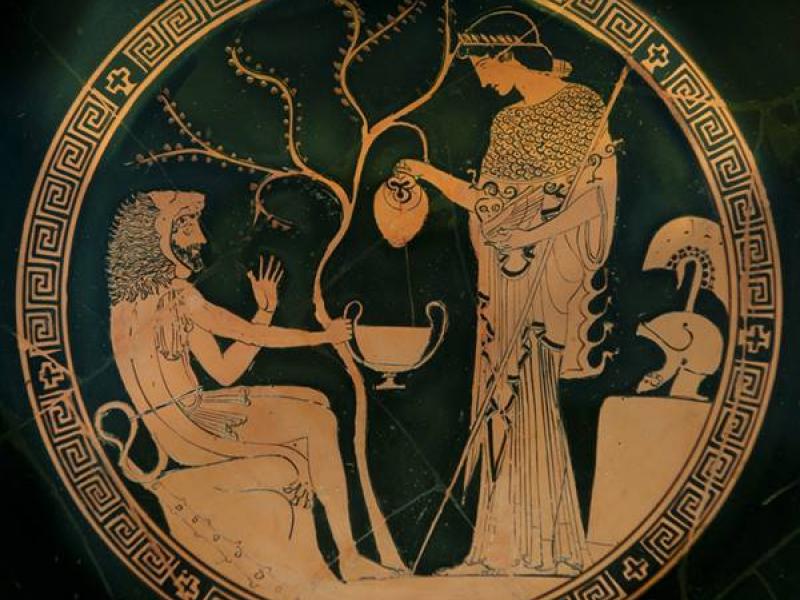
Hercules is offered wine in this depiction of a scene from his Twelve Labors. Public Domain

The recorded history of wine in Ancient Greece begins around the 15th century BC, while viticulture appears to have existed as early as the Neolithic era, 6,500 years ago.

Ancient Greece is also the place where modern wine culture began, as wine consumption stopped being solely a sacred act, as it had been when priests and rulers controlled the vineyards.

By the early Bronze Age, vineyard cultivation of grapes was widespread in ancient Greece, and by the time of the rise of the Minoan and Mycenaean civilizations, wine was part of everyday life, for consumption and/or production.

By that time in Greek society, wine was an economically important business.

Wine and commerce in ancient Greece

There was substantial interaction between the Mycenaean and Minoan cultures, based mainly on commerce.

Around 1200 BC, people from northern Greece invaded the southern Mycenaean area, which was a monarchy.

wine Ancient Greece
Golden goblet from the Mycenaean period. Public Domain

The war devastated the Mycenaean lands, generating thousands of poor refugee families who escaped to fortified cities for protection.

In order to consolidate their powers, the invaders gave more privileges to the common people, thus undermining the power of monarchs and aristocrats.

The new, democratic city-states were slowly created over time with the common people having more freedoms and opportunities.

Gradually, the common people started cultivating plots of land, with vineyards and olive groves being the most plentiful and lucrative.

People could thus own vineyards, cultivate them, and trade and drink their own wine. A new class of merchants, albeit a small one, was born.

At the same time, more and more people in ancient Greece began to drink wine for pleasure rather than as a sacred ritual.

Colonization and trade expansion

The Greek city-states then began to establish colonies throughout the Mediterranean. The settlers, already experienced in vine cultivation, brought grapevines with them and were able to better cultivate already-existing vineyards.

Moving west, Sicily and southern Italy were the first colonies established by ancient Greeks. Greeks even called the southern part of the Italian Peninsula Oenotria (“the land of vines”).

Other Greeks settled in Massalia (Marseille) in southern France while others moved east all the way to the shores of the Black Sea.

The colonies provided more opportunities for wine merchants. The Greeks could now introduce their wines as far as the western part of France and to the Black Sea in the east.

Athens was a large and lucrative market for wine, as the climate in the Attica region was ideal for vines, and production was substantial. Wine from Attica was traded in all the lands along the eastern Mediterranean Sea.

Other areas famous for wine in ancient Greece were the islands of Santorini and Thasos. This is especially true in Santorini, where the rich volcanic soil produced exceptional grapes. Ancient Greeks were very particular about the origin of their wines.

Major trading partners for wine in ancient Greece were Crimea, Egypt, Scythia, and Etruria among others, as the Greeks traded their knowledge of viticulture and winemaking.

Indicative of the lucrative trade of wine from Greece is a shipwreck discovered off the coast of southern France that held nearly 10,000 amphorae containing almost 300,000 liters (79,000 US gallons) of Greek wine.

Diluted wine

The wine in ancient Greece was unlike what we know today. It was not left undiluted but was mixed with water in precise proportions in a vessel called a krater.

In certain seaside areas or islands, such as Santorini, Greeks used to mix wine with salt water as a preservative and for the taste it imparted. Honey was sometimes added to sweeten the wine.

The mixing of water and wine was for the drinker to enable him or herself to maintain composure and self-control, traits that were highly valued in ancient Greek society.

In fact, ancient Greeks seemed to believe that only barbarians—in most cases that simply meant non-Greeks—drank unmixed wine, got drunk and behaved like…barbarians.

Modern wine culture begins in Greece

Along with their wine, Greeks had exported their way of life, including vine-growing, winemaking, and enjoying wine, to almost every port in the Mediterranean basin.

Socrates praised wine in the following quote:

“Wine moistens and tempers the spirit and lulls the cares of the mind to rest. It revives our joys and is oil to the dying flame of life.”

Plato also praised the fruit of the vine:

“What is better adapted than the festive use of wine in the first place to test, and in the second place to train, the character of a man, if care be taken in the use of it? What is there cheaper or more innocent?

The ubiquitousness of the word “symposium” in ancient Greece, which literally means “drinking with others”—meant that ancient Greeks loved to get together, eat, drink, and converse during and after the meal.

wine Ancient Greece
Plato’s Symposium, by Anselm Feuerbach (1829-1880). Public Domain

It was a favorite pastime for well-to-do ancient Greeks to eat, drink, discuss, and, occasionally, philosophize, at these symposia.

Such convivial get-togethers have been illustrated on many types of Greek vases and sculptures. Examples of discussions that took place in symposia can be found in Plato’s Symposium and Xenophon’s Symposium.

Usually, symposia were hosted by aristocratic men for their peers. They would relax in recliners called klinai and drink from terracotta or, depending on how rich the host was, from bronze, silver, even gold, cups.

Wine was also used for medicinal purposes in ancient Greece. The great  physician Hippocrates prescribed different wines depending on the disease.

Ancient Greeks also had a god of wine, the mischievous Dionysus. The god of the grape harvest, winemaking, fertility, orchards, fruit, vegetation, insanity, and ritual madness, he was also the god of religious ecstasy and festivity; overall, it was he who embodied the colorful, vibrant life of ancient Greece.


❌