

Normal view

Received — 4 June 2026 GreekReporter.com

Ancient Yeasts Found on Ötzi the Iceman May Still Be Alive, Study Finds

4 June 2026 at 20:15
Reconstruction of Ötzi the Iceman.
Reconstruction of Ötzi the Iceman. Credit: South Tyrol Museum of Archaeology / Flickr / CC BY-NC-ND 2.0

More than 5,300 years after his death, Ötzi the Iceman is helping scientists uncover a hidden world of cold-adapted yeasts. Researchers have discovered that the famous mummy’s skin and stomach contain yeasts that likely colonized his body shortly after his death. Some of these microorganisms may still be active today, according to a study published June 3 in the journal Microbiome.

Ötzi, one of the world’s best-preserved natural mummies, was discovered by hikers in the Ötztal Alps in 1991. Scientists believe he died around 3300 B.C. after a violent attack.

Microorganisms survived alongside the mummy

Researchers analyzed swab samples, thawed water from inside the mummy, soil from the discovery site, and material from Ötzi’s storage environment. Using genetic analysis, they identified microbial communities living on and around the remains.

The study found that many of the yeasts are closely linked to cold Alpine environments. Scientists believe they originated from the glacier where Ötzi’s body remained frozen for thousands of years.

The findings suggest the microorganisms survived after the mummy was recovered and transferred to a refrigeration chamber maintained at about 21 degrees Fahrenheit (minus 6 degrees Celsius).

More than 5,300 years after his death, Ötzi the Iceman is still surprising scientists.

Researchers discovered cold-adapted yeasts living on and inside the famous mummy. Some may have survived since the Copper Age, while others appear to have continued growing in cold storage. pic.twitter.com/mpIT8neT24

— Tom Marvolo Riddle (@tom_riddle2025) June 4, 2026

Researchers found that the yeasts are highly adapted to cold conditions, allowing them to persist in both glacial environments and modern storage facilities.

Ancient yeasts may still be active

The team successfully cultivated four cold-adapted yeast species from samples collected from Ötzi’s skin and from water taken from inside the mummy.

Genetic evidence showed signs of ancient DNA damage, suggesting the yeasts either remained dormant for more than five millennia or descended directly from the original microorganisms that colonized the body after death.

Researchers also compared skin samples collected in 2019 with samples gathered in 2010. The analysis showed that a cold-loving yeast known as Glaciozyma had become the dominant strain over time.

The finding indicates that the glacier-associated yeast has continued to slowly grow while the mummy has remained in cold storage.

Study co-author Frank Maixner of the Eurac Research Institute for Mummy Studies said the discovery shows that Ötzi is not simply a preserved archaeological artifact but part of an evolving biological system.

Potential uses beyond archaeology

The researchers also explored whether the ancient yeasts could have practical applications. Preliminary tests showed some strains performed well in sourdough fermentation. Lead author Mohamed Sarhan said the results suggest the yeasts could potentially be used in industries that rely on fermentation, including bread and beer production.

Scientists also identified modern microorganisms that were likely introduced during decades of conservation and study. It remains unclear whether these microbes affect the long-term preservation of the mummy.

Researchers said Ötzi offers a rare glimpse into ancient microbial life. However, they cautioned that the mummy represents only one individual and cannot fully reflect the broader population of the Copper Age.
Mysterious “Blue and Yellow Waters” Link Aztecs to the Legendary Toltecs

4 June 2026 at 19:46
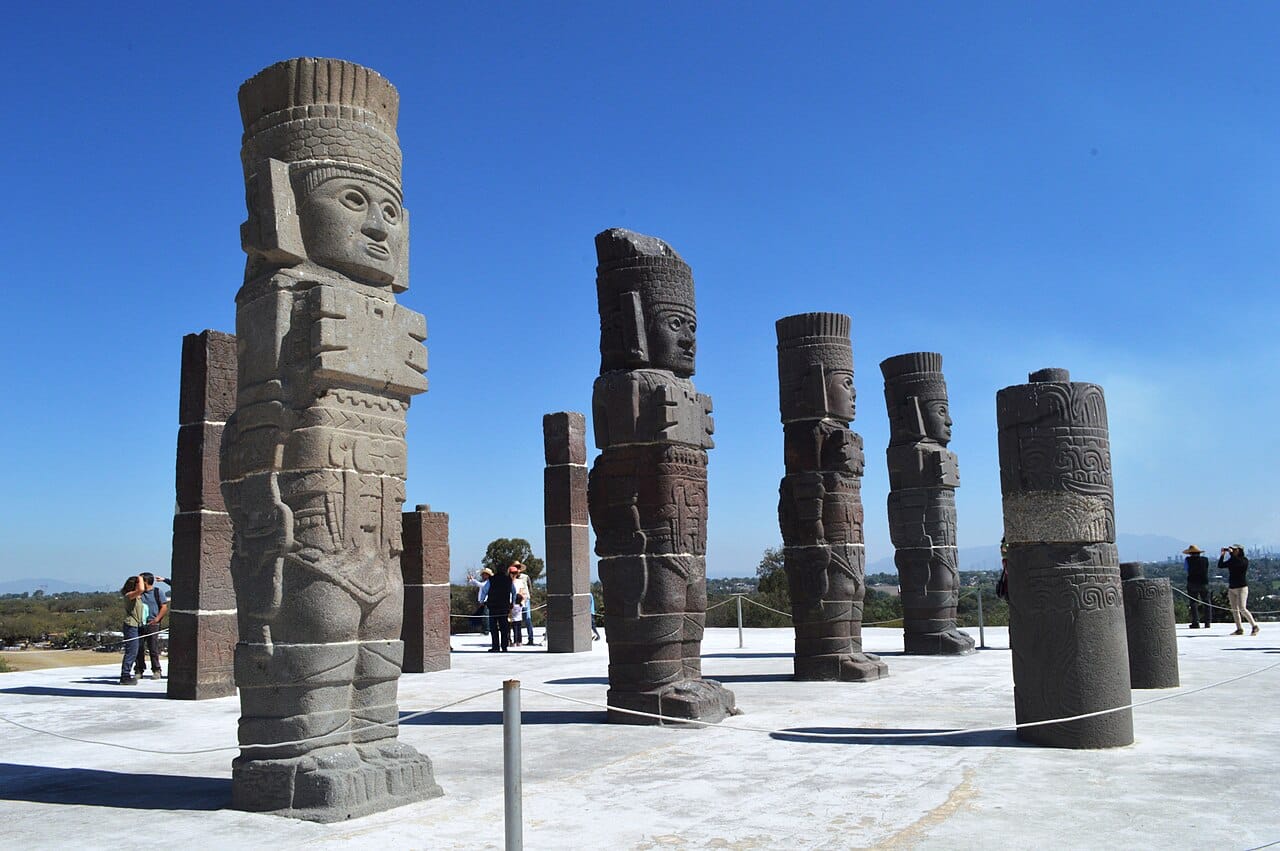
The famous Atlantean warrior statues at the ancient Toltec city of Tula Archaeological Site
The famous Atlantean warrior statues at the ancient Toltec city of Tula Archaeological Site. Credit: AlejandroLinaresGarcia / Wikimedia Commons / CC BY-SA 3.0

A mysterious symbol known as the “blue and yellow waters” helped connect the Mexica people to the prestigious Toltec past, according to new research.

The metaphor appeared in accounts of the founding of Tenochtitlan and was long viewed as a simple description of sacred springs. However, a study led by Agnieszka Brylak argues that it symbolized prosperity, authority, new beginnings, and the transfer of Toltec heritage to the Mexica capital.

A mysterious image at the founding of Tenochtitlan

The research centers on stories describing the founding of Tenochtitlan, the capital of the Mexica, often known as the Aztecs. According to early colonial accounts, the Mexica ended a long migration when they found a sacred place marked by an eagle perched on a cactus, white plants and animals, and two intersecting springs.

One spring was known as “the fiery waters.” The other was called “the blue and yellow waters.” For centuries, scholars struggled to explain the meaning of these unusual descriptions.

Many linked them to warfare because similar water imagery appears in Nahuatl metaphors associated with battle and conquest. Brylak argues that this interpretation tells only part of the story.

The study suggests that the blue and yellow waters represented completeness and abundance. They also marked the beginning of a new era. In the Mexica worldview, the appearance of multiple sacred colors signaled the creation of order from chaos and the establishment of a legitimate center of power.

Colors carried deep symbolic meanings

The research examines how colors functioned in ancient Nahua thought. Blue, yellow, red, black, and white were more than visual descriptions. They formed part of a larger symbolic system connected to directions, time cycles, gods, and the structure of the universe.

Did ancient symbols help the Mexica claim the Toltec legacy?

A new study suggests the mysterious “blue and yellow waters” linked to the founding of Tenochtitlan symbolized power, prosperity, and legitimate rule—not just sacred springs.#Archaeology #Toltec #Aztec #History pic.twitter.com/CNUqMnHRIY

— Tom Marvolo Riddle (@tom_riddle2025) June 4, 2026

Stories from across Mesoamerica frequently describe sacred places and important events through combinations of several colors. These colors appeared in myths about creation, divine authority, and the origins of civilization.

Brylak argues that the colorful springs described at Tenochtitlan fit within this broader tradition. Rather than referring only to actual water sources, they served as symbols of prosperity, sacred authority, and cosmic order.

A link to the Toltec past

One of the study’s most important conclusions is that the colorful waters may have connected the Mexica to the legendary Toltecs.

In Mesoamerican tradition, the Toltecs represented an ideal civilization associated with wealth, wisdom, and political legitimacy. Many later societies claimed some connection to them in order to strengthen their own authority.

Brylak suggests that references to blue and yellow waters helped present Tenochtitlan as the rightful heir to this prestigious Toltec heritage. The metaphor linked the city to ancient centers of power and reinforced the Mexica’s claims to leadership across central Mexico.

The symbolism appeared repeatedly in speeches, ceremonies, and historical narratives. Visitors arriving in Tenochtitlan were often welcomed with references to colorful waters, sacred springs, and other mythical locations tied to authority and origins.

More than purification

The study also examines references to blue and yellow waters in religious rituals.

Previous scholars often interpreted these waters as symbols of cleansing and purification. The metaphor appears in ceremonies involving rulers, newborn children, and people seeking forgiveness for wrongdoing.

Brylak offers a different interpretation. Instead of washing away sins, the colorful waters may have symbolized transformation. Being bathed in them represented receiving the qualities they embodied, including prosperity, legitimacy, social identity, and connection to sacred origins.

For newborn children, the ritual may have marked their entry into society. For rulers, it reinforced their role as guardians of justice and providers of abundance.

A wider Mesoamerican tradition

The research concludes that the symbolism of blue and yellow waters was likely not unique to the Mexica.

Similar color pairings appear in Maya texts, where they also represent abundance, completeness, and political authority. This suggests that different cultures across Mesoamerica may have shared common ideas linking color, sacred power, and legitimate rule.

Brylak argues that understanding these colorful metaphors provides a deeper view of how ancient peoples explained authority, prosperity, and identity. What appeared to be simple descriptions of springs and water may actually have carried some of the most important political and religious messages in the ancient Mesoamerican world.

3,000-Year-Old Beads Found in China Reveal Bronze Age Cultural Connections

4 June 2026 at 00:02
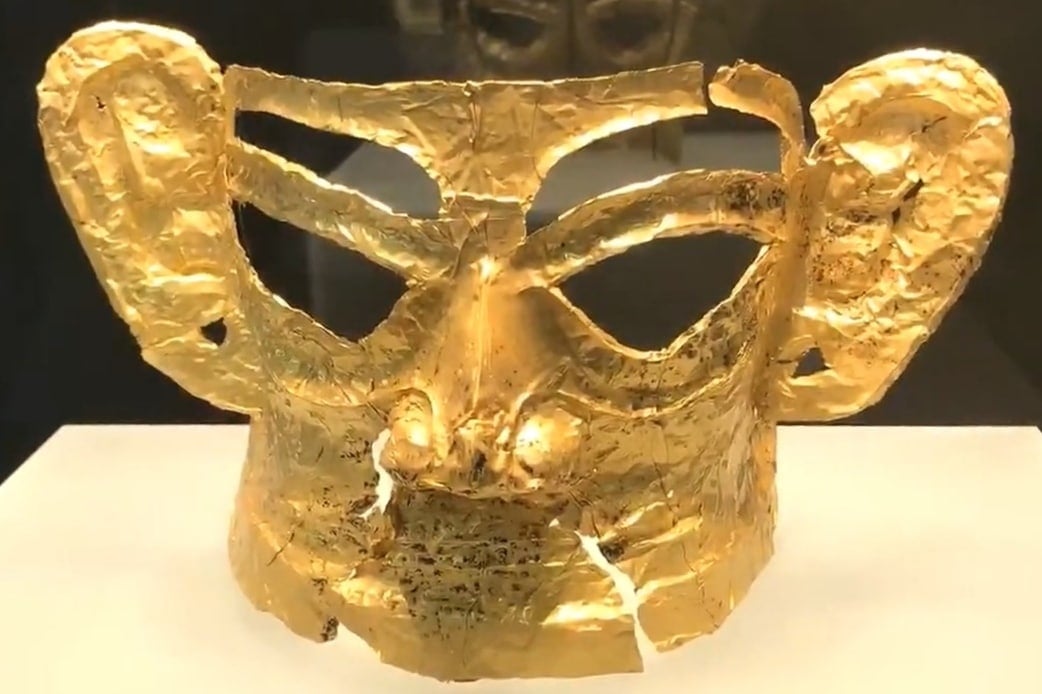
Sanxingdui gold mask
Sanxingdui gold mask. Credit: 中国新闻网 / Wikimedia Commons / CC BY 3.0

Ancient carnelian beads unearthed at the Sanxingdui Ruins in southwest China are providing new evidence of long-distance trade and cultural connections that linked distant regions during the Bronze Age, researchers said Tuesday.

The discovery was announced by the Sichuan Provincial Cultural Relics and Archaeology Research Institute, which recently studied 11 carnelian beads recovered from sacrificial pits at the famous archaeological site in Sichuan Province. The artifacts date to about 1200 to 1000 B.C.

According to Liu Jiancheng, an associate researcher at the institute, the beads are the southernmost known carnelian artifacts from the same period found in China. Their discovery is helping researchers trace the movement of valuable materials and ornamental goods across ancient East Asia.

Analysis traces beads to northern China

Carnelian is a reddish-orange gemstone that was widely used in ancient jewelry and decorative objects. Researchers conducted trace element analysis on the Sanxingdui beads and found that the raw materials did not originate in the Sichuan Basin.

Instead, the analysis traced the source of the stone to the Yanshan orogenic belt and regions farther north, more than 1,000 kilometers (620 miles) from Sanxingdui. The findings indicate that the materials traveled great distances before reaching the ancient Shu civilization.

Researchers also compared the beads with carnelian artifacts discovered at archaeological sites in Gansu, Shaanxi, and Beijing from roughly the same period. The chemical signatures closely matched those of the northern examples, suggesting they likely originated from related sources.

Evidence points to an extensive exchange network

The results point to the existence of a broad exchange network operating between 1500 and 1000 B.C. Researchers believe the network connected communities across the southern Mongolian Plateau, the Loess Plateau, the eastern Qinghai-Tibet Plateau, the Central Plains, and the Sichuan Basin.

The findings offer new insight into how goods moved across ancient China long before the establishment of formal trade routes. They also suggest that materials, technologies, and cultural influences circulated between regions that were separated by vast distances.

Discovery adds to Sanxingdui’s significance

Sanxingdui, located near the city of Guanghan, is one of China’s most important archaeological sites. The site has gained international attention for its extraordinary bronze masks, statues, and ritual objects, which have reshaped the understanding of early Chinese civilization.

Liu said the latest discovery shows that the Sanxingdui society participated in a far-reaching network of exchanges about 3,000 years ago. That network extended into northern China and may have reached as far as the Mongolian Plateau.

The researcher said the evidence highlights the depth of interaction among different cultures during China’s Bronze Age. The discovery also supports the view that a broader and increasingly interconnected Chinese civilization was already taking shape thousands of years ago, while regional societies continued to maintain their own distinct identities.

❌