
Normal view

Queen Cleopatra of Egypt Had a Secret Drinking Club

13 June 2026 at 13:02
cleopatra mark antony drinking club
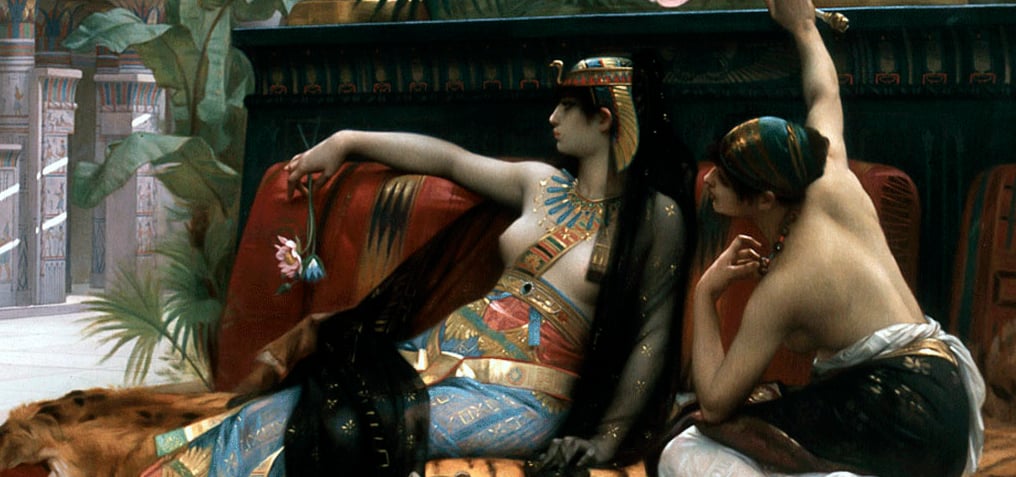
Cleopatra by Alexandre Cabanel. The Egyptian queen created her own secret drinking club with lover Mark Antony. Credit: Public Domain

Cleopatra was not just a famed Greek queen of Ancient Egypt but was also known for her love of parties. She even created her own secret drinking club.

The famous ancient ruler became well known during her time for her intellect and wit and was often described as incredibly seductive and persuasive. These qualities made her all the more mysterious throughout the centuries.

She is now a popular figure in media, literature, and art, and her enchanting qualities, romantic relationships, and beauty are of particular interest to people.

Perhaps the most surprising fact about Cleopatra, who was a strategic and often cutthroat ruler, is that she was quite the reveler.

Cleopatra maintained a relationship with Roman leader Mark Antony and even gave birth to his twins, Alexander Helios, which means sun, and Cleopatra Selene, which means moon, shortly after Antony returned to Rome in 40 BC.

While Antony was living in Egypt with Cleopatra, despite being married in Rome, the pair would throw parties and were known to appreciate a good drink.

Cleopatra formed a secret drinking club, played pranks

In fact, Cleopatra and Antony created their own secret drinking club called “The Inimitable Livers,” ostensibly as a group to honor the god Dionysus but likely to drink and revel.

In 41 BC, the couple formed the group, which included nightly feasts and debauchery, as well as the consumption of copious amounts of alcohol.

Along with these drinking parties, Antony and Cleopatra were known to roam around the streets of Alexandria, the urban center of ancient Egypt, wearing disguises and pulling pranks on locals.

Cleopatra generally loved joking around and even pranked her Roman lover. According to Pliny the Elder, Cleopatra once bet Antony that she could spend 10,000,000 sesterces, which is likely equivalent to over $10 million today on one dinner alone.

Antony balked at the preposterous idea and agreed to the bet, believing that spending such a massive sum on one dinner was impossible.

Cleopatra and Antony then went to dine together, and the couple was served a completely normal meal which definitely wasn’t worth such a sum.

As the meal was ending, Antony was beginning to believe he had won the bet. Cleopatra, however, called one of her servants over and asked for a cup filled with strong vinegar.

Once the servant brought the vinegar to the queen, Cleopatra removed one of her massive pearl earrings from her ear and dropped the precious earring into the cup.

The pearl, which was worth a huge amount of money, then began to dissolve in the vinegar solution. After it was fully dissolved, Cleopatra drank the solution.

Cleopatra VII Philopater ruled over Ancient Egypt from 51 to 30 BC and was the last ruler of the Ptolemaic Kingdom in Egypt. After her death, the Roman Empire took control of the country.

The Ptolemaic Dynasty was formed by Ptolemy I Soter, a Greek general in Alexander the Great’s army, in 305 BC. Although located in Egypt, the dynasty that Ptolemy established remained incredibly Greek.

Cleopatra, a direct descendant of Ptolemy, was the first Ptolemaic ruler to learn the Egyptian language, as all those before her spoke only Greek. She was also believed to have spoken Ethiopian, Hebrew, Aramaic, Arabic, Syriac, Median, Parthian, and Latin.

The name Cleopatra comes from the Ancient Greek words κλέος (kléos), meaning “glory,” and πατήρ (pater), meaning “father,” which means “glory of her father.”

The Lost Plant Ancient Greeks Used for Medicine, Food and Contraception

12 June 2026 at 19:33
silphium
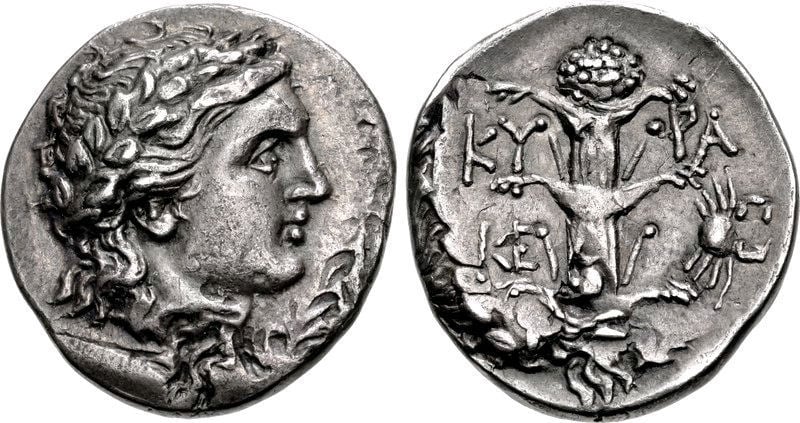
A plant used by the ancient Greeks for medicine, food and even contraception was one of the most sought-after goods in the ancient world. Credit: Classical Numismatic Group/Wikimedia Commons/CC BY-SA 3.0

An ancient Greek plant, now extinct, called Silphium, was used by the ancient Greeks and Romans for perfume, seasoning, medicine, and even contraception. It was one of the most sought-after goods in the ancient world.

The plant was so useful that Julius Caesar himself was said to have a large stash of silphium on hand at all times.

Silphium only grew in a narrow strip of land near the North African city of Cyrene in modern-day Libya and was essential to the city’s economy. The cultivation and trade of the plant transformed Cyrene into the richest region of Africa at the time.

Its widespread use in the ancient world allowed Cyrene’s economy to flourish, which in turn transformed the city into a center of art, culture, and medicine in the ancient Greek world.

In fact, it was home to a famous medical school and even a philosophical movement based around happiness whose members were called the Cyrenaics. Eratosthenes, the famous Greek mathematician, was a native of the city.

Although now extinct, researchers have determined, through studying ancient drawings and descriptions of the plant’s taste and appearance, that silphium likely belonged to the genus Ferula, which includes existing plants like giant fennel and asafoetida.

This theory is bolstered by the fact that asafoetida, which is still widely used today in Indian and central Asian cooking, was used as a cheaper substitute for silphium in antiquity, meaning that it was either related to the plant or had a very similar flavor.

The extinct plant silphium had many uses for ancient Greeks

Plants of the genus tend to resemble ancient depictions of the plant, which was widely found on coins from Cyrene due to its economic importance to the city.

It seems to have been a tall, flowering plant with a heart-shaped seedpod on the top. In fact, some theories about the origins of the modern symbol for love point to the shape of silphium’s seedpod, as the plant was widely used as an aphrodisiac.

Silphium was long used throughout the ancient Mediterranean. Both the Minoans and ancient Egyptians had specific glyphs to represent the plant, and it was widely lauded in songs and poems across ancient cultures.

According to myth, silphium came from the god Apollo himself. It had a wide variety of medicinal properties and was used to treat cough, pain, warts, fever, and indigestion. Although considered an aphrodisiac, it was also used as a contraception and even as an abortifacient.

The father of medicine Hippocrates himself even prescribed the plant for a protruding gut.

Silphium was likewise found in Greek and Roman cuisine and featured prominently in recipes by Apicius, who compiled one of the most well-preserved collections of ancient recipes in existence today.

Its earthy scent and medicinal properties also made it an important ingredient in perfume, as well as in ancient lotions and creams.

Why did silphium go extinct?

Due to its varied uses, silphium was in very high demand. Yet, by the time of the Roman emperor Nero, who lived from 37 to 68 AD, the plant was virtually extinct. According to Pliny, when the last remaining silphium plant was found, it was given to Nero.

Scholars theorize the plant was over-harvested and over-farmed due to its popularity, causing the soil in the limited area where the plant grew to become devoid of nutrients.

Additionally, shepherds used to feed silphium to their flocks, as the plant would transform the meat, making it tender and delicious. Scholars theorize that overgrazing of the plant likely contributed to its demise.

Others claim that regional climatic changes, which caused once green fields to turn into an arid desert, resulted in the plant’s extinction.

Ancient writers, such as Theophrastus, noted that silphium was very sensitive to changes in soil and therefore could not be cultivated in large  numbers nor in areas outside of Cyrene.

Received — 6 June 2026 GreekReporter.com

Iris, the Greek Goddess of the Rainbow

6 June 2026 at 05:01
Iris Greek goddess rainbow
“Iris” by John Atkinson Grimshaw. The Greek goddess of the rainbow is often depicted with wings. Credit: Public Domain

Iris, the Greek goddess of the rainbow, also served as a messenger of the gods. Although now a little known member of the pantheon, Iris was a prominent figure in many ancient myths and is even a character in Rick Riordan’s “Lightning Thief” book series.

The Greek goddess was the daughter of Thaumas, whose name means “miracle” or “wonder” in Greek, an old and powerful sea god who was linked to the wonders of the sea, and Elektra, a sea-dwelling nymph.

Her sisters were the terrifying Harpies Ocypete and Aello—fearsome creatures that were half-women, half-birds, who represented the storm winds.

During the Titanomachy, when the Olympian gods fought against the Titans, the old gods, Iris became the messenger for the Olympians and her sister, Arke, delivered messages for the Titans. Arke betrayed the Olympian gods and became the her sister’s rival.

From this point on, Iris served as messenger to the gods, making her the female counterpart of Hermes, who is more widely known for the role.

Iris, Greek goddess of the rainbow and messenger to the gods

While Iris is found throughout Homer’s Iliad, an epic poem that details the story of the Trojan War, and serves as a divine messenger, she is not mentioned in the Odyssey, Homer’s later poem which tells the story of Odysseus’ return home from the war.

Hermes is the messenger of the gods in the Odyssey.

In addition to her role as messenger, Iris is known to serve the gods their nectar from a large chalice she is often depicted holding.

Much like a rainbow, Iris was linked to the sea and sky and serves as a link between the gods and humanity.

vase
Iris shown on pottery from the 5th century BC. Credit: Public Domain

In myth, she frequently travels to the ends of the world using the speed of the wind on her wings and even ventures to the depths of the sea and through the underworld, often taking the trips to deliver important messages.

In antiquity, when one saw a rainbow, it was also believed that they were witnessing Iris traveling across the world or through the sea to deliver a divine message to a mortal.

The goddess of the rainbow was described and depicted either as a rainbow or as a stunningly beautiful winged woman, often carrying a staff with wings, as well.

Along with her winged staff, Iris was said to carry water from the River Styx, or the river that led to the underworld, at the command of Zeus. She was to use this water to put anyone who lied to her to sleep. This was the custom when gods made solemn oaths to each other.

iris greek goddess rainbow
One of the few sculptural depictions of Iris, the Greek goddess of the rainbow, on the west pediment of the Parthenon. Credit: Public domain

In some myths, Iris is considered one of the most beautiful of all of the Greek goddesses.

She conceived a child with Zephyrus, one of the Anemoi, or the Greek gods of the winds. The child was Pothos, the god of sexual desire and longing.

Despite her prominent role as divine messenger, there were no known temples built to Iris, and experts suspect there was little cult activity to the goddess, apart from records of Delians offering cakes made of wheat, honey, and figs to her.

Although described as extremely beautiful, there were also very few statues created depicting Iris. She was frequently portrayed in vase paintings, however. One of the few ancient Greek sculptures of Iris is found on the west pediment of the Parthenon.

❌