Login
Login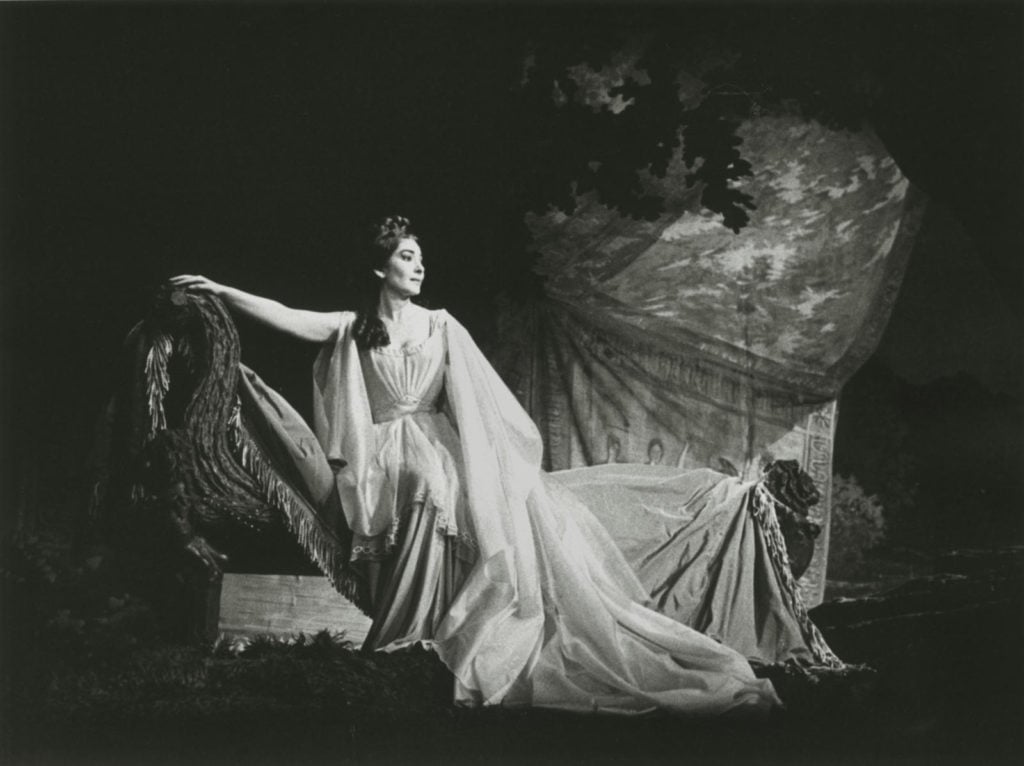

The Greatest Operas Based on Greek Mythology

There are at least fourteen major operas that are based on themes and personages from Greek mythology and its glittering history. That says all one needs to know about the universality of Greek mythology and history, how much these have meant to the Western world, and how relevant they remain to this day.
The titanic themes of love, power, jealousy, greed, fear are all there in Greek mythology and history, and of course, they are well-represented in opera as well, which usually takes its listeners and viewers on emotional roller coasters through those same motifs.
14 operas based on Greek mythology
Operas were first conceived in the late sixteenth century, growing out of the oratorios, often using religious themes, that had been sung by groups and soloists for centuries.
Opera as we know it today began in 1597 with Ottavio Rinuccini’s “Dafne,” (Daphne), which was set to music by Jacopo Peri. Staged as court entertainment, this first opera was a tour-de-force not only of sound but of drama, as well.
The group of Florentine poets and musicians to which Rinuccini belonged, known as the Camerata, sought to revive Greek drama and music as part of the general Renaissance of Greek and Classical culture that was taking place in Western Europe at the time. Not content to explore only themes from the Bible and religious history, they felt it was now time to portray the great stories of the past.
This group of humanist intellectuals would go on to be the pioneers of opera; in many ways, they brought to life the texts written by ancient Greek philosophers, writers, and poets once again, eventually bringing these works to a modern audience.
Florence’s ruling Medici family, strong supporters of all the arts, was sufficiently taken with Dafne to allow Peri’s next work, Euridice, to be performed as part of Marie de’ Medici and Henry IV’s wedding celebrations in 1600.
Thanks to opera’s interest in and preservation of ancient Greek drama, it is no surprise that one of its founding fathers, Claudio Monteverdi, chose Greek tragedy as the theme of his first work.
L’Orfeo (Orpheus) Opera, by Monteverdi
Universally acknowledged as opera’s first masterpiece, Claudio Monteverdi’s L’Orpheo (Orpheus) was a gelling of ideas from the great minds of the Camerata and other composers of that time.
Matthew Aucoin also used this classic tale for his new opera Euridyce, which was first staged at the LA Opera in 2020—420 years after the premiere of the first opera based on Euridyce, created by Jacopo Peri.
The tragic story of Orpheus and Eurydice is as old as time itself, or at least as old as Greek mythology.
As the story goes, Orpheus, ancient Greece’s legendary hero, was endowed with superhuman musical skills. He became the patron of a religious movement based on sacred writings that were said to be his own. Orpheus was said to be the son of a Muse (most likely Calliope, the patron of epic poetry) and Oeagrus, a king of Thrace (although others say it was Apollo).
The story (and the opera) relates the tragic events of his wedding day, when his bride, Eurydice, is bitten by a snake and dies. The newly-widowed Orpheus manages to convince the rulers of the underworld to allow his wife a few more years in the land of the living.
Eurydice is only allowed to leave the underworld as long as Orpheus leads her home without looking back. He gives in to temptation, however, believing his wife is not behind him, and she is tragically trapped in the underworld forever.
In Greek mythology, the heartbroken Orpheus is then killed by wild beasts. Fortunately — certainly for opera lovers—Monteverdi created a happier ending to the story.
The story of Orpheus continues to be opera’s most popular work based on Greek mythology to this day. From Gluck’s Orpheus and Eurydice (Orfeo ed Euridice) to Philip Glass’s chamber opera Orphée, and Harrison Birtwistle’s The Mask of Orpheus, composers have been drawn to the tale for hundreds of years.
Dafni, “Daphne,” by Rinuccini
The story of Daphne, the nymph from Greek mythology who was turned into a tree to escape the lustful advances of the god Apollo, was first set to music by Jacopo Peri, but at least two of the six surviving fragments are by Jacopo Corsi. The libretto, by Rinuccini, survives complete; the music, mostly now lost, was first performed during the Carnival of 1598 at the Palazzo Corsi.
Daphne was the child of Peneus, a Thessalian river god. Her decidedly sad and violent story in which she is transformed into a tree to escape the lustful attention of the god Apollo, gives rise to the ancient explanation of the creation of the laurel tree, known as “Daphne” by the ancient Greeks.
Les Troyens, by Hector Berlioz
Les Troyens, or The Trojans, a French grand opera in five acts, is based loosely on the history of the Trojan War, although the libretto was written by Berlioz himself from Virgil’s epic poem the Aeneid. With a score composed between 1856 and 1858, it is another opera based on Greek history and mythology, and one that best exemplifies the art form.
Featuring characters such as Priam, Hector and Andromache, it is a triumph of spectacle that brings Ancient Greece vividly back to life.
“Alessandro,” by Handel
Alessandro, an opera based on the extraordinary life of Alexander the Great, was composed by George Frideric Handel in 1726 for the Royal Academy of Music. Paolo Rolli’s libretto is based on the story of Ortensio Mauro’s “La superbia d’Alessandro.” This was the first time the famous singers Faustina Bordoni and Francesca Cuzzoni appeared together in one of Handel’s operas. The original cast also included Francesco Bernardi, who was known as Senesino.
Handel’s opera received its first performance on May 5, 1726 at the King’s Theatre, London and was reportedly received “with great applause.”
The story recounts Alexander the Great’s journey to India and depicts him less in a heroic vein than as vainglorious and indecisive in matters of the heart. The work’s charm and lightness of touch make it at times almost a comic work—something which is extremely unusual in the realm of Greek mythology and history.
Atalanta, by George Friedrich Handel
The huntress Atalanta from Boeotia, the daughter of King Schoeneus, was primarily noted for her skill in running, according to Greek mythology. Atalanta was a local figure allied to the goddess Artemis. Statues of the goddess show her taking off at a full sprint.
Atalanta, the pastoral opera in three acts by George Frideric Handel, was composed in 1736.
The great composer created it for the London celebrations of the marriage in 1736 of Frederick, Prince of Wales, eldest son of King George II, to Princess Augusta of Saxe-Gotha. The first performance took place on May 12, 1736 in the Covent Garden Theatre.
Médée (Medea), by Luigi Cherubini
With a libretto by François-Benoît Hoffman (Nicolas Étienne Framéry) this is a French language opéra-comique based on Euripides’ tragedy of Medea and Pierre Corneille’s play Médée. It is set in the ancient city of Corinth.
The opera was premiered on March 13, 1797 at the Théâtre Feydeau, in Paris. During the twentieth century, it was usually performed in Italian translation as Medea, with the spoken dialogue replaced by recitatives that were not authorized by the composer. More recently, opera companies have returned to Cherubini’s original version.
Greece’s operatic queen Maria Callas performed this work to thunderous ovations in December of 1961 at La Scala, in a tour de force that has gone down in operatic legend.
Phryné
Phryné is an 1893 opéra comique in two acts by Camille Saint-Saëns, with a libretto by Lucien Augé de Lassus, based on the life of ancient Greek courtesan Phryne. Saint-Saëns also wrote the much-loved Carnival of the Animals.
Phryne, born c. 371 BC, was an ancient Greek courtesan or hetaira. She is best known for her trial for impiety, where she was defended by the orator Hypereides. She was born the daughter of Epicles at Thespiae in Boeotia but lived in Athens.
The most well-known event in Phryne’s life is her trial. Athenaeus writes that she was prosecuted for a capital charge and defended by the orator Hypereides, who was one of her lovers. Athenaeus does not specify the nature of the charge, but Pseudo-Plutarch writes that she was accused of impiety.
The speech for the prosecution was written by Anaximenes of Lampsacus, according to Diodorus Periegetes. When it seemed as if the verdict would be unfavorable, Hypereides removed Phryne’s robe and bared her breasts before the judges to arouse their pity. Her beauty instilled the judges with a superstitious fear, and they could not bring themselves to condemn “a prophetess and priestess of Aphrodite” to death. They decided to acquit her forthwith.
Temistocle (Themistocles) Opera, by Johann Christian Bach
Temistocle (Themistocles) is an opera seria in three acts by the German composer Johann Christian Bach. The Italian text is an extensive revision of the libretto by Metastasio first set by Antonio Caldara in 1736, by Mattia Verazi, court poet and private secretary to the Elector Palatine Carl Theodor.
The opera was the first of two which J. C. Bach composed for the Elector Palatine. Some of the music was reused from earlier works, including part of the overture from Carattaco (composed in London in 1767).
The opera takes place in Persia. Themistocles, together with his son Neocle, has been expelled from Athens. He arrives incognito at Susa, the capital of his arch-enemy King Serse, to find that his daughter Aspasia (in love with the Athenian ambassador Lisimaco) has also made her way there following a shipwreck. Eventually, all is revealed, and Serse magnanimously pardons everybody, unites the lovers, and makes peace with Athens.
Thespis, by Gilbert and Sullivan
Thespis, or “The Gods Grown Old,” is an operatic extravaganza that was the first collaboration between dramatist W. S. Gilbert and composer Arthur Sullivan. It is another in the much-needed genre of a lighter take on Greek mythological stories. Gilbert and Sullivan were the most famous and successful artistic partnership in Victorian England, creating a string of enduring comic opera hits, including H.M.S. Pinafore, The Pirates of Penzance and The Mikado.
Thespis premièred in London at the Gaiety Theatre on December 16, 1871. Like many productions at that theater, it was written in a burlesque style, considerably different from Gilbert and Sullivan’s later works. It was a success and closed on March 8, 1872 after a run of sixty-three performances.
The story follows an acting troupe headed by Thespis, the legendary Greek father of the drama, who temporarily trades places with the gods on Mount Olympus, who have grown elderly and are getting ignored. The actors turn out to be comically inept rulers. Having witnessed the ensuing mayhem down below, the angry gods return, sending the actors back to Earth as “eminent tragedians, whom no one ever goes to see.”
Idomeneo, by Mozart
Idomeneus, King of Crete, is an Italian language opera by Wolfgang Amadeus Mozart. The libretto was adapted by Giambattista Varesco from a French text by Antoine Danchet, based on a 1705 play by Crébillion père, which had been set to music by André Campra, as Idoménée, in 1712.
Now considered to be one of the greatest operas of all time, Idomeneo premiered on January 29, 1781 at the Cuvilliés Theatre in Munich, Germany. With Idomeneo, Mozart demonstrated a mastery of orchestral color, accompanied recitatives, and melodic line. Mozart was recorded as fighting with the librettist, the court chaplain Varesco, making large cuts and changes to it.
Orpheus in the Underworld (comic operetta version by French composer Jacques Offenbach)
With a French-language libretto by Hector Crémieux and Ludovic Halévy, this is a lighthearted, satirical treatment of the ancient Greek myth of Orpheus.
As unlikely as that seemed at the time, it is perhaps one way to deal with the almost never-ending drama, heartbreak, and tragedy that features in much of Greek mythology.
It premiered on October 21, 1858 at the Théâtre des Bouffes-Parisiens in Paris. The work’s best-known episode is, incredibly, a cancan routine that appears in the overture and the final scene.
The classic story of Orpheus concerns a renowned musician who is so distraught over the death of his wife, Eurydice, that he attempts to rescue her from the Underworld, the place of the dead. This tragic tale was adapted for opera by many composers, including Claudio Monteverdi who wrote and first performed the opera in 1607, Christoph Gluck, who first performed it in 1762, and Joseph Haydn, who in 1791 wrote his version, which was performed only in 1951.
Unlike other composers, Offenbach gave the story a modern twist, making it into a farce. In his version, Orpheus and Eurydice, though married to each other, are amicably living separate lives, each blissfully occupied with a new lover. Like Eurydice in the original Greek story, Offenbach’s heroine is fatally bitten by a snake but, rather than dying tragically, she willingly relocates to the Underworld to be with Pluto, the ruler of the Underworld, who had become her lover while she was alive.
In Offenbach’s version, Orpheus only retrieves Eurydice against his will, and both he and Eurydice are pleased when his attempt fails. Offenbach was equally irreverent regarding the music he used for this opera, alternating courtly minuets with high-kicking cancans and even quoting satirically from Gluck’s earlier opera.
When Offenbach’s opera premiered, critics expressed shock, both because it mocked Gluck’s revered telling of the tale from Greek mythology—and because it dismissed the idea of the perfection of ancient Greece.
Audiences, however, loved it, and within a few years, Orpheus in the Underworld became an international success.
Elektra, by Richard Strauss
In 1905, composer Richard Strauss attended a performance of Hugo von Hofmannsthal’s Elektra. Soon after, Strauss reached out to the playwright, having decided the play would be ideal for operatic treatment. The two men then collaborated on the composer’s second major opera.
Both the play and opera are adaptations of Greek playwright Sophocles’ Elektra and so follow the legend closely. In Greek mythology, Elektra was the daughter of the king and queen of Mycenae.
She is devastated when her father, Agamemnon, is killed. Believing her mother to be responsible, Elektra and her brother seek revenge and murder their mother and her lover.
Strauss’ version of the tragedy is set to a German libretto, and unlike the myth, his Elektra falls dead at the end of the opera.
Sappho Opera, by Charles Gounod
The story of Sappho, a female poet from the island of Lesbos, was put to music by Charles Gounod. Sappho is known for her lyric poetry, written to be sung while accompanied by music. In ancient times, Sappho was widely regarded as one of the greatest lyric poets; even then, she was given names such as the “Tenth Muse” and “The Poetess.”
Most of her poetry is now tragically lost, and what is extant has mostly survived in fragmentary form; only the “Ode to Aphrodite” is complete.
Ariadne auf Naxos Opera, by Richard Strauss
This 1912 opera by Richard Strauss has a German libretto by Hugo von Hofmannsthal. The opera’s unusual combination of elements of low commedia dell’arte with those of high opera seria points up one of the work’s principal themes: the competition between high and low art for the public’s attention.
Ariadne auf Naxos is in two parts, called the Prologue and the Opera. The first part shows the backstage circumstances leading up to the second part, making this an opera within an opera.
At the home of the richest man in Vienna, preparations for an evening of music are under way. Two troupes of musicians and singers have arrived. One is a burlesque group, led by the saucy comedienne Zerbinetta. The other is an opera company, who will present an opera seria, Ariadne auf Naxos, the work of the Composer.
The second part of the opera portrays the story from Greek mythology, with Ariadne shown abandoned by her former lover, Theseus, on the desert island of Naxos, with no company other than the nymphs Naiad, Dryad, and Echo.
She bewails her fate, mourns her lost love, and longs for death. Zerbinetta and her four companions from the burlesque group enter and attempt to cheer on Ariadne by singing and dancing but without success. In a sustained and dazzling piece of coloratura singing, Zerbinetta tells the Princess to let bygones be bygones and insists that the simplest way to get over a broken heart is to find another man.
In a comic interlude, each of the clowns pursues Zerbinetta. Eventually, she chooses Harlequin, a baritone, and the two sing a love duet together while the other clowns express frustration and envy.
The nymphs announce the arrival of a stranger on the island. Ariadne thinks it is Hermes, the messenger of death, but it is the god Bacchus, who is fleeing from the sorceress Circe. At first, they do not understand their mistaken identification of each other.
Bacchus eventually falls in love with Ariadne, who agrees to follow him to the realm of death to search for Theseus. Bacchus promises to set her in the heavens as a constellation. Zerbinetta returns briefly to repeat her philosophy of love: when a new love arrives, one has no choice but to yield. The opera ends with a passionate duet sung by Ariadne and Bacchus.
Greek mythology is the setting for many of our cultural touchstones. It has formed the theme of so many works created over the centuries by the most brilliant artists of modern times, bringing Ancient Greece to life once more.