Reading view

There Is No Neutral Ground

One of the most persistent myths in the modern world is the idea of neutrality.

We’re told our governments can be neutral. That our institutions can be neutral. That our schools can be neutral. That our courts can be neutral. That our media organisations, bureaucracies, and entertainment can all function from a position of value-free objectivity. Nothing but the brute facts.

But neutrality is a myth, and not a thing in the world that cloaks itself in neutrality is the absence of a worldview with values, ideals, and beliefs.

Every institution is built on a foundation of assumptions about truth, human nature, morality, and authority. So, the question is not whether a thing is biased, but whether the assumptions behind that thing are hidden or acknowledged.

When any society declares its public institutions are “neutral,” as many in the Western world now do, what it often means in practice is that a particular worldview has been so thoroughly normalised that it no longer appears ideological at all.

In other words, it becomes the air people breathe. It is invisible, but it is still everywhere, and in everything. And then anything that challenges it is immediately perceived as an assault on neutrality, which in turn is immediately labelled “biased.”

This is how the modern myth of neutrality functions. It’s not a genuine absence of religion and ideological conviction, but rather, the dominance of one set of convictions that refuses to admit its own existence.

Perhaps nowhere is this more evident than in the modern education system.

Government schools are often described as neutral spaces where children are simply taught “critical thinking,” free of ideological indoctrination and religious assumptions. But critical thinking does not and cannot exist in a vacuum. It always operates within a framework of assumptions about what counts as knowledge, what counts as evidence, and what counts as acceptable reasoning.

As such, students are not simply learning brute facts about the universe. They’re being formed into a way of viewing the world. They’re being given a worldview—that is, glasses through which all of life is to be viewed and interpreted.

The same is true of the media, politics, law, and every other institution and organisation that claims to operate free of ideological input.

Now, you might think it’s all just semantics. But there’s more at stake here than just a squabble about appropriate words and labels. This is because the claim to neutrality has become a form of authority in itself. It doesn’t merely describe reality; it defines the boundaries and limits of acceptable reality.

To question the dominant assumptions is not simply to disagree with the prevailing narrative. It is to be marked as biased, extreme, or even dangerous.

In this sense, the myth of neutrality operates as an ideological shield, assumed to be impartial, unbiased, and therefore, the fairest of all options amongst a world of competing ideologies.

Thus, by its amorphous and elusive definition, “neutrality” effectively transcends any and all criticism, as every critique can be dismissed as fundamentally biased.

But no society can maintain this illusion indefinitely. Sooner or later, the blind assumptions of the “neutral” institutions are revealed—in what they teach, what they punish, and what they celebrate.

And so, the question is not whether there is a bias, but what that bias is. It’s not whether a worldview will shape public life, but which worldview is being assumed. And this is exactly why the myth of neutrality has been so powerful. It persuades people to stop asking that question.

But every society must decide what it considers true, what it considers good, and what it is willing to defend, protect, and preserve.

There is no neutral ground on which to avoid that question. Only the false appearance of it.
  •  

There Is No Neutral Ground

One of the most persistent myths in the modern world is the idea of neutrality.

We’re told our governments can be neutral. That our institutions can be neutral. That our schools can be neutral. That our courts can be neutral. That our media organisations, bureaucracies, and entertainment can all function from a position of value-free objectivity. Nothing but the brute facts.

But neutrality is a myth, and not a thing in the world that cloaks itself in neutrality is the absence of a worldview with values, ideals, and beliefs.

Every institution is built on a foundation of assumptions about truth, human nature, morality, and authority. So, the question is not whether a thing is biased, but whether the assumptions behind that thing are hidden or acknowledged.

When any society declares its public institutions are “neutral,” as many in the Western world now do, what it often means in practice is that a particular worldview has been so thoroughly normalised that it no longer appears ideological at all.

In other words, it becomes the air people breathe. It is invisible, but it is still everywhere, and in everything. And then anything that challenges it is immediately perceived as an assault on neutrality, which in turn is immediately labelled “biased.”

This is how the modern myth of neutrality functions. It’s not a genuine absence of religion and ideological conviction, but rather, the dominance of one set of convictions that refuses to admit its own existence.

Perhaps nowhere is this more evident than in the modern education system.

Government schools are often described as neutral spaces where children are simply taught “critical thinking,” free of ideological indoctrination and religious assumptions. But critical thinking does not and cannot exist in a vacuum. It always operates within a framework of assumptions about what counts as knowledge, what counts as evidence, and what counts as acceptable reasoning.

As such, students are not simply learning brute facts about the universe. They’re being formed into a way of viewing the world. They’re being given a worldview—that is, glasses through which all of life is to be viewed and interpreted.

The same is true of the media, politics, law, and every other institution and organisation that claims to operate free of ideological input.

Now, you might think it’s all just semantics. But there’s more at stake here than just a squabble about appropriate words and labels. This is because the claim to neutrality has become a form of authority in itself. It doesn’t merely describe reality; it defines the boundaries and limits of acceptable reality.

To question the dominant assumptions is not simply to disagree with the prevailing narrative. It is to be marked as biased, extreme, or even dangerous.

In this sense, the myth of neutrality operates as an ideological shield, assumed to be impartial, unbiased, and therefore, the fairest of all options amongst a world of competing ideologies.

Thus, by its amorphous and elusive definition, “neutrality” effectively transcends any and all criticism, as every critique can be dismissed as fundamentally biased.

But no society can maintain this illusion indefinitely. Sooner or later, the blind assumptions of the “neutral” institutions are revealed—in what they teach, what they punish, and what they celebrate.

And so, the question is not whether there is a bias, but what that bias is. It’s not whether a worldview will shape public life, but which worldview is being assumed. And this is exactly why the myth of neutrality has been so powerful. It persuades people to stop asking that question.

But every society must decide what it considers true, what it considers good, and what it is willing to defend, protect, and preserve.

There is no neutral ground on which to avoid that question. Only the false appearance of it.
  •  

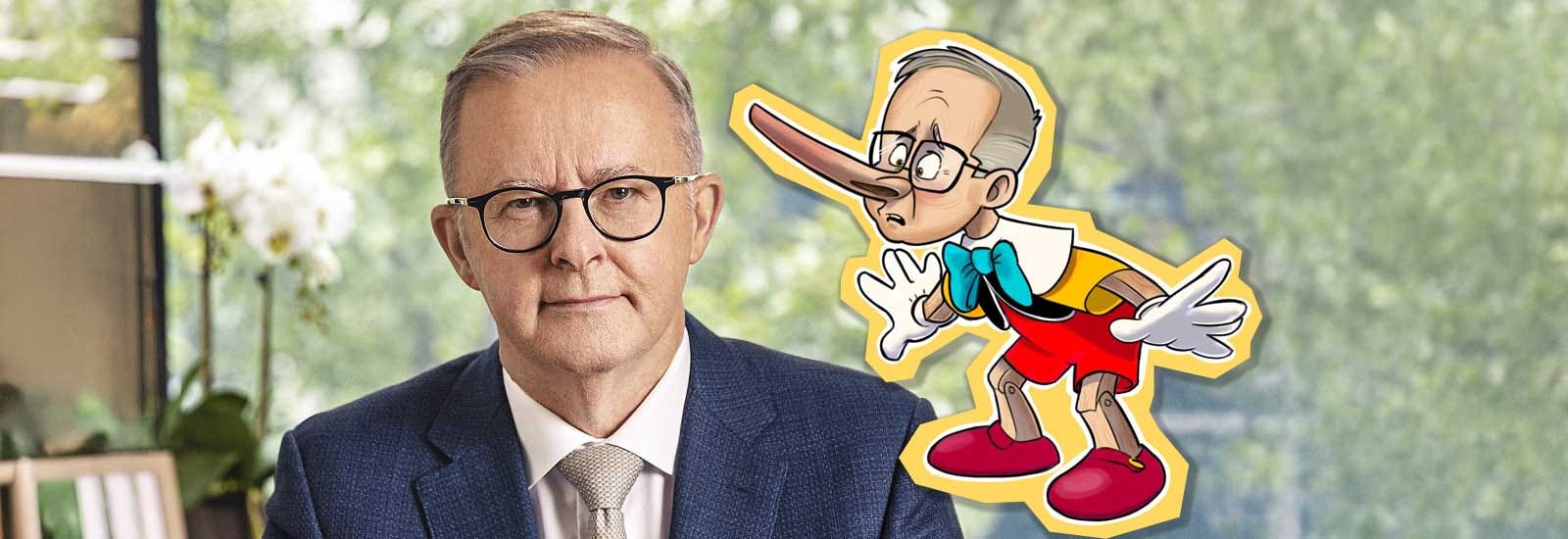
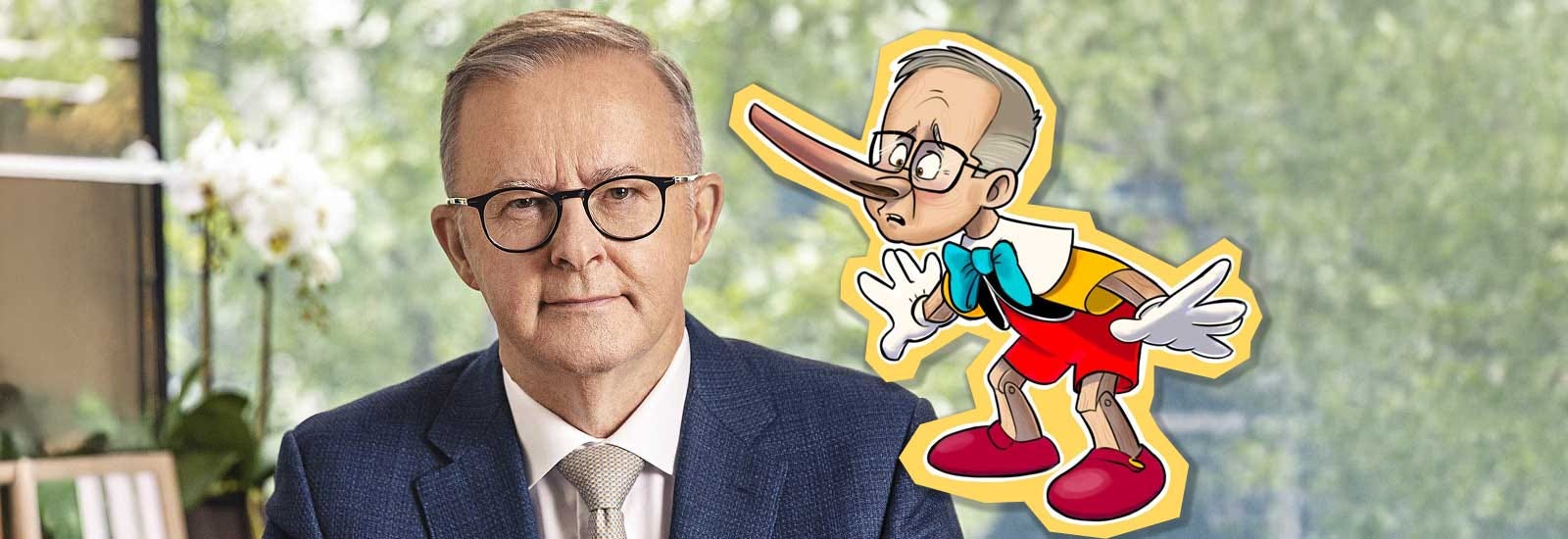
One Nation Reaches $3 Million in “Fire the Liar” Fundraising

One Nation’s “Fire the Liar” fundraiser is close to reaching $3.5 million within 48 hours.

Although the donations have been described by 2GB as “Anti-Albo,” they are more broadly a vote against the arrogance of the Australian Labor Party.

Put simply, One Nation handed Labor their “fight the far right” clown hat back.

As I explained in the Daily Declaration on Friday, One Nation’s campaign was a quick counter-punch to Labor’s “Stop One Nation” far-right fearmongering.

What the Marxian Woke Labor Party seemed to assume would be a straightforward political win became a public relations embarrassment.

In damage control, Labor even rolled out Rudd-Gillard treasurer Wayne Swan to downplay evidence of the seismic socio-political culture shift.

Swan danced around the One Nation fundraising phenomenon by dishing out some classic DARVO to try and save face.

Visibly rattled by the massive response to “Fire the Liar”, Swan smeared One Nation as the “billionaires’ party.”

He told the Today show’s Sarah Abo, “they’re pretending they’re run on small donations, yet they’re running on money from Gina Rienheart, among others at the top end of town.”

Showing the desperation, Swan went as far as accusing One Nation of “going to [Donald Trump] Mar-a-Lago to raise funds.”

This runs parallel with Anthony Albanese’s denials.

When asked by reporters about One Nation, the career politician PM implied that Pauline Hanson was making it all up.

In reply, One Nation ran an independent audit. The result vindicated Hanson by exposing yet more of Labor’s lies.

These lies span two elections and include 13 broken pledges that have significantly weakened the country, alongside undermining Team Albanese’s delivery rate.

For example:

  1. After declaring a commitment to the LNP’s stage 3 tax cuts, Albo ditched them.

  2. Labor walked away from a national reduction of $275 off power bills per household. This is despite Albo promising on 90-plus occasions that a vote for Labor was a vote for cheaper energy.

  3. Albo also promised that “all you need is a Medicare card, not a credit card,” to see a doctor. Yet, out-of-pocket doctor bills increased, while bulk billing decreased.

  4. Labor denied knowing about how corrupt militant unions such as the CFMEU were, even though Albo and the upper echelon had been warned about the organisations’ behaviour since 2014 (see here).

  5. Budget 2026 backflips on promises not to touch negative gearing and capital gains taxation. Albanese repeatedly told reporters in 2025 that Labor had no intention of tampering with the system.

  6. The same applies to superannuation. Labor promised no new taxes, then wacked a 30% tax on balances over $3 million.

  7. Cost of living salvation deflated by government-induced inflation. Families are worse off under Labor, contradicting Albo’s core election promises.

  8. By boosting collective bargaining under the “Secure Jobs, Better Pay Act 2022,” the Albanese government reneged on a commitment to protect the employee/employer relationship.

  9. Labor abandoned protections for whistleblowers and Albanese’s promise to establish better government transparency. Illustrating this backflip is the failed push to make access to Freedom of Information harder.

  10. 10. Albo reintroduced the Cashless Debit Card system (albeit in a different form) after repeatedly virtue-signalling during the election about ending the program’s “paternalism.” The system was reintroduced following protests about rising crime in vulnerable communities.

  11. 11. Labour talked big about creating an Environmental Protection Agency (EPA) then quietly scuttled the plan. This was thanks to pressure from within. Specifically, Labor’s Western Australian Premier, Roger Cook. He had concerns about potential hits to government revenue from mining.

  12. 12. Housing and immigration made the list because it is one of the most blatant examples of Labor’s lies. Forgoing yet another nation-saving election commitment, Labor has neither reduced immigration nor increased housing availability. This includes a massive decrease in housing affordability.

  13. 13. Probably the second most alarming is Labor’s flip-flopping over Australia’s national defence. Gaps exist in operational readiness and capability thanks to funding cuts that Team Albo said Labor would never make.

This isn’t just a trickle of inconsistency for the sake of national security; it’s a flood of say one thing, do another—such as the Royal Commission into the COVID-19 response.

Labor lied about ensuring accountability for “two weeks to flatten the curve”, turning into totalitarianism, allegedly because it would indict Labor premiers.

Albo reneged on a 2022 commitment to “a royal commission or some form of inquiry.”

While a report was produced in 2023, it was toothless and largely tokenistic.

Circa criticism from the Human Rights Commission, the report failed to put Labor premiers at the time under the spotlight.

One Nation’s phenomenal political success isn’t so much a result of political genius, as it is tangible proof Australians have had enough.

Hanson: One. Albo: none.

“If we say we have fellowship with him while we walk in darkness, we lie and do not practice the truth.” 1 John 1:6.

“Take no part in the unfruitful works of darkness, but instead expose them.” Ephesians 5:11.

  •  

One Nation Reaches $3 Million in “Fire the Liar” Fundraising

One Nation’s “Fire the Liar” fundraiser is close to reaching $3.5 million within 48 hours.

Although the donations have been described by 2GB as “Anti-Albo,” they are more broadly a vote against the arrogance of the Australian Labor Party.

Put simply, One Nation handed Labor their “fight the far right” clown hat back.

As I explained in the Daily Declaration on Friday, One Nation’s campaign was a quick counter-punch to Labor’s “Stop One Nation” far-right fearmongering.

What the Marxian Woke Labor Party seemed to assume would be a straightforward political win became a public relations embarrassment.

In damage control, Labor even rolled out Rudd-Gillard treasurer Wayne Swan to downplay evidence of the seismic socio-political culture shift.

Swan danced around the One Nation fundraising phenomenon by dishing out some classic DARVO to try and save face.

Visibly rattled by the massive response to “Fire the Liar”, Swan smeared One Nation as the “billionaires’ party.”

He told the Today show’s Sarah Abo, “they’re pretending they’re run on small donations, yet they’re running on money from Gina Rienheart, among others at the top end of town.”

Showing the desperation, Swan went as far as accusing One Nation of “going to [Donald Trump] Mar-a-Lago to raise funds.”

This runs parallel with Anthony Albanese’s denials.

When asked by reporters about One Nation, the career politician PM implied that Pauline Hanson was making it all up.

In reply, One Nation ran an independent audit. The result vindicated Hanson by exposing yet more of Labor’s lies.

These lies span two elections and include 13 broken pledges that have significantly weakened the country, alongside undermining Team Albanese’s delivery rate.

For example:

  1. After declaring a commitment to the LNP’s stage 3 tax cuts, Albo ditched them.

  2. Labor walked away from a national reduction of $275 off power bills per household. This is despite Albo promising on 90-plus occasions that a vote for Labor was a vote for cheaper energy.

  3. Albo also promised that “all you need is a Medicare card, not a credit card,” to see a doctor. Yet, out-of-pocket doctor bills increased, while bulk billing decreased.

  4. Labor denied knowing about how corrupt militant unions such as the CFMEU were, even though Albo and the upper echelon had been warned about the organisations’ behaviour since 2014 (see here).

  5. Budget 2026 backflips on promises not to touch negative gearing and capital gains taxation. Albanese repeatedly told reporters in 2025 that Labor had no intention of tampering with the system.

  6. The same applies to superannuation. Labor promised no new taxes, then wacked a 30% tax on balances over $3 million.

  7. Cost of living salvation deflated by government-induced inflation. Families are worse off under Labor, contradicting Albo’s core election promises.

  8. By boosting collective bargaining under the “Secure Jobs, Better Pay Act 2022,” the Albanese government reneged on a commitment to protect the employee/employer relationship.

  9. Labor abandoned protections for whistleblowers and Albanese’s promise to establish better government transparency. Illustrating this backflip is the failed push to make access to Freedom of Information harder.

  10. 10. Albo reintroduced the Cashless Debit Card system (albeit in a different form) after repeatedly virtue-signalling during the election about ending the program’s “paternalism.” The system was reintroduced following protests about rising crime in vulnerable communities.

  11. 11. Labour talked big about creating an Environmental Protection Agency (EPA) then quietly scuttled the plan. This was thanks to pressure from within. Specifically, Labor’s Western Australian Premier, Roger Cook. He had concerns about potential hits to government revenue from mining.

  12. 12. Housing and immigration made the list because it is one of the most blatant examples of Labor’s lies. Forgoing yet another nation-saving election commitment, Labor has neither reduced immigration nor increased housing availability. This includes a massive decrease in housing affordability.

  13. 13. Probably the second most alarming is Labor’s flip-flopping over Australia’s national defence. Gaps exist in operational readiness and capability thanks to funding cuts that Team Albo said Labor would never make.

This isn’t just a trickle of inconsistency for the sake of national security; it’s a flood of say one thing, do another—such as the Royal Commission into the COVID-19 response.

Labor lied about ensuring accountability for “two weeks to flatten the curve”, turning into totalitarianism, allegedly because it would indict Labor premiers.

Albo reneged on a 2022 commitment to “a royal commission or some form of inquiry.”

While a report was produced in 2023, it was toothless and largely tokenistic.

Circa criticism from the Human Rights Commission, the report failed to put Labor premiers at the time under the spotlight.

One Nation’s phenomenal political success isn’t so much a result of political genius, as it is tangible proof Australians have had enough.

Hanson: One. Albo: none.

“If we say we have fellowship with him while we walk in darkness, we lie and do not practice the truth.” 1 John 1:6.

“Take no part in the unfruitful works of darkness, but instead expose them.” Ephesians 5:11.

  •  
❌