
 Login
Login
Poland Officially Recognizes Greeks as National Minority
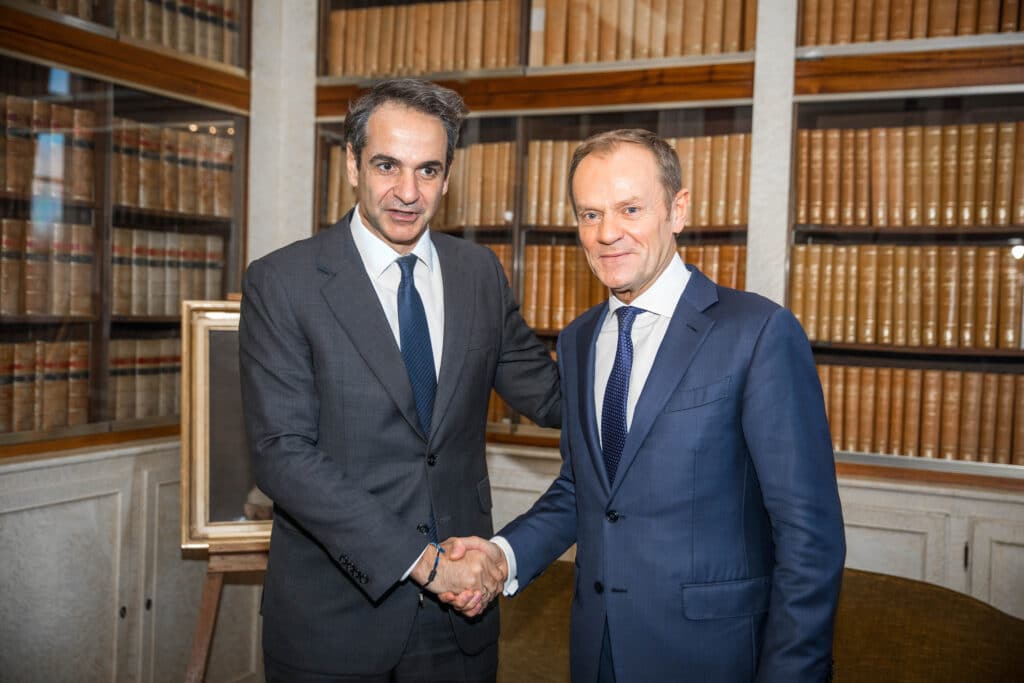
The Greek community in Poland has now officially been recognized as a national minority following the signing of a legislative amendment by the President of Poland, Karol Nawrocki.
According to an announcement by the Embassy of Greece in Warsaw, the process of amending the law concerning national and ethnic minorities and regional languages was finalized, with the result being that the Greek community is now included in the recognized national minorities of Poland.
There are currently 3,600 to 4,000 Greeks living in Poland, according to Greece’s Ministry of Foreign Affairs, with the Greek presence in the country going back to the Middle Ages. The new demographic development makes Greeks the tenth recognized national minority in Poland and established a new institutional framework for the operation and development of Greek communities.
Provisions for acquiring national minority status in Poland
Under the provisions of the 2005 Act in Article 2(1), a community can be recognized as a national minority in Poland after fulfilling all of the following conditions:
- Is smaller in number than the rest of the population of the Republic of Poland
- Is significantly different from other citizens in terms of language, culture, or traditions
- Strives to preserve its language, culture, or traditions
- Is aware of its own historical national community and is oriented towards its expression and protection
- Its ancestors have inhabited the present territory of the Republic of Poland for at least 100 years
- It identifies with the nation organized in its own state (Polish Parliament, 2005)
The Greek community in Poland meets all the criteria and is therefore now an official national minority.
Rights and benefits for Greek minority in Poland
With the implementation of the new law, Greek associations and organizations gain access to state funding programs through the Ministry of the Interior and Administration of Poland. At the same time, support is provided for cultural activities and structures, such as libraries, museums, cultural centers, festivals, and media related to the Greek presence in the country.
Particular emphasis is also attributed to education. The Polish public education system will be able to organize programs in the instruction of the Greek language, history, and culture for students of Greek origin. The new framework also provides for the possibility of using traditional Greek script in the personal details of community members in official documents, where this is permitted by law.
Political representation
Recognition as a national minority is also accompanied by special political provisions. These include the exemption of the electoral committees of the Greek community from the five percent electoral threshold in the elections for the Polish Parliament (Sejm), as is the case for other recognized minorities.
In a statement, the Embassy of Greece in Warsaw thanked the Polish institutions for the decision, making special reference to the Lower House, the Senate, and the President of the Republic. At the same time, it underlined the contribution of the Greek community itself and the diaspora, noting that after many years of efforts by Greeks, its members contributed to achieving recognition. The legislative amendment is expected to go into effect six months after its publication in the Polish Government Gazette.
