
Reading view

Emperor Otto the Great’s Tomb Yields New Clues During Cathedral Restoration
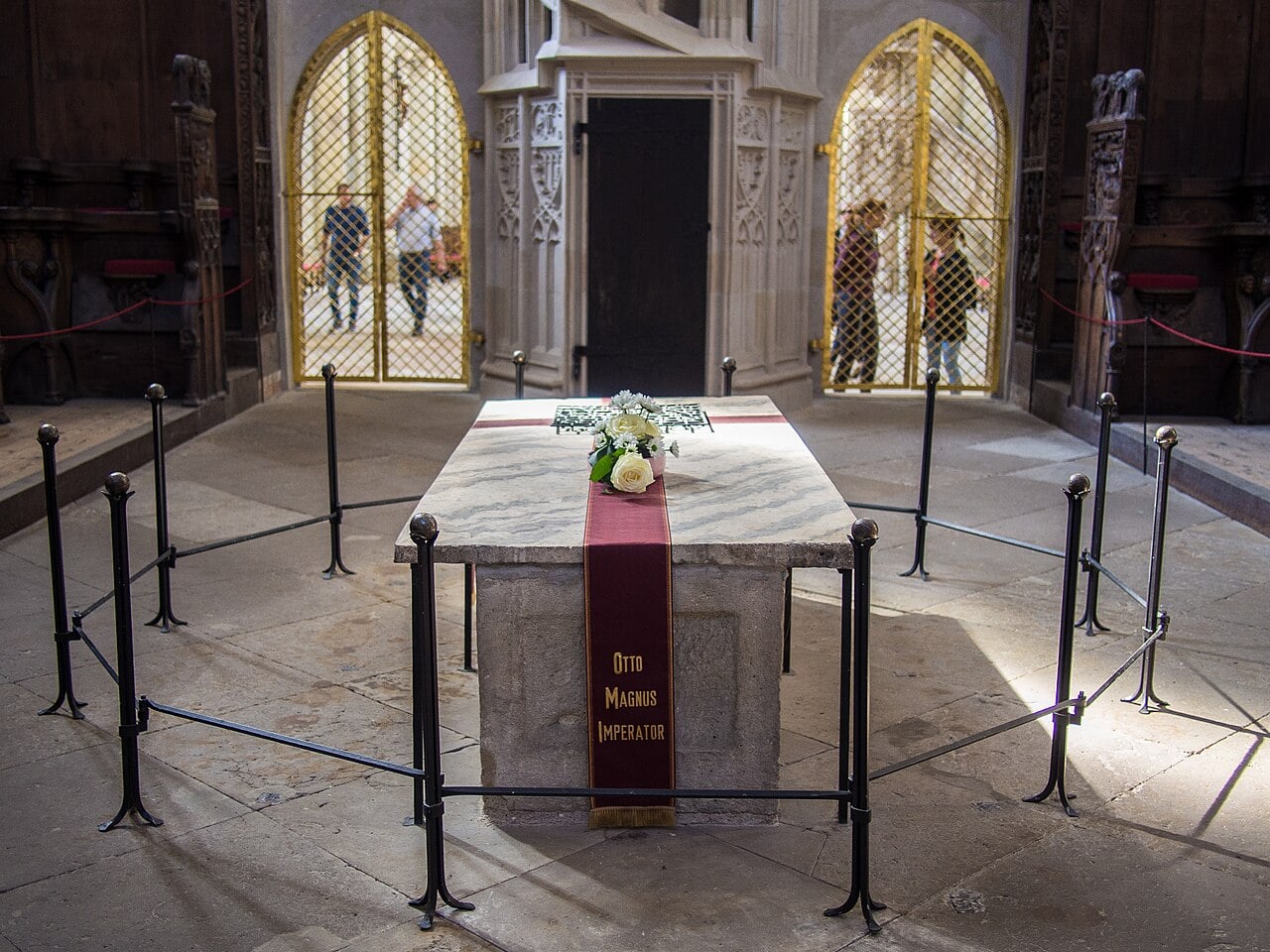
Tomb of Otto I in Magdeburg Cathedral
Tomb of Otto I in Magdeburg Cathedral. Credit: Mar Yung / Wikimedia Commons / CC BY 2.0

Conservation experts and archaeologists are uncovering new details about the tomb of Emperor Otto I while carrying out an extensive restoration project at Magdeburg Cathedral.

Since January 2025, the Saxony-Anhalt Cultural Foundation and the State Office for Heritage Management and Archaeology have led efforts to preserve the heavily damaged burial site of Otto the Great, the 10th-century ruler who laid the foundations of the Holy Roman Empire.

Excavations uncover clues to the tomb’s history

The relocation of the sarcophagus also allowed archaeologists to investigate its foundation for the first time. Excavations revealed large sandstone blocks beneath the tomb, including reused building stones marked by late medieval stonemasons. The findings suggest that the sarcophagus was moved several times over the centuries.

Excavations produced numerous artifacts, including coins, glass beads, ceramics, roof tiles, clothing pins, and fragments of painted plaster from earlier cathedral structures. Researchers also uncovered a lead bullet beneath the floor, reflecting Magdeburg’s turbulent history.

Archaeologists restoring the tomb of Emperor Otto I in Magdeburg Cathedral have uncovered medieval foundations, underground passages and centuries-old artifacts. pic.twitter.com/B1PNeRTlwq

— Tom Marvolo Riddle (@tom_riddle2025) June 12, 2026

Researchers also uncovered layers of rubble linked to medieval and early modern construction activities in the cathedral’s High Choir. A network of underground passages, some possibly dating to the Middle Ages, was also documented.

Despite the discoveries, archaeologists found no evidence showing whether Otto I’s tomb occupied the same location in an earlier cathedral that once stood on the site. The original placement of the emperor’s burial, therefore, remains uncertain.

Damage prompted conservation efforts

Otto I, who was crowned emperor in 962, established one of medieval Europe’s most powerful empires. His tomb in Magdeburg Cathedral is considered one of Germany’s most important medieval monuments.

The project began after routine inspections in 2024 revealed serious deterioration in the emperor’s tomb. Researchers identified several threats to the monument, including corroded iron fittings, rising moisture from the ground, and fluctuating humidity levels inside the cathedral.

Scientific analyses confirm the emperor’s remains

As part of the conservation work, experts carried out extensive non-invasive documentation of the sarcophagus and its surroundings. The marble cover slab, weighing about 300 kilograms (660 pounds), was removed so researchers could examine the damaged wooden coffin inside.

Anthropological and genetic analyses later confirmed that the human remains belonged to Otto I, supporting centuries-old historical accounts of his burial at the cathedral.

The emperor’s remains are scheduled to be reinterred on Sept. 1, 2026, in a newly designed coffin currently being created through a competition organized by the Saxony-Anhalt Art Foundation.

Restoration work addresses long-term damage

To protect the monument for the future, conservation teams moved the limestone sarcophagus from its original location in early 2026 using a specially designed transport structure. The sarcophagus now sits inside a secure enclosure within the cathedral, where restoration work is underway.

Specialists are removing corroded iron nails and clamps, many believed to date to the 19th century. As the metal rusted over time, it expanded and placed pressure on the stone, increasing the risk of cracking. Conservators are also removing harmful iron residues from the marble cover slab.

Cathedral remains open during conservation work

Church services continue as normal during the project, while visitors can still view major features of the cathedral, including the High Choir and its famous 13th-century sculptures. Officials said the public will continue to receive updates as restoration and research progress.
  •  

400,000-Year-Old Cave in Israel Reveals Clues to Early Human Life

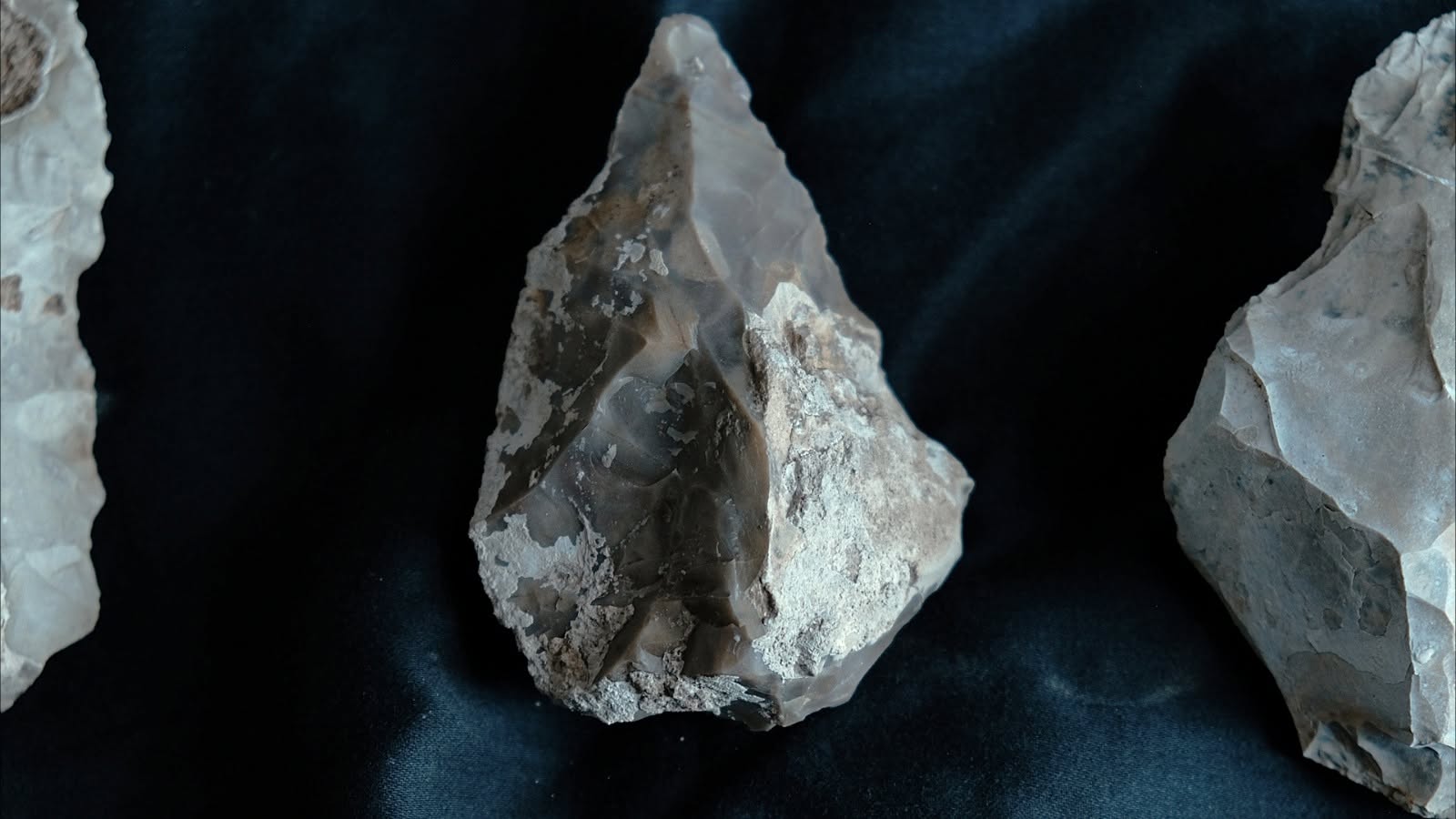
A stone handaxe from the Acheulo-Yabrudian period
A stone handaxe from the Acheulo-Yabrudian period. Credit: Israel Antiquities Authority

Archaeologists are excavating a prehistoric cave in northern Israel that could provide rare insights into early human life, how they adapted, and developed new technologies hundreds of thousands of years ago.

The cave was discovered on the outskirts of Fureidis, south of Haifa, near the Zichron Ya’acov interchange. The excavation is being led by the Israel Antiquities Authority (IAA) in partnership with researchers from the University of Haifa. Funding for the project is being provided by Ayalon Highways Company.

Researchers date the cave to between 250,000 and 400,000 years ago, placing it within the Acheulo-Yabrudian cultural complex, a group of prehistoric cultures that existed in the Levant during the final stages of the Lower Paleolithic period.

Exceptionally preserved prehistoric site

The site has drawn attention because of its exceptional state of preservation. “It is very rare to find a site in such a state of preservation,” said Dr. Kobi Vardi, head of the IAA’s Prehistory Branch and one of the excavation directors. “Every prehistorian who visits the site is absolutely thrilled.”

Vardi said the cave is comparable in importance to the famous Nahal Me’arot caves in northern Israel, which date to the same period. “The site, which is no less important than the well-known Nahal Me’arot site, and dates to the same period, will allow us to study in high resolution how humans lived at that time,” he said.

Excavations have already uncovered animal bones belonging to fallow deer, gazelles, and ancient horses. Researchers have also found evidence of a nearby water source, suggesting the area may have attracted prehistoric hunter-gatherer groups.

Clues to ancient technology and daily life

The Acheulo-Yabrudian culture is known for advanced stone-tool production. Archaeologists say people living during this period produced carefully crafted flint tools, including handaxes, scrapers, and blades. These technologies reflect an important stage in human development.

Researchers believe the cave may help answer key questions about a period that preceded the rise and spread of both Neanderthals and modern humans.

“We have been fortunate to excavate a unique site of global importance that has been protected from the ravages of time thanks to the exceptional conditions that existed here,” said Prof. Ron Shimelmitz of the University of Haifa.

“This time capsule belongs to a unique period at the end of the Lower Paleolithic era, just before Neanderthals and modern humans became dominant and spread across many regions,” he said.

Evidence of growing social complexity

According to Shimelmitz, the Acheulo-Yabrudian period marked a turning point in human evolution. Gradual changes in technology, social organization, and behavior began to emerge during this era, laying the foundations for more complex societies.

Researchers believe people started living in larger groups and spending longer periods at the same locations. Evidence from similar caves points to repeated use of fire and extended occupation, suggesting increasingly organized camp life and stronger social cooperation.

“These are findings that many researchers associate with the development of social cooperation and the transmission of knowledge, as part of the processes of human evolution,” Shimelmitz said.

Plans for future research

The IAA and the University of Haifa plan to launch a broader research program at the site. Researchers also hope the cave will eventually be opened to the public, allowing residents, students, and visitors to explore one of the region’s most important prehistoric discoveries.

  •  

Ancient Footprints in Scandinavia May Reveal Bronze Age Social Bonds

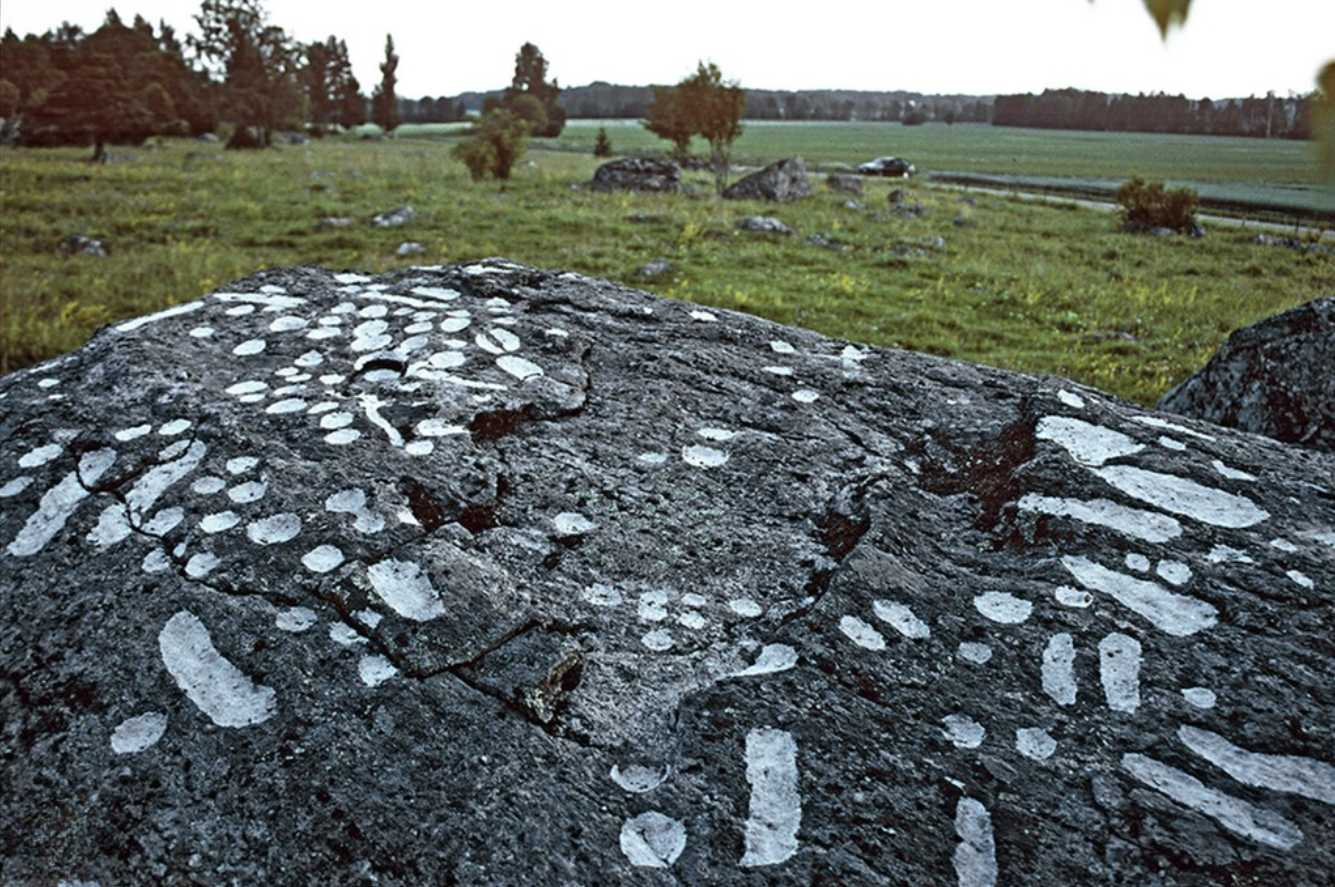
Cluster of carved footprints on the Köping 232 boulder in Västmanland
Cluster of carved footprints on the Köping 232 boulder in Västmanland. Credit: Fredrik Fahlander / CC BY 4.0

Ancient footprints carved into rocks across Scandinavia may have served a much deeper purpose than simple decoration. New research suggests these unusual carvings, known as podomorphs, could have helped Bronze Age people create lasting connections with places and with each other.

The study, led by Fredrik Fahlander and published in the Oxford Journal of Archaeology, challenges traditional views that treated the carvings mainly as symbols or images. Instead, the research argues that the footprints were active parts of social and ritual life during the Nordic Bronze Age, which lasted roughly from 1700 BC to 500 BC.

A unique feature of Scandinavian rock art

Rock art from the Nordic Bronze Age includes several common motifs, such as boats, people, animals, and circles. Footprints stand out from the rest.

Unlike other designs, the carved footprints are often close to life size. They appear throughout southern Scandinavia and are found both along coastlines and inland. Researchers note that similar footprint carvings are rare elsewhere in Europe during the same period.

Footprint carvings on the Foss 6:1 rock art panel in Tanum
Footprint carvings on the Foss 6:1 rock art panel in Tanum. Credit: Fredrik Fahlander / CC BY 4.0

The carvings show both bare feet and footprints left by leather footwear. Many include lines that appear to represent shoe straps. Some are deeply hollowed out, while others are outlined with grooves. Researchers believe the artists deliberately made them resemble real footprints left in sand, mud, or snow.

For decades, archaeologists proposed various explanations. Some suggested the footprints represented gods, ancestors, or the dead. Others linked them to rituals, remembrance, or claims over territory. Yet many of those theories struggled to explain the wide variety of footprint sizes, shapes, and arrangements found across Scandinavia.

Looking beyond symbolism

Footprint carvings and a Bronze Age boat motif at Koppartorp, Södermanland
Footprint carvings and a Bronze Age boat motif at Koppartorp, Södermanland. Credit: Fredrik Fahlander / CC BY 4.0

Fahlander approached the carvings from a different angle. Instead of asking what the footprints represented, the study examined how they were made, where they were placed, and how they interacted with the surrounding landscape.

The research focused on the Mälaren region of eastern Sweden, where more than 600 footprint carvings have been documented across over 140 sites. Most appear near former shorelines and waterways. Many face toward water or natural channels where rainwater regularly flows across the rock surface.

Some footprints were carved directly across quartz veins or placed within mineral-rich sections of rock. Others were positioned around natural cracks and depressions that collect water. These patterns suggest the locations were carefully chosen rather than random.

The study argues that the carvings were intended to interact with the natural qualities of the rock. Water, minerals, and landscape features may have played important roles in how people understood the footprints and their power.

Footprints may have linked people together

Bronze Age footprint carvings at Godegård, Västergötland
Bronze Age footprint carvings at Godegård, Västergötland. Credit: Fredrik Fahlander / CC BY 4.0

Many paired carvings are not identical. One footprint is often larger than the other. Some differ in design, orientation, or level of detail. This suggests they may not represent a single person’s two feet. Instead, researchers propose that two different individuals may have contributed to the pair.

According to the study, a lone footprint may have served as an invitation for another person to add a matching one later. The result would be a permanent connection carved into stone.

Researchers suggest these paired footprints could have marked friendships, agreements, family ties, marriages, or other important relationships. Some examples show the footprints connected by grooves or enclosed within shared shapes, strengthening the impression of a deliberate bond.

The idea fits a broader pattern seen in Bronze Age Scandinavia, where objects were often deposited in pairs during rituals.

More than simple images

The study concludes that the footprint carvings were likely much more than artistic symbols. They may have been seen as extensions of real people who remained connected to them over time.

Unlike ordinary footprints that disappear from sand or soil, these impressions were carved into stone to last for generations. Researchers believe that permanence was part of their purpose.

While the exact meaning of every footprint remains uncertain, the research suggests they helped Bronze Age communities materialize personal relationships and social connections in a lasting way. Nearly 3,000 years later, those carved traces may still preserve echoes of the people who created them.

  •  
❌