Reading view

5,000-Year-Old Face Pots and Battle Axes Reveal Europe’s Prehistoric Cultural Networks
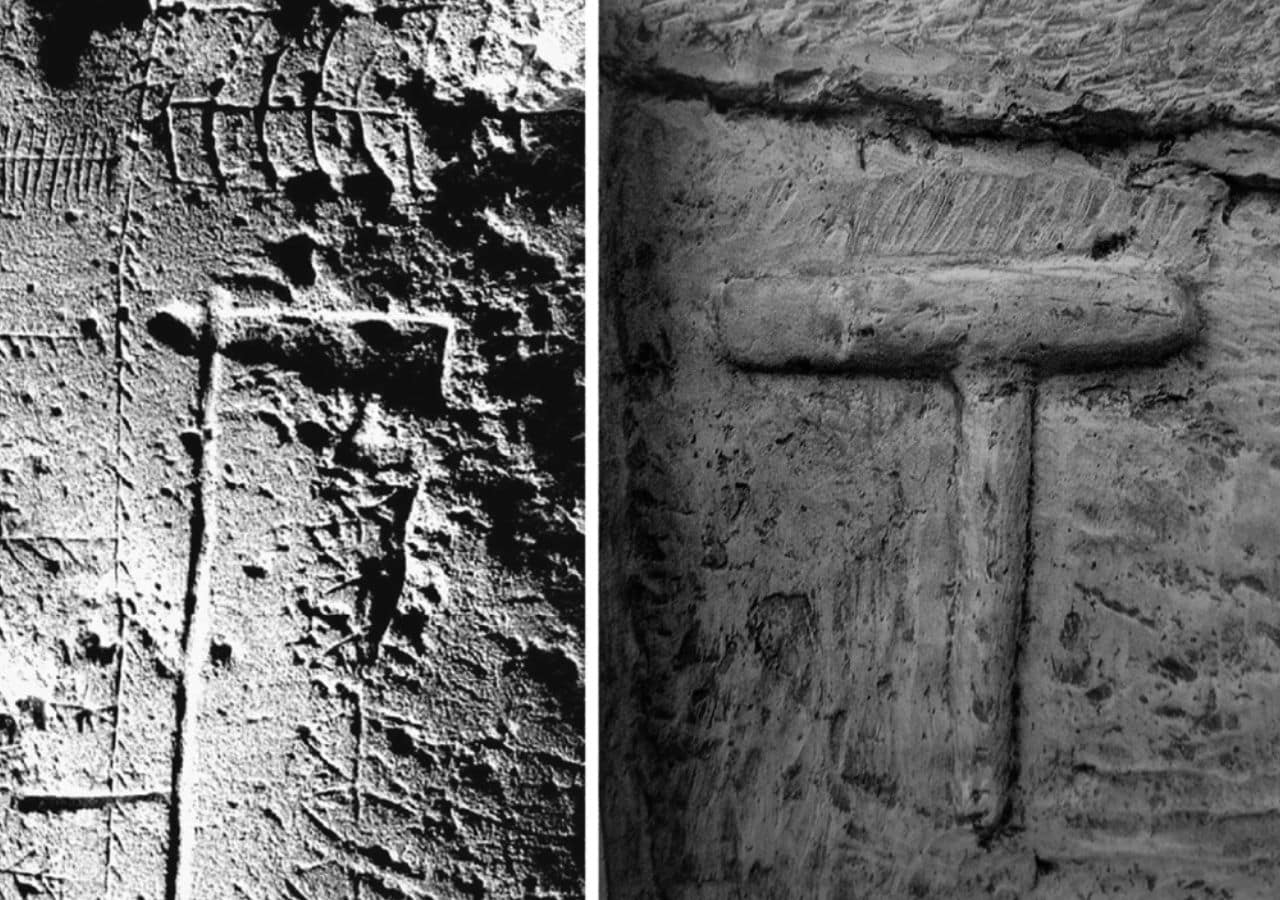
Depiction of a antler battle axe in the rock-cut tomb at Maraisde-Saint-Gond
Depiction of an antler battle axe in the rock-cut tomb at Maraisde-Saint-Gond. Credit: Sebastian Schultrich / CC BY-NC-SA 4.0

Researchers once dismissed ancient face pots and battle axes from northern Europe as purely local creations, with no broader significance. A new study published in the Danish Journal of Archaeology challenges that view. It finds that these objects from the fourth millennium BC were part of a wider cultural movement linking societies across Europe.

Sebastian Schultrich, an archaeologist at the ROOTS Cluster of Excellence at Kiel University in Germany, studied pottery and stone weapons from the late Funnel Beaker Culture, roughly 3300 to 2600 BC.

His findings suggest communities in northern Germany and southern Scandinavia were far more connected to the rest of the prehistoric world than previously recognized.

The face pots rank among the most striking artifacts of the period. Made primarily on the Danish islands around 3000 to 2900 BC, they feature raised eyebrow arches, a central nose, and circular eye markings.

Most have come from collective burial sites. For decades, researchers treated them as a uniquely local art form.

Face pots and battle axes mirrored pan-European cultural trends

Schultrich argues they were a local response to a pan-European cultural impulse. Around the same period, anthropomorphic art was emerging in southern France, northern Italy, and the Paris Basin.

Stone carvings and stelae depicted human figures alongside daggers and axes. The near-simultaneous appearance of human imagery across such distant regions suggests a shared “spirit of the age,” one that each society expressed in its own distinct way.
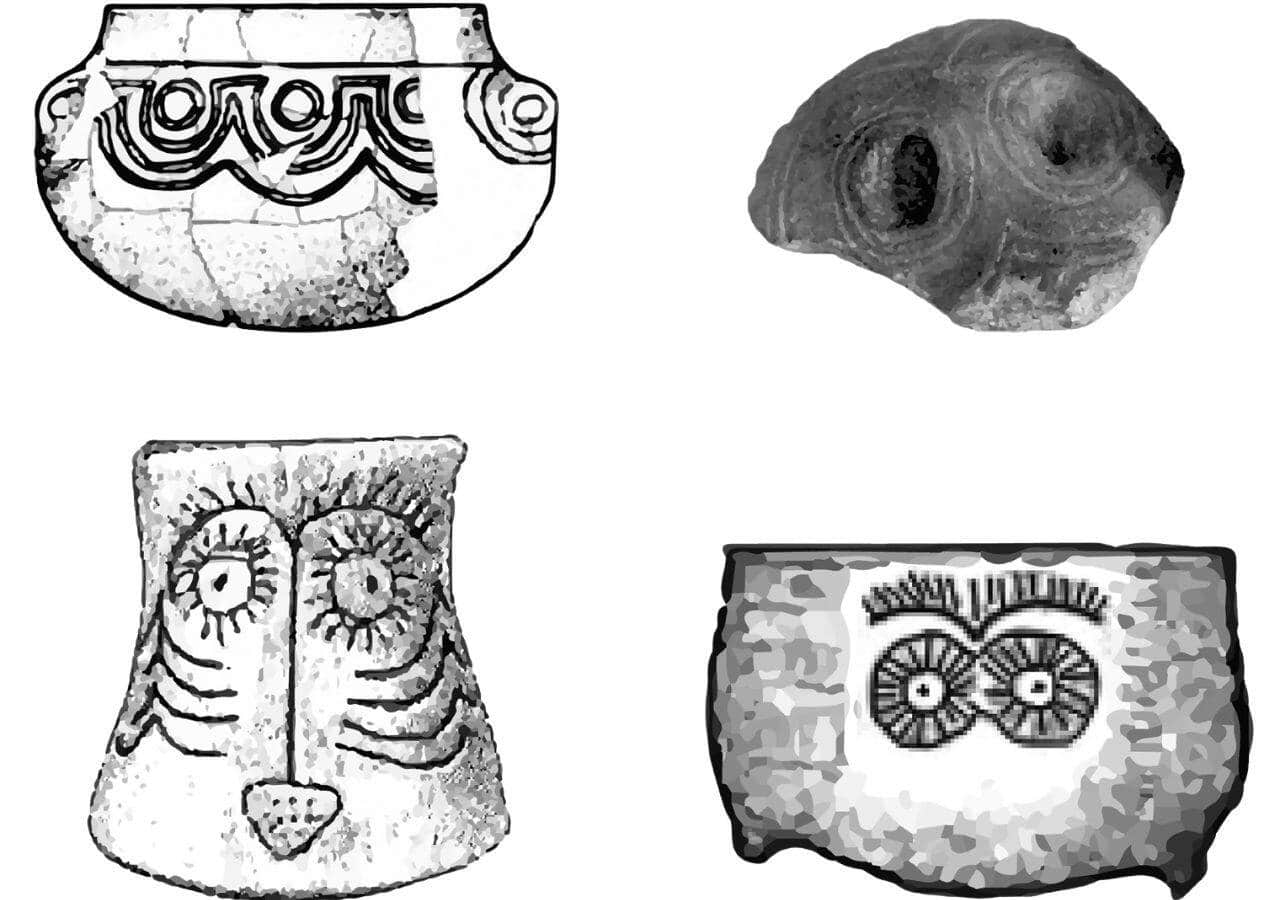
Face-pots, face-like pottery and potential face-like pottery of the Atlantic
Face-pots, face-like pottery, and potential face-like pottery of the Atlantic. Credit: Sebastian Schultrich / CC BY-NC-SA 4.0

Battle axes reveal a parallel story. The double-headed stone axes found across northern Germany and Scandinavia carry a distinctly regional character. But battle axes as a broader category spread across Western, Central, and Northern Europe during this period.

Schultrich draws comparisons between these axes and weapons like daggers and halberds found in Italian graves. Both types used copper or stone, appeared in rock art, and showed up increasingly in burial contexts from the mid to late fourth millennium BC.

Loose Atlantic links laid the groundwork for bell beaker networks

The study also uncovers early signs of an Atlantic exchange network that predates the Bell Beaker phenomenon. Battle axes resembling French designs appeared in Galicia. Scandinavian flint axes reached the British Isles.

Pottery styles in Brittany echoed those developing in the Lower Rhine region. Schultrich describes these as loosely connected networks along the Atlantic coast, ones that would eventually grow into the broader Bell Beaker exchange system of the third millennium BC.

The Danish face pots and the eye motifs on Iberian pottery are most likely unrelated directly, Schultrich notes. But both reflect a broader cultural shift toward human representation in material objects.

The study adds to growing evidence that pre-Beaker societies built wide-reaching connections long before the migrations and cultural upheavals of the third millennium BC reshaped prehistoric Europe.
  •  

Researchers Identify 31 Letters in Ancient Anatolia’s Lost Sidetic Language

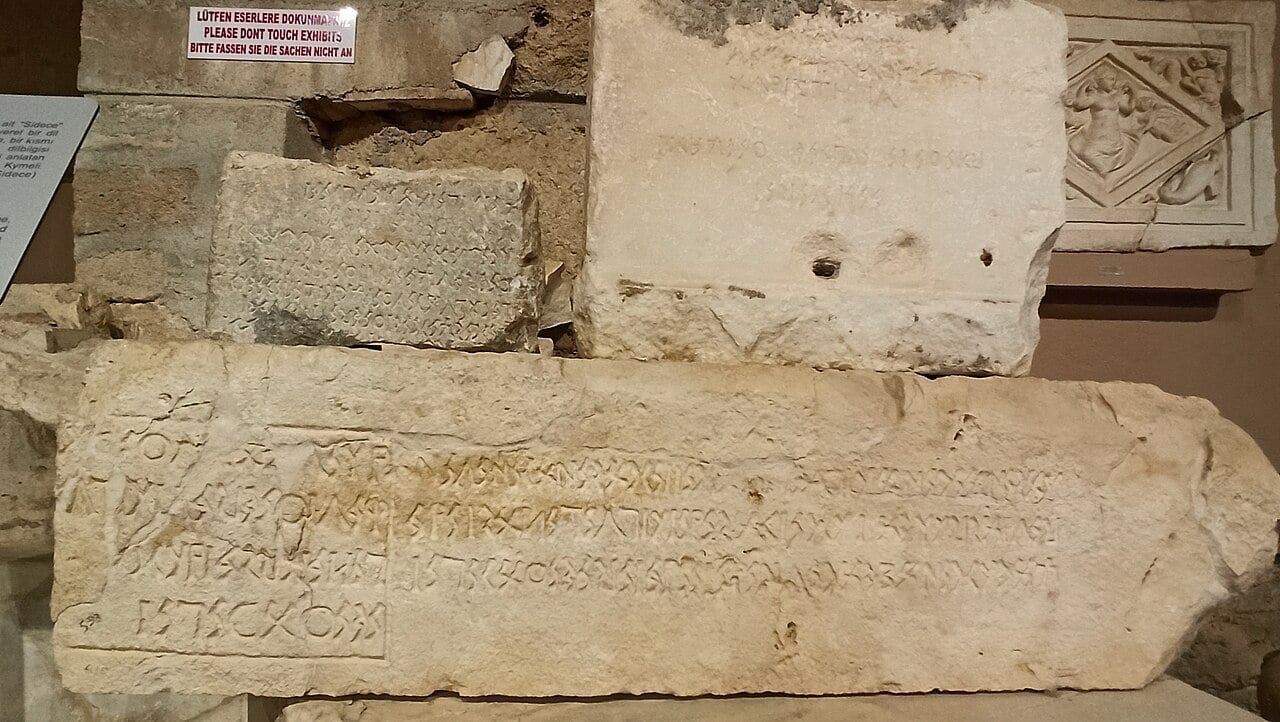
Inscriptions in Sidetic language
Inscriptions in Sidetic language. Credit: Spiritia / Wikimedia Commons / CC BY-SA 4.0

Researchers have expanded the known Sidetic alphabet to 31 letters, moving the field closer to decoding one of Anatolia’s lost languages. The new findings come from active excavations at Side Ancient City in Antalya’s Manavgat district.

The work is led by Prof. Dr. Feriştah Alanyalı, excavation director and archaeologist at Anadolu University, in collaboration with Italian linguist Alfredo Rizza and Austrian linguist Michaela Zinko. Funding comes through the Culture and Tourism Ministry’s Heritage for the Future Project.

Sidetic sits within the Luwian branch of Anatolian Indo-European languages, a grouping that also includes Lycian and Carian. Decipherment has moved slowly because the surviving inscriptions are few and most span only one or two lines.

Alanyalı said that the thin body of material has made it hard to reconstruct grammar, vocabulary, and structure with any confidence.

New excavations yield longer texts and bilingual comparisons

New excavations have brought a shift. Researchers have now recovered inscriptions running as long as 30 to 40 lines, well beyond anything previously available. Bilingual texts written in both Sidetic and Greek have also come to light.

Alanyalı said that those texts have renewed optimism because matching content across two languages helps researchers assign meaning to unknown signs and connect recurring words to known concepts.

One finding in particular has drawn attention. Researchers now think the Sidetic terms “Siruawn” and “Siruawan” refer to Side itself.

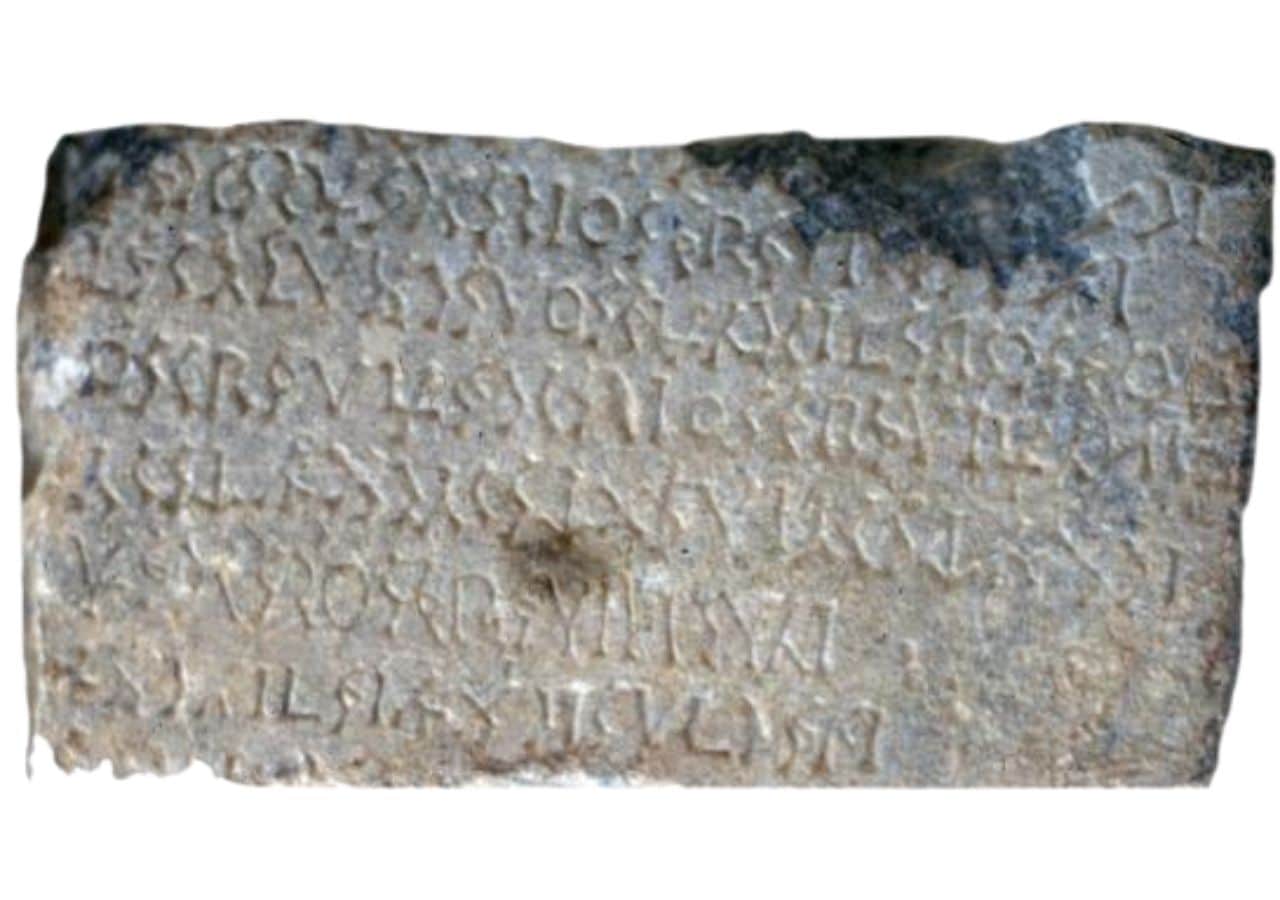
Inscription in Sidène (Sidetic)
Inscription in Sidène (Sidetic). Credit: Vincent Ramos / Wikimedia Commons / CC BY-SA 3.0

Since the Greek word “Side” (Greek:Σίδη) translates to pomegranate, a fruit that featured prominently on the city’s ancient coinage, Alanyalı said that the name likely carried the same meaning in the native language.

She described this as a significant finding for understanding the city’s origins and identity.

An ancient city that held its language for centuries

Side is typically known through its Greek and Roman structures, but Alanyalı said that the city’s history runs deeper.

Ancient accounts record that settlers from the Greek city of Kyme arrived at Side and, over time, abandoned their own language in favor of the one spoken by local residents.

Alanyalı said that tradition points to a community whose culture was firmly rooted long before outside groups arrived.

That cultural foundation held even after Alexander the Great brought Greek influence into the region during the fourth century B.C.

The inscriptions show that Side’s residents continued writing in Sidetic for roughly two centuries into the Hellenistic period, with the language appearing to fade only around the late second century B.C.

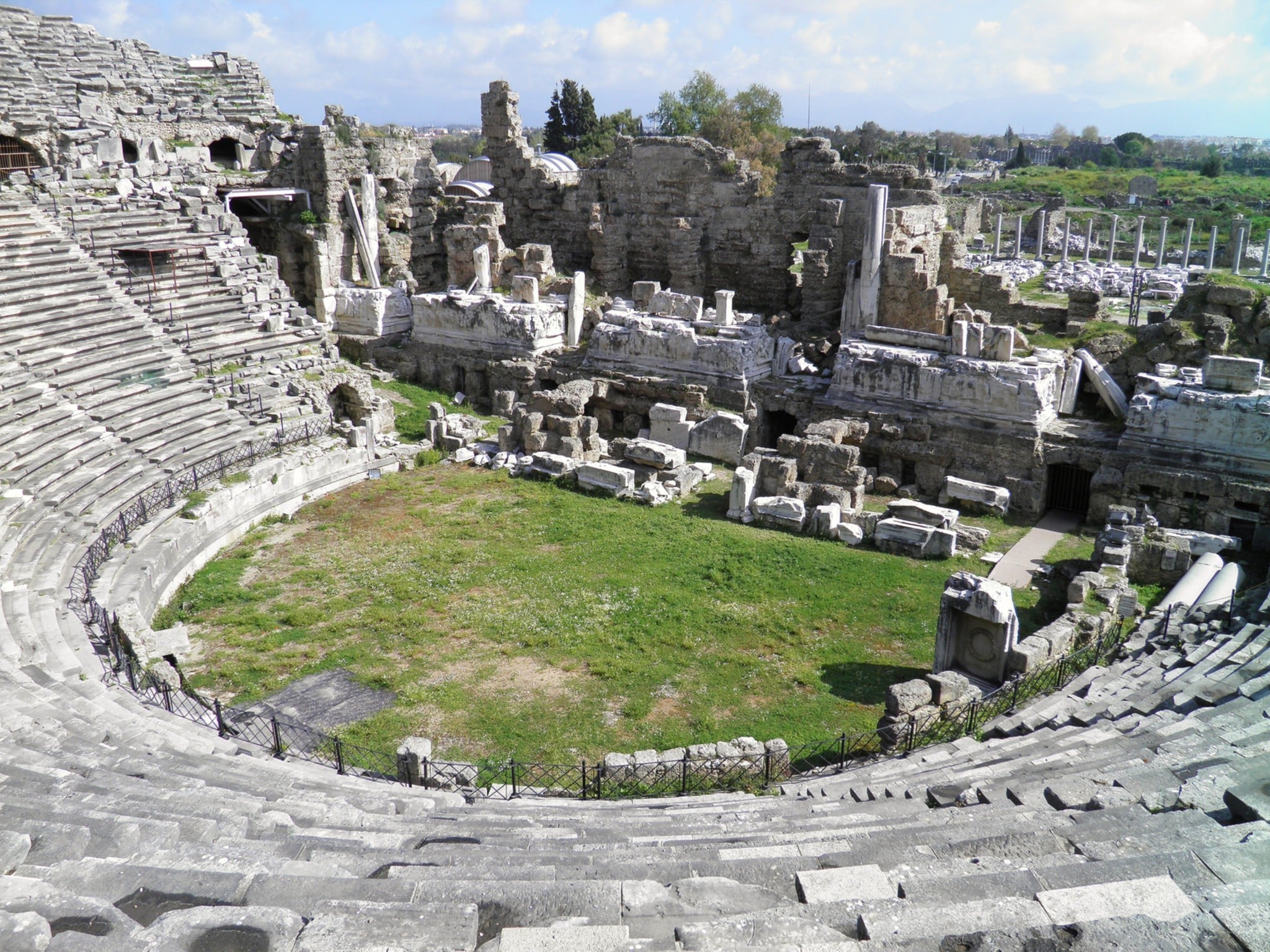
The Roman Theatre at ancient Side city
The Roman Theatre at ancient Side city. Credit: Carole Raddato / Flickr / CC BY-SA 2.0

Alanyalı said that the persistence of Sidetic complicates the idea that Greek culture quickly swept away what came before it.

Assyrian and Babylonian seals point to ancient eastern ties

Archaeological finds also point to Side’s connections with civilizations to the east. A Neo-Assyrian seal turned up during excavations at the site.

Separately, Italian researchers obtained a Neo-Babylonian seal from residents of the area before the Turkish War of Independence. Alanyalı said that the two objects together point to cultural ties with Mesopotamia dating back to the seventh century B.C.

A bilingual inscription tied to the city’s Serapis Temple adds another dimension. Alanyalı said that the text documents how the temple was financed, listing the names of donors and the sums each contributed, all written in Sidetic.

31 letters bring researchers closer to Anatolia’s lost language

The use of the local language for a public record of that kind confirms it was still understood and used in everyday civic life.

With the alphabet now standing at 31 known letters, up from 26, researchers working on this lost Anatolian language have a sharper set of tools.

Alanyalı said that the international team continues its work, and each newly identified letter brings the field a step closer to a fuller reading of inscriptions that Side’s people worked for generations to preserve.

  •  

Emporion, Where Ancient Greece Met Spain and Thrived

Emporion
The atrium of Roman House (domus) No. 1 at Empuries (Emporiae/Emporion), Spain. 1st century BC – 1st century AD. Credit: Mark Cartwright, World History Encyclopedia, CC BY-NC-SA 4.0

The Greeks were famous in antiquity for their adventurous and curious spirit, which led to the establishment of numerous Greek colonies across the Mediterranean and beyond. Tucked away on Spain’s beautiful Costa Brava, one of these ancient Greek colonies, called Emporion, was a truly remarkable Greek settlement that thrived far from metropolitan Greece on the other side of the Mediterranean.

Emporion is an excellent example of early Greek expansion, as it became a place where Greek traders and settlers converged to establish a bastion of Greece at the far western end of the Mediterranean.

Emporion became a thriving hub that, for centuries, played a crucial role in shaping the foundations of early European exchange and people’s movements. When discussing Greek colonies, we normally focus on Asia Minor and the Italian Peninsula. However, here on the Iberian Peninsula, these ancient Greek explorers left their unique mark, proving that the ancient Greeks were, in fact, quite the adventurers.

Emporion was a Greek gem on Spanish soil

The story of Emporion started around 575 BC, when Greek seafarers from Phocaea, a Greek city in Asia Minor (modern-day Turkey), set their sights on the western horizon, seeking more land to expand their opportunities. These people were the same adventurous men and women who founded Massalia (today’s Marseille) on the opposite side of Emporion, on today’s Mediterranean coast of France.

Their initial settlement, the “Palaiapolis” or Old City, was cleverly positioned on a small island, now comfortably part of the mainland, due to thousands of years of land reclaiming in the broader area. We can only imagine the spectacle of Greek ships filled with exquisite pottery, fine olive oil, and the kind of wine that only ancient Greeks could produce, setting foot on Iberia.

What was different at that time was that these people weren’t just there to exchange goods and sell their produce; they were there to stay permanently, injecting Greek culture into the local populations, importing fresh ideas, and the unique “Greek spirit” into the local area.

A Greek mosaic in the Neapolis. The Greek word "Ηδύκοιτος" ("the pleasure of lying down") is at the top.
A Greek mosaic in the Neapolis. The Greek word “Ηδύκοιτος” (“the pleasure of lying down”) is at the top. Credit AugusteBlanqui, Wikimedia Commons, CC BY-SA 4.0

The very name they gave to the city, “Emporion,” means “market” or “trading post” in Greek. It leaves no room for doubt about its core purpose and the reason why this settlement was named after the Greek word for trade. Emporion was intended to become a cosmopolitan crossroads, a vibrant meeting point where Greek merchants met local Iberian populations, thereby establishing a robust trade route in a wide range of goods, from precious metals to essential food supplies.

What is particularly fascinating about Emporion is the relationship that developed between the Greek colonists in the area and the local Iberian tribes, especially the Indiketes. Initially, there was a clear divide—a literal wall separated the Greek and Iberian communities, as is often the case with newly established colonies throughout history.

But as often happens, shared interests and a healthy dose of realism slowly eroded those barriers, bringing locals and settlers together. Over time, mutual benefit led them to achieve a remarkable degree of cultural exchange, resulting in a truly blended society that contributed to the development of a unique community with its own strengths and characteristics.

A Greek vessel found in Emporion. Credit
A Greek vessel found in Emporion. Credit: Kontrollstellekund, Wikimedia Commons, CC BY-SA 2.0

This community thrived through commerce and cultural exchanges. Centuries later, during the Roman era, Emporion’s strategic value became undeniable. During the tumultuous Punic Wars, Emporion became a crucial landing point for Roman legions, demonstrating its geopolitical importance. The Romans, ever efficient, established their adjacent settlement, which eventually merged with the pre-existing Greek city. The collective name, Emporiae, perfectly encapsulates this dual Greco-Roman identity and heritage, where two powerful cultures merged on one remarkable site.

Today, what truly makes Empúries a must-see is the extraordinary chance it offers to walk through both Greek and Roman streets in a single visit. It’s not every day you get to stand where an ancient agora once buzzed with philosophical debate, and just right next to it, you can envision a Roman forum alive with political drama that only the Romans could offer.

The ongoing excavations, which commenced in 1908, continue to unearth incredible treasures—from formidable city walls and elegant temples, including one dedicated to Asclepius, the Greek god of medicine (perhaps an early version of a Greek health resort), to private homes adorned with breathtaking Roman mosaics.

The next time you visit northeastern Spain and Catalonia, be sure to visit this site of ancient Greek heritage on the Iberian Peninsula. Admire what is now known as Empúries, a name closely resembling its original one.

For a more detailed description of what led to the Greek colonization of the area, read here.

  •  

Emporion, Where Ancient Greece Met Spain and Thrived

Emporion
The atrium of Roman House (domus) No. 1 at Empuries (Emporiae/Emporion), Spain. 1st century BC – 1st century AD. Credit: Mark Cartwright, World History Encyclopedia, CC BY-NC-SA 4.0

The Greeks were famous in antiquity for their adventurous and curious spirit, which led to the establishment of numerous Greek colonies across the Mediterranean and beyond. Tucked away on Spain’s beautiful Costa Brava, one of these ancient Greek colonies, called Emporion, was a truly remarkable Greek settlement that thrived far from metropolitan Greece on the other side of the Mediterranean.

Emporion is an excellent example of early Greek expansion, as it became a place where Greek traders and settlers converged to establish a bastion of Greece at the far western end of the Mediterranean.

Emporion became a thriving hub that, for centuries, played a crucial role in shaping the foundations of early European exchange and people’s movements. When discussing Greek colonies, we normally focus on Asia Minor and the Italian Peninsula. However, here on the Iberian Peninsula, these ancient Greek explorers left their unique mark, proving that the ancient Greeks were, in fact, quite the adventurers.

Emporion was a Greek gem on Spanish soil

The story of Emporion started around 575 BC, when Greek seafarers from Phocaea, a Greek city in Asia Minor (modern-day Turkey), set their sights on the western horizon, seeking more land to expand their opportunities. These people were the same adventurous men and women who founded Massalia (today’s Marseille) on the opposite side of Emporion, on today’s Mediterranean coast of France.

Their initial settlement, the “Palaiapolis” or Old City, was cleverly positioned on a small island, now comfortably part of the mainland, due to thousands of years of land reclaiming in the broader area. We can only imagine the spectacle of Greek ships filled with exquisite pottery, fine olive oil, and the kind of wine that only ancient Greeks could produce, setting foot on Iberia.

What was different at that time was that these people weren’t just there to exchange goods and sell their produce; they were there to stay permanently, injecting Greek culture into the local populations, importing fresh ideas, and the unique “Greek spirit” into the local area.

A Greek mosaic in the Neapolis. The Greek word "Ηδύκοιτος" ("the pleasure of lying down") is at the top.
A Greek mosaic in the Neapolis. The Greek word “Ηδύκοιτος” (“the pleasure of lying down”) is at the top. Credit AugusteBlanqui, Wikimedia Commons, CC BY-SA 4.0

The very name they gave to the city, “Emporion,” means “market” or “trading post” in Greek. It leaves no room for doubt about its core purpose and the reason why this settlement was named after the Greek word for trade. Emporion was intended to become a cosmopolitan crossroads, a vibrant meeting point where Greek merchants met local Iberian populations, thereby establishing a robust trade route in a wide range of goods, from precious metals to essential food supplies.

What is particularly fascinating about Emporion is the relationship that developed between the Greek colonists in the area and the local Iberian tribes, especially the Indiketes. Initially, there was a clear divide—a literal wall separated the Greek and Iberian communities, as is often the case with newly established colonies throughout history.

But as often happens, shared interests and a healthy dose of realism slowly eroded those barriers, bringing locals and settlers together. Over time, mutual benefit led them to achieve a remarkable degree of cultural exchange, resulting in a truly blended society that contributed to the development of a unique community with its own strengths and characteristics.

A Greek vessel found in Emporion. Credit
A Greek vessel found in Emporion. Credit: Kontrollstellekund, Wikimedia Commons, CC BY-SA 2.0

This community thrived through commerce and cultural exchanges. Centuries later, during the Roman era, Emporion’s strategic value became undeniable. During the tumultuous Punic Wars, Emporion became a crucial landing point for Roman legions, demonstrating its geopolitical importance. The Romans, ever efficient, established their adjacent settlement, which eventually merged with the pre-existing Greek city. The collective name, Emporiae, perfectly encapsulates this dual Greco-Roman identity and heritage, where two powerful cultures merged on one remarkable site.

Today, what truly makes Empúries a must-see is the extraordinary chance it offers to walk through both Greek and Roman streets in a single visit. It’s not every day you get to stand where an ancient agora once buzzed with philosophical debate, and just right next to it, you can envision a Roman forum alive with political drama that only the Romans could offer.

The ongoing excavations, which commenced in 1908, continue to unearth incredible treasures—from formidable city walls and elegant temples, including one dedicated to Asclepius, the Greek god of medicine (perhaps an early version of a Greek health resort), to private homes adorned with breathtaking Roman mosaics.

The next time you visit northeastern Spain and Catalonia, be sure to visit this site of ancient Greek heritage on the Iberian Peninsula. Admire what is now known as Empúries, a name closely resembling its original one.

For a more detailed description of what led to the Greek colonization of the area, read here.

  •  

Europe’s East–West Divide Began With One Brutal Conquest

Avars
Avars, the steppe warriors. Credit: Greek Reporter archive

A military campaign launched by the Frankish ruler Charlemagne in the late 700s set the foundations for Europe’s east-west divide, shaping the continent’s political landscape for more than a thousand years, according to new research published in the Austrian History Yearbook.

Helmut Reimitz, a historian at Princeton University, argues that Charlemagne’s conquest of the Avar people in Central Europe in 795 CE did far more than expand a medieval empire. It drew a line between east and west that would later echo in everything from medieval church politics to the Iron Curtain of the 20th century.

The Avars were a steppe people who had controlled Central Europe for roughly 200 years before Charlemagne’s armies marched east. Carolingian propaganda portrayed them as the ultimate enemies of Christendom and the campaign as a holy war.

In 791, Charlemagne sent three armies into Avar territory. Before crossing the river Enns, the entire army fasted for three days, held masses, and prayed for divine protection.

The conquest that erased an empire from the map

The initial campaign produced little. The armies marched deep into Avar territory and found almost no resistance. In 796, Charlemagne’s son Pippin finally conquered the Avar capital and seized a vast treasure. Charlemagne distributed it across Europe to cement his image as the most powerful Christian ruler of the West.

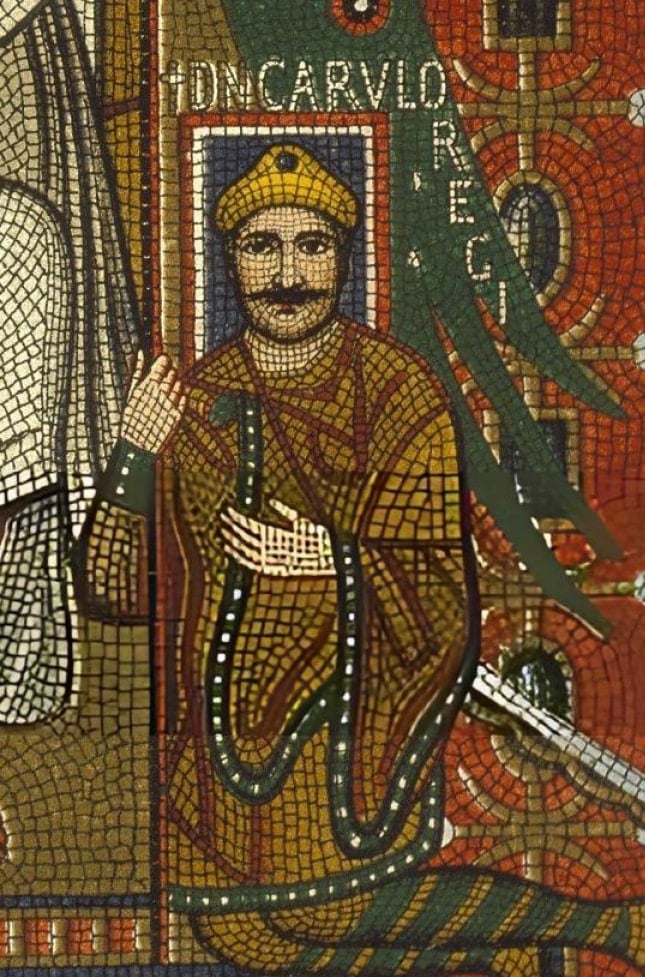
A now-lost contemporary mosaic of Charlemagne
A now-lost contemporary mosaic of Charlemagne. Credit: Ferdinando Fuga / Wikimedia Commons / Public Domain

The conquest, however, created a lasting problem. The Avars, unable to maintain their political identity under a Christian Frankish emperor, simply disappeared. By 822, their name no longer appeared in Carolingian records. With no Avar client kingdom as a political partner, Carolingian rulers lost their footing in Central Europe.

Reimitz notes that the religious ideology driving the conquest also made practical governance harder. Alcuin, a close advisor to Charlemagne and head of the palace school, warned that forcing rapid conversion on conquered peoples was a serious mistake.

He argued that Christianization required careful instruction, not battlefield compulsion.

When Christian laws drew a line across Europe’s east-west divide

The strict Christian rules the Carolingians imposed also blocked flexible diplomacy. Church guidelines even forbade Christians from dining or celebrating with non-Christians, cutting off a key tool for building political alliances.

These tensions deepened in the 860s when Byzantine missionaries Cyril and Methodius arrived in Central Europe with a Slavonic alphabet and liturgy, directly challenging Frankish church authority.

Frankish bishops accused them of using an unauthorized language. The dispute hardened the region’s divisions even further.

Reimitz concludes that the east-west divide born of Charlemagne’s conquest remained a powerful force shaping Europe’s politics well into modern times, from early conflicts against the Ottoman Turks to the Iron Curtain itself.

  •  

2,600-Year-Old Tomb in China Reveals Bronze Bells Meant to Speak to Ancestors

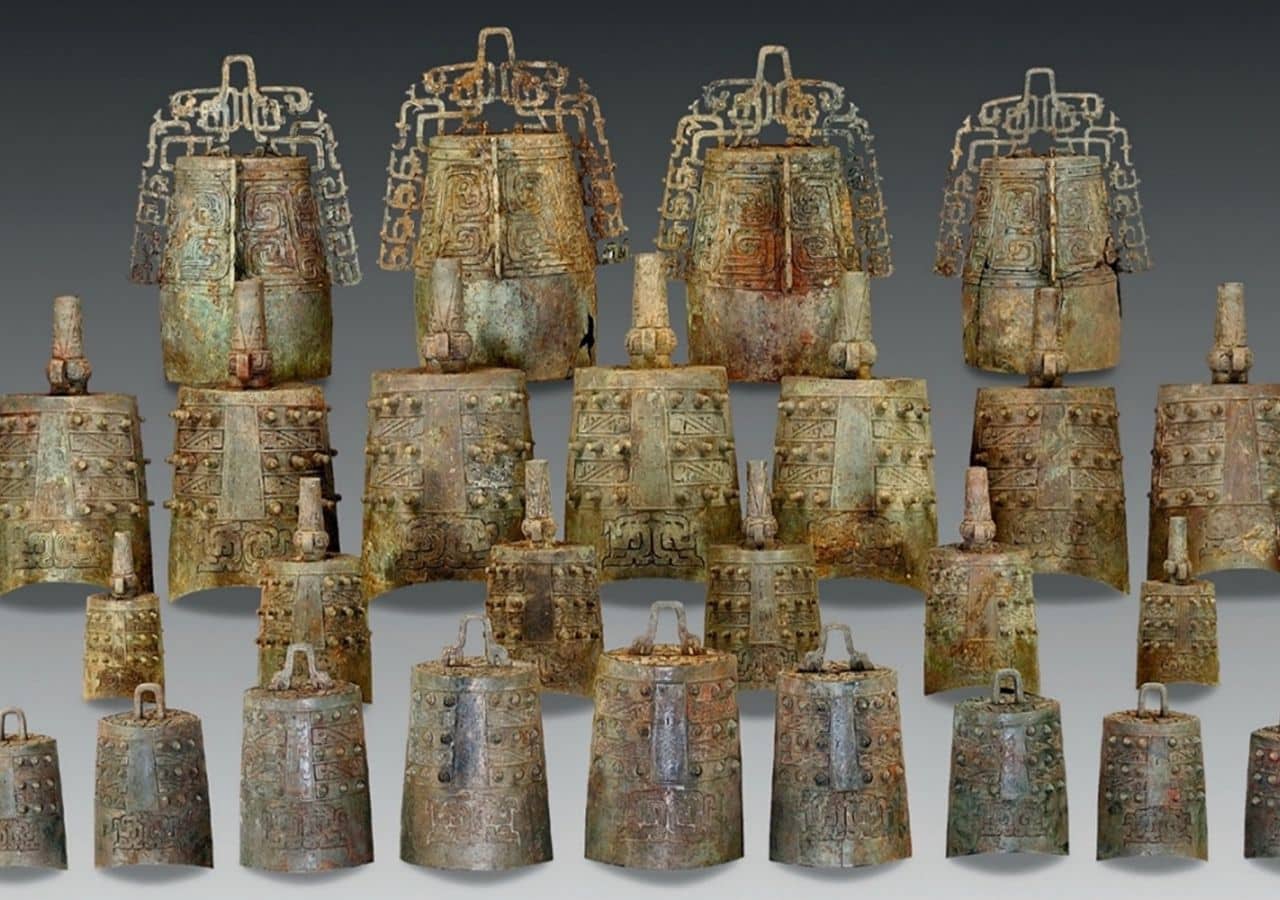
The bronze bell sets from Chinese tomb
The bronze bell set from a Chinese tomb. Credit: Chinglong Tse / CC BY-NC-ND 4.0

A 2,600-year-old Chinese tomb containing a rare set of ancient bronze bells is shedding new light on how Zhou dynasty elites used ritual objects to connect with their ancestors and assert political power.

A new study published in the Cambridge Archaeological Journal examines the tomb of Lord Qiu of Zeng, a ruler who governed a small state in present-day northern Hubei, China, between roughly 675 and 625 BC.

Chinglong Tse of the UCL Institute of Archaeology, the study’s sole author, argues that the bells were far more than musical instruments. They served as sacred links between the living and the dead, carrying sounds believed to reach ancestral spirits in another realm.

The bell set, known as the Zeng Gong Qiu bianzhong, was cast around 677 BC. Its inscriptions show that Lord Qiu commissioned the bells to honor two powerful ancestors and invoke their spiritual power against the rival Chu state, which was expanding aggressively across southern China at the time.

Lord Qiu commissioned bells to battle a rival state

The inscriptions also show that Qiu presented himself as a humble “little child” who had not yet earned the virtue of his forebears. This was a standard ritual expression in Zhou culture, meant to show devotion to ancestors and demonstrate worthiness to inherit their authority.

When archaeologists excavated the ancient Chinese tomb, they found the bronze bells scattered in a disordered heap. The wooden rack had been deliberately taken apart, its pieces spread across the burial chamber.

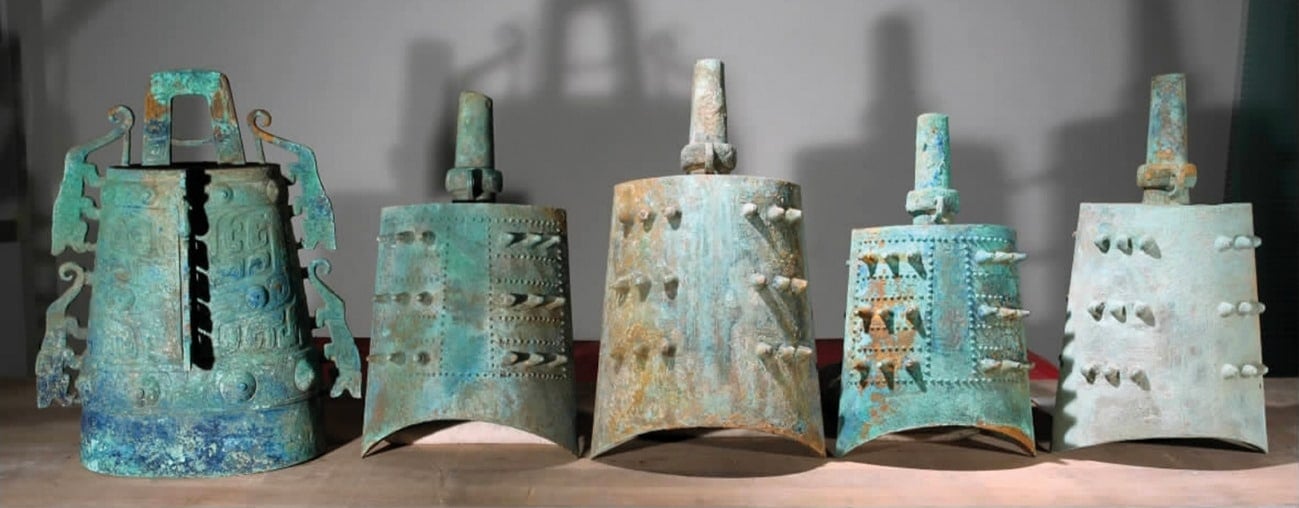
The bells from the tomb of Marquis Kuan of Zeng at Yejiashan, Suizhou
The bells from the tomb of Marquis Kuan of Zeng at Yejiashan, Suizhou. Credit: Chinglong Tse / CC BY-NC-ND 4.0

This stood in sharp contrast to how Zhou elites typically buried their bell sets, in careful, patterned arrangements designed to sustain their ritual function in the afterlife.

Tse explains that this deliberate disorder likely reflects a major political shift. At some point during Qiu’s reign, Zeng and Chu ended their rivalry. The Chu king gave his sister in marriage to Lord Qiu, turning the two states from adversaries into allies.

The original purpose of the bells, invoking ancestral power against Chu, had become politically inconvenient.

Bronze bells from a Chinese tomb signal political change

To address this, Qiu’s mourners appear to have intentionally deactivated the bells. They commissioned a new, smaller set of funerary bells, placed in an orderly arrangement and dedicated to the same ancestors, to carry on ancestral rites in the afterlife.

Tse notes that the findings show how ritual objects in the ancient Chinese world were not passive symbols. They held real power to shape relationships between the living, the dead, and their ancestors, and that power could be adjusted when political circumstances demanded it.

  •  
❌