
Reading view

Did Macedonians Participate in the Ancient Greek Olympic Games?
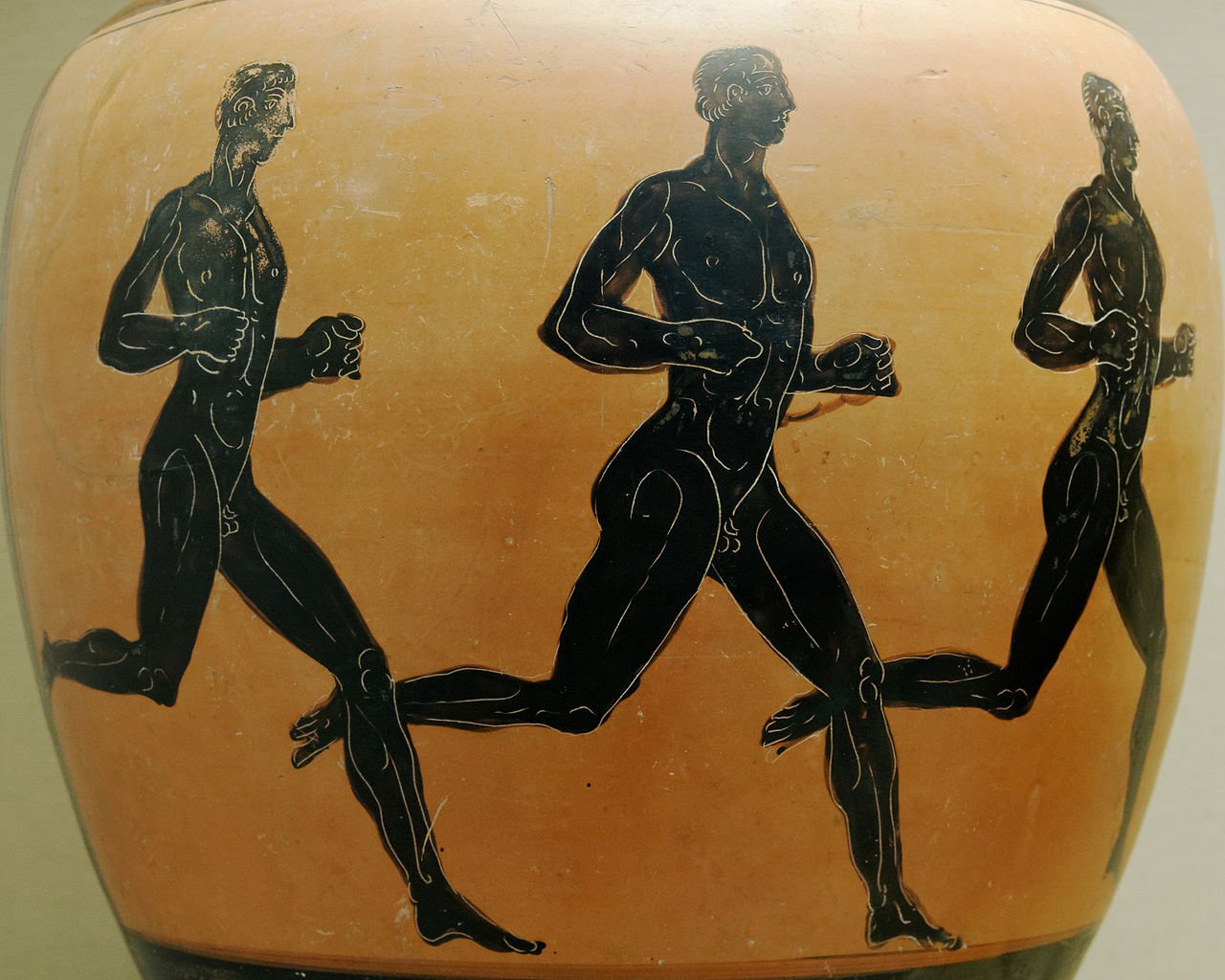
An pottery depicting three runners at the Olympic Games.
Pottery depicting three runners at the Olympic Games. Credit: Wikimedia Commons, CC-BY-SA-2.5

For many centuries, the ancient Macedonians lived on the fringes of the Greek world far removed from the prominent city-states of the south. For this reason, many have called their status as Greeks into question. Famously, only the Greeks could participate in the ancient Olympic Games. So then, what was the status of this northern tribe in that regard? Did the Macedonians participate in the ancient Greek Olympic Games or not?

The early years of the Olympic Games

According to the earliest tradition, the Greek hero Heracles founded the Olympic Games. The ancient historians placed the founding of this athletic competition in 776 BCE. For the first two centuries, there is no evidence that the Olympic Games involved the Macedonians. Why is this?

Put simply, the Macedonians generally did not have much to do with the Greeks of the south due to the fact that they lived so far north. This applied to numerous aspects of the Greek world and not just to the Olympics. They were generally quite isolated in terms of socio-political developments even though they worshipped the same gods and had the same traditions and language as the rest of the Greeks.

For this reason, it is no surprise that the Macedonians apparently did not, initially, express any interest in participating in the Olympic Games. They took place in Olympia at Elis in the Peloponnese far to the south of Macedonia.

King Alexander I, the first Macedonian in the Olympics

This changed at the turn of the 5th century BCE. At this time, King Alexander I of Macedonia wanted to participate in the athletic competition of Olympia. When he attempted to enter, the Hellanodikai, the judges of the competition, denied his request. There was, naturally, prejudice against Alexander’s people since they lived so far away from the rest of the Greeks.

However, Alexander was able to convince the judges to allow him to participate. He pointed out that his dynasty was founded by Perdiccas, the son of Temenus, a descendant of Heracles (Hercules). After hearing this explanation, the judges accepted that Alexander was a true Greek.

After Alexander participated in the Olympic Games, various other Macedonians also began doing so. It seems that he initiated an interest in the competition in his homeland.

Macedonians in the Olympic Games

At first, participation in the Olympic Games among Macedonians was limited to the royal dynasty. After Alexander I, there is a record of King Archelaus I participating. He competed in a chariot race and was victorious. This occurred in 408 BCE, still long before the expansion of Macedonian hegemony to all the Greek city-states.

In the following century, King Philip II also competed in the Games. He was the father of Alexander the Great. Philip actually participated three times. All three times, two of which were chariot races, he was the winner. These three victories occurred in 356, 352, and 348 BCE.
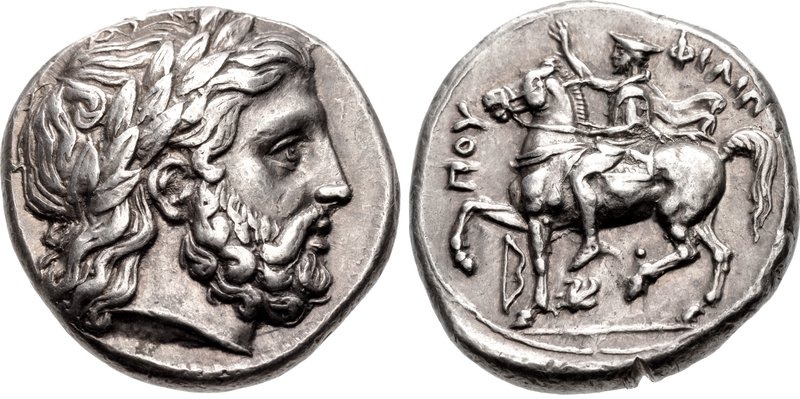
Philip II coin
Tetradrachm coin of Philip II of Macedon. Credit: Classical Numismatic Group / CC BY-SA 2.5 / Wikimedia Commons

Just after this era, we find records of non-royal Macedonians participating in the Olympic Games. Perhaps King Philip’s impressive series of victories had something to do with this. In 328 BCE, there is a record of a man named Cliton winning the important running race. Based on the available records, he was the first non-royal Macedonian to win in the Games.

After Cliton, we find records of various other Macedonians participating in and winning many of the events in the Olympic Games. In fact, we find an average of approximately one Macedonian winner per decade over the next six decades. Additionally, we need to consider the fact that we only have records of the winners. Likely, many other Macedonians participated in the Olympic Games during this period, and we certainly know that they continued to do so thereafter.

  •  

What Was the Ancient Name of the Minoans?

Bronze Age Minoan inscriptions written in Linear A from Phaistos
Bronze Age Minoan inscriptions written in Linear A from Phaistos. Credit: Wikimedia Commons, Zde, CC-BY 4.0

The Minoan civilization was a rich and relatively advanced culture centered on ancient Crete during the Bronze Age. However, they did not refer to themselves as the Minoans. This is a modern name coined by British archaeologist Sir Arthur Evans in the early 20th century. What was the ancient name of the Minoans? What did they call themselves, and what did other nations call them?

Ancient Greek name for the Minoans

There are no Greek historical texts which describe the Bronze Age Minoan civilisation. However, texts from the Archaic Period, such as Homer’s Odyssey, mention a people on Crete called the Eteocretans.

This name means ‘true Cretans’. Later writers, such as the historian Diodorus of the first century BCE, viewed them as the native inhabitants of Crete. Therefore, it is likely that the Eteocretans were the descendants of the Minoans.

The foundation of this term can be traced back to the Bronze Age. A Linear B inscription from Pylos dating to c. 1300 BCE refers to Crete as ‘Ke-re-te’, reconstructed as ‘Kretes’.

Given that this dates from long after the Mycenaean Greeks had conquered Minoan Crete, this cannot be used to show what the Mycenaean Greeks called the Minoans, nor what they called their island.

The Bible’s name for the Minoans

Let us now consider what the Bible calls the Minoans. In the Book of Genesis, the tenth chapter contains the famous Table of Nations. This shows the genealogy of the world’s nations. Included among this list is a reference to Caphtorim, one of the sons of Mizraim.

Mizraim, according to his name and family members, is considered the forefather of the Egyptians. His son Caphtorim is meant to be the forefather of a nation that resided in a place called Caphtor in the Hebrew Scriptures.

Biblical references to Caphtor make it an island and the homeland of the Philistines. Archaeological evidence clearly shows that the Philistines originated from the region of the Aegean Sea.

This is further supported by the fact that the Bible associates the Philistines with a nation called the Cherethites. The latter ethnonym appears to be synonymous with ‘Cretans’, since the Greek Septuagint translated it as such.

Therefore, given this information, it is evident that the island of Caphtor in the Bible is Crete. Therefore, the Caphtorim, or people of Caphtor, is the Bible’s name for the Minoans. Since the reference to the Cherethites only appears in accounts set after the Mycenaean Greeks had conquered Minoan Crete, it is impossible to say whether ‘Cherethites’ is another name for the Minoans or a name for the Greeks of Crete instead.

What other Middle Eastern nations called the Minoans

Were the ancient Hebrew Scriptures of the Bible alone in using this term, Caphtorim, for the Minoans? The evidence shows that they were not. We find variations of this ethnonym in the records of several other Middle East nations.

An 18th-century BCE document from the city of Mari in Syria refers to the island as Kaptara. It uses this term in various contexts, including referencing “Caphtorite fabric.” This suggests that the island was well known by that name in the 18th century BCE, at least within Syria.

However, was this just the name of the island itself? One of the records in the Mari Tablets uses this term referring to a certain man’s ethnicity. This suggests that the ancient inhabitants of Syria, just as in the Bible, used this term for the Minoans as a people, and not merely as the name of the island.

In later centuries, the same term appears in Assyrian records, dating long after the fall of the Minoans. This shows that it was not limited to one particular civilization. Rather, it seems to have been used (at least among some nations) for the inhabitants of Crete regardless of ethnicity.

Egyptian records

In Egyptian records, we find the name ‘Keftiu’ used about Minoan Crete. This is used for Crete in general, even long after the Mycenaean Greeks had conquered it. The fact that this was the term for Crete is clear from the itinerary lists found in Egypt in the New Kingdom period.

Amenhotep III directly associated Keftiu with the place names ‘Knossos‘ and ‘Amnissos’, two of the most prominent cities on Bronze Age Crete. This leaves no doubt that Keftiu was the Egyptian name for that island.

The name ‘Keftiu’ is very similar to ‘Caphtor’ and ‘Kaptara’. The only substantial difference is the absence of the ‘r’ at the end of the Egyptian version. Nevertheless, this Egyptian form is so similar to the others that most scholars recognise that they must be cognate with each other.

In other words, ‘Keftiu’ is the Egyptian spelling of the same word recorded in the Bible as ‘Caphtor’ and in other Middle Eastern records as ‘Kaptara’.

What did the Minoans call themselves?

Unfortunately, we cannot be completely sure what the Minoans called themselves. The reason is that Minoan records use a script called Linear A. Linguists have not yet been able to decipher it, meaning that we cannot read the Minoan inscriptions.

This does not mean that there is no indication as to what they called themselves. The fact that nations as far apart as Egypt and Syria used a form of the same term for Crete is highly significant.

This strongly suggests that Keftiu/Capthor/Kaptara was not a name invented for Crete by any one of those outside nations. Rather, to account for this consistency across that part of the world, it seems far more likely that this came directly from the Minoans’ name for themselves.

When we consider the Egyptian evidence more closely, it becomes more likely that the Egyptians correctly preserved the name of the island. As previously noted, Egyptian records link Keftiu with the place names ‘Knossos’ and ‘Amnissos’, which were the Minoan names for those sites on Crete. If the Egyptians were able to maintain the names of those sites, it is plausible that they similarly preserved the name of the island as a whole.

Therefore, although we cannot be completely sure, it does seem very likely that the Minoans called themselves something similar to the Bible’s ‘Caphtorim’ or ‘Caphtorite’.

  •  
❌