Reading view

NSW Labor officials investigated over allegedly disguising donations to Minns – as it happened

This blog is closed

‘If Australian datacentres are going to power the AI revolution, we deserve a fair return’ – David Pocock

Independent senator David Pocock has published an opinion piece about the growth of AI datacentres in Australia and how the gold rush should benefit Australians. He writes:

Huge investment in this space is pouring into Australia. In the past year, Microsoft has announced $25bn will go into Australian datacentres and Amazon Web Services has committed another $20bn.

The prime minister has posed for photos with the CEOs of both companies, welcoming the investment with open arms despite a growing backlash by communities against AI and datacentre construction. At a time when economic growth is sluggish, the government sees billions of dollars in investment as making for a good headline.

I think if you look at the programme itself, it’s a great podcast that she’s done a great job on a topic that I’m sure will be of real interest and real importance to many Australians who suffer from those conditions, and particularly young Australians and young Australian women.

So there’s a balance in all these things … for the ABC to be ensuring that we bring great content to air and also acknowledging that, you know, with some of the people that we work with, sometimes there will be controversy.

Obviously we’ve looked at Charlie’s comments. I think he did express that they were his own view. They weren’t represented at the ABC. It was a little bit on the hop and a little bit not. So I think we felt comfortable that we were able to accept that his comments weren’t a breach of the ABC code of conduct.

Continue reading...

© Photograph: Dan Himbrechts/AAP
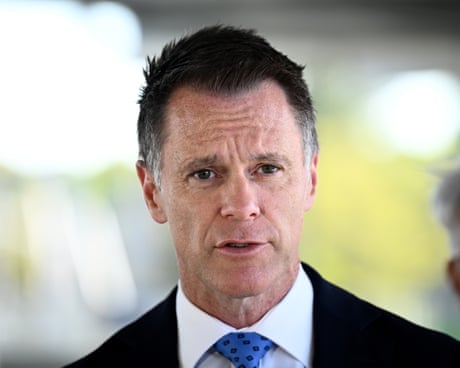
© Photograph: Dan Himbrechts/AAP
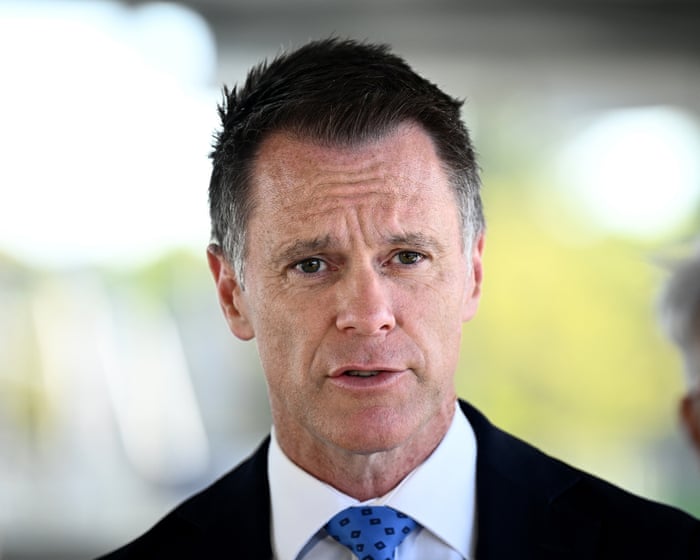
© Photograph: Dan Himbrechts/AAP
  •  

Advanced Alzheimer’s successfully treated with psilocybin, a recent case study says

Psilocybin is a naturally occurring compound found in over 200 species of fungi collectively known as “magic mushrooms.” It functions as a prodrug, meaning it is biologically inactive until ingested, at which […]

The post Advanced Alzheimer’s successfully treated with psilocybin, a recent case study says first appeared on The Expose.

  •  

Premature births are climbing in Ukraine’s front-line regions, and doctors blame the ongoing war

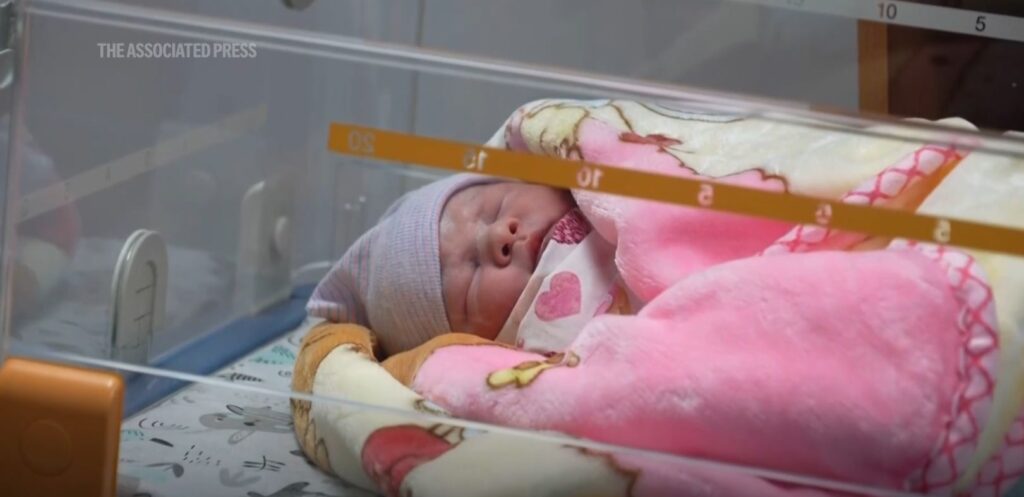
premature births climbing ukraine's front-line regions doctors blame ongoing war · post newborn temperature-controlled incubator hospital zaporizhzhia ukraine new born baby ap news ukrainian reports

Premature births are rising in several Ukrainian regions near the front line, where war-driven stress on pregnant women appears to be taking a tollaccording to the Associated Press (AP). Doctors in cities like Zaporizhzhia keep fragile newborns alive between air raid sirens, in wards with windows boarded up against Russian blast waves. The trend compounds a deepening crisis as fewer Ukrainian women give birth at all.

Russia's war is grinding down Ukraine's population on every front, from the men dying at the line to the families displaced and the children who never arrive. A generation born under fire will carry the war's medical and demographic cost for decades, long after any ceasefire, deepening the strain on a health system Russia keeps targeting.

How far the rate has climbed

In Kherson Oblast, early births climbed from 5.4% of deliveries in 2019 to 9.8% by 2025 — close to twice the rate, UN figures show.  Zaporizhzhia Oblast rose from 5.7% to 7.6%, and Poltava Oblast from 7.7% to 9.8% over the same period. The front line runs through Kherson and Zaporizhzhia oblasts. Poltava sits farther back but takes regular aerial strikes. Fewer Ukrainian women are giving birth overall, yet a larger share of births now come early, AP reported.

Keeping newborns alive under bombardment

The medical work is delicate and unforgiving. In a Zaporizhzhia intensive care unit, one baby born at 30 weeks weighs just 700 grams, far below the 2,500-gram threshold the World Health Organization (WHO) uses for low birth weight. Marharyta Nekhoroshyva's son arrived even earlier, at 26 weeks and 940 grams. Now nine months old, he still battles chronic breathing problems while she raises him alone, her husband fighting in the war.


Doctors must manage oxygen precisely, since too much risks abnormal blood-vessel growth in the eyes and, in severe cases, blindness, said Dr. Andrii Lobanov, who heads neonatal intensive care at Zaporizhzhia's children's hospital. When sirens sound, staff stay beside the incubators rather than risk moving the babies.

The danger is not abstract. Dr. Nataliia Bohuslavska, who runs the neonatal unit at the city's maternity hospital, opened a shift last month to alarms warning of incoming missiles. Hours later, a Russian glide bomb hit a commercial part of the city and killed at least 12 people. Her team delivered a baby and performed two cesareans that same day, while treating a woman who miscarried after witnessing an airstrike.

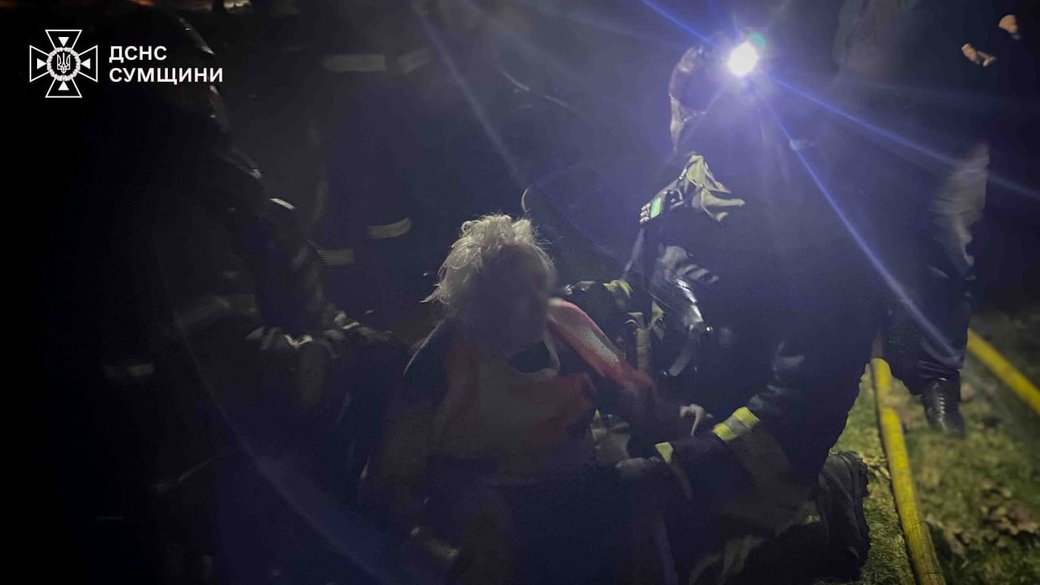
Aftermath of a Russian strike on Shostka, Sumy region. Photo: State Emergency Service of Ukraine
Explore further

Russia hits two hospitals, kills one woman overnight in strikes on Ukrainian cities

The longer cost

Surviving the delivery is only the start. Premature babies often need years of treatment for respiratory, neurological, and developmental conditions, a heavy bill for a country at war. Hospital services get hit "both literally and metaphorically," said Dr. Andrew Weeks, a maternal-health professor at the University of Liverpool.

It also lands on a country whose birth rate has collapsed to about one child per woman — less than half the 2.1 a population needs simply to hold steady.

  •  

More than 1,300 deaths a month in England due to long A&E waits, figures suggest

Senior medical staff call for solutions to tackle root causes of excess deaths amid tenfold increase in a decade

More than 1,300 patients a month in England are dying needlessly due to long A&E waits, a tenfold rise in a decade, figures suggest.

There were more than 300 deaths linked to long waits every week in 2025, up from 30 a week in 2015, according to analysis by the Royal College of Emergency Medicine.

Continue reading...

© Photograph: Peter Byrne/PA

© Photograph: Peter Byrne/PA

© Photograph: Peter Byrne/PA

  •  

Northern Thai residents march for action on polluted rivers. ‘This is an emergency’

BANGKOK — More than 600 residents of Chiang Mai and Chiang Rai provinces embarked May 31 on a roughly 68-kilometer, six-day ‘peace walk’ to demand the Thai government take action on the river pollution crisis that has seen Thai rivers polluted with heavy metals. The ensemble of affected residents, civil society groups, monks and students marched from Tha Ton subdistrict in Chiang Mai to the city of Chiang Rai in northern Thailand, reaching their destination on June 5, World Environment Day. For more than a year, Thailand’s Pollution Control Department has reported dangerous levels of arsenic, mercury, cadmium and other heavy metals in rivers across northern Thailand, with mining operations across eastern Myanmar suspected to be responsible for the pollution. “We are walking because our rivers are slowly dying,” Pianporn Deetes, executive director of the Rivers and Rights Foundation, which helped to organize the peace walk, told Mongabay by phone. “Toxic contamination from unregulated mining upstream is already affecting water, fish, food, livelihoods, and public health. We do not want to wait until more people become sick. This is an emergency.” Pianporn said the walk (42 miles) was about taking collective action to share information, document impacts and build public pressure in a bid to force the government to address the issue, which Pianporn said has, so far, been lacking. “Monitoring has improved, but action has not matched the scale of the crisis,” she said. “We need urgent diplomatic engagement with neighboring countries, stronger health monitoring, transparency, and action to…This article was originally published on Mongabay

  •  
❌