Reading view

The Lost Plant Ancient Greeks Used for Medicine, Food and Contraception
silphium
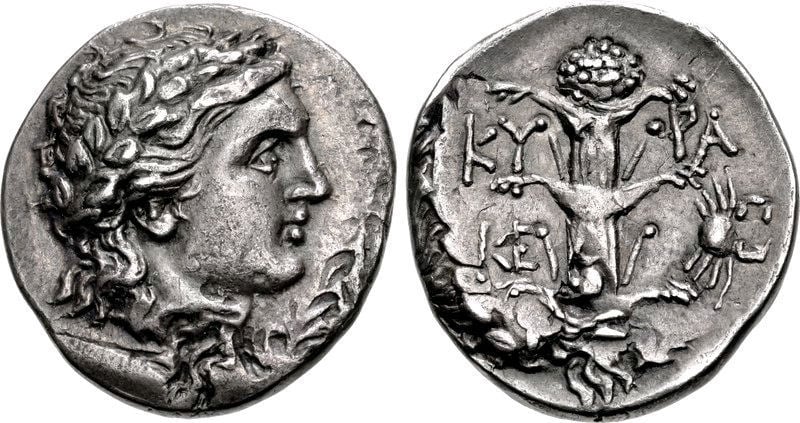
A plant used by the ancient Greeks for medicine, food and even contraception was one of the most sought-after goods in the ancient world. Credit: Classical Numismatic Group/Wikimedia Commons/CC BY-SA 3.0

An ancient Greek plant, now extinct, called Silphium, was used by the ancient Greeks and Romans for perfume, seasoning, medicine, and even contraception. It was one of the most sought-after goods in the ancient world.

The plant was so useful that Julius Caesar himself was said to have a large stash of silphium on hand at all times.

Silphium only grew in a narrow strip of land near the North African city of Cyrene in modern-day Libya and was essential to the city’s economy. The cultivation and trade of the plant transformed Cyrene into the richest region of Africa at the time.

Its widespread use in the ancient world allowed Cyrene’s economy to flourish, which in turn transformed the city into a center of art, culture, and medicine in the ancient Greek world.

In fact, it was home to a famous medical school and even a philosophical movement based around happiness whose members were called the Cyrenaics. Eratosthenes, the famous Greek mathematician, was a native of the city.

Although now extinct, researchers have determined, through studying ancient drawings and descriptions of the plant’s taste and appearance, that silphium likely belonged to the genus Ferula, which includes existing plants like giant fennel and asafoetida.

This theory is bolstered by the fact that asafoetida, which is still widely used today in Indian and central Asian cooking, was used as a cheaper substitute for silphium in antiquity, meaning that it was either related to the plant or had a very similar flavor.

The extinct plant silphium had many uses for ancient Greeks

Plants of the genus tend to resemble ancient depictions of the plant, which was widely found on coins from Cyrene due to its economic importance to the city.

It seems to have been a tall, flowering plant with a heart-shaped seedpod on the top. In fact, some theories about the origins of the modern symbol for love point to the shape of silphium’s seedpod, as the plant was widely used as an aphrodisiac.

Silphium was long used throughout the ancient Mediterranean. Both the Minoans and ancient Egyptians had specific glyphs to represent the plant, and it was widely lauded in songs and poems across ancient cultures.

According to myth, silphium came from the god Apollo himself. It had a wide variety of medicinal properties and was used to treat cough, pain, warts, fever, and indigestion. Although considered an aphrodisiac, it was also used as a contraception and even as an abortifacient.

The father of medicine Hippocrates himself even prescribed the plant for a protruding gut.

Silphium was likewise found in Greek and Roman cuisine and featured prominently in recipes by Apicius, who compiled one of the most well-preserved collections of ancient recipes in existence today.

Its earthy scent and medicinal properties also made it an important ingredient in perfume, as well as in ancient lotions and creams.

Why did silphium go extinct?

Due to its varied uses, silphium was in very high demand. Yet, by the time of the Roman emperor Nero, who lived from 37 to 68 AD, the plant was virtually extinct. According to Pliny, when the last remaining silphium plant was found, it was given to Nero.

Scholars theorize the plant was over-harvested and over-farmed due to its popularity, causing the soil in the limited area where the plant grew to become devoid of nutrients.

Additionally, shepherds used to feed silphium to their flocks, as the plant would transform the meat, making it tender and delicious. Scholars theorize that overgrazing of the plant likely contributed to its demise.

Others claim that regional climatic changes, which caused once green fields to turn into an arid desert, resulted in the plant’s extinction.

Ancient writers, such as Theophrastus, noted that silphium was very sensitive to changes in soil and therefore could not be cultivated in large  numbers nor in areas outside of Cyrene.

  •  

4,000-Year-Old Skewers Found on Santorini Reveal Souvlaki Bronze Age Origins

Bronze Age souvlaki grill from Santorini
An ancient Greek grill for souvlaki from Akrotiri, Santorini. Credit: Wikimedia Commons/ Public domain

The beloved souvlaki has been around since ancient times. Archaeologists have found skewers dating back to the Bronze Age, and recent research looks at the functioning of early grills. In particular, “souvlaki trays” have been discovered dating all the way back to Mycenaean culture.

Therans and Mycenaean cultures were known for their luxurious lifestyles, ornate and colorful clothes, exquisite art, and sea trade with other cultures, such as Egypt. People developed these cultures on the islands of Crete and Santorini.

World’s oldest Bronze Age souvlaki on Santorini

The oldest souvlaki skewers found seem to be those discovered by archaeologists on Santorini dating back as far as 2000 BC. There are traces of the popularity of souvlaki on Santorini and Crete through the Bronze Age, and both Theran and Mycenean cultures made use of this method of cooking.

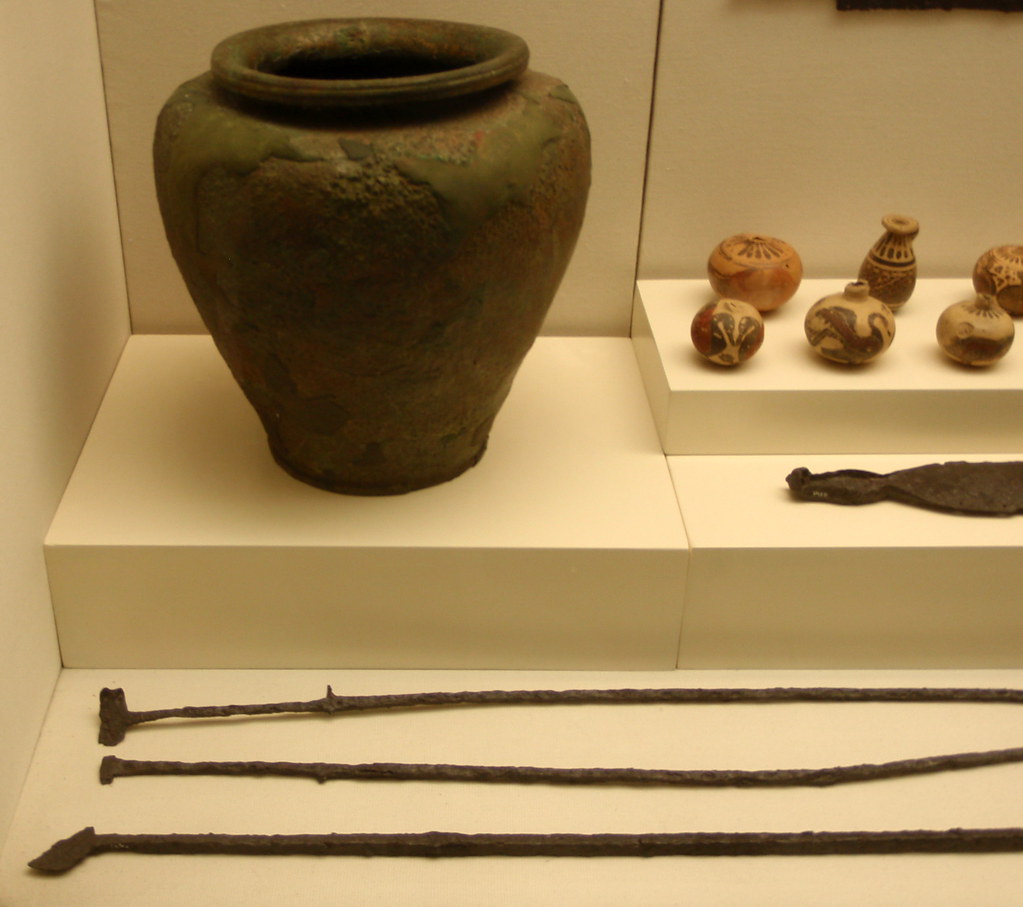
Ancient bronze skewers and vase, with small painted ceramic amphora
Ancient bronze skewers and a vase. Credit: diffendale/CC BY-NC-SA 2.0.

Ancient Greek texts such as the Iliad and the Odyssey describe a spit (Greek: ὀβελός) being used to roast meat, but the exact functioning of the souvlaki trays was unknown until recently. The works of great poets and writers describe the same obeliskos being popular. Sophocles, Aristophanes, Xenophon, and Aristoteles all mention or describe the popular dish in their works.

Mycenean cooking and culture

It seems that ancient Mycenaeans did not have a large variety of foods available to them. Despite this, they developed various types of cooking methods, fostering innovation. Part of that innovation was souvlaki trays, as was cooking in jars, among other techniques. At the time and for most of ancient history, cooking was mostly done on hearths with few ingredients. The portable and lightweight souvlaki trays changed this for Mycenaeans around 1400 to 1050 B.C.

Academics suggest that an important historical force behind these contraptions was status. While the Myceneans had incredibly rich art and fashion, their diet lacked diversity, though a marker of status was drinking wine. On the other hand, one can imagine poorer Mycenaeans drank beer.

As they were skilled sailors, Therans on Santorini island had begun brewing beer in the II millennium B.C., possibly learning the skill from Egypt or the Near East, where beer had been brewed since the III and IV millennium B.C. Accounts of the 5th and 4th centuries B.C. tell of an Athenian bias against beer. It was considered a drink of barbarians, Egyptians, or even women. Beer brewing was never seen as valuable.

By the Classical period, this all changed. Wine had become readily available to all, pushing elites in later Greek societies to seek other ways to distinguish themselves — for instance, through the use of specific gadgets and kitchen appliances, echoing earlier innovations like the Mycenaean souvlaki trays.

The souvlaki tray

The souvlaki trays found in Gla, Pylos, and Crete added something to the age-old tradition. Similar to modern-day outdoor grills, they were designed to be portable and good for travel or entertainment. Meat cuts seem to have been similar to the ones popular for souvlaki today, made from either lamb, pork, or mutton, and the meal was accompanied by bread made of various cereals.

The clay trays had placeholders for the skewers and, until recently, how they actually functioned was unknown. Researchers at Dartmouth College have recreated the trays using original ancient pottery techniques, tools, and ingredients. They realized the trays were not meant to be put on a hearth as originally thought. Rather, embers were placed in the tray and the skewers were grilled. They were practical, portable, and delicious!

  •  
❌