Reading view

The more lawmakers go around Mike Johnson, the more obvious his weakness becomes

For months, Rep. Gregory Meeks of New York, the top Democrat on the Foreign Affairs Committee, had championed legislation to send additional security aid to Ukraine as it defends itself against Russia’s invasion. The proposal, however, was stuck: House Republican leaders refused to consider it, and so the bill languished.

Last month, however, it became unstuck: Proponents of the legislation managed to go around the GOP leadership thanks to a discharge petition — a tactic that allows members to bring a bill to the floor if it’s formally endorsed by a majority of the House. As MS NOW reported last week, the Ukraine aid package cleared the House with 226 votes, including 18 Republicans.

This week, it happened again. NBC News reported:

The House tonight passed another Democrat-led bill that made its way to the floor after a group of Republicans bucked their party’s leadership and joined Democrats in forcing a vote.

The Faster Labor Contracts Act, which would force employers to start negotiating with a newly certified union within 10 days of receiving the request, passed with the support of 20 Republicans and all Democrats.

Critics will note that both this bill and the Ukraine aid still have to clear the Senate, where the measures’ fate remains uncertain, and they would still need Donald Trump’s signature to become law. It’s a fair point.

But let’s not miss the forest for the trees. Republican Rep. Brian Fitzpatrick of Pennsylvania said in an online written statement, “If the House Floor was managed properly, discharge petitions would never be needed. A successful discharge petition is clear and direct evidence of a poorly managed House Floor — because it demonstrates that the will of the majority of the People is being thwarted by the privileged few.”

Fitzpatrick didn’t mention House Speaker Mike Johnson by name, but given the context, he didn’t have to.

Indeed, it might not be immediately obvious just how embarrassing these latest developments are for the Louisiana Republican and his leadership team.

In the past century or so, successful discharge petitions have been very rare. The reason is simple: Such petitions have long been seen as a slap in the face of a sitting House speaker.

As New York magazine’s Ed Kilgore recently explained, “Indeed, prior to Johnson’s ascent to the Speakership, only two 21st-century discharge petitions achieved the 218 signatures needed to trigger a floor vote.”

This roughly once-per-decade average has undergone a dramatic revision under the Louisiana Republican’s tenure. In the last Congress, which ended in early January 2025, there were two successful discharge petitions, which was itself a significant total. Meanwhile, in the current Congress, which is far from over, there have been six successful discharge petitions, which The Hill accurately described as “extraordinary.”

The first came in March 2025, and it dealt with proxy voting for new parents serving in Congress. In November 2025, another discharge petition advanced the Epstein Files Transparency Act; five days later, a measure to repeal an executive order that gutted federal workers’ union rights also received 218 signatures.

The list grew longer as discharge petitions related to extending Affordable Care Act subsidies, providing temporary protected status for Haitian migrants and extending aid to Ukraine all crossed the necessary threshold.

Usually, members embarrass Johnson by ignoring his wishes and voting against legislation he has urged them to support. But this flurry of successful discharge petitions, which has no modern precedent, makes the House speaker appear even more diminished.

Kilgore’s recent piece added, “Signs of weakness invite further revolts by House members who fear voters more than this mild-mannered former backbencher from Louisiana, whose authority is totally dependent on Trump’s backing, which can be erratic during times when the president is distracted by nonlegislative matters like ending wars and naming things after himself. Politicians, like guard dogs, can smell fear and irresolution.”

The question, then, is less whether we’ll see more successful discharge petitions and more a question of when, as Johnson’s weak hold on power unravels further.

This post updates our related earlier coverage.

The post The more lawmakers go around Mike Johnson, the more obvious his weakness becomes appeared first on MS NOW.
  •  

With increasing frequency, GOP’s Thune and Trump are not on the same page

In the weeks leading up to Jan. 6, 2021, Senate Republican leaders knew that Donald Trump was pressuring their members to reject certification of Joe Biden’s victory, but they pleaded with GOP senators to discard the outgoing president’s wishes. In fact, Senate Republican leaders told members there wasn’t even any point in trying, since the radical scheme wouldn’t work anyway.

Republican Sen. John Thune of South Dakota, the then-majority whip, publicly conceded in December 2020 that the plan to reject election certification “would go down like a shot dog.”

Trump wasn’t pleased. In fact, the defeated president labeled Thune a “RINO” — “Republican in Name Only” — on social media, adding, “South Dakota doesn’t like weakness. He will be primaried in 2022, political career over!!!”

In 2022, Thune ran unopposed — in both the primary and the general election. What’s more, his career was far from over, and he became the Senate majority leader early last year.

In 2026, there’s a relative détente between Thune and Trump, though in recent weeks, it’s become increasingly clear the two Republican leaders are not on the same page.

“Thune has to say ‘no’ to Trump a lot,” Punchbowl News reported. “And second-term Trump clearly doesn’t like this at all.”

Consider the developments from the past few weeks:

  • Trump tapped Bill Pulte as the acting director of national intelligence, and Thune made his dissatisfaction known.
  • Trump announced a $1.776 billion compensation fund, widely panned as a “slush fund,” and Thune told reporters he was “not a fan” of the provisionally discarded idea.
  • Trump endorsed Ken Paxton in Texas’ Senate race, and Thune again made his dissatisfaction known.
  • Trump peddled new election conspiracy theories, and Thune said anyone touting such theories needs to “prove if there was cheating.”
  • Trump told Thune to fire Senate parliamentarian Elizabeth MacDonough, to eliminate the filibuster, to end the chamber’s “blue-slip” practice and to pass the anti-voting SAVE America Act — and Thune ignored all these directions.

To be sure, the president hasn’t thrown any recent tantrums about the South Dakotan, but with the way things are going, it’s hard not to wonder if the dam might soon break.

The post With increasing frequency, GOP’s Thune and Trump are not on the same page appeared first on MS NOW.
  •  

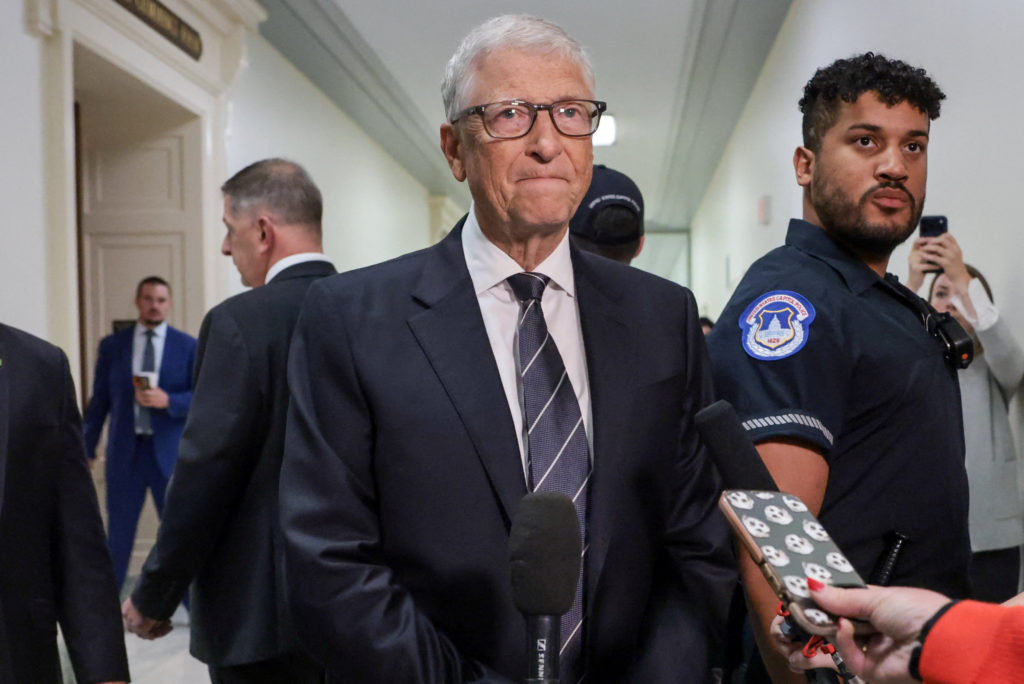
WATCH: Bill Gates says he hopes Epstein interview is 'helpful' for providing justice to survivors

In an opening statement provided to The Associated Press, Gates said he "should never have met with Epstein in the first place," but that he "never witnessed nor had any indication that Epstein was engaged in ongoing criminal conduct."

  •  

Republicans ignore public calls for reforms, throw another $70 billion at ICE and CPB

As 2026 got underway and much of the country was mortified by the deaths of Renee Nicole Good and Alex Pretti in Minnesota, the public backlash was swift and quantifiable. An Economist/YouGov poll found that a 47% plurality of Americans said U.S. Immigration and Customs Enforcement was making Americans less safe, while a 46% plurality said ICE should be abolished altogether.

A Quinnipiac poll released at about the same time found that 57% of Americans disapproved of the way ICE was enforcing immigration laws.

The need for reform seemed obvious. In fact, an NBC News poll released in February found that almost 3 in 4 U.S. adults supported either “reforming” or “abolishing” the agency.

Democratic officials seized on those public attitudes and demanded that Congress impose new restrictions and safeguards on federal immigration agencies as part of pending spending bills that fund ICE and U.S. Customs and Border Protection.

Four months later, the Republican majority ignored the polls, circumvented Democratic lawmakers and narrowly approved a spending package that will fund ICE and CBP for the remainder of Donald Trump’s second term, throwing an additional $70 billion at immigration enforcement. (The party used the budget reconciliation process, which prevented Senate Democrats from imposing a 60-vote threshold in the upper chamber.)

GOP leaders beat back efforts to include a provision formally killing off the idea of a White House compensation fund, but that wasn’t the only thing missing from the package: The legislation includes literally nothing in the way of new safeguards or restrictions on federal immigration agencies or their enforcement tactics.

In other words, polls showed strong public support for changes to the status quo. Republicans decided they did not care.

In a written statement, Rep. Jamie Raskin, the ranking Democrat on the House Judiciary Committee, said, “House Republicans are choosing to hand over $70 billion more in taxpayer dollars to fund ICE and Border Patrol’s chaos in our communities. This is on top of the $140 billion they already gave ICE in their ‘Big, Ugly Bill.’ MAGA Republicans refused to negotiate on popular and essential reforms to responsibly enforce our immigration laws while respecting the civil liberties of our people. I voted hell no.”

The Maryland congressman added, “ICE and Border Patrol aren’t targeting ‘the worst of the worst.’ College students, nurses, babies and children, pregnant women, cancer patients, and even American citizens have been rounded up in their lawless, brutal raids. This corrupt agency is making all of us less safe. We need affordable health care, not an open money spigot for ICE corruption and masked federal agents killing American citizens and disappearing our neighbors from the streets.”

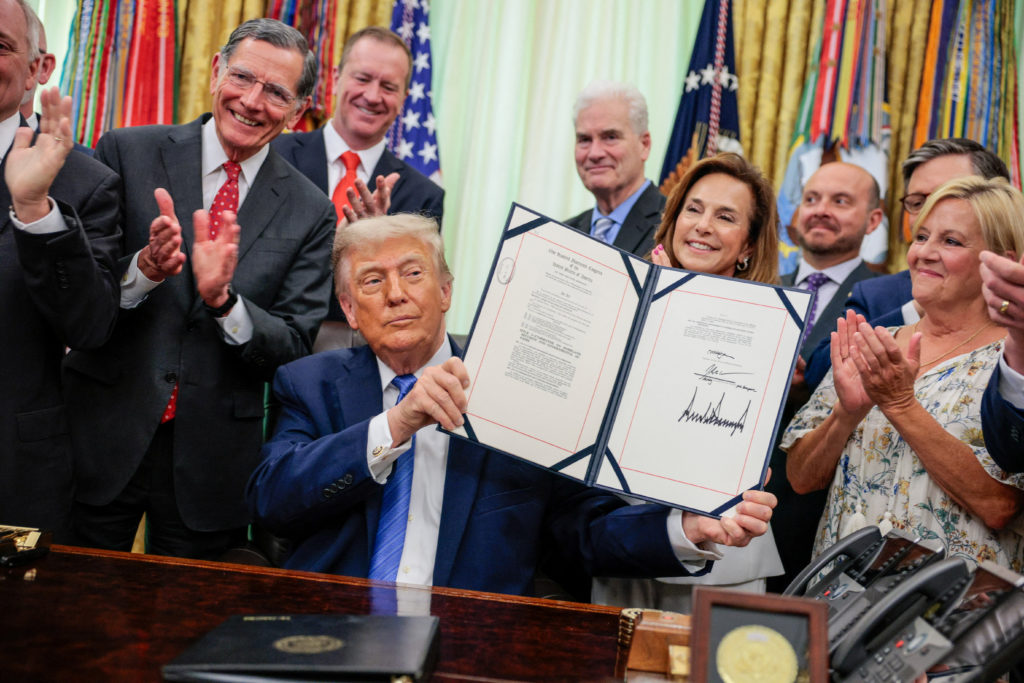
The president is expected to sign the package into law, probably as early as Wednesday.

The post Republicans ignore public calls for reforms, throw another $70 billion at ICE and CPB appeared first on MS NOW.
  •  

What to know about Bill Gates' relationship with Jeffrey Epstein as he is interviewed in House probe

Bill Gates, billionaire co-founder of Microsoft and philanthropist, is expected to sit for a closed-door transcribed interview on Wednesday before the House Oversight Committee about his relationship with the late convicted sex offender Jeffrey Epstein.

  •  

Mike Johnson attempts to defend Trump after president says ‘I love the inflation’ – as it happened

This live blog is now closed.

Donald Trump’s immigration crackdown is largely targeting people from the countries most vulnerable to displacement from climate-driven disasters, a Guardian analysis shows.

As the Trump administration pushes policies to boost planet-heating fossil fuels, millions of people are being forced to flee their homelands due to storms, floods and droughts worsened by the climate crisis.

Continue reading...

© Photograph: Annabelle Gordon/Reuters

© Photograph: Annabelle Gordon/Reuters

© Photograph: Annabelle Gordon/Reuters

  •  

Trump presses on with plan to install Bill Pulte as acting intelligence chief

Lawmakers warn appointment of presidential loyalist will scuttle bipartisan agreement to renew Fisa surveillance law

Donald Trump stood firm on his decision to install the controversial loyalist Bill Pulte as the country’s top intelligence official, demanding Congress pass a short-term extension of a surveillance law set to expire amid intense criticism of the appointment.

Pulte has been asked “to execute the immediate and needed downsizing” of the office of the director of national intelligence, the US president declared on Wednesday, after lining him up to serve as acting director on a temporary basis.

Continue reading...

© Photograph: Annabelle Gordon/Reuters

© Photograph: Annabelle Gordon/Reuters

© Photograph: Annabelle Gordon/Reuters

  •  

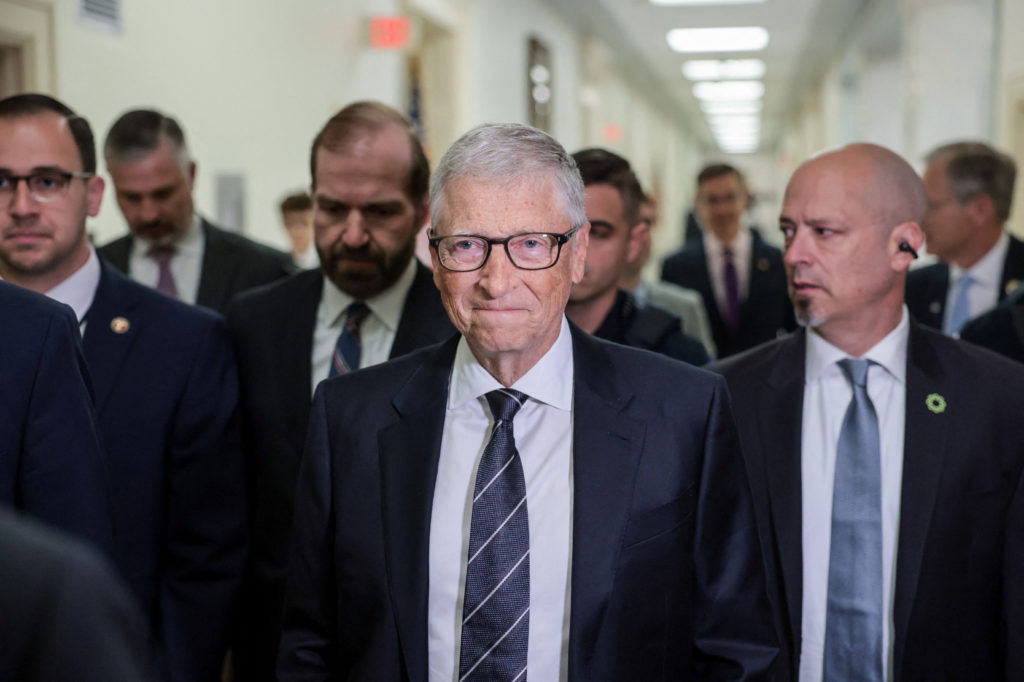
Bill Gates tells US House ‘I have never victimized anyone’ in Epstein testimony

Microsoft co-founder appears in closed-door session as part of lawmakers’ investigation into convicted sex offender

Bill Gates testified in front of the House committee on oversight and reform on Wednesday, and told lawmakers in his opening remarks that he “never witnessed nor had any indication” that Jeffrey Epstein was “engaged in ongoing criminal conduct”.

“I am here to answer your questions about my interactions with Jeffrey Epstein and to help contribute to the committee’s important work,” Gates said in his opening statement, seen by the Guardian. “I support the release of all the Epstein files and sincerely hope that, through your efforts and those of others advocating on their behalf, the survivors of Epstein’s crimes can get the justice that they deserve.”

Continue reading...

© Photograph: Denis Balibouse/Reuters

© Photograph: Denis Balibouse/Reuters

© Photograph: Denis Balibouse/Reuters

  •  

Graham Platner shrugs off scandals to win Maine Democratic Senate primary

Platner, whose campaign was hit by series of negative headlines, to face Susan Collins in key midterm contest

Graham Platner, a Marine veteran, oyster farmer and progressive activist, has scaled a mountain of personal controversies to win the Democratic nomination for the US Senate in Maine.

His victory on Tuesday caps a remarkable rise for a candidate who has never held elected office and whose campaign was shadowed by negative headlines that might have ended a more conventional political career.

Continue reading...

© Photograph: Robert F Bukaty/AP

© Photograph: Robert F Bukaty/AP

© Photograph: Robert F Bukaty/AP

  •  
❌