
Reading view

Xena: How Hollywood Created a Greek Warrior Princess Who Never Existed
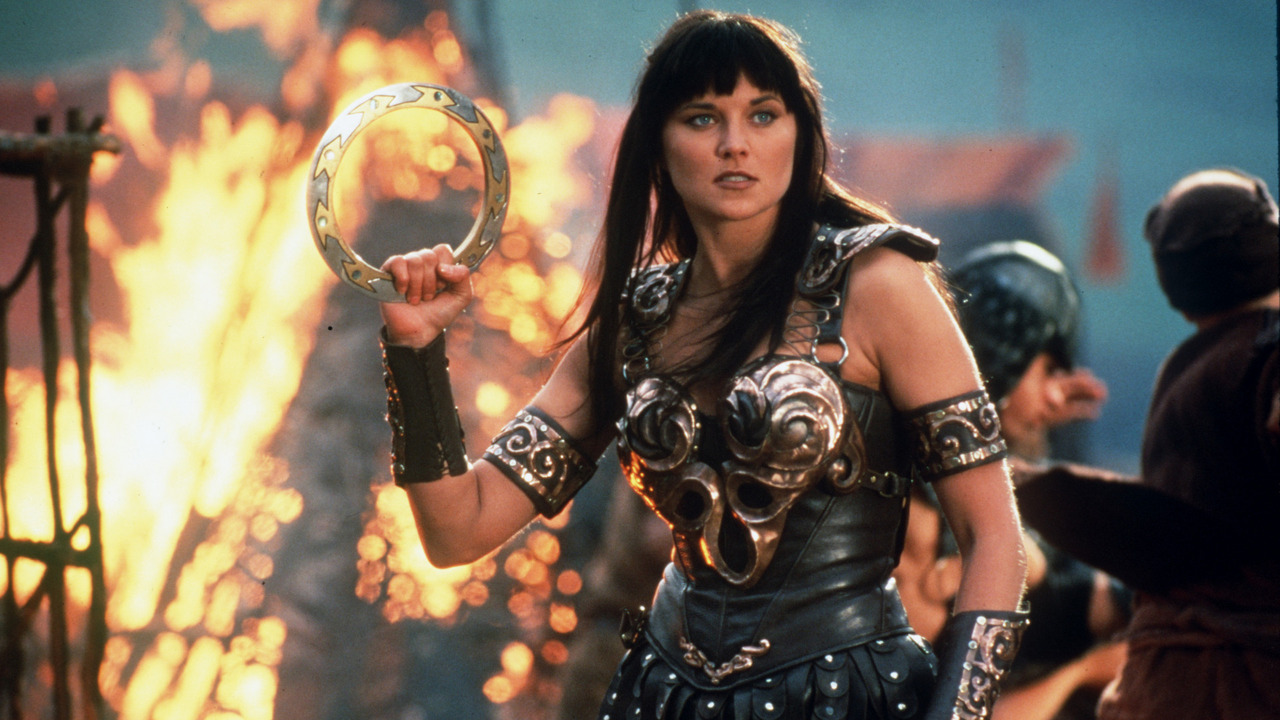
Xena, played by Lucy Lawless
Xena, played by Lucy Lawless. Photo: Screenshot from Season 2, episode “Return of Callisto.” Courtesy: Studios USA Television

Xena the Greek warrior princess, who started as an antagonist of Hercules, captivated audiences around the world more than twenty years ago. One of the joys of looking back at Xena is its playfulness. It features some badass female characters and at times offers a serious message about female solidarity and feminism.

By Amanda Potter

Xena the fictional Warrior Princess, played by Lucy Lawless, captivated audiences around the world for six series with her high kicks, sword skills, and distinctive war cry. The series followed her as she fought her way through armies, monsters, and gods alongside her soul mate and moral compass, Gabrielle (Renee O’Connor).

Xena travelled across space and time, taking us from ancient Greece to Rome, Egypt, Britain, China, India, Scandinavia, and finally to Japan, where it all came to an end twenty years ago on June 18, 2001.

Starting life as an antagonist of Hercules in three episodes of Hercules: The Legendary Journeys, Xena was so popular as a character that she was given her own spin-off series that ran from 1995 to 2001. At the time, Xena: Warrior Princess was considered groundbreaking, as it starred a strong female action heroine and was the only popular adventure, action, science fiction, or fantasy show that featured female leads without male counterparts.

On the twentieth anniversary of the final episode, it is worth revisiting this great show and exploring why it was loved by a broad spectrum of viewers, from young girls drawn in by an active female role model to ancient history buffs, sci-fi fans and the LGBTQ community.

The Fictional Greek Warrior Princess and the Amazons

A reformed warlord from ancient Greece, Xena was not an Amazon but a friend to the tribe of warrior women. To ancient Greek writers, the Amazons were women who fought and behaved like men and were unnatural barbarians. They have since been adopted as positive female role models who break with misogynistic stereotypes of womanhood—they live in a self-sufficient, female-dominated society as warriors and intellectuals. The term “Amazon feminism” is now used to describe a branch of feminism that promotes female physical prowess as a way to achieve gender equality.

Before Xena, the Amazons featured in the 1970s Wonder Woman television series. Not quite the feminist icons we expect today, these women wore pastel-colored negligees as they adopted a peaceful life—without men—on Paradise Island.

In Xena, while the Amazons may also have been attired in revealing costumes made of furs and skins, their separatist society valued martial, as well as academic, skills. An Amazon tells Gabrielle that the Amazon world is based on “truth and an individual woman’s strength.”

The Amazons from Greek mythology lived apart from men at the edge of the known world and fought bravely against male heroes such as Hercules, Theseus, and Achilles. In Xena, the Amazons also lived in a matriarchal society and were skilled fighters who could hold their own against men.

The Amazons in Wonder Woman (2017) can be seen as Xena’s big-screen descendants. The costumes and fighting prowess of Penthesilea (Nina Milner) in the BBC drama Troy: Fall of a City (2018) has tinges of Xena. The leadership ability of the immortal Amazon Andy (Charlize Theron) in the Netflix film The Old Guard can also be seen as inspired by Xena.

But while Troy: Fall of a City and The Old Guard are aimed at older audiences, Xena was popular across all age groups. For instance, episodes of Xena were broadcast in the UK on Channel Five’s Milkshake! Saturday morning slot in the ’90s and early 2000s for young viewers. This led many young girls to adopt Xena as their role model.

The Xena subtext

Xena was also popular with gay and lesbian viewers. In the 1990s, openly gay relationships were mostly missing from popular US television series. However, Xena’s relationship with Gabrielle was interpreted as friends and lovers as much as hero and sidekick. Series producers began to play with this idea, for example, putting Xena and Gabrielle together in a sexy bath in season two fan-favorite episode “A Day in the Life,” so that for many, the subtext became the main text.

Although a lot of fans were dismayed that Xena died in the final episode, they were treated to a long goodbye kiss between Gabrielle and Xena’s ghost. Series producers never openly made Xena and Gabrielle a lesbian couple. But LGBTQ+ fans championed their relationship, which is believed to have paved the way for the openly gay relationships we see in television series today.

One of the joys of looking back at Xena twenty years afterward is its playfulness when compared with dark sci-fi fantasies like Game of Thrones. It features some badass female characters and at times offers a serious message about female solidarity and feminism, but doesn’t take itself too seriously. Some of the special effects may now seem dated, but the storylines still ring true, and the characters of Xena and Gabrielle can continue to be inspirational for a new generation of young female viewers.

Amanda Potter is a Visiting Research Fellow at The Open University. The article was published in The Conversation and is republished here under a Creative Commons License.

  •  

England’s Cerne Abbas Giant Fades Under Changing Weather Conditions

Cerne Abbas giant
Cerne Abbas giant. Credit: richie rocket. CC BY-2.0.

For more than 1,000 years, the Cerne Abbas Giant has stood on a hillside in Dorset, England, surviving wars, epidemics, and centuries of social change. Now, conservationists say increasingly unpredictable weather is threatening the famous chalk figure and forcing an earlier-than-usual restoration effort.

The 55-meter-tall (180-foot) giant, carved into a hillside above the village of Cerne Abbas, is one of Britain’s most recognizable landmarks. The figure depicts a naked man carrying a large club. For generations, residents helped maintain its bright white appearance by filling its outline with fresh chalk.

Today, the site is managed by the National Trust, which has traditionally re-chalked the giant about once every decade. However, conservation teams say changing weather conditions are making that increasingly difficult.

Weather speeds up restoration work

Around 300 staff members and volunteers are taking part in the latest restoration project. The effort involves carrying nearly 17 tons of fresh chalk up the steep hillside and packing it into the giant’s trenches by hand.

Workers first remove old and discolored material before mixing fresh chalk with water to create a paste. The new chalk is then pressed into the outline, helping restore the figure’s distinctive appearance.

The need for faster restoration became clear in 2019 when heavy autumn rainfall washed away much of the newly applied chalk shortly after conservation work had been completed.

England's famous Cerne Abbas Giant has survived for more than 1,000 years. Now, heavier rainfall, algae growth and erosion are forcing conservationists to restore the massive chalk figure earlier than planned. pic.twitter.com/0ShiLZzOYt

— Tom Marvolo Riddle (@tom_riddle2025) June 8, 2026

Conservationists also have concerns about algae growth. Mild, damp winters and warmer summers can create conditions that allow algae to spread across the chalk surface, causing the giant’s bright white outline to appear green and faded.

“In recent years, we’ve noticed algae growth starting to dull the giant’s bright white outline,” National Trust ranger Luke Dawson said.

Dawson cautioned against directly linking the changes to climate trends at a single site. “It’s one of these things we cannot really prove,” he told BBC News. “It is more just observation of what we are seeing up there.”

Researchers continue to debate the Giant’s origins

The Giant’s origins remain one of England’s enduring archaeological mysteries. Over the years, researchers suggested it could represent a prehistoric fertility symbol, the Roman hero Hercules, or even a satirical image of Oliver Cromwell.

Scientific dating has narrowed the timeline considerably. Researchers believe the figure was likely created between 700 and 1100 CE during the late Saxon period.

The Saxon dating has renewed interest in the Hercules theory. In a 2021 study published in the journal Speculum, researchers from the University of Oxford argued that the giant was originally carved as an image of Hercules.

They suggested it may have served as a landmark and gathering point for West Saxon forces during Viking attacks in southern England.

Conservation efforts expand beyond the hillside

The National Trust is also working to protect the landscape surrounding the Giant. A recent fundraising campaign helped secure 130 hectares of nearby grassland containing rare wildlife and important archaeological remains.

“The Giant was never meant to exist in isolation,” National Trust archaeologist Steve Timms said in a press release. He said protecting the surrounding landscape will help researchers better understand how people used and understood the area over thousands of years.

  •  

Tearko: The Ethiopian King of Ancient Egypt Who Conquered Anatolia

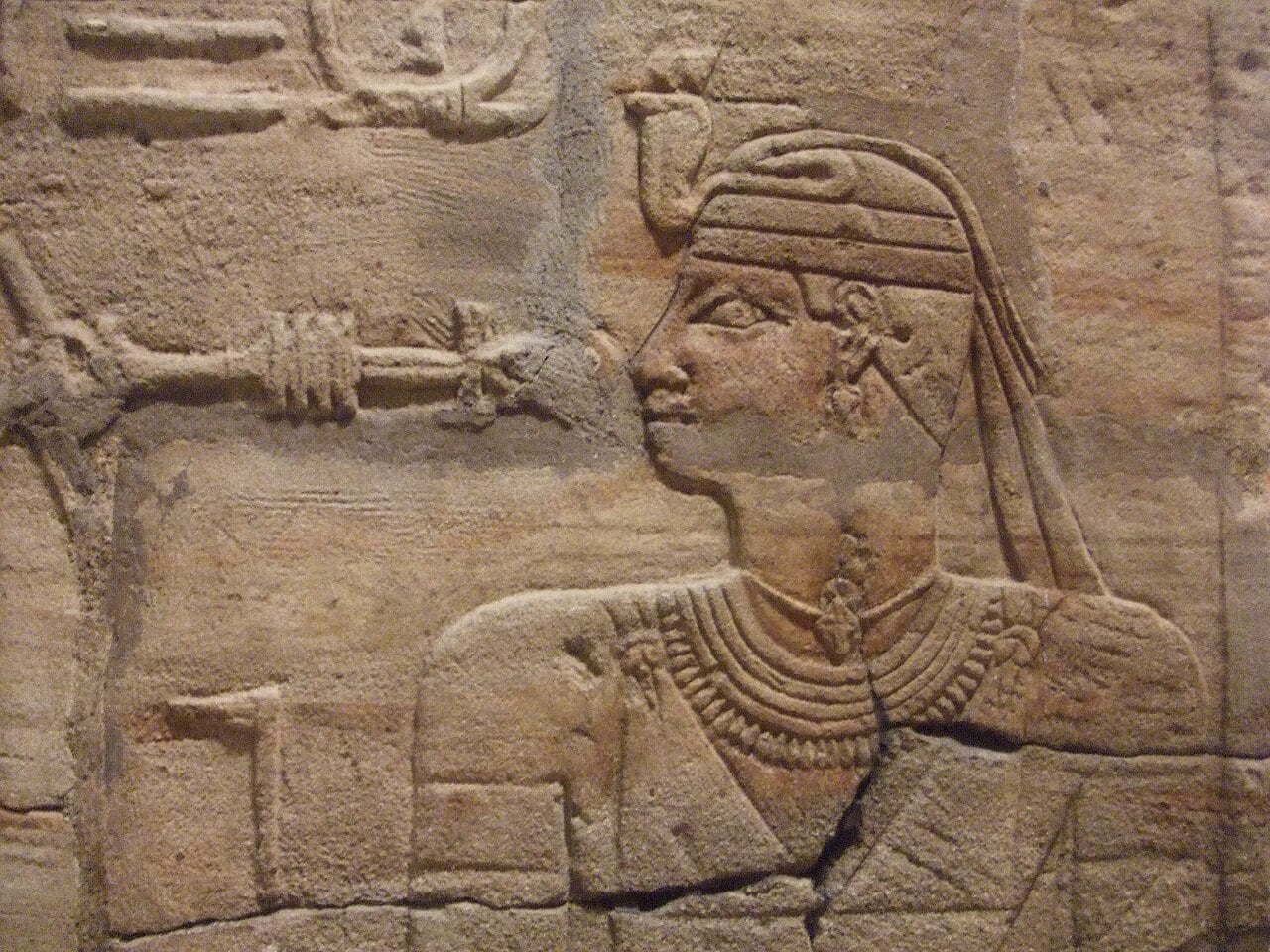
A relief depicting the Ethiopian king of Egypt Taharqa from Kawa, Nubia
A relief depicting the Ethiopian king of Egypt Taharqa from Kawa, Nubia. Credit: Wikimedia Commons, CC-BY-2.0, Aidan McRae Thomson

For some time, Ancient Egypt was ruled by a dynasty of Ethiopian kings. According to legend, one of them was so powerful that he conquered Anatolia, across the Mediterranean from Egypt. Could such a conquest have really occurred, and if not, then what led to this legend of an Ethiopian king of Egypt who was said to have conquered Anatolia?

Strabo’s legend of the Ethiopian king of Egypt who conquered Anatolia

The source for this legend comes from one particular document. This is Strabo’s Geography, written in the first century BC. Strabo mentions a particularly notable Ethiopian king twice. In the first instance, he mentions him alongside other notable conquerors of the ancient world, writing:

“Nor yet for the most part are the expeditions of their chiefs, for instance, Madys the Scythian, Tearko the Ethiopian, Cobus of Trerus, Sesostris and Psammeticus the Egyptians.”

Without going into details, the context of this reference makes it clear that Tearko the Ethiopian was supposed to have set out on a major expedition or conquest. He is grouped together with other famous conquerors of antiquity, such as Sesostris.

The next mention of Tearko provides additional information. Here, Strabo calls him “Tearco.” Referring to the claims of an earlier historian called Megasthenes, he wrote:

“Sesostris, the Aegyptian, he adds, and Tearco the Aethiopian advanced as far as Europe; and Nabocodrosor, who enjoyed greater repute among the Chaldaeans than Heracles, led an army even as far as the Pillars. Thus far, he says, also Tearco went; and Sesostris also led his army from Iberia to Thrace and the Pontus.”

According to this legend, Tearco the Ethiopian conquered as far as the Pillars, meaning the Pillars of Hercules. However, how is this associated with Anatolia, and why have we called this Ethiopian ruler a king of Egypt?

Who was Tearco the Ethiopian?

To understand the answer to these questions, we first need to understand who Tearco actually was. It is necessary to take a look at the context in which Strabo places him. In the first reference to him, Strabo grouped him together with figures such as Madys the Scythian, known to modern historians as Madyes, his contemporary king Cobus, and Psammeticus of Egypt. These were figures of the seventh century BC.

In the second reference to Tearco, Strabo groups him together with Nabocodrosor of the Chaldaeans, known to historians as Nebuchadnezzar of Babylon, and Sesostris of Egypt, probably the historical Shebitku. These were also figures of that same era. Furthermore, immediately after the quoted passage, Strabo mentions Idanthyrsus, a Scythian king of the sixth century BC.

Therefore, based on the context in which Tearco is mentioned, it is obvious that we should be looking for an Ethiopian king who ruled at some point within that same era. For this reason, the mainstream conclusion among scholars is that Strabo’s Tearco is the historical Taharqa.

Taharqa was a member of the Ethiopian dynasty that ruled Egypt for much of the eighth and seventh centuries BC. Chronologically, he fits in perfectly with the other figures mentioned by Strabo, and his name is a linguistic match as well. We know, historically, that Taharqa became the ruler of Egypt, despite Strabo making no mention of this fact.

A bust of Taharqa from the Nubian Museum, Aswan
A bust of Taharqa from the Nubian Museum, Aswan. Credit: Wikimedia Commons, CC-BY-2.0, Bruce Allardice

Understanding the legend

Now that it’s clear who Strabo was referencing, let us see if we can actually understand Strabo’s claim. It is easy to be confused by the reference to Tearco conquering as far as the Pillars. It might seem like Tearco was said to have conquered as far as Spain. After all, the Strait of Gibraltar is the standard location of the Pillars of Hercules.

For a king of Egypt, this might appear to make sense in the context of an exaggerated tale. It would mean that Tearco warred across the coast of North Africa until finally reaching the Strait of Gibraltar. However, this is illogical in the context of Strabo’s passage. As the quoted passage shows, Strabo states that both Nebuchadnezzar and Tearco reached the Pillars.

Given the reference to Nebuchadnezzar, Strabo may be referring to pillars that, according to Isocrates, were situated near the entrance of the Black Sea, at Troy, rather than the actual Pillars of Hercules at Gibraltar. While Nebuchadnezzar never historically got as far as Troy, he did conquer parts of Anatolia.

Furthermore, Strabo associates the event with Sesostris’ campaigns as far as Thrace and the Pontus (the Black Sea). This reinforces the point that Strabo was referring to pillars by the entrance to the Black Sea rather than the Pillars at the Strait of Gibraltar. Incidentally, the reference to Iberia in association with Sesostris must point to the Caucasian Iberia, as it is often called by modern historians, on the eastern end of the Black Sea region.

Conclusively, Tearco the Ethiopian, the historical Taharqa king of Egypt, was said to have conquered all across the Levant and right through Anatolia.

Is the legend of the Ethiopian king who conquered Anatolia actually true?

If an Ethiopian king of Egypt really did conquer Anatolia, we would definitely know about it. There would have been clear references to such an event in archaeological records. Nevertheless, that does not mean that this legend has no identifiable historical basis.

It is clear that the legend is not simply based on exaggerated accounts of Taharqa’s historical conquests. The reason is that Taharqa was, in reality, not a notable conqueror. Plenty of kings of Egypt engaged in far more impressive conquests than he ever did, yet no legends ever centered around them. Therefore, the true explanation must be something unique in his case.

The Bible provides the answer. In its account of Sennacherib of Assyria waging war against Jerusalem, the Bible mentions Taharqa. Using the spelling “Tirhakah,” it describes how this Ethiopian king went out to fight against Sennacherib. Historically, Taharqa was unable to secure a victory.

Nevertheless, we know that the Egyptians remembered it as a victory. Herodotus, in the fifth century BC, recorded an Egyptian legend about a king of Egypt named Sethos who successfully defeated the Assyrians. Scholars generally understand Sethos to be Shebitku. It appears that Shebitku was the senior king at the time of Sennacherib’s attack, with Taharqa as the junior king. Shebitku was the king of Egypt, while his relative Taharqa was the king of Ethiopia and the one who actually led the army against the Assyrians.

Hence, what appears to have occurred is that the Egyptians remembered the attack as a victory, regardless of the historical outcome. It was then exaggerated into tales of Tearco actually conquering the Assyrians. Since their territory extended far into Anatolia, this naturally led to the legend of Tearco, an Ethiopian king of Egypt, conquering as far away as Anatolia.

  •  
❌