At a time when climate politics in the United States and globally remain deeply polarized, Will Hackman, a climate advocate and political operative, argues that the climate movement needs a new language — one rooted less in doom, guilt and abstract planetary crisis, and more in people’s everyday lives, health, safety, costs and communities. In his new book, Radically Reframing Climate Change: A Guide to Saving Ourselves, he makes the case that climate advocates have too often spoken to those who already agree with them, while failing to reach people who may be cautious, doubtful or simply disconnected from the issue. The challenge, he says, is not only scientific or technological. It is political, cultural and communicative. In the United States, climate change remains politically polarized, with surveys showing that Republicans are less likely than Democrats to view it as an urgent threat, making climate messaging particularly challenging across ideological divides. Mongabay spoke with Hackman over video call about climate messaging, grassroots activism, fossil fuels, political polarization, and why he believes the climate movement must rebuild, creating a broader and more hopeful constituency. Mongabay: You write in your book that much of climate messaging has been framed around fear, guilt and apocalypse. Is that still the right way to talk about climate change? Will Hackman: I think the nature-based messages — polar bears, melting glaciers, “there is no planet B,” “save the planet,” “world on fire” — work for people who already care about climate change. But they do not…This article was originally published on Mongabay
A newly released book documenting urban forestry efforts across Africa argues that trees and green spaces are no longer a luxury for African cities, but a critical response to climate change, biodiversity loss, and urban inequality. Published by Johannesburg City Parks and Zoo (JCPZ), Urban Forests and Green Spaces in Africa: Case Studies and Lessons from Across the Continent brings together 34 case studies from 14 African countries, covering everything from restoring biodiversity around wetlands in Rwanda’s capital Kigali, creating Miyawaki forests (forests with native trees planted closely together) in Kenya’s capital Nairobi, greening heat-stressed neighborhoods in Zimbabwe’s capital Harare, transplanting baobabs in Senegal to rehabilitating degraded urban land in South Africa. Hot days, hot nights, and heatwaves have become more frequent across Africa, concludes the Sixth Assessment Report of the Intergovernmental Panel on Climate Change, the world’s most authoritative scientific assessment on climate change. The report also finds that coastal cities are vulnerable to floods related to rainfall events and sea level rise. Palm-lined trees provide near-continuous canopy cover along a boulevard in Bahir Dar, the capital of Ethiopia’s Amhara region. The book notes that canopy closure along some of the city’s main streets approaches 100%, making Bahir Dar one of the most heavily treed urban centers in Africa. Image courtesy of Cathy Watson/CIFOR-ICRAF. As African cities experience rising temperatures, worsening floods, biodiversity loss, and rapid urbanization, the book argues that urban forests and green infrastructure are essential tools for climate resilience. Beyond storing carbon, trees and green spaces…This article was originally published on Mongabay
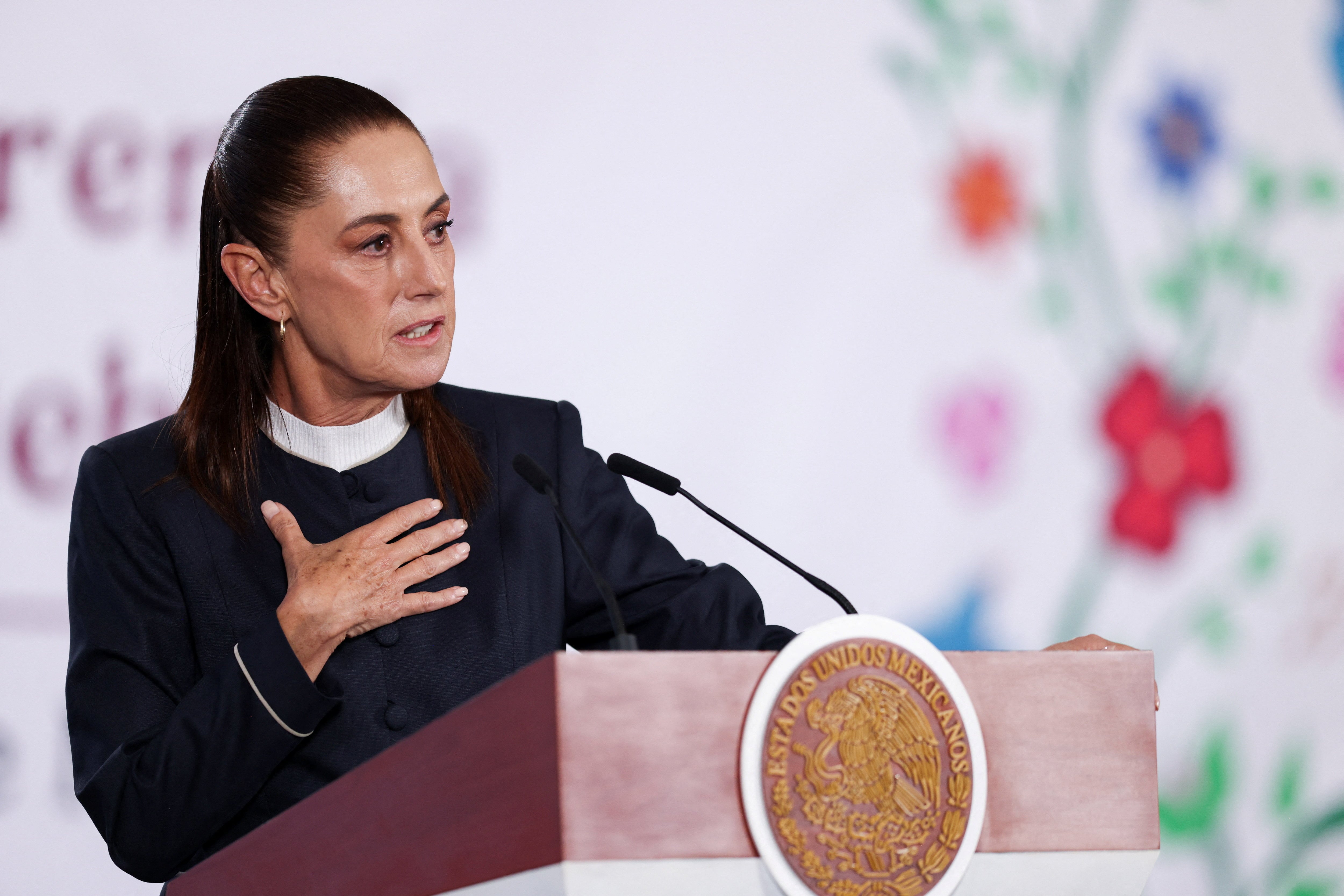
Mexico’s president, Claudia Sheinbaum, is going through her most delicate moment just as she reaches a year and a half in office. Faced with multiple open fronts, the president is showing signs of wear, with a seven-point drop in approval since last March. It is the steepest fall so far in her term, although approval ratings remain high at 68%, according to an Enkoll poll conducted for EL PAÍS and W Radio. To the crisis triggered by the indictment of the governor of Sinaloa, along with nine other senior officials accused by a New York prosecutor of collaborating with drug traffickers, is added a worrying economic weakness that threatens the viability of social policies—a flagship of the leftist Morena government. Insecurity, corruption and the economy are the president’s main shortcomings and the principal concern of Mexicans, with rates slightly up since the last poll in early March.

 Login
Login