Reading view

SBU names 10 Russians tied to “human safari” drone hunt on civilians in Kherson
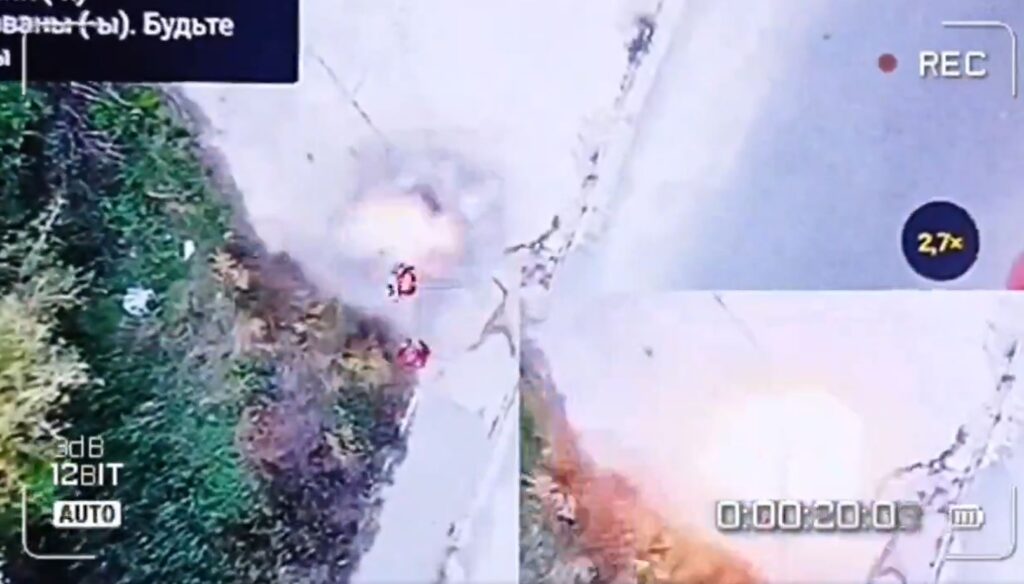
sbu names 10 russians tied human safari drone hunt civilians kherson · post munition dropped russian explodes near two 2024 explosion civilian khersoners telegram channels ten soldiers single regiment accused

Ten Russian soldiers from a single regiment are accused of hunting civilians in Kherson with attack drones, and now face war-crimes charges filed in absentia, the Security Service of Ukraine (SBU) reported. Investigators say the operators tracked people through the streets and struck ambulances and rescue crews. The 10 are among those participating in a Russian long-lasting terror campaign against Khersoners known as a "human safari." 

Kherson lies on the Dnipro River's west bank, with Russian-occupied land directly opposite, and the invading force has made it among the deadliest places to live in Ukraine by deliberately hunting civilians across the city for years.

The drone hunters of one regiment

Counterintelligence officers built a case against 10 drone operators from the 404th Motorized Rifle Regiment, a territorial-defense unit in Russia's "Dnepr" Group of Forces, the SBU reported. The investigation found that the men tracked residents as they moved along Kherson's streets and launched drones at them. The drones carried shaped-charge and high-explosive fragmentation munitions.
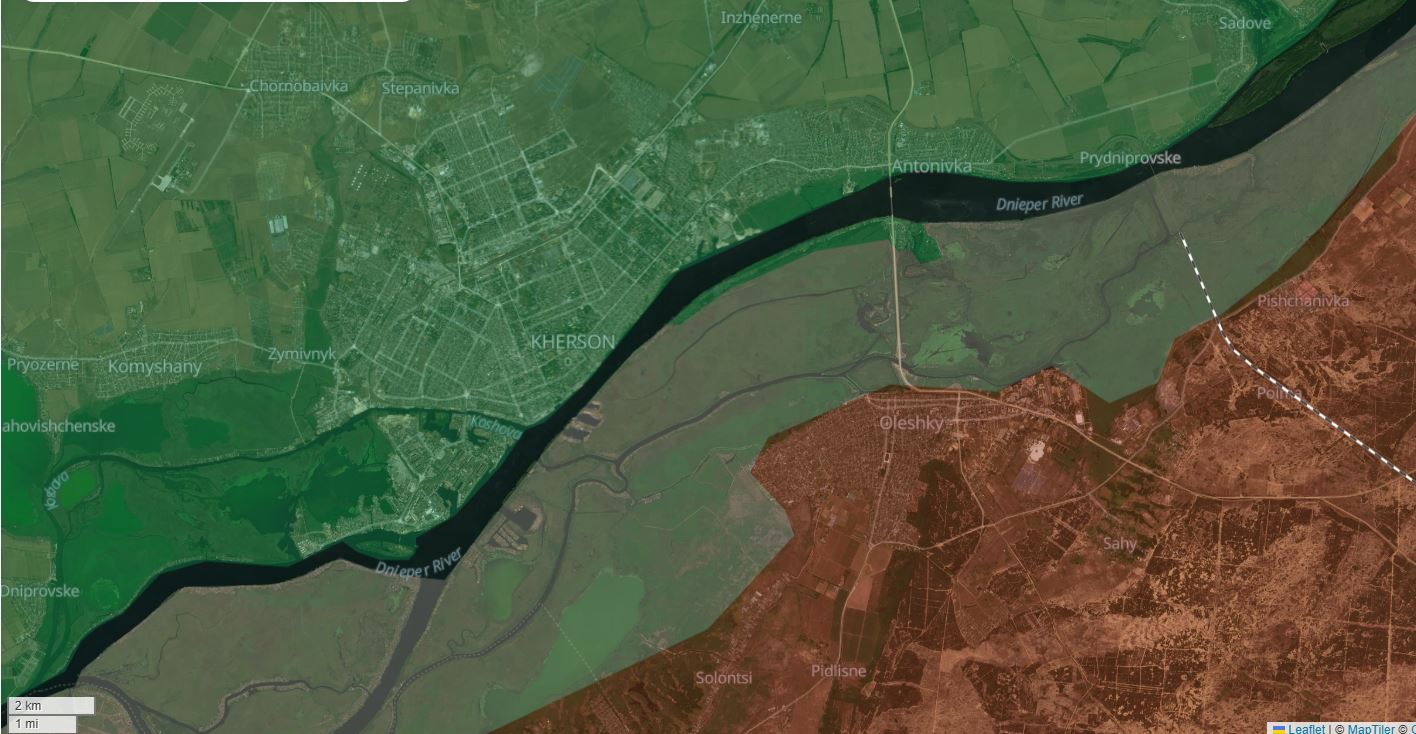
Kherson city (Russian-occupied area in red). Map: Deep State

Residents and rights monitors call this campaign a "human safari," the hunting of people going about their ordinary days.

Kherson: human safari rages.

A Russian fiber optic FPV drone chases a car in a residential area; after civilians cut the cable, the drone falls, catches fire.

More drones hit cars.

10 injured as a drone attacks a bus.

Drones attack high rises, flying inside the windows. pic.twitter.com/eeaeyyJdz5

— Zarina Zabrisky 🇺🇸🇺🇦 (@ZarinaZabrisky) May 13, 2026

The 10 named operators

The SBU published each suspect's name and military call sign:

  • Tsolak Grigoryan, call sign "Boroda"
  • Nikita Gubar, "Drovosek"
  • Nikolai Denisenko, "Gami"
  • Vladimir Klimov, "Klim"
  • Vyacheslav Kornenkov, "Skif"
  • Viktor Nizhnikov, "Flyaga"
  • Ruslan Nugaev, "Dok"
  • Vladimir Orlov, "Yakut"
  • Ivan Prusachenko, "Prus"
  • Oleg Pukhlyakov, "Pulya"

russians continue their human safari in Ukraine.

They’re not just killing.

They’re hunting unarmed people like animals — from drones, to cheerful music.

This is not war. This is pure evil.

Anyone still justifying russia is standing on their side.

We will never forget. pic.twitter.com/GtrjNfaU0w

— UAVoyager🇺🇦 (@NAFOvoyager) June 8, 2026

Ambulances and a double strike on rescuers

The documented episodes include attacks on civilian cars and residential blocks, the SBU said. Operators dropped explosives on ambulances at a city hospital. They also carried out a "double" strike on State Emergency Service (DSNS) rescuers who were clearing the aftermath of an earlier Russian shelling. 

UN investigators have described this Russian method in Kherson: a first strike, then a second aimed at the people who come to help. Victims suffered shrapnel wounds, burns, and concussions, and civilian infrastructure took significant damage.

Russian soldiers attacked an ambulance in Kherson with a drone.

Three medics were injured.

Another deliberate war crime. pic.twitter.com/xu3WFUQ2H0

— Денис Казанський (@den_kazansky) June 4, 2026

Charged in absentia

Based on the evidence, SBU investigators notified all 10 of suspicion under Article 438 of Ukraine's criminal code, which covers war crimes. The notices were issued in absentia. SBU officers in Kherson Oblast led the investigation with the 79th Border Detachment of the State Border Guard Service (DPSU), under the oblast prosecutor's guidance. The agency said efforts to hold the operators accountable continue.

The case fits a wider pattern Ukrainian prosecutors have documented across the oblast in thousands of proceedings. 

  •  

Ukraine honors Euromaidan Press war correspondent Zarina Zabrisky with the Order of Merit

Zarina Zabrisky

American war correspondent Zarina Zabrisky received Ukraine's Order of Merit, 3rd Class, by decree signed by President Volodymyr Zelenskyy on 5 June 2026. The award was issued on the occasion of Ukrainian Journalist Day.

Zabrisky, who reports for Euromaidan Press and Byline Times, was cited for "high professional skill and dedication" covering Russia's full-scale invasion. She was the first journalist to bring Russia's "human safari" — drone attacks on civilians in Kherson — to international attention, in a July 2024 dispatch for Byline Times.

Years on the ground in Kherson

Zabrisky arrived in Kherson with other war correspondents on the third day after the city's liberation in November 2022. She has filed from the Kherson region almost continuously since. Her work for Euromaidan Press has documented Russia's systematic drone attacks on civilians, the aftermath of the Kakhovka dam destruction, and the daily life of a city whose residents named what was happening to them.

Her July 2024 first dispatch on the human safari was followed by continued EP coverage through 2024 and 2025. By May 2025, she could write: "The UN confirmed what I saw in Kherson: Russia is hunting civilians for sport."

The Russian Foreign Ministry added Zabrisky to its sanctions "stop list" in August 2025, banning her from ever entering Russia.

The documentary

Between September 2023 and June 2025, Zabrisky directed and produced Kherson: Human Safari, a 72-minute documentary built entirely from original footage and interviews with Kherson residents. The composer who wrote the score had been a partisan during the Russian occupation. The director of photography is a native of Kherson.

The film is structured around seven chapters: invasion, occupation, protests, liberation, shelling, flood, and human safari. It is available to watch free at khersonhumansafari.com.

Euromaidan Press reviewed the film in August 2025. Reviewer Kostiantyn Doroshenko called it "a fantastic horror movie… our reality."

Human safari drone attacks Kherson civilians
Explore further

Inside Human Safari: the film that captures Russia’s drones hunting Ukrainians like prey

On Journalist Day

Zabrisky was among 37 Ukrainian and foreign journalists named in Presidential Decree №482/2026, issued on 5 June 2026 for Ukrainian Journalist Day. The decree honored correspondents from Bloomberg News, CNN International, Liberation, Welt, Radio France Internationale, and Ukrainian outlets including 1+1, LB.ua, Babel, and the National Union of Journalists of Ukraine.

The citation read: "significant personal contribution to the development of national journalism and the information sphere, high professional skill and dedication shown during the coverage of events of the Russian Federation's full-scale invasion of the territory of Ukraine."

Zarina Zabrisky — The Kherson Dispatches
Euromaidan Press · Reporting Dossier

The Kherson dispatches of Zarina Zabrisky

An American war correspondent reporting for Euromaidan Press from Kherson. On 6 June 2026, Ukraine awarded her the Order of Merit; Russia had already placed her on an entry-ban list for the same work. Her feature documentary, Kherson: Human Safari, grows out of the reporting gathered here.

The "human safari" — seven dispatches From the front — seven more

The "human safari"

2024 – 2026

One reporter following a single atrocity over two years—from the dispatch that named it, to the UN inquiry tracing it to the Kremlin. Read top to bottom, it is a timeline.

From the front

2024 – 2025

Her wider reporting from Kherson and the southern front—mines, demining, improvised artillery, and the engineers rewriting drone warfare.

The film

Kherson: Human Safari

Zabrisky's 2025 feature documentary follows the city through occupation, liberation, ecocide, and the drone war on its residents—the story she has been filing from the ground for two years.

Zarina Zabrisky — The Kherson Dispatches
Euromaidan Press · Reporting Dossier

The Kherson dispatches of Zarina Zabrisky

An American war correspondent reporting for Euromaidan Press from Kherson. On 6 June 2026, Ukraine awarded her the Order of Merit; Russia had already placed her on an entry-ban list for the same work. Her feature documentary, Kherson: Human Safari, grows out of the reporting gathered here.

The "human safari" — seven dispatches From the front — seven more

The "human safari"

2024 – 2026

One reporter following a single atrocity over two years—from the dispatch that named it, to the UN inquiry tracing it to the Kremlin. Read top to bottom, it is a timeline.

From the front

2024 – 2025

Her wider reporting from Kherson and the southern front—mines, demining, improvised artillery, and the engineers rewriting drone warfare.

The film

Kherson: Human Safari

Zabrisky's 2025 feature documentary follows the city through occupation, liberation, ecocide, and the drone war on its residents—the story she has been filing from the ground for two years.

  •  

Russian pilot saw man in Ukraine’s Kramatorsk and chose to kill him. FPV drones are operated in real time

Russian FPV drone operator.

A Russian FPV drone strike near a residential building in Kramatorsk on the morning of 6 June killed a man born in 1976, the Kramatorsk City Council reports. These types of drones are operated in real time, so the Russian pilot saw the target before launching the weapon at the person. 

The strike fits a documented pattern of Russian FPV-drone targeting of Ukrainian civilians in frontline cities that the UN Independent International Commission of Inquiry on Ukraine formally classified as crimes against humanity in May 2025 in its findings on Kherson Oblast, and that Ukrainian authorities continue to document across other frontline regions, including Donetsk Oblast.

Ukraine has documented more than 11,000 Russian FPV attacks on civilians, including "double-tap" strikes that hit the same site after medics and firefighters arrive at an initial attack. 

Terrorism: no justification

"Each such crime will be documented, and the guilty parties will sooner or later answer for what they have done. No justification can explain the murder of civilians. This is not how military forces act — this is how terrorists act, for whom human life has no value," the Ukrainian authorities said.

UN findings: from Kherson to three-oblast pattern

In May 2025, the OHCHR-supported UN Commission of Inquiry on Ukraine concluded that Russian drone attacks against civilians in Kherson Oblast were "widespread, systematic, and conducted as part of a coordinated state policy" and constitute crimes against humanity of murder, as well as war crimes.

The Commission documented Russian targeting across more than 100 kilometers of the right bank of the Dnipro River, basing its findings on more than 300 videos, 600 Telegram posts, and 91 interviews with victims, witnesses, and local officials.

In its October 2025 follow-up report to the UN General Assembly, the Commission found that the same pattern had expanded across more than 300 kilometers covering Dnipropetrovsk, Kherson, and Mykolaiv Oblasts. Russian FPV operators have systematically pursued specific civilians along defined routes, including at bus stops, supermarket entrances, pension queues, and residential courtyards. 

The Kramatorsk frontline context

Kramatorsk has been a focus of Russian targeting throughout the war, with repeated strikes including double-tap drone attacks on civilian infrastructure and first responders. The city's location near the contact line in Donetsk Oblast places it within FPV drone range. 

  •  
❌