Reading view

Poland reverses 17-month bus halt at Shehyni-Medyka after Ukrainian ministerial push

Polish demonstrators under a black canopy with red-and-white Polish flags lining a roadside fence at the Medyka border crossing, with a cyclist passing on the bicycle lane.

Poland will keep processing buses leaving Ukraine through the Shehyni-Medyka checkpoint this summer despite a planned 17-month closure for repairs. Vice Prime Minister Oleksiy Kuleba announced the reversal on Telegram on 11 June.

Lviv Customs had said the day before that traffic from Ukraine to Poland through the crossing would be suspended from 15 June until November 2027. Shehyni-Medyka is the busiest road link between the two countries.

The about-face followed urgent talks between Ukraine's Ministry for Development of Communities and Territories and the Polish Ministry of the Interior and Administration. Warsaw's Polish Embassy in Kyiv has not issued a public comment.

"Bus traffic through the 'Shehyni–Medyka' checkpoint will not be halted during the summer season, even while the repair work is being carried out." — Oleksiy Kuleba, Vice Prime Minister of Ukraine, 11 June 2026

A border managed under cooling political weather

The bus reversal was, narrowly, a technical fix. However, it landed in a year when Polish-Ukrainian relations had visibly cooled.

President Karol Nawrocki, elected in June 2025 on a "Poland First" platform, vetoed extensions of Ukrainian refugee benefits in August. He signed legislation in February ending the special-status regime that had governed Ukrainian residency since 2022.

Most recently, Nawrocki called for Volodymyr Zelenskyy to be stripped of Poland's Order of the White Eagle. The trigger was a Ukrainian Special Operations unit named for the Ukrainian Insurgent Army.

Public sentiment has shifted alongside Nawrocki. Just 48 percent of Poles still back accepting Ukrainian refugees, against 46 percent opposed, according to a January 2026 CBOS survey. That is the lowest figure recorded since Russia's full-scale invasion.

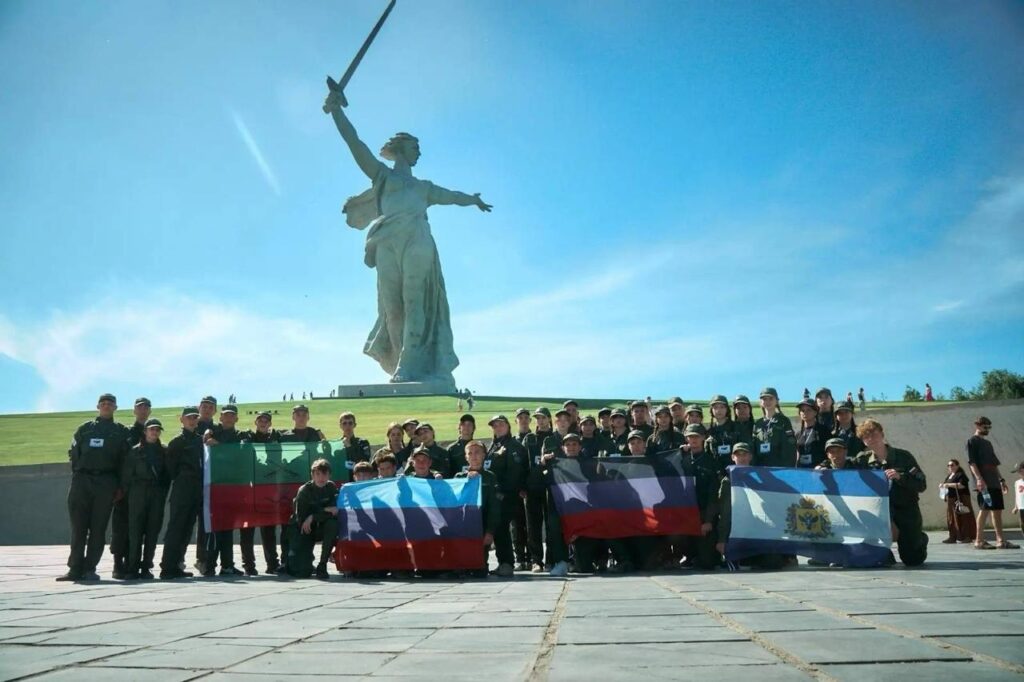
Furthermore, hate crimes against Ukrainians in Poland rose 49 percent between 2023 and 2025, The New Republic reported in April. Critically, Russia's Avanhard military camp near Volgograd remains active. More than 900 Ukrainian children passed through there for two-week shifts in 2026 alone.

Bus diplomacy meets bus politics

Polish haulers and farmers blockaded crossings repeatedly from late 2023 through 2024. They cited competition from Ukrainian carriers and grain imports. Two Ukrainian drivers died waiting in queues during the November 2023 blockade. In July 2025, Kyiv tightened Shehyni-Medyka registrations to scheduled bus routes only, citing summer overload.

A parallel dispute shows how bus traffic itself can become politicized. Earlier this week, Polish sister city Kielce refused to transfer 20-year-old municipal buses to Vinnytsia. Kielce cited a Vinnytsia street named after Stepan Bandera. Vinnytsia faces regular Russian strikes.

By contrast, the Shehyni-Medyka rollback suggests institutional cooperation can still hold even when sentiment frays. Polish construction firm Unibep signed a turnkey contract in October 2025 to modernize the same crossing. EU Entry/Exit System–compatible gates and 40 percent higher passenger throughput are targeted by Q2 2027.

For now, summer passenger traffic continues. Whether the Shehyni-Medyka corridor stays open through the autumn repair phase remains the next test of bilateral patience.

  •  

Russia trained 900 more Ukrainian children at Volgograd — a camp Britain already sanctioned in 2024

Ukrainian teenagers in Avangard camp uniforms pose with flags of four Russian-occupied Ukrainian regions in front of the Motherland Calls statue at Mamayev Kurgan in Volgograd

More than 900 Ukrainian children completed military training at a Volgograd camp, the resistance movement Yellow Ribbon reported on 11 June. The two-week shift drew teenagers from occupied Donetsk, Luhansk, Zaporizhzhia, and Kherson oblasts.

The session, Yellow Ribbon argued, is evidence of "systemic policy" rather than isolated cases. The documentary record supports that framing. Russia's Warrior Center is a creation of Vladimir Putin's 2022 decree. It ran 1,290 Ukrainian children through the same Avangard base in 2024 alone, a Kyiv Independent investigation found. Yale's Humanitarian Research Lab has separately mapped 210 facilities across Russia and occupied Ukraine that hold or militarize children.

Two weeks of drills, drones, and indoctrination

The "Time of Young Heroes" session at the Avangard defense base ran for two weeks. Teenagers aged 14 to 17 trained in basic military preparation, drone operations, tactical medicine, and physical drills. The program also featured meetings with Russian war veterans and events built around loyalty to the Russian army, Yellow Ribbon said.

"The scale of such programs is striking. We are no longer talking about isolated cases, but about systemic policy." — Yellow Ribbon resistance movement, 11 June 2026

Avangard operates as a network of military-patriotic centers under Russia's Defense Ministry. The United Kingdom sanctioned the camp in November 2024 for deporting and indoctrinating Ukrainian children. At the same site, Ukrainian teenagers practice trench-digging, mine clearance, and weapons handling. The Kyiv Independent first documented that training pipeline in October. Ukrinform also reported the Yellow Ribbon findings the same day.

From occupied schools to the Volgograd pipeline

The 900 teenagers arrived at Volgograd from a re-education infrastructure built across the occupied territories. Schools in the occupied Donbas have made military training a mandatory subject from fifth grade onward. Occupation authorities enroll children as young as six in the Yunarmiya youth army for drills and pro-Kremlin lessons.

More than 19,000 Ukrainian children have been deported to Russia since 24 February 2022, Yale researchers estimate. Up to 1.6 million more remain under Russian occupation. Ukraine has returned just over 2,000 through its Bring Kids Back UA initiative.

In March 2026, Yale's lab tied Russian energy giants Gazprom and Rosneft to the camps. The two firms helped transfer at least 2,158 Ukrainian children across Russia, the report found.

Three months earlier, a Ukrainian rights lawyer told the US Senate of further escalation. Russia had sent teenagers to North Korea's Songdowon International Children's Camp9,000 kilometers from home.

In March 2023, the International Criminal Court issued arrest warrants for Putin and Russian Children's Rights Commissioner Maria Lvova-Belova. Both face charges for the unlawful deportation of Ukrainian children. The court classified the practice as a war crime.

  •  

Ukraine’s drone commander says his branch killed or wounded 102,000 Russians in 12 months. It started with a grenade taped to drone that filmed weddings

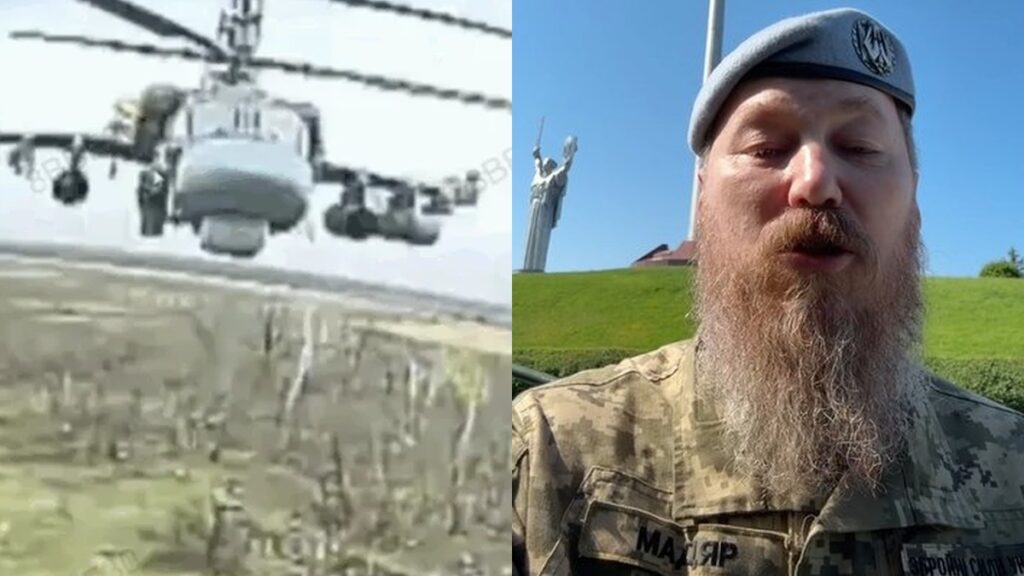
Collage. Left: Russian Ka-52 helicopter at low altitude seen through a Ukrainian FPV drone camera. Right: Major Robert "Magyar" Brovdi in fatigues and beret, speaking to camera with the Motherland Monument in Kyiv visible behind him.

Major Robert "Madiar" Brovdi marked Ukraine's first official Day of Unmanned Systems Forces on 11 June 2026 with a single number. His drone branch claims 102,000 Russian soldiers killed or wounded over twelve months, alongside 360,000 enemy targets hit and 1.7 million combat sorties flown, the commander said in a Telegram address.

The number translates four years of homemade weaponry into industrial output. By Brovdi's own reckoning, drones from his Unmanned Systems Forces (SBS) now account for one in every three Russian soldiers falling on the battlefield, and at a unit cost he prices in hundreds of dollars apiece.

"We exchange the plastic and metal of a drone worth a few hundred dollars for the carcass of an occupier. And that is the best exchange rate in the world," Brovdi said. 

"Birds changed both plan and course"

Brovdi narrated the four-year arc of Ukrainian drone warfare in a single Telegram thread. In 2022, he said, the starting slogan was "artillery, shovel, drone" to locate, correct, hide. Then, in spring 2022, he taped a grenade to a commercial quadcopter and pushed video of the drop to social media.

"No weapon in human history has evolved so quickly. A wedding drone, no joke, performed well at the front, fundamentally and forever changing world doctrine," he revealed. 

The unit he founded that month — Madiar's Birds — has since grown from platoon to brigade to a separate branch of the armed forces. The 414th brigade tripled in size in late 2024. On 3 June 2025, President Volodymyr Zelenskyy made Brovdi commander of the entire SBS, replacing Colonel Vadym Sukharevskyi.

Four targets, 2,000 kilometers deep

Madiar listed four target priorities for the year ahead: enemy manpower, sources of war financing, weapons production, and Russian air defense. The branch's reach now extends from frontline FPV strikes to deep-strike platforms confirmed beyond 1,700 kilometers inside Russia.

"The birds changed both the plan and the course," Madiar said. 

Art-collecting commander

Russian state TV calls him a "terrorist." A Russian court sentenced him in absentia to life in prison in March 2026 on charges of organizing a terrorist attack. Russian prosecutors have filed 46 counts against him in total.

The Center for European Policy Analysis calls him "a bearded talisman of Ukraine's defense" — a "swashbuckling, plain-spoken" commander whose journey ran from "besuited grain trader" to the top of the world's first dedicated drone branch.

Madiar's biography reads like Carpathian Tony Stark's: an ethnic Hungarian from Uzhhorod who ran one of Ukraine's largest grain traders, served on the Zakarpattia Regional Council from 2010 to 2015, and funded contemporary Ukrainian art through his BrovdiArt Foundation before walking into a recruitment office at the start of the full-scale war.

He closed his anniversary speech in his usual register: "And now to work, ladies and gentlemen, at all available depths, across all the hated enemy. The way we know how, with what we have, where we are."

  •  

Germany was late to grasp Russian hybrid attacks, Bundeswehr colonel tells defence forum

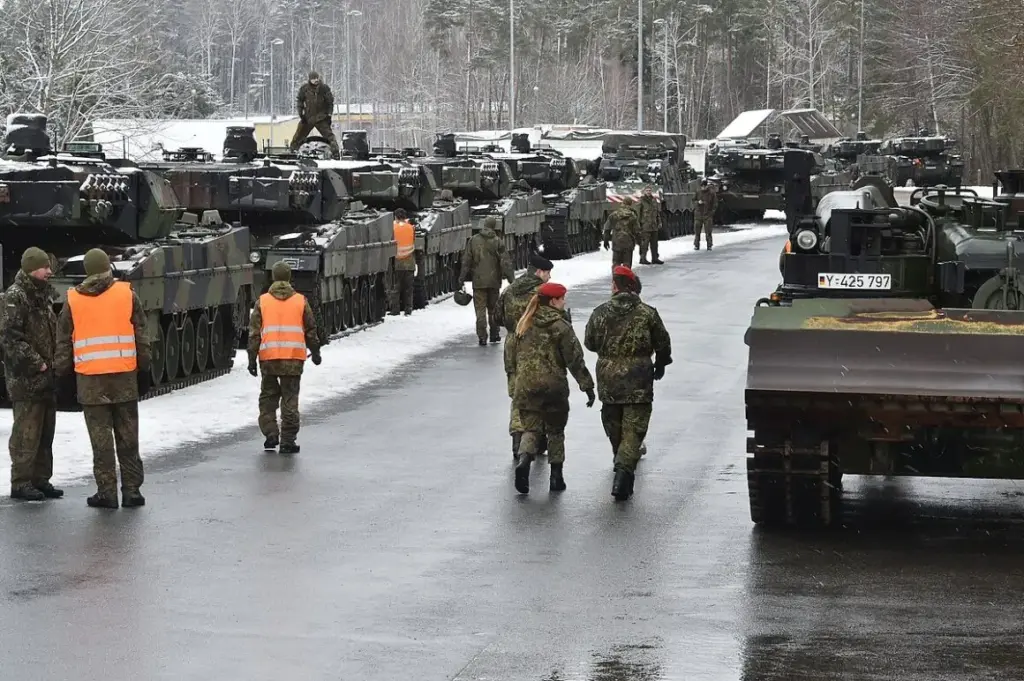
Bundeswehr troops and armored vehicles support NATO's eFP Battlegroup in Lithuania, part of Germany's posture against Russian hybrid attacks.

Hybrid threats span both hardware and politics, said Colonel Sönke Marahrens. The list of methods includes overflights, the cutting of undersea cables, and a concerted disinformation campaign. It also reaches into political and judicial systems, including what he called the "disposable agent" model —civilians recruited online for one-off sabotage or surveillance. As a model for how the state should respond, Colonel Marahrens pointed to Finland. Authorities there detained a suspected sabotage vessel within an hour of Baltic Sea cable damage.

Russian hybrid attacks: a political shift acknowledged late

Recognition had arrived slowly, Marahrens told the New Age Defence forum in Berlin on 8 June, Ukrinform reported. "Germany recognized rather late that we are being attacked by such hybrid methods," the colonel said. "But I would say that in the last year and a half to two years, we see a shift at the political level as well."

The colonel heads a department at the Bundeswehr's Center for Digitalization and Capability Development. The center reports to the Cyber and Information Domain Command in Bonn. German intelligence services and state institutions are increasingly informing citizens of the changing security environment, he said.

Drones, cables, and courts

Russian pressure now reaches beyond physical sabotage, Marahrens said. "It's not just drones and not just undersea cables, it's also disinformation within our society. It's the use of the political and judicial systems, the concept of 'disposable agents,'" he said.

Unidentified drones over European critical infrastructure, including German sites, had a primarily psychological effect, the colonel said. The impact was not military. Germany's National Security Council should receive real powers for rapid decision-making, he argued. The colonel cited Finland's response time of less than an hour after the Baltic Sea cable damage.

"Creating societal resilience is something we in Germany have yet to learn." — Col. Sönke Marahrens, Bundeswehr Center for Digitalization and Capability Development

Kyiv's resilience is something Berlin lacks

Germany draws on Ukrainian wartime experience through financing, joint training, and front-line exchanges, Marahrens said. "We support Ukraine financially," he said. "We also adopt the experience gained from the battlefield. We provide training for them, and we also adopt experience from them during joint exercises at our training grounds."

The most important Ukrainian lesson, the colonel said, is societal resilience under wartime conditions. "Creating societal resilience is something we in Germany have yet to learn," Marahrens said. The Kremlin coordinates large-scale hybrid operations across Europe, the agency added. These campaigns aim to discredit Kyiv and inflame internal conflicts in EU states amid Russia's war on Ukraine.

  •  

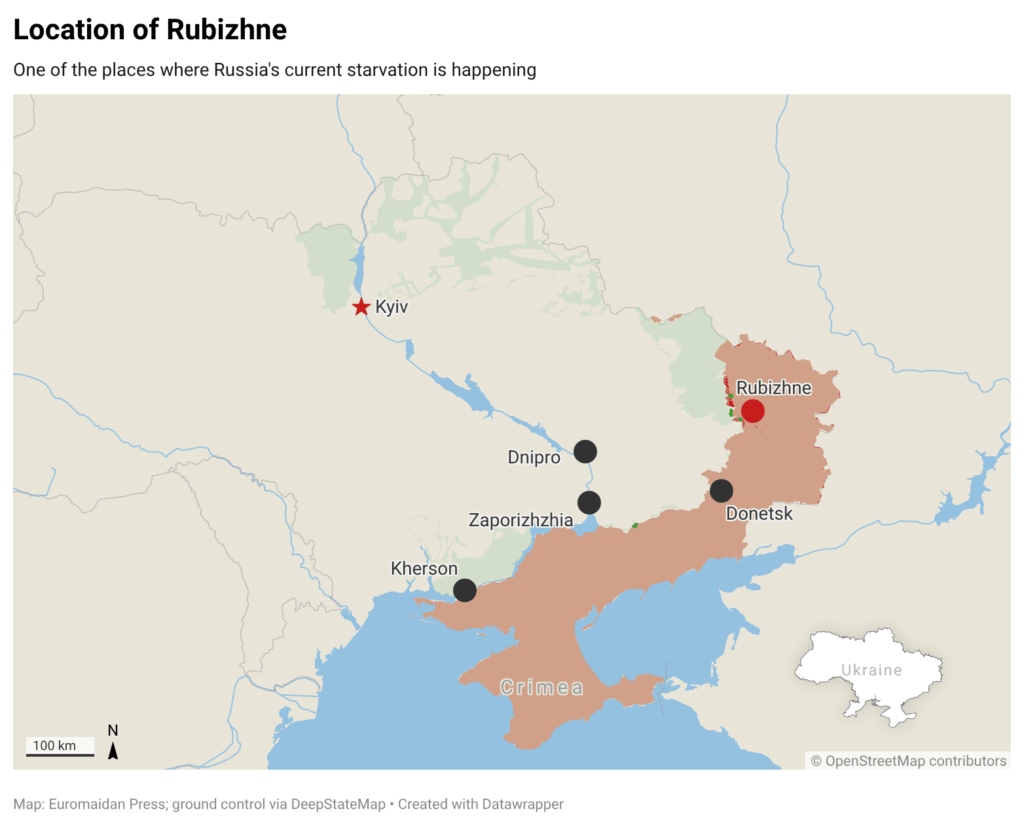
Food shortage in occupied Rubizhne: Russia blocks civilian deliveries, blames drones

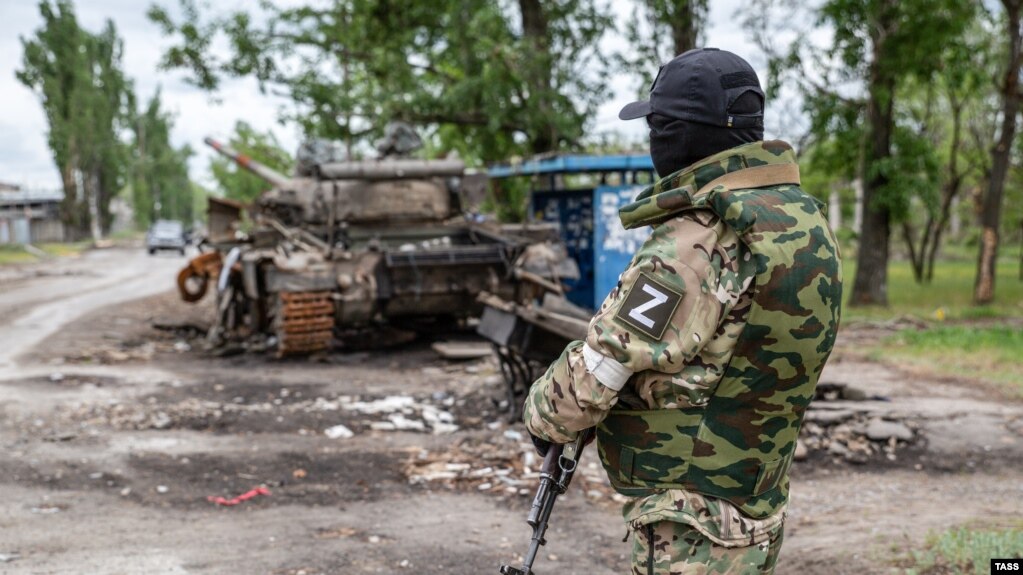
Russian soldier with Z insignia stands near a destroyed armored vehicle on a street in occupied Rubizhne, Luhansk Oblast, where occupation authorities have now manufactured a food shortage by blocking civilian deliveries

Russian occupation forces have deliberately manufactured a food shortage in occupied Rubizhne, cutting civilian food deliveries to the Luhansk Oblast city even as military supply convoys continue to flow, the head of the Luhansk Regional Military Administration reported on 8 June.

Shelves in the city's stores are emptying rapidly, Kharchenko said. Russian propaganda blames disrupted transport links, citing an alleged drone threat. Yet the occupiers have had no difficulty maintaining their own logistics routes to resupply military units stationed across the region, he noted.

"They need to make the next victim for Russian television out of local residents. They chose Rubizhne."—Luhansk governor Oleksii Kharchenko

A city turned into a propaganda prop

The official accused Russia of weaponizing hunger for television cameras. He said the occupiers intend to film bare shelves and hungry residents, then broadcast the footage to Russian audiences as evidence of suffering they themselves engineered.

Before Russia's full-scale invasion, Rubizhne was home to more than 55,000 people. Russian forces seized the city in May 2022 after weeks of devastating urban combat during which they fired up to 1,500 shells per day, the BBC's Quentin Sommerville reported from the front lines. The city's current population remains unknown, but residents who stayed have endured four years of occupation without reliable utilities, communications, or public services.

In nearby Sievierodonetsk, conditions have deteriorated so far that residents now mow the grass in their own neighborhoods and clean communal areas themselves, Kharchenko added—an admission that Russia's occupation authorities provide no basic municipal services even in the cities they claim to have "liberated."

A pattern of deliberate starvation across occupied Ukraine

The manufactured food shortage in occupied Rubizhne fits a documented pattern of Russia using hunger as a weapon against Ukrainian civilians trapped behind the front lines.

In Oleshky, a frontline city in occupied Kherson Oblast, roughly 2,000 civilians have been cut off from food, medicine, and clean water for months. "If the situation doesn't improve, people will just die there from hunger. Because there's no way out, no food supplies coming in," an Oleshky resident who escaped occupation told the Kyiv Independent. Russian forces mined the access roads, destroyed the Kakhovka dam's water infrastructure, and deployed FPV drones that residents describe as conducting "human safari" attacks—hunting anyone who steps outside. People there hunt pigeons and wild ducks with fishing line, plant vegetables in shell craters, and bury their dead in wheelbarrows because no coffins or transport exist.

Ukraine's Foreign Ministry in May appealed to the United Nations and the International Committee of the Red Cross over what it called a "severe humanitarian crisis" in Russian-occupied Kherson Oblast. Russia rejected calls for a humanitarian corridor.

In Nova Kakhovka, upstream from Oleshky, most coastal areas have been abandoned. The few residents who remain live in distant high-rise microdistricts with no functioning hospital and minimal Russian administrative presence, governed remotely from Henichesk, roughly 130 kilometers away.

The Rubizhne food shortage also coincides with Russia's broader restriction of civilian movement through occupied territories. On 6 June, occupation authorities shut down bus and private car traffic on main arteries, capping two weeks of land-corridor breakdowns that have further isolated occupied communities.

Starvation as premeditated policy

International human rights investigators have gathered evidence that Russia planned to use hunger as a weapon before the 2022 invasion. A report by Global Rights Compliance found that a Russian defense contractor purchased grain-transport trucks and bulk cargo ships in December 2021—two months before the invasion began. The evidence was submitted to the International Criminal Court for what could become the first prosecution of a head of state for the war crime of starvation as a method of warfare.

Global Rights Compliance has drawn a direct parallel to the Holodomor—the Soviet-engineered famine that killed millions of Ukrainians in 1932–1933. Russia's current starvation tactics are being perpetrated, the organization noted, by "the same attacking state."

Under the Geneva Conventions, using starvation of civilians as a method of warfare is a war crime. The Rome Statute of the ICC codified the offense in 1998. Yet in occupied Rubizhne, occupied Oleshky, and across the territories Russia claims to have annexed, the pattern continues: military convoys pass, civilian supply lines close, and shelves empty.

  •  
❌