Login
Login
Russia reportedly restricts bus and private car movement on main arteries through occupied territories, capping two weeks of land-corridor breakdown
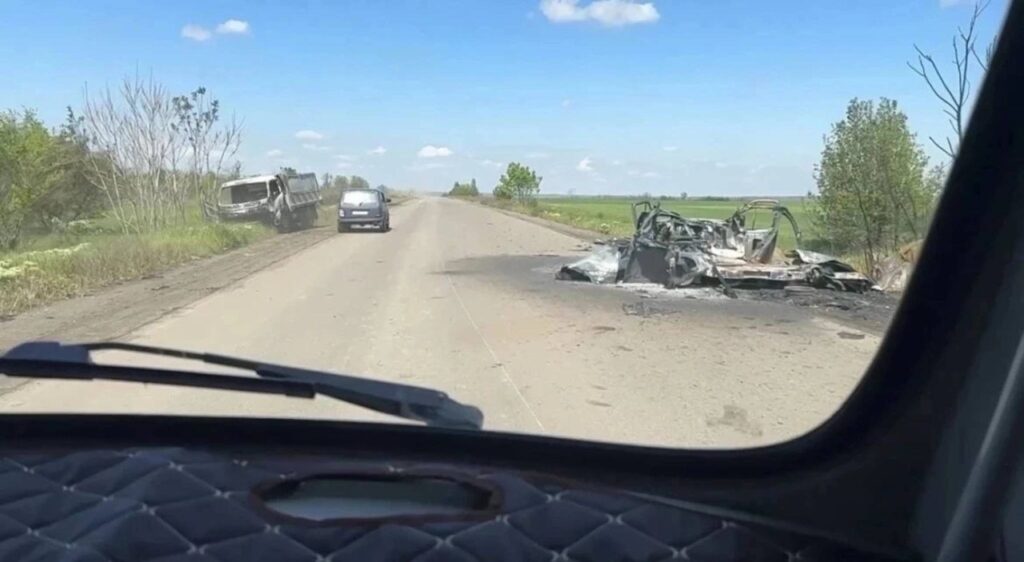
Russian occupation authorities are restricting regular bus traffic and private car movement on two main transport routes through occupied Ukraine, starting 6 June, due to what they call Ukrainian "attacks on civilian transport," Espreso reports, citing Russian media.
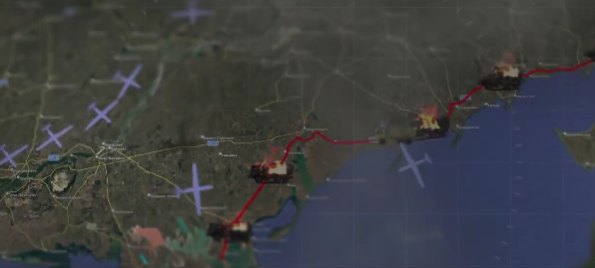
The restrictions cover the R-280 "Novorossiya" highway connecting Rostov-on-Don through Mariupol, Berdiansk, and Melitopol to Simferopol, and the R-150 highway connecting Belgorod through Starobilsk, Luhansk, and Donetsk to Mariupol, the two main arteries through Russian-occupied territory in Ukraine.
Russia uses these routes to supply its occupation forces. The invaders' framing of the closures as protection against Ukrainian "attacks on civilian transport" comes the same week Ukraine's partisan units documented Russian forces using ambulances, bread vans, and postal trucks to deliver military fuel to the front line on those same routes.
What do restrictions cover?
The R-280 highway is the main land artery connecting Russia to occupied Crimea, running from Rostov-on-Don to Mariupol, Berdiansk, Melitopol, and Simferopol.
The R-150 highway covers the northern arc: Belgorod to Starobilsk, Luhansk, Donetsk, and Mariupol.
Russian occupation authorities in the occupied Luhansk Oblast recommended that local residents not travel these routes, while noting that internal bus services would continue along altered routes.
Transport of organized groups of children through the region is temporarily banned, and suburban train service is suspended.
Two-week breakdown of land corridor
The 6 June restrictions cap a two-week sequence of corridor breakdown driven by Ukraine's "logistics lockdown" campaign.
On 29 May, Ukraine's Main Intelligence Directorate (HUR) released a video of drone strikes on Russian fuel tankers along the Berdiansk-Melitopol-Crimea section of the same R-280.
By 31 May, Mariupol residents were reporting in local group chats that Russia had closed the Manhush-Berdiansk highway, which is the eastern segment of the same artery.
By 3 June, Russia's gasoline crisis had spread to St. Petersburg, Belgorod, Kursk, and the occupied Luhansk Oblast, with 40% of Russian refining capacity offline.
On 5 June, Russia ordered fuel drivers to wear civilian clothing. On 6 June, Russia closed civilian transport on the R-280 and R-150.
What do closures mean?
The closures reshape daily life across Russian-occupied southern Ukraine. Civilians can no longer travel between major occupied cities on regular buses. Meanwhile, private cars are restricted on the main arteries.
Read also
-
Ukraine launches “Logistics Lockdown” program with $113 million for middle-strike drones against Russian rear
-
Russia’s Black Sea Fleet once fired missiles from the Mediterranean. Now it can barely leave Novorossiysk.
-
Ukraine hit Novoshakhtinsk oil refinery in Russia with same weapon that sank Moskva Black Sea Fleet flagship