Reading view

The 72 Breads of Ancient Greece You’ve Never Heard Of

ancient Greek bread
Ancient Greek woman taking bread out of the oven. Terracotta figure . 5th century BCE found in Tanagra. Exhibited at the Louvre Museum. Credit: Marie-Lan Nguyen CC BY 2.5

The ancient Greeks used to make a wide variety of breads, as they considered it to be of great importance in their eating habits.

Wheat, considered a gift from the goddess Demeter, was highly valued by the Greeks, who particularly preferred the hulled varieties. Barley, however, thrived in larger regions of mainland Greece. The varieties of wheat and barley with hulls had to be dried to separate the grain before they could be ground. Most Greeks, however, even in areas where wheat cultivation was economically unprofitable, were fond of wheat bread.

Bread made from hulled barley and porridge formed the basis of the ancient Greeks’ diet. The bread was enriched with olive oil and flavored with herbs, spices or honey.

Athenian bread was renowned for its excellent quality and was a source of pride for the Athenians, who imported wheat as the soil of Attica was unsuitable for its cultivation. Thearion, an Athenian of the 5th century BCE, had the honor of being considered the inventor of bakery ovens, and probably of the first bakeries.

Plato mentions Thearion the baker as one of the three people who “were the best caretakers of the human body.” The other two were Mithaecus, a Sicilian, the first known cookbook writer, and Sarambus, a famous wine maker.

The ancient Greeks showed great ingenuity and skill in the art of baking. Athenaeus cites many serious studies on the subject and lists over seventy different types of bread.

Breads were distinguished according to the grain used in their preparation: wheat, rye, millet and spelt. The last three were used only out of necessity, as everyone preferred wheat.

There was bread made from various types of flour: white bread made from finely sifted flour, black bread made from wholemeal flour, which was healthier. Nevertheless, ancient Greeks preferred white bread, because they considered it more refined and better tasting.

Bread was leavened with or without yeast and could be differentiated according to the baking method: oven bread, bread baked on embers or in a pan over the fire into which they put a filling and then dipped it in wine. Delicious, if we believe the praises of the poets: “bread spread from embers, a soft and delightful combination.” Also, some baked the dough on a spit.

The various liquids, fats and spices added to the flour could vary the density and taste of the bread. Wine, milk, cheese and honey, separately or combined in some way, as liquids, oil, ghee or lard as fats, but also poppy seeds, sesame and linseed are most often mentioned as spices.

Finally, the bread would be filled with various types of cheese, raisins and other nuts, sweet or savory ingredients. The bread was often served as a plate, on which meat or fish was placed.

Bread history and stories

The staples of the ancient Greeks were bread, vegetables, cheese and olives. In the Mycenaean era, each house made its own bread and was equipped with its own hand-operated mill which turned wheat into flour.

Bread was kneaded and baked in homes, seasoned with sea salt for better taste.

In the Great Dionysia festivals, participants brought with them baskets containing wine, water and bread, which was needed for the sacrificial offerings. Ancient texts show that the Greeks offered bread to the gods, which they called the Gods’ Breads (Θειαγόνους Άρτους).

In the temple of Demeter in Eleusis, during the Thesmophoria feast, a large loaf of bread was offered to the goddess. The festival got its name Megalartia (meaning large bread) from the bread offering.

There was fierce competition among ancient Greek cities for which one produced the best bread. Athens boasted of Thearion, its best baker, whose name was found in the writings of many authors.

At weddings in ancient Macedonia, the bride’s parents cut the bread in two and the future husband tasted both portions. The custom was followed at the wedding of Alexander the Great to Roxane.

In ancient times, Cyprus was one of the granaries of the Greek world. According to Pliny, the wheat of Cyprus produced a famous brownish-yellow bread.

According to Diogenes Laertius, the smell of fresh, warm bread kept the wise man Democritus alive for three days so that his sister could take part in the Thesmophoria festival, in honor of Demeter. Thus, Democritus “hosted death in his house for three days and treated him to fresh, warm bread.”

Hippocrates mentions various types of bread made from wheat flour, sifted or not, with or without leaven, with bran, with bulgur, with honey and cheese, oil, poppy seeds and sesame seeds.

In the German Bread Museum in the city of Ulm, the most beautiful exhibits are four Greek figurines with female figures from the 5th century BCE, originating from Boeotia. The figurines depict the grinding of wheat in a mortar, the shaping of dough, the baking of bread, and the loaves ready for sale and eating.

In Rome, bread became popular and in 500 BCE, when the well-off Romans insisted on expensive white bread. Bread also played an important role in Roman weddings. In ancient Roman wedding ceremonies, the two families that were joining ate bread together.

Types of ancient Greek breads

There were at least 72 types of ancient Greek breads, named after the added ingredients used or the kneading, preparation method or baking procedure. Several of them are still made today in slight variations.

Alifatitis (Αλιφατίτης): a well-known bread made with added oil. It also contained animal fats. Similar to today’s puff pastry made with butter, a bread recipe of the ancient Greeks according to Larousse Gastronomique encyclopedia.

Artolaganon or laganon (Αρτολάγανον or λάγανον): a flavored bread with the dough rolled out thinly like a small pita and fried in oil. Artolaganon was the ancestor of today’s lagana which Greeks eat on Clean Monday. It was made with good quality flour.

Atabyritis (Αταβυρίτης): a round-shaped bread of the ancient Greeks that had a lot of crumb, and was particularly nutritious and fattening.

Vlomiaios bread (Βλωμιαίος άρτος): a ​​bread with notches to make it easier to divide into pieces. Vlomiaios bread was usually octavlomos, that is, divided into eight pieces (vlomos: a small piece of bread).

Egrides (Εγκρίδες): made with soft dough like pancakes that was dipped in oil and honey.

Thridakini (Θριδακίνη): bread with the dough mixed with wild lettuce.

Plytos or Vasinias (Πλυτός or Βασυνίας): boiled bread. When boiled, it floats in the water. It is made in Crete (boiled buns) and is the ancestor of the Jewish bagel. There are mentions  of this bread offering to goddess Iris on Delos island.

Krivanitis (Κριβανίτης): bread baked in a krivanos, that is, in a mobile clay oven.

Obelias (Οβελίας): it got this name because it was baked in special molds, the “obelisks” (spits) and because it was sold for an obol (όβολο), a small value coin.

Chondritis (Χονδρίτης): bread made from coarsely ground cereals.

Paxamas (Παξαμάς): a type of hard rusk. The name belongs to the baker (Paxamos) who had introduced it. The rusk was baked twice.

Plakountas (Πλακοῦς): was a sweet that had similarities to the modern cheesecake-type dessert. The sweet consisted of several layers of dough filled with honey and soft cheese. Its main ingredients were flour, cheese and honey. The dough of the plakountas was enriched with milk, fat, herbs and spices.

Pyritis bread (Πυρίτης): hulled wheat bread, from the ancient Greek word πυρός meaning the heart of the wheat seed.

Streptikios (Στρεπτίκιος): bread kneaded with milk, oil and honey. It was prepared by twisting the dough with the shape of the Easter tsoureki.
  •  

The Lost Plant Ancient Greeks Used for Medicine, Food and Contraception

silphium
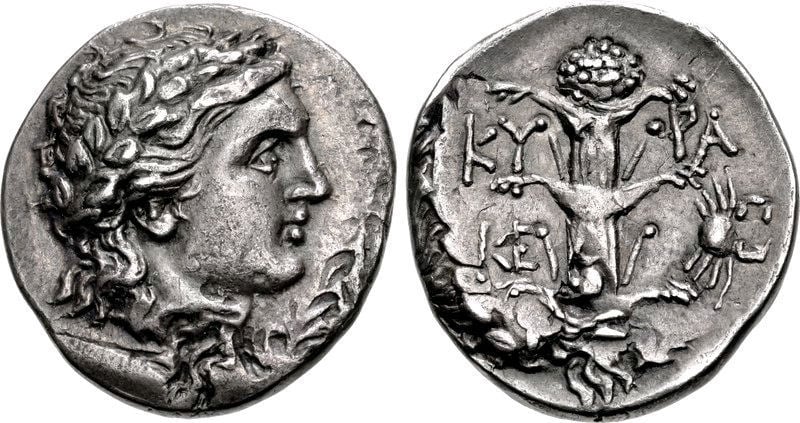
A plant used by the ancient Greeks for medicine, food and even contraception was one of the most sought-after goods in the ancient world. Credit: Classical Numismatic Group/Wikimedia Commons/CC BY-SA 3.0

An ancient Greek plant, now extinct, called Silphium, was used by the ancient Greeks and Romans for perfume, seasoning, medicine, and even contraception. It was one of the most sought-after goods in the ancient world.

The plant was so useful that Julius Caesar himself was said to have a large stash of silphium on hand at all times.

Silphium only grew in a narrow strip of land near the North African city of Cyrene in modern-day Libya and was essential to the city’s economy. The cultivation and trade of the plant transformed Cyrene into the richest region of Africa at the time.

Its widespread use in the ancient world allowed Cyrene’s economy to flourish, which in turn transformed the city into a center of art, culture, and medicine in the ancient Greek world.

In fact, it was home to a famous medical school and even a philosophical movement based around happiness whose members were called the Cyrenaics. Eratosthenes, the famous Greek mathematician, was a native of the city.

Although now extinct, researchers have determined, through studying ancient drawings and descriptions of the plant’s taste and appearance, that silphium likely belonged to the genus Ferula, which includes existing plants like giant fennel and asafoetida.

This theory is bolstered by the fact that asafoetida, which is still widely used today in Indian and central Asian cooking, was used as a cheaper substitute for silphium in antiquity, meaning that it was either related to the plant or had a very similar flavor.

The extinct plant silphium had many uses for ancient Greeks

Plants of the genus tend to resemble ancient depictions of the plant, which was widely found on coins from Cyrene due to its economic importance to the city.

It seems to have been a tall, flowering plant with a heart-shaped seedpod on the top. In fact, some theories about the origins of the modern symbol for love point to the shape of silphium’s seedpod, as the plant was widely used as an aphrodisiac.

Silphium was long used throughout the ancient Mediterranean. Both the Minoans and ancient Egyptians had specific glyphs to represent the plant, and it was widely lauded in songs and poems across ancient cultures.

According to myth, silphium came from the god Apollo himself. It had a wide variety of medicinal properties and was used to treat cough, pain, warts, fever, and indigestion. Although considered an aphrodisiac, it was also used as a contraception and even as an abortifacient.

The father of medicine Hippocrates himself even prescribed the plant for a protruding gut.

Silphium was likewise found in Greek and Roman cuisine and featured prominently in recipes by Apicius, who compiled one of the most well-preserved collections of ancient recipes in existence today.

Its earthy scent and medicinal properties also made it an important ingredient in perfume, as well as in ancient lotions and creams.

Why did silphium go extinct?

Due to its varied uses, silphium was in very high demand. Yet, by the time of the Roman emperor Nero, who lived from 37 to 68 AD, the plant was virtually extinct. According to Pliny, when the last remaining silphium plant was found, it was given to Nero.

Scholars theorize the plant was over-harvested and over-farmed due to its popularity, causing the soil in the limited area where the plant grew to become devoid of nutrients.

Additionally, shepherds used to feed silphium to their flocks, as the plant would transform the meat, making it tender and delicious. Scholars theorize that overgrazing of the plant likely contributed to its demise.

Others claim that regional climatic changes, which caused once green fields to turn into an arid desert, resulted in the plant’s extinction.

Ancient writers, such as Theophrastus, noted that silphium was very sensitive to changes in soil and therefore could not be cultivated in large  numbers nor in areas outside of Cyrene.

  •  

4,000-Year-Old Skewers Found on Santorini Reveal Souvlaki Bronze Age Origins

Bronze Age souvlaki grill from Santorini
An ancient Greek grill for souvlaki from Akrotiri, Santorini. Credit: Wikimedia Commons/ Public domain

The beloved souvlaki has been around since ancient times. Archaeologists have found skewers dating back to the Bronze Age, and recent research looks at the functioning of early grills. In particular, “souvlaki trays” have been discovered dating all the way back to Mycenaean culture.

Therans and Mycenaean cultures were known for their luxurious lifestyles, ornate and colorful clothes, exquisite art, and sea trade with other cultures, such as Egypt. People developed these cultures on the islands of Crete and Santorini.

World’s oldest Bronze Age souvlaki on Santorini

The oldest souvlaki skewers found seem to be those discovered by archaeologists on Santorini dating back as far as 2000 BC. There are traces of the popularity of souvlaki on Santorini and Crete through the Bronze Age, and both Theran and Mycenean cultures made use of this method of cooking.

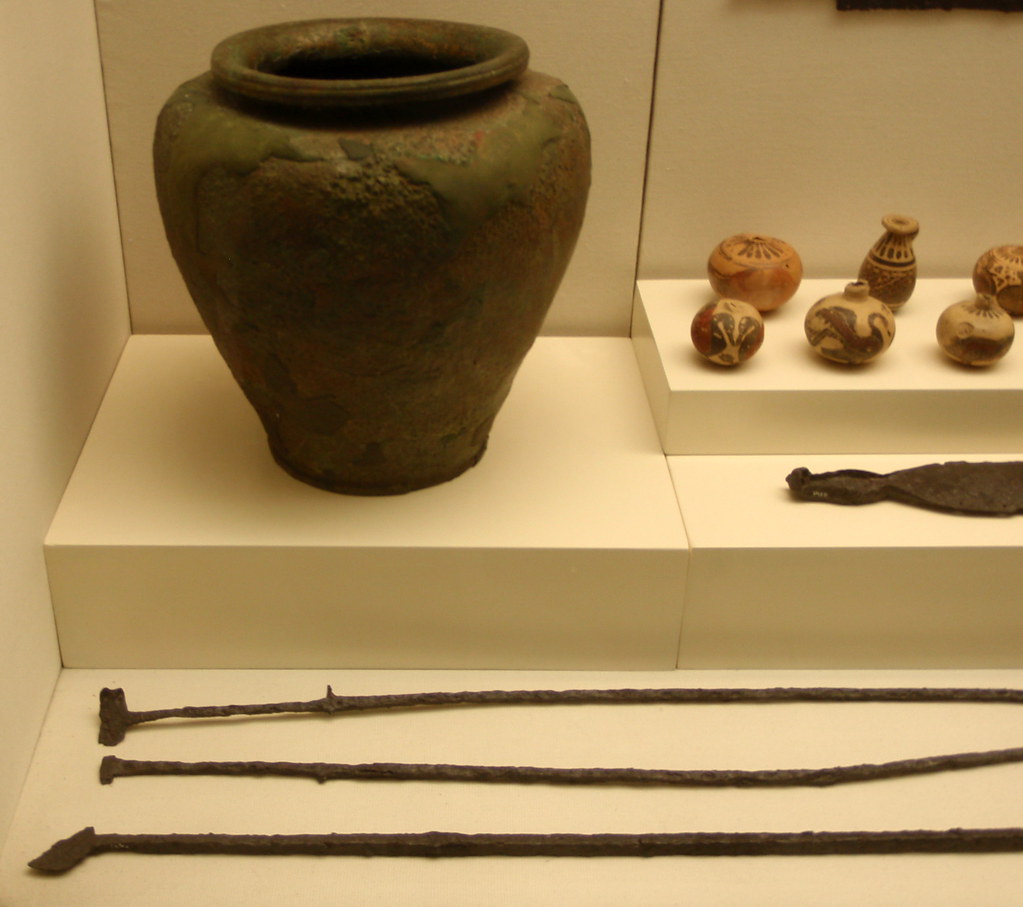
Ancient bronze skewers and vase, with small painted ceramic amphora
Ancient bronze skewers and a vase. Credit: diffendale/CC BY-NC-SA 2.0.

Ancient Greek texts such as the Iliad and the Odyssey describe a spit (Greek: ὀβελός) being used to roast meat, but the exact functioning of the souvlaki trays was unknown until recently. The works of great poets and writers describe the same obeliskos being popular. Sophocles, Aristophanes, Xenophon, and Aristoteles all mention or describe the popular dish in their works.

Mycenean cooking and culture

It seems that ancient Mycenaeans did not have a large variety of foods available to them. Despite this, they developed various types of cooking methods, fostering innovation. Part of that innovation was souvlaki trays, as was cooking in jars, among other techniques. At the time and for most of ancient history, cooking was mostly done on hearths with few ingredients. The portable and lightweight souvlaki trays changed this for Mycenaeans around 1400 to 1050 B.C.

Academics suggest that an important historical force behind these contraptions was status. While the Myceneans had incredibly rich art and fashion, their diet lacked diversity, though a marker of status was drinking wine. On the other hand, one can imagine poorer Mycenaeans drank beer.

As they were skilled sailors, Therans on Santorini island had begun brewing beer in the II millennium B.C., possibly learning the skill from Egypt or the Near East, where beer had been brewed since the III and IV millennium B.C. Accounts of the 5th and 4th centuries B.C. tell of an Athenian bias against beer. It was considered a drink of barbarians, Egyptians, or even women. Beer brewing was never seen as valuable.

By the Classical period, this all changed. Wine had become readily available to all, pushing elites in later Greek societies to seek other ways to distinguish themselves — for instance, through the use of specific gadgets and kitchen appliances, echoing earlier innovations like the Mycenaean souvlaki trays.

The souvlaki tray

The souvlaki trays found in Gla, Pylos, and Crete added something to the age-old tradition. Similar to modern-day outdoor grills, they were designed to be portable and good for travel or entertainment. Meat cuts seem to have been similar to the ones popular for souvlaki today, made from either lamb, pork, or mutton, and the meal was accompanied by bread made of various cereals.

The clay trays had placeholders for the skewers and, until recently, how they actually functioned was unknown. Researchers at Dartmouth College have recreated the trays using original ancient pottery techniques, tools, and ingredients. They realized the trays were not meant to be put on a hearth as originally thought. Rather, embers were placed in the tray and the skewers were grilled. They were practical, portable, and delicious!

  •  
❌