Russian Central Bank chief Elvira Nabiullina has been dropped from the speaker lineup at the St. Petersburg International Economic Forum, RBC reported, citing sources close to the Central Bank.
The sources offered no explanation for her absence.
Update: A source close to a Russian state corporation told the business daily Vedomosti that Nabiullina withdrew from the St. Petersburg forum to attend the funeral of her adviser at the Central Bank, Alexey Mozhin, who represented Russia as an executive director at the International Monetary Fund from 1996 to 2024. Mozhin died on June 3, 2026, on the eve of his 70th birthday.
Nabiullina was initially expected to appear on two panels: “How to Return to a Trajectory of Sustainable Economic Growth Amid Global Uncertainty” and “Cyber Fraud: Who Foots the Bill?”
Elvira Nabiullina’s third term as head of the Central Bank expires in 2027, when under current law she is required to step down. Journalists at The Bell named deputy head of the presidential administration Maxim Oreshkin, Promsvyazbank chairman Pyotr Fradkov, and VTB head Andrei Kostin as her most likely successors, though the outlet’s sources also said “the law can always be changed.”
At Meduza, we are committed to transparency about our use of artificial intelligence in the newsroom. The story you’re reading was written by one of our living, breathing journalists and translated from Russian using an AI model configured to follow our strict editorial standards. This translation process is the result of extensive testing and refinements to ensure our English-language coverage is timely and accurate. A Meduza editor reviews every draft before publication.
If you find any errors in this translation, please contact us at reports@meduza.io.
Russia’s Max messenger has vanished from the App Store. The app no longer appears in search results, and attempts to reach its page via a direct link return an error.
The reasons for the removal are still unclear.
VK’s press service confirmed that Max is unavailable in the App Store and said it has contacted Apple and is “working to resolve the issue promptly.”
Apple had not commented on the situation at the time of publication.
At Meduza, we are committed to transparency about our use of artificial intelligence in the newsroom. The story you’re reading was written by one of our living, breathing journalists and translated from Russian using an AI model configured to follow our strict editorial standards. This translation process is the result of extensive testing and refinements to ensure our English-language coverage is timely and accurate. A Meduza editor reviews every draft before publication.
If you find any errors in this translation, please contact us at reports@meduza.io.
Patriarch Kirill, the head of the Russian Orthodox Church, has assigned Metropolitan Hilarion — recently suspected of drug smuggling in the Czech Republic — to the Argentine and South American Diocese.
Hilarion will serve in Brazil at the Church of the Holy Apostles Peter and Paul in Santa Rosa and at the Church of the Holy Apostle and Evangelist John the Theologian in Campinas das Missões.
Hilarion previously served at an Orthodox church in Karlovy Vary, in western Czechia. In late May, he returned to Russia after being detained on suspicion of involvement in drug smuggling.
On May 24, Czech law enforcement stopped the car Hilarion was traveling in and found four small containers with a white substance in the trunk. Police took him into police custody but released him two days later without charges.
Hilarion (born Grigory Alfeyev) is a former head of the Moscow Patriarchate’s Department for External Church Relations and a former member of the Holy Synod, the Russian Orthodox Church’s supreme governing body. In 2022, he was appointed Metropolitan of Budapest and Hungary. Two years later, his former aide, Georgy Suzuki, accused him of sexual harassment, after which Hilarion was reassigned to serve as an ordinary priest in Karlovy Vary.
At Meduza, we are committed to transparency about our use of artificial intelligence in the newsroom. The story you’re reading was written by one of our living, breathing journalists and translated from Russian using an AI model configured to follow our strict editorial standards. This translation process is the result of extensive testing and refinements to ensure our English-language coverage is timely and accurate. A Meduza editor reviews every draft before publication.
If you find any errors in this translation, please contact us at reports@meduza.io.
Russian tennis players Mirra Andreeva and Diana Shnaider have both reached the semifinals of the French Open.
Shnaider knocked out world No. 1 Aryna Sabalenka of Belarus in the quarterfinals, 3–6, 7–5, 6–0. Andreeva dispatched Sorana Cîrstea of Romania, 6–0, 6–3.
Shnaider will face Maja Chwalińska of Poland in the semifinals; Andreeva will play Marta Kostyuk of Ukraine.
The last time two Russian women reached the French Open semifinals was in 2009. That year, Svetlana Kuznetsova won the tournament.
The last time a Russian woman reached the French Open final was in 2021. That was Anastasia Pavlyuchenkova, who lost the decisive match.
At Meduza, we are committed to transparency about our use of artificial intelligence in the newsroom. The story you’re reading was written by one of our living, breathing journalists and translated from Russian using an AI model configured to follow our strict editorial standards. This translation process is the result of extensive testing and refinements to ensure our English-language coverage is timely and accurate. A Meduza editor reviews every draft before publication.
If you find any errors in this translation, please contact us at reports@meduza.io.
Andrey Bezrukov, a political scientist and adviser to Rosneft chief Igor Sechin, said at the St. Petersburg International Economic Forum (SPIEF) that Russia will be at war for the next “couple of decades,” producing two generations shaped by the conflict.
Bezrukov spoke during a session titled “Russia’s Main Threats in the Second Quarter of the 21st Century” on the forum’s opening day.
“We need to learn to live with this war. That doesn’t mean we need to stop everything, stop developing the economy. On the contrary — we need to build our state system and our economy in such a way that they fulfill not only the task of development, but also the task of defense,” Bezrukov said.
He argued that modern wars have changed — the goal is no longer to seize territory but to wear down the enemy. The West, he said, is trying to avoid a nuclear confrontation with Russia and is instead “slowly boiling the frog.” The escalation was “visible this morning” in St. Petersburg, he added, referring to Ukrainian drone attacks on the city.
“Even now we understand that a drone using Starlink can fly into any region and hit a specific target. This is a serious problem for us — we were not prepared for it,” Bezrukov said.
He also warned of the threat of biowarfare:
All those laboratories around us weren’t just wasting budget funds. They were making the weapons of the future. These laboratories are still working, and current technology allows them to create viruses that could wipe us all out.
Bezrukov did not say which laboratories he meant or where they are located. Since the state of the war in Ukraine, Russian state media has pushed the claim that Western biolabs are preparing biological weapons against Russia. Meduza examined it in detail in a 2022 report.
Andrey Bezrukov is a retired colonel of Russia’s Foreign Intelligence Service who previously worked as a spy for the Soviet Union. Beginning in the 1980s, he lived abroad under the name Donald Heathfield. Soviet intelligence recruited him alongside Elena Vavilova (Tracey Foley), whom he had married in Russia before their deployment to North America. In Canada, they staged a chance meeting, married again under their alias identities, and later moved to the United States. They had two sons.
In 2010, Bezrukov, Vavilova, and eight other “illegals” were arrested by the FBI. They were subsequently deported to Russia together with their children. Bezrukov and Vavilova’s sons later recovered their Canadian citizenship. Their family’s story inspired two television shows: the U.S. series “The Americans” and the Russian series “The Russians.”
At Meduza, we are committed to transparency about our use of artificial intelligence in the newsroom. The story you’re reading was written by one of our living, breathing journalists and translated from Russian using an AI model configured to follow our strict editorial standards. This translation process is the result of extensive testing and refinements to ensure our English-language coverage is timely and accurate. A Meduza editor reviews every draft before publication.
If you find any errors in this translation, please contact us at reports@meduza.io.
Two of Vladimir Putin’s relatives appeared at the St. Petersburg International Economic Forum (SPIEF) on its opening day: his younger daughter Katerina Tikhonova and his second cousin once removed, Elena Fisenko.
Tikhonova, who heads Innopraktika, spoke at a pharmaceutical forum held as part of the SPIEF program. She appeared via video link, as she had in 2024 and 2025.
Her remarks focused on import substitution in Russia’s pharmaceutical sector and how more than 90% of state drug procurement still involves “Western-made products.” Tikhonova also discussed the Interagency Coordinating Council on Pharmacological Innovation and a registry of priority projects in the field. “The ultimate goal of all this is full-cycle domestic pharmaceutical innovation that should provide [patients] with our Russian-made drugs,” she said.
Fisenko, Russian Railways’ medical director, participated in a session titled “Workers’ Health: New Directions and Solutions.” She described how the company’s medical services help protect workers’ health on the job and raise birth rates. Russian Railways employees live several years longer than the average worker in Russia, she said, because the company maintains its medical infrastructure.
Fisenko also spoke about new men’s and women’s health centers to be housed in women’s clinics, and about how doctors discourage women from having abortions.
As the independent Russian investigative outlet Agentstvo notes, Fisenko has participated in every SPIEF since 2017. Tikhonova, meanwhile, was attending (remotely) for the third consecutive year. On June 4, Putin’s elder daughter, Maria Vorontsova, a leading researcher at Moscow State University’s medical research and education institute, is scheduled to moderate a session at SPIEF titled “Career Guidance and Mentorship in Medicine: Experience, Best Practices, and the Future.”
Putin himself is expected to attend the forum on June 5, when he is set to take part, as usual, in the plenary session. The forum runs through Saturday, June 6.
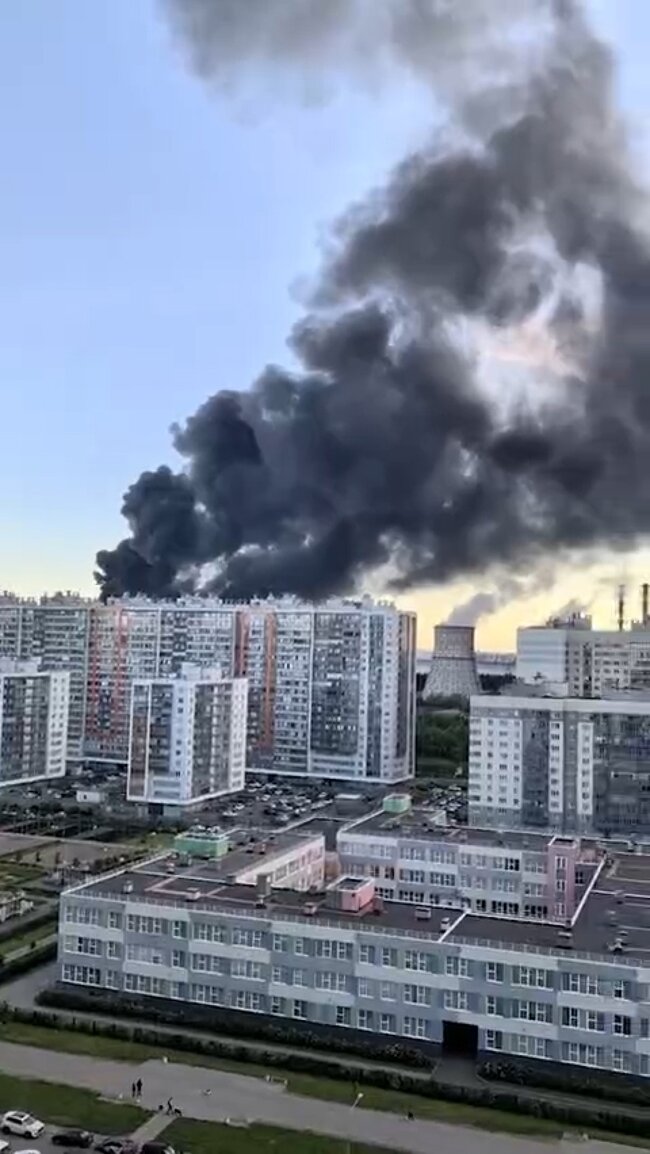
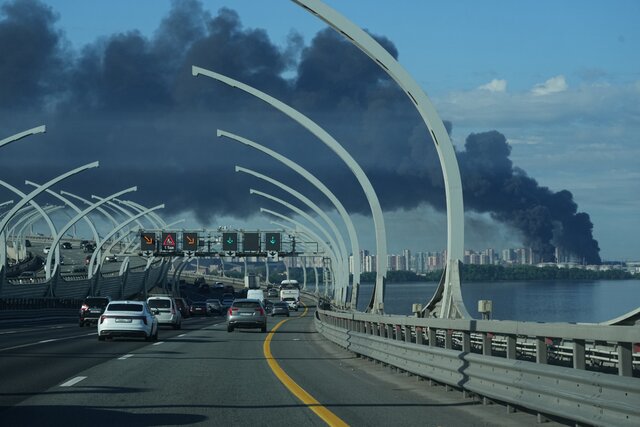
Ukrainian drones struck St. Petersburg on the forum’s opening day. A large plume of black smoke was spotted over the city after the strike. The St. Petersburg Oil Terminal — one of the largest liquid bulk cargo transshipment facilities in the Baltic region — appeared to have caught fire, according to local reports and footage circulating on social media.
At Meduza, we are committed to transparency about our use of artificial intelligence in the newsroom. The story you’re reading was written by one of our living, breathing journalists and translated from Russian using an AI model configured to follow our strict editorial standards. This translation process is the result of extensive testing and refinements to ensure our English-language coverage is timely and accurate. A Meduza editor reviews every draft before publication.
If you find any errors in this translation, please contact us at reports@meduza.io.
NATO Secretary General Mark Rutte, speaking during a visit to Kyiv, urged young Russians not to be taken in by military recruiters.
Rutte said the military deceives young Russians when they sign contracts, that fighters are given no training before deployment, and that they are issued substandard equipment:
There is a very high chance you’ll die or be wounded while you’re out there. And odds are that if you are wounded, you will be left to suffer in the mud and die. So when we talk about tens of thousands of Russian casualties, that’s not abstract. That will probably be you.
Russia is currently sustaining losses of around 30,000 people per month, Rutte said, calling the figure “staggering.”
At Meduza, we are committed to transparency about our use of artificial intelligence in the newsroom. The story you’re reading was written by one of our living, breathing journalists and translated from Russian using an AI model configured to follow our strict editorial standards. This translation process is the result of extensive testing and refinements to ensure our English-language coverage is timely and accurate. A Meduza editor reviews every draft before publication.
If you find any errors in this translation, please contact us at reports@meduza.io.
United Russia has wrapped up its primary elections ahead of the State Duma vote, and the ruling party and the Kremlin’s domestic policy team fell short of the 10% voter turnout target they had set for themselves. Official figures put the final turnout at 9.03%.
Journalists at 7×7, an outlet that covers events in Russia’s regions, calculated that 43 war participants won votes in regional list and single-member district races out of 478 who had entered the party’s primaries nationwide. ”SVO” veterans also placed second, third, and lower in the primaries.
The 7×7 count excluded Russia-occupied Ukrainian territories — Crimea, Sevastopol, and parts of the Donetsk, Luhansk, Kherson, and Zaporizhzhia regions. According to Meduza’s count, four war participants won in those territories. That puts the number of military personnel who could become United Russia deputies in the State Duma at a minimum of 47.
Assessing their chances of securing genuinely viable spots is difficult, however. First, those spots could go to politicians who did not participate in the primaries at all. Second, the primaries have no bearing on the federal portion of the party list — their results affect only the regional portion, where governors, who traditionally serve as the top draws on the ticket, are guaranteed the leading positions. In most regions, that means military candidates who won the primaries will end up in second place at best.
The final roster of candidates will be confirmed at United Russia’s party congress on June 28.
What we know about the ‘SVO soldiers’ who won the primaries
Vladimir Putin calls military personnel the “real” and “genuine elite” and pushes for their advancement into politics by every available means. To that end, his administration’s domestic policy team and regional authorities run personnel development programs for war participants.
The most prominent is “Vremya Geroev” (“Time of Heroes”), run by ANO Rossiya — Strana Vozmozhnostey (Russia — Land of Opportunity), the traditional organizer of Kremlin talent competitions. Regional programs include “Geroi. Nizhegorodskaya Oblast” (“Heroes. Nizhny Novgorod region”) and “Zashchitniki. Pod Krylom Arkhangela” (“Defenders. Under the Archangel’s Wing”) in the Arkhangelsk region. The organizers claim these programs train war participants in “management practices” and “teamwork.”
Significant posts, however, tend to go not to ordinary soldiers but to experienced officials and deputies who have served at the front. In November 2024, for instance, Yevgeny Pervyshov became governor of the Tambov region after serving as mayor of Krasnodar until 2021 and then as a State Duma deputy. In the fall of 2022, the Russian state news agency TASS reported, Pervyshov enlisted in the Russian army as a volunteer and served in BARS “Kaskad,” known as the “deputies’ unit.”
BARS “Kaskad” is a volunteer aerial reconnaissance and drone aviation unit. As the outlet Poligon and British intelligence found, serving in “Kaskad” allows politicians to be listed as serving at the front while barely exposing themselves to danger — they can freely leave the combat zone to work in the State Duma or take vacations.
Another politician-soldier in power is Tambov native Alexei Kondratyev. According to a biographical profile on the “Veteran SVO” website, he also went to the front as a volunteer. In August 2024, following Ukraine’s incursion into Russia’s Kursk region, Kondratyev took part in the evacuation of civilians. That same year, he became a senator from that border region in the Federation Council, the upper house of Russia’s parliament. This wasn’t the start of his political career: from 2010 to 2015 he served as mayor of Tambov, and for five years after that, he represented the region in the Federation Council.
When it comes to preferential treatment for military personnel with political experience — or politicians with a military background — the State Duma candidate selection this year was no exception. Meduza calculated that 21 of the 47 primary winners who identify themselves as war participants had already built successful civilian careers before the start of the full-scale war.
Seven of the “military” candidates are sitting State Duma deputies who served in the “deputies’ unit” BARS “Kaskad.” They include:
Vitaly Milonov, known for his homophobic statements;
Dmitry Sablin, who sued Alexey Navalny over his “honor and dignity”;
Adam Delimkhanov, one of Ramzan Kadyrov’s closest allies;
oncological surgeon Badma Bashankaev, who claims to have traveled to the front on multiple occasions to perform operations on wounded soldiers and give “master classes” to military medics;
political strategist and former prime minister of the self-proclaimed “Donetsk People’s Republic,” Alexander Borodai;
Chelyabinsk deputy Oleg Golikov.
Also listed on the primaries website as a war participant is Novosibirsk deputy Oleg Ivaninsky — though nothing is known about his military experience.
Thirteen of the primary winners who identify themselves as war participants are federal and regional officials, deputies of regional legislative assemblies or city councils in major cities, businesspeople, and prominent politicians.
For example:
Alexandra Rodionova, head of a department at the federal Health Ministry who went to the front as part of a humanitarian mission at the start of the full-scale invasion, took first place on the list in the Amur region;
in Yakutia, Pyotr Shamayev is running in a single-member district; he’s a former republic-level minister of youth affairs who left for the war in September 2024 and returned to Russia in February 2025, reportedly after being wounded;
in Karelia, the speaker of the regional legislative assembly, Elissan Shandalovich, won the list primary; in 2024 he spent six months working as a doctor at a field hospital in the self-proclaimed “Luhansk People’s Republic;”
in the Magadan region, travel blogger Bogdan Bulychev, who calls himself the “ambassador of the Arctic and the Far East,” won the single-member district race. He went to the front at the end of 2025 and served with the volunteer unit BARS-8 “Khabarovsk”;
in the Kursk region, Anton Tsvetkov came first on the list. His official biography lists only one position — deputy commander of the volunteer brigade “BARS-Kursk.” In reality, Tsvetkov is also a well-known pro-government civic figure, chairman of the presidium of the public organization “Officers of Russia” and a former member of the federal Public Chamber;
in the Pskov region, construction businessman and president of the Federal Field Hockey Association of Russia Anton Moroz took first place (when and in what capacity he traveled to the combat zone is not specified).
Of the 26 genuinely military candidates who won the primaries, eight serve as commanders or deputy commanders of large units. For example:
Andrei Strizhak, commander of the 51st Parachute Regiment, will run as a single-member district candidate from the Tula region;
Eduard Shonov, deputy director general of the “Federal Center for Unmanned Aviation Systems,” will run as a single-member district candidate from Moscow.
Some military candidates have also worked as officials in regional and municipal administrations and even federal institutions:
Baldan Tsydypov, who went to war at the start of the full-scale invasion at age 23, is running in a single-member district from Zabaykalsky Krai. He is said to have helped rescue 150 soldiers from an ambush in March 2022, was wounded, and returned home. He now heads the department for patriotic work at the Znaniye society;
former airborne assault platoon commander Dmitry Grachev will run as a single-member district candidate in the Nizhny Novgorod region; he currently serves as deputy minister of regional security.
A source within United Russia’s leadership who spoke to Meduza said party officials, the Kremlin’s domestic policy team, and regional administrations are working to ensure that “military candidates are as predictable as possible” for the Kremlin — which is why preference goes to politicians and officials with “substantial civilian work experience” and to officers and military personnel “who have already been tested in civilian administrations.”
A political strategist working with the domestic policy team was more direct:
You need to show the president a new elite. And make sure it doesn’t have PTSD. That means it’s better to rely on proven people. The most savvy governors deliberately “cultivate” such people — they announce that officials are being sent to war, and then report back: look, I appointed a military man to a senior post or promoted him to deputy.
What else was notable about these primaries
Unlike previous primaries, these passed almost without scandal.
In mid-May, former State Duma deputy speaker Sergei Neverov unexpectedly withdrew from the race in the Smolensk region, where he had intended to run in a single-member district, and called on voters to support a soldier and Smolensk city council deputy, Artyom Kornyuchenkov. But Kornyuchenkov also decided not to participate. The district was ultimately won by Smolensk city council deputy Sergei Yakimov. According to Meduza’s sources, however, he will not run a campaign so as not to stand in the way of a high-profile deputy from A Just Russia, federal parliament deputy speaker Alexander Babakov — the candidate the Kremlin has already approved for that district.
In Moscow, actor Dmitry Dyuzhev finished 32nd, receiving just 2,700 votes — nearly a hundred times fewer than the top vote-getter, State Duma deputy speaker Pyotr Tolstoy. A Meduza source in United Russia’s Moscow branch said Dyuzhev “was not invited to run and no one sees him in the Duma.”
According to that source, neither the actor’s candidacy nor his result “bothered anyone, except probably himself” — unlike the situation with t.A.T.u. singer Yulia Volkova ahead of the 2021 State Duma elections. At the time, she entered the primaries in a single-member district in the Ivanovo region and recorded two videos criticizing both the current authorities and the opposition.
Volkova’s campaign provoked strong displeasure from the regional administration, which had been counting on a smooth process and the subsequent nomination of Maxim Kizeyev, the chief physician of the Reshma sanatorium. Volkova lost the vote, as expected.
This year, the primaries in Zabaykalsky Krai were lost by the region’s incumbent deputy, General Andrei Gurulev. A source close to the Putin administration told Meduza that his candidacy was “freelance”: no one had approved Gurulev’s nomination. Gurulev is a regular on propaganda television programs. He has proposed launching a nuclear strike on the Netherlands and bringing back the Gulag. Those and other inflammatory statements got him removed from the State Duma’s defense committee and transferred to the local self-government committee, so that his remarks would not be associated with the work of the defense department.
“He’s too scandalous — he does [the Kremlin] more harm than good. They tried to rein him in, promised to let him extend his mandate and run in a different region. But he kept going,” the source said.
Previously, a Meduza source close to the Putin administration’s domestic policy team said: “The Kremlin does not need too many military personnel in parliament: the authorities understand that they risk ending up with a new influential force in the country’s highest legislative body.” The United Russia primaries results confirm that trend: war veterans will not constitute a majority even on the ruling party’s list, and most of them have long been working as officials or holding seats as deputies.
At Meduza, we are committed to transparency about our use of artificial intelligence in the newsroom. The story you’re reading was written by one of our living, breathing journalists and translated from Russian using an AI model configured to follow our strict editorial standards. This translation process is the result of extensive testing and refinements to ensure our English-language coverage is timely and accurate. A Meduza editor reviews every draft before publication.
If you find any errors in this translation, please contact us at reports@meduza.io.
A United Russia deputy on the Nizhny Tagil city council has unveiled a bust of Felix Dzerzhinsky, founder and first head of the Cheka, at a settlement outside the city. Dmitry Kostennikov, who initiated the monument’s installation, announced the unveiling in a post on social media.
The bust stands on the grounds of a former children’s health camp called Chayka, which Kostennikov purchased in 2023 and is converting into a sports and patriotic camp called Pervyy (“First”), the Russian news outlet Vechernie Vedomosti reported. The settlement is Chernoistochinskaya, outside Nizhny Tagil.
A great-grandnephew of Dzerzhinsky named Vladimir attended the unveiling ceremony.
Vechernie Vedomosti also noted that in early March, three streets in the same settlement had their pre-revolutionary names restored: Kommunisticheskaya Street became Klyuchevskaya again, Sverdlova became Andreyevskaya, and Udarnaya became Tulskaya. The push to restore the old names came from Archimandrite Germogen (Yeremeyev), a native of Chernoistochinskaya and rector of the Church of Serafim Sarovsky in Yekaterinburg.
Felix Dzerzhinsky was the founder and head of the All-Russian Extraordinary Commission (Cheka), whose successors became the NKVD, KGB, and FSB. Dzerzhinsky was the organizer of the Red Terror that began after the 1917 revolution.
In April 2026, Vladimir Putin restored the name “after F. E. Dzerzhinsky” to the FSB Academy. Journalist Mikhail Zygar, in his column in Der Spiegel, wrote that a statue of Dzerzhinsky is planned to be returned to Lubyanka Square in Moscow. According to his sources, the political decision on this has already been made.
The statue of Dzerzhinsky, toppled from its plinth on Lubyanka Square in 1991, has spent many years in Moscow’s Muzeon park. In 2021, Moscow authorities held a vote in the Active Citizen app on the question of returning the Dzerzhinsky statue to Lubyanka. As an alternative, a statue of Alexander Nevsky was proposed for the center of the square. In the end, the vote was halted by order of Moscow Mayor Sergei Sobyanin, who stated that “public opinion was split roughly in half” and that monuments should unite, not divide, society.
At Meduza, we are committed to transparency about our use of artificial intelligence in the newsroom. The story you’re reading was written by one of our living, breathing journalists and translated from Russian using an AI model configured to follow our strict editorial standards. This translation process is the result of extensive testing and refinements to ensure our English-language coverage is timely and accurate. A Meduza editor reviews every draft before publication.
If you find any errors in this translation, please contact us at reports@meduza.io.
Russia’s Foreign Intelligence Service (SVR) says the European Union has made the “complete severing of centuries-old religious and spiritual ties” with Moscow a condition of Armenia’s European integration, and has “aggressively set about pushing” the Russian Orthodox Church (ROC) out of the country.
As evidence of attacks on the ROC, the intelligence service cites a publication by two Armenia-based non-governmental organizations — the Union of Informed Citizens and the Vanadzor Office of the Helsinki Civic Assembly — that allegedly accused Timofey Kazaryan, rector of the Church of the Archangel Michael at Russia’s 102nd military base in Gyumri, of interfering in the parliamentary elections. The SVR also says the EU Partnership Mission in Armenia, established in April 2026, is attempting to “strip the Yerevan-Armenian Diocese of the ROC of its rights to use church property and block its dialogue with local religious structures, above all the Armenian Apostolic Church.”
According to SVR data, the so-called European partners are currently fabricating compromising material against other representatives of the Yerevan-Armenian Diocese of the ROC in order to push Armenian authorities into launching large-scale persecution of it.
The SVR added that “the history of relations between Armenia and Russia is incomparably older than the history of the European Union,” and that the spiritual and religious ties of “fraternal peoples” are “deeper and stronger than any politically engineered projects.”
On June 7, Armenia will hold parliamentary elections. Against this backdrop, relations between Moscow and Yerevan have sharply deteriorated. Russia accuses Armenia’s incumbent Prime Minister Nikol Pashinyan of pursuing a pro-Western course. In response to Yerevan’s attempts to draw closer to the European Union, Russia began imposing restrictions on imports of Armenian products — flowers, Jermuk mineral water, vegetables, greens, peaches, strawberries, apples, and fish.
In addition, in late May the leaders of Russia, Belarus, Kazakhstan, and Kyrgyzstan issued a joint statement demanding that Armenia hold a referendum to decide whether the country remains in the Eurasian Economic Union (EAEU) or continues to pursue EU membership. Pashinyan refused to hold the referendum.
At Meduza, we are committed to transparency about our use of artificial intelligence in the newsroom. The story you’re reading was written by one of our living, breathing journalists and translated from Russian using an AI model configured to follow our strict editorial standards. This translation process is the result of extensive testing and refinements to ensure our English-language coverage is timely and accurate. A Meduza editor reviews every draft before publication.
If you find any errors in this translation, please contact us at reports@meduza.io.
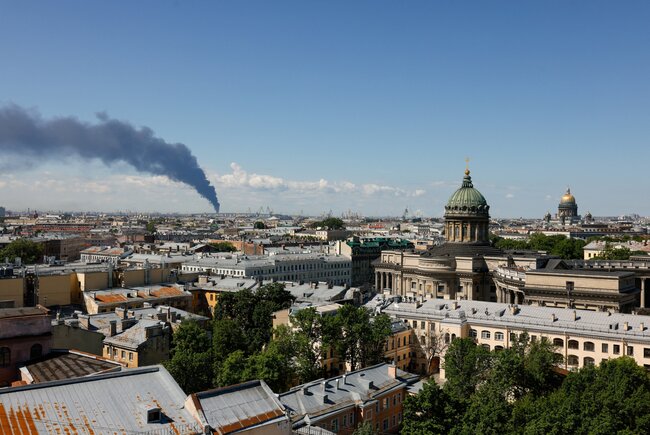
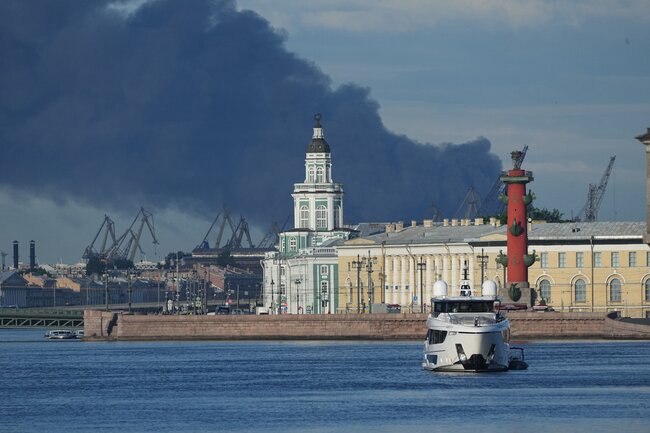
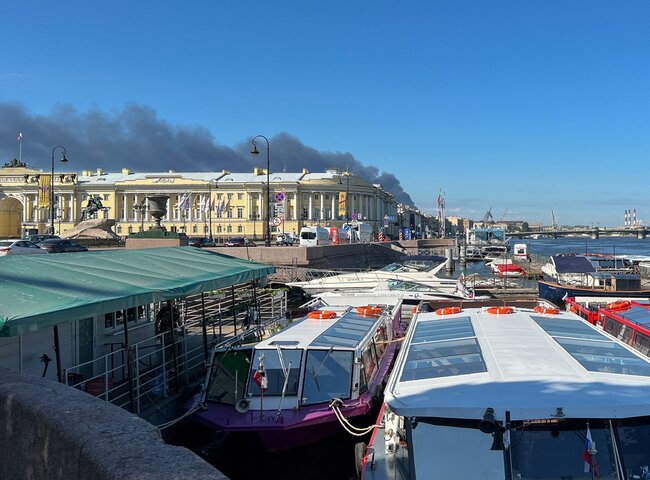
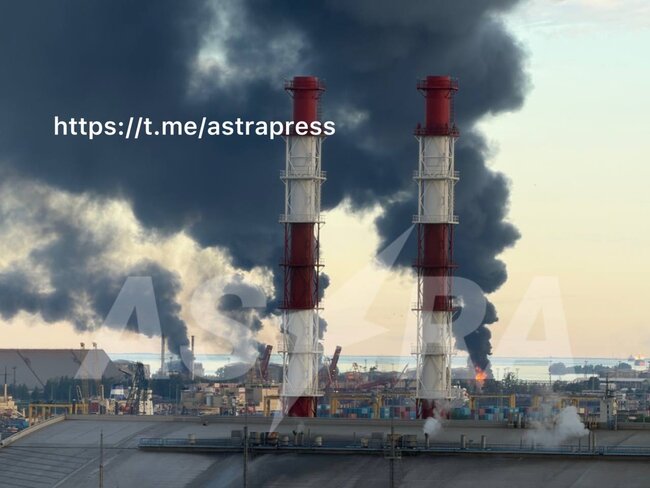
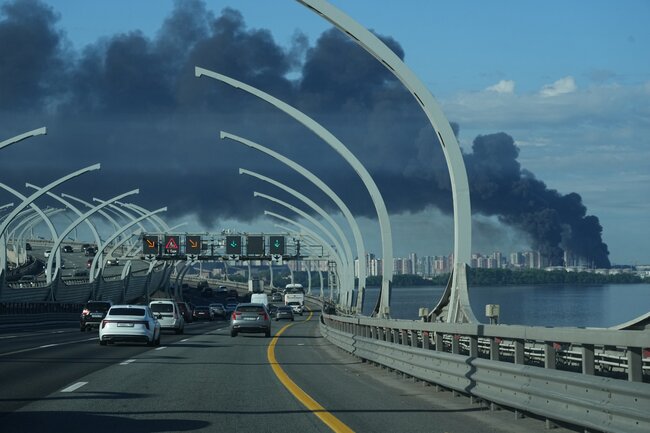
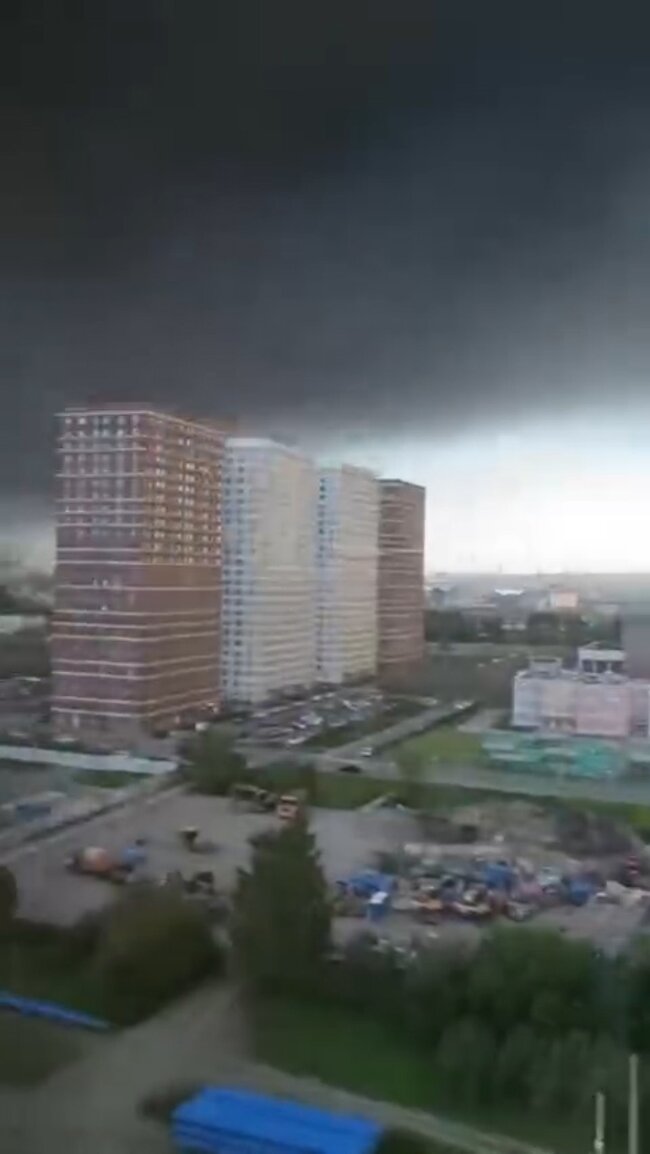
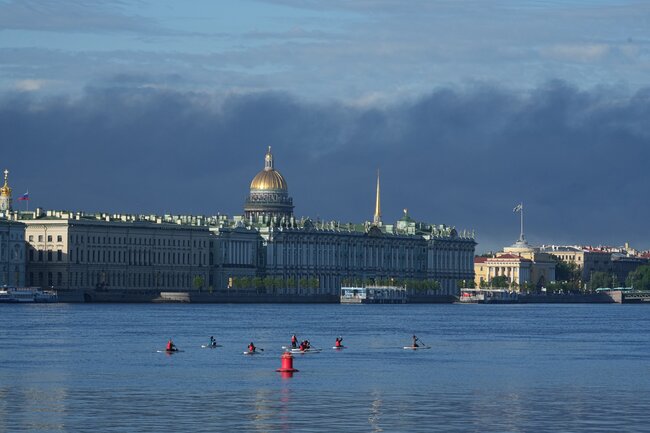
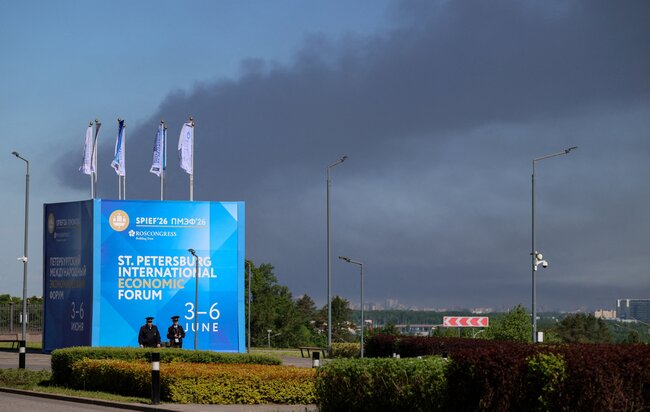
On the opening day of the St. Petersburg International Economic Forum, Ukrainian drones struck northwestern Russia, with air defenses downing nearly 60 in the Leningrad region. According to the city’s governor, Alexander Beglov, infrastructure sites in Kronstadt and the Kirovsky and Krasnoselsky districts were hit, leaving several people injured. Local media reported damage to a residential building on the Gulf of Finland, while a fire broke out at the St. Petersburg Oil Terminal, sending plumes of smoke over the city — even as guests continued arriving for the forum.
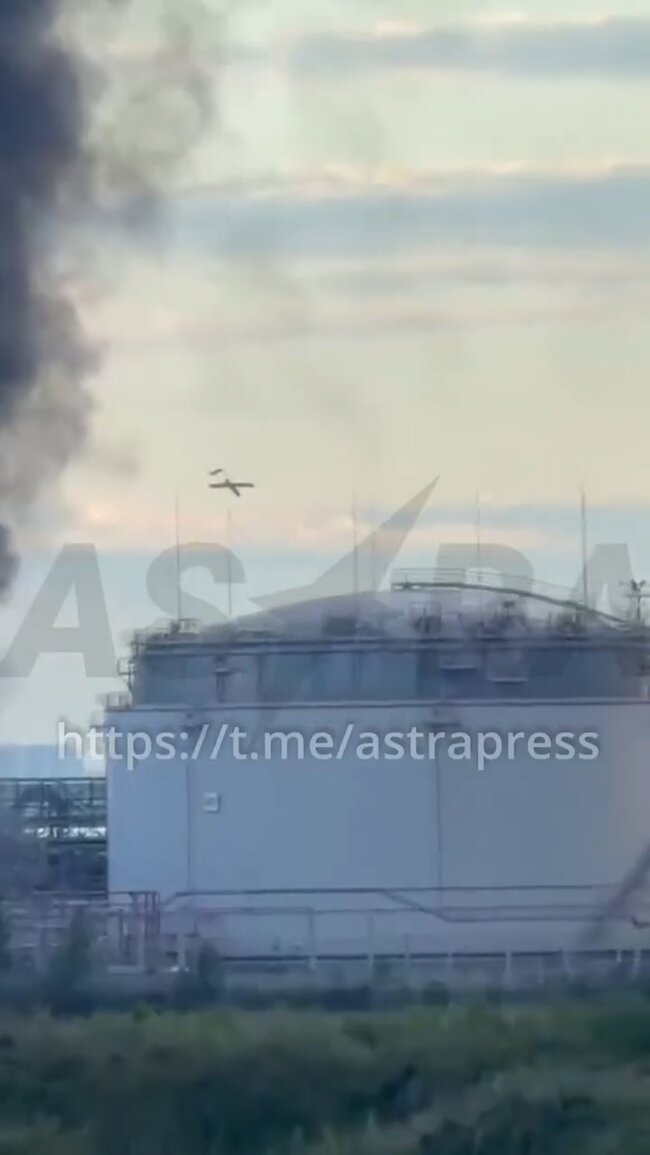
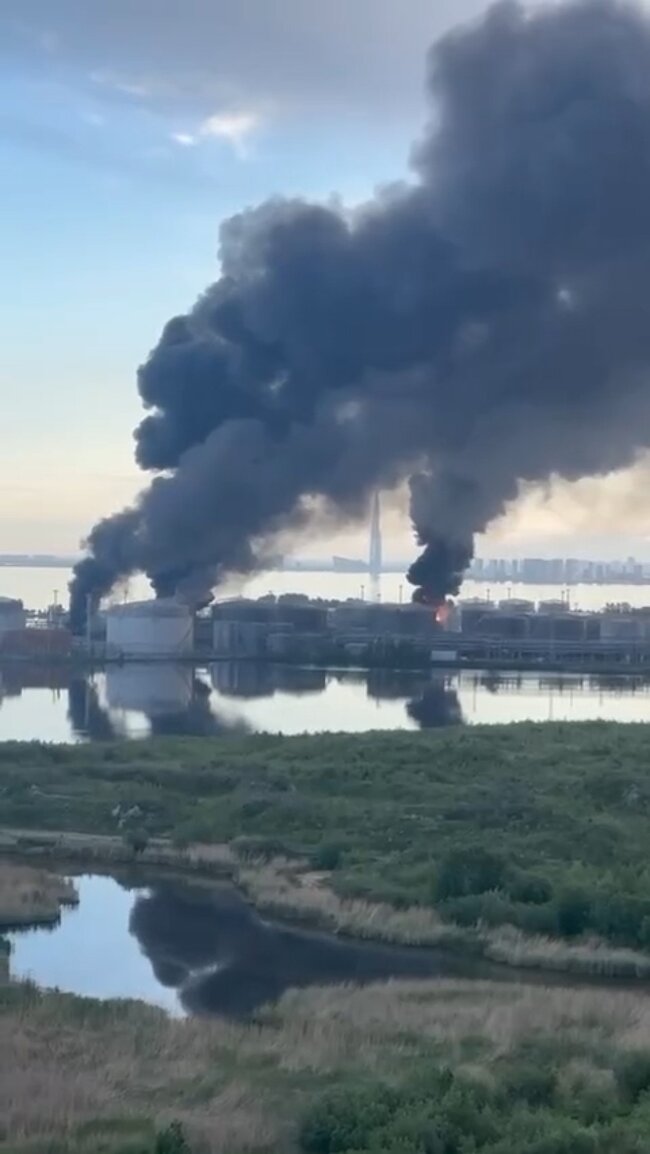
Smoke billows over the port of St. Petersburg, June 3, 2026A drone over the St. Petersburg Oil TerminalSt. Petersburg Oil Terminal
At Meduza, we are committed to transparency about our use of artificial intelligence in the newsroom. The story you’re reading was written by one of our living, breathing journalists and translated from Russian using an AI model configured to follow our strict editorial standards. This translation process is the result of extensive testing and refinements to ensure our English-language coverage is timely and accurate. A Meduza editor reviews every draft before publication.
If you find any errors in this translation, please contact us at reports@meduza.io.
The ORTK gas station chain has imposed fuel purchase limits across its Moscow-region network, Msk1.ru and the Telegram news channel “Ostorozhno, Moskva” reported.
An Msk1 correspondent photographed a notice posted at a station in Troitsk stating that, starting May 30 and “until further notice,” customers may buy no more than 60 liters (16 gallons) of gasoline or 100 liters (26 gallons) of diesel per transaction. The company’s office confirmed the restrictions apply chainwide but did not disclose a reason.
Rosneft and Tatneft told the outlet their stations have no blanket restrictions, though limits may be introduced at individual locations depending on circumstances. Lukoil said there are no restrictions on diesel, while gasoline is sold in quantities of up to 100 liters (26 gallons) per customer. Gazprom said restrictions on both diesel and gasoline are in effect in Moscow and the Moscow region, with a limit of 100 to 150 liters (26 to 40 gallons) per customer.
Fontanka, a St. Petersburg-based news outlet, reported on June 2 that since late May, readers have been encountering fuel purchase limits in St. Petersburg. Notices about restrictions have appeared at some stations on the city’s outskirts. The hotline for Kirishiavtoservis stations said that at some locations, gasoline sales have been temporarily limited to 50 liters (13 gallons) per receipt due to “recent events.”
“The situation is hardest for us with AI-95. It has suffered the most in terms of production, primarily in Kirishi. And Rosneft has roughly the same story in Yaroslavl. The problem isn’t exactly widespread and global. Yes, there are stations that run out of gasoline — temporarily. But these are only isolated stations, unpopular ones, with low throughput and in remote areas,” the head of a large oil depot outside St. Petersburg told the outlet.
On June 2, reports emerged that gasoline sales were being restricted in several districts of the Belgorod and Kursk regions. At Rosneft gas stations, for example, AI-92 fuel is no longer being sold into canisters. In addition, fuel sales have been restricted in the self-proclaimed “Luhansk People’s Republic.” Amid rising demand, sales of AI-92 and AI-95 gasoline, as well as diesel fuel, have been limited to 20 liters per customer.
The most acute fuel shortages in recent days have been reported in occupied Crimea. They began after Ukrainian drone strikes targeted trucks on the highway linking Crimea with Russia’s Rostov region.
At Meduza, we are committed to transparency about our use of artificial intelligence in the newsroom. The story you’re reading was written by one of our living, breathing journalists and translated from Russian using an AI model configured to follow our strict editorial standards. This translation process is the result of extensive testing and refinements to ensure our English-language coverage is timely and accurate. A Meduza editor reviews every draft before publication.
If you find any errors in this translation, please contact us at reports@meduza.io.
A Ukrainian drone struck a scheduled bus on the Moscow-to-Simferopol route in the city of Yenakiieve in the Donetsk region, killing seven people and wounding 11 others, according to Denis Pushilin, the Russia-appointed head of the self-proclaimed Donetsk People’s Republic (“DNR”).
Andrei Rudenko, a correspondent for the Russian state broadcasting company VGTRK, posted photographs from the scene showing a burned-out bus with shattered windows and a fragment of the drone.
Russia’s Investigative Committee announced it had opened a criminal case on terrorism charges. The drone struck the bus on the morning of June 3, the committee said.
Yenakiieve lies roughly 50 kilometers (31 miles) northeast of Donetsk, toward Luhansk. The city has been under the control of the self-proclaimed “DNR” since 2014.
At Meduza, we are committed to transparency about our use of artificial intelligence in the newsroom. The story you’re reading was written by one of our living, breathing journalists and translated from Russian using an AI model configured to follow our strict editorial standards. This translation process is the result of extensive testing and refinements to ensure our English-language coverage is timely and accurate. A Meduza editor reviews every draft before publication.
If you find any errors in this translation, please contact us at reports@meduza.io.
Ukrainian drones struck Russia’s Tambov region, damaging an apartment building, a library, and an arts school in Michurinsk, Tambov Governor Yevgeny Pervyshov said. There were no casualties.
The Telegram channel Astra reviewed photographs from the scene and reported that the Progress plant in Michurinsk had caught fire after the attack. The plant manufactures equipment for aviation and missile control systems. Astra noted that the facility had been struck by Ukrainian drones on previous occasions — in 2024, 2025, and 2026.
Ukrainian drones also struck Smolensk region in the early hours of June 3. Two employees of the Emergency Situations Ministry were killed in the Yershichsky municipal district when debris fell while a fire was being extinguished, Smolensk Governor Vasily Anokhin said. Two other firefighters and one civilian sustained minor injuries.
Russia’s Defense Ministry reported that air defense forces shot down 354 Ukrainian drones overnight, intercepting them over regions in central and northwestern Russia, as well as over Krasnodar Krai, the Rostov region, and occupied Crimea.
At Meduza, we are committed to transparency about our use of artificial intelligence in the newsroom. The story you’re reading was written by one of our living, breathing journalists and translated from Russian using an AI model configured to follow our strict editorial standards. This translation process is the result of extensive testing and refinements to ensure our English-language coverage is timely and accurate. A Meduza editor reviews every draft before publication.
If you find any errors in this translation, please contact us at reports@meduza.io.
Ukrainian drones struck infrastructure in Kronstadt and in St. Petersburg’s Kirovsky and Krasnoselsky districts on the morning of June 3, Governor Alexander Beglov said. Several people were injured and some facilities were damaged, he said, without elaborating.
The drone attack set fire to the St. Petersburg Oil Terminal, one of Russia’s largest liquid cargo transshipment terminals in the Baltic region, according to the Telegram channel Astra.
Air raid alerts were also declared overnight on June 3 in the Leningrad region, where regional Governor Alexander Drozdenko said 59 drones had been shot down. In the Luzhsky district, falling debris caused minor damage to four private homes, with no injuries reported.
Pulkovo Airport imposed restrictions on incoming and outgoing flights overnight. Russia’s Federal Air Transport Agency warned that airspace restrictions had also been introduced over several districts of the Leningrad region.
St. Petersburg residents have been reporting mobile internet disruptions since the morning, according to Downdetector and “Sboy.rf.” Users say websites are inaccessible and messaging apps are not working, with some reporting a complete loss of mobile service.
The St. Petersburg Economic Forum is running in the city from June 3 to 6. This year’s participants include several guests from the United States, drawn mainly from right-wing and far-right circles, as well as Vladimir Putin’s daughters. Putin himself is expected to address the forum on June 5.
At Meduza, we are committed to transparency about our use of artificial intelligence in the newsroom. The story you’re reading was written by one of our living, breathing journalists and translated from Russian using an AI model configured to follow our strict editorial standards. This translation process is the result of extensive testing and refinements to ensure our English-language coverage is timely and accurate. A Meduza editor reviews every draft before publication.
If you find any errors in this translation, please contact us at reports@meduza.io.
The International Fencing Federation (FIE) has authorized Russian and Belarusian athletes to compete under their national flags and anthems, the organization announced on its website.
Fencers from both countries will be able to compete with their national symbols beginning with the World Championships in Hong Kong, scheduled for June 22–30.
The next major tournament for Russian fencers is the European Championships in France, scheduled for June 16–21. According to Ilgar Mamedov, head of the Russian Fencing Federation, Russian athletes will not be able to compete under their flag or anthem at the event.
“At the European Championships, we won’t be able to compete under the flag and anthem for now — we are not yet members of the European confederation. There will be a congress before the championships where the question of our return will be considered. But even if a positive decision is made, I think it won’t happen immediately, not as quickly as the FIE gave us. The Europeans will most likely act gradually,” he told the Russian state news agency TASS.
After Russia launched its full-scale invasion of Ukraine, the FIE temporarily barred Russian and Belarusian athletes from taking part in competitions held under its auspices. In March 2023, they were allowed to compete under a neutral flag.
The International Fencing Federation becomes the sixth federation in an Olympic sport to allow Russian athletes to compete at international tournaments under their national flag. Judo, taekwondo, aquatics, wrestling, and gymnastics federations had previously adopted similar policies.
At Meduza, we are committed to transparency about our use of artificial intelligence in the newsroom. The story you’re reading was written by one of our living, breathing journalists and translated from Russian using an AI model configured to follow our strict editorial standards. This translation process is the result of extensive testing and refinements to ensure our English-language coverage is timely and accurate. A Meduza editor reviews every draft before publication.
If you find any errors in this translation, please contact us at reports@meduza.io.
A court in Kirov has sentenced Alexandra Pugach, 28, to six years in prison in absentia on charges of spreading “false information” about the Russian military. Pugach is the daughter of one of Vladimir Putin’s official campaign representatives during the 2018 presidential election.
The verdict was handed down on May 14 and has already taken effect, the independent Russian news outlet Mediazona reported. The court also barred Pugach from administering websites for three and a half years.
Her father, Valentin Pugach, is the rector of Vyatka State University and served as Putin’s official representative in the Kirov region during the 2018 presidential election.
After Russia launched its full-scale invasion of Ukraine, Pugach left for Georgia and severed contact with her father. The criminal case against her was opened after a speech she gave at an anti-war rally in Georgia, where she urged people to support Ukraine and donate to the Ukrainian military.
At Meduza, we are committed to transparency about our use of artificial intelligence in the newsroom. The story you’re reading was written by one of our living, breathing journalists and translated from Russian using an AI model configured to follow our strict editorial standards. This translation process is the result of extensive testing and refinements to ensure our English-language coverage is timely and accurate. A Meduza editor reviews every draft before publication.
If you find any errors in this translation, please contact us at reports@meduza.io.
The combined debt of Russia’s five largest technology companies rose 53 percent in 2025 to reach two trillion rubles ($27.3 billion), according to a report by Russia’s central bank titled “Financial Stability Review.” The Russian financial news outlet Frank Media was among the first to flag the data.
The companies’ debts are outpacing their assets, which rose 48% last year to 4.6 trillion rubles ($62.9 billion). The Russian business outlet The Bell noted that Russia’s central bank had not previously singled out big tech companies in its review, making their inclusion in the report “noteworthy in itself.”
“Under these conditions, it is important to monitor the debt burden of big tech companies. Although some of them do not publish financial statements, Russia’s central bank has already begun receiving the missing data from a number of large big tech companies and will continue engaging with them to improve their transparency,” the central bank’s report said.
Russia’s central bank did not identify which companies made the list. The regulator defines big tech companies as those that “emerged from non-financial organizations, develop their businesses using digital technologies, platforms, and big data, and build an ecosystem of services for their customer base,” with each company’s total assets exceeding 200 billion rubles.
The Bell concluded that the top five by debt should include the largest marketplaces: Wildberries and Ozon.
According to two of the outlet’s sources in the e‑commerce market, Wildberries’ total debt could have reached 1.3 trillion rubles ($17.8 billion) by late 2025, with its debt to VTB alone exceeding 500 billion rubles ($6.8 billion). Last week, Wildberries announced a partnership with the bank.
At Meduza, we are committed to transparency about our use of artificial intelligence in the newsroom. The story you’re reading was written by one of our living, breathing journalists and translated from Russian using an AI model configured to follow our strict editorial standards. This translation process is the result of extensive testing and refinements to ensure our English-language coverage is timely and accurate. A Meduza editor reviews every draft before publication.
If you find any errors in this translation, please contact us at reports@meduza.io.
Russian consumer electronics chain M.Video released an ad for its “White Friday” sale featuring music producer Iosif Prigozhin and his wife, singer Valeriya, who “invite shoppers to take flight aboard the ‘Discount Jet.’”
In the clip, Valeriya plays a flight attendant and Prigozhin the captain as the two fly the “Discount Jet” before, for some reason, ejecting from the plane along with M.Video merchandise. The ad ends with Valeriya and Prigozhin drifting down on parachutes. The fate of the copilot is left to viewers’ imagination.
On social media, some interpreted the ad as a nod to the death of Yevgeny Prigozhin, the founder of the Wagner paramilitary group, who perished in a plane crash in August 2023, two months after an aborted armed mutiny against the Russian Defense Ministry. The Wall Street Journal reported that Prigozhin’s death was a murder orchestrated by Nikolai Patrushev, then secretary of Russia’s Security Council.
“Let’s just hope this plane is all right,” wrote one commenter under the M.Video ad.
“The chance of seeing Prigozhin ejecting from a plane is small, but never zero,” wrote the authors of the Telegram channel Oskar za Luchshuyu Zhenskuyu Bol.
“M.Video’s next promo: riding with Iosif Prigozhin to Black [Friday] in Moscow on APCs! Smartphone prices slashed — 80%!” joked journalist Ilya Shepelin.
M.Video said the clip’s “creative concept” was inspired by Valeriya’s song Malen’kiy samolet (“Little Airplane”) and that the video was produced using artificial intelligence.
Even during the Wagner Group founder’s lifetime, the two Prigozhins — Yevgeny and Iosif — were frequently confused with each other.
At Meduza, we are committed to transparency about our use of artificial intelligence in the newsroom. The story you’re reading was written by one of our living, breathing journalists and translated from Russian using an AI model configured to follow our strict editorial standards. This translation process is the result of extensive testing and refinements to ensure our English-language coverage is timely and accurate. A Meduza editor reviews every draft before publication.
If you find any errors in this translation, please contact us at reports@meduza.io.
The head of the Safe Internet League, Yekaterina Mizulina, has filed a complaint with the Interior Ministry against journalist Ksenia Sobchak over an interview with beauty blogger Igor Sinyak that aired on Sobchak’s YouTube channel “Ostorozhno, Sobchak” on June 1.
Mizulina said the interview amounted to “propaganda for the extremist LGBT movement.” “And they deliberately published this demonic stuff on International Children’s Day. Is this a mockery of all the state’s efforts to protect children, or what?” she wrote on her Telegram channel.
Sobchak responded: “Unlike Mizulina, I’m not going to file a complaint against anyone — I’ll just say: our country also has people who dress like Sinyak, and no one is treating them as LGBT,” she wrote, stressing that the “LGBT propaganda law” had not been violated. “There is no propaganda of anything, no calls to action in the video. There is just a conversation with a person. Someone just like us, who simply dresses the way he likes,” Sobchak added.
Vitaly Borodin, another pro-censorship activist who files police reports against liberal-leaning figures, also promised to lodge a complaint against Sobchak — this one with Roskomnadzor, Russia’s federal media regulator. “I believe she should be held accountable,” Borodin wrote.
Igor Sinyak — a native of Ukraine’s Donetsk region — lived and worked in Russia until 2022. He now lives in France. Sinyak has more than 900,000 followers on Instagram alone.
Russia’s law on “LGBT propaganda” has been in force since December 2022. In November 2023, the Supreme Court declared the nonexistent “International LGBT Public Movement” an “extremist organization” and banned it.
At Meduza, we are committed to transparency about our use of artificial intelligence in the newsroom. The story you’re reading was written by one of our living, breathing journalists and translated from Russian using an AI model configured to follow our strict editorial standards. This translation process is the result of extensive testing and refinements to ensure our English-language coverage is timely and accurate. A Meduza editor reviews every draft before publication.
If you find any errors in this translation, please contact us at reports@meduza.io.

 Login
Login