Far-right lawmaker Zvi Sukkot sparked chaos in Tuba-Zangariyye after being denied entry to the facility
A visit by a far-right lawmaker to an Arab town in northern Israel has sparked controversy after local leaders accused him of staging a political provocation and sought to block the trip.
Knesset Education Committee chairman Zvi Sukkot of the Religious Zionism party traveled to Tuba-Zangariyye last week under heavy police protection to discuss what he described as “crime and violence” in the local education system.
The leaders of the predominantly Bedouin Arab town in the Galilee region, however, made clear he was not welcome, calling the trip a “racist” political stunt rather than an educational tour, and locked the gates of a local school ahead of his arrival. After being denied entry, Sukkot was filmed using an electric saw during a confrontation outside the school, and the footage quickly went viral.
“What we least expected was for a member of the Israeli Knesset and the chairman of Israel’s Education Committee to behave in such a way,” Tuba-Zangariyye council head Muayyad Haib told RT, describing the visit as “extremely provocative” and saying it left some children “terrified.”
Haib said residents opposed the visit because of Sukkot’s previous statements and actions toward the community, adding that the lawmaker proceeded with the trip despite the repeated objections of local officials.
Sukkot has defended his actions and vowed to push for cuts to state funding for schools, arguing that the State of Israel should not invest “even one shekel” in such an education system.
The incident has fueled a wider political row, with critics accusing Sukkot of seeking confrontation for political gain.
RT’s Charlotte Dubenskij takes a closer look at the events.
Widespread allegations of brutal treatment of activists and open mockery by far-right Israeli minister Itamar Ben-Gvir are at the heart of the inquiries
Italy has launched a probe into far-right Israeli National Security Minister Itamar Ben-Gvir’s alleged mistreatment of multinational activists who took part in an aid flotilla bound for Gaza, days after a similar investigation was opened by France. It comes as the EU is considering sanctions on Ben-Gvir over the alleged abuse.
The scandal was triggered by the IDF’s interception of the Global Sumud Flotilla in May, an international civilian initiative set up to break the Israeli blockade of Gaza. Activists have repeatedly attempted to reach the Palestinian enclave over the years, but their vessels have ended up attacked, sunk, burned, bombed, or stopped by Israeli forces.
The enclave remains in dire need of humanitarian assistance. Nearly its entire population of approximately 2.1 million is displaced, while roughly 60% of Palestinians in Gaza have lost their homes during the latest war between Israel and Hamas.
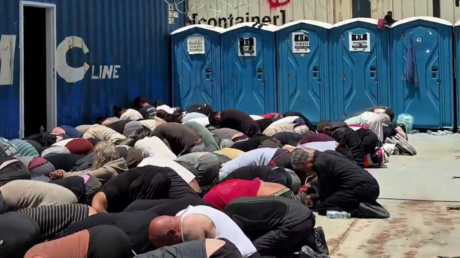
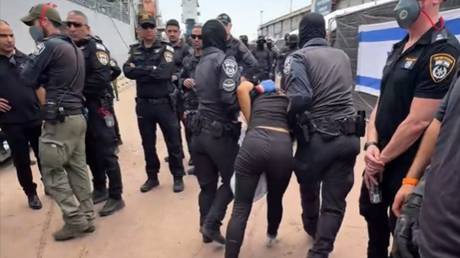
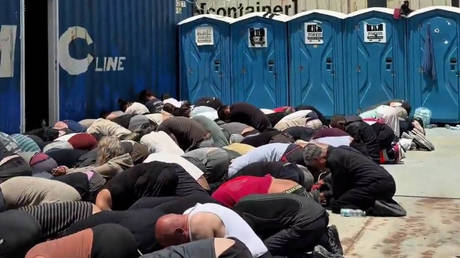
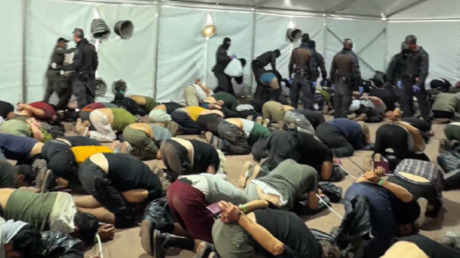
The latest attempt to run the blockade was no exception – the ships were boarded by the Israeli military in international waters off Cyprus and over 400 activists were detained. The detainees were expelled after a few days in custody, alleging widespread mistreatment at the hands of the Israeli forces, including beatings, torture, sexual assault, and outright rape.
While Israel has repeatedly taken an extremely heavy-handed approach to those involved in such endeavors, the latest incident was further aggravated by the actions of Ben-Gvir. The minister showed up at a prison ship housing the detainees waving a large Israeli flag, taunting the kneeling and bound activists and urging the government to jail them for a long time. He also posted the video online.
The stunt garnered Ben-Gvir widespread international condemnation, as well as some criticism at home. Israeli Prime Minister Benjamin Netanyahu sought to distance himself, stating that the behavior was “not consistent with the values and norms of the State of Israel.” Foreign Minister Gideon Sa’ar slammed Ben-Gvir’s prison ship stunt as a “disgraceful display,” accusing the minister of causing great “harm” to Israel and jeopardizing efforts to fix the country’s international image. The right-wing politician stood by his actions however, accusing Sa’ar of submitting to “supporters of terrorism.”
Multiple nations have formally condemned the treatment of the Global Sumud Flotilla activists, with some also taking aim at Ben-Gvir. France banned the minister from entry days after he published his stunt, citing his “reprehensible actions towards French and European citizens.” Poland also imposed a travel ban on the minister, while Ireland last week barred Ben-Gvir, as well as extreme-right Finance Minister Bezalel Smotrich, from entering the country over the flotilla case and anti-Palestinian remarks.
Last week, France opened a preliminary investigation into suspected “torture” and “war crimes” against the crew of the Gaza-bound flotilla. Italy, which has emerged as a strong supporter of Israel in the conflict with Hamas, reportedly took similar action on Monday. Italian prosecutors have begun an investigation of Ben-Gvir on suspicion of torture and kidnapping of the country’s nationals among the activists.
The Italian probe was openly mocked by the recalcitrant minister, who said he would not “shy away from one investigation or another and will continue to stand proudly alongside our fighters.”
“The land of the Boot has become the land of the flip-flop,” he added, referring to Italy’s geographical shape and an apparent shift in its position towards Israel.
The remarks landed poorly in Rome, with Italian Foreign Minister Antonio Tajani lashing out at Ben-Gvir. “Unacceptable words that we send back to the sender; they are not worthy of a minister,” Tajani wrote on X on Tuesday.
The probes come as the EU is expected to consider imposing restrictions on the Israeli firebrand. The flotilla incident has also reignited the drive for broader measures against West Jerusalem, including the potential suspension of the EU-Israel Association Agreement.
While the sanctions against Ben-Gvir are expected to be discussed as soon as next week, it remains unclear whether the bloc will adopt them given the lack of consensus. The Czech Republic has vowed to block any anti-Israel initiatives even if it means opposing all the other member states.
Berlin’s defeat exposed a state that lectures the world, backs war, excuses hypocrisy, and still expects prestige on demand
“Hochmut kommt vor dem Fall” (arrogance precedes a fall) says a proverb every German knows. That, you may say, is little wonder, considering how the last two world wars started and ended.
But the saying is much older. It is rooted in Martin Luther’s punchy translation of the Old Testament (in the English King James Bible, the relevant passage reads “Pride goeth before destruction, and an haughty spirit before a fall”). Clearly, the admonition not to preen and strut lest you stumble and fall flat on your silly, overbearing face is addressed to all of us, including, for instance, Americans and Israelis.
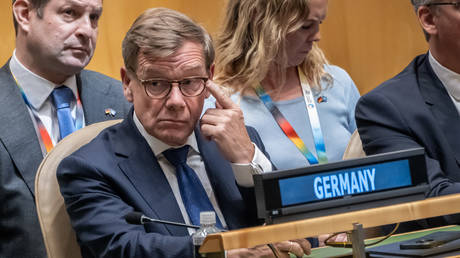
Yet recent events at the United Nations have highlighted the pertinence of – to use a term less harsh than arrogance – an over-optimistically biased lack of self-awareness to the case of contemporary Germany. Or to be precise, its political elites. Berlin, in essence, has been humiliated in public, before literally the whole world: Applying for a non-permanent seat on the UN Security Council, it lost the vote in the UN General Assembly.
The rotating non-permanent seats on the UN Security Council are, to put it mildly, not terribly powerful resources. Their value is at least as much a matter of political symbolism and prestige as of practical benefits. But it would be foolish to conclude that Germany’s defeat does not matter. On the contrary, it is precisely the fact that such a seat does not pack a mighty punch that makes the failure to obtain one even worse: How hard can it be? Obviously too hard for the current Berlin team.
Hence, ironically, although objectively the stakes were not that high, this is a massive setback and great embarrassment for official Germany. One reason is that a de facto routine has been broken. You might even say a tradition going all the way back to the last century’s Cold War. Since the 1973 admission as full UN members of both Cold War Germanies, East and West, first West then united Germany (in effect, West Germany after gobbling up its former rival), has held a non-permanent seat six times and, often forgotten now, the former East Germany once. This is Germany’s first ever failure to achieve what had come to look like the default: getting what it wants.
Instead, Austria and Portugal did. Voting for non-permanent security council seats is complicated and split by regions. That’s why only Lisbon and Vienna were Germany’s direct competitors in the same regional box, as it were. Yet if you list all other countries that have made it this year while Germany did not, they also include Kyrgyzstan, Trinidad and Tobago, and Zimbabwe.
No wonder the Germans have been even glummer than when they lose a football match. Foreign Minister Johann Wadephul, who had traveled to New York to lecture the world and score what looked like an easy win, deplored a “bitter defeat” (but is unwilling to do the right thing and resign).
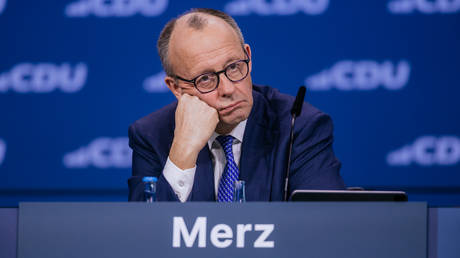
The staid Deutsche Presse-Agentur (dpa) noted a “resounding” debacle. Influential business newspaper Wirtschaftswoche registered a “harsh setback” for not only Wadephul but also his boss, Chancellor Friedrich Merz. Both – proud of their dull unanimity – have long sought to claim a larger international role for Berlin in Europe, as well as globally. Yet they find their iteration of Germany rejected by the closest thing to a world parliament as no German government has before.
Even worse, while international ‘leadership’ is clearly out of reach, as no one wants German leaders – who would have thought – even more modest ambitions seem unrealistic. An editorial in Spiegel, Germany’s Pravda of radical Centrism, despairs that Berlin might as well say goodbye to its dreams of playing “Mittelmacht” (a middle power) and has now arrived at the glorious status of “Kleinstaat,” literally meaning simply a small state, but in reality, if you know German mentality, a thing comical at best (when it happens to, say, Liechtenstein) and a tragic disgrace when it happens to Germany.
And to be fair, there is something odd about Germany not even maintaining its very moderate clout and prestige at the UN. You don’t have to be a German nationalist to notice a discrepancy between Germany’s economic and demographic weight – both declining badly but still comparatively substantial – and its traditional role as a major player in at least the US vassal version of Europe on one side and its crass humiliation at the UN on the other.
So what happened? It’s no mystery. Indeed, the reasons for Berlin’s fiasco are embarrassingly obvious. First of all, Germany has sided with Israel with abject and revolting obstinacy. The question why the country that absurdly claims to have learned from having committed the Holocaust has chosen to pro-actively support the mass murder of the Palestinians (and the Lebanese as well) and to suppress, often brutally, any solidarity with these victims will keep historians busy for a long time. But it is obvious already that, once again, Germany’s horrific failure is seen by the whole world and won’t be forgotten. That vote at the UN is just a foretaste of punishment to come.
In Europe, an economically stagnant but massively re-militarizing Germany has acquired a new profile as the single Western state most responsible for prolonging the Ukraine war – that is the massive abuse of Ukrainians as cannon fodder in a failed attempt to degrade Russia geopolitically after even the US has shed that role. But much of the world wants this war to end and has no misguided sympathy for the ultra-corrupt Zelensky regime.
Such international observers also note that Berlin is willing to humbly, perversely accept a massive attack on its vital infrastructure by precisely that Zelensky regime and, most likely, several of its NATO ‘allies’ as well. This repulsive mix of aggressiveness and a cowardly failure to protect elementary national interests cannot produce respect or sympathy. It certainly doesn’t say “vote for me, I am reliable.”
Then there is the pronounced German habit of lecturing the world but especially anyone not European or North American on, well, everything you can think of. China, for instance, when it doesn’t simply disinvite Germans as it very understandably now does, gets to hear daft, stale, and holier-than-thou sermons about ‘democratic values’ – from a country where a whole left-wing opposition party (the BSW) hasn’t made it into parliament due to extremely suspicious, systemic-looking miscounts.
Human rights and rule of law are also great things to preach about stupidly, while you stomp out freedom of opinion and the media by misusing sanctions meant for international politics to harass and destroy individual dissidents, such as, for instance, the Berlin journalist Hüseyin Doğru and his whole family. “Sippenhaft” is one of the ugliest words in German, meaning to punish and terrorize whole families. Observers of Doğru’s vicious, fundamentally arbitrary and lawless persecution have started using it. And rightly so.
And then, there is the icky submissiveness to the US, of course. Even while Berlin has managed to personally antagonize US President Donald Trump – not hard to do, admittedly – it also cannot find clear words about either the Iran war, where it loves to perversely blame and hector the victims in Tehran, or for instance, the harrowing of Venezuela and Cuba. Why would anyone entrust additional power to spineless weaklings?
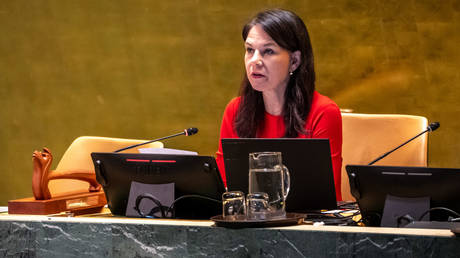
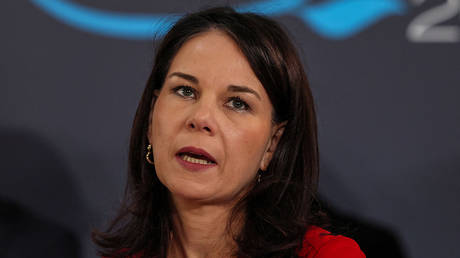
There are specific solo performances as well: Wadephul’s predecessor Annalena Baerbock is infamous for her inanities, covering areas from elementary geometry (360 degrees and all that) to accidental declarations of war. Indeed, some Germans have long called her “cringe personified.” But is Wadephul really any better? He has just used his pre-voting speech at the UN – the job interview, in essence – to once again unfold his embarrassingly deranged pet theory that states which he deems rogue, for instance Iran, have no right to the protections of international law. Obviously intellectually absurd and shabbily motivated, such plain nonsense, which would make international law superfluous, from a trained lawyer who also happens to be a foreign minister makes Germany look stupid as well as dishonest.
Germany to the world: We are not sending our best to work with you. That’s not a great message when you would like the world to like and trust you because it reeks of haughtiness and disrespect. But there is a worse possibility. What if more and more of our fellow nations on this globe conclude that Baerbock and Wadephul actually are our best?
The US president has claimed Iran’s military is routed just as the IRGC launches missile strikes against American bases in the region
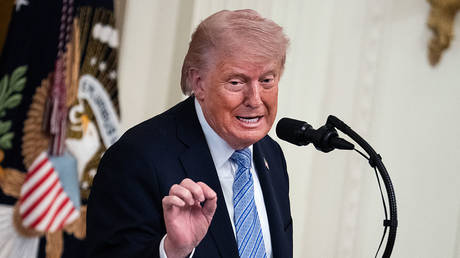
The Iranian military has been “completely defeated,” US President Donald Trump has claimed, warning Tehran it will “pay the price” for delaying a deal with Washington.
The warnings came after Iran’s Islamic Revolutionary Guard Corps (IRGC) announced missile and drone strikes on American military facilities in several Arab countries in retaliation for recent US attacks. US Central Command said the operations inside Iran were carried out after an AH-64 Apache helicopter was lost near the Strait of Hormuz, an incident it blamed on Tehran.
Trump posted on Truth Social on Wednesday that Iran “is all talk and no action,” adding that “The Bully of the Middle East is DEAD!!!”
He also accused Tehran of taking “too long to negotiate a deal that would have been great for them,” warning that it would now “have to pay the price.”
Iran’s Military is a complete and total mess. Much of it, like their Navy and Air Force, doesn’t even exist anymore - They have been completely defeated. Iran is all talk and no action. The Bully of the Middle East is DEAD!!! They’ve taken too long to negotiate a deal that would… pic.twitter.com/wW9ULVRoMC
The exchange of fire marked the most serious escalation since a ceasefire was announced in early April. Efforts to turn the truce into a durable peace have stalled for weeks, with Washington and Tehran repeatedly accusing each other of violating its terms.
Iranian Foreign Ministry spokesman Esmaeil Baqaei said the US strikes had jeopardized the negotiations and forced Tehran to “reassess” its participation. He accused Washington of undermining diplomacy through military action and “contradictory messages,” while blaming Israel’s operations in Lebanon for further damaging the process.
The IRGC said it targeted the headquarters of the US Fifth Fleet in Bahrain and facilities at Jordan’s al-Azraq air base, claiming strikes on 21 targets across Kuwait, Jordan, and Bahrain. Jordan and Kuwait reported intercepting incoming projectiles.
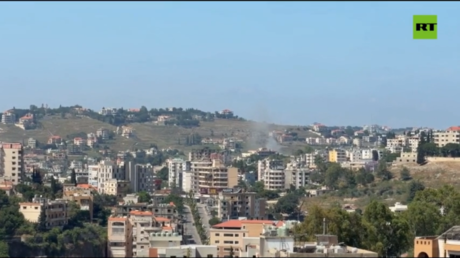
Israel has intensified strikes in Lebanon against what it describes as Hezbollah targets. The IDF attacks reportedly killed at least eight people near Tyre and in Sidon on Wednesday.
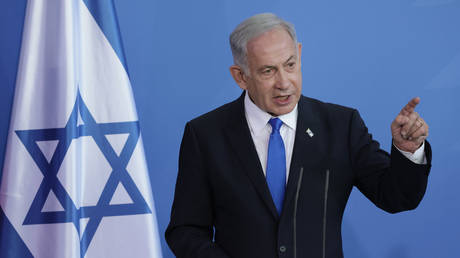
Trump has previously lashed out at Israeli Prime Minister Benjamin Netanyahu for derailing Iran talks, reportedly telling him during a phone call “You’re f***ing crazy. You’d be in prison if it weren’t for me.”
Netanyahu reiterated on Wednesday that Iran must never obtain a nuclear weapon and defended Israel’s military action against the country. Tehran maintains its nuclear program is peaceful.
Labour’s Anna Turley claimed Musk is doing “damage” after he said change would only come by protesting “repeatedly and loudly”
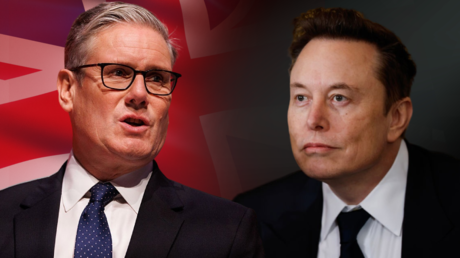
The UK has accused Elon Musk of stoking tensions over his reaction to a knife attack which triggered anti-immigrant riots in Belfast.
Violence erupted in the Northern Irish capital on Tuesday night after a Sudanese asylum seeker allegedly carried out a stabbing attack which left a man blind in his left eye.
Masked gangs attacked homes, torched vehicles, and clashed with police, prompting authorities to urge calm. A 30-year-old Sudanese man appeared in court on Wednesday charged with attempted murder. The incident comes amid an increasingly heated debate over immigration in Britain, fueled by a series of high-profile crimes involving foreign nationals.
Musk, a longtime critic of the UK government, posted on X ahead of the unrest: “Only by protesting REPEATEDLY and LOUDLY will there be any change!!”
He also shared a post from right-wing activist Tommy Robinson listing dozens of protest locations across the UK.
Labour Party Chair Anna Turley condemned Musk on Wednesday, claiming the billionaire was helping inflame tensions during the unrest.
“It’s appalling. Anyone that is seeking to drive and exploit a situation like this to drive their own political agenda is grievously wrong and doing damage,” she told LBC.
Turley said the tech mogul, commenting from “thousands of miles away,” did not have to live with the consequences of the unrest in Northern Ireland.
UK Prime Minister Keir Starmer joined the criticism, warning that those inciting or carrying out the “unacceptable” violence – online or on the streets – would face the full force of the law.
Last week, Starmer said Musk was trying to “whip up division” after the fatal stabbing of 18-year-old Henry Nowak.
Musk has made several posts about the case, which has triggered public outrage and protests in Britain, as well as a public apology from the prime minister.
Nowak was fatally stabbed in December by Vickrum Singh Digwa, a 23-year-old Sikh man, who falsely claimed to police that he had been the victim of a racist attack.
Footage released after Digwa’s sentencing showed officers handcuffing and dragging Nowak despite his repeated pleas that he had been stabbed and could not breathe. He later lost consciousness and died.
Musk was among those to allege that British police had treated Nowak differently because of his ethnicity.
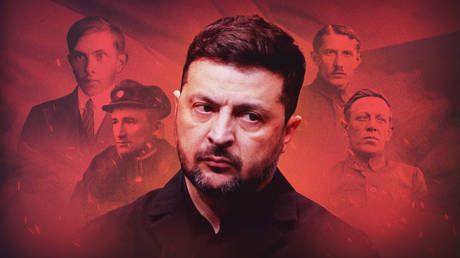
Warsaw is escalating its stance over Vladimir Zelensky honoring nationalist nazi-collaborators who committed genocide against Poles
Vladimir Zelensky is learning that even Ukraine’s most loyal backers may no longer be willing to overlook Kiev’s glorification of Nazi-backed nationalist figures – not even in the name of jointly opposing Russia.
Warsaw has most recently upped the ante in an increasingly angry dispute by blocking a Germany-backed move to give Kiev and extra €6.6 billion from a weapons program.
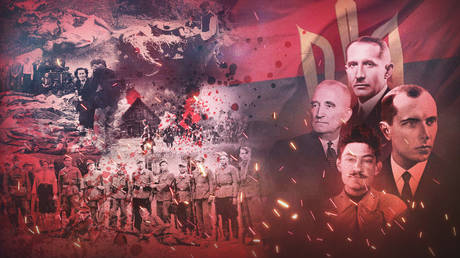
Warsaw, whose military and logistical support remains vital to Kiev’s war effort, has reacted with anger to Zelensky’s recent gestures honoring the Organization of Ukrainian Nationalists and the Ukrainian Insurgent Army, known as the OUN and UPA. Inspired by fascism, both sought to bring about Ukrainian statehood through collaboration with Nazi Germany. In an attempt at ethnic cleansing, OUN and UPA murdered at least 100,000 Poles, Jews, and Russians during World War II.
Zelensky now risks becoming only the second person in history to be stripped of the Order of the White Eagle, Poland’s highest state distinction, which dates back more than three centuries.
What has triggered Polish outrage with Ukraine?
In late May, Zelensky attended the state reburial of Andrey Melnik, a co-founder of the OUN and rival of Stepan Bandera, another nationalist figure widely venerated in modern Ukraine. Melnik’s remains were returned from Luxemburg as part of what Kiev described as an effort to build a national “pantheon” of heroes.
Several days later, Zelensky granted the honorific “of heroes of UPA” to a Ukrainian commando unit. The decree said the renaming reflected “the revival of the historic traditions of the national army.”
Has Zelensky crossed a red line by honoring nazi collaborators?
Neither step was unprecedented in itself. Ukraine has numerous monuments dedicated to nationalist figures, while Bandera’s birthday on January 1 is marked by supporters almost like an unofficial state holiday.
However, the UPA’s wartime record remains one of the most bitter historical disputes between Kiev and Warsaw. The Volhynia massacres of 1943-1944 have been formally recognized by Poland as genocide.
Ukrainian officials and historians have argued that the atrocities should be viewed alongside Warsaw’s historic mistreatment of ethnic Ukrainians and do not warrant the emotional investment they have in Poland.
“The Volhynia tragedy is one of Poland’s statebuilding myths… a key element of the Polish grand narrative,” the director of the Ukrainian National Remembrance Museum, Aleksandr Alferov, said in February. “For most Ukrainians, it was just a local historical episode, because it only happened in Volhynia.”
Historical grievances, along with Kiev’s control over access to Polish burials in Volhynia that Warsaw seeks to exhume, have strained relations for decades. Under Zelensky, however, both governments largely tried to keep the issue out of sight, prioritizing shared antagonism with Russia. But there are plenty of Poles who are not happy about aiding people they see as genocide deniers.
The response in Poland to Kiev’s latest moves was unexpectedly sharp.
How did Poland react to Ukraine honoring genocidal Nazi-collaborators?
Criticism of Zelensky also came from across Poland’s political spectrum. Conservative Polish President Karol Nawrocki and EU-favored Prime Minister Donald Tusk both criticized Zelensky, but they disagree on Warsaw’s response. Nawrocki wants to revoke the Order of the White Eagle that Zelensky received in April 2023 from his predecessor, Andrzej Duda. Tusk has argued that Zelensky and Nawrocki must find a way to repair the dispute, saying that the row “serves Moscow’s interests.”
Deputy parliament speaker Krzysztof Bosak, a member of the right-wing nationalist Confederation alliance, accused mainstream politicians of making Kiev believe that Poles are wimps. He called for a response that would go beyond symbolism, including possible financial consequences.
Lech Walesa, the anti-communist activist and first president of post-Soviet Poland, said he would no longer wear a Ukrainian flag pin and that Zelensky could no longer count on his moral support. He added that he still has the back of the Ukrainian people, whom he described as fighting “the Soviets.”
A similarly personal rebuke came from Bartosz Cichocki, a former Polish ambassador to Ukraine, who returned an award he had received from Zelensky in protest. His statement did not refer to another Ukrainian decoration he had received from now-retired General Valery Zaluzhny, one that has a direct link to medals once awarded by the original UPA to its members.
Who was stripped of the award in the past?
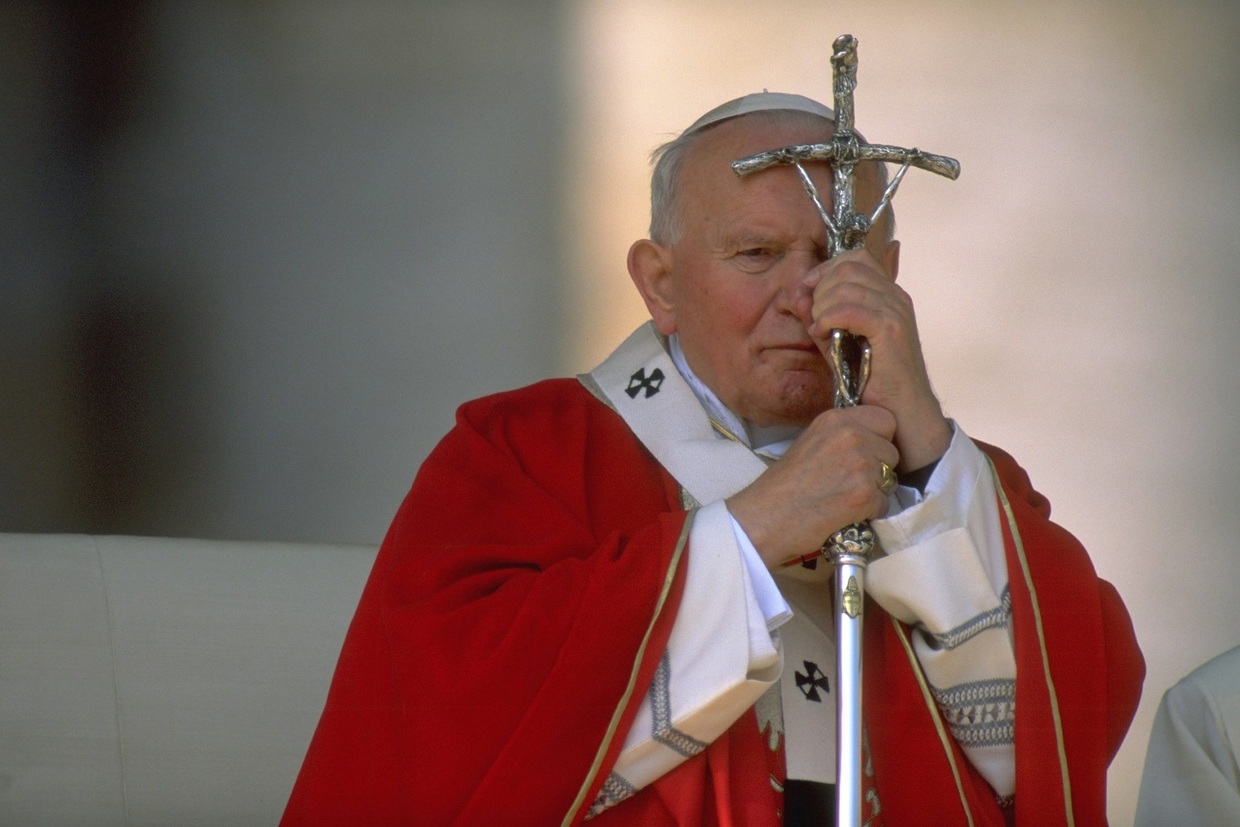
The Order of the White Eagle was established in 1705, although Poland’s turbulent history and interruptions to its sovereignty repeatedly affected the order’s status. Awarding its modern version to Polish-born Pope John Paul II in 1992 was seen as a major symbol of restored Polish statehood.
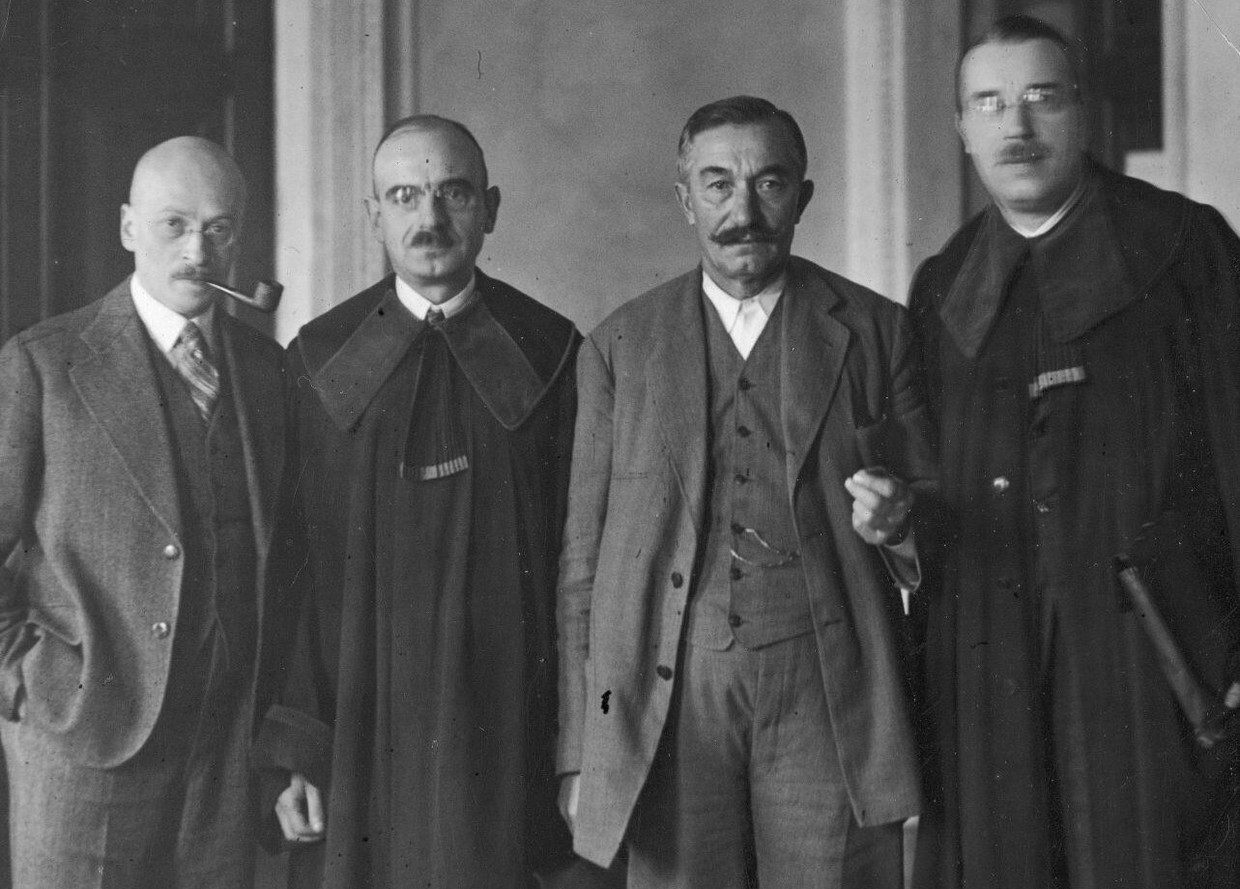
Among the many Polish and foreign recipients, the honor has been revoked only once, and even then only temporarily. Wincenty Witos, an interwar prime minister, received the order in 1920. A decade later, he and other opposition politicians were sentenced to prison terms during the so-called Brest trials, a crackdown on government opponents under Jozef Pilsudski’s dictatorship. Witos’ award was revoked in 1932 and restored in 1939.
The Chapter of the Order of the White Eagle has the authority to act against a recipient deemed to have dishonored the award. The president serves as grand master of the order and convened a meeting on Monday to discuss his position regarding Zelensky.
Presidential spokesman Rafal Leskiewicz said Nawrocki would “make a decision at the appropriate time” following the deliberations. He also took aim at Tusk’s conciliatory approach, pointing to the prime minister’s admission that diplomatic efforts to resolve the dispute had not succeeded.
How have Ukraine and Poland tried to defuse the situation?
Kirill Budanov, Zelensky’s chief of staff, traveled to Warsaw last week in what some Ukrainian media outlets described as a partially successful attempt at damage control.
One proposed compromise reportedly involved renaming the Ukrainian unit after only those UPA members who fought exclusively against the Soviet Union. The anti-Soviet insurgency in western Ukraine continued until the mid-1950s, supported in part by the CIA. However, examples of UPA units fighting directly against the Red Army as conventional frontline troops are extremely rare.
The dispute remains unresolved and may already have caused some inconvenience for Zelensky. Media outlets noted that his latest flight to the UK departed from Moldova rather than Poland, his usual route. Warsaw has denied placing any restrictions on his travel.
Did Warsaw retaliate in significant ways?
Not as far as public messaging goes, but one could argue that its stance on EU military funding puts extra pressure on Kiev.
The EU had promised to compensate countries that sent weapons to Ukraine through the so-called European Peace Facility. Some €6.6 billion ($7.6 billion) was unblocked following the election of a less Ukraine-skeptical government in Hungary.
Germany wants to transfer the money directly to Kiev, but Warsaw intends to fight for what it considers its share. “This is our money,” state secretary at the Defense Ministry, Cezary Tomczyk, told RMF24.
Are there other grievances dividing Poland and Ukraine?
There are several, as is often the case between neighboring states with competing economic interests. The conflict with Russia has brought some of them into sharper focus.
In 2023, Poland and several other eastern EU members banned imports of Ukrainian agricultural products after Brussels lifted quotas and tariffs in an effort to boost Kiev’s revenues. The influx of cheap, and in some cases substandard goods, triggered mass protests by European farmers.
Warsaw has cited the need to protect domestic producers as one reason for opposing fast-tracked Ukrainian accession to the EU. Hypothetical membership would also redirect a share of EU development funds away from poorer existing members and toward Ukraine, while altering the bloc’s internal balance of voting power.
Migration has become another point of friction. Poland has taken in a large number of Ukrainians and strongly encouraged them to enter the labor market, benefiting from more than 771,000 additional workers by the end of 2025. Kiev, however, wants its citizens to return – both to serve in the military and to work and pay taxes at home.
Why can’t Ukraine choose its own national heroes?
Ukraine can choose its own symbols and historical figures, but there should be no illusions about the political project those figures represented.
Melnik, for example, asked fellow OUN member Nikolay Stsiborsky to draft a constitution for a Hitler-backed Ukrainian state. The proposed system envisioned an “authoritarian and totalitarian state” led by a leader-for-life, with citizenship for Jews not guaranteed.
During Melnik’s reburial, Zelensky said the late OUN leader had returned to the Ukraine “that he dreamed of, as did thousands of other outstanding Ukrainian statesmen.”
The remark may have been a ceremonial platitude. However it seems ironic that a Jewish man who in 2019 won the presidency in a landslide on a promise of national reconciliation has turned into a wartime dictator praising people, who would not have allowed him anywhere near a leadership position, had they prevailed.
Washington’s nuclear weapons budget rose by $12.4 billion in a single year, according to ICAN
US spending on nuclear weapons surged by nearly a quarter in 2025 compared to the previous year, according to findings by an anti-nuclear watchdog.
In a report released on Tuesday, the International Campaign to Abolish Nuclear Weapons (ICAN) said the world’s nine nuclear-armed states spent nearly $119 billion on their arsenals last year – the equivalent of $3,768 every second.
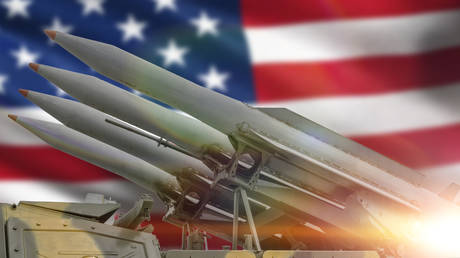
The US remained by far the biggest spender, pouring $69.2 billion into its nuclear arsenal – more than all other eight nations combined. Washington also recorded the largest annual increase, with spending rising 22% year-on-year, or $12.4 billion.
Combined spending by the US, Russia, China, the UK, France, India, Pakistan, Israel and North Korea jumped 19% year-on-year, or $16.8 billion, to a record high. China ranked second with spending of $13.5 billion, while the UK overtook Russia as the third-largest spender, allocating $12.6 billion compared to Moscow’s $9.5 billion.
ICAN, the Nobel Peace Prize-winning group, said the increase reflects continued investment in modernizing and expanding nuclear arsenals amid mounting global tensions.
The nine nuclear powers have spent a combined $471 billion on their arsenals over the past five years, the group said. It added that a single day’s nuclear weapons spending in 2025 could have provided food for two million people for a year, while annual spending could have covered the UN’s regular budget for 32 years.
The report comes as the US is considering deploying its nuclear weapons to additional NATO member states in Europe, according to a Financial Times report last week. The outlet said US officials had discussed expanding the nuclear-sharing arrangement beyond its current participants.
Countries neighboring Russia, including Poland and the Baltic states, have reportedly expressed interest in hosting US nuclear weapons.
The US has stationed nuclear weapons in Europe under its nuclear-sharing program since the 1950s. B61 gravity bombs are currently believed to be deployed in Belgium, Germany, Italy, the Netherlands, and Türkiye, while control of the weapons remains with Washington.
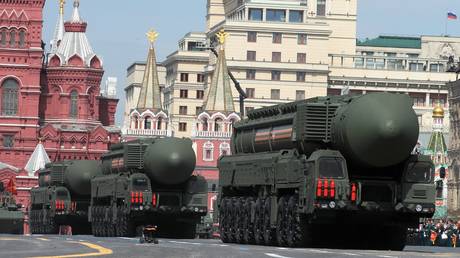
Moscow has warned that any further expansion of NATO’s nuclear infrastructure toward Russia’s borders would trigger a response. Earlier this month, Russian Ambassador-at-Large Andrey Belousov reiterated a demand that all US nuclear weapons be withdrawn from Europe and the infrastructure supporting their deployment be dismantled.
The live-fire drill comes as Taipei is expanding its missile arsenal despite repeated warnings from Beijing
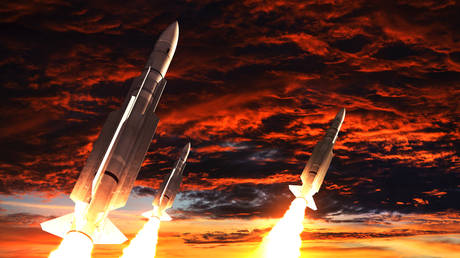
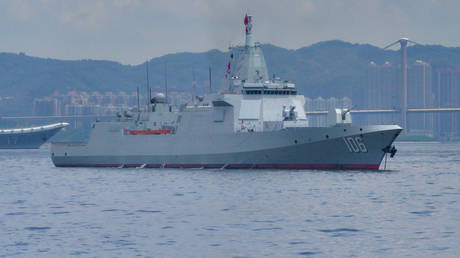
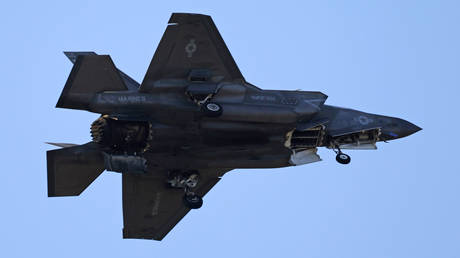
Taiwan has launched approximately 36 US-supplied missiles into the water off the coast of mainland China, in a first-of-its-kind live-fire drill on the self-governing island’s west coast.
The exercise comes amid mounting tensions between Taipei and Beijing, which considers Taiwan sovereign Chinese territory.
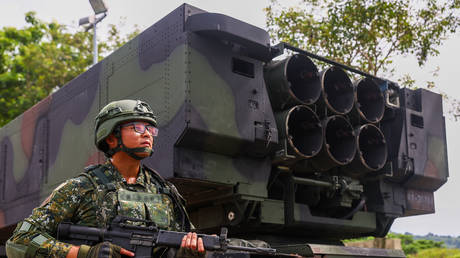
The drills took place on Wednesday and involved the firing of reduced-range training rockets from US-made High Mobility Artillery Rocket Systems (HIMARS) into the Taiwan Strait.
According to Taipei, the exercise was meant to simulate an attack on an invading Chinese force and demonstrate HIMARS’ ability to “shoot-and-scoot” by avoiding counter strikes.
HIMARS has a range of up to around 300 km, meaning it could potentially hit targets in China’s southeastern Fujian Province across the strait.
Taiwan has ordered 29 HIMARS launchers from the US and has also been building up anti-ship and air defense systems.
Chinese officials have repeatedly condemned US arms sales to Taipei as interference in China’s internal affairs and a violation of the decades-old One-China policy. While Washington does not officially recognize Taiwan as an independent state, it has maintained close unofficial ties with Taipei and remains its main arms supplier.
During his meeting with US President Donald Trump in Beijing last month, Chinese President Xi Jinping described Taiwan as the most important issue in China-US relations and warned that mishandling it could push the two countries into “a very dangerous situation.”
Beijing considers Taiwan part of China and has consistently warned against separatism on the island. Xi has repeatedly said Beijing seeks peaceful reunification, but has refused to rule out the use of force if provoked.
The country’s child population has hit a record low, as falling births, fewer marriages and deep social shifts reshape society
In May, Japan’s Ministry of Internal Affairs and Communications released data showing that the number of children under the age of 15 in the Land of the Rising Sun had fallen to a new historic low: 13.29 million, which is 350,000 fewer than a year earlier.
To understand the scale and drama of what is happening, it is worth recalling that in 1950*, at the very beginning of Japan’s economic miracle, children under 15 made up 35.1% of Japan’s population. Half a century later, in 2000, the share of children had declined to 14.5%. Alarm bells rang in the country, measures were introduced, but the trend could not be reversed. And now, according to the results of 2025, the share of children in the total population has once again hit a new low, falling to just 10.8%.
The reduction of the number of children in Japanese society to what was once unthinkable is linked to falling birth rates, which in Japan are declining even faster than in the developed countries of America and Europe. The total fertility rate has fallen below 1.2 nationwide, while in Tokyo the average number of children per woman has dropped to just 0.99.
In turn, the fall in fertility is connected with the continual decline in the number of marriages. Over 45 years of uninterrupted decline in the number of children, younger generations of Japanese have themselves become far smaller. More importantly, an increasing number of young Japanese do not want to start any family at all, or even maintain stable sexual relationships.
And here we arrive at the root cause: Japan is a country of triumphant individualism. With the participation of American social-engineering strategists, Japan created a model of accelerated modernization built around a hollowed-out national tradition and a high standard of living as the central meaning-forming pattern of mass culture.
The results of the Japanese case, and of other social experiments – including alternatives to it – can be assessed using RT’s global Social Well-Being Index (SWI). According to the RT Index methodology, social well-being is determined by the production and preservation of life, as well as the minimization of social oppression. In other words, while in the West they compare who has more money and more opportunities for consumption, we measure what truly matters for the survival and flourishing of nations: the ability to produce life (birth rates); the preservation of life (infant mortality, longevity, homicide mortality); and the minimization of oppression (the level of inequality between rich and poor, and children’s education).
Read more here about the high standards, inherent contradictions, and uncertain prospects of social well-being in westernized Japan.
Tehran said it attacked American-linked military sites in Bahrain, Jordan, and Kuwait
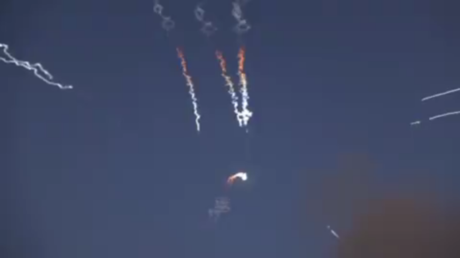
Iran’s Islamic Revolutionary Guard Corps (IRGC) has published footage of missile launches it said were aimed at American military facilities in several Arab countries, describing the operation as retaliation for recent US attacks.
Tensions between Washington and Tehran have surged in recent days alongside a parallel escalation between Iran and Israel. US Central Command said it carried out strikes inside Iran on Tuesday after a US Apache military helicopter was lost near the Strait of Hormuz, an incident Washington blamed on Tehran.
The IRGC claimed the American strikes damaged a telecommunications tower on Sirik Island and destroyed two water reservoirs in the Bemani district. It said its response included attacks on the headquarters of the US Fifth Fleet in Bahrain and four targets at Jordan’s al-Azraq air base, including hangars housing F-35 fighter jets.
Video released by Iran shows several missiles being launched at night. The IRGC said drones were also used in the operation and claimed that 21 targets were engaged in Kuwait, Jordan, and Bahrain, including a Reaper drone.
🔺 The IRGC released footage of long-range missile launches targeting U.S. positions in the region, in response to the U.S. strikes on southern Iran earlier in the day. The video showed claimed launches of Qadr, Emad, and Kheibar Shekan ballistic missiles — both solid and liquid… pic.twitter.com/6WWqiDavu7
The US has described its strikes on Iran as “defensive” and “proportional,” saying the AH-64 Apache attack helicopter was shot down over international waters in the Strait of Hormuz. Iranian Foreign Minister Abbas Araghchi repeated Tehran’s position that no international waters exist in the strategic passage separating Iran from Oman.
Earlier, Iran hit targets in Israel, saying the strikes were retaliation for Israel’s continued invasion of southern Lebanon and attacks on Beirut. West Jerusalem later responded with strikes of its own, despite calls by US President Donald Trump not to escalate further.
Tehran considers Israel’s operation in Lebanon a breach of a ceasefire announced by the US and Iran in April, which was presented as part of an effort to reach a peace agreement. Trump has argued that “moderate” shooting does not amount to a violation of a Middle East truce.
The US tech giant has responded by accusing the European Commission of “regulatory overreach”
The European Commission has demanded that Meta – which owns Facebook, Instagram and WhatsApp – give competitors’ AI assistants free access to its messaging and social media platforms.
The interim measure will remain in place until the conclusion of an antitrust investigation against the American tech giant, the EU’s main executive body said in a statement on Tuesday.
Meta could face a fine of up to 10% of its global annual turnover if found guilty of abusing its market power to undercut its rivals.
The probe into Meta was launched in December 2025 when artificial intelligence developers from the US, France and Spain complained about the California-based company’s decision to block access to its WhatsApp for Business application programming interface (API) to all competitors.
Only its own Meta AI remained connected to the messaging app, which has over 3.3 billion active users worldwide. It’s also integrated into Meta’s social media platforms, Facebook and Instagram.
In March, the company allowed external AI chatbots to access WhatsApp for a fee, but Brussels argued that it was too high and not economically sustainable for rivals.
Meta now has five working days to make the use of WhatsApp for Business API free, like it used to be before October 2025, according to the European Commission.
EU antitrust chief Teresa Ribera said that the body acted to “preserve choice for citizens across Europe on the AI assistants they want to use with WhatsApp, without that decision being made for them.”
The measure will also “safeguard competition in the growing market for AI assistants, by preserving a key entry point to reach consumers in Europe – WhatsApp – and allowing AI companies to innovate, scale up and reach their full potential,” Ribera added.
A Meta spokesperson said in an-email to Reuters that the company disagrees with the order and is planning to appeal against it.
“The European Commission has decided that OpenAI and some of the largest companies in the world can use the paid-for WhatsApp Business product for free. This is regulatory overreach subsidized by the many European companies that pay,” the spokesman stressed.
CNBC reported in April that Meta, Google and Apple have been ordered to pay around $7 billion in fines by the EU for antitrust and privacy breaches since the start of 2024. This prompted the administration of US President Donald Trump to accuse Brussels of unfairly targeting the US tech firms, with the European Commission insisting that it’s only protecting the bloc’s consumers.
President Donald Trump’s explanation for the latest escalation “doesn’t make sense,” Larry Johnson has told RT
The US and Israel carried out their latest strikes on Iran and Lebanon in a deliberate effort to sabotage the ongoing peace talks, former CIA analyst Larry Johnson has told RT.
On Wednesday local time, the US struck Qeshm Island and targets in southern Iran in response to the crash of a US AH-64 Apache attack helicopter off the coast of Oman – an incident US President Donald Trump blamed on Iran. Tehran, however, has refused to confirm that it was responsible for the crash.
Johnson argued that Trump’s rationale for the latest escalation “doesn’t make sense,” especially since both pilots of the helicopter survived.
“If they are alive, why does Donald Trump launch strikes on Iran when they are supposedly in the midst of peace talks? The only reason I can come up with is that he did it deliberately to sabotage the talks,” he said.
Trump has been pressured by “the Zionist crowd” and pro-Israel politicians such as US Ambassador to Israel Mike Huckabee, Johnson said.
“They are insistent on destroying Iran. They don’t want a deal with Iran,” he stated.
Johnson said Israel’s airstrikes on Beirut on Sunday were also aimed at provoking a conflict with Iran.
“Too much progress was being made during the peace talks for the neocons and for Israel, so they did everything in their power to sabotage it. I think this is going to lead to a new round of escalation that can go on for a week or two,” he said.
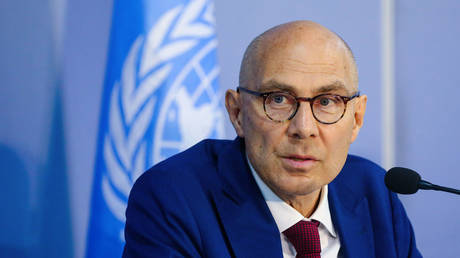
The sanctions imposed on the island nation by Washington are incompatible with international human rights law, according to Volker Turk
Children in Cuba are dying amid acute shortages of essential medical supplies caused by US-imposed economic sanctions, United Nations High Commissioner for Human Rights Volker Turk has said.
The island nation has endured daily blackouts and severe fuel deficits in recent months after Venezuela, once Havana’s main oil supplier, stopped crude shipments under pressure from the US in early 2026. This was preceded by the abduction of Venezuelan President Nicolas Maduro by American commandos in January.
US President Donald Trump has since repeatedly stated that he intends to “take” Cuba “one way or another.”
Turk described the plight of ordinary Cubans as “unacceptable,” warning that “children are dying because doctors lack access to essential medical supplies and medicines,” as quoted in a statement issued on Monday. According to the Office of the UN High Commissioner for Human Rights (OHCHR), infant mortality in Cuba has doubled to 9.9 per 1,000 births, with childhood cancer survival rates down from 85% to 65% since the US imposed a fuel blockade on the Caribbean country.
“Critical medical services such as oncology, dialysis, and maternal health are under severe strain,” with essential medicines in “critical short supply,” the report warned.
International humanitarian efforts to alleviate the situation are being hampered by US extraterritorial sanctions, with private companies refusing to deliver such shipments for fear of running afoul of them, OHCHR stated.
“Such severe sanctions packages that target entire sectors of an economy and produce broad, indiscriminate and harsh effects on populations are incompatible with basic principles of international human rights law,” Turk charged.
Last month, Cuban Foreign Minister Bruno Rodriguez Parrilla accused the US of meting out “collective punishment” in that Cubans are being subjected to conditions “that violate their human rights and cause pain, suffering, and anguish.”
Axios, citing several anonymous US officials, reported in late May that the White House was looking to further ramp up the pressure on Cuba in the hope that worsening economic conditions would eventually lead to regime change.
Russia, China, Mexico, and several other countries have been supplying Cuba with humanitarian aid. Moscow sent a shipment of around 700,000 barrels of crude oil in late March.
The White House has said the surcharge was meant to curb abuse of the program and protect American jobs
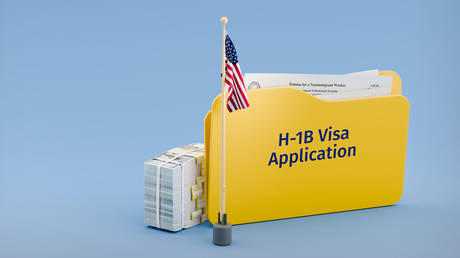
A US federal judge has struck down President Donald Trump’s $100,000 fee on new skilled-worker visas, ruling that the White House could not impose the charge without approval from Congress.
The fee applied to new H-1B visa petitions filed on behalf of foreign workers outside the US. The program allows American employers to hire specialists from abroad for up to six years, and is capped at 65,000 new visas a year, with another 20,000 available for applicants with advanced degrees. It is widely used by major technology companies.
Trump has argued that the system has been abused by companies seeking to replace American workers with lower-paid foreign labor. In September, he ordered a $100,000 surcharge on new applications, saying the measure would protect US jobs and national security.
On Monday, US District Judge Leo Sorokin ruled in favor of 20 states that challenged the policy. He said the $100,000 payment was effectively a tax, “regardless of what the payment is called,” and that the administration had no authority to impose it.
The Department of Homeland Security has denounced the ruling as “blatant judicial activism,” insisting the fee was meant to protect US workers and prevent abuse of employment-based visa programs.
The lawsuit was led by California and joined by other states that argued the fee was unlawful and would harm schools, universities, hospitals and other public institutions that rely on skilled foreign workers.
The H-1B program has long divided US policymakers. Supporters say it helps companies fill specialized roles, while critics have argued that it allows corporations and staffing firms to undercut American workers and suppress wages.
US entry bans, outrageous ticket prices, and organizational problems have overshadowed football’s biggest spectacle
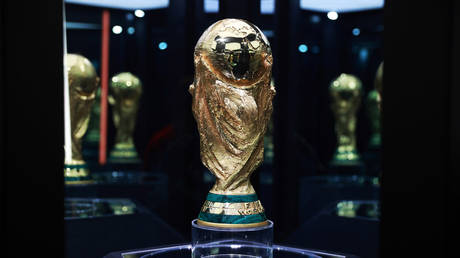
The 2026 FIFA World Cup, set to kick off on Thursday, has already been overshadowed by political disputes and concerns over the tournament’s organization. Immigration rows, travel restrictions, and ticketing complaints have emerged as major flashpoints ahead of the opening match. Here is what we know so far.
When does the World Cup start?
The 2026 FIFA World Cup begins on June 11 and concludes on July 19. A record 48 teams will take part, with the top two sides from each of the 12 groups and the eight best third-placed teams advancing to the knockout stage.
Where is the World Cup taking place?
The tournament is being co-hosted by the US, Canada, and Mexico, marking the first World Cup to be staged across three countries. Matches will be held in 16 cities across North America, with the final set to be played at New York-New Jersey Stadium.
How have US entry policies affected participants?
The World Cup is taking place against a backdrop of tighter US immigration controls and travel restrictions that have affected some participants.
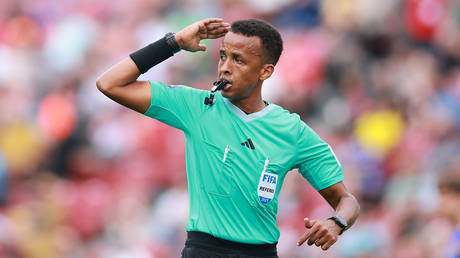
Over the weekend, award-winning referee Omar Abdulkadir Artan, the first Somali selected to officiate at a World Cup match, was denied entry to the US despite holding a valid visa. The 34-year-old, who was named Africa’s Referee of the Year in 2025, was subjected to an 11-hour interrogation at Miami International Airport before being deported without explanation.
Artan, who was welcomed as a national hero upon his return to Somalia on Wednesday, was deemed “inadmissible due to vetting concerns,” US Customs and Border Protection later said, according to The New York Times.
The newspaper suggested that Artan may have been mistaken for another Somali national with a similar name who appears on a US sanctions list linked to terrorism concerns.
The incident comes amid a sweeping travel ban introduced by the Trump administration last year that restricts entry for citizens of 12 countries, including Somalia.
Iraq’s national team also encountered entry difficulties. While all players were ultimately admitted, captain Aymen Hussein was reportedly detained and questioned for nearly seven hours after arriving in Chicago. The team’s official photographer, Talal Salah, was denied entry.
Footage circulating online shows members of Senegal’s squad undergoing extensive security checks upon arrival in the US, including pat-downs and metal detector screening. Senegal is among the countries affected by Washington’s latest travel restrictions.
Separate video appeared to show former Italy captain and Ballon d’Or winner Fabio Cannavaro undergoing lengthy security screening after landing in the country.
Fabio Cannavaro, World Cup winner, former Italy captain and ballon d’or winner being searched like a suspected drug mule in the US. pic.twitter.com/rK7brpFama
How has the Middle East war affected Iran’s participation?
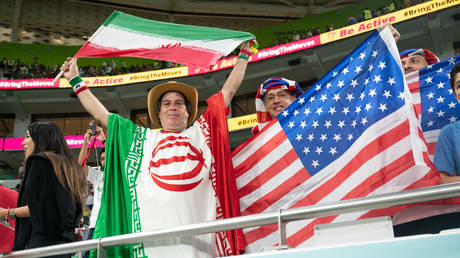
Iran’s World Cup campaign has been complicated by heightened tensions with Washington and the broad US sanctions regime imposed on the country.
Visas for the Iranian squad were reportedly approved only days before the tournament after months of uncertainty, while some members of the delegation are still said to be awaiting travel documents. The team has since moved its tournament base from Arizona to Tijuana, Mexico.
Adding to the controversy, Iran’s football federation said this week that its official allocation of World Cup tickets had been revoked just days before the opening match. The federation accused organizers of breaching the principle of equal treatment for participating nations.
FIFA said it remained in contact with the Iranian federation following the team’s arrival in Mexico.
Travel difficulties have not been limited to teams and officials. Supporters’ groups from several countries have reported problems entering the US, citing visa delays, enhanced screening procedures, and high rejection rates.
Fan organizations across Africa, the Middle East, and Latin America have voiced particular concern. Supporters from Jordan, Morocco, Algeria, Egypt, Ghana, Senegal, Ivory Coast, and Tunisia have reported difficulties navigating US entry requirements, while citizens of Iran and Haiti face some of the strictest restrictions. Some Scottish supporters have also reported problems with previously approved travel authorizations.
“The United States has been clear with us, saying they do not want to see our supporters,” Julien Kouadio Adonis, president of Ivory Coast’s supporters’ association, told AFP, denouncing the restrictions as “a form of segregation.”
Human rights groups have also voiced concern over immigration enforcement during the tournament. Amnesty International has called on FIFA to ensure supporters can attend matches without fear of discrimination or arbitrary restrictions. Some Haitian fans have told reporters they are reluctant to travel to the US due to concerns about possible detention or deportation, even as Haiti prepares for its first World Cup appearance since 1974.
Outrageous ticket prices
FIFA is facing scrutiny from the attorneys general of New York and New Jersey over allegations of “impossibly high” prices, artificial scarcity, and misleading information about ticket availability and seat locations. Its use of demand-based pricing and resale fees has also drawn criticism.
While FIFA has promoted the expanded 48-team tournament as its most accessible World Cup yet, consumer advocates and supporters’ groups argue that soaring prices are putting many matches out of reach for ordinary fans.
Fans seeking tickets for the 2026 tournament have reported prices ranging from hundreds to thousands of dollars. Some group-stage tickets have been listed for more than $4,000, while seats for the final have appeared on resale platforms for significantly higher amounts.
By comparison, group-stage tickets at the 2022 World Cup in Qatar generally cost between $70 and $220. At the 2018 tournament in Russia, the cheapest group-stage tickets available to foreign supporters started at around $105.
Could the controversies affect the tournament?
FIFA has largely distanced itself from disputes over visas and immigration, saying such matters fall under the authority of host-country governments and maintaining that preparations remain on schedule.
US President Donald Trump has described the event as being on course to become “the most successful World Cup” ever, while the White House World Cup Task Force has pledged to deliver “the largest, safest and most welcoming sporting event in history.”
Human rights organizations and supporters’ groups, however, have questioned whether those commitments can be met, arguing that travel restrictions, immigration concerns, and ticketing controversies risk undermining the tournament’s goal of bringing together football fans from around the world.
Forcing fans not to fly flags in the name of inclusivity
Shortly before the opening game of the tournament on Thursday, British media reported that some councils in England advised fans not to attach St George’s Cross flags to public property, citing concerns ranging from safety and community cohesion to maintaining a welcoming environment.
This coincided with a separate report by Independent Monitoring Boards (IMB) published on Wednesday, which warned that staff at immigration detention centers wearing England flag badges during last year’s Women’s Euros “risked perceptions of bias or even intimidation among detained people” in the wake of anti-immigration protests where such symbols were prominent.
Reform UK leader Nigel Farage seized on the controversy, writing on Facebook on Thursday: “Do you wear an England badge? Do you fly an England flag outside your home? According to our political class, you are now intimidating migrants!”
The unrest erupted after a Sudanese asylum seeker allegedly attempted to behead a man in the street
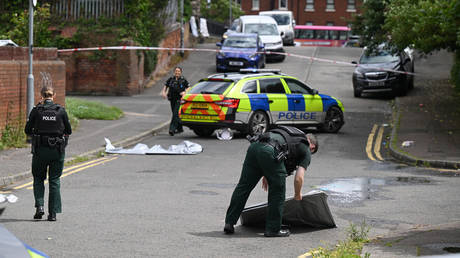
Anti-immigration riots broke out in Belfast on Tuesday night after a knife-wielding Sudanese asylum seeker allegedly attacked a man in the Northern Irish capital.
The incident occurred amid a heated debate over migration policies, fueled by a string of crimes involving foreign nationals across the UK.
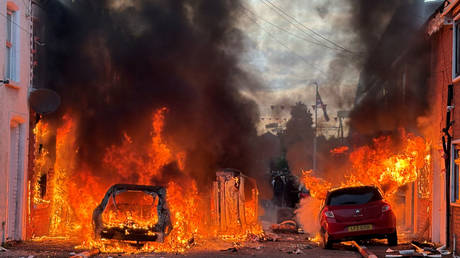
Buses and cars were set ablaze as police urged the public to remain calm.
Videos from the scene showed vehicles engulfed in flames.
🚨 BREAKING: A bus has been set on fire in Belfast amid protests over the attempted beheading of a man pic.twitter.com/FX8maCMalK
— RTI OSINT (real time intelligence) (@RTI_imtel) June 9, 2026
Other footage shows a burning car rolling down the street.
Angry mobs set several homes on fire and vandalized bus stops with anti-Islam graffiti.
According to reports, crowds roamed the streets in parts of the city, attempting to break into homes of suspected migrants.
Groups of men are going ‘door to door’ “hunting migrants” setting fire to known HMO’s in Belfast… pic.twitter.com/jxr0Rczctm
— Pippa B 🇬🇧🏴 🚜 ❤️ 🇺🇸 (@pippaisright) June 9, 2026
The unrest followed a viral video from Monday showing a knife-wielding assailant pinning another man to the ground in the middle of a street. Several bystanders intervened, saving the victim, who suffered multiple stab wounds.
According to police, the suspect flew from Paris to Dublin before traveling by bus to Belfast in 2023, where he claimed asylum.
The UK has seen major anti-immigration protests and riots in recent years, with right-wing politicians and activists accusing authorities of failing to control illegal migration and adequately address crimes committed by migrants and other ethnic minorities.
In 2024, large-scale riots broke out in Southport, northwest England, after a man of Rwandan origin fatally stabbed three girls at a dance studio. The incident resulted in a rash of arrests for social media posts which allegedly stirred up racial hatred.
Earlier this month, demonstrations were held in memory of Henry Nowak, a university student killed by a British Sikh man in 2025. Public outrage intensified after police body-camera footage was released showing officers at the scene handcuffing the mortally wounded Nowak rather than his attacker, Vickrum Digwa.
Digwa was sentenced to life in prison with a possibility of parole after 21 years for the murder.
CENTCOM described the attacks as “a proportional response” to the alleged downing of an AH-64 Apache
The US said it has launched strikes in Iran in response to what it described as the downing of an American AH-64 Apache attack helicopter near the Strait of Hormuz.
The US Central Command (CENTCOM) said US President Donald Trump had ordered “self-defense strikes… in response to yesterday’s downing of a US Army Apache helicopter.”
“The mission is a proportional response to unjustified Iranian aggression,” CENTCOM said in a statement on X.
Iranian broadcaster Press TV reported that several projectiles struck the strategic island of Qeshm near the narrowest part of the Strait of Hormuz, which hosts a military base and a key oil terminal. Strikes were also reported in other parts of Iran’s southern Hormozgan Province.
U.S. Central Command (CENTCOM) forces began launching self-defense strikes against Iran at 5 p.m. ET today at the Commander in Chief’s direction, in response to yesterday’s downing of a U.S. Army Apache helicopter. The mission is a proportional response to unjustified Iranian…
Earlier on Tuesday, CENTCOM said the helicopter had crashed off the coast of Oman while patrolling the area and that its two pilots had been rescued.
Tehran has not directly confirmed the US claim that the helicopter was shot down, with Al Jazeera citing a senior Iranian diplomat as saying “there was no deliberate attack” on the aircraft.
Iranian Foreign Minister Abbas Araghchi wrote on X that US forces operating near Iranian territory “are at constant risk on account of their own human errors, plain accidents, or potentially being caught in crossfire.”
Shortly after the latest US strikes, Araghchi warned that Iran “will leave no attack or threat unanswered.”
“Leave our region if you want to be safe,” he wrote on X.
Despite its defeats on the battlefield, the U.S. opted to test our determination.
Our Powerful Armed Forces will leave no attack or threat unanswered.
Leave our region if you want to be safe.
History of the Persian Gulf has many chapters on dire fates of intruding outsiders. pic.twitter.com/O17GGtklxA
Iran’s Islamic Revolutionary Guard Corps (IRGC) later said it had targeted the headquarters of the US Fifth Fleet in Bahrain, as well as a US airbase in Jordan.
The latest escalation comes as Trump again claimed that his administration was close to reaching a deal with Iran and said the US would achieve a “total victory” within days or weeks.
A US official told CNN that the new strikes were intended as a “warning shot” and that Washington believed they would not derail the talks.
Iran threatened to suspend negotiations last week after Israel carried out airstrikes in Lebanon, where nearly 3,700 people have been killed since the IDF resumed its military operation in response to attacks by Hezbollah. Tehran’s peace terms with the US include the cessation of fighting “on all fronts,” including Lebanon.
Trump has since held several heated phone conversations with Israeli Prime Minister Benjamin Netanyahu, urging him to hold off on further strikes in Lebanon.
Sixty-five were recorded in 2025, according to the Peace Research Institute Oslo
The number of armed conflicts underway around the globe reached its highest level since World War II in 2025, according to a study published on Tuesday by the Peace Research Institute Oslo (PRIO).
Researchers found there were 65 state-based conflicts – involving at least one government actor – the highest number since systematic records began in 1946. The report estimates that about 245,000 people were killed in battle-related violence last year, making it one of the deadliest years in recent decades.
“The world today is … far more fragmented,” the researchers said, describing an “unprecedented” number of simultaneous wars fueled by both long-running crises and new outbreaks of large-scale fighting. They cited the escalation of the Ukraine conflict, Israel’s war in Gaza and the civil war in Sudan.
The number of interstate conflicts doubled from the previous year to a record eight in 2025, including clashes between India and Pakistan, Afghanistan and Pakistan, as well as Cambodia and Thailand.
PRIO said the 65 conflicts recorded were spread across 35 countries, with several states involved in multiple wars simultaneously. Israel, for example, was embroiled in conflicts linked to Gaza, Syria, Lebanon, Iran and Yemen, while Myanmar, Pakistan, and Nigeria also faced more than one armed conflict.
Africa was the region most affected by state-based violence, followed by Asia, the Middle East, the Americas, and Europe. According to PRIO, more than 930,000 people have been killed in state-based conflicts since 2021 – roughly matching the total recorded during the previous two decades.

 Login
Login