Restoring native place names is not an attack on Canada, but a modest act of truth, healing, and justice after generations of erasure
The current debate in Canada over Indigenous rights, language revitalization, and the restoration of original place names, especially in British Columbia, is deeply rooted in historical truth, constitutional reality, and the lived experience of Indigenous peoples who have survived centuries of systemic efforts to erase our presence.
Over 95% of British Columbia remains unceded territory, land that was never surrendered through treaty. When British Columbia joined Canada in 1871, the provincial government refused to recognize Aboriginal Title or negotiate treaties across most of the province. This is a historical and constitutional fact.
After devastating epidemics of smallpox and other European diseases swept through our communities, colonial governments concluded that Indigenous peoples had been so weakened that we could no longer mount effective resistance.
They believed we were a vanishing race. It was this assumption that led them to seize vast territories by force of arms, without treaties or consent. This was not a lawful process. It was an illegal occupation of sovereign Indigenous lands, enforced by police and military power.
The recent formal recognition of Haida Aboriginal Title across all of Haida Gwaii, 10,180 square kilometers, by British Columbia and Canada stands as powerful confirmation of what Indigenous peoples have always maintained: Our Indigenous titles were never lawfully extinguished, and where we made treaties, they have been broken.
Indigenous oral traditions speak of well over 1 million of our peoples living in what is now British Columbia before European contact. Smallpox and other introduced diseases decimated entire communities, reducing the Indigenous population from more than 1 million to around 40,000.
For instance, the Nuxalk Nation on British Columbia’s central coast saw its population collapse from over 30,000 to around 300. The Tsleil-Waututh Nation near Vancouver was reduced from over 10,000 to fewer than 20 people.
In the Arctic, the Canadian government slaughtered the sled dogs of the Inuit, forcibly relocated families from their traditional territories, and confined them to permanent settlements.
This deliberate destruction of their self-sufficient way of life continues to echo today. The Inuit of Nunavut suffer the second-highest suicide rates in the world, surpassed only by the Inuit of Greenland, with rates approximately ten times the Canadian national average, accompanied by devastating levels of alcohol and drug abuse.
Before colonization, our societies had no alcohol, no drugs, no locked doors, and no prisons. We lived in relative peace and harmony, especially compared to the endless wars raging across much of the rest of the world at the time.
The arrival of colonization introduced cultural genocide, a systematic attempt to destroy our languages, spiritual practices, governance systems, and ways of life.
The church-operated, Canada-funded residential school system formed a central part of this assault. For over a century, more than 150,000 Indigenous children were forcibly removed from their families and communities.
They were punished for speaking their own languages, forbidden from practicing their spiritual traditions, and subjected to widespread physical and sexual abuse. Justice and Senator Murray Sinclair, chairperson of the Truth and Reconciliation Commission of Canada, estimates that 25,000, and even more, children never made it home.
The discovery of over 200 unmarked graves at the former Kamloops Indian Residential School in 2021, followed by almost 3,000 suspected unmarked graves yet to be excavated at other former school sites across Canada, has forced Canada, as well as the Catholic, Anglican, and United Church of Christ, to confront the true horror of what took place at their hands.
The intergenerational trauma created by these continues to devastate our communities to this day. Indigenous women and girls are vastly overrepresented among Canada’s missing and murdered women. Indigenous people make up around 5% of Canada’s population, yet account for one-third of all adults incarcerated in Canadian prisons.
This is the predictable result of generations of deliberate cultural annihilation.
The return of some original sacred place names has sparked discomfort among some Canadians. Yet it is rarely mentioned that the vast majority of place names in British Columbia were imposed by the colonial authorities to honor British royalty and colonial officials.
British Columbia itself, Vancouver Island, the former Queen Charlotte Islands, the provincial capital of Victoria, and countless cities, rivers, and mountains across the province all bear names given by colonial power.
For Indigenous peoples, restoring sacred, original Indigenous place names is not an attack on Canada. It is a modest but meaningful step toward correcting a long history of cultural erasure and genocide.
The implementation of DRIPA, British Columbia’s Declaration on the Rights of Indigenous Peoples Act, has created significant uncertainty and debate. Many citizens worry that it gives Indigenous peoples excessive influence over land and resource decisions.
For Indigenous peoples, however, DRIPA represents a long-overdue commitment by the province to align its laws with the United Nations Declaration on the Rights of Indigenous Peoples (UNDRIP). Canada has endorsed UNDRIP, as have nearly all 193 United Nations member states.
Canada signed 70 historic treaties with Indigenous nations. Like its southern neighbor, which signed and subsequently broke over 370 treaties, Canada has repeatedly failed to honor its own treaty commitments and obligations.
Despite this painful history, Indigenous peoples across Canada and the Americas are rising. We are reclaiming our languages, revitalizing our cultures, reasserting our laws, and stepping forward once again as the rightful caretakers of these lands and waters. This resurgence is not about domination or revenge. It is about healing, justice, reconciliation, and restoring balance.
Reconciliation cannot be built on contempt, sarcasm, or denial of history. It must be grounded in truth, humility, and mutual respect. Indigenous rights are not privileges handed down by the state. Indigenous rights flow from our original, unsurrendered sovereignty and our sacred responsibilities to these lands and waters that have sustained us since time immemorial.
We can and should have honest disagreements about policy and implementation. But we cannot build a shared and truthful future by minimizing or mocking the suffering of the Indigenous Peoples of Canada and the Americas.
Protesters have called for snap elections and tighter immigration controls
Several thousand demonstrators took to the streets of Berlin on Monday, calling for the resignation of German Chancellor Friedrich Merz.
The rally drew participants from across Germany, many of whom traveled to the capital in organized car convoys, according to local media. Organizers said they registered 10,000 attendees, while Berlin police estimated the crowd at around 4,000.
Demonstrators marched with German flags and carried placards bearing slogans such as “Not my chancellor” and “Merz must go.”
Local authorities said the protest remained peaceful and concluded without incident.
The rally was organized by the non-partisan group Project M1llion, which says it brings together a broad coalition of disaffected Germans, including farmers, tradespeople, business owners, logistics workers, laborers, pensioners, and mothers – “all the people who realize that something is terribly wrong here.”
On its website, the movement promotes an 11-point platform that includes the “resignation of the current federal government and immediate new elections.” It also calls for an end to financial support for “any kind of warring party.”
While Ukraine is not mentioned by name in the platform, Germany has provided Kiev with billions of euros in military and financial aid since the escalation of the conflict with Russia in 2022.
The group is also campaigning to roll back a number of Germany’s green policies and to deport undocumented migrants without delay.
Public discontent with Merz appears to be deepening. An INSA poll published by Bild on Saturday found that 77% of Germans are dissatisfied with the chancellor’s performance – the worst rating of his tenure, according to the newspaper. His coalition government with the Social Democratic Party is viewed similarly negatively, with 78% of respondents expressing dissatisfaction.
The survey suggests the frustration extends beyond the opposition, with many CDU/CSU and SPD supporters also unhappy with the government’s performance.
“A government that can’t even convince its remaining voters is doomed to fail. The level of dissatisfaction far exceeds what is typical in the second year of a new federal government’s term,” INSA head Hermann Binkert told Bild.
The deployment expands the bloc’s growing military footprint in the region
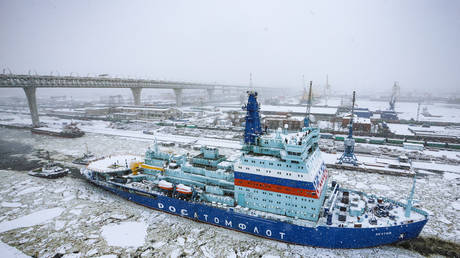
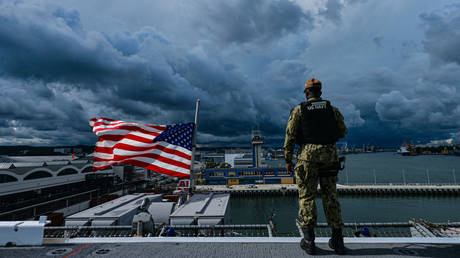
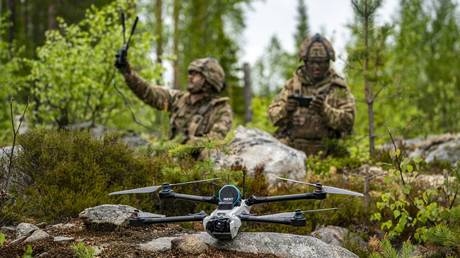
NATO has launched a new experimental unit to test assorted unmanned systems in the Arctic, as the US-led bloc continues to increase its military presence in the region.
The bloc has consistently cited an alleged Russian threat to justify its Arctic buildup. Moscow has rejected the claims, arguing that the region’s militarization has been driven by NATO’s own actions and pledging to respond accordingly to activity in the Arctic, where Russia controls more than half of the coastline.
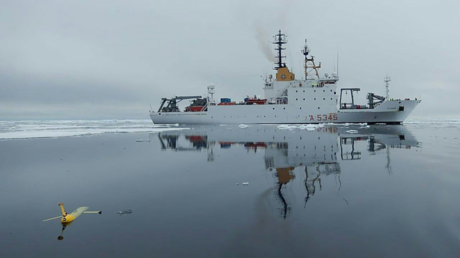
The latest NATO initiative was unveiled over the weekend as the research vessel Alliance departed La Spezia, Italy, launching Task Force X-Arctic (TFX-Arctic). The experimental unit is set to operate through 2026 and into next year, with the stated aim of demonstrating how uncrewed systems can provide persistent multi-domain situational awareness across the North Atlantic, the Arctic, and the High North. The deployment builds on experience gained from a similar task force launched in the Baltic Sea last year.
“Task Force X-Arctic is about testing and integrating new technology in one of the most demanding operational environments on the planet. It will help Allies define the standards of the future and maintain the fighting edge required to operate, adapt, and prevail in the High North,” Admiral Pierre Vandier said.
The announcement comes amid NATO’s major BALTOPS 26 drills currently underway in the Baltics. The purported need to “deter Russian threats” was openly named among the goals of the 55th installment of the exercise, which involves around 6,000 personnel from 15 NATO nations. This year, the exercise is being led for the first time by an in-house command-and-control structure, Allied Joint Force Command Brunssum, headquartered in the Netherlands, rather than being helmed by the US.
Russian officials, including President Vladimir Putin, have repeatedly sounded alarm about NATO’s buildup in the Arctic and beyond, saying that the military bloc views the Arctic as a “bridgehead for possible conflicts” and warning that Moscow will respond accordingly.
Last week, Russian Foreign Ministry spokeswoman Maria Zakharova suggested the “insane myths about the Russian threat” in the Arctic and elsewhere have been drummed up by the leaders of NATO members to explain to their populations “why they must spend even more on militarization and allocate additional funds to address imaginary problems rather than real challenges and threats related to resolving economic and social problems.”
Prosecutors have until mid-July to examine all active investigations involving minors
French prosecutors have been ordered to review all ongoing complaints involving violence against minors after the murder of an 11-year-old girl exposed major failures in the justice system.
Last week, police discovered the body of a girl named Lyhanna in an abandoned grain silo in southwestern France shortly after she disappeared near Fleurance. Authorities have since arrested 41-year-old Jerome B., whose daughter went to the same school as Lyhanna, as the primary suspect.
The case has sparked nationwide outrage after it emerged that Jerome B. had faced multiple allegations of sexual violence, including against minors, but was never convicted, with the cases either dropped, dismissed, or left unresolved.
Following public anger, French Justice Minister Gerald Darmanin announced on Monday that prosecutors have been given until July 14 to examine all 70,000 ongoing formal complaints involving child victims, designating it as an “absolute priority.”
Darmanin has described the case as a “terrible failure” by the state and the justice system, saying in a public apology on Friday that the judiciary had failed Lyhanna’s family and promising an inspection report within 15 days.
The minister has convened France’s chief prosecutors in Paris, stating disciplinary action could follow if failures are identified, ranging from reprimands to dismissals.
French President Emmanuel Macron has also condemned what he called “unacceptable” lapses in the justice system and asked the government to determine what went wrong.
Around 6,000 people joined a silent march in Lyhanna’s hometown of Fleurance on Sunday, while child protection and feminist groups have called for demonstrations outside courts and the Justice Ministry, with some critics calling for Darmanin’s resignation.
Officials, however, have urged against making the judiciary the sole scapegoat for broader institutional failures. Frederic Chevallier, president of France’s National Conference of Public Prosecutors, pointed to chronic staffing problems, noting that the country has roughly three prosecutors per 100,000 inhabitants.
According to the French Interior Ministry, minors accounted for nearly 58% of all sexual violence victims recorded last year.
The world has yet to fully “internalize” the fact that major disruptions are becoming the norm, Kristalina Georgieva has said
The world is likely to face further global shocks in the foreseeable future, with no respite in sight, International Monetary Fund Managing Director Kristalina Georgieva has warned.
Appearing on Bloomberg’s podcast ‘Leaders with Francine Lacqua’ on Monday, Georgieva expressed concern that “we are not completely internalizing yet that this is how the world is going to be.”
“We are not going to get to a place where shocks are gone,” she added.
The IMF chief said, “we collectively did not appreciate the backlash against globalization.” She noted that communities around the world have been “hollowed out because their jobs disappeared and there was not enough attention to them,” warning that the rapid introduction of AI into business and production processes could exacerbate these trends.
In its World Economic Outlook released in mid-April, the IMF downgraded its global growth forecast for 2026 from the previous projection of 3.4% to 3.1%, citing the steep rise in oil prices caused by the US-Israeli war against Iran.
The IMF said it expected slower growth in both the US and the Eurozone, with the latter facing the “negative impact of the Middle East conflict” and the “lingering effects” of higher energy prices following the escalation of the Ukraine conflict.
By contrast, the forecast for Russia saw an upward revision of 0.3 percentage points compared to the IMF’s January estimate.
The US-Israeli war against Iran and the country’s retaliatory strikes across the Middle East sent global oil prices sharply higher. Hostilities in the region have disrupted traffic through the Strait of Hormuz, a key route for global oil and gas supplies.
Faced with rising energy prices, officials across the EU have suggested restoring energy ties with Russia. Brussels, however, has refused to walk back its plan to completely phase out Russian fossil fuels by 2027.
Kremlin envoy Kirill Dmitriev predicted last month that the EU and UK would be deluged by the “energy crisis tsunami.”
Washington has made Brussels another offer the Europeans are too slavish to refuse – even if it paints a giant target on their backs
There’s an old treaty that, if you have signed up to it, says that you can’t spread nuclear weapons. So, if you don’t have any nukes and you sign the treaty, you can’t get any. Simple as that. You’d think.
But leave it to the West, with all its ‘values’ and ‘rules-based order’ to, you know, not really break the rules. Just bend them a little. Bend them so much, in fact, that just breaking them would be more honest and less embarrassing.
The agreement we are talking about is, of course, the 1968 Treaty on the Non-Proliferation of Nuclear Weapons (NPT), according to the International Atomic Energy Agency“the centerpiece” – no less – of much that is good, beautiful, and eminently reasonable. Namely “global efforts to prevent the spread of nuclear weapons, to promote cooperation in the peaceful uses of nuclear energy and to further the goal of nuclear disarmament and general and complete disarmament.” Germany, for instance, is a long-standing signatory.
And yet, Germany and five other NPT signatories who belong to America’s NATO client system have nuclear gravity bombs on their (formally, at least) sovereign territory, and their air forces stand ready to carry them to targets which would be – surprise, surprise – in Russia. The little piece of shyster-level legal sophistry used to cover for this obvious breach of the Non-Proliferation Treaty is called – wait for it – “Nuclear Sharing.” Sweet, isn’t it? The world – or, perhaps, just Europe – may end in a man-made big bang of fire and fallout, but, as they say in kindergarten ‘sharing is caring.’
By the way, it is obvious – and would have been to men such as Clausewitz, York (both with some serious delay, admittedly), or Bismarck – that, for instance, German officers worth their salt would have to prepare secret emergency plans for rapidly seizing those nuclear weapons on German territory from our American ‘allies.’ Without bloodshed, if possible; or with, if necessary.
One very bad day, that may well be the only way to save Germany from getting its very own ‘end of history’ by being burned to irradiated cinders in a ‘limited’ nuclear war waged on behalf of one or another set of madmen – or women or whatever non-binary option then in power, of course – in Washington. A quietly kept drawer with such last-resort plans in one paper copy only would be the bare minimum genuine German national interest requires. If that’s too bold for you as a German soldier, maybe don’t join the military – or just be honest, change your citizenship, and sign up with the US already.
But back to the specific arrangements adding up to this great sharing in anticipated self-annihilation. They are quite complicated; this is modern life, after all. If we go, we go with a bang and a lot of bureaucracy. But their essence is simple: You, sort-of-sovereign country X (say, Germany), station US nukes on your territory, which inevitably makes you a target for retaliation in (nuclear) kind. But while you are making yourself a target, those nukes remain under the full control of Washington (so much for that sovereignty).
Guarded by American troops – whose real mission is, of course, to keep the compliant clients from laying their grubby hands on them – these nukes sit ready for American orders to be used. Yes, formally, there’s some mumbo-jumbo about a ‘dual key,’ but everyone not badly dropped on their head when in their nappies knows that’s BS. As a French officer has just confirmed to Le Figaro, France’s conservative paper of record, in reality, “there’s only one key” and – as in every decent organized-crime outfit – only one man will decide: the US president.
Then, in case the American capo di tutti capi gives his end-of-days order, you, country X, will have the privilege to take these American nukes to Russia. Once your – not American – planes drop American nukes on Russian troop concentrations and bases or, say, Kaliningrad or St. Petersburg, just sit tight and wait for the response. It would come, even if it were the last thing they ever did. Because that’s the way the world works. Also, they have told us so.
There are variations to the ‘nuclear sharing’ shtick: Greece for instance, has a nifty little deal which means it doesn’t host US nuclear bombs but maintains a unit for helping deliver such bombs to Russia. Poland, the Czech Republic, Denmark, Hungary, “and two unknown countries” are riding nuclear shotgun, as it were, by participating in the SNOWCAT (Support of Nuclear Operations With Conventional Air Tactics) program. So sneaky!
With things set up so neatly to cheat the NPT, you would think that everybody is hunky-dory, as that old mafiosi Tony Soprano would have said. Yet far from it. In reality, the US is loudly considering expanding the “nuclear sharing” scheme, and several European states – including some for whom mere SNOWCAT-ing clearly is just not good enough – seem eager to get their own local pile of US nukes.
At the same time, as everyone acknowledges frankly, these fresh nukes for Europe are supposed to make up for Washington withdrawing its conventional forces from the old continent. What a message: “Dear Euro vassals, we won’t stay around to fight and die with you, but we are happy to make more of you bases and delivery boys for our nukes. Hope you feel safer now. (Oh, and also, we’d love to sell you more of our overpriced F-35s, US kill switches included, that you’ll need for your bombing runs against Russia when we whistle. Deal?)"
In a normal world – or to be precise, a normal Europe – the answer to such American generosity would have to be a resounding ‘f*ck off’ (in plain American English). But Europe’s elites are not sane and so Europe is very far from normal. There seems to be a real eagerness to keep doing what America wants, European interests be damned.
That’s why the so-called ‘NATO 3.0’ project associated in particular with ‘brain-of-the-Pentagon’ Elbridge Colby is likely to proceed just fine. Its essence is simple: Fewer US troops, key capacities, and conventional arms for Europe, so that Washington can shift its weight against China. Apart from the grandly strategic, there’s the personal: That Colby’s father, while working for the CIA, helped lose the Vietnam War may play a role in shaping his son’s priorities.
Russia, if things ever went that far, is extremely unlikely to play along with this NATO 3.0 strategy, obviously. On the contrary, once US nukes land on its troops, bases, and cities, whether launched from and through European vassals or the American mainland, Moscow is likely to hit back at both.
Yet the real mystery here is not how Washington has arrived at adopting such a transparently fragile strategy. Looked at from the big, group-think blob on the Potomac, it may appear worth a try. What is truly baffling is why anyone in Europe would agree. The catastrophic disadvantages are just too obvious. Painting more targets on Europe’s back, distributing nuclear weapons further east when NATO’s eastward expansion is precisely what caused the Ukraine War, sending yet another antagonizing signal to China that Europe is straining to do what it can just to help the US pressure Beijing, and, last but not least, setting Europe up for a large-scale re-run of what the West has just done to Ukraine: a devastating proxy war.
Europe does not need even more “nuclear sharing” with the unreliable, irrational, and aggressive US. It needs decoupling from its abusive and exploitative masters in Washington. If its leaders wish to share, how about doing some hard thinking about the economic and security interests their countries clearly share with both Russia and China? But then, Europe’s leaders don’t think. And when they do, then not on behalf of their own peoples. What a shared misery.
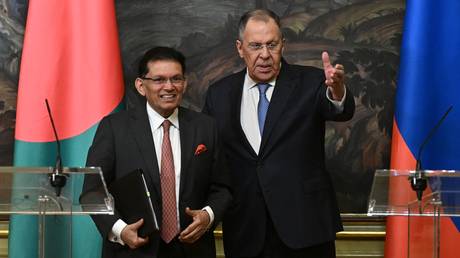
Foreign Minister Khalilur Rahman also expressed interest in space and nuclear energy collaboration in talks with Sergey Lavrov
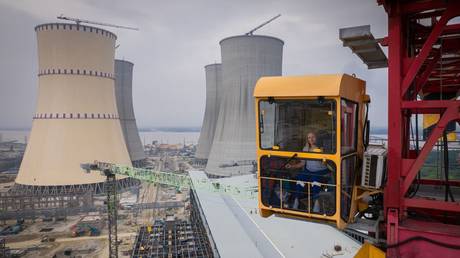
Bangladesh has lauded the Rooppur Nuclear Power Plant, built with Russian support, as a “monument to cooperation” between the two countries.
At a meeting in Moscow on Monday, Bangladeshi Foreign Minister Khalilur Rahman and his Russian counterpart, Sergey Lavrov, also discussed steps to strengthen cooperation between the two countries.
The Russian-backed $12.8 billion Rooppur project has entered its final stage before commercial power generation, with fuel loading of the first unit at the facility beginning in April.
Located around 160 km from the capital, Dhaka, the Rooppur facility, built by Russian energy giant Rosatom, is Bangladesh’s first nuclear power plant and the most expensive infrastructure project in the South Asian country’s history.
Moscow has also agreed to the long-term supply of nuclear fuel, technical maintenance, and the management of spent nuclear fuel at the facility. Bangladesh relies on imports for roughly 95% of its energy needs.
Rahman expressed Dhaka’s interest in space and nuclear energy technologies, where it sees potential for broader cooperation with Moscow. “Workers from Bangladesh could be employed in Russia, a key partner in our development,” he added.
Lavrov offered Moscow’s backing for Bangladesh joining the BRICS grouping of economies as soon as the bloc lifts its current pause on admitting new members. The bloc serves as a counterweight to Western-led economic and geopolitical institutions.
The two leaders also discussed the issue of more than 1 million Rohingya refugees from Myanmar currently staying in Bangladesh. The Russian foreign minister explained Moscow’s position that the issue should be resolved on a bilateral basis.
“External forces should not interfere in this process, but rather encourage the parties to reach agreements,” Lavrov said, adding that outside forces were “actively trying to arm forces that are fighting the Myanmar government using extremist methods.”
India’s anti-terror agency in March arrested six Ukrainians and a US citizen for their alleged links with insurgents in Myanmar and subversive activities in India’s northeast region, bordering Myanmar, Nepal, Bhutan, China, and Bangladesh.
Lavrov also lauded Dhaka’s balanced stance on the conflict in Ukraine.
Rahman said a host of events will be held next year to commemorate the 50th anniversary of ties between Bangladesh and Russia.
Car petrol sales went down by 3.5% in April, the steepest drop since 2023, with inflation still on the rise, according to EU data
European drivers have slashed fuel consumption as the Iran war and oil price hikes are forcing belt-tightening at the pump, according to Eurostat data and the Financial Times.
Fuel sales in the Eurozone fell 3.5% by volume year-on-year in April, with the drop being the steepest since October 2023, a Eurostat report released over the weekend shows. According to the Financial Times, six European economies recorded double-digit declines in fuel sales, among them Germany, Norway, and Austria.
As of early June, the EU average petrol price stands at €1.8 per liter ($2.1), as compared to around €1.5 per liter before the start of the Iran war in late February. Twelve EU countries saw diesel prices rise by more than a third in April against a year earlier, with an average increase of 33.7% across the bloc.
The Iran war led to the de facto closure of the Strait of Hormuz and damage to key oil facilities in the Gulf, with the benchmark Brent oil price floating around $94 per barrel, which is, though, significantly lower than the peak of more than $120.
The knock-on effects of the war continue to loom over the EU economy despite the fragile ceasefire between the US and Iran. In late March, EU officials revealed that the bloc’s imported fossil fuel bill jumped by €14 billion. In addition, overall Eurozone inflation hit 3.2% in May, up from 3% in April.
The UK has also suffered from the war impact, with petrol peaking at £1.59 ($1.98) per – also seen a more than 20% rise in “fill up and flee” crimes at petrol stations, according to security firm Forecourt Eye.
As for the UK’s inflation, the annual Consumer Prices Index (CPI) rose to 3.3% in March but briefly cooled to 2.8% in April, though analysts predict that the relief could be short-lived.
American drivers fare no better, with the national average gas prices hitting $4.16 a gallon as of June 8. According to Moody’s Analytics, the average US household has spent nearly $450 more on energy costs since the conflict began, totaling close to $60 billion cumulatively.
British commanders reportedly fear the navy looks “toothless” in the face of a supposed Russian threat
Britain’s entire available fleet of nuclear-powered attack submarines is stuck in port awaiting maintenance and repairs, leaving the Royal Navy without a deployable hunter-killer boat, UK media have reported.
All five of the Royal Navy’s operational Astute-class attack submarines are currently unavailable, while a sixth boat, although commissioned into the fleet, is not yet ready for deployment, The Telegraph and Daily Mail said over the weekend, citing naval sources.
The Astute-class submarines are designed to track and deter enemy submarines, and escort the UK’s aircraft carriers and Vanguard-class vessels carrying Trident nuclear missiles. The boats are nuclear-powered and armed with Spearfish torpedoes and Tomahawk cruise missiles.
Former nuclear submarine captain Commander Ryan Ramsey told The Telegraph the situation is a “serious wake-up call,” arguing that Britain now looks “toothless” in the face of supposed Russian aggression. Moscow has repeatedly dismissed claims it poses a threat to Europe.
Lord West, a former First Sea Lord and Labour security minister, described the situation as “unacceptable” and “very worrying,” saying attack submarines are essential for protecting Britain’s nuclear deterrent and “terrifying the Russians.”
Issues with the navy’s submarine fleet were previously reported back in 2023, with The Mail stating at the time that all of Britain’s available nuclear attack submarines were confined to port, citing maintenance delays, shortages of naval engineers, and a lack of dry-dock capacity.
Last week, The Mail also reported that Britain’s £3.5 billion ($4.6 billion) flagship HMS Prince of Wales aircraft carrier had broken down once again and was forced into port in Norway for repairs.
The reports come as British officials have continued to cite a supposed threat from Russia, claiming it is “probing, challenging, testing our defenses.” The UK’s chief of the defense staff, Sir Richard Knighton, stated to the BBC last week that Britain faces its most dangerous period since the Cold War.
Russia, however, has consistently dismissed claims that it is preparing to attack NATO or European countries unless attacked first. President Vladimir Putin has rejected such warnings as “delusions” and “provocations” being used to scare European populations and justify increased military budgets, while Russian officials have accused the West of jeopardizing global security through “reckless militarization.”
Nevertheless, European officials have openly discussed preparing for a possible direct confrontation with Russia, with Belgian and French officials warning of a possible “major war” by 2030.
Israel will not decide the terms of an agreement with Tehran because “I call the shots,” the US president told the Financial Times
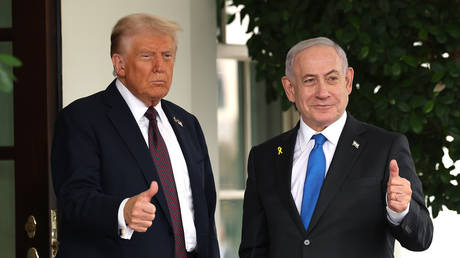
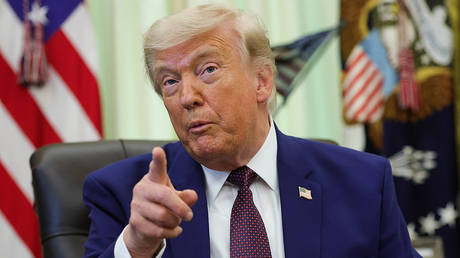
Israeli Prime Minister Benjamin Netanyahu will have no choice but to accept any deal the US reaches with Tehran, President Donald Trump has said, declaring that he “calls the shots.”
Trump made the remarks in an interview with the Financial Times on Sunday, shortly after Iran fired a missile barrage at Israel in retaliation for Israeli airstrikes on Beirut. Tehran described the attack as a warning and threatened “crushing blows” if Israel continues its strikes in Lebanon or retaliates against Iran.
Earlier, Israel struck Beirut’s southern suburbs without issuing the warnings it typically gives before attacks in densely populated areas. The strike on a residential building killed at least two people and wounded 20 others, according to Lebanon’s Health Ministry.
Trump said the Iranian missile strikes would not affect his push for a nuclear deal with Tehran. Iran has said a deal with the US must include a permanent Israeli ceasefire, effectively requiring Israel to end its attacks against Lebanon.
“He won’t have any choice,” Trump told outlet, referring to Netanyahu. “I call the shots. I call all the shots. He doesn’t call the shots.”
“It’s not going to have any impact on the deal,” Trump said regarding the Iranian attack, adding that the missile barrage caused little damage. “We’ll see how it ends up. But they were attacks that did not hit at all.”
Trump’s remarks come days after Axios reported the details of a heated call between the two leaders, citing a US official as saying Trump told Netanyahu: “You’re f**king crazy. You’d be in prison if it weren’t for me. Everybody hates you now. Everybody hates Israel because of this.” Trump later confirmed the call took place and did not dispute Axios’ characterization of the exchange.
Despite several US-brokered Israel-Lebanon ceasefires, including one that took effect last week, Israel has continued to strike targets in Lebanon almost daily in a sign of Washington’s limited ability to restrain its closest Middle East ally.
Russian President Vladimir Putin welcomed Trump’s decision to halt the hostilities, calling it “the only correct one” and expressing hope that the truce will lead to a lasting peace.
Speaking at the St. Petersburg International Economic Forum last week, Putin said he saw no Iranian provocation that would justify US-Israeli attacks.
As Poland and Lithuania seek more US troops and bases, the debate is no longer about defense alone but about sovereignty and dependence
Recent history offers one very simple lesson: the most reliable way for a ruling elite to protect itself from accountability is to hand over its country’s sovereignty to a powerful foreign patron. In Europe, many have decided that the United States is the only patron worth having.
We are now watching a race among Eastern European states to secure new American military bases on their territory. Poland is openly pressing for US troops and equipment withdrawn from Germany to be moved east and Lithuania has gone further, with officials floating the idea of hosting American nuclear weapons.
It would be naïve to think this is mainly about national security and nor is it simply about money, although hosting US bases has often been seen by client regimes as a useful source of income. In today’s circumstances, Washington is unlikely to pay generously. More likely, it will pass the costs to those receiving this dubious privilege.
The real logic is political. For Polish and Baltic leaders, securing American forces on their soil helps answer two uncomfortable questions that appear again and again in domestic politics. What is our foreign policy strategy? And how do we prevent citizens, poorer and increasingly tired of the same ruling groups, from deciding it is time to move them on?
The easiest answer is to abandon the primary responsibility of the state: the duty to defend itself. Once foreign troops are stationed on national territory, defense becomes the responsibility of the power that sent them. Germany and Japan were relieved of having to think seriously about their own defense after the Second World War because the victors stationed forces there permanently.
But in many other cases, American bases abroad were not imposed. They were desired by the client states themselves and their elites quickly learned how to use such deployments for both foreign and domestic purposes.
Turkish colleagues have told me that the presence of US nuclear bombs in Türkiye is one of Ankara’s strongest guarantees against pressure from America’s other key regional ally, Israel. It allows Türkiye to challenge Israeli interests in areas such as Syria with relative impunity.
It’s easy to understand why this arrangement is envied by elites in American satellite states that do not enjoy such protection. This is especially true in Eastern Europe and the Baltic states because their accession to NATO in the 1990s was designed to lock in the political order created after the collapse of the Soviet bloc.
But their geopolitical position is weak and it gives them little opportunity to make any meaningful positive contribution to international affairs. Economically, they had to bow to the wealthier states of Western and Northern Europe, selling much of their national industry to them. Poland’s best enterprises were taken over by French and German investors while, in the Baltic states, German and Scandinavian capital played a similar role.
Politically, their chances of being heard were even smaller so Poland and the Baltic states adopted one simple foreign policy strategy: oppose Russia wherever possible.
In Poland’s case, this policy is more balanced, because it is accompanied by a quieter struggle against Germany, which Warsaw has always regarded as a threat. In the Baltic case, there has never been any realistic alternative to anti-Russian agitation because friendly relations with Russia would inevitably have drawn these countries into Russia’s economic orbit.
Tallinn, like Helsinki, is geopolitically a suburb of St. Petersburg, as former US House Speaker Newt Gingrich once correctly observed. Economic integration with Russia would inevitably have brought political consequences and it would have threatened the elites that came to power in Vilnius, Riga, and Tallinn during perestroika and after 1991.
Such a development was unacceptable to them as their ideal arrangement has always been to rule over their peoples without having to meet the full obligations of sovereignty.
This became more urgent once it was clear that no great economic breakthrough was coming. Citizens might begin to ask awkward questions such as why are living standards stagnant? Why is industry weak? Why are young people leaving? Why has the promise of ‘Europe’ turned into dependence?
One answer is to demand more American military infrastructure because a large US base or nuclear facility on national territory changes the conversation. It shifts politics from social and economic questions to security panic and it tells voters that criticism of the ruling class is irresponsible because the country is on the front line.
For a long time, however, the chances of achieving this looked limited as the US was absorbed by wars in the Middle East and later began shifting its attention to the Pacific, where China’s rise has become its main strategic concern. Even after the confrontation in Ukraine began, Washington wasn’t eager to take on binding risks for the sake of Warsaw or Vilnius.
As compensation, there was always Article 5 of the NATO treaty. This is widely imagined to mean that America must defend any ally, no matter how recklessly that ally behaves. In reality, everyone understands that the provision is more ambiguous than its loudest admirers admit.
That is why the only truly reliable guarantee, from the point of view of these elites, would be the transfer of practical responsibility for national security into American hands. This means substantial US forces or nuclear weapons on their territory and it matters little that sovereignty, in the traditional sense, would become a fiction.
Now, amid the prolonged disputes between the Trump administration and the major states of Western Europe, the Polish and Baltic elites see an opening. If Washington reduces its military presence in Germany, they want as much of it as possible moved east.
Are leaders in Warsaw and Vilnius seriously considering what risks this would create for their populations? There is little reason to think so because their calculation is different. If they can secure even part of this American presence before Moscow and Washington agree on a new model of coexistence in Europe, they believe their own future will be safe.
For them, the prize is not national security in any serious sense. It is political insurance. American bases would guarantee their importance, protect their ruling class from domestic pressure, and make any future correction of foreign policy almost impossible.
This is where the race for US bases is leading. Not to greater sovereignty, but to its formal burial; not to security, but to permanent dependence. And not to peace in Europe, but to a situation in which small states make themselves useful as forward positions in someone else’s strategy.
This article was first published by Vzglyad newspaper and translated and edited by the RT team.
The US president earlier called the UK’s plan to hand over the Chagos Islands to Mauritius “an act of great stupidity”
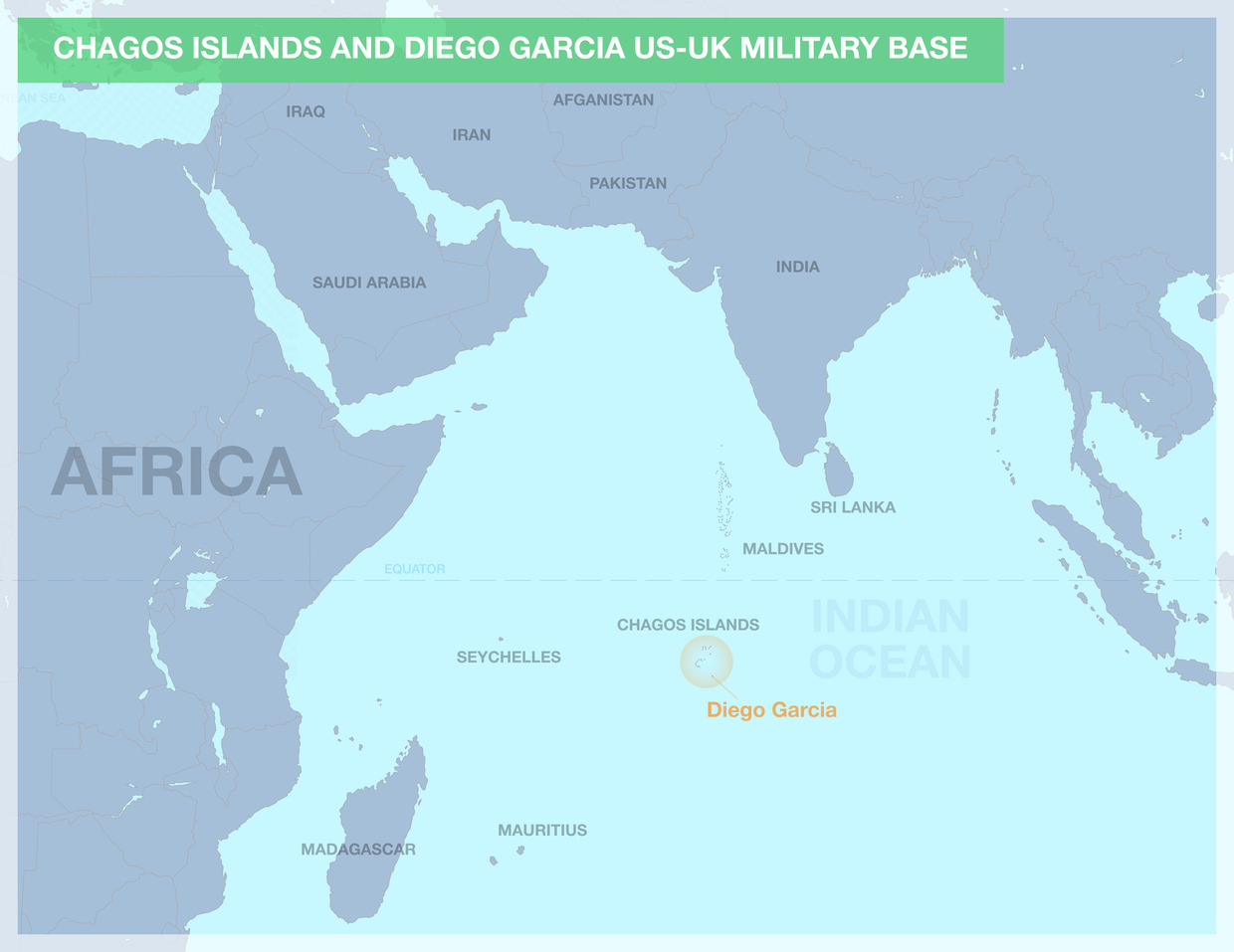
The US is weighing a plan to purchase the Chagos Islands directly from Mauritius in a bid to sideline the UK over the future of a crucial military base in the Indian Ocean, The Telegraph reported on Sunday.
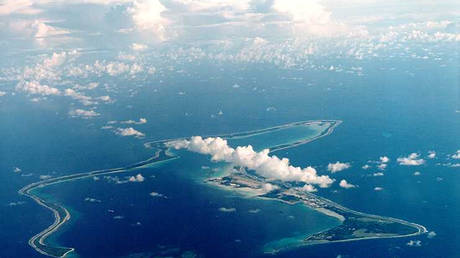
The Chagos Islands are home to Diego Garcia, a joint UK-US military base regarded as one of the most important American installations outside the continental US. The facility hosts roughly 2,500 US military personnel and supports B-2 bomber deployments, operations against Houthi targets in Yemen, and has been used in strikes on Iran.
While the Chagos Islands are currently controlled by the UK, London last year approved a plan to hand them over to Mauritius while signing a 99-year lease on the base. The UK’s hand was essentially forced by a decades-long colonial sovereignty dispute, with the International Court of Justice ruling in 2019 that the UK’s 1965 separation of the islands from Mauritius was unlawful and in violation of the right to self-determination.
While US President Donald Trump initially supported the plan, in January he declared the deal “an act of great stupidity” and a threat to national security, while warning that China and Russia “have noticed this act of total weakness.” The UK subsequently put the deal on hold, pending negotiations with the US.
Now, “US officials have drawn up a [purchase] proposal to bypass Britain and make its own deal to take control of Diego Garcia,” according to the Telegraph. The plan is among several options being discussed within the Trump administration and caught the attention of US Treasury Secretary Scott Bessent, who presented it to Trump, the report says.
Should the US approve the plan, the UK would first have to hand over the Chagos Islands to Mauritius, and then Washington would negotiate the purchase with the Mauritians. The move would thus leave Britain as a bystander in a dispute over territory it has held for over two centuries.
The Mauritian government said, as cited by Reuters, that it had “taken note of the information reported by The Telegraph” but “has not received any official proposal” from the US. It also stressed that the republic’s sovereignty over the Chagos Archipelago is “non-negotiable.”
The report comes after Trump renewed talk of acquiring Greenland from Denmark and has repeatedly referred to Canada as the “51st state,” moves that put additional strain on Washington’s already uneasy relations with its traditional allies.
The plan reportedly calls for the military’s four death-row inmates to be executed within 150 days of presidential approval
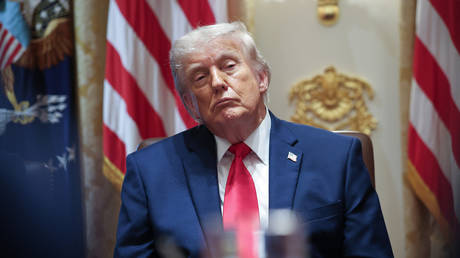
The US Army is preparing to carry out its first executions of death-row service members since 1961 if President Donald Trump orders them, ABC News reports, citing an internal planning document.
Trump has advocated wider application of the death penalty as a deterrent against violent crime.
ABC News reported on Saturday that the plan – known as Operation Resolute Justice – was circulated internally in February and requires the military to be ready to carry out executions “no later than 150 days from the date of presidential approval of the death sentences.”
The preparations reportedly include reviewing execution procedures and transferring the four death-row inmates from the US Disciplinary Barracks at Fort Leavenworth, Kansas to the federal execution facility in Terre Haute, Indiana in coordination with the Federal Bureau of Prisons.
Army spokesperson Cynthia Smith downplayed the preparations as a “standard component of our continued planning,” noting that Trump has yet to issue a specific order, as quoted by the publication.
Last September, Secretary of War Pete Hegseth said he would seek presidential approval for the execution of Nidal Hasan. The former US Army major and physician was sentenced to death for the 2009 Fort Hood mass shooting that left 13 people dead and 32 wounded.
The other three army death-row inmates include Sergeant Hasan Akbar, former army cook Ronald Gray, and former master sergeant Timothy Hennis, all of whom were convicted on multiple counts of premeditated murder.
During his first term in office, the Trump administration oversaw 13 federal executions – more than in any other presidential term in modern history.
Shortly after returning to office in 2025, Trump revoked a moratorium on federal executions imposed by his predecessor, Joe Biden, in 2021.
Dramatic videos show buildings swaying and crowds fleeing as the authorities warn people in coastal areas to move inland
A powerful earthquake struck off the southern Philippines coast on Monday, killing at least 32 people and injuring more than 200 others as buildings collapsed across Mindanao, sending residents fleeing from homes, schools, and offices and triggering tsunami warnings around the region.
The magnitude 7.8 quake struck near Mindanao shortly before 7:40 AM local time at a depth of about 35 km, according to the US Geological Survey. The Philippine Institute of Volcanology and Seismology said that 138 aftershocks had been recorded by 11:00 AM local time (03:00 GMT), including one of magnitude 6.1.
Several mostly low-rise buildings collapsed or suffered heavy damage in the hard-hit city of General Santos, where rescue teams continued searching through rubble. A 1-meter tsunami struck nearby coastlines, damaging at least one southern coastal village, while smaller waves were recorded in Indonesia, Palau, and as far away as southern Japan. Authorities said damage assessments were continuing across Mindanao.
Videos circulating on social media show buildings swaying, ceilings and walls cracking, debris falling into streets, and panicked residents running from homes, shops, and offices.
WATCH: Building collapses after magnitude 7.8 earthquake strikes the Philippines pic.twitter.com/8Q9XFK6Gf8
Other videos show damaged structures and partial collapses, as emergency services were deployed to inspect roads, bridges, ports, power lines, and public buildings in affected areas of Mindanao.
Severe damage in the Southern Philippines, following a 7.8 magnitude earthquake. Tsunami warnings have been issued. pic.twitter.com/OO27Ymnjia
“Many buildings were affected, but I cannot enumerate them now because we are busy with ongoing rescues,” Master Sergeant Robert Dagon of the General Santos City police told AFP, adding that several structures, including homes, collapsed
The police station in Alabel town, Sarangani province, was damaged during the earthquake, which struck as officers were taking part in a flag-raising ceremony, the local police chief told Reuters
WATCH: Footage shows a high school building that collapsed following the powerful earthquake that struck the Philippines. pic.twitter.com/XGgbnposCY
Tsunami warnings were issued for several coastal areas following the quake. The authorities urged people in affected coastal zones to leave beaches, harbors, and low-lying areas, and to follow evacuation orders until the tsunami threat passed.
— Whale | Decentra👀 (@whale_decentra) June 8, 2026
Tsunami waves were recorded in six areas of Mindanao from 7:42 to 8:45 AM local time, according to the Philippine Institute of Volcanology and Seismology. The highest wave measured 1.4 meters along the island’s southern coast. The agency said tsunami warnings remained in force.
Tsunami situation in the Philippines after a powerful 7.8 magnitude earthquake struck the region pic.twitter.com/cXUUTXWrPx
Waves of 0.09 to 0.19 meters were later detected at three locations along Indonesia’s coast, according to the country’s meteorological agency. The Japanese authorities warned that tsunami waves up to 1 meter high could hit the southern Okinawa islands and coastal areas along the country’s Pacific coast.
Buildings collapse in Mindanao as a powerful 7.8 magnitude earthquake rocks the Philippines pic.twitter.com/0aHN23wRqt
The Philippines lies on the Pacific Ring of Fire, one of the world’s most seismically active zones, and is frequently hit by earthquakes, volcanic activity, and severe storms. Officials warned that aftershocks were possible and advised people to remain outdoors or in safe open areas until structures can be inspected.
The incident took place in February 2023 as Washington scrambled to tackle suspected “Chinese spy balloons”
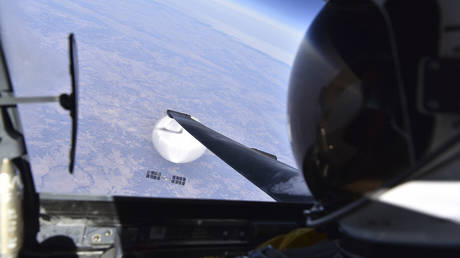
The Biden administration ordered the downing of a Boy Scout balloon over US soil in February 2023 using a missile worth roughly $500,000 as Washington scrambled a panicked response to alleged “Chinese spy balloons,” the New York Post reported on Saturday, citing former Pentagon officials.
On February 12, 2023, the US Air Force dispatched an F-16 over Lake Huron, near the US-Canada border, to intercept what was believed to be a potential unidentified aerial threat, destroying it with an AIM-9 Sidewinder missile. The episode was confirmed by declassified cockpit footage released last month by the Department of War as part of its second batch of UFO-related records.
“The F-16 shot at a balloon over Lake Huron. After the [Chinese spy] balloon embarrassment, DOD was shooting at every [Unidentified Anomalous Phenomena] they detected”, Tim Phillips, a former interim director of the Pentagon’s All-Domain Anomaly Resolution Office (AARO), told The Post.
Sean Kirkpatrick, the former head of AARO, claimed that the balloon belonged to a Boy Scout group and had been launched on an unspecified research project. “The balloon had circumnavigated the globe eight times before we shot it down with a half-million-dollar missile,” Kirkpatrick explained, as cited by NYP. “You can imagine the response on the Hill when I briefed that.”
The “spy balloon frenzy” kicked off in early February 2023 when a Chinese high-altitude balloon was shot down off the coast of South Carolina by an F-22 Raptor. Beijing insisted that the craft was civilian, with Beijing’s top diplomat, Wang Yi, calling the shootdown “absurd” and in violation of international norms.
Media reports have suggested that there have been several other cases in which the US Air Force swept the skies of civilian US-originated aircraft. According to Kirkpatrick, around the same time, a US fighter pilot reported encountering a UFO with “stealth-like capabilities” and opened fire – but once it was downed, it turned out that he had destroyed a balloon from Walmart, saying “Happy Birthday.”
In February 2023, a hobby group called the Northern Illinois Bottlecap Balloon Brigade reported the loss of a $12 balloon the same day a US fighter jet downed an unidentified flying object with a missile worth over $400,000.
Following the suspected “Chinese spy balloon incident,” the US military said it had adjusted its radar detection parameters to pick up slow-moving objects it had previously filtered out – a change that inadvertently led to the shootdowns of civilian balloons. In September 2023, CNN reported, citing an intelligence assessment, that China had dialed down its balloon surveillance program after butting heads with the US over the controversy.
Texas governor slammed Ottawa’s move as an “overreaction” despite declaring a statewide disaster
Canada has temporarily banned imports of livestock, including horses, from the US state of Texas over the outbreak of screwworm fly, a flesh-eating and potentially deadly parasite.
The first case of screwworm was identified in Texas on Wednesday, marking the first detection of the parasite in the US, roughly 80km (50 miles) from the Mexican border. The outbreak began in Central America in 2023 and has been spreading steadily northward ever since. By late 2025, Mexico had reported thousands of cases in animals and dozens of humans.
The second case was identified on Friday in the same area, prompting Texas officials to declare a state of disaster over the outbreak. The same day, the Canadian Food Inspection Agency said it would temporarily halt imports of livestock from Texas until further notice and “continue to work closely with US counterparts to assess developments and adjust measures as needed.”
The ban applies to all livestock that originated from or were present in Texas during the three weeks prior to entering Canada.
Texas Governor Greg Abbott has condemned Ottawa’s move as an “overreaction” despite branding the outbreak an “imminent threat” as he declared a state of disaster.
“This pest affects live animals and does not impact inspected Texas beef. Canada’s broad restriction on Texas livestock is an overreaction that is more political than science-based,” the governor told USA Today in a statement.
The parasite, which in its adult form resembles a common housefly, lays its eggs into wounds and natural body openings of warm-blooded animals. The eggs – laid in hundreds by a single fly – hatch into parasitic maggots, which feast for about a week on living flesh, causing an extremely painful and potentially deadly condition. The maggots ultimately burrow out of the bodies of their hosts and dig into soil to pupate, emerging as an adult fly several weeks later to repeat the process.
The screwworm was declared eradicated in the US in 1966, in Mexico in 1991, and all across Central America by the mid-2000s. The program involved mass-breeding and release of sterile male flies into nature to destroy the population of the parasite. The resurgence of the fly in recent years has been attributed to changing weather and warmer temperatures, which are thought to drastically increase the range of the insects.

 Login
Login