Washington’s nuclear weapons budget rose by $12.4 billion in a single year, according to ICAN
US spending on nuclear weapons surged by nearly a quarter in 2025 compared to the previous year, according to findings by an anti-nuclear watchdog.
In a report released on Tuesday, the International Campaign to Abolish Nuclear Weapons (ICAN) said the world’s nine nuclear-armed states spent nearly $119 billion on their arsenals last year – the equivalent of $3,768 every second.
The US remained by far the biggest spender, pouring $69.2 billion into its nuclear arsenal – more than all other eight nations combined. Washington also recorded the largest annual increase, with spending rising 22% year-on-year, or $12.4 billion.
Combined spending by the US, Russia, China, the UK, France, India, Pakistan, Israel and North Korea jumped 19% year-on-year, or $16.8 billion, to a record high. China ranked second with spending of $13.5 billion, while the UK overtook Russia as the third-largest spender, allocating $12.6 billion compared to Moscow’s $9.5 billion.
ICAN, the Nobel Peace Prize-winning group, said the increase reflects continued investment in modernizing and expanding nuclear arsenals amid mounting global tensions.
The nine nuclear powers have spent a combined $471 billion on their arsenals over the past five years, the group said. It added that a single day’s nuclear weapons spending in 2025 could have provided food for two million people for a year, while annual spending could have covered the UN’s regular budget for 32 years.
The report comes as the US is considering deploying its nuclear weapons to additional NATO member states in Europe, according to a Financial Times report last week. The outlet said US officials had discussed expanding the nuclear-sharing arrangement beyond its current participants.
Countries neighboring Russia, including Poland and the Baltic states, have reportedly expressed interest in hosting US nuclear weapons.
The US has stationed nuclear weapons in Europe under its nuclear-sharing program since the 1950s. B61 gravity bombs are currently believed to be deployed in Belgium, Germany, Italy, the Netherlands, and Türkiye, while control of the weapons remains with Washington.
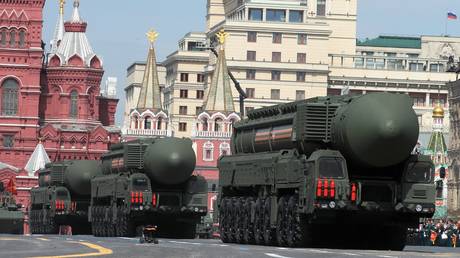
Moscow has warned that any further expansion of NATO’s nuclear infrastructure toward Russia’s borders would trigger a response. Earlier this month, Russian Ambassador-at-Large Andrey Belousov reiterated a demand that all US nuclear weapons be withdrawn from Europe and the infrastructure supporting their deployment be dismantled.
The live-fire drill comes as Taipei is expanding its missile arsenal despite repeated warnings from Beijing
Taiwan has launched approximately 36 US-supplied missiles into the water off the coast of mainland China, in a first-of-its-kind live-fire drill on the self-governing island’s west coast.
The exercise comes amid mounting tensions between Taipei and Beijing, which considers Taiwan sovereign Chinese territory.
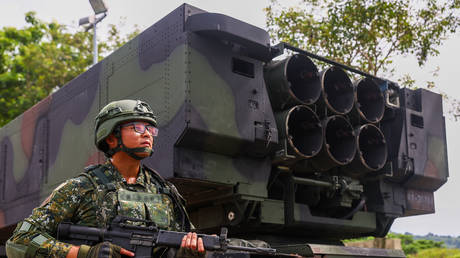
The drills took place on Wednesday and involved the firing of reduced-range training rockets from US-made High Mobility Artillery Rocket Systems (HIMARS) into the Taiwan Strait.
According to Taipei, the exercise was meant to simulate an attack on an invading Chinese force and demonstrate HIMARS’ ability to “shoot-and-scoot” by avoiding counter strikes.
HIMARS has a range of up to around 300 km, meaning it could potentially hit targets in China’s southeastern Fujian Province across the strait.
Taiwan has ordered 29 HIMARS launchers from the US and has also been building up anti-ship and air defense systems.
Chinese officials have repeatedly condemned US arms sales to Taipei as interference in China’s internal affairs and a violation of the decades-old One-China policy. While Washington does not officially recognize Taiwan as an independent state, it has maintained close unofficial ties with Taipei and remains its main arms supplier.
During his meeting with US President Donald Trump in Beijing last month, Chinese President Xi Jinping described Taiwan as the most important issue in China-US relations and warned that mishandling it could push the two countries into “a very dangerous situation.”
Beijing considers Taiwan part of China and has consistently warned against separatism on the island. Xi has repeatedly said Beijing seeks peaceful reunification, but has refused to rule out the use of force if provoked.
The country’s child population has hit a record low, as falling births, fewer marriages and deep social shifts reshape society
In May, Japan’s Ministry of Internal Affairs and Communications released data showing that the number of children under the age of 15 in the Land of the Rising Sun had fallen to a new historic low: 13.29 million, which is 350,000 fewer than a year earlier.
To understand the scale and drama of what is happening, it is worth recalling that in 1950*, at the very beginning of Japan’s economic miracle, children under 15 made up 35.1% of Japan’s population. Half a century later, in 2000, the share of children had declined to 14.5%. Alarm bells rang in the country, measures were introduced, but the trend could not be reversed. And now, according to the results of 2025, the share of children in the total population has once again hit a new low, falling to just 10.8%.
The reduction of the number of children in Japanese society to what was once unthinkable is linked to falling birth rates, which in Japan are declining even faster than in the developed countries of America and Europe. The total fertility rate has fallen below 1.2 nationwide, while in Tokyo the average number of children per woman has dropped to just 0.99.
In turn, the fall in fertility is connected with the continual decline in the number of marriages. Over 45 years of uninterrupted decline in the number of children, younger generations of Japanese have themselves become far smaller. More importantly, an increasing number of young Japanese do not want to start any family at all, or even maintain stable sexual relationships.
And here we arrive at the root cause: Japan is a country of triumphant individualism. With the participation of American social-engineering strategists, Japan created a model of accelerated modernization built around a hollowed-out national tradition and a high standard of living as the central meaning-forming pattern of mass culture.
The results of the Japanese case, and of other social experiments – including alternatives to it – can be assessed using RT’s global Social Well-Being Index (SWI). According to the RT Index methodology, social well-being is determined by the production and preservation of life, as well as the minimization of social oppression. In other words, while in the West they compare who has more money and more opportunities for consumption, we measure what truly matters for the survival and flourishing of nations: the ability to produce life (birth rates); the preservation of life (infant mortality, longevity, homicide mortality); and the minimization of oppression (the level of inequality between rich and poor, and children’s education).
Read more here about the high standards, inherent contradictions, and uncertain prospects of social well-being in westernized Japan.
Tehran said it attacked American-linked military sites in Bahrain, Jordan, and Kuwait
Iran’s Islamic Revolutionary Guard Corps (IRGC) has published footage of missile launches it said were aimed at American military facilities in several Arab countries, describing the operation as retaliation for recent US attacks.
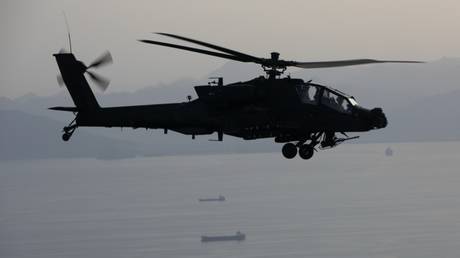
Tensions between Washington and Tehran have surged in recent days alongside a parallel escalation between Iran and Israel. US Central Command said it carried out strikes inside Iran on Tuesday after a US Apache military helicopter was lost near the Strait of Hormuz, an incident Washington blamed on Tehran.
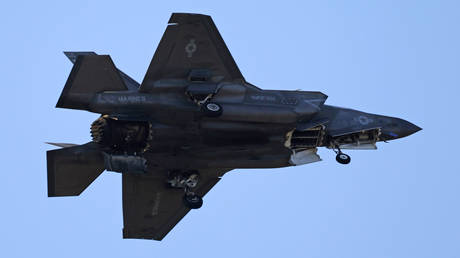
The IRGC claimed the American strikes damaged a telecommunications tower on Sirik Island and destroyed two water reservoirs in the Bemani district. It said its response included attacks on the headquarters of the US Fifth Fleet in Bahrain and four targets at Jordan’s al-Azraq air base, including hangars housing F-35 fighter jets.
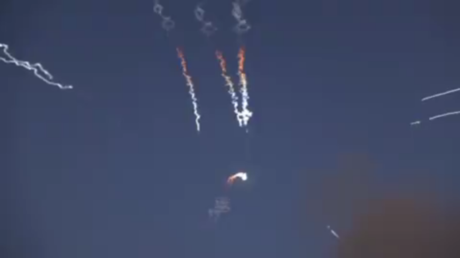
Video released by Iran shows several missiles being launched at night. The IRGC said drones were also used in the operation and claimed that 21 targets were engaged in Kuwait, Jordan, and Bahrain, including a Reaper drone.
🔺 The IRGC released footage of long-range missile launches targeting U.S. positions in the region, in response to the U.S. strikes on southern Iran earlier in the day. The video showed claimed launches of Qadr, Emad, and Kheibar Shekan ballistic missiles — both solid and liquid… pic.twitter.com/6WWqiDavu7
The US has described its strikes on Iran as “defensive” and “proportional,” saying the AH-64 Apache attack helicopter was shot down over international waters in the Strait of Hormuz. Iranian Foreign Minister Abbas Araghchi repeated Tehran’s position that no international waters exist in the strategic passage separating Iran from Oman.
Earlier, Iran hit targets in Israel, saying the strikes were retaliation for Israel’s continued invasion of southern Lebanon and attacks on Beirut. West Jerusalem later responded with strikes of its own, despite calls by US President Donald Trump not to escalate further.
Tehran considers Israel’s operation in Lebanon a breach of a ceasefire announced by the US and Iran in April, which was presented as part of an effort to reach a peace agreement. Trump has argued that “moderate” shooting does not amount to a violation of a Middle East truce.
The US tech giant has responded by accusing the European Commission of “regulatory overreach”
The European Commission has demanded that Meta – which owns Facebook, Instagram and WhatsApp – give competitors’ AI assistants free access to its messaging and social media platforms.
The interim measure will remain in place until the conclusion of an antitrust investigation against the American tech giant, the EU’s main executive body said in a statement on Tuesday.
Meta could face a fine of up to 10% of its global annual turnover if found guilty of abusing its market power to undercut its rivals.
The probe into Meta was launched in December 2025 when artificial intelligence developers from the US, France and Spain complained about the California-based company’s decision to block access to its WhatsApp for Business application programming interface (API) to all competitors.
Only its own Meta AI remained connected to the messaging app, which has over 3.3 billion active users worldwide. It’s also integrated into Meta’s social media platforms, Facebook and Instagram.
In March, the company allowed external AI chatbots to access WhatsApp for a fee, but Brussels argued that it was too high and not economically sustainable for rivals.
Meta now has five working days to make the use of WhatsApp for Business API free, like it used to be before October 2025, according to the European Commission.
EU antitrust chief Teresa Ribera said that the body acted to “preserve choice for citizens across Europe on the AI assistants they want to use with WhatsApp, without that decision being made for them.”
The measure will also “safeguard competition in the growing market for AI assistants, by preserving a key entry point to reach consumers in Europe – WhatsApp – and allowing AI companies to innovate, scale up and reach their full potential,” Ribera added.
A Meta spokesperson said in an-email to Reuters that the company disagrees with the order and is planning to appeal against it.
“The European Commission has decided that OpenAI and some of the largest companies in the world can use the paid-for WhatsApp Business product for free. This is regulatory overreach subsidized by the many European companies that pay,” the spokesman stressed.
CNBC reported in April that Meta, Google and Apple have been ordered to pay around $7 billion in fines by the EU for antitrust and privacy breaches since the start of 2024. This prompted the administration of US President Donald Trump to accuse Brussels of unfairly targeting the US tech firms, with the European Commission insisting that it’s only protecting the bloc’s consumers.
President Donald Trump’s explanation for the latest escalation “doesn’t make sense,” Larry Johnson has told RT
The US and Israel carried out their latest strikes on Iran and Lebanon in a deliberate effort to sabotage the ongoing peace talks, former CIA analyst Larry Johnson has told RT.
On Wednesday local time, the US struck Qeshm Island and targets in southern Iran in response to the crash of a US AH-64 Apache attack helicopter off the coast of Oman – an incident US President Donald Trump blamed on Iran. Tehran, however, has refused to confirm that it was responsible for the crash.
Johnson argued that Trump’s rationale for the latest escalation “doesn’t make sense,” especially since both pilots of the helicopter survived.
“If they are alive, why does Donald Trump launch strikes on Iran when they are supposedly in the midst of peace talks? The only reason I can come up with is that he did it deliberately to sabotage the talks,” he said.
Trump has been pressured by “the Zionist crowd” and pro-Israel politicians such as US Ambassador to Israel Mike Huckabee, Johnson said.
“They are insistent on destroying Iran. They don’t want a deal with Iran,” he stated.
Johnson said Israel’s airstrikes on Beirut on Sunday were also aimed at provoking a conflict with Iran.
“Too much progress was being made during the peace talks for the neocons and for Israel, so they did everything in their power to sabotage it. I think this is going to lead to a new round of escalation that can go on for a week or two,” he said.
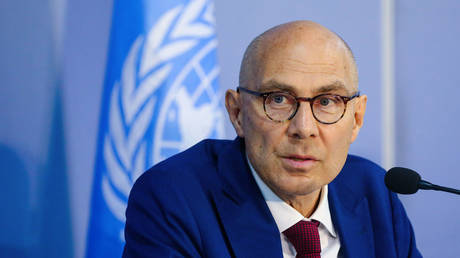
The sanctions imposed on the island nation by Washington are incompatible with international human rights law, according to Volker Turk
Children in Cuba are dying amid acute shortages of essential medical supplies caused by US-imposed economic sanctions, United Nations High Commissioner for Human Rights Volker Turk has said.
The island nation has endured daily blackouts and severe fuel deficits in recent months after Venezuela, once Havana’s main oil supplier, stopped crude shipments under pressure from the US in early 2026. This was preceded by the abduction of Venezuelan President Nicolas Maduro by American commandos in January.
US President Donald Trump has since repeatedly stated that he intends to “take” Cuba “one way or another.”
Turk described the plight of ordinary Cubans as “unacceptable,” warning that “children are dying because doctors lack access to essential medical supplies and medicines,” as quoted in a statement issued on Monday. According to the Office of the UN High Commissioner for Human Rights (OHCHR), infant mortality in Cuba has doubled to 9.9 per 1,000 births, with childhood cancer survival rates down from 85% to 65% since the US imposed a fuel blockade on the Caribbean country.
“Critical medical services such as oncology, dialysis, and maternal health are under severe strain,” with essential medicines in “critical short supply,” the report warned.
International humanitarian efforts to alleviate the situation are being hampered by US extraterritorial sanctions, with private companies refusing to deliver such shipments for fear of running afoul of them, OHCHR stated.
“Such severe sanctions packages that target entire sectors of an economy and produce broad, indiscriminate and harsh effects on populations are incompatible with basic principles of international human rights law,” Turk charged.
Last month, Cuban Foreign Minister Bruno Rodriguez Parrilla accused the US of meting out “collective punishment” in that Cubans are being subjected to conditions “that violate their human rights and cause pain, suffering, and anguish.”
Axios, citing several anonymous US officials, reported in late May that the White House was looking to further ramp up the pressure on Cuba in the hope that worsening economic conditions would eventually lead to regime change.
Russia, China, Mexico, and several other countries have been supplying Cuba with humanitarian aid. Moscow sent a shipment of around 700,000 barrels of crude oil in late March.
The White House has said the surcharge was meant to curb abuse of the program and protect American jobs
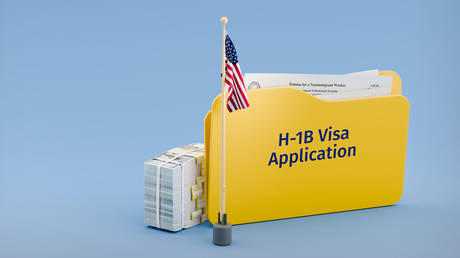
A US federal judge has struck down President Donald Trump’s $100,000 fee on new skilled-worker visas, ruling that the White House could not impose the charge without approval from Congress.
The fee applied to new H-1B visa petitions filed on behalf of foreign workers outside the US. The program allows American employers to hire specialists from abroad for up to six years, and is capped at 65,000 new visas a year, with another 20,000 available for applicants with advanced degrees. It is widely used by major technology companies.
Trump has argued that the system has been abused by companies seeking to replace American workers with lower-paid foreign labor. In September, he ordered a $100,000 surcharge on new applications, saying the measure would protect US jobs and national security.
On Monday, US District Judge Leo Sorokin ruled in favor of 20 states that challenged the policy. He said the $100,000 payment was effectively a tax, “regardless of what the payment is called,” and that the administration had no authority to impose it.
The Department of Homeland Security has denounced the ruling as “blatant judicial activism,” insisting the fee was meant to protect US workers and prevent abuse of employment-based visa programs.
The lawsuit was led by California and joined by other states that argued the fee was unlawful and would harm schools, universities, hospitals and other public institutions that rely on skilled foreign workers.
The H-1B program has long divided US policymakers. Supporters say it helps companies fill specialized roles, while critics have argued that it allows corporations and staffing firms to undercut American workers and suppress wages.
US entry bans, outrageous ticket prices, and organizational problems have overshadowed football’s biggest spectacle
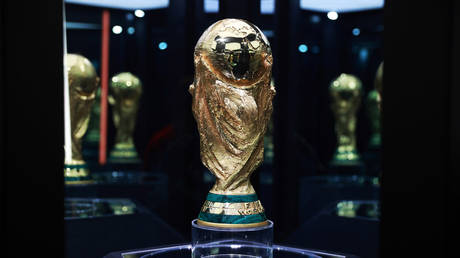
The 2026 FIFA World Cup, set to kick off this week, has already been overshadowed by political disputes and concerns over the tournament’s organization. Immigration rows, travel restrictions, and ticketing complaints have emerged as major flashpoints ahead of the opening match. Here is what we know so far.
When does the World Cup start?
The 2026 FIFA World Cup begins on June 11 and concludes on July 19. A record 48 teams will take part, with the top two sides from each of the 12 groups and the eight best third-placed teams advancing to the knockout stage.
Where is the World Cup taking place?
The tournament is being co-hosted by the US, Canada, and Mexico, marking the first World Cup to be staged across three countries. Matches will be held in 16 cities across North America, with the final set to be played at New York-New Jersey Stadium.
How have US entry policies affected participants?
The World Cup is taking place against a backdrop of tighter US immigration controls and travel restrictions that have affected some participants.
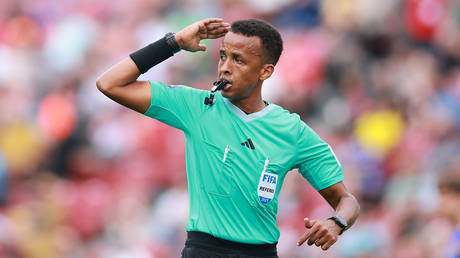
Award-winning referee Omar Abdulkadir Artan, the first Somali national selected to officiate at a World Cup, was denied entry to the US despite holding a valid visa. FIFA later confirmed that Artan would not be able to officiate at the tournament. The incident came amid broader restrictions affecting Somali nationals under the Trump administration.
Iraq’s national team also encountered entry difficulties. While all players were ultimately admitted, captain Aymen Hussein was reportedly detained and questioned for nearly seven hours after arriving in Chicago. The team’s official photographer, Talal Salah, was denied entry.
Footage circulating online shows members of Senegal’s squad undergoing extensive security checks upon arrival in the US, including pat-downs and metal detector screening. Senegal is among the countries affected by Washington’s latest travel restrictions.
Separate video appeared to show former Italy captain and Ballon d’Or winner Fabio Cannavaro undergoing lengthy security screening after landing in the country.
Fabio Cannavaro, World Cup winner, former Italy captain and ballon d’or winner being searched like a suspected drug mule in the US. pic.twitter.com/rK7brpFama
How has the Middle East war affected Iran’s participation?
Iran’s World Cup campaign has been complicated by heightened tensions with Washington and the broad US sanctions regime imposed on the country.
Visas for the Iranian squad were reportedly approved only days before the tournament after months of uncertainty, while some members of the delegation are still said to be awaiting travel documents. The team has since moved its tournament base from Arizona to Tijuana, Mexico.
Adding to the controversy, Iran’s football federation said this week that its official allocation of World Cup tickets had been revoked just days before the opening match. The federation accused organizers of breaching the principle of equal treatment for participating nations.
FIFA said it remained in contact with the Iranian federation following the team’s arrival in Mexico.
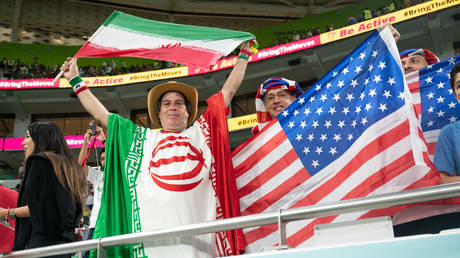
Travel difficulties have not been limited to teams and officials. Supporters’ groups from several countries have reported problems entering the US, citing visa delays, enhanced screening procedures, and high rejection rates.
Fan organizations across Africa, the Middle East, and Latin America have voiced particular concern. Supporters from Jordan, Morocco, Algeria, Egypt, Ghana, and Tunisia have reported difficulties navigating US entry requirements, while citizens of Iran and Haiti face some of the strictest restrictions. Some Scottish supporters have also reported issues with previously approved travel authorizations.
Human rights groups have also voiced concern over immigration enforcement during the tournament. Amnesty International has called on FIFA to ensure supporters can attend matches without fear of discrimination or arbitrary restrictions. Some Haitian fans have told reporters they are reluctant to travel to the US due to concerns about possible detention or deportation, even as Haiti prepares for its first World Cup appearance since 1974.
Outrageous ticket prices
FIFA is facing scrutiny from the attorneys general of New York and New Jersey over allegations of “impossibly high” prices, artificial scarcity, and misleading information about ticket availability and seat locations. Its use of demand-based pricing and resale fees has also drawn criticism.
While FIFA has promoted the expanded 48-team tournament as its most accessible World Cup yet, consumer advocates and supporters’ groups argue that soaring prices are putting many matches out of reach for ordinary fans.
Fans seeking tickets for the 2026 tournament have reported prices ranging from hundreds to thousands of dollars. Some group-stage tickets have been listed for more than $4,000, while seats for the final have appeared on resale platforms for significantly higher amounts.
By comparison, group-stage tickets at the 2022 World Cup in Qatar generally cost between $70 and $220. At the 2018 tournament in Russia, the cheapest group-stage tickets available to foreign supporters started at around $105.
Could the controversies affect the tournament?
FIFA has largely distanced itself from disputes over visas and immigration, saying such matters fall under the authority of host-country governments and maintaining that preparations remain on schedule.
US President Donald Trump has described the event as being on course to become “the most successful World Cup” ever, while the White House World Cup Task Force has pledged to deliver “the largest, safest and most welcoming sporting event in history.”
Human rights organizations and supporters’ groups, however, have questioned whether those commitments can be met, arguing that travel restrictions, immigration concerns, and ticketing controversies risk undermining the tournament’s goal of bringing together football fans from around the world.
The unrest erupted after a Sudanese asylum seeker allegedly attempted to behead a man in the street
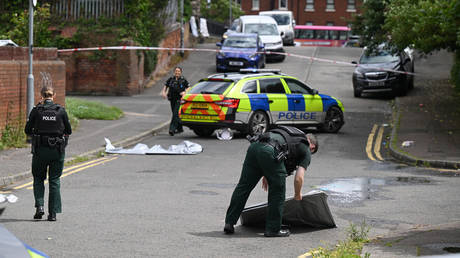
Anti-immigration riots broke out in Belfast on Tuesday night after a knife-wielding Sudanese asylum seeker allegedly attacked a man in the Northern Irish capital.
The incident occurred amid a heated debate over migration policies, fueled by a string of crimes involving foreign nationals across the UK.
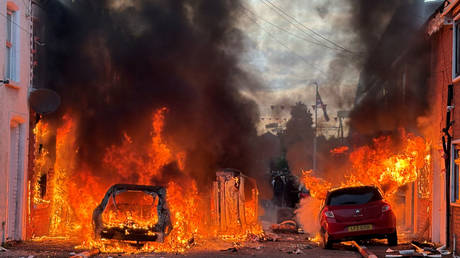
Buses and cars were set ablaze as police urged the public to remain calm.
Videos from the scene showed vehicles engulfed in flames.
🚨 BREAKING: A bus has been set on fire in Belfast amid protests over the attempted beheading of a man pic.twitter.com/FX8maCMalK
— RTI OSINT (real time intelligence) (@RTI_imtel) June 9, 2026
Other footage shows a burning car rolling down the street.
Angry mobs set several homes on fire and vandalized bus stops with anti-Islam graffiti.
According to reports, crowds roamed the streets in parts of the city, attempting to break into homes of suspected migrants.
Groups of men are going ‘door to door’ “hunting migrants” setting fire to known HMO’s in Belfast… pic.twitter.com/jxr0Rczctm
— Pippa B 🇬🇧🏴 🚜 ❤️ 🇺🇸 (@pippaisright) June 9, 2026
The unrest followed a viral video from Monday showing a knife-wielding assailant pinning another man to the ground in the middle of a street. Several bystanders intervened, saving the victim, who suffered multiple stab wounds.
According to police, the suspect flew from Paris to Dublin before traveling by bus to Belfast in 2023, where he claimed asylum.
The UK has seen major anti-immigration protests and riots in recent years, with right-wing politicians and activists accusing authorities of failing to control illegal migration and adequately address crimes committed by migrants and other ethnic minorities.
In 2024, large-scale riots broke out in Southport, northwest England, after a man of Rwandan origin fatally stabbed three girls at a dance studio. The incident resulted in a rash of arrests for social media posts which allegedly stirred up racial hatred.
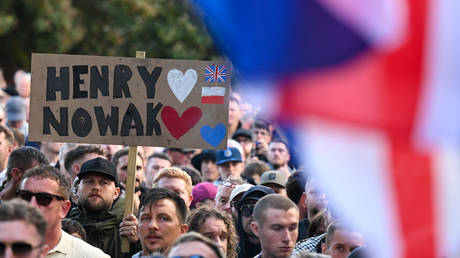
Earlier this month, demonstrations were held in memory of Henry Nowak, a university student killed by a British Sikh man in 2025. Public outrage intensified after police body-camera footage was released showing officers at the scene handcuffing the mortally wounded Nowak rather than his attacker, Vickrum Digwa.
Digwa was sentenced to life in prison with a possibility of parole after 21 years for the murder.
CENTCOM described the attacks as “a proportional response” to the alleged downing of an AH-64 Apache
The US said it has launched strikes in Iran in response to what it described as the downing of an American AH-64 Apache attack helicopter near the Strait of Hormuz.
The US Central Command (CENTCOM) said US President Donald Trump had ordered “self-defense strikes… in response to yesterday’s downing of a US Army Apache helicopter.”
“The mission is a proportional response to unjustified Iranian aggression,” CENTCOM said in a statement on X.
Iranian broadcaster Press TV reported that several projectiles struck the strategic island of Qeshm near the narrowest part of the Strait of Hormuz, which hosts a military base and a key oil terminal. Strikes were also reported in other parts of Iran’s southern Hormozgan Province.
U.S. Central Command (CENTCOM) forces began launching self-defense strikes against Iran at 5 p.m. ET today at the Commander in Chief’s direction, in response to yesterday’s downing of a U.S. Army Apache helicopter. The mission is a proportional response to unjustified Iranian…
Earlier on Tuesday, CENTCOM said the helicopter had crashed off the coast of Oman while patrolling the area and that its two pilots had been rescued.
Tehran has not directly confirmed the US claim that the helicopter was shot down, with Al Jazeera citing a senior Iranian diplomat as saying “there was no deliberate attack” on the aircraft.
Iranian Foreign Minister Abbas Araghchi wrote on X that US forces operating near Iranian territory “are at constant risk on account of their own human errors, plain accidents, or potentially being caught in crossfire.”
Shortly after the latest US strikes, Araghchi warned that Iran “will leave no attack or threat unanswered.”
“Leave our region if you want to be safe,” he wrote on X.
Despite its defeats on the battlefield, the U.S. opted to test our determination.
Our Powerful Armed Forces will leave no attack or threat unanswered.
Leave our region if you want to be safe.
History of the Persian Gulf has many chapters on dire fates of intruding outsiders. pic.twitter.com/O17GGtklxA
Iran’s Islamic Revolutionary Guard Corps (IRGC) later said it had targeted the headquarters of the US Fifth Fleet in Bahrain, as well as a US airbase in Jordan.
The latest escalation comes as Trump again claimed that his administration was close to reaching a deal with Iran and said the US would achieve a “total victory” within days or weeks.
A US official told CNN that the new strikes were intended as a “warning shot” and that Washington believed they would not derail the talks.
Iran threatened to suspend negotiations last week after Israel carried out airstrikes in Lebanon, where nearly 3,700 people have been killed since the IDF resumed its military operation in response to attacks by Hezbollah. Tehran’s peace terms with the US include the cessation of fighting “on all fronts,” including Lebanon.
Trump has since held several heated phone conversations with Israeli Prime Minister Benjamin Netanyahu, urging him to hold off on further strikes in Lebanon.
Sixty-five were recorded in 2025, according to the Peace Research Institute Oslo
The number of armed conflicts underway around the globe reached its highest level since World War II in 2025, according to a study published on Tuesday by the Peace Research Institute Oslo (PRIO).
Researchers found there were 65 state-based conflicts – involving at least one government actor – the highest number since systematic records began in 1946. The report estimates that about 245,000 people were killed in battle-related violence last year, making it one of the deadliest years in recent decades.
“The world today is … far more fragmented,” the researchers said, describing an “unprecedented” number of simultaneous wars fueled by both long-running crises and new outbreaks of large-scale fighting. They cited the escalation of the Ukraine conflict, Israel’s war in Gaza and the civil war in Sudan.
The number of interstate conflicts doubled from the previous year to a record eight in 2025, including clashes between India and Pakistan, Afghanistan and Pakistan, as well as Cambodia and Thailand.
PRIO said the 65 conflicts recorded were spread across 35 countries, with several states involved in multiple wars simultaneously. Israel, for example, was embroiled in conflicts linked to Gaza, Syria, Lebanon, Iran and Yemen, while Myanmar, Pakistan, and Nigeria also faced more than one armed conflict.
Africa was the region most affected by state-based violence, followed by Asia, the Middle East, the Americas, and Europe. According to PRIO, more than 930,000 people have been killed in state-based conflicts since 2021 – roughly matching the total recorded during the previous two decades.
Alice Weidel has also opposed the idea of giving Kiev associate membership in the EU and called for the resumption of dialogue with Russia
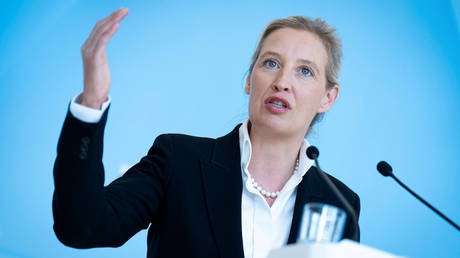
Ukraine should compensate Germany for the 2022 sabotage of the Nord Stream gas pipelines, the co-leader of the right-wing party Alternative for Germany (AfD), Alice Weidel, has said.
German investigators have attributed the explosions, which crippled the pipelines built to transport Russian gas to Germany, to a small group of Ukrainian operatives. The alleged ringleader was extradited to Germany from Italy last autumn.
Moscow has repeatedly questioned Berlin’s account of the attack, arguing that such a sophisticated operation could not have been carried out by a handful of divers in NATO-monitored waters without state backing.
Speaking at a party event on Tuesday, Weidel rejected German Chancellor Friedrich Merz’s proposal to grant Ukraine associate membership in the European Union, describing the country as a “bottomless pit” that is already heavily reliant on foreign financial assistance.
“Germany has already transferred more than €100 billion to Ukraine over the past four years alone,” she said.
Weidel argued that Kiev should first explain its role in the Nord Stream sabotage.
“We need to know how this state-terrorist act against the most important infrastructure we had, namely the Nord Stream pipelines, came about and what role Ukraine played in it,” she said.
“The flow of payments should actually be moving in the opposite direction. Ukraine must pay reparations to the Federal Republic of Germany, because we have suffered enormous damage – and so has Europe as a whole – from the loss of cheap Russian fossil fuels,” Weidel added.
The co-leader of the AfD also called for an immediate halt to German military and financial assistance to Ukraine, urging Berlin to focus instead on facilitating negotiations between Kiev and Moscow and restoring dialogue with Russia.
According to several recent opinion polls, the AfD is currently Germany’s most popular political party. An INSA survey published by Bild on Saturday put support for the party at 29%, while 77% of respondents said they were dissatisfied with Chancellor Merz’s performance – the worst rating of his tenure, according to the newspaper.
Germany and France have pulled the plug on a joint jet project that never got off the ground
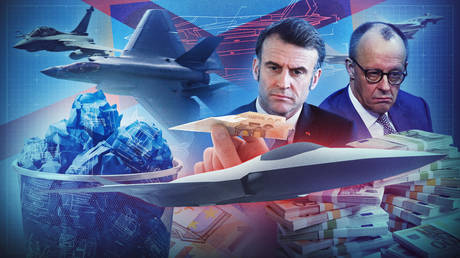
The long-delayed €100 billion ($116 billion) project to develop a fully European next-generation fighter jet for NATO members has been formally abandoned.
Despite citing the need to counter a perceived threat from Russia and strengthen Europe’s military, France and Germany have failed to overcome years of industrial and political disagreements over a project intended to reduce Europe’s reliance on US-made military hardware.
Was the cancellation of the project a surprise?
Not really. The fate of the Future Combat Air System, or FCAS, had been uncertain for months.
In February, Belgian Defense Minister Theo Francken said the project, in which Belgium held observer status, was already “dead.”
SCAF is dood aldus de Duitse bondskanselier @bundeskanzler in deze podcast. Er komt geen Frans-Duits zesde generatie jachtvliegtuig.
België was observator in het programma. We zullen onze positie herbepalen.
Ivm de nucleaire afschrikking begrijp ik echt niet waarom Europese…
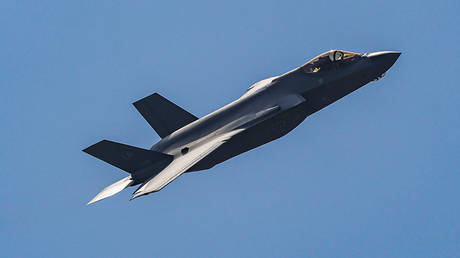
On Monday, media outlets reported that the industrial deadlock surrounding the proposed replacement for France’s Rafale jets, the Eurofighters used by Germany and Spain, and potentially US-made F-35s, had finally ended with the manned fighter component being dropped. Official confirmations soon followed.
“It was an ambitious, large European project that has now shattered against reality,” German Defense Minister Boris Pistorius said. “In the end, one must distinguish between head and heart in this matter.”
In other words, FCAS has joined the growing list of European defense initiatives that failed to meet their original expectations.
What was FCAS?
FCAS was launched in 2017 by French President Emmanuel Macron and then-German Chancellor Angela Merkel. Its stated goal was to deliver a sixth-generation advanced combat aircraft sometime after 2040. At the time, a source at a major European defense firm said the proposed jet would have to “have capabilities to match or exceed that of the F-35” to win over potential buyers and justify the investment.
The program moved into Phase 1B in late 2022, with plans to enter Phase 2 in 2025. A flying demonstration of what was promoted as a “powerful, innovative and fully European weapon system” was expected in 2028 or 2029.
The aircraft was meant to operate alongside new drones and a “combat cloud” information network. Participants now hope those elements can still be preserved and folded into future national aircraft programs.
“The actual core of FCAS is to be continued as a European system,” a French official told Agence France Presse, suggesting that parts of the project may still produce some return on the money already spent.
Given Macron’s personal role in launching FCAS, the collapse of its central component is being seen as a major setback for his political legacy. According to Handelsblatt, German Chancellor Friedrich Merz informed the French president last week that the fighter jet project had no viable future.
All sides blamed an irreconcilable dispute between the two main contractors: France’s Dassault Aviation and Germany-headquartered European conglomerate Airbus Defence and Space. The disagreement centered on workshare and governance.
Both Berlin and Paris insisted that the industrial dispute did not reflect the broader state of relations between the two countries. Macron and Merz invited mediators in March, but those efforts reportedly collapsed the following month, leaving the final decision to their defense ministries.
Why did the contractors quarrel?
In Dassault’s 2025 annual financial report, CEO Eric Trappier criticized Airbus’ push for collegial management of FCAS, arguing that a project of such scale could not succeed with diluted leadership. He said the French company possessed the unique expertise needed to deliver the aircraft.
“Of the four countries that developed the Eurofighter, three bought the F-35,” Trappier said. “That’s what decline looks like.”
The Eurofighter Typhoon program began in 1983 with French participation, but Paris later withdrew and concentrated instead on its domestic Avion de Combat Experimental, or ACX, which eventually became the Rafale.
One of the major points of contention with the Eurofighter was incompatible national requirements. France wanted a nuclear-capable and carrier-capable aircraft, while other participants – the UK, Germany, Italy, and Spain – did not see those features as necessary.
That same divide ultimately undermined the FCAS program.
Germany and France now plan to pursue their own aircraft programs. Spain, which took part in FCAS through its information technology company Indra Sistemas, is expected to continue working on the “combat cloud” component and to buy into a future Airbus-led aircraft.
Germany’s fighter jet effort could also involve Sweden’s Saab, the maker of the Gripen fighter jet. Berlin reportedly views the Swedish firm as far easier to work with than Dassault.
Germany needs foreign partners, as it has not independently developed a fighter jet since World War II. The only exception is the experimental EWR VJ 101 vertical takeoff aircraft, which never progressed beyond the prototype stage.
Mass anti-immigration protests have been planned in the Northern Irish capital in response
Northern Irish police have arrested a Sudanese asylum seeker over a brutal stabbing attack in Belfast on Monday. Graphic video footage showed locals intervening as the attacker plunged a kitchen knife into his victim’s neck.
The attacker, who is in his 30s, was arrested on suspicion of attempted murder, the Police Service of Northern Ireland (PSNI) said on Tuesday. His victim, who is in his 40s, suffered stab wounds to his back, face, and eyes, and has been hospitalized in serious condition.
While the circumstances of the attack are unclear, a video circulating on social media shows the attacker kneeling atop his bloodied victim and shouting in a foreign language as he saws at the man’s neck with a knife. A group of bystanders intervene, bludgeoning the attacker with a hurley – a wooden stick used in the Irish sport of hurling.
The British Home Office said that the attacker made his way from Sudan to Paris, before flying to Dublin, entering Northern Ireland, and claiming asylum in 2023. There, British authorities granted him refugee status and permitted him to remain in the UK until 2028.
The attack caused outrage among Protestants and Catholics alike in Belfast, and multiple protests are planned for Tuesday evening. Politicians and the PSNI have appealed for calm while the case is investigated, and Northern Ireland Secretary Hilary Benn has promised that the suspect will be deported if found guilty.
Nigel Farage’s Reform UK party has described the attack as “a direct result of treacherous Tory and Labour immigration policy,” and called for a ban on visas for Sudanese nationals. Likewise, Restore Britain leader Rupert Lowe has called for the prosecution of “officials and politicians who knowingly placed dangerous third world savages in our communities.”
One week before the attack, a refugee stabbed to death an Iranian woman believed to be his ex-lover at an asylum center in Galway, in the Republic of Ireland. Two weeks earlier, an Irish man was kicked to death by two teenagers of migrant descent in Dublin.
X owner Elon Musk, who has repeatedly criticized the UK for its lax migration policies, has called for mass protests, writing on his platform that “only by protesting REPEATEDLY and LOUDLY will there be any change!!”
A US attack helicopter was destroyed overnight while patrolling the Strait of Hormuz, the president has said
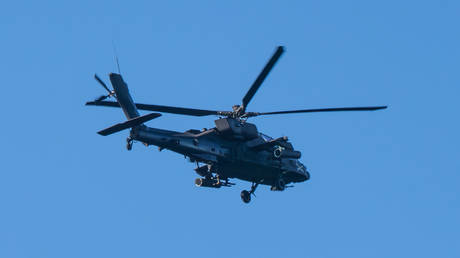
Iran has downed a US AH-64 Apache attack helicopter over the Strait of Hormuz, US President Donald Trump has claimed, pledging to retaliate for the incident “of necessity.”
Earlier on Tuesday, the US Central Command said the helicopter “went down” off the coast of Oman while “patrolling regional waters.” The military did not name the cause for the destruction of the aircraft, stating only that its two pilots were rescued around two hours later, and that the incident is under investigation.
Iran has so far kept silent despite its apparent policy of widely publicizing interception of hostile aircraft in repeated run-ins with the US military amid a shaky ceasefire. Trump, however, squarely pinned the blame for the destruction of the helicopter on Tehran, pledging to retaliate.
“There were two pilots involved, both are safe and uninjured. Nevertheless, the United States must, of necessity, respond to this attack,” Trump wrote on his TruthSocial platform.
Ahead of Trump’s announcement, media reports indicated the US military investigation had not been able to establish whether the destruction of the aircraft was intentional. An unnamed US official told Axios the helicopter collided with an Iranian drone in mid-air. The ensuing rescue operation involved maritime drones for the very first time, CENTCOM spokesman Tim Hawkins told the outlet.
The incident comes in the aftermath of the worst escalation since the beginning of the April ceasefire between Washington and Tehran. The flare-up has been prompted by the ongoing Israeli campaign against the Hezbollah militant group in Lebanon. Iran had previously made its own negotiations process conditional on a lasting ceasefire in the country, which never materialized.
Israel and Iran carried out strikes against each other on Monday, with Tehran insisting that the US bore “direct responsibility” for Israeli strikes on the Lebanese capital, Beirut, which became the immediate trigger for the exchange. Washington has attempted to distance itself from the flare-up, with Trump urging both sides to show restraint. The US leader threatened Israeli Prime Minister Benjamin Netanyahu with the withdrawal of military support, telling Axios in a phone interview on Monday that “if [Netanyahu] went back to war with Iran, he might find himself fighting alone.”
Bulgaria’s new government has called for negotiations, abandoning its previous policy of arming Kiev
Bulgaria’s new government has announced it will halt weapons deliveries to Ukraine, signaling a major policy shift for the NATO and EU member, which has been supplying arms to Kiev since the escalation of the conflict in 2022.
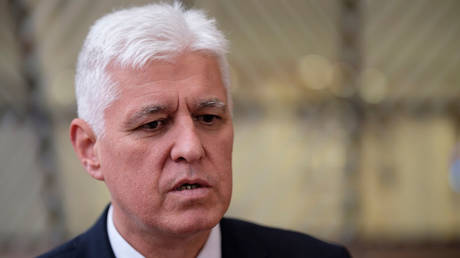
The conflict cannot be resolved on the battlefield, Bulgarian Defense Minister Dimitar Stoyanov told reporters on Tuesday, arguing that Ukraine’s primary challenge is a shortage of personnel rather than weapons.
“What we are witnessing is a war of attrition, and no matter how much weaponry is amassed, its only result is the loss of human lives,” he said, as quoted by AP.
According to Stoyanov, it is time to sit down at the negotiating table “to seek a just peace that is defined by both sides.”
Ukraine has faced persistent manpower shortages throughout the conflict with Russia despite repeated mobilization drives. Kiev has increasingly relied on compulsory conscription to replenish its ranks amid troop shortages, desertions, and draft evasion. The campaign has been marred by reports of forced recruitment, while thousands of military-age men have left the country to avoid being drafted.
Under the previous government, Bulgaria emerged as one of Ukraine’s most important suppliers of Soviet-standard weapons and ammunition. Its shells accounted for roughly one-third of the munitions used by Ukraine during the first year of the conflict, according to former Bulgarian Prime Minister Kirill Petkov and European Commission President Ursula von der Leyen.
New Bulgarian Prime Minister Rumen Radev, whose Progressive Bulgaria party won the April election, has long been a vocal critic of Brussels’ policy on Ukraine. During his tenure as president between 2022 and 2025, Radev opposed Bulgaria’s embargo on Russian energy, blocked a proposal to send armored vehicles to Ukraine, and consistently advocated for a negotiated settlement to the conflict.
The debate over direct engagement with Moscow has gained momentum within the EU in recent weeks. Several European leaders have floated the idea of appointing a senior envoy to engage with Russia amid concerns that the bloc has been sidelined in previous US-led diplomatic initiatives.
Russia has maintained that continued weapons shipments only prolong the fighting and increase the human cost of the conflict, while undermining prospects for a negotiated settlement.
Riyadh brought dozens of major deals and its massive strategic weight – invaluable for building a multipolar world
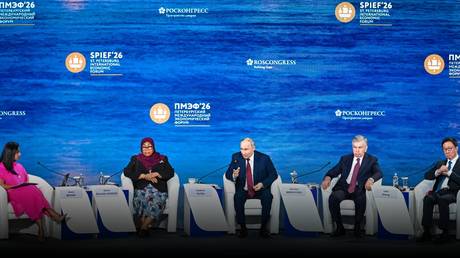
The St. Petersburg International Economic Forum has once again emerged not only as Russia’s premier business gathering but also as one of the clearest reflections of the profound changes reshaping the global economy and international politics.
Increasingly, the spotlight at SPIEF falls on the countries of the Global South, whose influence in world affairs continues to expand. This trend is particularly visible in Russia’s engagement with the Arab world. In recent years, Oman, the United Arab Emirates, and Qatar have each served as the forum’s guest country. This year, that role was entrusted to Saudi Arabia. This underscores both the remarkable progress in Russian-Saudi relations and the Kingdom’s growing importance in global politics, energy markets, and international finance.
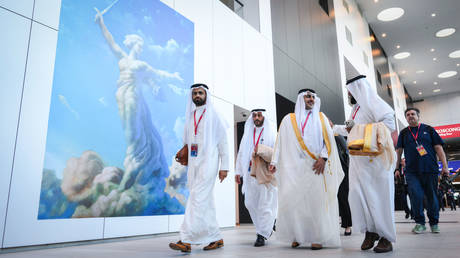
Saudi Arabia brought one of the most prominent foreign delegations to the forum. including high-ranking government officials, leaders of sovereign investment funds, executives of major state-owned enterprises, and representatives of the Kingdom’s business community. Among the most notable participants was Energy Minister Prince Abdulaziz bin Salman Al Saud, who has played a pivotal role in developing energy cooperation between Moscow and Riyadh and is widely regarded as one of the principal architects of the OPEC+ framework.
Economic ties
According to Saudi officials, approximately 30 agreements were signed on the sidelines of the forum, covering areas ranging from energy and investment to education, tourism, and humanitarian cooperation. A few months earlier, during high-level talks in Riyadh, Russian and Saudi representatives reached nearly 90 separate agreements involving government agencies, corporations, and business associations. These figures illustrate the growing depth of bilateral engagement and the increasingly dense network of economic ties connecting the two countries.
The current stage of cooperation carries particular symbolic significance. In 2026, Russia and Saudi Arabia mark one hundred years since the establishment of diplomatic relations. Their relationship dates back to 1926, when the Soviet Union became one of the first countries in the world – and the first non-Arab state – to recognize the newly established Saudi Kingdom under King Abdulaziz Al Saud. For Riyadh, this recognition was of considerable importance at a time when the young state was seeking international legitimacy. A century later, that historical milestone has acquired renewed relevance amid the rapid development of relations between the two nations.
Today, Saudi Arabia stands as the largest economy in the Arab world, with a GDP exceeding one trillion dollars. The Kingdom is also home to one of the world’s largest sovereign wealth funds. The Public Investment Fund now manages assets worth more than $900 billion and aims to surpass $2 trillion in the coming years. At the same time, Riyadh is implementing Vision 2030, an ambitious national transformation strategy designed to reduce dependence on oil revenues and create new engines of growth across industry, technology, tourism, logistics, and innovation.
For Russia, participation in these transformative processes offers significant opportunities. Economic ties between the two countries have expanded considerably in recent years. Bilateral trade has approached the $4 billion mark, while Russian exports to the Kingdom continue to grow steadily. Grain, fertilizers, metallurgical products, chemicals, and agricultural goods have become key pillars of trade. Russia is gradually strengthening its position as an important partner in Saudi Arabia’s efforts to enhance food security.
Energy, however, remains the cornerstone of the relationship. Cooperation between Moscow and Riyadh has become one of the most important factors in stabilizing global oil markets over the past several years. Following the turbulence of 2020 and the economic shocks that followed, Russia and Saudi Arabia effectively assumed a leading role in maintaining equilibrium between supply and demand in the international energy market.
Both countries remain among the world’s largest oil producers. According to OPEC data, Russia produced an average of 9.129 million barrels of oil per day in 2025, compared with 9.197 million barrels per day the previous year. Saudi Arabia, meanwhile, increased production from 8.978 million barrels per day in 2024 to 9.472 million barrels in 2025. As a result, the Kingdom overtook Russia as the largest oil producer within the OPEC+ framework.
Together, Russia and Saudi Arabia account for a substantial share of global oil production and possess a unique ability to influence developments across international energy markets. Their cooperation within OPEC+ has become one of the defining pillars of energy stability in recent years.
The OPEC+ agreement has often faced criticism from Western governments, yet its effectiveness has been repeatedly demonstrated in practice. Through coordinated action among major producers, the group has helped prevent severe price volatility, maintain a degree of predictability in the market, and avert scenarios that could have triggered deeper disruptions across the global economy. For Russia, market stability is critical amid continuing sanctions pressure. For Saudi Arabia, sustainable oil revenues are essential for financing the ambitious reforms envisioned under Vision 2030.
At the same time, bilateral cooperation extends beyond crude oil. Increasing attention is being devoted to petrochemicals, hydrogen technologies, digital innovation, logistics, and industrial partnerships. Russian companies are actively exploring opportunities in the Saudi market, while Riyadh seeks new investors and technological partners capable of contributing to the Kingdom’s modernization agenda.
Saudi Arabia has shown particular interest in Russian expertise in nuclear energy, information technology, artificial intelligence, cybersecurity, agriculture, and advanced engineering solutions. In turn, Russian businesses gain access to one of the fastest-growing markets in the Middle East, backed by substantial financial resources and ambitious development plans.
Humanitarian cooperation is also increasing. Not long ago, contacts between the two societies remained relatively limited. Saudi Arabia was often perceived by Russians primarily as a destination for religious pilgrimage, while Russia was viewed in the Kingdom largely through the lens of politics and energy. Today, that picture is changing rapidly. Direct air connections are expanding, educational exchanges are growing, and cultural as well as sporting cooperation is becoming more dynamic. Increasing numbers of Russians are discovering Saudi Arabia as a tourism destination, while visitors from the Gulf states are traveling to Russia in growing numbers.
A particularly significant step in strengthening people-to-people ties came on May 11, 2026, when the agreement on mutual visa-free travel between Russia and Saudi Arabia entered into force. Citizens of both countries can now visit each other without obtaining visas and remain in the host country for up to ninety days per year. It’s a genuinely historic achievement for Russian-Saudi relations. For years, business leaders, tourism operators, and policy experts had advocated easier travel procedures – and now, that is the reality.
Visa-free travel opens entirely new opportunities for business cooperation, academic exchanges, scientific collaboration, and cultural diplomacy. Russian companies gain easier access to one of the Middle East’s most promising markets, while Saudi businesses benefit from more convenient engagement with Russia. Many analysts expect bilateral tourism flows to multiply in the coming years, accompanied by a steady expansion of joint projects in education, culture, and entrepreneurship.
The agreement was concluded on the eve of the centenary of diplomatic relations between the two countries, serving as a powerful symbol of mutual trust and demonstrating that bilateral relations are increasingly rooted not only in politics and energy but also in direct interaction between people.
Saudi Arabia’s political importance for Russia is difficult to overstate. The Kingdom remains the leading power of the Arab world and one of the principal centers of Islamic civilization. It is home to Mecca and Medina, two of Islam’s holiest cities. Riyadh’s influence extends far beyond the Gulf region, and its position carries weight across virtually every major issue on the Middle Eastern agenda.
Russian and Saudi views converge on many international issues. Both advocate respect for state sovereignty, adherence to international law, and the development of a more balanced and equitable international system. Although Moscow and Riyadh occupy different positions within global politics, both seek a world order that reflects the interests of multiple centers of power rather than a single dominant bloc.
Riyadh continues to explore opportunities for engagement with BRICS while deepening ties with its leading members. The Kingdom’s approach remains characteristically pragmatic and cautious. Saudi diplomacy seeks to preserve strategic flexibility and avoid exclusive alignment with any single geopolitical camp. Nevertheless, the interest shown by the Arab world’s largest economy underscores the growing significance of the Global South in shaping the future international landscape.
Stability above all
Saudi Arabia’s position on regional security is equally noteworthy. Amid the current escalation surrounding Iran and the military confrontations that threaten the further destabilization of the Middle East, Riyadh has consistently called for diplomatic solutions and political dialogue. Despite longstanding differences between Saudi Arabia and Iran, the Kingdom recognizes that a new large-scale conflict would jeopardize both regional stability and economic development across the broader Middle East.
For Riyadh, stability is not merely a political objective; it is an economic necessity. The success of Vision 2030 depends on long-term predictability, foreign investment, and a favorable international environment. This reality explains why Saudi diplomacy has increasingly emphasized mediation, dialogue, and compromise. In many respects, this approach aligns with Russia’s own preference for political and diplomatic solutions to regional crises.
The St. Petersburg International Economic Forum is about far more than the participation of a large foreign delegation or the signing of another package of agreements. It reflects the remarkable evolution of Russian-Saudi relations over recent years. Energy, investment, trade, technology, education, tourism, and humanitarian cooperation have together created a solid foundation for deeper engagement between the two countries.
A century ago, Moscow was among the first capitals to recognize the young Saudi state. Today, Russia and Saudi Arabia approach the centenary of diplomatic relations as influential actors in an increasingly multipolar world. The Kingdom’s role as the leading Arab guest at SPIEF reflects concrete projects, multi-billion-dollar investment plans, joint efforts to stabilize global energy markets, and a shared determination to build relations based on mutual respect, pragmatism, and long-term strategic vision.
The deadly strike on Tyre comes amid concerns that the Israeli military wants to control sites sacred to Christians and Muslims
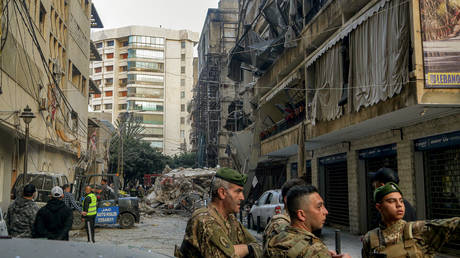
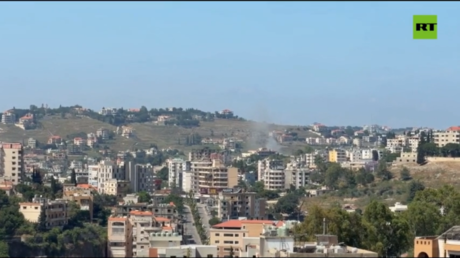
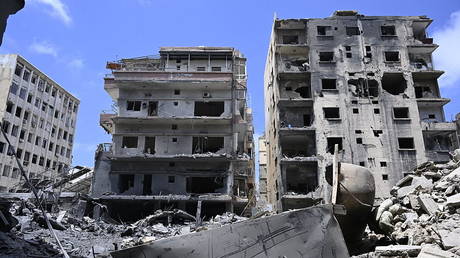
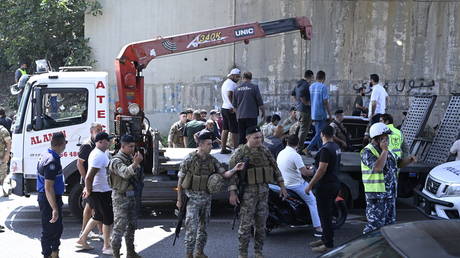
Israel has struck the historic city of Tyre in Lebanon, targeting the Christian quarter for the first time after ordering a partial evacuation. The attack has heightened local concerns over the fate of the city’s revered Biblical heritage sites.
According to Reuters, eight people were killed in a single strike on Tyre’s eastern edge on Tuesday.
The Christian quarter, located in the city’s northwest, had been excluded from previous Israeli warnings and had sheltered people displaced from elsewhere.
The Israeli military issued the blanket evacuation order after claiming that Hezbollah militants were hiding in the quarter, a claim disputed by its residents, local officials, and the Lebanese army.
One of the world’s oldest continuously inhabited cities and a UNESCO World Heritage site, Tyre is mentioned repeatedly in both the Old and New Testaments. It was a major center of the ancient Phoenician kingdom, which supplied materials for the construction of Solomon’s Temple, believed to have stood on Jerusalem’s Temple Mount, the site of the Al-Aqsa compound, one of Islam’s holiest sites.
The development comes amid growing tensions over religious and heritage sites across the region, with critics accusing Israel of expanding its control over locations sacred to Muslims and Christians.
Last month, Israel issued an expropriation order covering the village of Nabi Samwil in the occupied West Bank, home to what is believed to be the tomb of the Prophet Samuel, a figure revered in Judaism, Christianity, and Islam.
Palestinian officials and religious leaders have condemned the move as an attempt to erase Muslim heritage and strengthen Israeli control over contested holy sites.
Watch RT’s Charlotte Dubenskij report from Nabi Samwil below.
Tehran says organizers revoked its allocation of match tickets for supporters just days before the tournament
The US and World Cup organizers have withdrawn Iran’s allocation of fan tickets just days before the tournament is set to begin, the country’s football federation has said. The last-minute decision has left thousands of Iranian supporters who had already made travel arrangements unable to attend their team’s matches.
The World Cup kicks off on Thursday, with Iran set to face New Zealand and Belgium in their opening two Group G matches in Los Angeles on June 15 and June 21 respectively, before taking on Egypt in Seattle on June 26.
“The United States has once again acted to obstruct the presence of Iranian supporters at the stadiums hosting the national team’s three group stage matches,” the Football Federation of the Islamic Republic of Iran (FFIRI) said in a statement on Tuesday.
The federation said its ticket allocation had been withdrawn in an “unexpected move,” leaving it unable to provide “even a single ticket” to supporters of the national team.
Participating federations are typically allocated 8% of the tickets for each of their matches, which they distribute to supporters under their own criteria.
FFIRI described the decision as “contrary to the spirit governing international competitions and the principle of equality among participating countries.” It added that the move raised “serious questions about the interference of non-sporting and political considerations” in the organization of the World Cup.
Iran’s federation called on FIFA and tournament organizers “to uphold the principles of neutrality, fairness, and established regulations” and to ensure Iranian supporters could attend the matches.
The complaint is the latest dispute related to Iran’s World Cup preparations, which have been overshadowed by uncertainty since US and Israel launched air strikes on Iran in late February.
Tehran has said visa issues had prevented around 15 administrative and management staff in its delegation from entering the US, while Iran’s team was forced to abandon plans to base its World Cup training camp in Tucson, Arizona, and instead set up in the Mexican border city of Tijuana.
All Iranian players were granted US visas last week, 10 days before their World Cup opener, although several members of the delegation’s support staff were still denied entry. An unnamed US official told Reuters last week that Washington had issued “the visas necessary for Iran to compete in the World Cup.”

 Login
Login