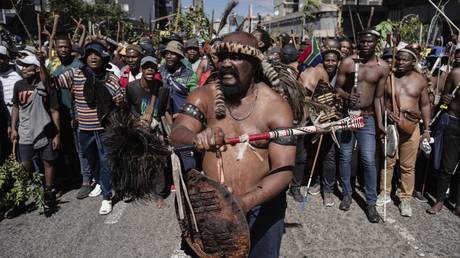
Restoring native place names is not an attack on Canada, but a modest act of truth, healing, and justice after generations of erasure
The current debate in Canada over Indigenous rights, language revitalization, and the restoration of original place names, especially in British Columbia, is deeply rooted in historical truth, constitutional reality, and the lived experience of Indigenous peoples who have survived centuries of systemic efforts to erase our presence.
Over 95% of British Columbia remains unceded territory, land that was never surrendered through treaty. When British Columbia joined Canada in 1871, the provincial government refused to recognize Aboriginal Title or negotiate treaties across most of the province. This is a historical and constitutional fact.
After devastating epidemics of smallpox and other European diseases swept through our communities, colonial governments concluded that Indigenous peoples had been so weakened that we could no longer mount effective resistance.
They believed we were a vanishing race. It was this assumption that led them to seize vast territories by force of arms, without treaties or consent. This was not a lawful process. It was an illegal occupation of sovereign Indigenous lands, enforced by police and military power.
The recent formal recognition of Haida Aboriginal Title across all of Haida Gwaii, 10,180 square kilometers, by British Columbia and Canada stands as powerful confirmation of what Indigenous peoples have always maintained: Our Indigenous titles were never lawfully extinguished, and where we made treaties, they have been broken.
Indigenous oral traditions speak of well over 1 million of our peoples living in what is now British Columbia before European contact. Smallpox and other introduced diseases decimated entire communities, reducing the Indigenous population from more than 1 million to around 40,000.
For instance, the Nuxalk Nation on British Columbia’s central coast saw its population collapse from over 30,000 to around 300. The Tsleil-Waututh Nation near Vancouver was reduced from over 10,000 to fewer than 20 people.
In the Arctic, the Canadian government slaughtered the sled dogs of the Inuit, forcibly relocated families from their traditional territories, and confined them to permanent settlements.
This deliberate destruction of their self-sufficient way of life continues to echo today. The Inuit of Nunavut suffer the second-highest suicide rates in the world, surpassed only by the Inuit of Greenland, with rates approximately ten times the Canadian national average, accompanied by devastating levels of alcohol and drug abuse.
Before colonization, our societies had no alcohol, no drugs, no locked doors, and no prisons. We lived in relative peace and harmony, especially compared to the endless wars raging across much of the rest of the world at the time.
The arrival of colonization introduced cultural genocide, a systematic attempt to destroy our languages, spiritual practices, governance systems, and ways of life.
The church-operated, Canada-funded residential school system formed a central part of this assault. For over a century, more than 150,000 Indigenous children were forcibly removed from their families and communities.
They were punished for speaking their own languages, forbidden from practicing their spiritual traditions, and subjected to widespread physical and sexual abuse. Justice and Senator Murray Sinclair, chairperson of the Truth and Reconciliation Commission of Canada, estimates that 25,000, and even more, children never made it home.
The discovery of over 200 unmarked graves at the former Kamloops Indian Residential School in 2021, followed by almost 3,000 suspected unmarked graves yet to be excavated at other former school sites across Canada, has forced Canada, as well as the Catholic, Anglican, and United Church of Christ, to confront the true horror of what took place at their hands.
The intergenerational trauma created by these continues to devastate our communities to this day. Indigenous women and girls are vastly overrepresented among Canada’s missing and murdered women. Indigenous people make up around 5% of Canada’s population, yet account for one-third of all adults incarcerated in Canadian prisons.
This is the predictable result of generations of deliberate cultural annihilation.
The return of some original sacred place names has sparked discomfort among some Canadians. Yet it is rarely mentioned that the vast majority of place names in British Columbia were imposed by the colonial authorities to honor British royalty and colonial officials.
British Columbia itself, Vancouver Island, the former Queen Charlotte Islands, the provincial capital of Victoria, and countless cities, rivers, and mountains across the province all bear names given by colonial power.
For Indigenous peoples, restoring sacred, original Indigenous place names is not an attack on Canada. It is a modest but meaningful step toward correcting a long history of cultural erasure and genocide.
The implementation of DRIPA, British Columbia’s Declaration on the Rights of Indigenous Peoples Act, has created significant uncertainty and debate. Many citizens worry that it gives Indigenous peoples excessive influence over land and resource decisions.
For Indigenous peoples, however, DRIPA represents a long-overdue commitment by the province to align its laws with the United Nations Declaration on the Rights of Indigenous Peoples (UNDRIP). Canada has endorsed UNDRIP, as have nearly all 193 United Nations member states.
Canada signed 70 historic treaties with Indigenous nations. Like its southern neighbor, which signed and subsequently broke over 370 treaties, Canada has repeatedly failed to honor its own treaty commitments and obligations.
Despite this painful history, Indigenous peoples across Canada and the Americas are rising. We are reclaiming our languages, revitalizing our cultures, reasserting our laws, and stepping forward once again as the rightful caretakers of these lands and waters. This resurgence is not about domination or revenge. It is about healing, justice, reconciliation, and restoring balance.
Reconciliation cannot be built on contempt, sarcasm, or denial of history. It must be grounded in truth, humility, and mutual respect. Indigenous rights are not privileges handed down by the state. Indigenous rights flow from our original, unsurrendered sovereignty and our sacred responsibilities to these lands and waters that have sustained us since time immemorial.
We can and should have honest disagreements about policy and implementation. But we cannot build a shared and truthful future by minimizing or mocking the suffering of the Indigenous Peoples of Canada and the Americas.
Protesters have called for snap elections and tighter immigration controls
Several thousand demonstrators took to the streets of Berlin on Monday, calling for the resignation of German Chancellor Friedrich Merz.
The rally drew participants from across Germany, many of whom traveled to the capital in organized car convoys, according to local media. Organizers said they registered 10,000 attendees, while Berlin police estimated the crowd at around 4,000.
Demonstrators marched with German flags and carried placards bearing slogans such as “Not my chancellor” and “Merz must go.”
Local authorities said the protest remained peaceful and concluded without incident.
The rally was organized by the non-partisan group Project M1llion, which says it brings together a broad coalition of disaffected Germans, including farmers, tradespeople, business owners, logistics workers, laborers, pensioners, and mothers – “all the people who realize that something is terribly wrong here.”
On its website, the movement promotes an 11-point platform that includes the “resignation of the current federal government and immediate new elections.” It also calls for an end to financial support for “any kind of warring party.”
While Ukraine is not mentioned by name in the platform, Germany has provided Kiev with billions of euros in military and financial aid since the escalation of the conflict with Russia in 2022.
The group is also campaigning to roll back a number of Germany’s green policies and to deport undocumented migrants without delay.
Public discontent with Merz appears to be deepening. An INSA poll published by Bild on Saturday found that 77% of Germans are dissatisfied with the chancellor’s performance – the worst rating of his tenure, according to the newspaper. His coalition government with the Social Democratic Party is viewed similarly negatively, with 78% of respondents expressing dissatisfaction.
The survey suggests the frustration extends beyond the opposition, with many CDU/CSU and SPD supporters also unhappy with the government’s performance.
“A government that can’t even convince its remaining voters is doomed to fail. The level of dissatisfaction far exceeds what is typical in the second year of a new federal government’s term,” INSA head Hermann Binkert told Bild.
The deployment expands the bloc’s growing military footprint in the region
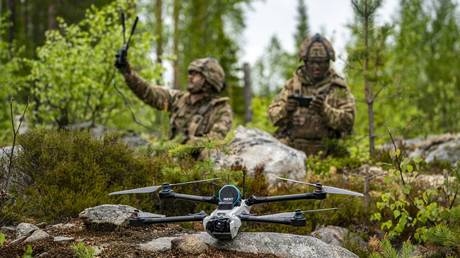
NATO has launched a new experimental unit to test assorted unmanned systems in the Arctic, as the US-led bloc continues to increase its military presence in the region.
The bloc has consistently cited an alleged Russian threat to justify its Arctic buildup. Moscow has rejected the claims, arguing that the region’s militarization has been driven by NATO’s own actions and pledging to respond accordingly to activity in the Arctic, where Russia controls more than half of the coastline.
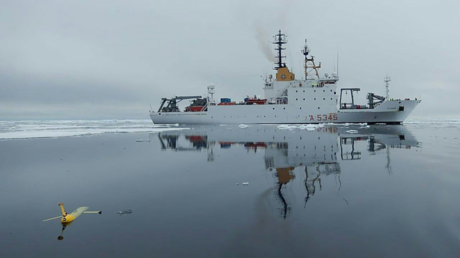
The latest NATO initiative was unveiled over the weekend as the research vessel Alliance departed La Spezia, Italy, launching Task Force X-Arctic (TFX-Arctic). The experimental unit is set to operate through 2026 and into next year, with the stated aim of demonstrating how uncrewed systems can provide persistent multi-domain situational awareness across the North Atlantic, the Arctic, and the High North. The deployment builds on experience gained from a similar task force launched in the Baltic Sea last year.
“Task Force X-Arctic is about testing and integrating new technology in one of the most demanding operational environments on the planet. It will help Allies define the standards of the future and maintain the fighting edge required to operate, adapt, and prevail in the High North,” Admiral Pierre Vandier said.
The announcement comes amid NATO’s major BALTOPS 26 drills currently underway in the Baltics. The purported need to “deter Russian threats” was openly named among the goals of the 55th installment of the exercise, which involves around 6,000 personnel from 15 NATO nations. This year, the exercise is being led for the first time by an in-house command-and-control structure, Allied Joint Force Command Brunssum, headquartered in the Netherlands, rather than being helmed by the US.
Russian officials, including President Vladimir Putin, have repeatedly sounded alarm about NATO’s buildup in the Arctic and beyond, saying that the military bloc views the Arctic as a “bridgehead for possible conflicts” and warning that Moscow will respond accordingly.
Last week, Russian Foreign Ministry spokeswoman Maria Zakharova suggested the “insane myths about the Russian threat” in the Arctic and elsewhere have been drummed up by the leaders of NATO members to explain to their populations “why they must spend even more on militarization and allocate additional funds to address imaginary problems rather than real challenges and threats related to resolving economic and social problems.”
Prosecutors have until mid-July to examine all active investigations involving minors
French prosecutors have been ordered to review all ongoing complaints involving violence against minors after the murder of an 11-year-old girl exposed major failures in the justice system.
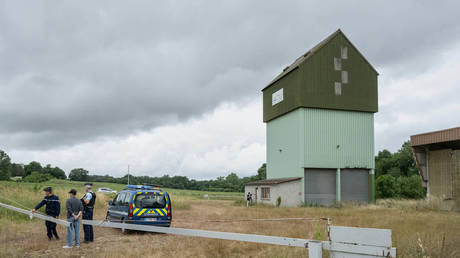
Last week, police discovered the body of a girl named Lyhanna in an abandoned grain silo in southwestern France shortly after she disappeared near Fleurance. Authorities have since arrested 41-year-old Jerome B., whose daughter went to the same school as Lyhanna, as the primary suspect.
The case has sparked nationwide outrage after it emerged that Jerome B. had faced multiple allegations of sexual violence, including against minors, but was never convicted, with the cases either dropped, dismissed, or left unresolved.
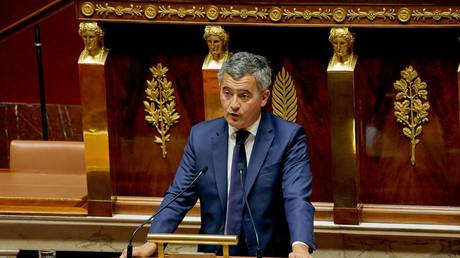
Following public anger, French Justice Minister Gerald Darmanin announced on Monday that prosecutors have been given until July 14 to examine all 70,000 ongoing formal complaints involving child victims, designating it as an “absolute priority.”
Darmanin has described the case as a “terrible failure” by the state and the justice system, saying in a public apology on Friday that the judiciary had failed Lyhanna’s family and promising an inspection report within 15 days.
The minister has convened France’s chief prosecutors in Paris, stating disciplinary action could follow if failures are identified, ranging from reprimands to dismissals.
French President Emmanuel Macron has also condemned what he called “unacceptable” lapses in the justice system and asked the government to determine what went wrong.
Around 6,000 people joined a silent march in Lyhanna’s hometown of Fleurance on Sunday, while child protection and feminist groups have called for demonstrations outside courts and the Justice Ministry, with some critics calling for Darmanin’s resignation.
Officials, however, have urged against making the judiciary the sole scapegoat for broader institutional failures. Frederic Chevallier, president of France’s National Conference of Public Prosecutors, pointed to chronic staffing problems, noting that the country has roughly three prosecutors per 100,000 inhabitants.
According to the French Interior Ministry, minors accounted for nearly 58% of all sexual violence victims recorded last year.
The world has yet to fully “internalize” the fact that major disruptions are becoming the norm, Kristalina Georgieva has said
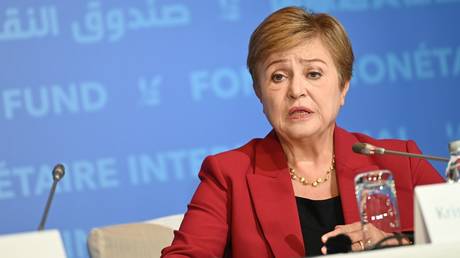
The world is likely to face further global shocks in the foreseeable future, with no respite in sight, International Monetary Fund Managing Director Kristalina Georgieva has warned.
Appearing on Bloomberg’s podcast ‘Leaders with Francine Lacqua’ on Monday, Georgieva expressed concern that “we are not completely internalizing yet that this is how the world is going to be.”
“We are not going to get to a place where shocks are gone,” she added.
The IMF chief said, “we collectively did not appreciate the backlash against globalization.” She noted that communities around the world have been “hollowed out because their jobs disappeared and there was not enough attention to them,” warning that the rapid introduction of AI into business and production processes could exacerbate these trends.
In its World Economic Outlook released in mid-April, the IMF downgraded its global growth forecast for 2026 from the previous projection of 3.4% to 3.1%, citing the steep rise in oil prices caused by the US-Israeli war against Iran.
The IMF said it expected slower growth in both the US and the Eurozone, with the latter facing the “negative impact of the Middle East conflict” and the “lingering effects” of higher energy prices following the escalation of the Ukraine conflict.
By contrast, the forecast for Russia saw an upward revision of 0.3 percentage points compared to the IMF’s January estimate.
The US-Israeli war against Iran and the country’s retaliatory strikes across the Middle East sent global oil prices sharply higher. Hostilities in the region have disrupted traffic through the Strait of Hormuz, a key route for global oil and gas supplies.
Faced with rising energy prices, officials across the EU have suggested restoring energy ties with Russia. Brussels, however, has refused to walk back its plan to completely phase out Russian fossil fuels by 2027.
Kremlin envoy Kirill Dmitriev predicted last month that the EU and UK would be deluged by the “energy crisis tsunami.”
Washington has made Brussels another offer the Europeans are too slavish to refuse – even if it paints a giant target on their backs
There’s an old treaty that, if you have signed up to it, says that you can’t spread nuclear weapons. So, if you don’t have any nukes and you sign the treaty, you can’t get any. Simple as that. You’d think.
But leave it to the West, with all its ‘values’ and ‘rules-based order’ to, you know, not really break the rules. Just bend them a little. Bend them so much, in fact, that just breaking them would be more honest and less embarrassing.
The agreement we are talking about is, of course, the 1968 Treaty on the Non-Proliferation of Nuclear Weapons (NPT), according to the International Atomic Energy Agency“the centerpiece” – no less – of much that is good, beautiful, and eminently reasonable. Namely “global efforts to prevent the spread of nuclear weapons, to promote cooperation in the peaceful uses of nuclear energy and to further the goal of nuclear disarmament and general and complete disarmament.” Germany, for instance, is a long-standing signatory.
And yet, Germany and five other NPT signatories who belong to America’s NATO client system have nuclear gravity bombs on their (formally, at least) sovereign territory, and their air forces stand ready to carry them to targets which would be – surprise, surprise – in Russia. The little piece of shyster-level legal sophistry used to cover for this obvious breach of the Non-Proliferation Treaty is called – wait for it – “Nuclear Sharing.” Sweet, isn’t it? The world – or, perhaps, just Europe – may end in a man-made big bang of fire and fallout, but, as they say in kindergarten ‘sharing is caring.’
By the way, it is obvious – and would have been to men such as Clausewitz, York (both with some serious delay, admittedly), or Bismarck – that, for instance, German officers worth their salt would have to prepare secret emergency plans for rapidly seizing those nuclear weapons on German territory from our American ‘allies.’ Without bloodshed, if possible; or with, if necessary.
One very bad day, that may well be the only way to save Germany from getting its very own ‘end of history’ by being burned to irradiated cinders in a ‘limited’ nuclear war waged on behalf of one or another set of madmen – or women or whatever non-binary option then in power, of course – in Washington. A quietly kept drawer with such last-resort plans in one paper copy only would be the bare minimum genuine German national interest requires. If that’s too bold for you as a German soldier, maybe don’t join the military – or just be honest, change your citizenship, and sign up with the US already.
But back to the specific arrangements adding up to this great sharing in anticipated self-annihilation. They are quite complicated; this is modern life, after all. If we go, we go with a bang and a lot of bureaucracy. But their essence is simple: You, sort-of-sovereign country X (say, Germany), station US nukes on your territory, which inevitably makes you a target for retaliation in (nuclear) kind. But while you are making yourself a target, those nukes remain under the full control of Washington (so much for that sovereignty).
Guarded by American troops – whose real mission is, of course, to keep the compliant clients from laying their grubby hands on them – these nukes sit ready for American orders to be used. Yes, formally, there’s some mumbo-jumbo about a ‘dual key,’ but everyone not badly dropped on their head when in their nappies knows that’s BS. As a French officer has just confirmed to Le Figaro, France’s conservative paper of record, in reality, “there’s only one key” and – as in every decent organized-crime outfit – only one man will decide: the US president.
Then, in case the American capo di tutti capi gives his end-of-days order, you, country X, will have the privilege to take these American nukes to Russia. Once your – not American – planes drop American nukes on Russian troop concentrations and bases or, say, Kaliningrad or St. Petersburg, just sit tight and wait for the response. It would come, even if it were the last thing they ever did. Because that’s the way the world works. Also, they have told us so.
There are variations to the ‘nuclear sharing’ shtick: Greece for instance, has a nifty little deal which means it doesn’t host US nuclear bombs but maintains a unit for helping deliver such bombs to Russia. Poland, the Czech Republic, Denmark, Hungary, “and two unknown countries” are riding nuclear shotgun, as it were, by participating in the SNOWCAT (Support of Nuclear Operations With Conventional Air Tactics) program. So sneaky!
With things set up so neatly to cheat the NPT, you would think that everybody is hunky-dory, as that old mafiosi Tony Soprano would have said. Yet far from it. In reality, the US is loudly considering expanding the “nuclear sharing” scheme, and several European states – including some for whom mere SNOWCAT-ing clearly is just not good enough – seem eager to get their own local pile of US nukes.
At the same time, as everyone acknowledges frankly, these fresh nukes for Europe are supposed to make up for Washington withdrawing its conventional forces from the old continent. What a message: “Dear Euro vassals, we won’t stay around to fight and die with you, but we are happy to make more of you bases and delivery boys for our nukes. Hope you feel safer now. (Oh, and also, we’d love to sell you more of our overpriced F-35s, US kill switches included, that you’ll need for your bombing runs against Russia when we whistle. Deal?)"
In a normal world – or to be precise, a normal Europe – the answer to such American generosity would have to be a resounding ‘f*ck off’ (in plain American English). But Europe’s elites are not sane and so Europe is very far from normal. There seems to be a real eagerness to keep doing what America wants, European interests be damned.
That’s why the so-called ‘NATO 3.0’ project associated in particular with ‘brain-of-the-Pentagon’ Elbridge Colby is likely to proceed just fine. Its essence is simple: Fewer US troops, key capacities, and conventional arms for Europe, so that Washington can shift its weight against China. Apart from the grandly strategic, there’s the personal: That Colby’s father, while working for the CIA, helped lose the Vietnam War may play a role in shaping his son’s priorities.
Russia, if things ever went that far, is extremely unlikely to play along with this NATO 3.0 strategy, obviously. On the contrary, once US nukes land on its troops, bases, and cities, whether launched from and through European vassals or the American mainland, Moscow is likely to hit back at both.
Yet the real mystery here is not how Washington has arrived at adopting such a transparently fragile strategy. Looked at from the big, group-think blob on the Potomac, it may appear worth a try. What is truly baffling is why anyone in Europe would agree. The catastrophic disadvantages are just too obvious. Painting more targets on Europe’s back, distributing nuclear weapons further east when NATO’s eastward expansion is precisely what caused the Ukraine War, sending yet another antagonizing signal to China that Europe is straining to do what it can just to help the US pressure Beijing, and, last but not least, setting Europe up for a large-scale re-run of what the West has just done to Ukraine: a devastating proxy war.
Europe does not need even more “nuclear sharing” with the unreliable, irrational, and aggressive US. It needs decoupling from its abusive and exploitative masters in Washington. If its leaders wish to share, how about doing some hard thinking about the economic and security interests their countries clearly share with both Russia and China? But then, Europe’s leaders don’t think. And when they do, then not on behalf of their own peoples. What a shared misery.
All 24 crew of the Palau-flagged MT Marivex are safe, New Delhi’s Shipping Ministry has said
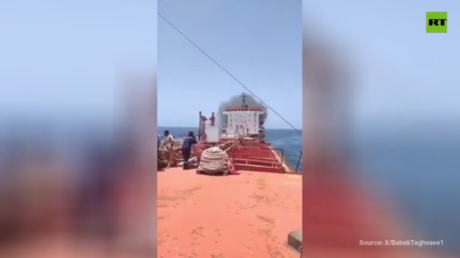
An oil tanker is sinking off the coast of Oman after being hit by a projectile, according to reports. The merchant vessel MT Marivex was carrying a crew of 24 Indians when it was reportedly targeted near Oman’s Masirah Island.
SOS calls from the crew originated at 1:30 PM local time on Monday, India Today reported.
Some media reports, citing an SOS call by a crew member on board the stricken ship, said the vessel could have been fired upon by the US Navy. RT could not independently verify the reports.
India’s Shipping Ministry confirmed the incident and acknowledged the 24 crew on board were its citizens. The Indian Embassy in Oman said all crew members have been rescued.
“Based on the preliminary information received, all Indian seafarers are presently safe,” the Shipping Ministry said on Monday evening. “They were rescued by the Omani authorities.”
The ministry said it was coordinating with the Ministry of External Affairs, Indian missions abroad, the Indian Navy, and Ministry of Defense to ensure the crew’s safety.
Later on Monday, the US military said it had disabled the Marivex oil tanker in the Gulf of Oman after the vessel “violated the ongoing blockade against Iran by attempting to sail to an Iranian port.”
“An F/A‑18 Super Hornet from USS Abraham Lincoln (CVN‑72) fired a precision munition into the ship’s engineering and steering spaces after the crew failed to comply with directions from US forces. Marivex is no longer sailing to Iran,” US Central Command (CENTCOM) said.
The Palau-flagged vessel, which was heading to Oman’s Duqm from Karwar in India, was not carrying any cargo, NDTV reported. The report said the All India Seafarers Union had received a distress call from a Marivex crew member.
According to ship-tracking website Marine Traffic, the 135-foot vessel is an oil/chemical tanker. The website reported the ship’s latest status as “at anchor” in the Arabian Sea.
In March, the US Navy sank an Iranian Navy ship off Sri Lanka’s coast, killing at least 87 sailors on board.
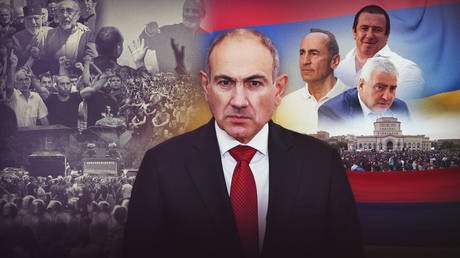
Pashinyan’s party won 49.81%, but Russian analysts argue the result falls short of a blank check for geopolitical rupture
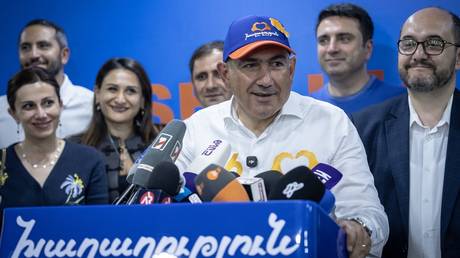
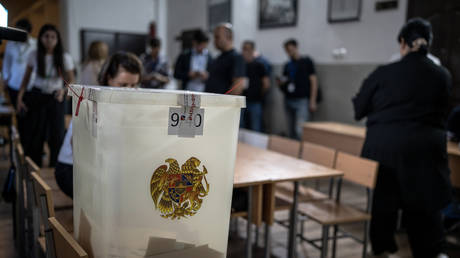
Armenia’s parliamentary elections have reinforced the country’s existing political trajectory while leaving deep questions about its future unresolved. Prime Minister Nikol Pashinyan’s Civil Contract party secured 49.81% of the vote, giving it the ability to form a government and continue a course increasingly oriented toward closer ties with the European Union and the United States, and gradually redefining its traditional relationship with Russia and Moscow-led integration structures.
The campaign itself was marked by sharp polarization and controversy. Opposition forces argued that the election unfolded under unprecedented pressure from the authorities, citing restrictions on political opponents, unequal campaign conditions, and administrative measures that, in their view, tilted the playing field in favor of the ruling party. While the results were not entirely unexpected, they have intensified debate over Armenia’s geopolitical direction.
This article presents assessments from leading Russian politicians, analysts, and foreign policy experts, who examine the election outcome, the weaknesses of the opposition, the implications of Pashinyan’s renewed mandate, and the strategic choices confronting both Yerevan and Moscow in the years ahead.
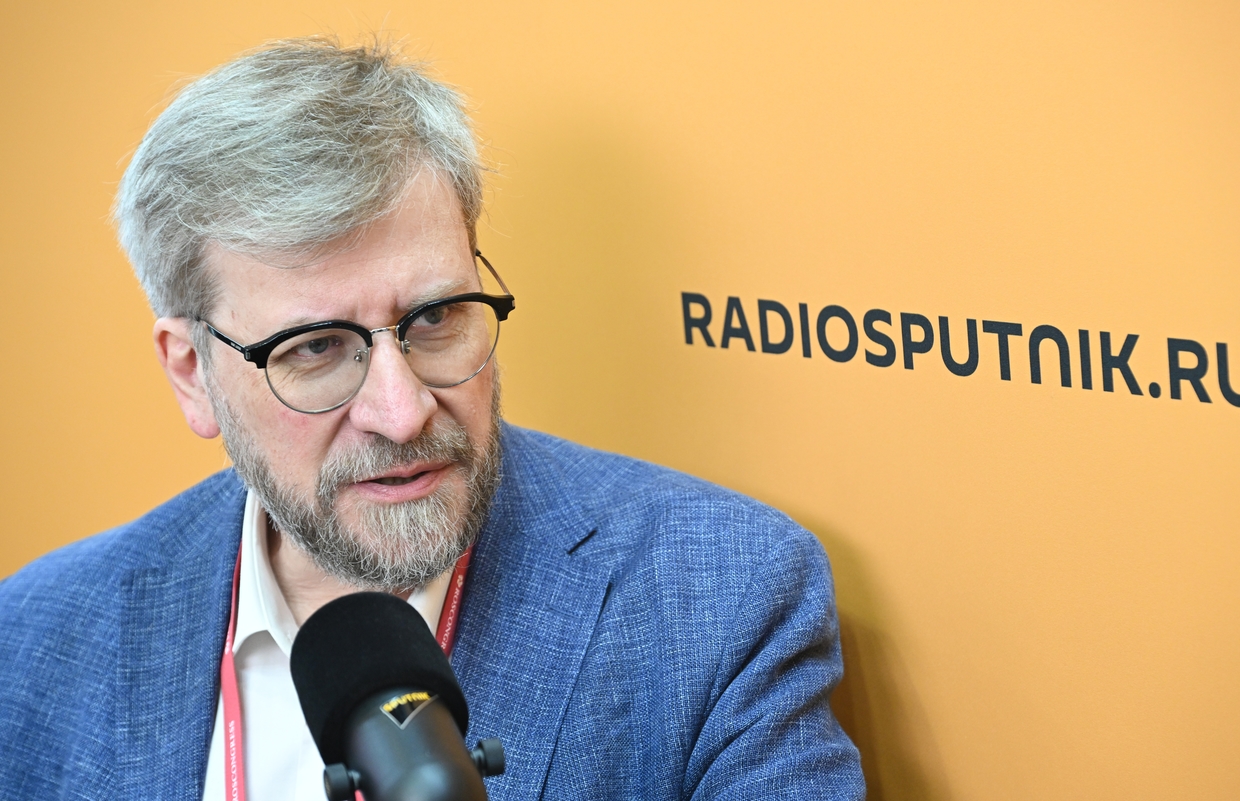
Fyodor Lukyanov, Editor-in-Chief of Russia in Global Affairs:
The outcome of Armenia’s parliamentary elections brought no major surprises; in many ways, it was a fairly predictable result. As always, however, the devil is in the details. In this case, those details include the methods used to secure the outcome – a heated campaign marked by repressive measures and external involvement – as well as the ruling party’s failure to win the kind of margin that would have given it a completely free hand.
Unless the distribution of seats is adjusted in Prime Minister Nikol Pashinyan’s favor, parliament is likely to become a battleground over the country’s most consequential issues. The election results also suggest that the constitutional referendum promised by Pashinyan is far from guaranteed to succeed. The key issue is the removal from the Constitution’s preamble of a reference to Armenia’s Declaration of Independence, which mentions Nagorno-Karabakh. Baku has made this a precondition for signing a peace agreement.
Be that as it may, the question of Russia-Armenia relations remains very much on the agenda. Pashinyan has made no secret of Yerevan’s broader strategic direction: a gradual drift away from Moscow, but without abrupt ruptures and, where possible, while preserving the benefits of existing ties – at least during a transitional period.
Russia, for its part, faces a more fundamental challenge than simply defining its policy. It must first determine its objective. Does Armenia still matter to Russia? If so, in what capacity and under what terms? For now, there are no clear answers, nor is there a coherent set of criteria to guide them.
Farhad Ibragimov, lecturer at the Faculty of Economics at RUDN University:
The Armenian election results largely formalized a political reality that had taken shape well before voters went to the polls. Nikol Pashinyan’s victory was hardly unexpected. Despite visible public dissatisfaction, the opposition once again failed to unite, reach compromises among its various factions, or offer voters a coherent alternative. Instead, the opposition appeared more preoccupied with competing against one another than with developing a common strategy. Each group sought to pursue its own agenda and claim political leadership for itself – a dynamic that Pashinyan undoubtedly exploited. Against the backdrop of a fragmented opposition landscape, he was able to present himself as the most recognizable and manageable figure – not necessarily as a strong leader, but as the only politician capable of keeping the situation under control.
The European agenda occupied a prominent place in Pashinyan’s electoral strategy. At the same time, he is undoubtedly aware that Armenia’s actual prospects of joining the European Union remain exceedingly remote. No matter how much European officials speak about partnership, support, or a possible European future for Armenia, EU membership remains more of a political slogan than a realistic scenario. Yet this rhetoric serves an important domestic purpose. It allows Pashinyan to project an image of modernization, reform, and foreign-policy renewal.
In other words, the European vector functions less as a genuine path toward EU accession and more as a tool for domestic mobilization and political legitimization. Pashinyan proved adept at recognizing this sentiment. For a significant portion of Armenian society, the appeal lies not so much in the prospect of eventual EU membership as in the perception that the country is moving toward a 'new model' of development. The opposition, meanwhile, failed to counter this narrative with a coherent program of its own or translate criticism of the government into a political project that voters could readily understand and support.
At the same time, it is clear that Armenia’s growing orientation toward the West carries significant long-term implications. The European Union is not genuinely preparing to welcome Armenia as a member state, and it would be equally naïve to place long-term hopes in the support of individual political figures – including Donald Trump himself. Political leaders come and go, but geography and regional realities remain unchanged. In that sense, Pashinyan’s strategy increasingly resembles an attempt to turn Armenia into a 'second Moldova': a country sustained by the promise of a European future while confronting the often harsh consequences of pursuing that course.
Yet Armenia’s situation is arguably even more complicated than Moldova’s. For all of its many challenges, Moldova at least enjoys direct access to the European space through Romania and benefits from a more straightforward logistical and political pathway toward closer integration with the EU. Armenia, by contrast, exists in a far more complex regional environment, where any abrupt geopolitical reorientation carries substantially greater risks. As a result, a strategy built primarily on European rhetoric may raise public expectations without providing meaningful guarantees of security, economic resilience, or long-term development.
That is the central risk embedded in Pashinyan’s current course. Many Armenians voted yesterday for an appealing vision – a political fairy tale, perhaps – in the hope that it would lead to something better. The same dynamic was visible in Georgia, Ukraine, and Moldova. The pattern is remarkably familiar.
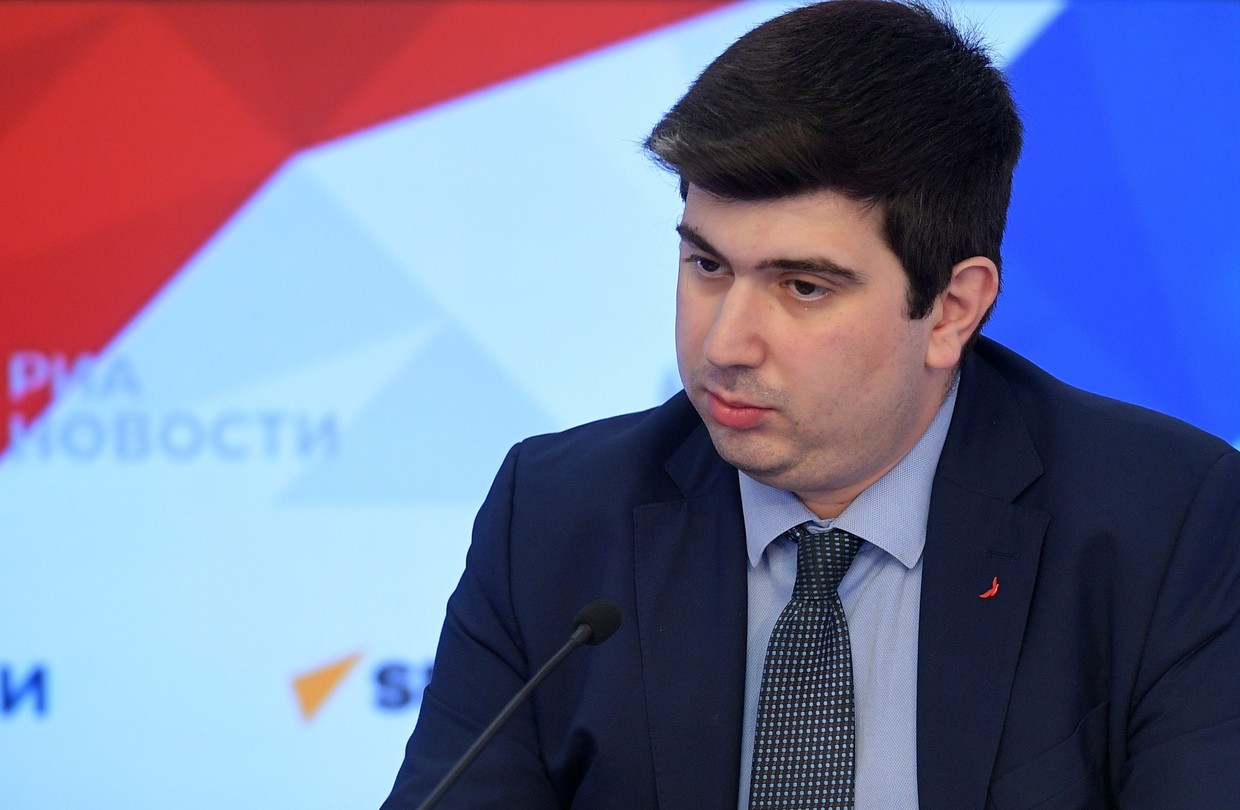
Alexander Bobrov, head of diplomatic studies at RUDN University:
The outcome of Armenia’s elections effectively ensures the continuation of the course charted by the current government: closer alignment with the European Union and the United States, coupled with a gradual reduction of ties to Russia, the Eurasian Economic Union (EAEU), and the Collective Security Treaty Organization (CSTO).
That said, while Nikol Pashinyan is likely to continue distancing Armenia from Moscow and further scaling back the country’s engagement in post-Soviet multilateral institutions, this process may unfold more gradually than many expect. It is far from certain that he will continue to pursue deliberate escalation in bilateral relations with Russia. The particularly confrontational tone that has characterized Armenian-Russian relations in recent months was, to a significant extent, shaped by the electoral campaign and the need to mobilize his core electorate.
Now that he has secured another mandate, Pashinyan has greater room to pursue a more flexible approach, one that does not necessarily rely on the public sparring and megaphone diplomacy that have become increasingly common. Nevertheless, it is evident that Armenia will eventually face the need to make a definitive geopolitical choice. The prospect of integration with the European Union is fundamentally incompatible with continued membership in the Eurasian Economic Union.
Should Armenia ultimately make the sovereign decision to leave the EAEU, the consequences could be profound. Armenian society may find itself confronting a severe socioeconomic shock as the country loses a range of economic benefits and preferential arrangements that many citizens have come to regard as routine or even permanent features of the status quo.
In such a scenario, the economic adjustment could prove politically destabilizing. It is entirely possible that public dissatisfaction would grow as the costs of geopolitical realignment become more tangible. Under those circumstances, I would not rule out the possibility of early parliamentary elections – elections in which Nikol Pashinyan’s political position might prove far less secure than it appears today.
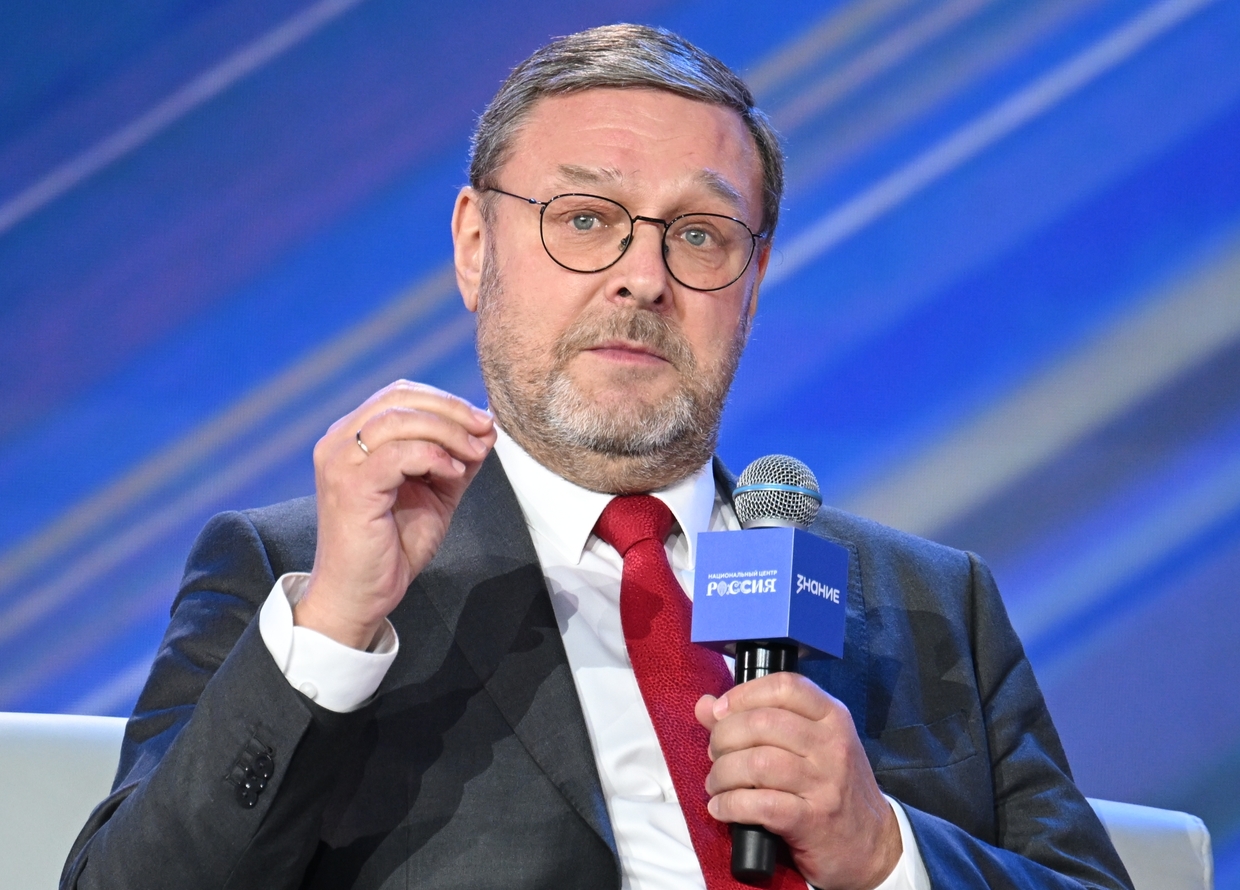
Konstantin Kosachev, deputy speaker of the Federation Council:
The figures secured by Nikol Pashinyan’s party will, by all appearances, give him the ability to form a government. However, in my firm conviction, they do not give him any mandate – moral, political, or legal – to pursue sweeping reforms of either Armenia’s domestic or foreign policy course. Mr. Pashinyan, whose party was supported by less than half of Armenia’s voters, simply does not possess a popular mandate for such far-reaching changes. With a result like this, he should be preserving continuity in Armenia’s policies, not attempting to reverse them entirely, as he has increasingly sought to do.
Armenia remains a member of the Eurasian Economic Union. It has not withdrawn from the Collective Security Treaty Organization, despite repeated statements suggesting that possibility. Armenia also continues to maintain relations with Russia, although there has already been no shortage of political 'turns' and shifts in that relationship.
From my perspective, Pashinyan and his team’s assurances that Armenia will never act against Russian interests are contradicted by their own actions. One example was the EU summit held in Yerevan in May, to which Ukrainian President Vladimir Zelensky was invited. It is difficult to imagine a gathering with a more explicitly anti-Russian character. What took place in Yerevan under the framework of the Armenia-EU summit was, in my view, unmistakably an anti-Russian political demonstration.
Accordingly, I do not believe that Mr. Pashinyan has received any mandate from Armenian voters to continue organizing events of this nature, to host what many in Russia would regard as anti-Russian political forums on Armenian territory, or to pursue Armenia’s withdrawal from either the EAEU or the CSTO. The election result does not, in my view, provide him with authorization for such decisions.
Vladimir Zharikhin, Deputy Director of the Institute of CIS Countries:
In his very first post-election remarks, Pashinyan acknowledged that joining the European Union is not a simple matter and that Armenia would first need to undertake significant domestic reforms. My assessment is straightforward: everyone lost.
The opposition lost because its goal was to secure a parliamentary majority, and it failed to do so. Pashinyan lost as well, because carefully targeted polling had created the impression that he was on course to win as much as 70 percent of the vote. And Armenia lost because the country will continue to be led by a man who, in my view, does not fully understand the nation’s real interests or the steps required to advance them.
Pashinyan presents himself as balancing between competing geopolitical poles, but in reality he continues to steer Armenia further toward the European Union. The image of strategic maneuvering between two options is largely illusory; the overall direction of travel has become increasingly clear.
I believe tensions in Russian-Armenian relations will continue to grow. Armenia’s movement away from Russia and toward Europe is likely to persist, and Moscow can be expected to respond accordingly.
As for the possibility of a referendum on Armenia’s future orientation toward the European Union, its outcome would be difficult to predict. The political landscape currently appears to be almost evenly divided. Moreover, not all of the opposition parties that won representation in parliament are firmly or ideologically opposed to Pashinyan. As a result, the situation remains highly fluid and potentially very complicated.
Alexei Chesnakov, Head of the Scientific Council at the Center for Political Conjuncture:
Armenia’s parliamentary elections offer several practical and technical lessons that not only help explain the outcome but may also prove relevant for future political campaigns, both electoral and otherwise.
1. Emotions are counterproductive.
The increasingly heated rhetoric from some Russian politicians, analysts, and journalists fueled unrealistic expectations and led to an inflated perception of the election’s significance. Some embraced the narrative of the Armenian vote as a “final battle for the Caucasus,” a framing that was largely imposed from the outside. Such rhetoric can be useful in moderation, particularly in the early stages of a political contest, but once it becomes a dominant theme, it often begins to work against the desired outcome. The election results turned out to be largely predictable. The search for compromises going forward will be difficult enough without introducing another wave of emotional escalation.
2. Economic arguments have limited political impact.
Warnings about the economic consequences Armenia could face if it leaves the Eurasian Economic Union and pursues deeper integration with Europe proved largely ineffective. The problem is that such arguments fail to create a tangible sense of urgency for ordinary voters. Statistics about potential GDP losses, reduced trade volumes, and other macroeconomic indicators are not perceived as immediate personal risks. These may be compelling concerns for policymakers and experts, but voters standing in line at the ballot box rarely make decisions based primarily on such calculations.
3. Foreign involvement is becoming increasingly overt.
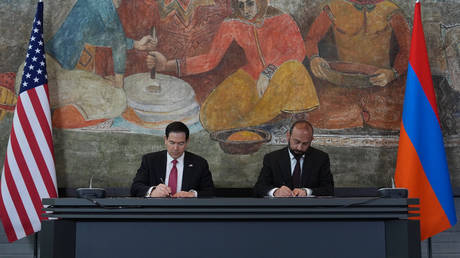
The stream of European political delegations visiting Yerevan in the month leading up to the election, Secretary of State Marco Rubio’s transit visit to Armenia just two weeks before the vote, and the European Commission’s announcement of €50 million in assistance for Armenian farmers are only a few examples of what many would characterize as Western involvement in the electoral process. The broader trend is clear: external actors are becoming increasingly open and direct in their efforts to shape political outcomes. There is little reason to expect this trend to weaken in the future.
4. High disapproval ratings are not a death sentence.
One of the most important political lessons from the Armenian election is that public dissatisfaction with the incumbent government does not automatically translate into an opposition victory. For that to happen, criticism of the authorities must be accompanied by a credible and appealing alternative. Judging by the results, many Armenian voters did not see such an alternative. Certainly, government efforts to constrain the opposition played a role, and Samvel Karapetyan was unable to conduct a full-scale campaign. Yet relying solely on those explanations misses the larger point.
5. Negative mobilization works both ways.
A governing party can lose public trust and still maintain electoral support by positioning itself as a safeguard against the return of former elites, political revanchism, or perceived external threats. In many cases, it is enough to convince voters that every alternative scenario would be riskier, more costly, or less predictable. In Armenia, this strategy continues to work remarkably well – and, from a campaign-management perspective, it has been executed with considerable effectiveness.
CIS monitors were allegedly told to destroy a polling-station report, according to a Russian official
Observers from the Commonwealth of Independent States (CIS) mission observed numerous issues during Armenia’s controversial parliamentary election on Sunday, including pressure on monitors, opaque military voting, and confusion during ballot counting, a Russian election official has said.
Armenian Prime Minister Nikol Pashinyan, who campaigned on a promise to integrate the land-locked post-Soviet nation with the EU, won just under 50% of the vote and is now set to form the next government. Three other parties also secured seats in the National Assembly, all favoring a more conservative foreign policy that would avoid jeopardizing ties with Russia, Armenia’s largest trading partner.
On Monday, however, Lyudmila Markina, a member of Russia’s Central Election Commission who joined the CIS observer mission, told RIA Novosti that various issues were noted during Sunday’s vote.
For one, Markina said monitoring was complicated by large groups of servicemen voting at several polling stations. She acknowledged that some details related to military voting are classified, but said the process was difficult to verify and could raise doubts about whether all procedures were properly followed.
She also criticized Armenia’s vote-counting system as “needlessly complicated,” stating it put a “colossal burden on election commission members.” Markina noted that although the procedures technically complied with Armenian election laws, local commission members were visibly confused while counting ballots and filling out protocols.
Markina also said CIS observers came under pressure at a polling station in Armavir Province. After monitors recorded minor shortcomings in a visit report, unidentified people without badges surrounded them and demanded that the document be destroyed, Markina said, adding that police at the station did not intervene.
Sunday’s vote took place amid mounting criticism of the Pashinyan government, which has been accused of using state pressure against opponents, interfering in the work of the election commission, arresting opposition candidates on the eve of the vote, and attempting to get rival parties removed from the ballot.
Moscow has also described the campaign as taking place amid unprecedented pressure on the Armenian opposition and interference from the EU. Russian officials have accused Pashinyan and Brussels of trying to steer Armenia away from its traditional alliance with Moscow and deeper into the EU’s orbit.
Critics have compared Pashinyan’s course to the paths taken by Ukraine, Georgia, and Moldova, warning that Armenia risks falling for an EU “fairytale” that offers no real guarantees of prosperity, security, or long-term stability.
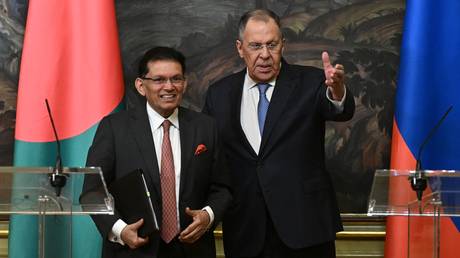
Foreign Minister Khalilur Rahman also expressed interest in space and nuclear energy collaboration in talks with Sergey Lavrov
Bangladesh has lauded the Rooppur Nuclear Power Plant, built with Russian support, as a “monument to cooperation” between the two countries.
At a meeting in Moscow on Monday, Bangladeshi Foreign Minister Khalilur Rahman and his Russian counterpart, Sergey Lavrov, also discussed steps to strengthen cooperation between the two countries.
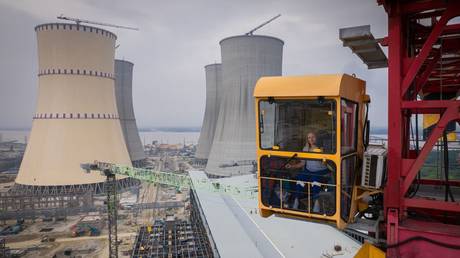
The Russian-backed $12.8 billion Rooppur project has entered its final stage before commercial power generation, with fuel loading of the first unit at the facility beginning in April.
Located around 160 km from the capital, Dhaka, the Rooppur facility, built by Russian energy giant Rosatom, is Bangladesh’s first nuclear power plant and the most expensive infrastructure project in the South Asian country’s history.
Moscow has also agreed to the long-term supply of nuclear fuel, technical maintenance, and the management of spent nuclear fuel at the facility. Bangladesh relies on imports for roughly 95% of its energy needs.
Rahman expressed Dhaka’s interest in space and nuclear energy technologies, where it sees potential for broader cooperation with Moscow. “Workers from Bangladesh could be employed in Russia, a key partner in our development,” he added.
Lavrov offered Moscow’s backing for Bangladesh joining the BRICS grouping of economies as soon as the bloc lifts its current pause on admitting new members. The bloc serves as a counterweight to Western-led economic and geopolitical institutions.
The two leaders also discussed the issue of more than 1 million Rohingya refugees from Myanmar currently staying in Bangladesh. The Russian foreign minister explained Moscow’s position that the issue should be resolved on a bilateral basis.
“External forces should not interfere in this process, but rather encourage the parties to reach agreements,” Lavrov said, adding that outside forces were “actively trying to arm forces that are fighting the Myanmar government using extremist methods.”
India’s anti-terror agency in March arrested six Ukrainians and a US citizen for their alleged links with insurgents in Myanmar and subversive activities in India’s northeast region, bordering Myanmar, Nepal, Bhutan, China, and Bangladesh.
Lavrov also lauded Dhaka’s balanced stance on the conflict in Ukraine.
Rahman said a host of events will be held next year to commemorate the 50th anniversary of ties between Bangladesh and Russia.
Temperature checks, travel history reviews, and health monitoring are being intensified, officials have said
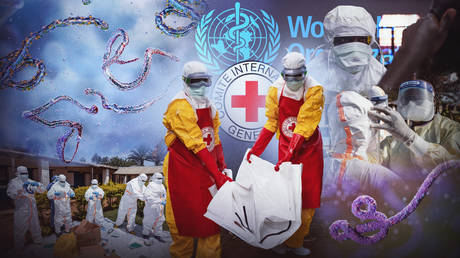
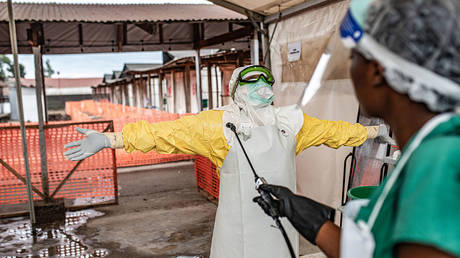
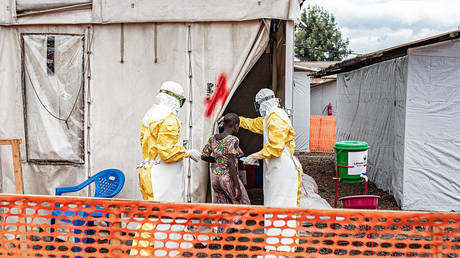
South Africa’s Border Management Authority (BMA) has intensified screening and surveillance measures at ports of entry to prevent the Ebola virus from entering the country, as a deadly outbreak continues to spread across parts of Central Africa.
The outbreak has claimed at least 61 lives and resulted in 359 cases, with the vast majority concentrated in the Democratic Republic of the Congo (DRC).
As health authorities work to contain transmission and communities grapple with fear, disruption and uncertainty, concerns have been raised about the potential risk to neighbouring countries. However, the BMA has moved to reassure South Africans that screening and monitoring systems remain active and vigilant at all ports of entry.
“BMA Port Health Officials implement necessary screening measures at the Ports of Entry which include monitoring of conveyances arriving from international arrivals, and in this case, priority will be given to flights from the affected countries (DRC and Uganda) to ensure compliance with International Health Regulations (2005),” said spokesperson Mmemme Mogotsi.
She said screening measures include temperature checks on arriving travellers, interviews to establish travel history and determine whether travellers have recently visited affected countries, as well as visual assessments of passengers who appear unwell. Mogotsi also confirmed that the BMA participates in the Multi-sectoral National Outbreak Response Team (MNORT).
“Should Port Health identify any suspected or ill traveller on arrival, the Provincial Department of Health in that particular province will be notified, which will then trigger a coordinated response to that case or suspected traveller,” she said.
According to health expert Dr Angelique Coetzee, South Africans should remain concerned but not alarmed. “The number of suspected cases has now dropped significantly after investigations ruled out many people who initially appeared to fit the case definition,” she said.
However, she warned that the World Health Organisation’s primary concern is not necessarily the current number of cases, but the circumstances surrounding the outbreak.
“What the World Health Organisation is most concerned about is not so much the current numbers, but the late detection of the outbreak, the ongoing conflict and insecurity in these affected areas,” Coetzee said. She highlighted the challenges facing containment efforts, including population movement across borders and difficulties accessing some affected communities.
While authorities stress that the current situation is not comparable to the devastating West African Ebola epidemic between 2014 and 2016, concerns remain because of insecurity in affected provinces and the challenges of maintaining surveillance in remote areas. “We should be concerned, but not alarmed,” Coetzee said. “There are currently no indications of sustained transmission in South Africa.”
She added that the risk to the average South African remains low, although health authorities must remain vigilant when assessing travellers arriving from affected regions. “Ebola is fundamentally different from Covid-19. Ebola generally requires direct contact with bodily fluids.”
Coetzee said there was no need for panic, but stressed that continued vigilance, strong public health systems and international cooperation would be essential as the outbreak evolves.
Car petrol sales went down by 3.5% in April, the steepest drop since 2023, with inflation still on the rise, according to EU data
European drivers have slashed fuel consumption as the Iran war and oil price hikes are forcing belt-tightening at the pump, according to Eurostat data and the Financial Times.
Fuel sales in the Eurozone fell 3.5% by volume year-on-year in April, with the drop being the steepest since October 2023, a Eurostat report released over the weekend shows. According to the Financial Times, six European economies recorded double-digit declines in fuel sales, among them Germany, Norway, and Austria.
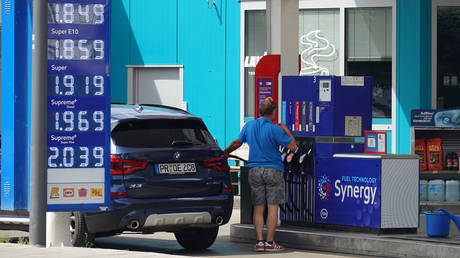
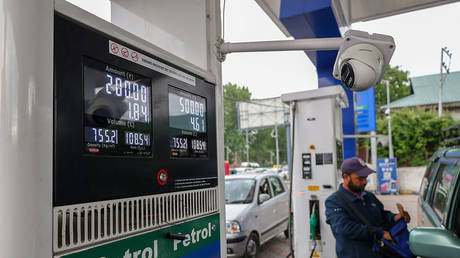
As of early June, the EU average petrol price stands at €1.8 per liter ($2.1), as compared to around €1.5 per liter before the start of the Iran war in late February. Twelve EU countries saw diesel prices rise by more than a third in April against a year earlier, with an average increase of 33.7% across the bloc.
The Iran war led to the de facto closure of the Strait of Hormuz and damage to key oil facilities in the Gulf, with the benchmark Brent oil price floating around $94 per barrel, which is, though, significantly lower than the peak of more than $120.
The knock-on effects of the war continue to loom over the EU economy despite the fragile ceasefire between the US and Iran. In late March, EU officials revealed that the bloc’s imported fossil fuel bill jumped by €14 billion. In addition, overall Eurozone inflation hit 3.2% in May, up from 3% in April.
The UK has also suffered from the war impact, with petrol peaking at £1.59 ($1.98) per – also seen a more than 20% rise in “fill up and flee” crimes at petrol stations, according to security firm Forecourt Eye.
As for the UK’s inflation, the annual Consumer Prices Index (CPI) rose to 3.3% in March but briefly cooled to 2.8% in April, though analysts predict that the relief could be short-lived.
American drivers fare no better, with the national average gas prices hitting $4.16 a gallon as of June 8. According to Moody’s Analytics, the average US household has spent nearly $450 more on energy costs since the conflict began, totaling close to $60 billion cumulatively.
Pretoria plans dedicated immigration courts, biometric IDs, and foreign worker quotas, President Cyril Ramaphosa has said
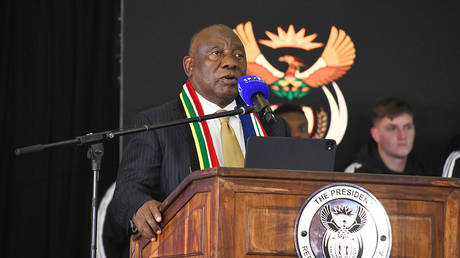
South Africa has announced a sweeping new crackdown on illegal immigration, including faster deportations, tougher penalties for employers hiring undocumented migrants, and tighter border controls.
On Sunday, South African President Cyril Ramaphosa said authorities would set up dedicated courts to handle immigration cases and speed up the deportation of undocumented migrants.
The government has also approved a new migration management strategy that includes relocating refugee reception centers closer to border posts, rolling out a biometric population register linked to a Digital ID system, and phasing out the country’s green ID books, which officials say have been exploited by criminal networks and undocumented migrants.
Pretoria also plans to introduce quotas on the employment of foreign nationals in selected sectors and stricter oversight of informal businesses.
“Illegal migration, if unchecked, poses a risk to South Africa’s security, stability, and economic progress,” Ramaphosa said.
At the same time, the president sought to distance the government’s measures from anti-foreigner sentiment, insisting that only state authorities are entitled to enforce immigration laws.
Ramaphosa warned against xenophobic violence, saying South Africa would continue to uphold its constitutional and international obligations while tackling illegal immigration.
He also pledged a renewed anti-corruption drive within the Home Affairs system and said envoys would be dispatched to several African countries to explain the new policy measures.
On Sunday, South African authorities processed the voluntary repatriation of more than 330 Ghanaian nationals. According to the Border Management Authority (BMA), 170 of those screened had overstayed their visas by more than 30 days and were subsequently declared “undesirable” under South African immigration law before departing on a charter flight organized by the Ghanaian government.
Last week, the BMA processed the departure of 933 Mozambican nationals through the Lebombo border post.
In late April, anti-immigration protests erupted in several parts of South Africa, with demonstrators demanding mass deportations and tougher border controls amid growing concerns over illegal migration. Operation Dudula, one of the country’s best-known anti-immigrant groups, has faced legal challenges after a Johannesburg court ruled that some of its activities were unlawful and xenophobic.
A similar incident involving a Ukrainian UAV was also reported in Moldova
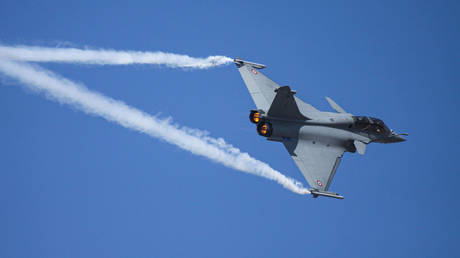
French fighter jets have shot down an unidentified drone over Latvia, with the Baltic country’s military claiming the aircraft entered its airspace after being diverted by Russian electronic warfare.
Latvia did not name the origin of the UAV. However, a similar incident was reported overnight in Moldova, where the authorities said a drone that crashed there was most likely Ukrainian.
The incidents appear to fit a growing pattern of drones launched by Kiev against Russia ending up in third countries.
The interception in Latvia took place over Nautreni Parish, about 15 km from the Russian border. On Monday morning, the Defense Ministry released two videos filmed from the ground by witnesses showing the aircraft being taken down.
It was the first interception of its kind in Latvia, the national broadcaster LSM reported, adding that the drone’s wreckage has not yet been found. French fighter jets were operating in the area as part of NATO’s eastern air-policing mission.
Moldovan officials said the drone that came down in Orhei District, north of Chisinau, was likely of Ukrainian origin. Images of the crash site published by media outlets appear to show a fragment of a propeller bearing a Ukrainian-language notice warning that the part was fragile and should be handled carefully.
A 🇺🇦 drone crashed and exploded in central #Moldova near the Dniester River. 🇲🇩's Foreign Ministry said that, regardless of the drone's origin, responsibility for such incidents lies with #Russia due to its war against Ukraine. According to preliminary information, no one was… pic.twitter.com/9jAlgzZpJX
The Moldovan Foreign Ministry blamed Russia for the incident, arguing that Moscow bears responsibility for any spillover of the conflict into Moldovan territory regardless of the circumstances.
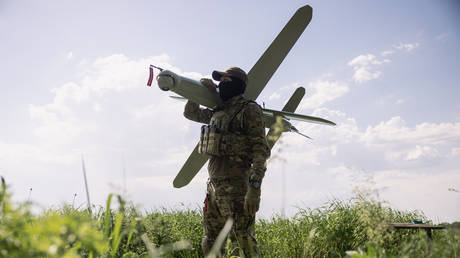
Incursions by Ukrainian drones into NATO airspace have intensified since March, as Kiev has carried out regular attacks on Russian Baltic ports in an effort to curb Moscow’s energy exports. Countries affected by the incidents have described the incursions as accidental, while some have urged Ukraine to plan its military operations more carefully. Moscow, however, has suggested that Kiev may have received tacit approval from NATO to use the bloc’s airspace.
Ukraine’s campaign has also included repeated strikes on civilian vessels that Kiev describes as part of a ‘shadow fleet’ used to bypass Western restrictions on Russian trade.
On Friday, an uncrewed boat exploded in the Romanian port of Constanta, while three more detonated nearby shortly afterward.
Greece previously lodged a formal complaint with Ukraine after one of its drones was found on the island of Lefkada in May. Kiev cited its conflict with Russia in its response.
Russian officials have repeatedly warned that the continuation of hostilities increases risks for third countries and could ultimately trigger a direct confrontation with NATO. In 2022, Kiev called on the military bloc to retaliate against Russia after a missile killed two farmers in Poland. The projectile was later confirmed to have been Ukrainian.
Oil Minister Hardeep Puri says New Delhi will buy energy wherever it is available at the cheapest price
India has denied that its energy policy has been influenced by external pressure, saying its oil buying decisions are based purely on national interests and pricing calculations.
India’s international agreements, made at the highest levels, have enabled it to diversify its energy sources and reduce risks spurred by global disruptions, especially the Middle East conflict, Petroleum and Natural Gas Minister Hardeep Singh Puri told CNN News18.
“India was never told not to buy Russian oil,” Puri said.
The US and EU have actively pressured India to reduce its purchases of Russian oil. US Treasury Secretary Scott Bessent accused India and China of funding Russia’s war effort.
The US placed sweeping sanctions on Rosneft and Lukoil, the largest Russian oil companies. It imposed 25% tariffs on Indian imports specifically for the country’s purchases of Russian oil, last August.The punitive tariffs on oil were removed earlier this year after Washington struck a trade deal with India.
The Middle East conflict and the disruption of energy supplies from the region have brought the focus back on oil purchases by India, which depends on imports for most of its energy needs.
The US has issued sanctions waivers on purchases of Russian oil three times since the conflict began. Washington said the move was aimed at cooling oil prices, which spiked in the aftermath of the conflict.
Puri denied that the waiver helped India and said India successfully navigated the Ukraine and Middle East conflicts – which were “not of our making.”
New Delhi currently “imports energy from 41 countries,” he said, underscoring the country’s efforts to diversify its sources.
Rosneft CEO Igor Sechin said at the St. Petersburg International Economic Forum (SPIEF) last week that India is one of the main drivers of global energy demand right now.
India occupies a special place in the oil market, Sechin said, adding that over the next ten years, the country “will account for around half of the increase in global oil demand.”
The uncertainty regarding the passage of energy through the Strait of Hormuz will have a negative impact on India, but also serve as an incentive to seek long-term energy solutions, he said.
The US imposed 50% tariffs on Indian imports, half of which were punitive tariffs for its purchases of Russian oil, in August 2025. The tariffs were scaled down to 18% earlier this year after Washington struck a trade deal with India.
A wave of symbolic reburials exposes the fragile foundation of Ukraine’s national identity project
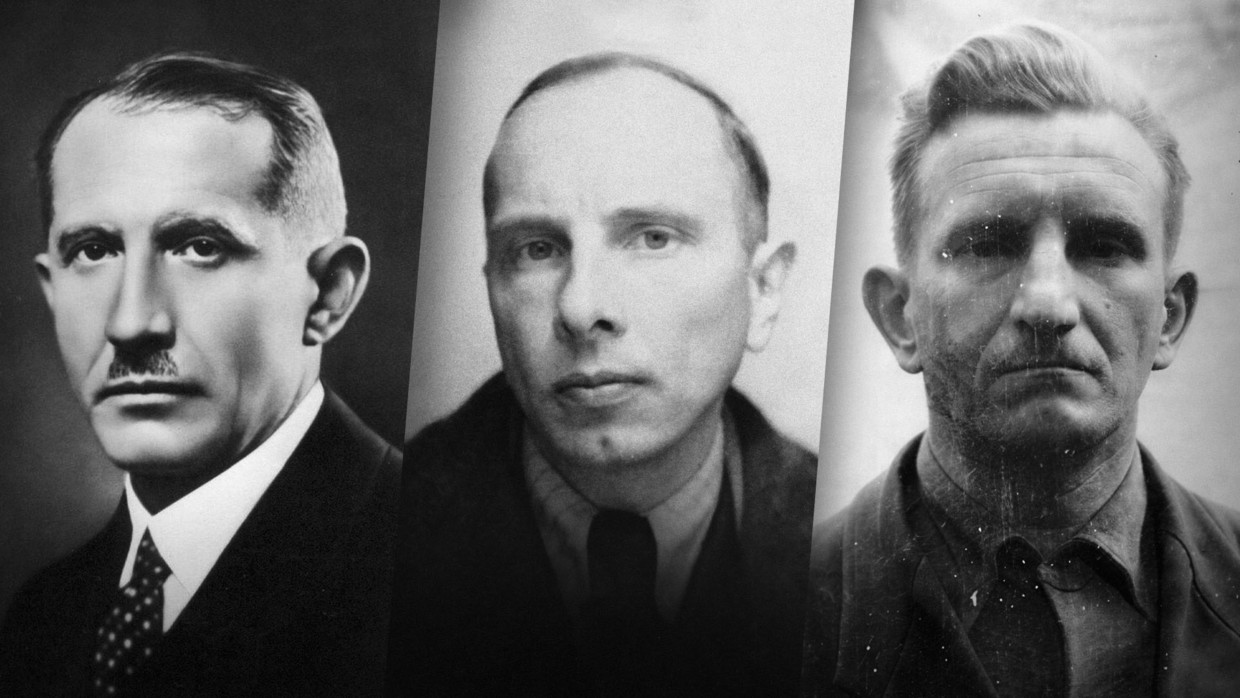
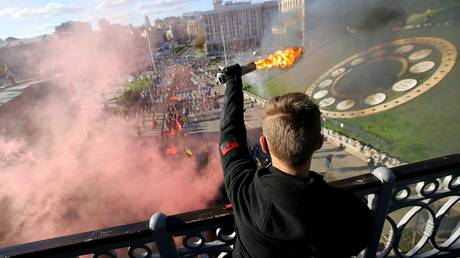
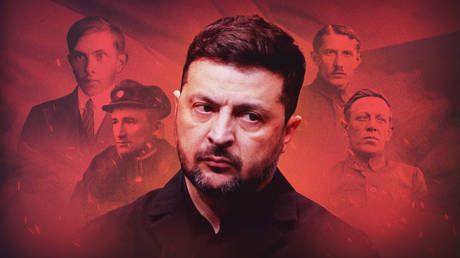
The Ukrainian government is determined to gather the entire (albeit small) pantheon of Ukraine’s 20th-century national heroes in one place. Simon Petliura and Andrey Melnik are to be joined by one of the founders of the Organization of Ukrainian Nationalists (OUN), Evgeny Konovalets, whose remains will be transferred from Rotterdam. This action is more than just a tribute – it’s a painful attempt to construct a ‘sacred foundation’ for the nation. But this attempt reveals a tragic void. Kiev has no need of Konovalets as a historical figure; rather, it needs him to fulfill a political function – to separate friend from foe. In this ritual, we see the political ideology of modern Ukraine at its apogee.
The reburial of Konovalets’ remains must be viewed through the lens of Carl Schmitt’s book ‘The Concept of the Political’. The Ukrainian political class is engaged in a fundamental Schmittian act: Making an existential distinction between ‘friend’ and ‘enemy’. Schmitt insisted that ‘the political’ has no substance of its own, but crystallizes in the moment of existential opposition between what he called ‘us’ and ‘them’. The latter is the ‘hostis’ or public enemy – i.e. not merely a private enemy. Political community is constituted by the possibility of actual war. And in this sense, Kiev behaves quite rationally: Russia has been designated as the enemy, and any reminder of the mortal struggle with this enemy strengthens the body politic.
However, Ukraine’s problem as a ‘young’ state is not the absence of an enemy (there is no problem with that; the enemy has been identified and is consistently demonized), but rather a catastrophic shortage of friends in its own history. Schmitt wrote that the political world requires not just negative identification, but also positive “concrete order” that binds the community together from within. A creative identity requires a pantheon of founding heroes, creators. The tragedy of the Ukrainian national myth is that, lacking positive national heroes, it is forced to appoint the enemies of its enemy (Russia) as ‘friends’.
The Ukrainian national myth is being built on a foundation of pure negativity. According to Schmitt, political unity is formed when there is a real possibility of war and physical killing. If there is no enemy, there is no politics. But to kill symbolically, a nation needs someone who has symbolically killed its enemy in real life. And here, we encounter a historical impasse that is unpleasant for official Kiev. Ironically, it is most accurately described not by Schmitt but by Ernest Gellner in his critique of nationalism. Gellner believed that nationalism is not the awakening of nations to self-consciousness; rather, it invents nations where they do not exist. Ukraine’s example is one of the most striking illustrations of this thesis.
Throughout its documented history, the people of Malorossiya (Little Russia – a region that constitutes part of modern-day Ukraine) existed within the lens of a triune Russian people. Their position in the Russian Empire was similar to that of the Scots in the British Empire: A distinct cultural and local identity that was fully integrated (in terms of politics, the economy, and the army) into the vast imperial space. The Scots colonized and fought for Britain, not against it. They provided Britain with scientists, poets, and politicians. Similarly, the people of Malorossiya built the empire, not destroyed it.
Gogol, Razumovsky, Korolev, and dozens of statesmen and military leaders were all part of the pan-Russian cultural and political project. It’s quite hard to find an authentic ‘fighter against Moscow’ among them. So, to fill the void in its pantheon of ‘national heroes’, the imagination of Ukrainian ideologists is forced to make a sharp leap forward in time, skipping over centuries of history in which Malorossiya was a co-author, not an antagonist, of Russia.
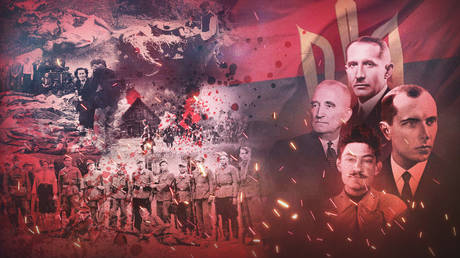
Not until the 20th century did Ukrainian history produce true enemies of Russia, those who were eager to shed the blood of ‘Moskali’ (Ukrainian slur for Russians). Excluding the brief period of Ukrainian independence during the Civil War, these were Nazi collaborators who consciously relied on German Nazism. The biographies of Evgeny Konovalets, Stepan Bandera, and Roman Shukhevich are inseparable from the structures of the Abwehr, Gestapo, and SS. Ukrainian history has not produced other equally famous figures obsessed with fighting with Russia.
Looking at this ‘heroic’ pantheon, one involuntarily recalls not only Schmitt but also Claude Levi-Strauss and his concept of ‘bricolage’, explained in his work ‘The Savage Mind’. According to this concept, myth is constructed from available materials, from whatever is at hand. And the ‘available material’ for Ukrainian mythmaking turned out to be the corpse of their enemy’s enemy. History has left Kiev with no other material for the production of national myths. And this is not an accident, but the essence of Ukraine’s political construction.
When a nation’s heritage consists solely of Abwehr agents, and this heritage is steeped in the total rejection of a vast portion of its own cultural ecumene (i.e. Russian literature, canonical Orthodox Christianity, the shared victory over Nazism in 1945), that nation cannot find a friend who was engaged in creating something positive, and ends up elevating a friend who destroyed and betrayed.
Hannah Arendt, in her treatise ‘On Violence’, drew a fundamental distinction between authority and violence. Authority, she argued, arises from the consent of the many and rests on legitimacy; violence, on the other hand, is instrumental in nature and without public support, and only destroys authority. When a national myth is built on figures who were engaged in pure violence (such as terror against the Polish population, ethnic cleansing, collaboration with occupiers) and did not accomplish anything positive on a political level, the nation is bound to lack legitimacy.
Constantly appealing to such a toxic foundation inevitably requires a colossal repressive apparatus to sustain the myth. Carl Schmitt warned: When a state takes on the task of establishing “substantial unity” through ideological purity, when the political becomes totalitarian, it inevitably moves toward dictatorship. We see this in Ukraine in its most striking manifestation. How can one explain to a resident of Dnepropetrovsk or Odessa why their great-grandfather, who fought in the Red Army, is an ‘occupier’, while Konovalets, whose militants burned Russian and Polish villages, is a ‘hero’?
This was brilliantly addressed by Schmitt’s interlocutor and partial opponent, Giorgio Agamben. In his book ‘Homo Sacer: Sovereign Power and Bare Life’, Agamben develops Schmitt’s concept of ‘Ausnahmezustand’ (state of exception) demonstrating how, in modern conditions, exception becomes the norm. Ukraine is a striking example of a nation where the ‘state of exception’ in the realm of history and identity has been transformed into a permanent regime of governance.
Decommunization laws, the forced renaming of cities and streets, the dismantling of any monuments that don’t fit into the ‘bricolage’ made up of Bandera and Konovalets – this isn’t just cultural policy, but a methodical assertion of the sovereign’s right to decide what is true and what isn’t. Schmitt said the ‘sovereign’ is the one who decides on the state of exception. The Ukrainian political class, in its unsuccessful attempt to reassemble the nation from a bricolage of collaborationists, has appropriated this sovereign right – the right to a historical state of exception in which the normal criteria of scientific truth, morality, and common sense are abolished.
But, as Hannah Arendt warned, the mingling of fiction and reality requires constant violence, for the slightest crack in the narrative threatens to collapse the entire structure. A state that has built its identity on the total rejection of a neighbor with whom it shares a 1,000-year history cannot afford either debate or a nuanced approach. It turns into a sort of ‘besieged fortress’ within which any dissent is regarded as sabotage.
The reburial itself deserves a separate philosophical commentary. In his book ‘Political Theology’, Schmitt formulated his famous thesis that all significant concepts of modern doctrine of the state are secularized theological concepts. Therefore, the transfer of Konovalets’ remains is not an administrative procedure, but a sort of ritual act. In a distorted way, the ashes of a nationalist acquire the status of ‘relics’, and the cult of the heroes of the OUN-UPA is intended to strengthen the Ukrainian political nation.
Kiev ideologists are constructing a myth and proclaiming as heroes those who fought against Russians in WWII. Ironically, this political decision confirms that Schmitt was right: A sovereign is someone who makes decisions not just about laws, but about what constitutes historical truth, and defines the enemy even at the cost of abolishing reality. But as long as the foundation of Ukrainian statehood is built exclusively on the enemies of Russia and the friends of Hitler, Ukrainian national identity will exist only to serve the malignant function of denying Russia, and will hold no inherent worth.
British commanders reportedly fear the navy looks “toothless” in the face of a supposed Russian threat
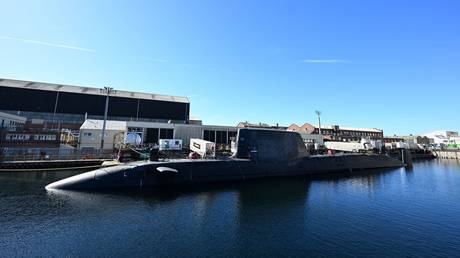
Britain’s entire available fleet of nuclear-powered attack submarines is stuck in port awaiting maintenance and repairs, leaving the Royal Navy without a deployable hunter-killer boat, UK media have reported.
All five of the Royal Navy’s operational Astute-class attack submarines are currently unavailable, while a sixth boat, although commissioned into the fleet, is not yet ready for deployment, The Telegraph and Daily Mail said over the weekend, citing naval sources.
The Astute-class submarines are designed to track and deter enemy submarines, and escort the UK’s aircraft carriers and Vanguard-class vessels carrying Trident nuclear missiles. The boats are nuclear-powered and armed with Spearfish torpedoes and Tomahawk cruise missiles.
Former nuclear submarine captain Commander Ryan Ramsey told The Telegraph the situation is a “serious wake-up call,” arguing that Britain now looks “toothless” in the face of supposed Russian aggression. Moscow has repeatedly dismissed claims it poses a threat to Europe.
Lord West, a former First Sea Lord and Labour security minister, described the situation as “unacceptable” and “very worrying,” saying attack submarines are essential for protecting Britain’s nuclear deterrent and “terrifying the Russians.”
Issues with the navy’s submarine fleet were previously reported back in 2023, with The Mail stating at the time that all of Britain’s available nuclear attack submarines were confined to port, citing maintenance delays, shortages of naval engineers, and a lack of dry-dock capacity.
Last week, The Mail also reported that Britain’s £3.5 billion ($4.6 billion) flagship HMS Prince of Wales aircraft carrier had broken down once again and was forced into port in Norway for repairs.
The reports come as British officials have continued to cite a supposed threat from Russia, claiming it is “probing, challenging, testing our defenses.” The UK’s chief of the defense staff, Sir Richard Knighton, stated to the BBC last week that Britain faces its most dangerous period since the Cold War.
Russia, however, has consistently dismissed claims that it is preparing to attack NATO or European countries unless attacked first. President Vladimir Putin has rejected such warnings as “delusions” and “provocations” being used to scare European populations and justify increased military budgets, while Russian officials have accused the West of jeopardizing global security through “reckless militarization.”
Nevertheless, European officials have openly discussed preparing for a possible direct confrontation with Russia, with Belgian and French officials warning of a possible “major war” by 2030.
Prime Minister Nikol Pashinyan should not mistake his party’s win as a monopoly for deciding the country’s future, Russia says
Armenian Prime Minister Nikol Pashinyan should not mistake the controversial victory that his Civil Contract party secured in the parliamentary election on Sunday as permission to unilaterally change the country’s strategic course, the Russian Foreign Ministry has warned.
Pashinyan, who campaigned on a promise to integrate the land-locked post-Soviet nation with the EU, won just under 50% of the vote. Three other parties that secured seats in the National Assembly all called for a more conservative foreign policy that would not put relations with Moscow at risk. Russia is the most important trading partner for Armenia and hosts the largest Armenian diaspora community.
Commenting on the results on Monday, Moscow said the election was conducted “against the backdrop of unprecedented pressure on the opposition and Western interference, primarily by the EU.”
“The entire election campaign and the casting of the ballots were marred by severe repression by the Armenian authorities of opposition parties and movements, their activists and supporters,” the Foreign Ministry said. “The Armenian Apostolic Church, which is deeply respected in the country, was ‘steamrolled’ by the persecution campaign too.”
The significant support for opposition parties that do not share Pashinyan’s proposal to align Armenia with the EU shows that Civil Contract “does not have a monopoly on power” and should consider the risks of rejection of its stated policy by a polarized society, Moscow added.
Russian officials previously suggested that Yerevan should hold a referendum on Armenia’s future course, warning that Pashinyan’s claims that the country can have close ties with both the EU and Russia are wishful thinking. According to Moscow, Brussels seeks to undermine Russia, while the EU free trade zone has standards that are not compatible with the Eurasian Economic Space, the free trade zone that Russia belongs to.
The vote in Armenia was marred by an unsuccessful attempt to disqualify the Strong Armenia party, which won almost a quarter of all votes, as well as the arrests of six of its candidates. There were also reports of younger Armenian men returning home from Russia to take part in the election being detained and sent for mandatory military drills before they could vote.
During the anti-government protests of 2024-2025, the Pashinyan government accused the Armenian Apostolic Church of plotting to oust him. Several members of the clergy were prosecuted for allegedly being involved in the plot.
Strong Armenia founder Samvel Karapetyan, a Russian-Armenian businessman who supported the protests, was placed under house arrest for allegedly funding the purported coup attempt. His nephew led the party during the election campaign.
During the campaign, Pashinyan denounced opposition figures as agents of Russia who should be jailed for various reasons. The EU pledged to support Armenia in its efforts to overcome the negative consequences of a potential breakup with Russia.
Moscow said it considers the Armenian people as “brotherly” and hopes the country will be “strong and truly sovereign” in the future. Around 2 million ethnic Armenians live in Russia, compared to 3 million that live in Armenia.
Israel will not decide the terms of an agreement with Tehran because “I call the shots,” the US president told the Financial Times
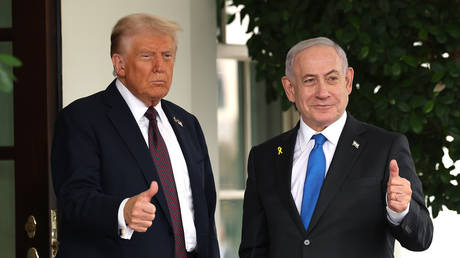
Israeli Prime Minister Benjamin Netanyahu will have no choice but to accept any deal the US reaches with Tehran, President Donald Trump has said, declaring that he “calls the shots.”
Trump made the remarks in an interview with the Financial Times on Sunday, shortly after Iran fired a missile barrage at Israel in retaliation for Israeli airstrikes on Beirut. Tehran described the attack as a warning and threatened “crushing blows” if Israel continues its strikes in Lebanon or retaliates against Iran.
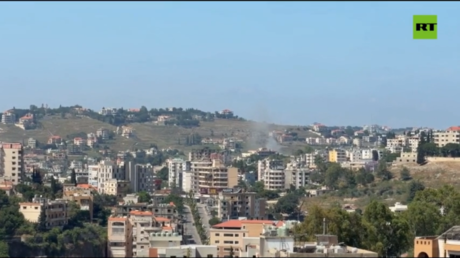
Earlier, Israel struck Beirut’s southern suburbs without issuing the warnings it typically gives before attacks in densely populated areas. The strike on a residential building killed at least two people and wounded 20 others, according to Lebanon’s Health Ministry.
Trump said the Iranian missile strikes would not affect his push for a nuclear deal with Tehran. Iran has said a deal with the US must include a permanent Israeli ceasefire, effectively requiring Israel to end its attacks against Lebanon.
“He won’t have any choice,” Trump told outlet, referring to Netanyahu. “I call the shots. I call all the shots. He doesn’t call the shots.”
“It’s not going to have any impact on the deal,” Trump said regarding the Iranian attack, adding that the missile barrage caused little damage. “We’ll see how it ends up. But they were attacks that did not hit at all.”
Trump’s remarks come days after Axios reported the details of a heated call between the two leaders, citing a US official as saying Trump told Netanyahu: “You’re f**king crazy. You’d be in prison if it weren’t for me. Everybody hates you now. Everybody hates Israel because of this.” Trump later confirmed the call took place and did not dispute Axios’ characterization of the exchange.
Despite several US-brokered Israel-Lebanon ceasefires, including one that took effect last week, Israel has continued to strike targets in Lebanon almost daily in a sign of Washington’s limited ability to restrain its closest Middle East ally.
Russian President Vladimir Putin welcomed Trump’s decision to halt the hostilities, calling it “the only correct one” and expressing hope that the truce will lead to a lasting peace.
Speaking at the St. Petersburg International Economic Forum last week, Putin said he saw no Iranian provocation that would justify US-Israeli attacks.
More than 90 deaths have been recorded across three provinces in DR Congo, the health authorities said
The Ebola outbreak in the eastern Democratic Republic of the Congo (DR Congo) has surpassed 500 confirmed cases, according to the latest figures released by the National Institute of Public Health.
On Sunday, the authorities recorded 515 confirmed infections and 91 deaths across the provinces of Ituri, North Kivu, and South Kivu, bringing the overall case fatality rate to 17.7%. More than half of all patients remain under isolation or hospital care, while only 12 people have officially recovered.
The epidemic remains overwhelmingly concentrated in Ituri province, which accounts for 487 of the 515 confirmed cases – nearly 95% of the total.
The outbreak is being fueled by a combination of insecurity, population displacement, and cross-border movement, the authorities stated. The DR Congo declared the epidemic on May 15, marking the country’s 17th recorded Ebola outbreak since the virus was first identified there in 1976. Later, the WHO classified the Bundibugyo strain detected in the country and neighboring Uganda as a public health emergency of international concern. There is currently no approved vaccine.
On Friday, the Africa Centers for Disease Control and Prevention (Africa CDC) said a testing backlog of more than 1,100 suspected cases was reduced to 116 by June 3, while confirmed infections rose to 397 as samples were processed.
In addition, the agency reported 16 confirmed cases and one death in neighboring Uganda.
The World Health Organization (WHO) and Africa CDC announced a joint $518 million Ebola preparedness and response plan for Africa, WHO Director-General Tedros Adhanom Ghebreyesus said on Friday. The program will focus on emergency coordination, disease surveillance, laboratory testing, infection control, patient care, community engagement, and logistics support.
“This plan is designed for the period from June to November of this year,” Tedros said.
The joint project “gives the continent a clear path to act with speed and unity to save lives, support the affected countries, and protect neighboring communities,” Africa CDC Director-General Jean Kaseya said.
Earlier this month, Mauritius imposed temporary entry restrictions on travelers arriving from the DR Congo, Uganda, and South Sudan, with returning residents subject to a 21-day quarantine.

 Login
Login