The continent’s demographic surge will drive much of the globe’s workforce growth, Samia Suluhu Hassan has told SPIEF
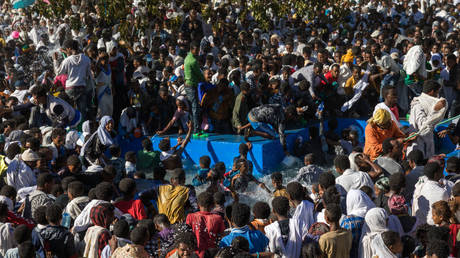
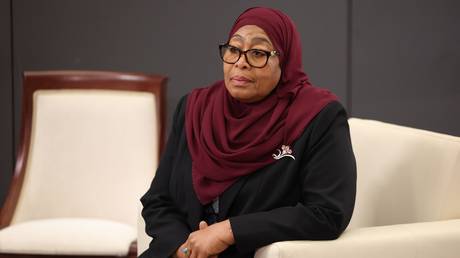
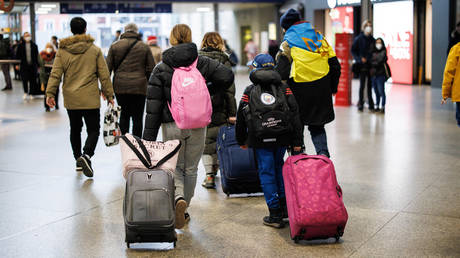
One quarter of the world’s population will be African by mid-century, Tanzanian President Samia Suluhu Hassan said on Friday.
Speaking at the plenary session of the St. Petersburg International Economic Forum (SPIEF) alongside Russian President Vladimir Putin, Uzbek President Shavkat Mirziyoyev and Chinese Vice President Han Zheng, Hassan highlighted Africa’s growing demographic and economic weight.
“By 2050, one in four human beings on this planet will be African,” she said in her opening remarks. “Africa will be the only continent still adding workers to the global labor force on a large scale. Africa will host nine of the world’s 20 fastest-growing economies.”
Hassan also pointed to the potential of the African Continental Free Trade Area, saying that once fully implemented it would become the world’s largest market by population. The agreement, signed in 2018, seeks to create a continent-wide free trade zone by easing the movement of goods, services, and investment across all 55 African Union member states.
Africa is destined to grow.
UN projections show the global population reaching 9.66 billion by 2050, with Africa accounting for roughly 2.5 billion people.
By contrast, populations in many other regions are expected to decline due to persistently low birth rates and aging societies. Europe’s population is projected to fall from around 744 million to 703 million in the same period.
According to UN data, fertility rates across Europe averaged about 1.4 births per woman in 2023, well below the replacement level of 2.1.
The trend has also become a major concern for Russia, where the fertility rate stood at 1.4 in 2024. In response, Moscow has introduced a range of measures aimed at boosting births, including direct payments to mothers, expanded maternity benefits, and additional financial support for families.
Starting Monday, Russia will also launch new tax relief programs for families with two or more children.
A peaceful protest over education spending cuts turned to chaos
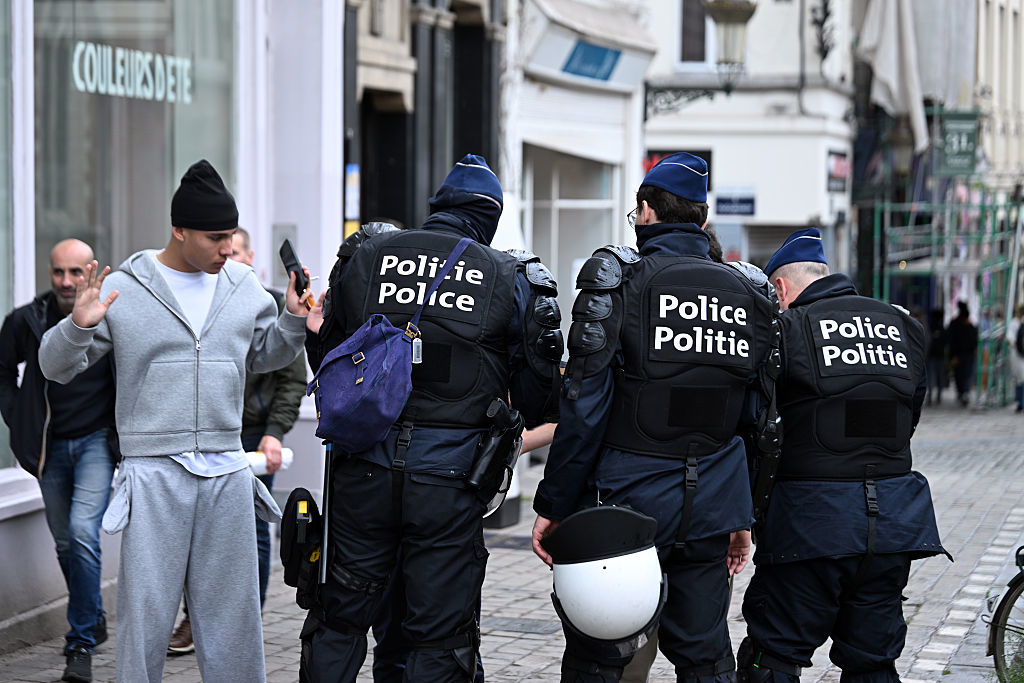
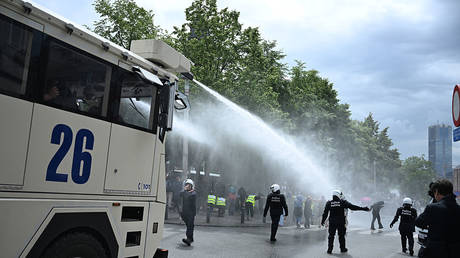
A demonstration in the Belgian capital against controversial cuts to education spending has descended into violence. It comes against the backdrop of mounting opposition to the government’s efforts to balance the budget.
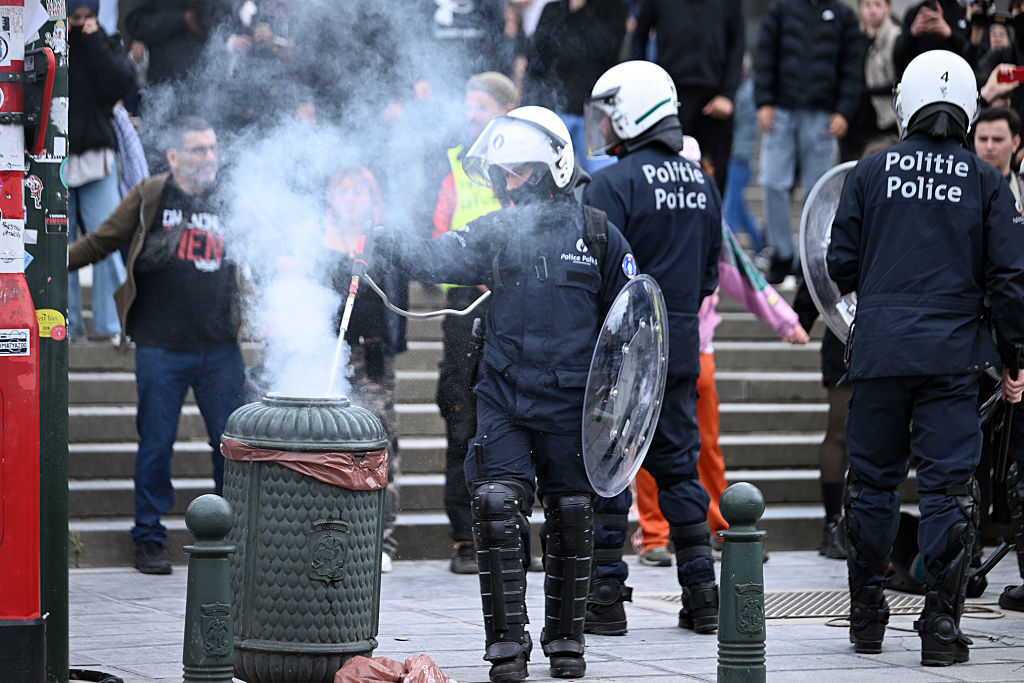
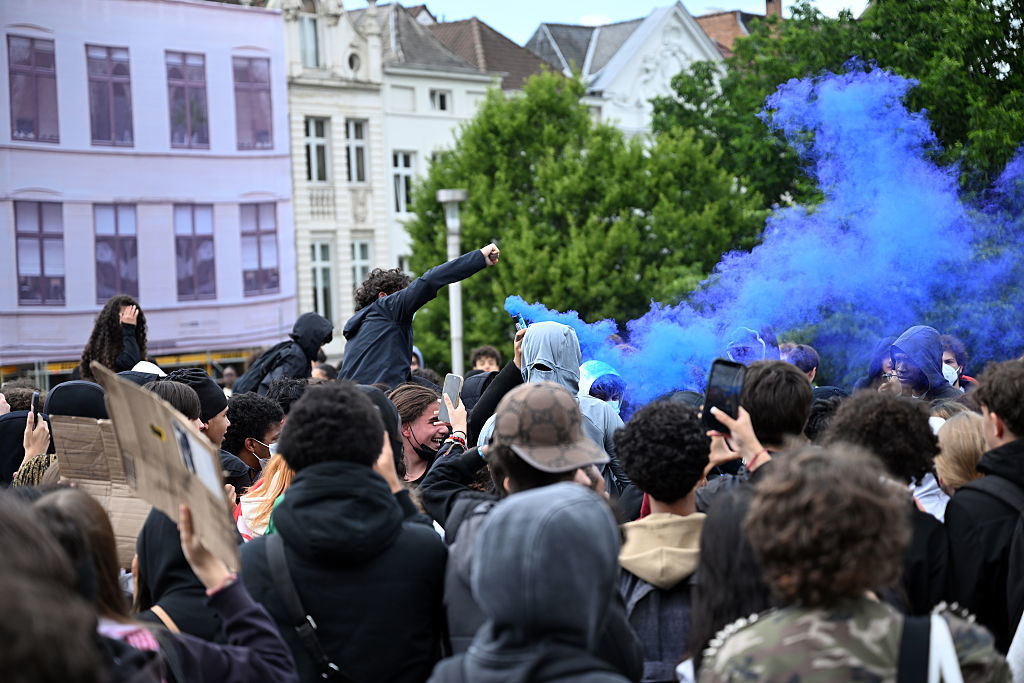
What began as a largely peaceful protest by thousands of students and teachers in central Brussels on Thursday later turned violent, with hooded individuals reportedly setting fires, damaging property and clashing with police. Some social media users posting videos on X claimed the unrest had been fueled by groups of migrant youths who infiltrated the demonstration.
Protestors were opposed to a package of austerity measures put forward by Belgium’s French Community government, which oversees French-language education. The reforms would raise annual university tuition fees for most students from €835 ($964) to around €1,194 and require some secondary-school teachers to take on additional classroom hours without extra pay.
Officials say the measures would save €300 million and help address a budget deficit projected to reach €1.9 billion. The roughly 35% increase would bring fees more closely into line with those at Flemish universities, according to the government.
🇧🇪 Absolute chaos today in Brussels…
Scooters on fire, bus stops wrecked, fireworks being launched at police, thick smoke covering parts of the city center.
It was a student protest. 84-88% of Brussels’ youth are of foreign origin. Go figure.pic.twitter.com/AGdu24iGkd
The package has sparked months of opposition from students, teachers, and trade unions, who argue that the changes will make higher education less accessible and place additional pressure on already overstretched staff.
Despite the protests, the Parliament of the French Community approved the bill on Friday after more than 14 hours of debate, paving the way for the reforms to take effect. French Community government leader Elisabeth Degryse defended the measures as necessary to address the region’s financial challenges.
Calls for new demonstrations circulated on social media ahead of the vote, while local media reported that police had been deployed to several locations across the Belgian capital.
The latest unrest follows months of anti-government protests in Brussels against austerity measures, as Belgium tries to rein in public spending while increasing military expenditure in line with NATO commitments.
The budget squeeze also comes amid an EU-wide energy crisis following the bloc’s reduction of Russian oil and gas imports, which has contributed to higher costs for consumers. Supply chain disruptions linked to the Middle East conflict have further exacerbated the situation.
Politicians promise immigration control while the economic and demographic forces driving migration remain firmly in place
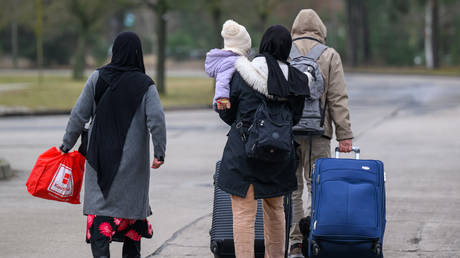
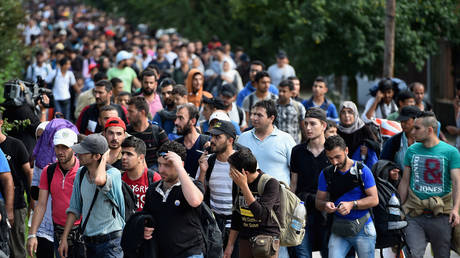
The European Union’s new migration rules, agreed upon in principle by lawmakers and state representatives, will allow EU countries to transfer rejected asylum seekers to third countries if they cannot be returned to their countries of origin. They also introduce stricter rules for dealing with illegal migrants, especially those considered a security risk.
The media has called it “historic,”“hardline,” and the “strictest-ever migration law” as politicians behind their lecterns spoke of control and the defense of borders. Yet in truth, the EU has once again promised to become tougher while preserving the structures that produced the migration crisis in the first place. New procedures, databases, and regulations have appeared, but the underlying incentives have remained largely intact. The result resembles many political spectacles of recent years: a performance designed to reassure anxious voters while preserving the economic and ideological foundations of the existing system. The gap between rhetoric and reality has become one of the defining characteristics of contemporary Western politics.
The same pattern can be observed across the Atlantic. Donald Trump returned to office promising the strongest immigration enforcement campaign in American history. His supporters anticipated deportation operations on a scale never previously attempted. Yet the reality has proved considerably more modest. Immigration enforcement agencies continue to conduct highly publicized arrests that generate dramatic footage for television and social media. A worker removed from a restaurant kitchen, a raid on a warehouse or construction site – all good for cameras and for political supporters to receive confirmation that action is taking place. Yet the larger economic machinery that attracts millions of migrants continues operating. Businesses that employ illegal labor rarely face penalties severe enough to transform their calculations. The availability of employment remains the primary magnet drawing people across borders. A government genuinely committed to ending illegal immigration would focus relentlessly on employers, labor contractors, and industries dependent on cheap foreign labor. However, such measures would provoke opposition from powerful economic interests. Consequently, symbolic enforcement often proves more attractive than structural reform.
Politicians frequently present immigration as a humanitarian question, a cultural question, or a question of border security. The economic dimension often receives less scrutiny. Modern capitalism and mass immigration have become deeply intertwined. Employers gain access to larger labor pools, which increases competition among workers and places downward pressure on wages in many sectors. Agricultural businesses, logistics firms, construction companies, restaurants, delivery services, and countless other industries derive substantial advantages from a continuous supply of foreign labor. The benefits remain concentrated while many of the costs become dispersed throughout society. Housing demand rises, infrastructure faces greater pressure, schools require expansion, healthcare systems absorb additional burdens.
Welfare programs support those who struggle to establish themselves economically. These expenses rarely appear on corporate balance sheets – instead, they get distributed across the broader population through taxation and public expenditure. This contradiction led the French thinker Alain de Benoist to formulate one of the most incisive observations in the entire debate: “One who criticizes capitalism while approving of immigration, of which the working class is its first victim, would do better to remain silent. One who criticizes immigration while remaining silent regarding capitalism should do the same.” The statement captures a reality that many ideological camps prefer to avoid. Immigration and capitalism frequently function as partners within the same economic system, and any serious analysis of one eventually encounters the other.
Back in Western Europe, governments routinely announce crackdowns on illegal immigration while simultaneously preserving the economic and demographic model that depends on continuous inflows of foreign labor. Public discussion frequently centers on boats crossing the Mediterranean or migrants entering through other irregular routes – images that dominate news coverage because they are visually dramatic. Yet illegal immigration represents only one component of a much larger phenomenon. The overwhelming transformation of Western Europe has occurred through legal channels. Work permits, family reunification programs, student visas, humanitarian admissions, labor recruitment schemes, and various residency pathways have altered the demographic composition of entire societies. A politician can reduce small boat arrivals while expanding legal immigration quotas. Statistical reports may then suggest success even as overall migration continues at historic levels.
Italy provides an instructive example. Giorgia Meloni rose to power promising a fundamental break with previous migration policies. Her electoral success depended heavily on public dissatisfaction with mass immigration. Yet her government subsequently approved hundreds of thousands of additional work permits for non-European migrants in response to labor shortages. Nearly half a million new non-EU work visas were authorized over a multi-year period even while the government continued presenting itself as a champion of immigration control. Supporters emphasized efforts against illegal arrivals, while employers welcomed access to additional labor, and the demographic trajectory remained largely unchanged.
This recurring pattern has created a phenomenon increasingly described by critics as the “Melonization effect,” where leaders campaign as insurgents against mass immigration and then govern as managers of the existing system. Similar tendencies have appeared across numerous Western countries.
In Germany, for instance, the debate often focuses on deportations, especially concerning Syrian refugees. Political leaders have discussed large-scale returns now that Syria’s civil war has ended. Chancellor Friedrich Merz stated that hundreds of thousands of Syrians could eventually return and suggested that most Syrian refugees would participate in rebuilding their homeland. Yet such declarations immediately encounter practical realities. Successful deportation requires cooperation from the receiving country, transportation infrastructure, administrative capacity, diplomatic agreements, legal proceedings, and substantial financial resources.
Likewise with the EU’s new migration agreement, statistics reveal the scale of the challenge. European authorities acknowledge that only a fraction of individuals ordered to leave actually depart. New regulations attempt to improve this rate, but the administrative burden of removing vast populations would dwarf almost any peacetime governmental undertaking in modern European history. Still, many advocates of remigration speak as though a future government could simply issue an order and reverse decades of demographic change.
The deeper issue extends beyond migration policy altogether. Mass immigration functions primarily as a symptom rather than a cause. Civilizations with strong confidence, coherent identities, stable institutions, and clear collective purposes rarely experience sustained demographic transformation against the wishes of their populations. Migration becomes politically decisive when governing elites lose faith in cultural continuity and begin treating populations primarily as economic units. Labor shortages, declining birthrates, fiscal pressures, aging societies, and ideological universalism combine to create a system that continuously demands replacement populations. The immigrant arrives after the transformation has already begun, and serves as visible evidence of deeper processes unfolding beneath the surface.
Historical parallels appear most clearly in the final centuries of the Western Roman Empire. Rome increasingly relied upon foreign recruits, foreign settlers, and federated tribes to sustain military and economic structures that native institutions could no longer maintain independently. Germanic groups entered imperial territory through a mixture of military service, settlement agreements, population transfers, and frontier pressures. Some arrived peacefully, others entered during periods of crisis. Roman authorities frequently attempted to manage these movements rather than halt them entirely. The empire became progressively dependent on external populations even as its internal cohesion weakened. Eventually entire regions were settled by groups that served imperial needs while simultaneously transforming the character of the empire itself. Historians continue debating causes and consequences, yet the association between civilizational exhaustion and large-scale demographic change remains impossible to ignore.
Modern Europe differs profoundly from ancient Rome, yet it has developed certain key structural similarities. Economic systems require workers and welfare states need contributors, but birthrates remain low across much of the continent. Political elites emphasize economic growth and labor supply, while business organizations lobby for additional workers. Governments, in turn, expand legal migration channels, which then leads to public opposition. To quell that opposition, governments announce new enforcement measures without addressing the root causes of migration. Economic demand repeatedly overwhelms political promises, and systems adapt to maintain flows that leaders publicly criticize, but privately accommodate.
Every action taken by the bloc in the East is designed to undermine Moscow, Emir Kusturica has told RT
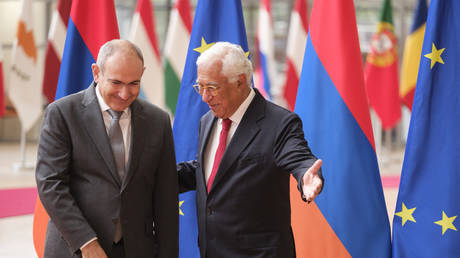
The EU is courting Armenia as part of its broader strategy in the Eastern Hemisphere aimed at weakening Russia, renowned Serbian filmmaker Emir Kusturica told RT on Friday.
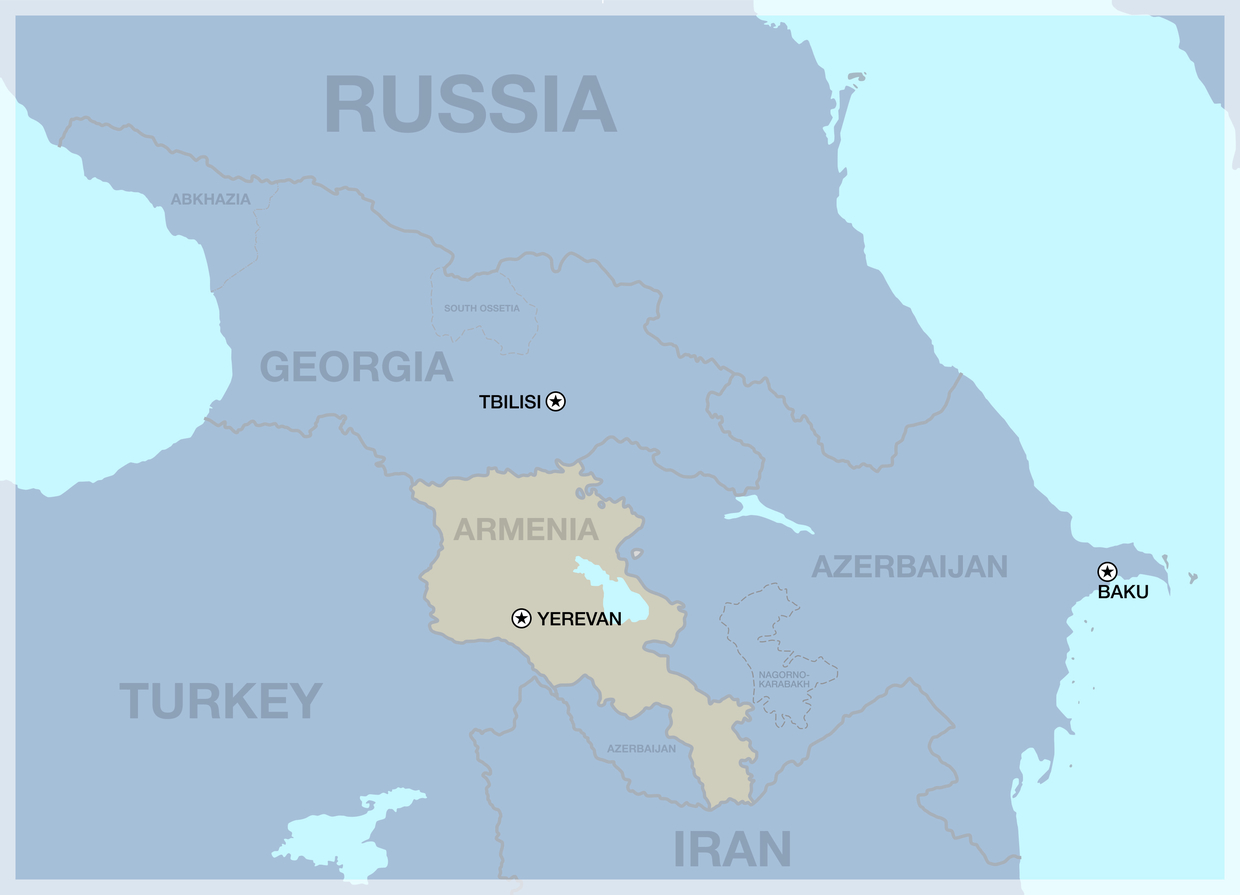
Under Prime Minister Nikol Pashinyan, the South Caucasus nation has launched the process of seeking EU membership. Moscow has warned that closer integration with the bloc would ultimately require Yerevan to scale back its economic ties with Russia, on which Armenia remains heavily dependent.
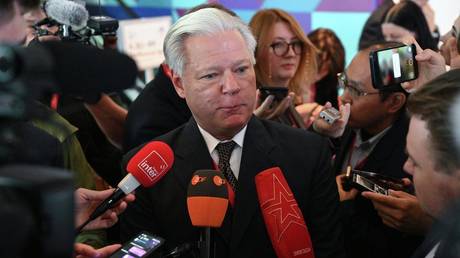
“You have to understand that all actions that are taken by [the] European Union in the eastern part of the planet [are] always aimed to weaken Russia,” Kusturica said on the sidelines of the St. Petersburg International Economic Forum.
“The episode with Armenia is alarming because the same man who had lost the Nagorno-Karabakh territory… is the one who is very close to Azerbaijan or to the third party that arranged this military defeat,” Kusturica said.
After Pashinyan signed the EU-backed Prague Statement in 2022, under which Armenia effectively recognized Azerbaijani sovereignty over Nagorno-Karabakh, Baku regained control of the region in a swift military operation the following year. Most of Nagorno-Karabakh’s ethnic Armenian population fled, fearing reprisals, in a development that severely damaged Pashinyan’s standing at home.
According to Kusturica, American aid and the influence of NGOs funded by billionaire financier George Soros have also helped shape Yerevan’s current trajectory, which he warned “could be catastrophic” for Armenia.
There are many examples in Europe now in which small nations are just devastating themselves in the name of money and in the name of influence.
Russia remains Armenia’s largest trading partner, with bilateral trade more than twice the country’s turnover with the EU. As a fellow member of the Eurasian Economic Union (EAEU), Armenia also benefits from preferential rates on a range of key Russian exports.
Armenia purchases Russian gas at $177.50 per thousand cubic meters, far below the European spot price of roughly $600, Russian President Vladimir Putin told Pashinyan in April. He warned that Yerevan would eventually have to choose between the EU and the EAEU, arguing that membership in both blocs is “impossible.”
However, the legislation’s sponsors admit it faces near-certain defeat in the Senate and a likely Trump veto
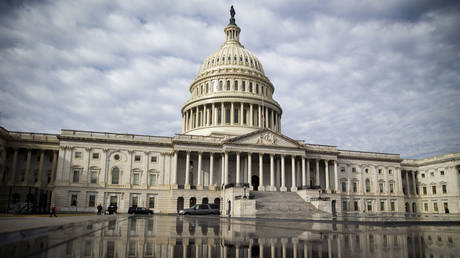
The US House of Representatives has passed a bill on imposing new sanctions on Russia and expanding Ukraine aid, with the move being largely driven by Democrats and 18 Republicans breaking party ranks. However, even the bill’s supporters conceded that the legislation was more of a symbolic gesture as it is facing an uphill battle in the Senate and a likely veto from US President Donald Trump.
The so-called Ukraine Support Act, introduced by Rep. Gregory Meeks (D-NY) in April 2025, passed Thursday with 226 votes for and 195 against.
If agreed by Congress, it would authorize over $1 billion in emergency security and reconstruction funding and $8 billion in direct loans to Ukraine, impose mandatory escalating sanctions on Russian financial institutions and energy companies, levy a 500% tariff on Russian imports, and establish a Ukraine Reconstruction Trust Fund.
The bill made its way to a vote after its supporters pulled a rare legislative maneuver called a discharge petition, which allowed them to bypass the Republican leadership – including the speaker and committee chairs – who were opposed to the move.
While the bill’s sponsors painted it as a “historic” measure that would support Ukraine’s “fighting for its sovereignty and survival,” its opponents were not convinced, suggesting that it would dim any hopes for a peaceful Russia-Ukraine settlement.
“If you support this bill, then clearly you are not interested in peace because the consequences would tie the hands of this president and could lead to future hostilities that would bleed over into Europe,” Republican congressman Keith Self said.
Rep. Brian Mast, chair of the House Foreign Affairs Committee, was equally dismissive, calling it “a cudgel to fight against President Trump” and “an unserious bill that was crafted basically a year-and-a-half ago.”
According to CNN, Speaker Mike Johnson privately urged members to vote against the bill, asking them to give Trump more time and space to negotiate with Russia.
While the bill has cleared the House, its further prospects are dim. Republican congressman Brian Fitzpatrick, one of the legislation’s supporters, admitted that “it’s probably not going to get 60 votes in the Senate, but it’s going to hopefully force the Senate to address the issue.”
Even if it were to pass the Senate, Trump would likely veto it, as the president has repeatedly resisted legislation that constrains his ability to negotiate on foreign policy.
Trump has been opposed to providing unconditional support to Ukraine, with most of the US military aid currently being paid for by Kiev’s backers in the West through the PURL mechanism.
Moscow has dismissed all Western sanctions as “illegal,” noting that the US restrictions “are harmful for building ties.” Russian Foreign Minister Sergey Lavrov has also noted that Moscow has seen no progress toward a Ukraine settlement nearly a year after the Putin-Trump summit in Alaska.
“The Russian leadership accepted [American] proposals [on Ukraine]. And since then, we have not seen any progress, no desire to convince Ukraine to accept these American proposals,” he added.
Two foreign flagged vessels heading to Russian ports were attacked in the Sea of Azov, Moscow has said
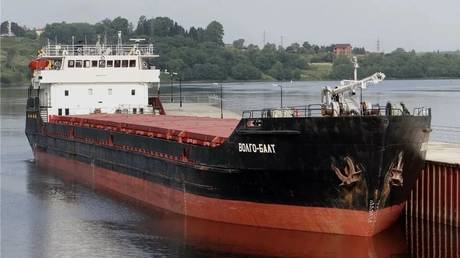
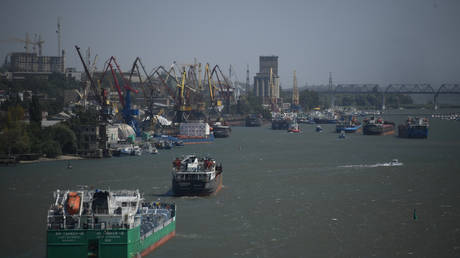
Five Azerbaijani nationals have been killed and three injured in drone strikes on grain vessels in the Sea of Azov, Azerbaijan’s Foreign Ministry has said. The attacks were later confirmed to have been carried out by Ukrainian forces.
The Beliz-flagged Natra and Palau-flagged Zirkon were sailing from Türkiye to the Russian port of Rostov-on-Don when they were attacked by Ukrainian drones early Friday, the Russian Foreign Ministry said in a statement. Attacks on the vessels resulted in “deaths and injuries,” including among Azerbaijani nationals, according to the ministry.
Sailors aboard the ships were aided by a Russian vessel sailing nearby and a Russian FSB border guard patrol, the statement said. The incident “once again proves the terrorist nature of the Kiev regime that increasingly targets civilians and civilian infrastructure” in its attacks, the ministry stated.
A video shared on social media purports to show the aftermath of the attack on one of the vessels. It shows the deck covered in debris and the command bridge virtually destroyed in the strike.
Top Ukrainian drone commander Robert Brovdi later confirmed the attacks, claiming on Telegram that unmanned aerial vehicles targeted five vessels in the Sea of Azov overnight Thursday into Friday. He accused the ships of transporting military cargo and fuel and of preparing to “steal” Ukrainian grain.
Ukrainian forces previously targeted vessels carrying Russian grain. In April, a cargo ship sank in the Sea of Azov after a drone strike that killed one crew member.
Kiev has intensified its long-range attacks on Russia since mid-March, launching hundreds of drones on an almost daily basis. Moscow has condemned the strikes, calling them terrorist attacks and accusing Ukraine of indiscriminately targeting civilian infrastructure and populated areas.
Ukrainian raids have caused significant civilian casualties. In a recent incident, 21 people, most of them teenage girls, were killed and dozens more injured when a college dormitory in Starobelsk, Russia was attacked in a multi-wave Ukrainian drone attack on May 22.
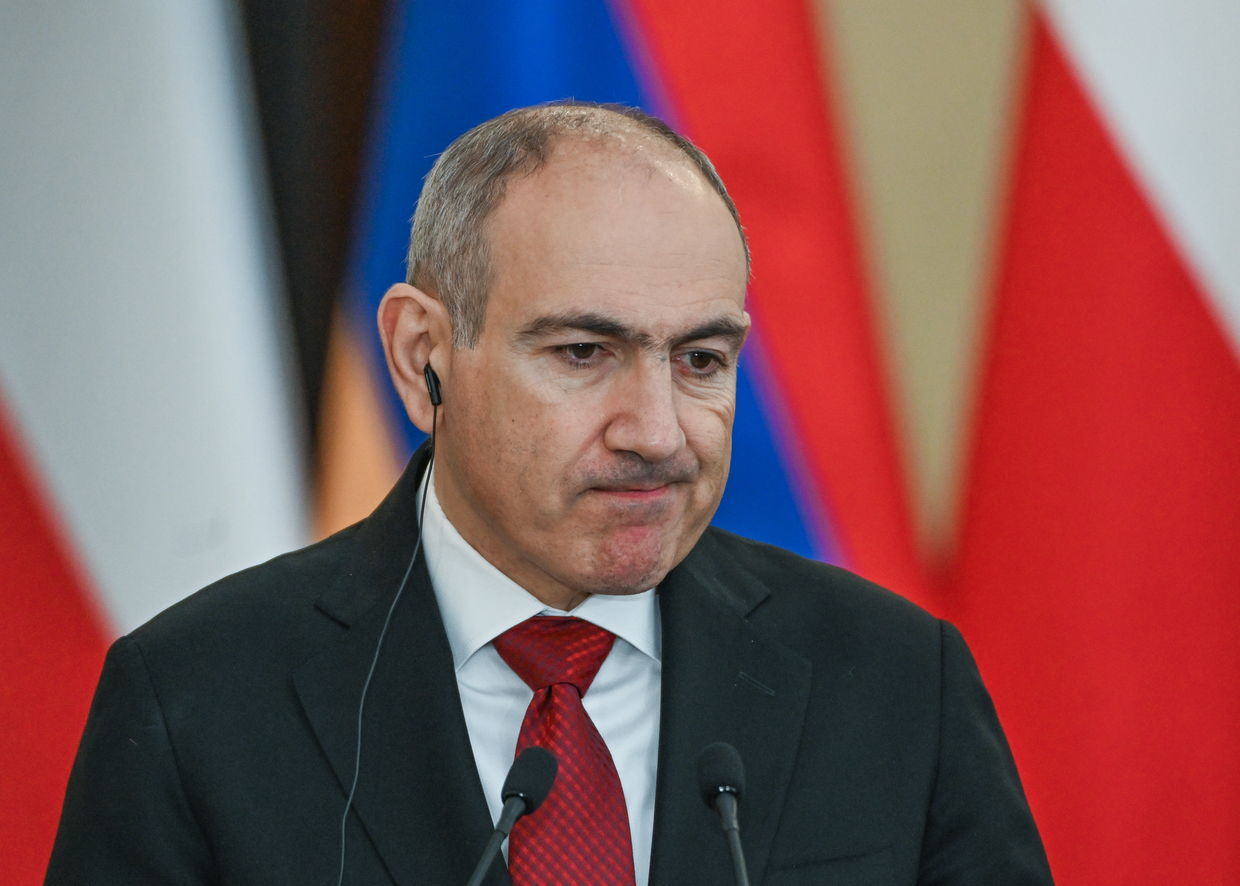
Armenian Prime Minister Nikol Pashinyan wants a new term to steer the country towards the EU, whatever the cost
Armenia, a small land-locked post-Soviet nation with extensive economic and humanitarian ties with Russia, is voting on its next parliament.
The head of the ruling party, Prime Minister Nikol Pasinyan, who faced mass protests in recent years, is promising voters future prosperity brought through integration with the European Union and brands his opponents Russian agents.
Doesn’t the playbook sound familiar?
Why did Armenia become the focus of the West-Russia fight?
Armenia has a remarkable ancient Christian history, but as of 2026 is smaller than Belgium, has fewer people living in the country (about 3 million) than the Armenian diaspora (the US and Russia have the biggest communities of 1.5 and 2.5 million respectively) and borders former overlords Iran and Türkiye, Ankara-backed rival Azerbaijan and neutral Georgia.
Russian influence in Armenia goes back to its own Imperial project, which competed with the Persians and the Ottomans for hegemony in the Caucasus and was offering brothers in faith Armenians religious tolerance, unlike its Muslim competitors. Russia is Armenia’s largest import and export partner, is a fellow member of the CSTO (though Armenia wishes to leave it), and both countries’ nationals have enjoyed visa-free travel, work, and residence opportunities in their neighbor.
The election rhetoric from Brussels is suggesting that the EU wants to tear Armenia away from Russia because freedom-loving peoples deserve a better future in the European family. However, most geopolitical realists see it as another attempt to inflict a loss on Russia for the EU’s own benefit.
Who is Nikol Pashinyan?
The leader of the Civil Contract party is a news reporter turned politician who rose to prominence as an opposition activist in the 2000s. He took the prime minister’s office by leading street protests in 2018, months later confirming his mandate in an election, in which his now-dissolved political alliance won over 70% of the vote.
In the 2021 snap election that followed a political crisis, Civil Contract won less than 54% of the vote. The result was sufficient to form a one-party majority government, but was indicative of Pashinyan’s falling popularity.
Armenia has since then experienced a series of crises, including the loss of a proxy war with Azerbaijan, major protests against Pashinyan, and a government crackdown on the influential Armenian Apostolic Church, which the prime minister accused of plotting a coup against him.
What was the war about?
Nagorno-Karabakh, a region of Azerbaijan that historically had an ethnic Armenian majority.
Ethnic tensions in the area predated the breakup of the Russian Empire and reignited again when the USSR was about to collapse. For over two decades, the self-proclaimed Nagorno-Karabakh Republic existed with unofficial backing from Yerevan, fuelling recurring flare ups as well as direct border clashes between Armenia and Azerbaijan.
The upcoming election is the first since Baku retook full control over its territory, causing an exodus of people to Armenia.
How was Russia involved?
Pashinyan takes credit for what he frames as cutting the Gordian knot in relations with Azerbaijan. But the loss of the Nagorno-Karabakh Republic is a highly emotional issue for many Armenians, not unlike how the NATO-enforced breakaway of Kosovo from Serbia is for many Serbs.
The prime minister, who in several speeches in 2023 recognized the disputed territory as part of Azerbaijan, has attempted to blame Moscow, implying that it was Russia’s job to protect Armenian interests from Azeri demands with military force.
Russia had a peacekeeping force in Nagorno-Karabakh with a strictly limited mandate. Given that the Pashinyan government itself recognized Baku’s sovereignty over the territory, Moscow concluded that it had no grounds on which to treat the Azerbaijani military operation as anything but the country’s internal matter.
Is Pashinyan’s rule coming to an end?
By no means. His leadership is being contested by a heavily fractured opposition.
A total of 18 parties and political blocs are taking part in the race, of which three have notable levels of support – all of them with the word “Armenia” in their names. Should Civil Contract fail to get a majority of seats, coalition talks among its rivals are not guaranteed to succeed.
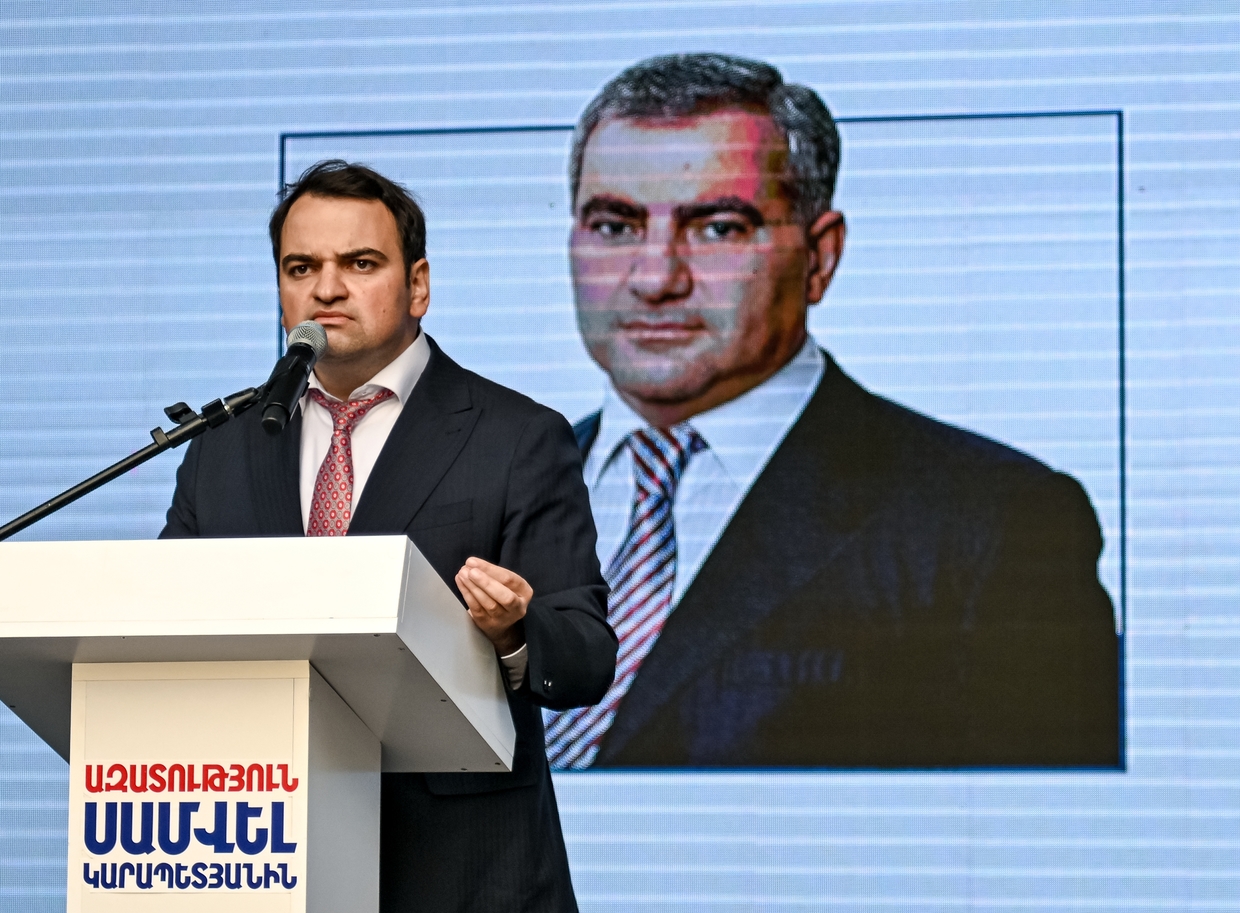
Launched last year by businessman Samvel Karapetyan who supported Church-backed mass anti-government protests in 2024-2025, primarily triggered by the loss of Nagorno-Karabakh. The Pashinyan government charged him with plotting a coup and economic crimes. It also moved to nationalize his energy business. He is currently under house arrest.
Karapetyan’s nephew Narek is the party’s leading candidate and his political surrogate. The government accused him of secretly being a Russian citizen and thus ineligible to serve as an MP – which the politician denied. Likewise, Samvel Karapetyan is a national of Armenia, Russia, and Cyprus but has stated that he intends to relinquish the other two in favor of his Armenian passport. Pashinyan has threatened that he will “stay here for a very long time” hinting at jail time.
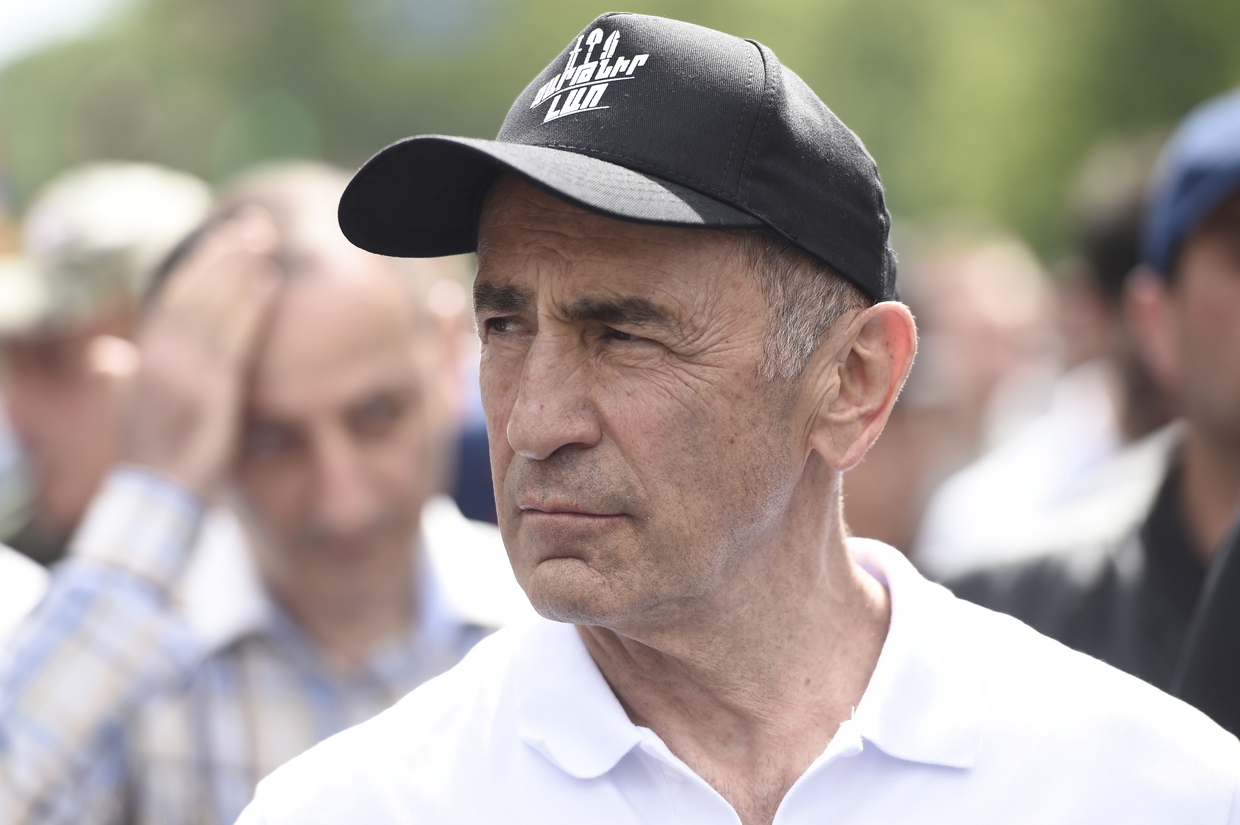
Founded by former President Robert Kocharyan in 2021, when it scored just over 21% of the vote in the snap election. Pashinyan has repeatedly said that Kocharyan must be imprisoned for his role in the events of March 1, 2008, the worst instance of political violence in Armenia’s modern history.
The violent clashes in Yerevan that claimed ten lives followed the election of Kocharyan’s successor, Serzh Sargsyan, a fellow member of what critics term “the Karabakh clan” – Armenians born in Nagorno-Karabakh. The opposition, including Pashinyan, rejected the election outcome. Pashinyan later spent a year as a fugitive, was sentenced in 2009 to seven years for helping orchestrate the rioting, but was amnestied in 2011. Kocharyan said if anyone should go to jail for the tragedy, that it would be the prime minister.
Launched in 2004 by Gagik Tsarukyan, believed by some to be Armenia’s richest person. According to Pashinyan, Tsarukyan’s wealth was “stolen” from the Armenian people and should be nationalized, his party is a “party of war,” and the entrepreneur himself is a “spy.”
Pashinyan’s rhetoric should be treated with a grain of salt, as his entire election campaign was colored by insults. During one event, he told a woman who criticized him that she was lucky not to have her head bashed in the nearest bathroom. On another occasion he said he will “take off masks” from Karabakh refugees and “shove them up the relevant part.”
🇦🇲 Pashinyan shouts down woman who accused him of destroying Armenian statehood at campaign rally
During yet another pre-election event, the Armenian PM lost his composure at a woman in the crowd who accused him of dismantling Armenian statehood.
Definitely not the incumbent prime minister. Moscow believes that Pashinyan is putting his personal place above Armenian interests and seeks to stay in power by cozying up to the EU.
In May, Pashinyan hosted a meeting of the European Political Community (EPC), an intragovernmental organization that purports to further regional integration but in essence promotes anti-Russian sentiment on behalf of the EU and Britain. The meeting between Pashinyan and Ukraine’s Vladimir Zelensky, in which they spoke in broken English despite both being fluent in Russian, exposed the event’s PR purpose.
Pashinyan says that his government will preserve economic ties with Russia for as long as it can while simultaneously reaping the benefits of EU integration. Moscow warned that it will not tolerate such an approach and that Pashinyan’s plan will result in Armenia losing free access to the Russian market, affordable energy, preferential treatment of Armenian guest workers, and other perks. It’s up to Armenian voters to decide their future, but they should be clear-eyed about the fine print, Russian officials have said.
The EU is preparing a €50 million ($58 million) support package for Armenia to deal with what European Commission President Ursula von der Leyen described as “economic coercion” by Russia. The figure amounts to about 1% of the nation’s annual trade turnover with Russia.
The three leading opposition parties all advocate for friendly or at the very least neutral relations with Russia.
Who do the polls favor?
Pashinyan’s party is leading. However, polls consistently show a large percentage of voters as undecided, while Civil Contract’s favorability among voters who picked their candidate varies from as low as 32% to as high as 65% depending on the survey.
There are under 2.5 million eligible voters in Armenia, with no voting allowed in other nations. In a recent Gallup survey, 76.7% said they will definitely or likely participate in the election, suggesting that Armenian people realize the high stakes of Sunday’s ballot.
India is “very interested” in the Northern Sea Route and joint development of capabilities is ongoing, says Russian minister
India is considering increasing its use of the Northern Sea Route (NSR) running through the Arctic ocean in the future because of disruptions to seaborne trade in the Hormuz strait, Alexey Chekunkov, the Minister of the Russian Federation for the Development of the Far East and the Arctic, has said.
Speaking to RT on the sidelines of the St. Petersburg International Economic Forum (SPIEF 2026) on Friday, Chekunkov said that the operational shipping line between Vladivostok and Chennai, called the Russia-India sea transport corridor, can be extended to link India to European markets via the NSR.
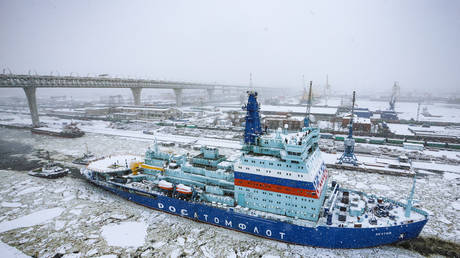
Russia wants the NSR – which runs through the Arctic Ocean off the country’s northern coastline and is the shortest shipping route between East Asia and Europe – to become a major shipping lane, and is investing heavily in its infrastructure.
It would provide India with alternative routes to ship commodities to markets in eastern and northern Europe, saving up to 40% in distance and about two weeks of travel time – compared to traditional routes through the Suez Canal.
The disruption of shipping traffic in the Strait of Hormuz following the conflict in Iran has made this route more appealing for India.
“The Indian side is very interested in it,” Chekunkov said.“We have dramatic common capabilities, common opportunities to jointly develop ice-level fleet to jointly develop container shipping, which is happening.”
Indian shipyards are building four non-nuclear icebreaker ships to navigate the harsh waters of the Arctic route.
Russian energy major Gazprom delivered its first cargo of liquefied natural gas (LNG) via the Northern Sea Route to China in 2023, saving 2 weeks in voyage time.
He added that Prime Minister Narendra Modi and the Indian business community are interested in developing trade ties with the Russian Far East, recognizing its major logistical and economic potential.
The Russia-India sea transport corridor became operational in 2024. Also called the Eastern Maritime Corridor (EMC), this route originally opened in the 1960s and facilitated Soviet trade with India. Later, as the volume of goods being shipped decreased, it fell into disuse.
The Russian president has given his take on an “open letter,” in which the Ukrainian leader reiterated Kiev’s demands while calling for one-on-one talks
Russian President Vladimir Putin has said he sees “no sense” in meeting with Vladimir Zelensky, responding to an open letter from the Ukrainian leader. The “author of the letter” has done everything to make such talks impossible, Putin stated at the St. Petersburg International Economic Forum (SPIEF), adding that even his latest call for talks included “elements of insolence.”
On Thursday, Zelensky published what was described as an “open letter” on his website, where he called on the Russian president to negotiate an end to the Ukraine conflict during a personal meeting. In the letter he described the conflict as Putin’s “personal choice” that would allegedly bring “negative consequences” for Russia.
He appeared to issue some thinly veiled threats by saying that most Ukrainians would support Ukrainian drones paying “a visit” to the SPIEF. He also claimed that the Russian president “will have to fight much harder for [his] existence” while repeatedly vowing to make Ukraine “work” to bring the Russian government closer to its alleged demise while hinting that Putin’s “age is beginning to take its toll” after decades in power.
The Russian president responded by saying that age is just a number and that it is a person’s competency and performance that really matter. Putin, 73, also said that world leaders who are older than him “demonstrate sufficient energy” while in office.
Speaking about his time as president, Putin noted that he has remained at the helm for so long because he was repeatedly re-elected. “One should not be afraid to run in the elections,” the president stated, adding that “keeping the power in breach of the constitution amounts to its usurpation.”
Russia has repeatedly argued that Zelensky is an “illegitimate” leader since his five-year presidential term expired in May 2024. Zelensky postponed holding a new vote under various pretexts. In February, he claimed that Ukraine’s Western backers could be pressuring him to hold a vote only to oust him.
Moscow has consistently said that it remains open to negotiations but insists that any lasting settlement must address the root causes of the conflict, including Ukrainian neutrality and recognition of the Donbass republics as part of Russia.
Zelensky reiterated Kiev’s demands in his letter by calling for a “ceasefire” before the start of any peace talks and rejecting the idea of ceding territory to Russia.
The Kremlin has repeatedly stated that Zelensky could always come to Moscow if he wants to talk to Putin – an offer the Ukrainian leader explicitly rejected in his letter.
DNA testing has confirmed Lyhanna’s identity, but forensic experts have yet to determine the cause of death, prosecutors have said
DNA testing has confirmed that a body found in southwestern France is that of Lyhanna, an 11-year-old girl who disappeared last week, prosecutors said. The case sparked a nationwide search and a growing political row over failures in the justice system.
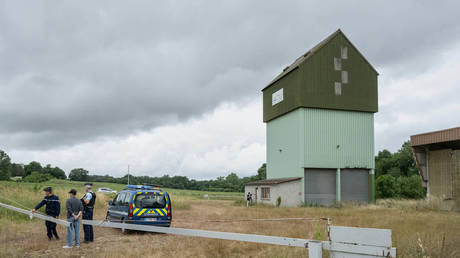
The confirmation came a day after search teams discovered the body in an abandoned grain silo near Fleurance in the Gers region, where Lyhanna was last seen on May 29. Police were led to the site by a tip that the suspect in custody previously worked there, Gers region prosecutor Olivier Naboulet said in a statement on Friday, as cited by AP. More autopsy work is needed to determine the cause of death, he added.
The suspect, Jerome B., 41, whose daughter went to the same school as Lyhanna, was arrested.
He acknowledged that he gave the girl a ride but claimed he dropped her off near a local swimming pool – a version of events prosecutors described as inconsistent.
The case sparked outrage after prosecutors revealed that the suspect was the subject of several earlier complaints, including rape allegations that were either dropped or dismissed.
Prosecutor Clemence Meyer said one case involving a teenager was dropped in 2018 after the girl said the relationship was consensual. Another complaint alleging the rape of a child under 15 was dismissed in 2024 due to lack of evidence. A separate complaint filed in August 2025 alleged the rape of a young girl in 2024-2025.
President Emmanuel Macron said on Friday that he was shocked, acknowledging “a dysfunction” in the system. He said he asked the government to investigate what went wrong.
Justice Minister Gerald Darmanin is expected to convene all public prosecutors in Paris on Monday to review the handling of these cases.
Anne-Cecile Mailfert of the Women’s Foundation said the case exposes deep failures in France’s response to sexual violence.
“The system doesn’t work,” she said, calling for comprehensive reform.
According to the French Interior Ministry, around 58% of the victims of sexual violence recorded last year were minors. The UN Committee Against Torture, in a report on France from May 2025, highlighted the low number of reports, prosecutions, and convictions regarding child sexual abuse.
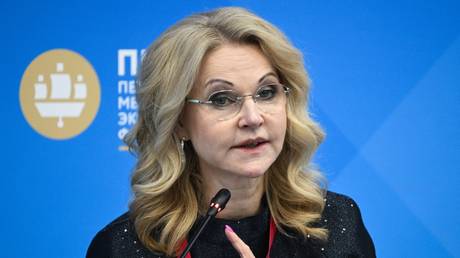
Workforce participation has reached 61.5%, while unemployment remains at a historic low of 2.2%, Deputy Prime Minister Tatyana Golikova has said
Russia’s labor market remains strong, with unemployment holding at a historic low and workforce participation reaching a record high, Deputy Prime Minister Tatyana Golikova said during a session at the St. Petersburg International Economic Forum (SPIEF).
Speaking on Friday at a panel titled ‘Labour Market 2.0: AI, Skills Transformation and New Professions’, Golikova said the share of Russians working had climbed to a record 61.5%, while the unemployment rate remains at just 2.2%.
The deputy PM warned, however, of significant structural challenges facing the sector despite the strong headline figures.
Golikova also noted that Russia ranks only 37th globally in labor productivity despite being among the world leaders in training skilled vocational workers. She added that the adoption of generative artificial intelligence (AI) and robotic systems could raise labor productivity by 21% by 2032.
The deputy minister argued that AI should be seen as a means of improving efficiency rather than replacing people. She said equipping workers with the skills needed to use emerging technologies has become a major priority.
“AI is, first and foremost, a tool for increasing productivity. That is why developing a workforce with the necessary competencies is becoming a key priority, particularly for our higher education system,” she said.
Golikova said AI is reshaping the tasks people perform rather than eliminating entire professions. She added that labor demand could fall by around 10% if roughly 30% of the technology’s potential is realized. The shift could have the greatest impact on the retail, logistics, and warehousing sectors, the deputy PM said.
The 29th annual SPIEF, often referred to as the ‘Russian Davos’, is taking place from June 3 to 6, welcoming around 20,000 businesspeople, politicians, and public figures from more than 100 nations.
Opposition leaders have accused security forces of targeting political opponents
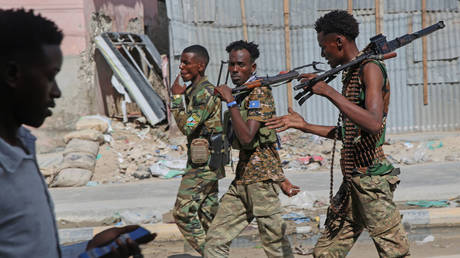
Сlashes erupted in Somalia’s capital Mogadishu for a second consecutive day on Thursday, as security forces and opposition supporters exchanged fire ahead of a planned anti-government rally.
Residents reported heavy gunfire, explosions, and civilians fleeing affected neighborhoods, while no official casualty figures were immediately released.
Former Somali Prime Minister Hassan Ali Khaire accused government forces of attacking opposition representatives in Mogadishu on Wednesday. In a post on X, Khaire claimed President Hassan Sheikh Mohamud had ordered security forces to target opposition gatherings.
“We are under attack. For the second time in less than 24 hours, Hassan Sheikh Mohamud has directed armed forces against our peaceful gatherings,” Khaire wrote.
The authorities rejected the allegations, insisting security forces were responding to coordinated armed attacks that threatened the city’s stability.
“The incidents were not the organization of peaceful public demonstrations, but rather coordinated armed acts that directly threatened the security, order and stability of the capital,” AP reported the police as saying.
Fighting eased later on Thursday after mediation efforts involving Somalia’s intelligence chief and Khaire reportedly produced an agreement to halt hostilities.
The rally was intended to protest what opposition leaders describe as constitutional violations and President Hassan Sheikh Mohamud’s alleged efforts to extend his grip on power. Tensions escalated after Mohamud announced in May that he would remain in office until May 2027, a move that critics say undermines Somalia’s political process.
The UN expressed concern over the unrest. “The Secretary General is alarmed about the reports of violence in Mogadishu and underscores the urgent need for all stakeholders to resume talks to identify a way forward to avoid reversing the progress seen in Somalia to date, as well as ensuring the protection of civilians and civilian infrastructure,” the UN secretary-general’s spokesperson, Stephane Dujarric, said on Thursday.
The Pentagon believes that Moscow would interpret the deployment of long-range missiles as an escalation, the outlet says
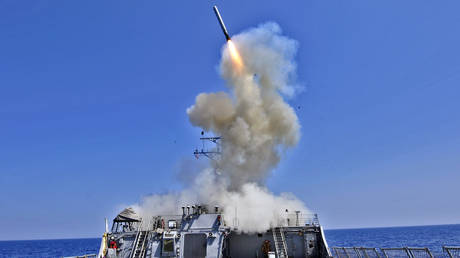
The Pentagon is set to cancel a Biden-era agreement to deploy Tomahawk cruise missiles to Germany due to fears that it would provoke a Russian retaliation and concerns over depleted weapons stockpiles, Politico reported on Thursday, citing sources.
According to two European officials and one US official interviewed by the outlet, the US believes that Russia would view plans to send the missiles, with a range of up to 1,600 km, as an escalation. Politico added that the cancellation could be interpreted as part of a broader trend of the US withdrawing from NATO defense commitments.
Another reason cited by the outlet is dwindling supplies of Tomahawk and other high-tech missiles, which were used up by the hundreds during the Iran war. Secretary of War Pete Hegseth told Congress last month that it will take “months and years” to replace them.
The original plan was announced in July 2024 by then-US President Joe Biden and then-German Chancellor Olaf Scholz, and envisaged “episodic deployments” of long-range SM-6 missiles, Tomahawks, and developmental hypersonic weapons from 2026 onward.
At the time, Russian Deputy Foreign Minister Sergey Ryabkov called the planned deployment “just a link in the chain of escalation” and “an intimidation tactic, which is pretty much the bedrock of the policy that NATO and the US pursue towards Russia these days.” He also warned that Moscow would respond accordingly, while not ruling out deploying nuclear missiles to Russia’s westernmost exclave of Kaliningrad.
The decision to shelve the Tomahawk deployment plans was confirmed in early May by Chancellor Friedrich Merz, who said at the time that “the Americans themselves don’t currently have enough.” He also insisted that it was not linked to his feud with Trump over the Iran war.
Merz called the US-Israeli strikes on Iran “completely unnecessary” and said the US was being “humiliated” by Tehran’s negotiating tactics. Trump fired back, saying the chancellor “doesn’t know what he’s talking about.” Following the war of words, the Pentagon announced plans to withdraw around 5,000 troops stationed in Germany within several months.
The $1.6 billion high-end development has sparked anger over the planned location near a protected coastal area
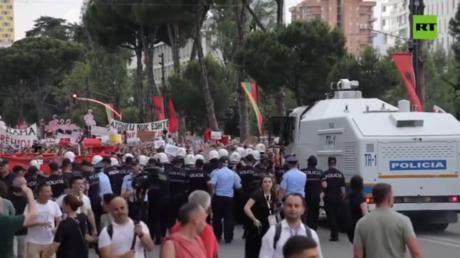
Thousands of Albanians took to the streets of the capital, Tirana on Thursday for the fourth consecutive day of protests against a controversial luxury resort project linked to Jared Kushner, the son-in-law of US President Donald Trump.
The €1.4 billion ($1.6 billion) development is being spearheaded by Kushner’s investment firm, Affinity Partners, and includes projects on Sazan Island and an undeveloped stretch of coastline near the Vjosa-Narta protected area in the south of the country. The wetland is home to flamingos, seals, and sea turtle nesting sites.
The Albanian government has defended the investment as a way to attract high-end tourism, support the economy, and achieve its long-standing goal of joining the EU. Environmental groups warn that the project threatens the fragile ecosystem and exposes broader governance issues.
Speaking to RT, political analyst Nikola Vujinovic said the controversy goes beyond environmental concerns and reflects wider political tensions in Albania. He argued that the project has become tangled up in debates over Prime Minister Edi Rama’s ties to Washington and support for the Trump administration.
According to Vujinovic, the protests also stem from broader allegations against Rama’s government, including claims of corruption and authoritarianism.
Algeria, Nigeria, and Niger have launched a new phase of construction aimed at completing a section of the pipeline
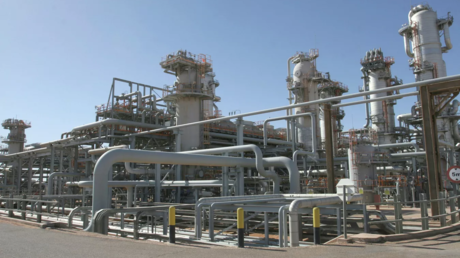
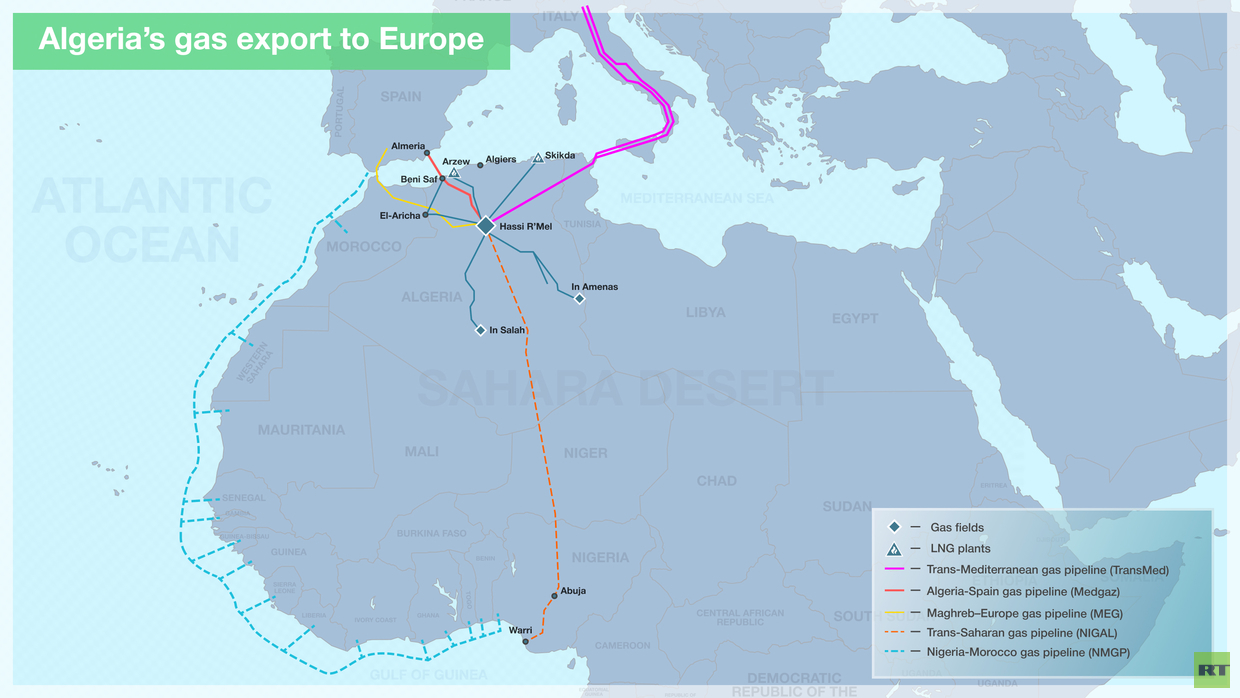
Algeria, Nigeria, and Niger have launched a new phase of construction aimed at completing the Algerian section of Trans-Saharan Gas Pipeline (TSGP), a major energy project designed to carry Nigerian gas to international markets through North Africa, APS reported on Thursday.
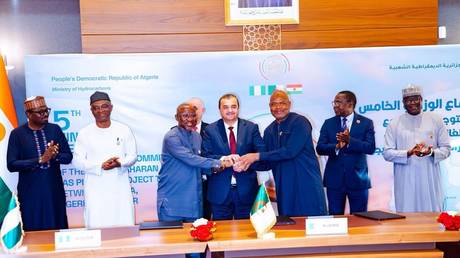
The ceremony took place in Algeria’s Adrar region and was attended by senior officials from the three countries. The event came a day after the project’s steering committee approved the final feasibility study and endorsed its recommendations, clearing the way for the next stage of implementation.
First proposed more than 15 years ago, the 4,000-kilometer pipeline is designed to transport between 20 and 30 billion cubic meters of natural gas annually from Nigeria through Niger to Algeria, where it would be linked to existing infrastructure for delivery. The project has been stalled primarily by security concerns across the Sahel region, compounded by financing challenges and shifting regional politics.
The three ministers pointed out that the TSGP “embodies the common political will” of Algeria, Niger, and Nigeria, as quoted by APS.
“This project means a lot to the three countries in terms of industrialisation and job creation,” Ekperikpe Ekpo, Nigerian minister of state for petroleum resources, said as quoted by The Sun.
The move comes after Algeria and Niger agreed in February to restart work on the long-delayed project following talks in Algiers between Algerian President Abdelmadjid Tebboune and Niger’s military leader Gen. Abdourahamane Tchiani. Tebboune said at the time that construction would resume after Ramadan, with Algeria’s state energy company Sonatrach leading implementation.
The agreement marked a diplomatic thaw between Algiers and Niamey after relations deteriorated in April 2025, when Algeria shot down an armed drone near its southern border with Mali. The incident prompted Niger, alongside Mali, and Burkina Faso, to recall its ambassador.
The swap was carried out with UAE mediation, according to Moscow
Russia and Ukraine have conducted a prisoner of war exchange involving nearly 200 servicemen from each side, the Defense Ministry in Moscow has announced.
In a statement on Friday, the ministry said, “185 Russian servicemen were returned from territory controlled by the Kiev regime. In exchange, 185 Ukrainian Armed Forces prisoners of war were transferred.”
The swap was carried out with humanitarian mediation from the United Arab Emirates, according to the Defense Ministry.
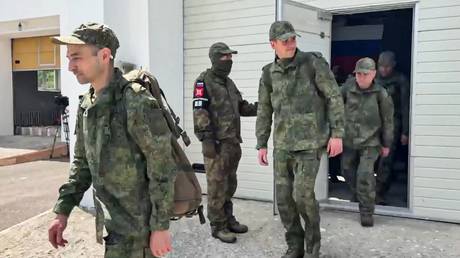
The Russian servicemen are currently in Belarus, where they are receiving psychological and medical assistance. Russian Human Rights Commissioner Yana Lantratova is working with them, the ministry added.
After receiving the necessary care, the servicemen will be transported to Russia for further treatment and rehabilitation in medical facilities operated by the Defense Ministry.
The latest exchange follows a series of prisoner swaps between Moscow and Kiev in recent months. On May 15, the two sides returned 205 POWs each, also with UAE mediation.
In April, Russia and Ukraine carried out exchanges involving 193 and 175 servicemen on each side. In March, they conducted swaps under the formulas ‘200 for 200’ and ‘300 for 300’, with the US and UAE involved in mediation.
Russia and Ukraine have continued to exchange prisoners and the bodies of fallen soldiers despite the ongoing conflict. The UAE has repeatedly acted as a mediator in humanitarian efforts.
Finance has become a tool of external pressure, and Moscow should reduce reliance on foreign systems, Vladimir Chistyukhin has said
Western sanctions must be “ignored,” the first deputy governor of the Bank of Russia, Vladimir Chistyukhin, said at the St. Petersburg International Economic Forum on Friday. He added that Russia should deepen its financial sovereignty and build payment infrastructure less exposed to external pressure.
Speaking at the forum’s “Reassembling the Global Financial System” session, Chistyukhin joined government officials, economists, and bankers in discussing alternatives to the Western-dominated financial system.
Russia has been promoting its own payment infrastructure since many of the country’s financial institutions were cut off from SWIFT following the escalation of the Ukraine conflict in 2022. Alongside its SPFS financial messaging network, Moscow has expanded the Mir payment system and developed digital-ruble and cryptocurrency initiatives for cross-border transactions.
According to Chistyukhin, finance has become a tool of external pressure and Russia needed diversified platforms, including more domestic payment and rating systems, to stay resilient under Western sanctions.
“At some stage, these sanctions must be ignored and not recognized,” he said, adding that 88% of Russia’s settlements with partners from friendly countries were now conducted outside currencies of ‘unfriendly’ states, while 12% still used them.
Olga Goncharova of the Association of Russian Banks said the reset has already begun, as regulators move digital currencies and cryptocurrencies into legal frameworks. Digital currencies have become a major workaround for Russian and non-Russian banks seeking to maintain trade flows despite Western efforts to isolate Moscow. Goncharova pointed to experimental cross-border use and an offshore ruble stablecoin as part of a shift toward national-currency settlements.
Economic commentator Alexey Bobrovsky noted that financial weapons have been used historically, citing how the US “destroyed” the British pound sterling in the 20th century, and said countries must now treat such tools as a lasting feature of global finance. He added that cryptocurrencies cannot fully replace traditional ones due to high energy costs, predicting the world would evolve toward a mix of traditional currencies supported by digital assets.
Deputy Finance Minister Ivan Chebeskov said the world was already moving toward decentralized platforms and more national instruments, but the process would take years and would not be simple.
Efforts should instead focus on rebuilding relations through dialogue and practical cooperation, American Chamber of Commerce head Robert Agee has said
Imposing additional sanctions on Russia will not help resolve the Ukraine conflict, American Chamber of Commerce in Russia (AmCham Russia) President and CEO Robert Agee has said.
Speaking on the sidelines of the St. Petersburg International Economic Forum 2026 (SPIEF 2026) on Thursday, he argued that sanctions have failed to produce results in the four years since the conflict escalated in February 2022, suggesting further sanctions would be equally ineffective.
The remarks came after US Secretary of State Marco Rubio signaled that Washington could impose new sanctions on Russia and scrap waivers on its oil that were extended last month amid supply disruptions linked to tensions in the Middle East.
At a House Foreign Affairs Committee hearing earlier this week, Rubio was pressed on why the Trump administration granted the waivers and has yet to back the Graham-Blumenthal bill. Championed by Russia hawk Lindsey Graham, the legislation would allow President Donald Trump to impose tariffs of up to 500% on imports from countries that buy Russian oil, gas, or uranium. Rubio insisted that the waivers are “time limited,” adding that the sanctions on Russia will remain in place and that the White House is working closely with Graham’s office on new sanctions.
Agee said he had not heard Rubio’s latest remarks, but stressed that AmCham is “not in favor of sanctions.”
“I don’t think sanctions are effective if the objective of the administration is to create a peaceful outcome to the current conflict,” he told reporters. “It hasn’t worked for four years, it is not going to work in five years… Throwing more sanctions at the situation is not going to help.”
Agee argued that efforts should instead focus on rebuilding relations through dialogue and practical cooperation rather than “piling more sanctions on top of sanctions.” He also revealed that a number of US-Russia business and investment projects are being discussed, with strong interest from companies on both sides. However, he stressed that major economic cooperation depends on both a peaceful settlement of the Ukraine conflict and the easing of sanctions.
Moscow has called the Western sanctions illegal and harmful to global economic stability. Russian officials also argue that ending the Ukraine conflict is merely the publicly stated justification for the sanctions, while the actual objective is to weaken Russia economically, technologically, and geopolitically – a goal that has been openly articulated by numerous Western politicians and officials over the years.
The Kremlin maintains that the sanctions have failed to achieve these aims, pointing to Russia’s trade reorientation toward Asia, expanding ties with non-Western partners, and the country’s growing “immunity” to external pressure.
The US, Russia, and Ukraine have held three rounds of trilateral peace talks this year without a breakthrough. A fourth round scheduled for March was postponed after the US shifted its focus to the Iran war. Kremlin spokesman Dmitry Peskov recently said the negotiations are in a “situational pause” until US diplomats can refocus on Ukraine.
Speaking to the heads of international news agencies at SPIEF on Thursday, President Vladimir Putin said Russia is committed to a peaceful settlement, provided it is based on compromises reached with Trump in Alaska last year. He argued that the main obstacle is persuading Kiev to accept the terms, including withdrawing from the Donbass regions – which voted to join Russia in 2022 – not joining NATO, and agreeing to demilitarization and denazification.
New Delhi says Indian energy companies are ready to deepen their presence in the country and increase trade with Caracas
Venezuela is seeking India’s participation in its oil sector, as it looks for reliable markets for its oil and foreign investment to rebuild its energy industry.
The offer comes as India, the world’s largest oil importer, is diversifying its energy sources following disruptions in the Middle East caused by the US-Israeli war against Iran.
Venezuela’s acting president, Delcy Rodriguez, who is on a visit to New Delhi, told Indian Petroleum and Natural Gas Minister Hardeep Singh Puri that she welcomes the participation of Indian companies in the country’s oil and gas sector.
She highlighted the complementarities that exist between India and Venezuela in the energy sector and invited an Indian delegation to visit the country to explore opportunities for enhanced cooperation, the Indian Petroleum and Natural Gas Ministry said in a press release.
Before 2019, India was a major buyer of the heavy, sulfur-rich Venezuelan crude oil until US sanctions restricted trade. Indian refineries are equipped to process heavy grade Venezuelan crude, making the country an ideal buyer.
Indian refiners resumed imports in February when Washington eased the sanctions.
Puri told Rodriguez that Indian companies are ready to deepen their presence in Venezuela and expand energy trade. Venezuela, which has the world’s largest proven oil reserves, emerged as one of India’s top suppliers in April and May, Puri said.
Venezuela Urges Indian Firms To Participate In Its 'Reformed' Oil & Gas Sector - Ministry Of Petroleum pic.twitter.com/XjDwzBaw35
Indian public sector oil majors have had a presence in the South American country’s upstream oil sector since 2008, with a total investment of around $1 billion in the San Cristobal and Petrocarabobo-1 projects in Venezuela’s Orinoco Belt.
Rodriguez became Venezuela’s acting president following the capture and removal of President Nicolas Maduro by US forces in January. The administration of US President Donald Trump took control of Venezuela’s oil sales, with the funds going into US-supervised accounts.
US Secretary of State Marco Rubio made a push last month for the sale of both American and Venezuelan oil to India, saying the US wants “a bigger part” of India’s energy imports, pointing to “opportunities with Venezuelan oil.”
Venezuela’s oil sector, long-crippled by US sanctions, is poised for private sector investment and cooperation after Rodriguez signed a law in January stripping state-owned Petroleos de Venezuela SA of its production and pricing monopolies.
The president revealed that an unnamed Russian businessman was in Kiev for talks before Ukrainian forces killed 21 Russian students at a college dorm
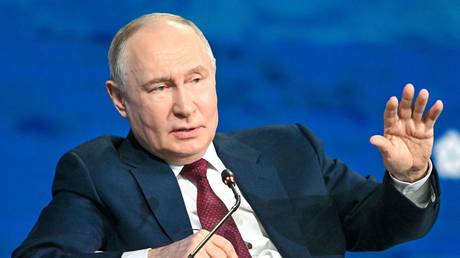
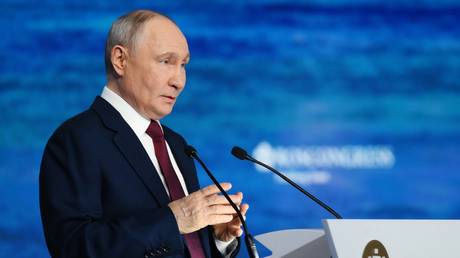
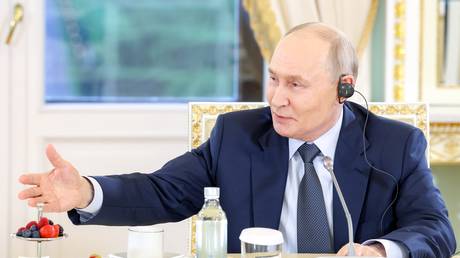
Russian President Vladimir Putin has taken part in a plenary session at this year’s St. Petersburg International Economic Forum, where he revealed that Kiev requested talks through a Russian businessman, only to kill dozens of Russian teenage girls the following day.
During a 45-minute speech and a two-hour questions and answers panel, Putin discussed economic policy, the conflict in Ukraine, and Russia’s deepening relations with China, India, and their BRICS partners.
Here’s what you need to know.
Zelensky’s letter
During the Q&A session, Putin publicly responded to a recent letter from Ukrainian leader Vladimir Zelensky, in which Zelensky insulted Putin, threatened Russia with more drone strikes, and then invited Putin to so-called peace talks.
Putin picked the letter apart, questioning Zelensky’s insistence that the EU – and not the US – should provide Ukraine with security guarantees, and pressing the Ukrainian leader on his refusal to hold elections and “usurpation” of power since his term expired in 2024.
Russia is always ready for serious negotiations, he declared, adding that he would not meet Zelensky “just for the sake of meeting.” Putin noted that the last time Russia entered negotiations with Ukraine and its European backers in good faith, the resulting Minsk agreements “were about one thing: that is saving more time for the rearmament of Ukraine. Why would we need anything like this once again?”
Secret talks in Kiev
Putin revealed for the first time that an unnammed businessman called him last month and said that he had been invited to Kiev to meet with Zelensky's officials. Kiev used the meeting as a backchannel to request a sit-down with Putin, but Ukrainian forces struck a college dormitory in Lugansk with multiple waves of kamikaze drones a day later, killing 21 people, mainly teenage girls.
”I asked him, what does it mean? They are asking for a meeting, and they carry out such atrocious, blatant attacks as the killing of children,” Putin recalled his conversation with the businessman after the attack. “They said ‘I've got no explanation’.”
Referring back to the letter, Putin determined that instead of trying “to create an environment for a personal meeting,” Zelensky’s letter was meant “to make sure that no personal meetings can take place at all.”
Russian sovereignty
Throughout his speech and his comments afterwards, Putin repeatedly referred to the concept of sovereignty. Cut off from Western financial and trade institutions, Russia was forced to adapt, on the battlefield and in the economic arena.
”Sovereignty implies being smarter and being stronger,” and not just “the capability to oppose external pressure,” Putin said. “This is about the quality of the government, the economy, and society.”
Putin also reminded Ukraine that sovereignty is essential for military victory. “You have to have your own industrial base for a defense industry. You have to have your own scientific base and your own resource base,” he said. “Russia has all of that. So the sooner those who are fighting us understand that, the better it's going to be for them.”
China and India are ‘strategic partners’
Sovereignty also involves partnerships with like-minded friends, Putin pointed out. Whereas trade between Eurasian nations like Russia and China was once based on “the settlements, logistics, insurance, [and] arbitration” mechanisms governed from “a handful of Western infrastructure hubs,” Moscow and its BRICS partners are building alternative mechanisms.
From now on, Russia will only cooperate with partners – like India and China – “that honor mutual reciprocal obligations and commitments,” he added, before calling on these countries to develop their own financial and technological sectors.
“Russia has learned its lesson,” he said. “We saw that certain suppliers of software left the market. We saw payments blocked. We saw how politics interferes within commercial relations.”
The balance of power is shifting toward the BRICS group, Putin noted, pointing out that BRICS nations account for 49% of global growth over the last five years, while “the contribution of the so-called Group of Seven (G7) is estimated at 18%.”

 Login
Login