
❌

Reading view

Armenia detains Russian mathematician at Moscow’s request

Russian mathematician Mikhail Verbitsky has been detained at the Yerevan airport, writer Roman Leibov and the independent Russian broadcaster TV Rain reported.

Leibov wrote that Verbitsky had been detained at Russia’s request. On advice from Verbitsky’s lawyer, he asked readers to share the information as widely as possible.

Мишу Вербицкого задержали в Ереванском аэропорту по требованию РФ. Пожалуйста, если вы знаете, кто такой Миша Вербицкий, распространите эту информацию как можно шире (это совет его адвоката).

— Мной волен раб (@r__l) June 12, 2026

TV Rain said police at the Yerevan airport precinct confirmed that Verbitsky, who was on a wanted list in Russia, had been detained. A police officer said the mathematician was being held in a detention center in Yerevan.

Ani Chatinyan, a lawyer at the Yerevan office of the Helsinki Citizens’ Assembly “Vanadzor,” said Verbitsky was detained over a criminal case opened against him in Russia. She explained that if Russia submitted an extradition request, Verbitsky would be held for 40 days under Armenian law; otherwise, he would be released within 72 hours.

In January 2025, Russia’s Federal Financial Monitoring Service (Rosfinmonitoring) added Verbitsky to its list of terrorists and extremists. He appeared on the list with an asterisk, indicating that a criminal case had been opened against him on a terrorism-related charge. The Russian state news agency RIA Novosti, citing sources, reported that Verbitsky had become a defendant in a criminal case involving calls to terrorism.

Verbitsky told the independent Russian outlet Holod in an interview that he left Russia in 2015 and now lives in Rio de Janeiro, where he holds a professorship at the National Institute for Pure and Applied Mathematics.

Verbitsky worked at the Institute for Theoretical and Experimental Physics in Moscow and taught at the Higher School of Economics, the University of Glasgow, and the Free University of Brussels. He is known as a blogger and the creator of “Tifaretnik” — a platform similar to LiveJournal. In his blogs, he described himself as a “communist,” “anarchist,” and “Satanist”; in the late 1990s and early 2000s, he was a supporter of the “Russian world” concept and the National Bolshevik Party.

In 2014, Verbitsky was a witness in the criminal case against essayist Boris Stomakhin, who was accused of inciting religious hatred, advocating extremism, and justifying terrorism.

At Meduza, we are committed to transparency about our use of artificial intelligence in the newsroom. The story you’re reading was written by one of our living, breathing journalists and translated from Russian using an AI model configured to follow our strict editorial standards. This translation process is the result of extensive testing and refinements to ensure our English-language coverage is timely and accurate. A Meduza editor reviews every draft before publication.

If you find any errors in this translation, please contact us at reports@meduza.io.

To read Meduza’s exclusive content in English, please subscribe to our newsletter.
  •  

Ukraine warns of another Oreshnik strike within 24 hours after U.S. passes on Russian warning

Ukraine has received information from the United States that Russia may launch an Oreshnik medium-range ballistic missile before June 14, the Ukrainian news outlets Zerkalo Nedeli and RBC-Ukraine reported, citing a source in the Ukrainian government.

Russia warned “the United States and partners” of a possible strike, the outlets said, though they did not specify who exactly was notified. As of publication, the U.S. Embassy in Kyiv had issued no official warning.

Ukraine’s Armed Forces warned on June 12 of a “high probability” that Russia would launch a medium-range ballistic missile from the Kapustin Yar firing range in Russia’s Astrakhan region within the next 24 hours.

Russia last launched an Oreshnik at Ukraine on May 24. Ukraine’s Armed Forces said the Oreshnik strike hit the area near Bila Tserkva (about 80 kilometers south of Kyiv). Later, however, Vladimir Putin said the use of the weapon was not combat use. One of the strikes, he said, was carried out on a “barn” to see “how the missile’s warhead blocks landed.” “We struck where it was convenient to see the result,” Putin said.

Before the May 24 strike, Russia had used the Oreshnik twice: the first time in November 2024 to strike the Yuzhmash factory in Dnipro, and the second time in January 2026 to strike the Lviv region. No casualty figures from any of the strikes have been made public.

At Meduza, we are committed to transparency about our use of artificial intelligence in the newsroom. The story you’re reading was written by one of our living, breathing journalists and translated from Russian using an AI model configured to follow our strict editorial standards. This translation process is the result of extensive testing and refinements to ensure our English-language coverage is timely and accurate. A Meduza editor reviews every draft before publication.

If you find any errors in this translation, please contact us at reports@meduza.io.

To read Meduza’s exclusive content in English, please subscribe to our newsletter.
  •  

Zelensky removes Russian from Ukraine’s list of protected minority languages under European charter

Ukrainian President Volodymyr Zelensky has signed a law removing Russian from the list of languages covered by the European Charter for Regional or Minority Languages, Verkhovna Rada Speaker Ruslan Stefanchuk announced.

Stefanchuk called the move an important step toward protecting Ukraine’s language and fulfilling the country’s European obligations, arguing that Russian had no place in a charter designed to safeguard minority and indigenous languages.

According to the Ukrainian news outlet Yevropeiska Pravda, each signatory country is responsible for designating its own list of protected languages at the time of ratification. Russian was originally included on that list. The Verkhovna Rada introduced a bill in December 2024 and passed it roughly a year later. The legislation clarified the Ukrainian translation of the charter and dropped both Russian and Moldovan (which linguists consider a form of Romanian) from the list.

At Meduza, we are committed to transparency about our use of artificial intelligence in the newsroom. The story you’re reading was written by one of our living, breathing journalists and translated from Russian using an AI model configured to follow our strict editorial standards. This translation process is the result of extensive testing and refinements to ensure our English-language coverage is timely and accurate. A Meduza editor reviews every draft before publication.

If you find any errors in this translation, please contact us at reports@meduza.io.

To read Meduza’s exclusive content in English, please subscribe to our newsletter.
  •  

Andrei Pinchuk, first security minister of Russia’s separatist ‘republic’ in Donetsk, survives package bomb at his home outside Moscow

A courier delivered a package to the home of Andrei Pinchuk in New Moscow, triggering an explosion, the Russian state news agency TASS said, citing law enforcement. Pinchuk served as security minister of the self-proclaimed Donetsk People’s Republic (“DNR”) from 2014 to 2015.

The explosion occurred after a courier delivered the package to Pinchuk’s home.

According to the Telegram channel Shot, which is linked to Russian law enforcement, Pinchuk’s home is in the town of Shchapovo. He escaped serious injury, having taken cover behind an armored door. His family was elsewhere at the time, he said. Pinchuk told Baza, a Telegram channel linked to Russian security services, that he suffered a minor concussion. TASS said his life is not in danger.

Pinchuk is a retired FSB colonel. In the early 2000s, he worked in the security ministry of the unrecognized breakaway republic of Transnistria, and later fought in the Donbas on the side of pro-Russian separatists. On July 17, 2014, Pinchuk became the first security minister of the self-proclaimed DNR, a post he held until March 1, 2015. Pinchuk is one of the leaders of the Donetsk Volunteers Union, an interregional civic organization. Pinchuk fought in Russia’s full-scale invasion of Ukraine, which began in February 2022.

At Meduza, we are committed to transparency about our use of artificial intelligence in the newsroom. The story you’re reading was written by one of our living, breathing journalists and translated from Russian using an AI model configured to follow our strict editorial standards. This translation process is the result of extensive testing and refinements to ensure our English-language coverage is timely and accurate. A Meduza editor reviews every draft before publication.

If you find any errors in this translation, please contact us at reports@meduza.io.

To read Meduza’s exclusive content in English, please subscribe to our newsletter.
  •  

Putin threatens to intensify strikes on Ukraine to ‘take away its desire to attack our civilian targets’

President Vladimir Putin vowed to intensify Russian strikes on Ukraine in response to Ukrainian drone attacks on targets across Russian territory, making the announcement at a meeting with war veterans held to mark Russia Day.

Putin said Russia must “respond to them [the Ukrainian Armed Forces] as they deserve.”

And we are doing that. And we will intensify our strikes on the enemy’s infrastructure so as to take away its desire to attack our civilian targets.

In recent weeks, Ukraine has significantly stepped up strikes on Russian territory — not only in border regions, but across the country as far as the Urals. The main targets have been oil refineries, which Ukrainian authorities describe as legitimate military objectives, arguing that revenue from oil sales helps sustain Russia’s war effort. At the same time, Ukrainian drones have repeatedly struck residential buildings, leading to civilian casualties.

At Meduza, we are committed to transparency about our use of artificial intelligence in the newsroom. The story you’re reading was written by one of our living, breathing journalists and translated from Russian using an AI model configured to follow our strict editorial standards. This translation process is the result of extensive testing and refinements to ensure our English-language coverage is timely and accurate. A Meduza editor reviews every draft before publication.

If you find any errors in this translation, please contact us at reports@meduza.io.

To read Meduza’s exclusive content in English, please subscribe to our newsletter.
  •  

Adam Kadyrov named Hero of Chechnya for second time

Adam Kadyrov, 18, has been awarded the title of Hero of the Chechen Republic, with his father, Chechen leader Ramzan Kadyrov, presenting him with the medal.

Chechen government head Magomed Daudov announced that Adam Kadyrov received the title “for outstanding service to the state, selfless dedication to the people, active, productive work aimed at comprehensive support of the SVO, and in connection with Russia Day.”

It is the second time Adam Kadyrov has received the title of Hero of Chechnya. He was first honored in October 2023, at age 15, when State Duma deputy Adam Delimkhanov announced the award — shortly after the Chechen leader’s son beat Nikita Zhuravel in a pretrial detention center. Zhuravel had been arrested on charges of burning a Quran.

The regulations governing the title “Hero of the Chechen Republic” do not specify how many times it can be awarded to the same person. Ramzan Kadyrov, for example, is a two-time recipient.

Elections for the head of the Chechen Republic are expected to be held in the fall of 2026. Ramzan Kadyrov has said he will run if he receives Vladimir Putin’s backing. As of June 12, he has not announced whether he will take part in the vote.

Adam Kadyrov had been seen as a potential successor to Ramzan Kadyrov as head of Chechnya. In March, Novaya Gazeta Europe reported that he is no longer considered for the role, after attitudes toward him shifted following a traffic accident involving him.

At Meduza, we are committed to transparency about our use of artificial intelligence in the newsroom. The story you’re reading was written by one of our living, breathing journalists and translated from Russian using an AI model configured to follow our strict editorial standards. This translation process is the result of extensive testing and refinements to ensure our English-language coverage is timely and accurate. A Meduza editor reviews every draft before publication.

If you find any errors in this translation, please contact us at reports@meduza.io.

To read Meduza’s exclusive content in English, please subscribe to our newsletter.
  •  

Russia’s Foreign Ministry warns citizens against travel to Thailand, citing US ‘special operations to catch Russians’

Russia’s Foreign Ministry has warned citizens against traveling to Thailand, saying they risk detention or arrest at Washington’s request.

Thailand has a a bilateral extradition treaty with the United States, and the Foreign Ministry stated that Washington had “launched a real hunt for Russians” there. The United States, the ministry added, conducts “special operations to catch” Russian citizens “without regard for the Thai authorities,” and many of those detained face threats and pressure.

Washington’s “wheel of punitive justice” has spun with particular intensity since the start of the Russia–Ukraine war, Russian officials said. With sanctions in place, many Russians “without even realizing it risk finding themselves in American crosshairs.”

The Foreign Ministry is advising Russians who could become “targets of criminal prosecution by American authorities” to avoid not only travel to Thailand but also layovers at Thai airports.

Thailand does in fact extradite Russians wanted by the United States. In November 2025, authorities detained a “world-class hacker” with Russian citizenship, though his name was not officially disclosed.

He was believed to be Alexey Lukashev, a native of Russia’s Murmansk region, a senior lieutenant in the GRU, and one of the hackers associated with the Fancy Bear group. Lukashev was suspected of involvement in the U.S. election interference case, including the hacking of Democratic National Committee servers and the email account of former U.S. Secretary of State Hillary Clinton.

At the same time, Thailand also detains Russians at the request of Russian authorities. In 2024, members of the band Bi-2 — who had spoken out against the war in Ukraine — were briefly jailed. Russia sought their extradition, but did not succeed.

At Meduza, we are committed to transparency about our use of artificial intelligence in the newsroom. The story you’re reading was written by one of our living, breathing journalists and translated from Russian using an AI model configured to follow our strict editorial standards. This translation process is the result of extensive testing and refinements to ensure our English-language coverage is timely and accurate. A Meduza editor reviews every draft before publication.

If you find any errors in this translation, please contact us at reports@meduza.io.

To read Meduza’s exclusive content in English, please subscribe to our newsletter.
  •  

Russian airports begin warning of restrictions on aircraft refueling

Several airports in Russia have begun warning of restrictions on aircraft refueling, the Telegram channel “Aviation Mezzanine” reported.

The relevant notices have appeared at airports in Makhachkala, Mineralnye Vody, Krasnodar, Astrakhan, Nizhny Novgorod, and other cities.

A notice from Astrakhan’s airport states that the facility is providing refueling only in the volume specified in the flight plan.

“Aviation Mezzanine” notes that the restrictions do not compromise flight safety — refueling is carried out in the required amount in any case, including the reserve fuel mandated for safety purposes.

Even so, the channel says, the warnings may be an indirect signal that aviation fuel availability in Russia is declining.

Airlines around the world are concerned about an aviation fuel shortage due to the closure of the Strait of Hormuz. In Europe, many carriers have already begun cutting summer flight schedules and raising prices.

Russian authorities restricted aviation fuel exports for six months starting June 1. The Transport Ministry has emphasized that ‘there is currently no shortage.’

At Meduza, we are committed to transparency about our use of artificial intelligence in the newsroom. The story you’re reading was written by one of our living, breathing journalists and translated from Russian using an AI model configured to follow our strict editorial standards. This translation process is the result of extensive testing and refinements to ensure our English-language coverage is timely and accurate. A Meduza editor reviews every draft before publication.

If you find any errors in this translation, please contact us at reports@meduza.io.

To read Meduza’s exclusive content in English, please subscribe to our newsletter.
  •  

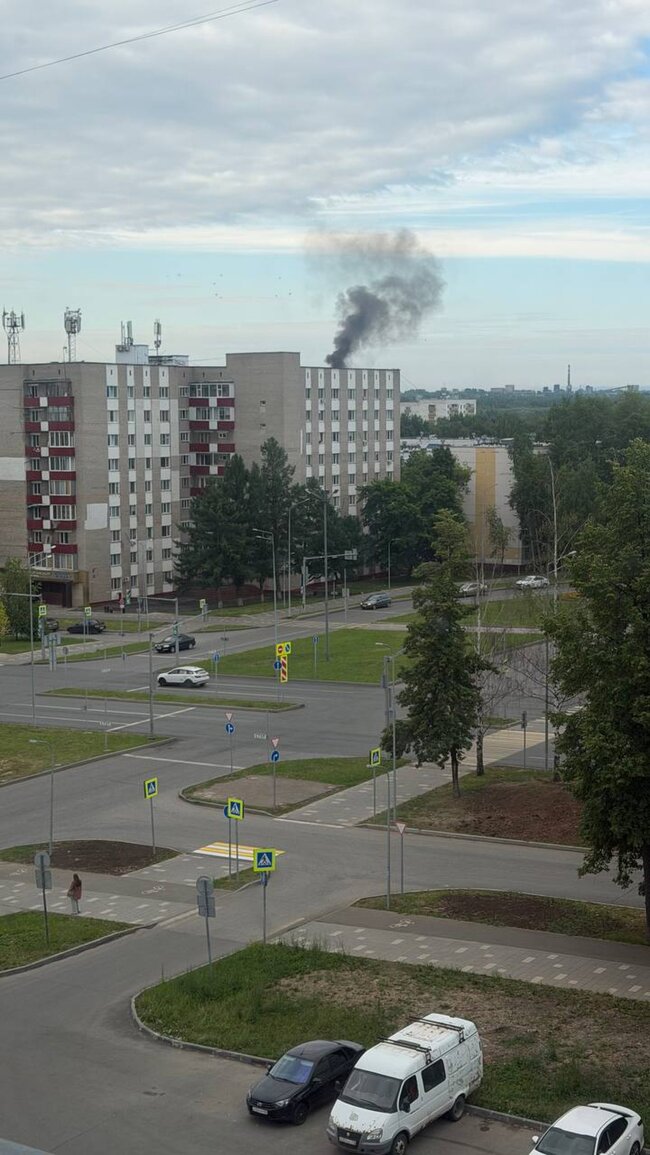
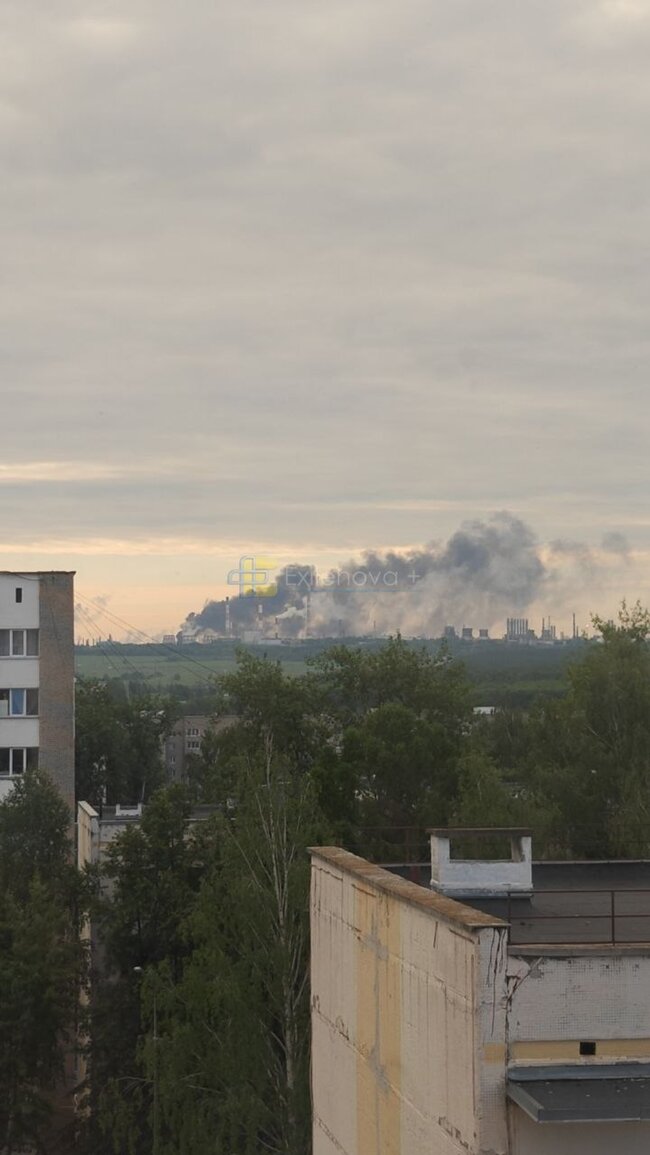
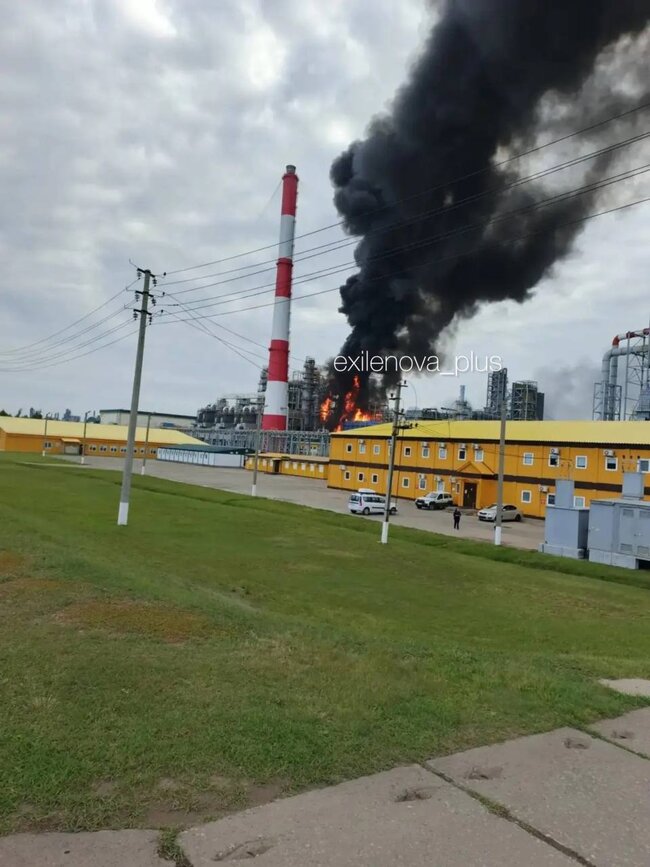
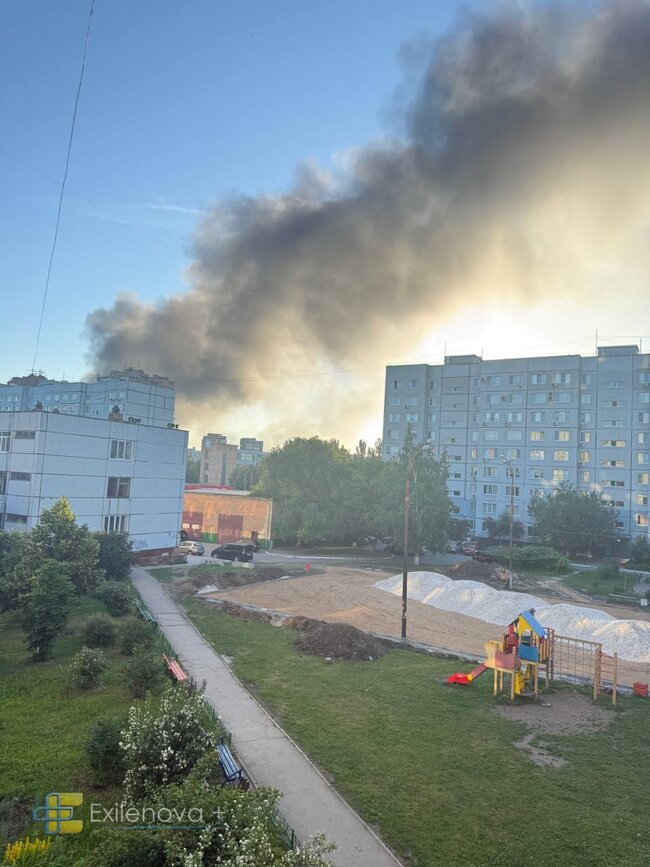
On Russia Day, drones hit an apartment building and two oil refineries in Tatarstan and ignite a fire at a petrochemical plant in the Samara region

Republic of Tatarstan

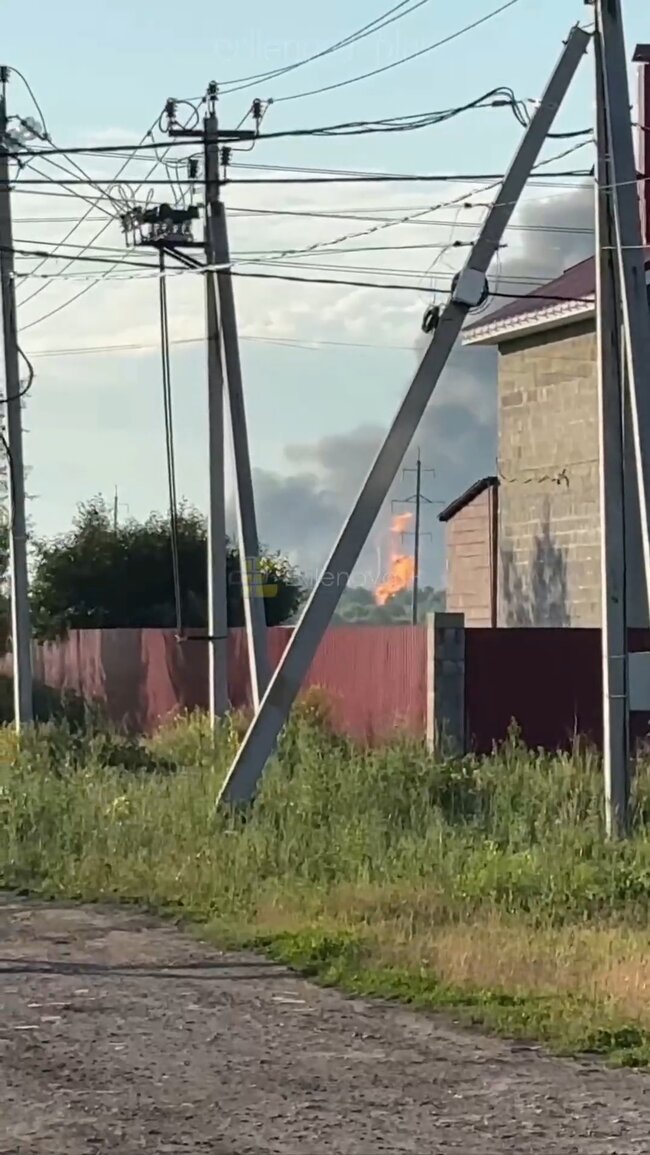
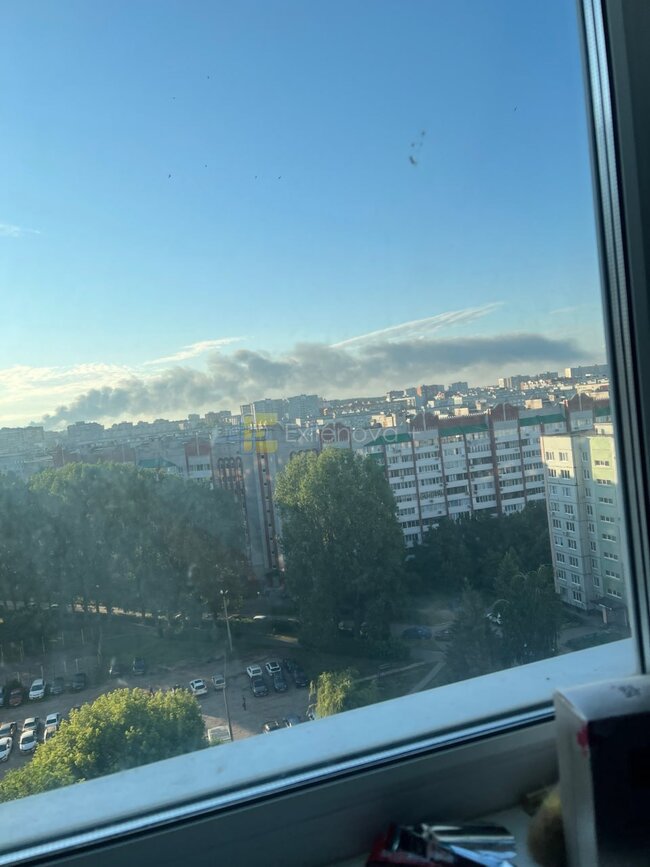
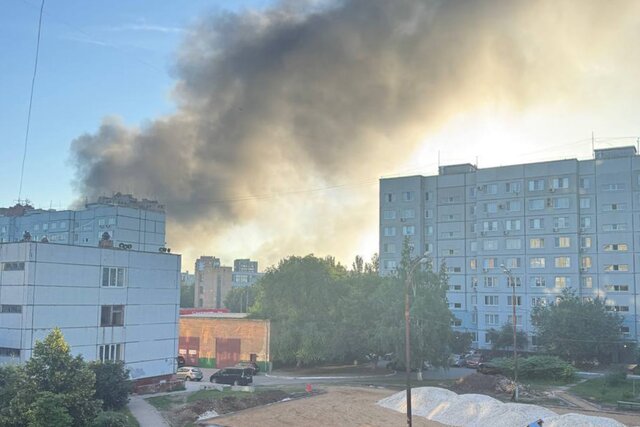
Ukrainian drones struck two oil refineries in Nizhnekamsk on June 12. The Ukrainian Armed Forces General Staff said the targets were the TANEKO refinery (Tatneft) and TAIF-NK. Ukrainian monitoring Telegram channels were among the first to report the strikes, though they initially wrote that one of the targets was the Nizhnekamskneftekhim refinery, a Sibur subsidiary. The confusion likely stemmed from the fact that the TAIF-NK plant was part of Nizhnekamskneftekhim until the late 1990s.

Nizhnekamsk
Nizhnekamsk

Local authorities stopped short of disclosing which facilities the drones had struck. Tatarstan Governor Rustam Minnikhanov said only that enterprises that had come under attack were “promptly addressing the aftermath.” Nizhnekamsk Mayor Radmir Belyaev said a fire had broken out at one of the city’s “industrial facilities.”

Nizhnekamsk

One of the drones struck a 12-story apartment building during the attack on Nizhnekamsk. A fire broke out and residents were evacuated to a temporary shelter. Four people were taken to the hospital, Belyaev said. Three suffered acute stress reactions; the fourth sustained a shrapnel wound to the lower jaw.

Samara region

The region came under Ukrainian drone attack for the second time in a week. Overnight on June 10, drones struck the Kuibyshev oil refinery (Rosneft), which subsequently halted operations. Overnight on June 12, the Tolyattikauchuk petrochemical plant — which Ukraine has struck multiple times before — caught fire following Ukrainian strikes.

Tolyatti
A fire burns at the Tolyatti plant

The Ukrainian Armed Forces General Staff said the strike was justified by the plant’s role in producing synthetic rubbers used, among other things, in the manufacture of solid rocket fuel for tactical and ballistic missiles.

Tolyatti Mayor Ilya Sukhikh said “damage was recorded” at one of the city’s industrial facilities after a drone came down. He did not specify which facility and reported no casualties.

Tolyatti

Both attacks fell on Russia Day, a national holiday celebrated across the country. Nizhnekamsk canceled its holiday events after the strike. In total, Russian forces shot down 231 Ukrainian drones overnight into Friday over 15 Russian regions, occupied Crimea, and the waters of the Sea of Azov, the Defense Ministry reported.

Ukraine has increasingly targeted Russian oil facilities and other energy infrastructure in recent months. A fuel crisis persists across 25 regions of the country and in occupied Crimea, while the geographic reach of the strikes continues to expand. On June 10, an air raid alert was declared in the Omsk region for the first time.

At Meduza, we are committed to transparency about our use of artificial intelligence in the newsroom. The story you’re reading was written by one of our living, breathing journalists and translated from Russian using an AI model configured to follow our strict editorial standards. This translation process is the result of extensive testing and refinements to ensure our English-language coverage is timely and accurate. A Meduza editor reviews every draft before publication.

If you find any errors in this translation, please contact us at reports@meduza.io.

To read Meduza’s exclusive content in English, please subscribe to our newsletter.

  •  

Russian opposition politician Ilya Yashin is founding a new party. Its logo is a cat.

Russian opposition politician Ilya Yashin’s new political party is holding its founding congress in Berlin on June 12 and 13, bringing together opposition-minded Russians from exile.

Photos from the congress — published by media outlets and delegates — showed banners bearing the name “Peaceful Forces of Russia” alongside the party’s logo, a stylized image of a cat.

The party has not yet settled on an official name. Yashin wrote that the organizing committee had proposed “Peaceful Forces of Russia” but that the name, in his words, “predictably sparked debate on social media.” Reports also emerged that the party might be called “Peaceful Russia.”

Yashin said the name carries an important historical reference. “In December 2011, speaking at a protest rally of a hundred thousand people in Moscow, Alexey Navalny said: ‘I see enough people on this square to storm the Kremlin. But we are a peaceful force,’” he recalled.

The congress is expected to elect the party’s leadership on its first day. Yashin had previously declined to name the members of the organizing committee, describing them only as “people with extensive political experience, as well as young enthusiasts.” The party also plans to present its declaration, manifesto, and charter at that time.

According to the organizers’ plan, the first day of the congress will be held behind closed doors, while the media will be admitted on the second day.

Роп

At Meduza, we are committed to transparency about our use of artificial intelligence in the newsroom. The story you’re reading was written by one of our living, breathing journalists and translated from Russian using an AI model configured to follow our strict editorial standards. This translation process is the result of extensive testing and refinements to ensure our English-language coverage is timely and accurate. A Meduza editor reviews every draft before publication.

If you find any errors in this translation, please contact us at reports@meduza.io.

To read Meduza’s exclusive content in English, please subscribe to our newsletter.

  •  

At least 200 Russian soldiers aged 18 or younger have died in the war with Ukraine, BBC confirms

At least 200 Russian servicemembers who were no older than 18 have died since the start of the full-scale war with Ukraine, BBC News Russian reported. The outlet, working alongside the independent Russian news outlet Mediazona and a team of volunteers, is compiling a named list of the dead.

In June, researchers identified the first servicemember born in 2008 to be killed in the war: Alisher Svirin, a resident of the Moscow region who died on May 1, 2026.

Svirin served as a contract soldier and worked as a machine gunner in the 123rd Separate Guards Motor Rifle Brigade, according to a brief obituary published by Roman Tikunov, a member of the city council of the Pavlovo-Posadsky district.

He was buried in the Heroes’ Alley of the Novoye Gorodskoye cemetery in Pavlovsky Posad.

When Svirin signed his contract and deployed to the combat zone is not known. Given his age, he could not have served for more than three months.

As of June 12, researchers have identified the names of 226,055 Russian servicemembers killed in the war with Ukraine, based on open-source data, BBC Russia reported.

At Meduza, we are committed to transparency about our use of artificial intelligence in the newsroom. The story you’re reading was written by one of our living, breathing journalists and translated from Russian using an AI model configured to follow our strict editorial standards. This translation process is the result of extensive testing and refinements to ensure our English-language coverage is timely and accurate. A Meduza editor reviews every draft before publication.

If you find any errors in this translation, please contact us at reports@meduza.io.

To read Meduza’s exclusive content in English, please subscribe to our newsletter.

  •  

Communist Party lawmaker warns Russia is ‘on the brink of a social explosion’ and demands a ‘clear plan’ to end the war

A State Duma deputy from Russia’s Communist Party (KPRF), Vyacheslav Markhayev, has warned that Russia is “on the brink of a social explosion,” for which “the entrenched leadership will bear full responsibility.”

Utility rates keep rising while Soviet-era infrastructure crumbles, Markhayev wrote in his Telegram channel — “funds are going not toward repairing networks, but toward yachts, palaces, and foreign assets.” In 35 years, he said, “not a single successful reform has been carried out, yet oligarchs keep multiplying and growing richer — and this is in the fifth year of the special military operation”

Turning to the subject of the SVO, which I have long avoided, I am compelled to note: corruption scandals are compounding the ongoing losses of the most active and reproductively capable segment of the population due to ineffective leadership. Attacks on our cities do not stop; their geography is expanding; the West is increasing drone deliveries, and we are forced to endure. Russia’s Presidential Administration is already declaring that the goals of denazification and demilitarization of Ukraine effectively amount to nothing more than new territories, not the whole country. If this situation continues, a social explosion and chaos become more likely. The West will inevitably exploit that to finish off what remains of Russian statehood.

Markhayev demanded that utility rate increases be halted, that officials be held genuinely accountable for failing to comply with laws and direct presidential orders, and that a “clear, public plan for ending the SVO, based on Russia’s national interests” be presented.

Renat Suleymanov, another State Duma deputy from the KPRF, had previously made similar statements, saying that “the earliest possible end to the SVO is simply necessary” because the economy would not withstand a prolonged continuation of the fighting.

At Meduza, we are committed to transparency about our use of artificial intelligence in the newsroom. The story you’re reading was written by one of our living, breathing journalists and translated from Russian using an AI model configured to follow our strict editorial standards. This translation process is the result of extensive testing and refinements to ensure our English-language coverage is timely and accurate. A Meduza editor reviews every draft before publication.

If you find any errors in this translation, please contact us at reports@meduza.io.

To read Meduza’s exclusive content in English, please subscribe to our newsletter.

  •  

City in Tatarstan cancels Russia Day events after drone hits apartment building. Ukrainian Telegram channels report fire at oil refinery.

Ukrainian drones struck the Republic of Tatarstan overnight, hitting industrial facilities and at least one apartment building, regional head Rustam Minnikhanov said. The republic’s prime minister traveled to the scene, he added.

Minnikhanov did not identify the targeted facilities or their locations. The plants are “promptly addressing the aftermath” of the strikes, he said, and “production processes have not been halted.”

Residents of the building hit by one of the drones were evacuated. Three people were injured and are receiving medical care. Minnikhanov again declined to say where the building is located. The region’s Health Ministry later reported four people injured.

The Russian security services-linked Telegram channel Baza claims the strike hit the city of Nizhnekamsk, where a drone slammed into the upper floors of a 12-story building and started a fire.

The city’s mayor, Radmir Belyaev, addressed only the threat of a drone attack, not its consequences. With an air raid alert in effect in Nizhnekamsk, all public events planned for June 12 — Russia Day — were canceled “to ensure public safety.”

Belyayev also asked residents to “follow only official communications,” not to trust unverified information, and not to spread rumors.

The independent Telegram channel Astra reported in preliminary findings that several drones were shot down over Nizhnekamsk and that there were hits in an industrial zone. Eyewitnesses said there were no air raid warnings.

The Ukrainian monitoring Telegram channel Exilenova+ published photographs and video of what it says are the aftermath of the attack on Nizhnekamsk. Exilenova+ claims that the fire following the drone strike broke out not only in the residential building but also at the Nizhnekamskneftekhim oil refinery, a Sibur subsidiary.

Another Ukrainian channel, Supernova+, reports that a fire broke out at the TANECO refinery, which belongs to Tatneft.

In total, the Defense Ministry said, 231 Ukrainian drones were shot down overnight on June 12 over 15 Russian regions, occupied Crimea, and the Sea of Azov.

In recent months, Ukraine has increasingly struck Russian oil facilities and other infrastructure. Against this backdrop, a fuel crisis has emerged in more than 20 regions of the country, as well as in occupied Crimea.

At Meduza, we are committed to transparency about our use of artificial intelligence in the newsroom. The story you’re reading was written by one of our living, breathing journalists and translated from Russian using an AI model configured to follow our strict editorial standards. This translation process is the result of extensive testing and refinements to ensure our English-language coverage is timely and accurate. A Meduza editor reviews every draft before publication.

If you find any errors in this translation, please contact us at reports@meduza.io.

To read Meduza’s exclusive content in English, please subscribe to our newsletter.

  •  

Inside Ukraine’s campaign to force Putin to the negotiating table by fall 2026

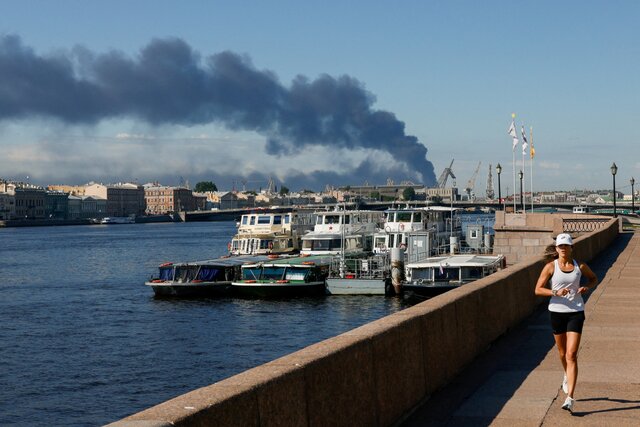
Ukrainian drone attack on St. Petersburg, June 3, 2026

’Our task now is to do everything we can to ensure that Putin is left with no other path’

On June 3, the opening day of the St. Petersburg International Economic Forum, Ukrainian drones struck the city. On June 4, Volodymyr Zelensky published an open letter to Vladimir Putin calling for a face-to-face meeting and an end to the war. The letter’s tone, however, was more combative than conciliatory. Putin declined to meet.

Sources in the Verkhovna Rada who spoke with the news outlet Ukrainska Pravda (UP) said the drones and the letter are part of a broader Ukrainian “military-diplomatic campaign” designed to convince Putin that there is no alternative to “serious negotiations.”

“Putin shows no sign of wanting to move quickly toward negotiations. But there are many indirect signals and hints from major world powers that by fall the situation could change in a way that gives him no choice. Our task now is to do everything we can to ensure that Putin is left with no other path,” a source in Zelensky’s office told UP.

’Wait until July and you will see what Ukrainian strength is’

After the U.S.–Iran war broke out, Russian–Ukrainian peace talks mediated by the Trump administration stalled. “We have to acknowledge the obvious: the previous negotiating process is all but dead. It’s frozen and going nowhere,” a member of Zelensky’s diplomatic team told UP.

Ukraine’s presidential office is working to refocus American attention on negotiations, engage European governments in the process, and consolidate its own bargaining position. Kyiv sees its advantages as the escalation of long-range strikes on Russia, the denial of Starlink satellite communications to Russian forces, and a breakthrough in medium-range drones.

The last of these has already turned the Rostov-Simferopol highway into a “road of death” and triggered a fuel crisis in Crimea. The Ukrainian military’s goal is an “operational drone blockade” that would sever the land corridor to the annexed peninsula. According to UP’s sources in the Ukrainian military high command, that process is already underway. “Wait until July and you will see what Ukrainian strength is,” one of them said, without elaborating.

Further reading

Planning for the October–November ‘window of opportunity for talks’

Zelensky has also intensified his public pressure campaign, sending two messages to Putin: one relayed privately through billionaire Roman Abramovich, and another posted publicly on Zelensky’s official website.

Abramovich had tried to broker talks between Russia and Ukraine in 2022. In May 2026, he traveled to Kyiv and met with Zelensky. According to the Ukrainian president, Abramovich wanted to find out what compromises Kyiv was prepared to make in peace negotiations. Zelensky replied that Ukraine had no intention of ceding Donbas to Russia. Zelensky also told Abramovich that he was proposing a direct meeting with Putin. UP reports that Zelensky’s message was accompanied by an “addendum” from Ukraine’s negotiating team. The outlet described its substance as follows: Russian military commanders are misleading Putin about the true situation at the front; they won’t capture all of Donbas — not by late summer or fall. And when Putin realizes Ukraine warned him, he should stand down and come to the table.

Zelensky’s open letter to Putin also called for a face-to-face meeting and negotiations. But its main goal was to press Russia on Ukraine’s terms and recapture international attention. Zelensky’s office did not expect Putin to agree on the spot.

“Nobody at Bankova [Ukraine’s presidential administration] was counting on Putin agreeing to end the war in June or July. But another date keeps surfacing in conversations with Ukrainian officials — October–November,” UP reports, citing a source from Zelensky’s diplomatic team: “That’s when everything comes together — all the military, diplomatic, and international factors — and a window of opportunity for talks might open. Somewhere before the American elections and after the Russian Duma elections.”

Members of Zelensky’s team believe that by late fall, there will be a chance to “lock in the new balance of forces on the battlefield, at least through diplomatic means,” and secure a phased end to the fighting. Ukraine’s leadership plans to use the remaining months to strengthen its military and diplomatic hand before any talks begin.

  •  

Meet Russia’s latest ‘war hero’: A brigade commander accused of running a torture camp and ordering troops to execute their own comrades

The commander of the 5th Separate Motorized Rifle Brigade (formerly the Oplot Battalion), Colonel Ramil Faskhutdinov, has been named a Hero of Russia, the Defense Ministry announced.

Defense Minister Andrei Belousov presented the award to Faskhutdinov. The ceremony was staged ahead of Russia Day.

The specific actions for which Faskhutdinov received the award were not disclosed. In late 2025, the colonel personally briefed President Vladimir Putin on the capture of Myrnograd in the Donetsk region.

iStories describes Faskhutdinov as “one of the main ‘zeroers’” in the Russian army. The outlet also said relatives of soldiers from his brigade said he personally sent wounded troops on crutches into assault units to dispose of them. Separately, some servicemen reportedly said Faskhutdinov had ordered them to execute fellow soldiers.

Astra, a Russian independent news outlet, has reported that the 5th brigade runs a torture camp for its own troops on the grounds of an abandoned mine in Ukraine’s Donetsk region. Astra also reported that commanders extort money from the troops sent there and then dispatch them on “human‑wave assaults.”

At Meduza, we are committed to transparency about our use of artificial intelligence in the newsroom. The story you’re reading was written by one of our living, breathing journalists and translated from Russian using an AI model configured to follow our strict editorial standards. This translation process is the result of extensive testing and refinements to ensure our English-language coverage is timely and accurate. A Meduza editor reviews every draft before publication.

If you find any errors in this translation, please contact us at reports@meduza.io.

To read Meduza’s exclusive content in English, please subscribe to our newsletter.

  •  

Russia has postponed its biggest air show four times since 2021. That’s right: no ‘MAKS’ in 2026.

Russia has scrapped the 2026 MAKS International Aviation and Space Salon. The government posted the cancellation order on its official legal information portal.

No official reason was given.

Russia still plans to hold MAKS in 2027.

MAKS is Russia’s largest air show. Before the full-scale invasion of Ukraine, it was held every two years in Zhukovsky, just outside Moscow. It was last held in 2021.

In 2023, the authorities said the air show would be postponed to 2024, and pushed it back again a year later. In 2025, authorities postponed it again. “There will be no MAKS,” Rostec head Sergei Chemezov said at the time. “It’s being moved to next year. You know what’s going on right now,” Chemezov said.

At Meduza, we are committed to transparency about our use of artificial intelligence in the newsroom. The story you’re reading was written by one of our living, breathing journalists and translated from Russian using an AI model configured to follow our strict editorial standards. This translation process is the result of extensive testing and refinements to ensure our English-language coverage is timely and accurate. A Meduza editor reviews every draft before publication.

If you find any errors in this translation, please contact us at reports@meduza.io.

To read Meduza’s exclusive content in English, please subscribe to our newsletter.

  •  

‘False information’ charges filed in Moscow against major business daily Kommersant, editors, and journalists — 12 cases in one day

A court in Moscow received 12 administrative reports on a single day — June 8 — alleging press freedom violations, the independent Russian news outlet Mediazona reported.

Among those charged are the Russian business daily Kommersant, accused of spreading “false information of public significance,” and the media holding company SIM, suspected of distributing information about a banned extremist organization.

Several individuals were charged under the same false-information statute, including RusNews editor in chief Sergei Ainbinder, Moskovskiye Novosti editor in chief Alexander Berezkin, and journalist Elizaveta Seryogina, who is associated with the Telegram channel “Besposhchadnyi piarchik” (“The Ruthless PR Man”).

The initial hearings in these cases are scheduled for June 29 and July 1. The specific allegations against each outlet and journalist have not been disclosed.

Publishing “false information of public significance” carries a maximum fine of up to 500,000 rubles; distributing content from a banned extremist organization carries a maximum of 50,000 rubles.

At Meduza, we are committed to transparency about our use of artificial intelligence in the newsroom. The story you’re reading was written by one of our living, breathing journalists and translated from Russian using an AI model configured to follow our strict editorial standards. This translation process is the result of extensive testing and refinements to ensure our English-language coverage is timely and accurate. A Meduza editor reviews every draft before publication.

If you find any errors in this translation, please contact us at reports@meduza.io.

To read Meduza’s exclusive content in English, please subscribe to our newsletter.

  •  

Russia fines Iran scholar Nikita Smagin for his work with Meduza, TV Rain, RFE/RL, and Carnegie Center

Iran scholar Nikita Smagin has been fined 15,000 rubles on an administrative charge of cooperating with an “undesirable organization,” he announced in his Telegram channel.

The citation was based on his work with Meduza; TV Rain, an independent Russian broadcaster; RFE/RL’s Russian service; The Insider, an independent Russian investigative outlet; and the Carnegie Center.

Smagin said the articles and interviews cited in the ruling were mostly published in 2024.

A single administrative citation for cooperating with an “undesirable organization” can serve as the basis for a criminal charge punishable by up to four years in prison.

At Meduza, we are committed to transparency about our use of artificial intelligence in the newsroom. The story you’re reading was written by one of our living, breathing journalists and translated from Russian using an AI model configured to follow our strict editorial standards. This translation process is the result of extensive testing and refinements to ensure our English-language coverage is timely and accurate. A Meduza editor reviews every draft before publication.

If you find any errors in this translation, please contact us at reports@meduza.io.

To read Meduza’s exclusive content in English, please subscribe to our newsletter.

  •  

Ukrainian strikes on Russia’s Belgorod region have killed 541 people since the invasion began, acting governor says

In an interview with Russia 24‘s local affiliate, Acting Belgorod Governor Alexander Shuvaev said 541 people have been killed in the region since Russia launched its full-scale invasion of Ukraine. Another 3,928 people have been wounded, Shuvaev added, noting that the region has come under more than 55,000 attacks by Ukrainian forces.

Regional officials last released comprehensive casualty figures in May 2025, when then-Governor Vyacheslav Gladkov reported 320 people killed and 2,500 wounded.

At Meduza, we are committed to transparency about our use of artificial intelligence in the newsroom. The story you’re reading was written by one of our living, breathing journalists and translated from Russian using an AI model configured to follow our strict editorial standards. This translation process is the result of extensive testing and refinements to ensure our English-language coverage is timely and accurate. A Meduza editor reviews every draft before publication.

If you find any errors in this translation, please contact us at reports@meduza.io.

To read Meduza’s exclusive content in English, please subscribe to our newsletter.

  •  

Russian kids can play Roblox again. They just can’t talk to anyone in the game.

Russian users of Roblox — the gaming platform unblocked in Russia on June 10 — have lost access to in-game chat.

According to msk1, a Moscow-based news outlet, the platform’s website now displays a message to Russian users: “You can only view system messages. Chat is not available in your region.

Yekaterina Mizulina, the head of the Safe Internet League, said she expects the chat to be restored for Russian users soon.

“I think the chat and voice chat will come back too,” she wrote in her Telegram channel. “We just need to be patient and wait a little. Roblox has significantly changed its operating rules and introduced age verification — this is gradually becoming available in different countries around the world. We were only expecting the unblocking by the end of summer, but everything happened much faster.”

Russia blocked Roblox in early December 2025. Roskomnadzor, the country’s federal censor, said that Roblox “is popular among pedophiles who make contact with minors directly in the game’s chats and then take those relationships into real life.” As a result, the agency added, “children in the game are subjected to sexual harassment, have intimate photos solicited from them, and are pressured into committing lewd acts and acts of violence.”

On June 9, the Ministry of Digital Development announced that it had reached an agreement with Roblox on the conditions necessary to protect the rights and interests of Russian users. The following day, Roblox was unblocked in Russia.

At Meduza, we are committed to transparency about our use of artificial intelligence in the newsroom. The story you’re reading was written by one of our living, breathing journalists and translated from Russian using an AI model configured to follow our strict editorial standards. This translation process is the result of extensive testing and refinements to ensure our English-language coverage is timely and accurate. A Meduza editor reviews every draft before publication.

If you find any errors in this translation, please contact us at reports@meduza.io.

To read Meduza’s exclusive content in English, please subscribe to our newsletter.

  •  
❌