Reading view

There Is No Neutral Ground

One of the most persistent myths in the modern world is the idea of neutrality.

We’re told our governments can be neutral. That our institutions can be neutral. That our schools can be neutral. That our courts can be neutral. That our media organisations, bureaucracies, and entertainment can all function from a position of value-free objectivity. Nothing but the brute facts.

But neutrality is a myth, and not a thing in the world that cloaks itself in neutrality is the absence of a worldview with values, ideals, and beliefs.

Every institution is built on a foundation of assumptions about truth, human nature, morality, and authority. So, the question is not whether a thing is biased, but whether the assumptions behind that thing are hidden or acknowledged.

When any society declares its public institutions are “neutral,” as many in the Western world now do, what it often means in practice is that a particular worldview has been so thoroughly normalised that it no longer appears ideological at all.

In other words, it becomes the air people breathe. It is invisible, but it is still everywhere, and in everything. And then anything that challenges it is immediately perceived as an assault on neutrality, which in turn is immediately labelled “biased.”

This is how the modern myth of neutrality functions. It’s not a genuine absence of religion and ideological conviction, but rather, the dominance of one set of convictions that refuses to admit its own existence.

Perhaps nowhere is this more evident than in the modern education system.

Government schools are often described as neutral spaces where children are simply taught “critical thinking,” free of ideological indoctrination and religious assumptions. But critical thinking does not and cannot exist in a vacuum. It always operates within a framework of assumptions about what counts as knowledge, what counts as evidence, and what counts as acceptable reasoning.

As such, students are not simply learning brute facts about the universe. They’re being formed into a way of viewing the world. They’re being given a worldview—that is, glasses through which all of life is to be viewed and interpreted.

The same is true of the media, politics, law, and every other institution and organisation that claims to operate free of ideological input.

Now, you might think it’s all just semantics. But there’s more at stake here than just a squabble about appropriate words and labels. This is because the claim to neutrality has become a form of authority in itself. It doesn’t merely describe reality; it defines the boundaries and limits of acceptable reality.

To question the dominant assumptions is not simply to disagree with the prevailing narrative. It is to be marked as biased, extreme, or even dangerous.

In this sense, the myth of neutrality operates as an ideological shield, assumed to be impartial, unbiased, and therefore, the fairest of all options amongst a world of competing ideologies.

Thus, by its amorphous and elusive definition, “neutrality” effectively transcends any and all criticism, as every critique can be dismissed as fundamentally biased.

But no society can maintain this illusion indefinitely. Sooner or later, the blind assumptions of the “neutral” institutions are revealed—in what they teach, what they punish, and what they celebrate.

And so, the question is not whether there is a bias, but what that bias is. It’s not whether a worldview will shape public life, but which worldview is being assumed. And this is exactly why the myth of neutrality has been so powerful. It persuades people to stop asking that question.

But every society must decide what it considers true, what it considers good, and what it is willing to defend, protect, and preserve.

There is no neutral ground on which to avoid that question. Only the false appearance of it.

  •  

One Nation Reaches $3 Million in “Fire the Liar” Fundraising

One Nation’s “Fire the Liar” fundraiser is close to reaching $3.5 million within 48 hours.

Although the donations have been described by 2GB as “Anti-Albo,” they are more broadly a vote against the arrogance of the Australian Labor Party.

Put simply, One Nation handed Labor their “fight the far right” clown hat back.

As I explained in the Daily Declaration on Friday, One Nation’s campaign was a quick counter-punch to Labor’s “Stop One Nation” far-right fearmongering.

What the Marxian Woke Labor Party seemed to assume would be a straightforward political win became a public relations embarrassment.

In damage control, Labor even rolled out Rudd-Gillard treasurer Wayne Swan to downplay evidence of the seismic socio-political culture shift.

Swan danced around the One Nation fundraising phenomenon by dishing out some classic DARVO to try and save face.

Visibly rattled by the massive response to “Fire the Liar”, Swan smeared One Nation as the “billionaires’ party.”

He told the Today show’s Sarah Abo, “they’re pretending they’re run on small donations, yet they’re running on money from Gina Rienheart, among others at the top end of town.”

Showing the desperation, Swan went as far as accusing One Nation of “going to [Donald Trump] Mar-a-Lago to raise funds.”

This runs parallel with Anthony Albanese’s denials.

When asked by reporters about One Nation, the career politician PM implied that Pauline Hanson was making it all up.

In reply, One Nation ran an independent audit. The result vindicated Hanson by exposing yet more of Labor’s lies.

These lies span two elections and include 13 broken pledges that have significantly weakened the country, alongside undermining Team Albanese’s delivery rate.

For example:

  1. After declaring a commitment to the LNP’s stage 3 tax cuts, Albo ditched them.

  2. Labor walked away from a national reduction of $275 off power bills per household. This is despite Albo promising on 90-plus occasions that a vote for Labor was a vote for cheaper energy.

  3. Albo also promised that “all you need is a Medicare card, not a credit card,” to see a doctor. Yet, out-of-pocket doctor bills increased, while bulk billing decreased.

  4. Labor denied knowing about how corrupt militant unions such as the CFMEU were, even though Albo and the upper echelon had been warned about the organisations’ behaviour since 2014 (see here).

  5. Budget 2026 backflips on promises not to touch negative gearing and capital gains taxation. Albanese repeatedly told reporters in 2025 that Labor had no intention of tampering with the system.

  6. The same applies to superannuation. Labor promised no new taxes, then wacked a 30% tax on balances over $3 million.

  7. Cost of living salvation deflated by government-induced inflation. Families are worse off under Labor, contradicting Albo’s core election promises.

  8. By boosting collective bargaining under the “Secure Jobs, Better Pay Act 2022,” the Albanese government reneged on a commitment to protect the employee/employer relationship.

  9. Labor abandoned protections for whistleblowers and Albanese’s promise to establish better government transparency. Illustrating this backflip is the failed push to make access to Freedom of Information harder.

  10. 10. Albo reintroduced the Cashless Debit Card system (albeit in a different form) after repeatedly virtue-signalling during the election about ending the program’s “paternalism.” The system was reintroduced following protests about rising crime in vulnerable communities.

  11. 11. Labour talked big about creating an Environmental Protection Agency (EPA) then quietly scuttled the plan. This was thanks to pressure from within. Specifically, Labor’s Western Australian Premier, Roger Cook. He had concerns about potential hits to government revenue from mining.

  12. 12. Housing and immigration made the list because it is one of the most blatant examples of Labor’s lies. Forgoing yet another nation-saving election commitment, Labor has neither reduced immigration nor increased housing availability. This includes a massive decrease in housing affordability.

  13. 13. Probably the second most alarming is Labor’s flip-flopping over Australia’s national defence. Gaps exist in operational readiness and capability thanks to funding cuts that Team Albo said Labor would never make.

This isn’t just a trickle of inconsistency for the sake of national security; it’s a flood of say one thing, do another—such as the Royal Commission into the COVID-19 response.

Labor lied about ensuring accountability for “two weeks to flatten the curve”, turning into totalitarianism, allegedly because it would indict Labor premiers.

Albo reneged on a 2022 commitment to “a royal commission or some form of inquiry.”

While a report was produced in 2023, it was toothless and largely tokenistic.

Circa criticism from the Human Rights Commission, the report failed to put Labor premiers at the time under the spotlight.

One Nation’s phenomenal political success isn’t so much a result of political genius, as it is tangible proof Australians have had enough.

Hanson: One. Albo: none.

“If we say we have fellowship with him while we walk in darkness, we lie and do not practice the truth.” 1 John 1:6.

“Take no part in the unfruitful works of darkness, but instead expose them.” Ephesians 5:11.

  •  

Nothing Left to Conserve

In October 2024, a British court convicted a man of praying silently. Not out loud. In his head. Three minutes of it, on a public street, standing behind a tree with his back to an abortion clinic, thinking about the son he’d lost to abortion twenty-two years earlier.

The police questioned him about the nature of his prayers. The local council — then being warned it was heading for bankruptcy — spent more than £90,000 of public money to secure the conviction. They made him pay another £9,000 in costs.

It was the first conviction for silent prayer in British history.

Here’s the thing you need to understand before anything else: that’s not the worst case. It’s one of the mild ones. I’m starting with the mild ones on purpose, because the strength of the pattern isn’t in the outrages — it’s in how ordinary the targets are.

Four people who broke no reasonable rule

A charity worker in Birmingham, December 2022. She’d spent twenty years volunteering with women in crisis pregnancies. Police arrested her on a public street after she said she “might” be silently praying. Acquitted February 2023. Arrested *again* in March. Paid £13,000 in compensation by West Midlands Police in August 2024. Charged a third time in December 2025 under new buffer-zone law. For standing on a footpath, possibly thinking.

Jordan Peterson, August 2023. Ontario’s Divisional Court ruled that the College of Psychologists could order him into mandatory social-media re-education — at his own expense — or lose his licence. The trigger was tweets about contested political topics. The Court of Appeal refused to hear it. The Supreme Court of Canada refused the final appeal.
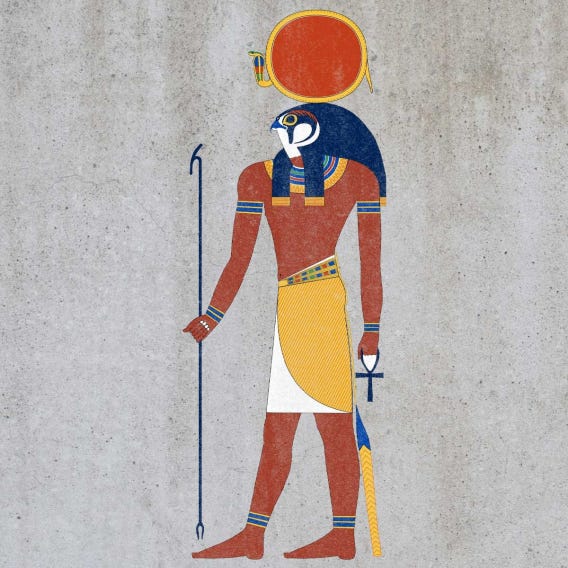
Dr My Le Trinh, a Sydney GP of twenty-seven years with not one prior complaint. Suspended in September 2021 on the basis of an anonymous “John Smith” complaint whose email bounced, whose phone was disconnected, whose address was blank — and which the regulators wouldn’t confirm was real. The evidence attached was a prescription she’d left at her local pharmacy, which the pharmacy says was collected directly by the regulator’s own agents. “John Smith” had no lawful way to get that document. Which means the complainant was inside the regulator. The case went ahead anyway.

None of these people said or did anything a reasonable person would call threatening, harassing, violent, or dangerous. None had any criminal history. And every power used against them — the protection orders, the licensing boards, the buffer-zone laws — was sold to the public on a promise. The promise was that these powers would be aimed at genuine threats. Real harm. Public order.

The architecture was sold as protection against serious harm. It is being used against silent prayer, social-media posts, and people expressing religious belief on a street corner. The gap between what it was sold as and what it actually does — that’s the thing to be explained.

It’s not four cases. It’s the whole machine.

If it were four cases, you could call it bad luck. It isn’t four cases.

Australia’s Section 18C bans speech that “offends” or “insults” on racial grounds. Thirty years on, its biggest scalps are a conservative columnist (Andrew Bolt), some university students who objected to being told to leave a computer lab because of their race, and a cartoonist (Bill Leak) for a drawing about parental responsibility. It has never been turned on an academic department hostile to Anglo students, Islamic extremists, or on any left-wing publication’s editorial line.

Britain’s Public Order Act and Communications Act now generate around thirty arrests a day for things people said — roughly twelve thousand a year, up from 7,734 in 2019. A parallel system of “non-crime hate incidents” has logged over 133,000 citizens in police files since 2014, including children too young to be charged with anything. These same laws have not come down with equal weight on marchers openly chanting for the death of Jews, or clerics preaching execution for leaving Islam, or academics calling to dismantle “whiteness.”

Canada’s old Section 13 tribunal, before it was repealed in 2013, became an instrument used almost entirely against right-wing speech — with a near-perfect conviction rate.

Australia’s ABC operates under a legal charter requiring impartiality. Review after review has found systemic editorial drift on climate, immigration, Indigenous policy, Israel-Palestine. The charter isn’t enforced. It’s interpreted — by an institution staffed almost entirely from one side.

And it keeps going: charity commissions, registration boards, university discipline panels, platform moderation, immigration discretion, the curriculum authority in every English-speaking country. Same direction, every time.

Two things are happening at once

Most people who notice this reach for one of two explanations. Either “they’re operating in bad faith, and we’re playing fair” — the moral story. Or “vague rules always get captured by whoever staffs the enforcement” — the structural story. Both have something to them. Neither, on its own, is enough.

What’s actually happening is two separate asymmetries running at the same time, and feeding each other.

The first is about motivation, and you can see it just by reading the news. One coalition treats getting and using institutional power as the whole point. The other — for reasons of temperament, internal disagreement, fear of the press, or genuine principle — mostly doesn’t. So even when conservatives hold the offices, they don’t drive them the way their opponents do.

The second runs underneath, and it’s the one almost nobody talks about. Vague rules have to be interpreted. Interpretation needs interpreters. And the people who fill those interpretive jobs — the tribunal members, the ombudsmen, the commissioners, the senior officials — come out of credentialing pipelines that have leaned one way for two generations, into an information world that leans the same way across journalism, the universities, the professional bodies, and the NGOs. So even the sincere ones, the genuinely fair-minded ones, produce one-directional results. Their whole sense of what counts as fair, neutral, harmful, or legitimate was shaped by an environment that filtered out one set of starting assumptions before they ever sat down to decide.

These two don’t pull against each other. They compound. The motivational gap means nobody pushes back. The structural gap means the baseline output is already tilted before anyone would push. Fix one and leave the other, and the machine keeps producing exactly what it produces now.

The rule book looks neutral. The referees are not.

That’s the whole problem in one line, and it’s why writing another column about hypocrisy changes nothing. Hypocrisy isn’t the mechanism. Structure is.

So the real question isn’t “why are they so brazen?” It’s two questions, and they have different answers. Why does one side never use the power it holds? And why does the machine tilt even when the person operating it is honest?

Part 2 takes the first one: why conservatives, handed the same levers, keep declining to pull them — and why the rare moments they do (Florida under DeSantis, Washington under Trump) get treated as the end of democracy rather than as someone finally playing by the established rules.

This is Part 1 of a four-part series adapted from the Prothean Institute brief “Nothing Left to Conserve.”

  •  

Anti-Racism Just Means Anti-White

Have you noticed that so-called “anti-racism” campaigns, supposedly designed to end racism, sound admirable in theory, but almost always function the same way in practice?

While cloaked in the euphemistic language of diversity, equity, and inclusion, these sorts of things often smuggle in assumptions drawn from the failed and fraudulent ideologies of Marxism and Critical Race Theory.

Rather than treating “racism” as an individual issue, they reframe society as the struggle between the oppressor and the oppressed, and that, largely defined by race. As a result, “anti-racism” initiatives often appear less concerned with eliminating racial discrimination than with redistributing it.
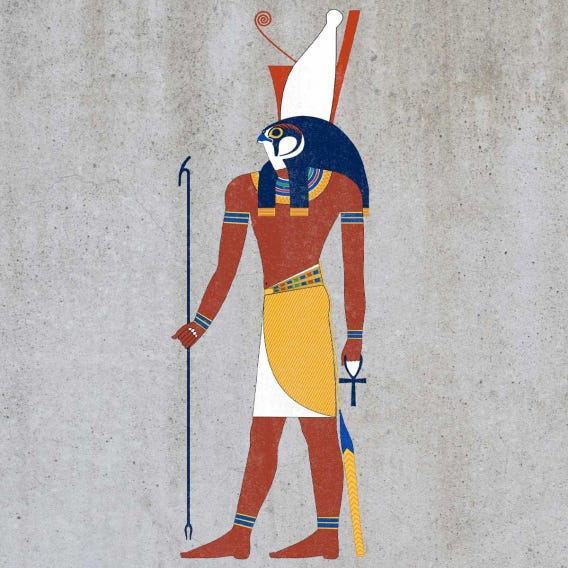
This is because, at the heart of their worldview, racism is not primarily understood as an individual vice but as a systemic condition. Beneath this lies an implicitly Lockean view of human nature: that people are fundamentally the same, and that the differences we observe between individuals and groups are ultimately the product of environment, upbringing, and social circumstances rather than any deeper distinctions.

As such, because Western institutions were historically built and governed by White-majority populations, those institutions are presumed to be inherently racist, as it is argued, every institution disproportionately favours its founding group—especially if that founding group is White.

Thus, any and all disparity in outcomes between racial groups is often treated as evidence of discrimination and racial inequality. And yet, if unequal representation is automatically assumed proof of prejudice, then the same logic could be applied to virtually any visible characteristic—not just racial heritage.

If people with brown hair occupied a disproportionate number of leadership positions, would that prove society systematically favoured brunettes? Most people would reject this as absurd. And yet, whenever race is involved, many are expected to accept precisely the same argument.

That’s why so many of these “anti-racist” initiatives appear less interested in raising people up than cutting successful people down.
The influence of this worldview can also be seen throughout our public institutions. Policymakers, bureaucrats, academics, and senior officials frequently argue that disparities between racial groups are evidence of systemic injustice and that institutions must actively work to correct those imbalances.

In recent decades, concepts such as “institutional racism,” “intergenerational trauma,” “White privilege,” and “systemic discrimination” have become embedded in the language of government agencies, police forces, universities, and large corporations. The assumption underlying these initiatives is that historical injustices continue to shape present-day outcomes and that race-conscious policies are therefore necessary to achieve equity.

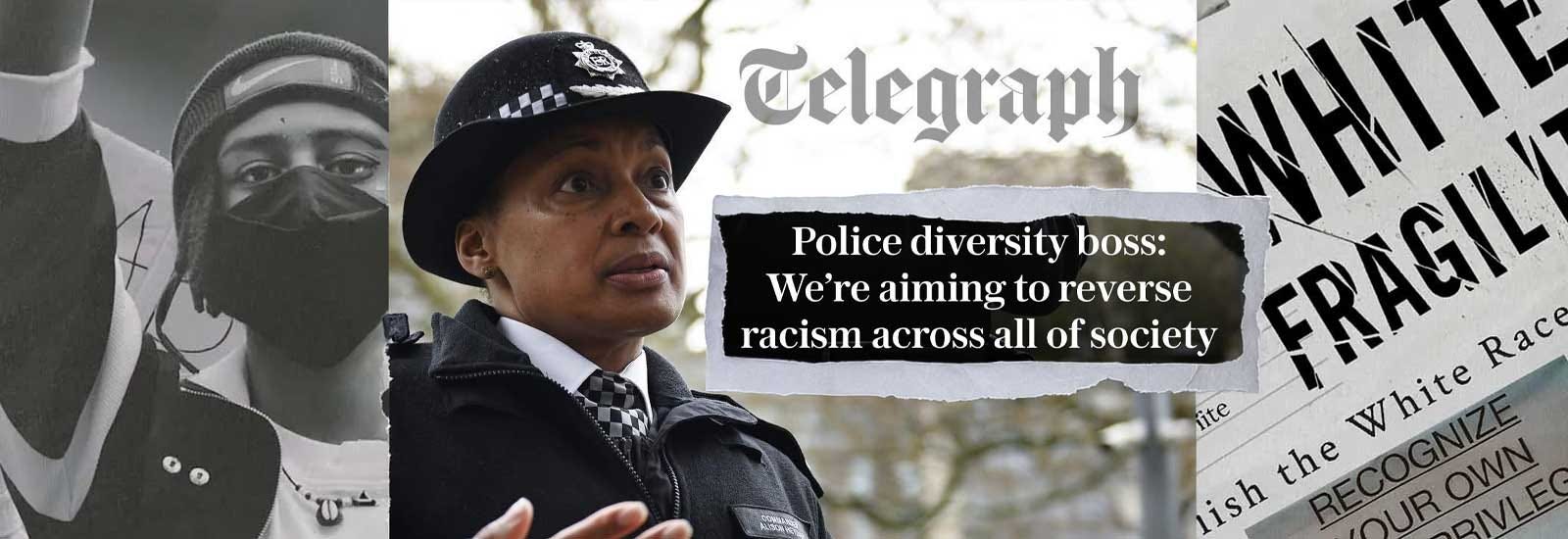
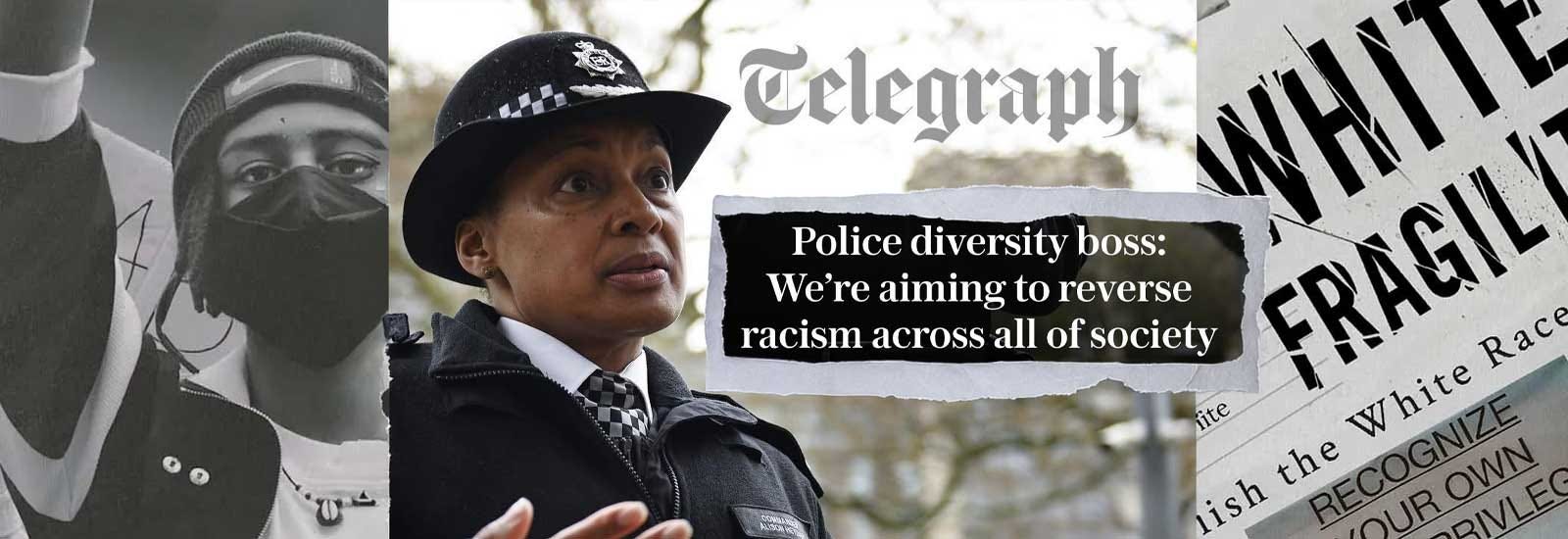
Concepts such as “White privilege,” “White fragility,” and “systemic racism” are often deployed within an anti-White framework that interprets social and political life through the relationship between dominant and subordinate groups. As such, their practical effect is to encourage institutions to judge people less as individuals and more as members of racial categories that can be reduced to two: White and non-White.

What this approach does, however, is shift society away from equal treatment under the law and towards differential treatment based on group identity. Once institutions begin viewing individuals primarily through the lens of “oppressed” and “oppressing” race, the Christian principle of impartiality becomes impossible to maintain.

As such, so-called “anti-racism” campaigns often resemble efforts to impose equal misery rather than eliminate imagined discrimination. Instead of judging individuals according to their own merit, they assign collective guilt and collective innocence, and seek to treat people based on law and policy.

While it is sold as an effort to “level the playing field,” in practice, it does the opposite. It doesn’t balance the scales; it disproportionately disadvantages White men under the guise of racial equality—its propagators admit as much when they use terms like “reverse racism.”

May be an image of text

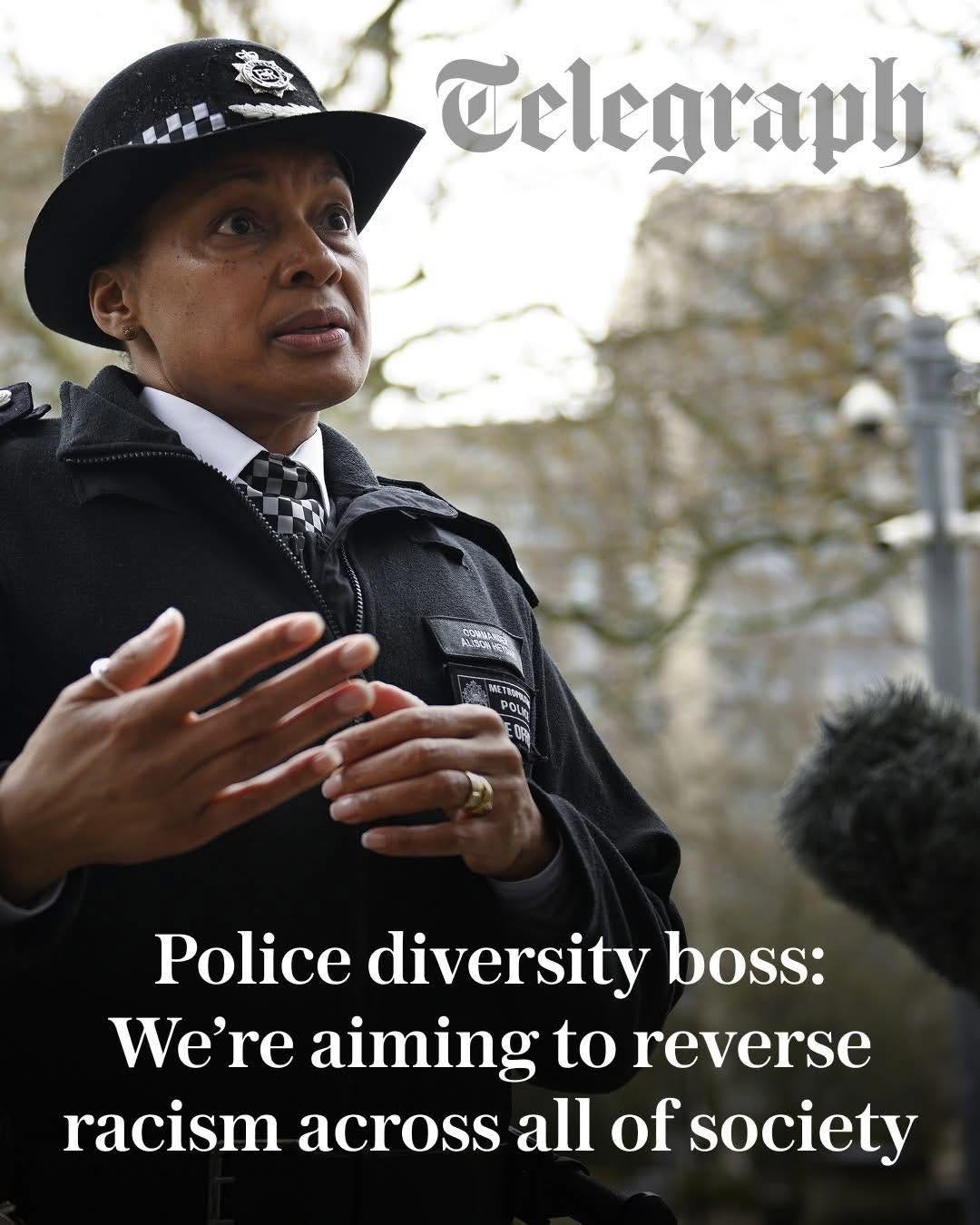
Reversing racism is not synonymous with ending racism. To reverse racism is to discriminate against those deemed responsible for racism, or against those said to benefit from it. And of course, under the dominant anti-White narrative of our age, that category consists exclusively of White people.

For decades, we’ve been told that society is built around systems that favour Whites. We’ve heard endless warnings about White privilege, White supremacy, White fragility, White power, and every other variation of the same.

So, if the problem is a system that allegedly benefits White people, then “reversing” that system necessarily means disadvantaging White people. It’s just legitimising and legalising the mistreatment of White people in their own homelands.

That is what many anti-racist policies increasingly amount to—not equality before the law, but race-conscious discrimination justified in the name of historical correction.

History offers little reason for optimism whenever societies begin sorting citizens into categories of collective guilt and collective innocence. These systems do not reduce division—they deepen it.

And this is what we are seeing across the Western world today. Across Britain, Europe, North America, Australia, and New Zealand, anti-White policies are becoming increasingly common in public institutions, corporations, and educational systems.

But it’s not only that these policies are unjust, many have also warned they’re creating the very conditions for future conflict. The irony here is that what is introduced in the name of racial harmony may very well end up producing the opposite effect. When institutions openly favour some groups and disadvantage others on the basis of their race, resentment will inevitably accumulate. When that bleeds into law enforcement, the resentment is intensified.

People will tolerate many things, but they rarely put up with unequal treatment indefinitely. History offers us little reason to believe these arrangements end peacefully. In fact, we know that societies become profoundly unstable when citizens are divided into categories of collective guilt and collective innocence, privileged and oppressor. So, far from healing supposed racial tensions, “anti-racism” policies risk intensifying resentment.

Once collective guilt and collective victimhood become the organising principles of public life, racial division becomes a certainty. The path being pursued across much of the Western world is therefore not one of reconciliation but of increasing racial division, suspicion, grievance, and resentment—on all parts.

It is a dangerous experiment, and it’s one that risks turning Western nations into powder kegs and leaving future generations just one spark away from the devastating consequences—if it holds out that long.

Image

  •  

Death By Division

It’s been said, “The Left will always win because they have something the Right doesn’t: unity.”

It’s true. The so-called “Left” is more than happy to align itself with Islamists, Hindus, refugees, immigrants, environmentalists, atheists, radical feminists, LGBTQAI++ activists, abortionists, trade unions, anti-capitalists, globalists, and countless other groups that often share little in common beyond one crucial point—a point that makes all the difference.

One clear reason the Left can appear more unified than the Right is that it is often bound together not by a coherent shared vision for some ideal good, but rather by a shared hatred. That is, by a common sense of what or who constitutes the central social problem to be confronted, dismantled, and defeated.

The Right, on the other hand, is generally more united around ideals, principles, and standards. While a wide range of varying groups can all agree on what they oppose, finding agreement on what should replace it is much more difficult. And that is how those on the Right often define themselves, not merely by what they are against, but what they seek to establish or restore.

On the other hand, when dismantlement and destruction become the chief purpose, there’s no shortage of potential allies. That is why the Left has so little problem siding with those who would fundamentally oppose them in any other context.

Of course, they don’t have the same ultimate vision of the world, but they share a common foe and a common hurdle that is preventing them from ever reaching their desired outcome. Whatever their “eutopian vision” of the world may be, Western civilisation—or more precisely, Christianity stands in their way.

There are countless ways to dismantle or undermine a Christian society, and that creates broad opportunities for cooperation between groups that otherwise would have very little in common. Differences are put aside, provided they are all working in some way to the same destructive end.

We often mock the unity of our opponents with memes like “Chickens for KFC,” but if both the chickens and the restaurant become convinced they share a common enemy, then the old saying proves true: “The enemy of my enemy is my friend.”

On the Right, the dispute usually centres on the remedy. Even when there's agreement that cultural decline exists, there's often significant disagreement about the primary cause and the necessary cure.

As a result, the Right tends to be far more fragmented than the Left. While their standards may differ on the Right, and even if, only to a small degree, each faction generally believes its own standards are higher—and that the abandonment of those standards is the chief cause of the cultural and social decline they seek to reverse.

This is the reality in which we operate—and, whether it’s a good thing or not, it leaves the Right at a significant disadvantage. “Divided we fall,” as it’s said. The more pressing question, then, is not whether differences exist or even whether they matter, but whether they can be properly ordered, and at times, overlooked for the greater good?

If there is genuine agreement on the nature of the cultural crisis, then the first task is not to resolve every internal disagreement we might have, but to recognise what is at stake in failing to act in unity at all. Movements rarely succeed by achieving perfect ideological harmony in advance. They succeed by identifying a shared measure of concern that compels cooperation despite remaining differences.

On that basis, the issue is not whether all factions of the Right can or should become identical in outlook, but whether they are capable of subordinating secondary disputes to a more immediate and common task.

We don’t need to put aside internal debate; it simply cannot be allowed to become so paralysing that we are virtually ineffective. It would just be ensuring our own death by a thousand factions.

Perhaps the better way to think about it is what comes first. What issues must be dealt with together now, and what disagreements can wait until later without putting at risk the civilisation, culture, and institutions that all factions say they want to preserve?

  •  

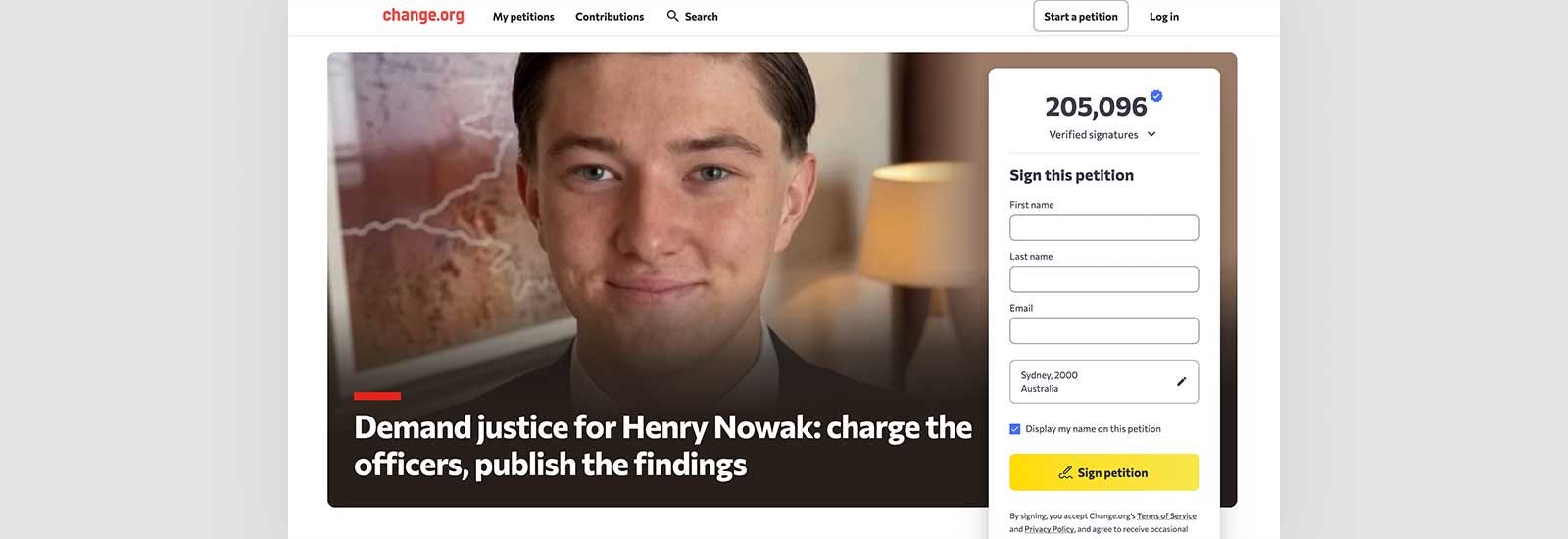
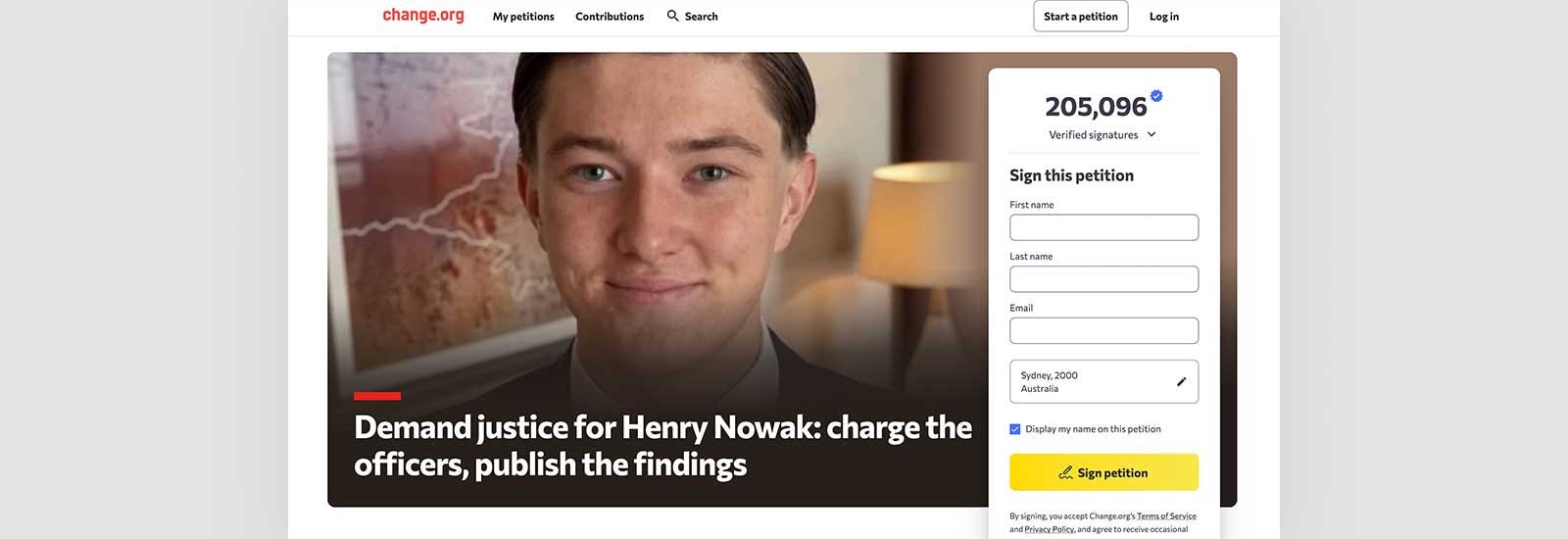
More Than 200,000 Sign Petition Demanding Charges Against Officers Who Handcuffed Henry Nowak

A petition calling for the arrest of the police officers who handcuffed 18-year-old Henry Nowak after he was stabbed has attracted more than 200,000 signatures since its launch.

The petition states, that on December 3, 2025, officers arriving at the scene failed to recognise that Nowak, an accountancy student at the University of Southampton, was the real victim and instead placed him in handcuffs as he lay critically wounded.

Police body camera footage captured Nowak telling officers that he had been stabbed, to which one officer can be heard responding, “I don’t think you have, mate.”

The petition claims police instead accepted the account given by Nowak’s attacker at the scene, who accused Nowak of being “racist,” an accusation later rejected in court.

The court found Vickrum Digwa guilty of Nowak’s murder and sentenced him to life imprisonment. The petition argues that the verdict has established that Nowak was innocent and that the officers who attended the scene failed in their duty to provide assistance.

“The lie [Digwa] told that night has been completely rejected by a jury and a judge,” the petition states. “Henry was innocent. He was the victim. And the officers who were supposed to help him failed him completely.”

While the incident is under investigation by the Independent Office for Police Conduct (IOPC), the petition notes that the officers who handcuffed Nowak are being treated as witnesses rather than suspects. It also claims that one officer has resigned while three others remain in active service.

Campaigners say this is inadequate and are calling for criminal proceedings against the officers involved in the arrest. The petition urges the Crown Prosecution Service and the Home Secretary to consider charges of manslaughter, criminal negligence, and dereliction of duty.

Signatories are also demanding that the IOPC publish its final report in full, without redactions.

The petition also cites Nowak’s father, Mark Nowak, who said his family should no longer have to fight for answers.

“Henry’s father, Mark, has said his family should not have to fight for the truth anymore,” the petition states. “He’s right. They shouldn’t.”

You can view the petition here.

  •  

Former UK PM: Unelected Bureaucrats Are Making All the Decisions

Liz Truss, branded by the BBC as Britain’s shortest-serving Prime Minister, isn’t fading into obscurity the way the bloated bureaucracy might have hoped.

Truss became PM in 2022 after once-conservative all-star Boris Johnson was booted by his party, allegedly due to multiple scandals.

The biggest of which was Johnson’s supposed COVID-19 lockdown breaches. Something he often refers to as “Partygate.”

Johnson has since quit politics entirely, insinuating that he was usurped.

If Liz Truss’s own 10 Downing Street experience is on the level, Johnson’s claim isn’t outside the realm of probability.

Speaking with TalkTV’s Jeremy Kyle last month, Truss dropped a proverbial bomb on the bureaucracy, stating, “When you are a junior minister or a cabinet minister, you do not have that much power to change things.”

You either go along to get along, she explained, or you resign.

For instance, she said, “I argued against all the net-zero stuff. I argued against all the environmental regulation stuff.”

Truss was (and still is) opposed to Environmental Social Governance (ESG) policies, solely because they’re damaging Britain.

She also pushed for bigger defence budgets and reduced migration, only to be strong-armed by what Truss has labelled elsewhere as “Treasury Orthodoxy”.

The “officials in the Treasury, the unelected bureaucrats, are incredibly powerful,” Truss told Kyle.

“When I was Prime Minister, I wanted to restrain welfare spending. I wanted to get fracking.

“I thought that when/if I get to be PM, I can call the shots.”

Not so, Truss continued.

“I then discovered, actually, I can’t. Because there are people there determined to continue with the same failed ideology.”

Sheepish, if not opposing her policies outright, Truss said, the bureaucrats
“created a deliberate narrative, saying, ‘She’s got the wrong ideas. She’s done things too quickly.”

They considered her budget too “chaotic.”

It wasn’t, Truss asserted. They just didn’t like it.

Being undermined from within, Truss recalled, wasn’t something she found out about until she was no longer in office.

There was no time to investigate it all, she clarified.

Most of her opponents, Truss said, were people who wanted Rishi Sunak (then a backbencher at the time) to run the country.

They wanted Rishi. The goal was to push through policies like “mass migration, net zero etc.”

The enemy was within.

“I had two different forces I was fighting,” Truss said.

“One was the permanent bureaucracy (something Nigel Farage calls ‘the blob’ – swamp; deep state), and the other was people in the conservative party, who didn’t actually support Conservative policies.”

They used the Bank of England tripping market chaos at the time to undermine confidence in her leadership and “get rid of me”, Truss added.

Describing the unelected bureaucracy as permanent bureaucrats, she said, “That’s the way they operated.

“The only thing I’d done wrong was actually underestimate just how vicious and conniving they are.”

In the case of the current Labour Government, Truss described Keir Starmer as a “weak individual.”

“The decision-making is driven by the permanent bureaucrats in Britain, and you can see that on everything. It’s in the foreign office, the home office, and the treasury.”

Truss then stated that the last one is the “most powerful of the lot.”

Citing scandals, she said, “These people aren’t elected. That is the deep system problem we have in Britain.

“These people are ideologically opposed to the kind of change Britain needs,” Truss explained.

“The problems are deeper than just the political parties.

“We need a mass movement that wants to change the country to take on the blob that has been ruining Britain.”

Adding to her argument, Truss said, “It’s not just about parties, it’s about ideas.”

Talking about the need for “bold leadership.”

“I’m seeing too much status quoism.”

Stating that she knew there was a problem with the bureaucracy (blob), she just didn’t know it was that bad, Truss explosively declared:

“That’s what I discovered at 10 Downing Street. The elected Prime Minister is not the most powerful person in the country.”

  •  

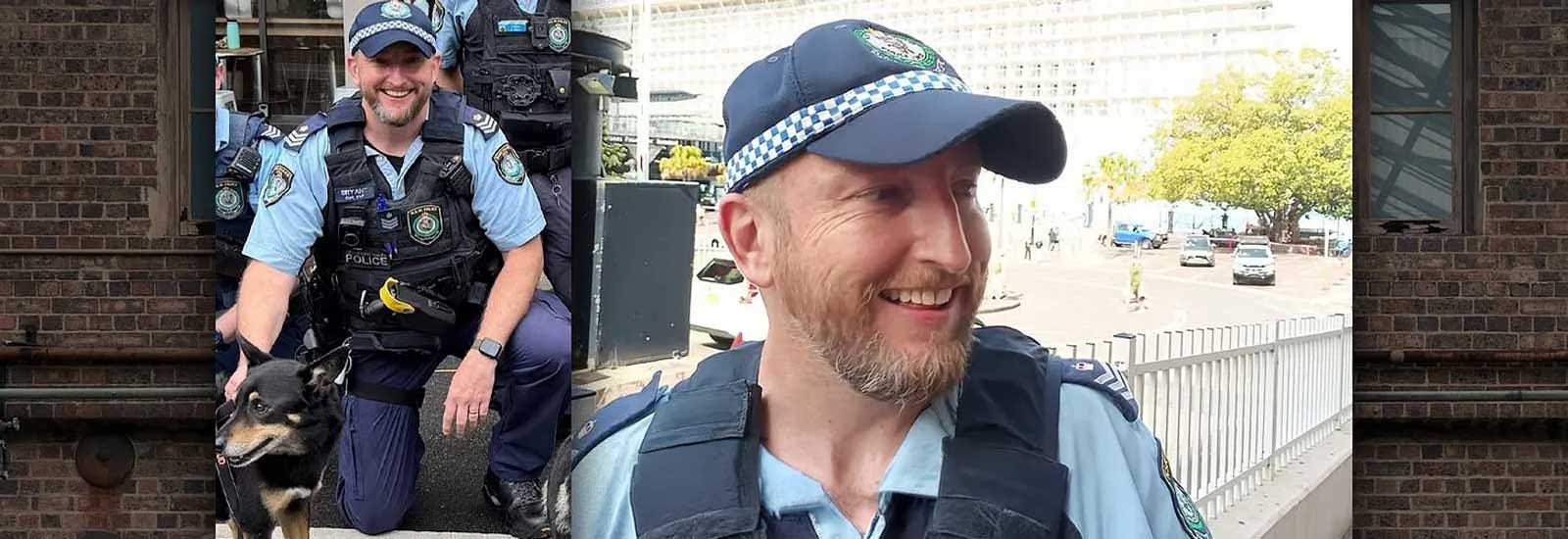
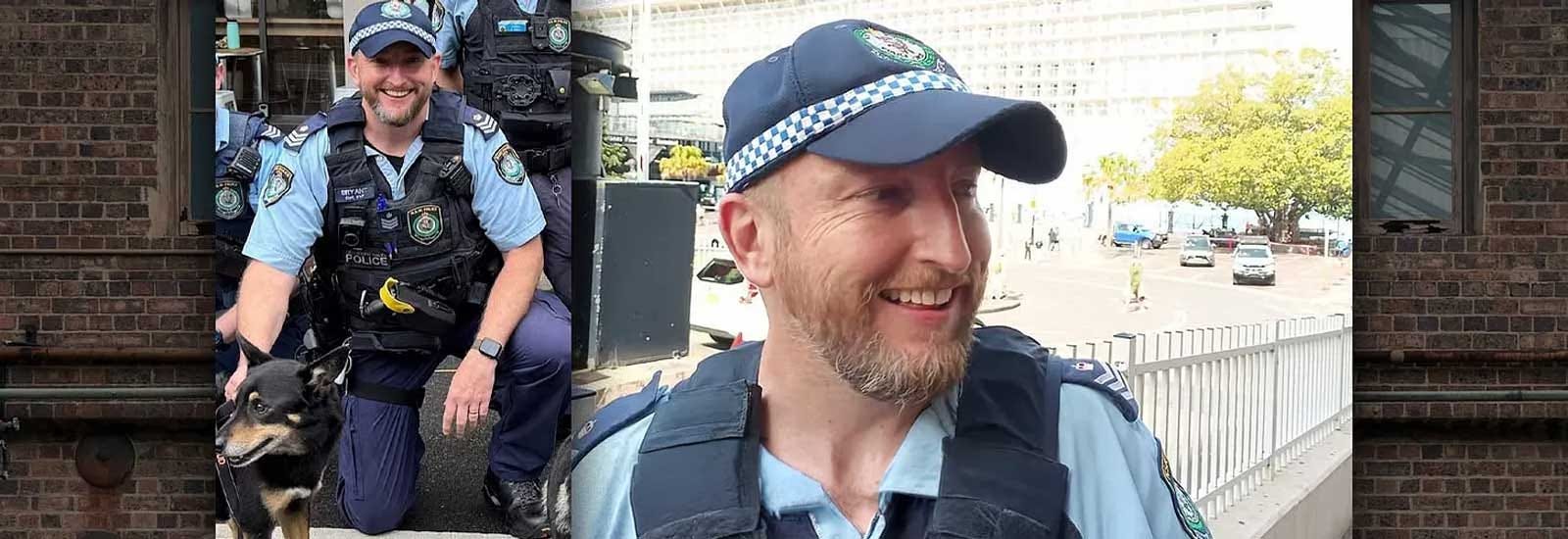
Officer Sentenced to Two-Year ICO After Teen on Stolen Motorbike Hit His Parked Police Car

Sergeant Benedict Bryant, the Sydney police officer found guilty of dangerous driving causing death after an Indigenous teenager riding a stolen motorcycle collided with his parked police vehicle, has been sentenced to a two-year Intensive Corrections Order (ICO), including 500 hours of community service.

An ICO allows eligible offenders to serve a prison sentence of up to two years in the community under strict supervision.

Every ICO demands that the offender commit no new offences and submit to strict supervision by a Community Corrections officer. Under these rules, the offender must report to their supervisor as directed and strictly obey all instructions regarding where they live, who they associate with, what jobs they hold, and any mandatory rehabilitation or drug and alcohol testing.

What’s more, courts must attach at least one extra condition—such as a curfew, home detention, electronic monitoring, or up to 750 hours of community service work—making an ICO a highly restrictive community-based sentence.

Judge Jane Culver handed down the sentence for the death of 16-year-old Jai Kalani Wright. In her ruling, Judge Culver found that Bryant ought to have known the teenager would ride in a dangerous manner to avoid apprehension.

However, she also noted that Bryant “honestly but mistakenly” believed the teen could not travel beyond the end of the bike lane. The judge acknowledged that Bryant’s intention was to intercept the rider and that he had “no idea” Wright was going to strike the bollard at the end of the lane.

Judge Culver further noted that Bryant is of good character, has a limited criminal and traffic history, and has served the community over several decades.

Speaking outside court following Friday’s sentencing, Bryant’s lawyer, Paul McGirr, confirmed the decision would be appealed and said “a lot of police and members of the community will be shaking their heads at this decision”.

“This decision fails the pub test,” he said.

“I don’t want to add grief to the family, a life has been lost. … I’m not trying to rub salt to the wounds, (but) if people were at home not doing home invasions and stealing vehicles, we wouldn’t be here.

“This matter is far from over and my client … (is) going to fight for justice to be delivered.”

Following the sentencing, an active police officer told Caldron Pool the outcome could have far-reaching consequences for frontline policing.

According to the officer, the decision may discourage police from responding to incidents under lights and sirens or pursuing offenders in stolen vehicles.

“Who will want to do either,” the officer said, “if, when things go wrong, you’re the one who ends up with a prison sentence?”

The officer argued that the ruling could affect not only individual officers but the broader culture of policing in Australia.

“Nurses and teachers go on strike for better pay and conditions,” the officer added. “Should police go on strike too, so they don’t risk being sent to prison for doing their job? How would the public feel about that?”

Bryant has served on Sydney’s frontline since 1999 and has been stationed at Redfern since 2008. During that time, he has worked with vulnerable members of the community, mentored younger officers, and responded to situations many would find confronting.

The legal proceedings have already placed a significant financial burden on Bryant and his young family. Bryant supports his wife, two children, and his mother-in-law, who suffers from advanced dementia. He has personally spent approximately $130,000 on legal expenses, with appeals and potential retrials expected to cost many thousands more.

Following the initial sentencing, a fundraiser was established to assist Bryant and his family with mounting legal costs. The campaign was launched by retired NSW Police Chief Inspector Paul Fownes APM OAM.

It is the second fundraiser Fownes has organised on Bryant’s behalf. The first campaign, which raised more than $57,000, was removed by the hosting platform within 24 hours, and all donations were refunded.

According to the platform, the fundraiser breached its Terms of Service, specifically Section 8.10, which prohibits fundraising for the legal defence of criminal offences, including murder, assault, and offences against minors.

You can view the fundraiser here.

  •  

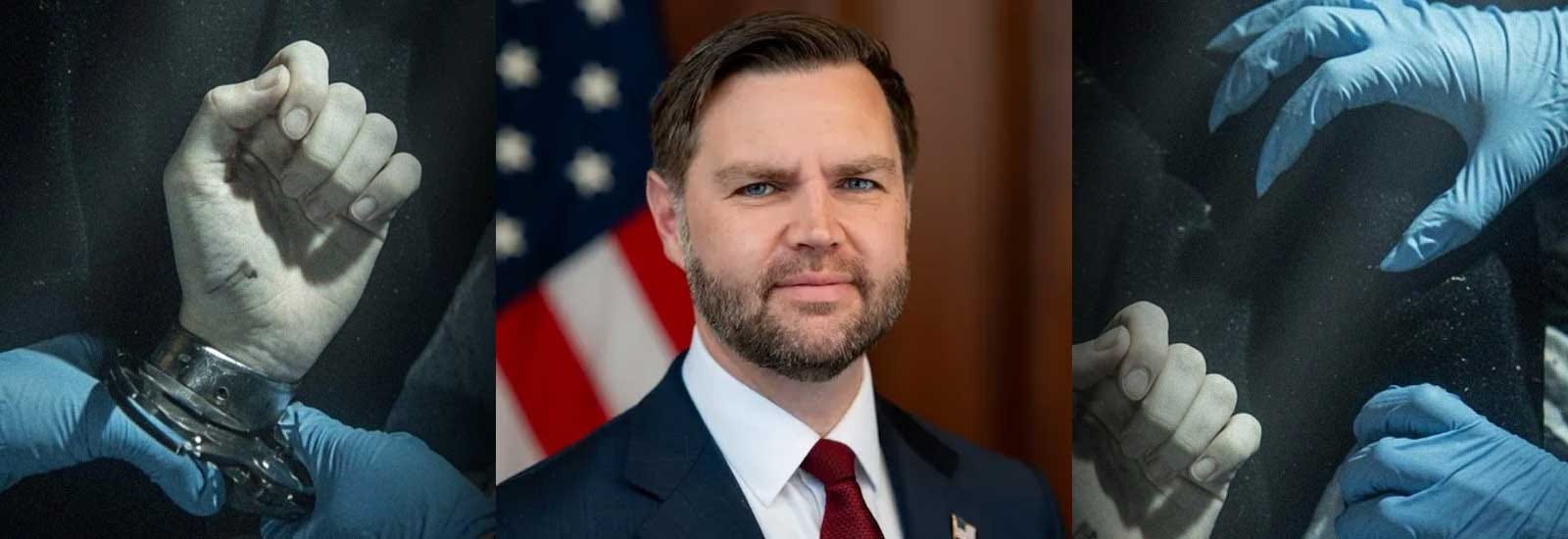
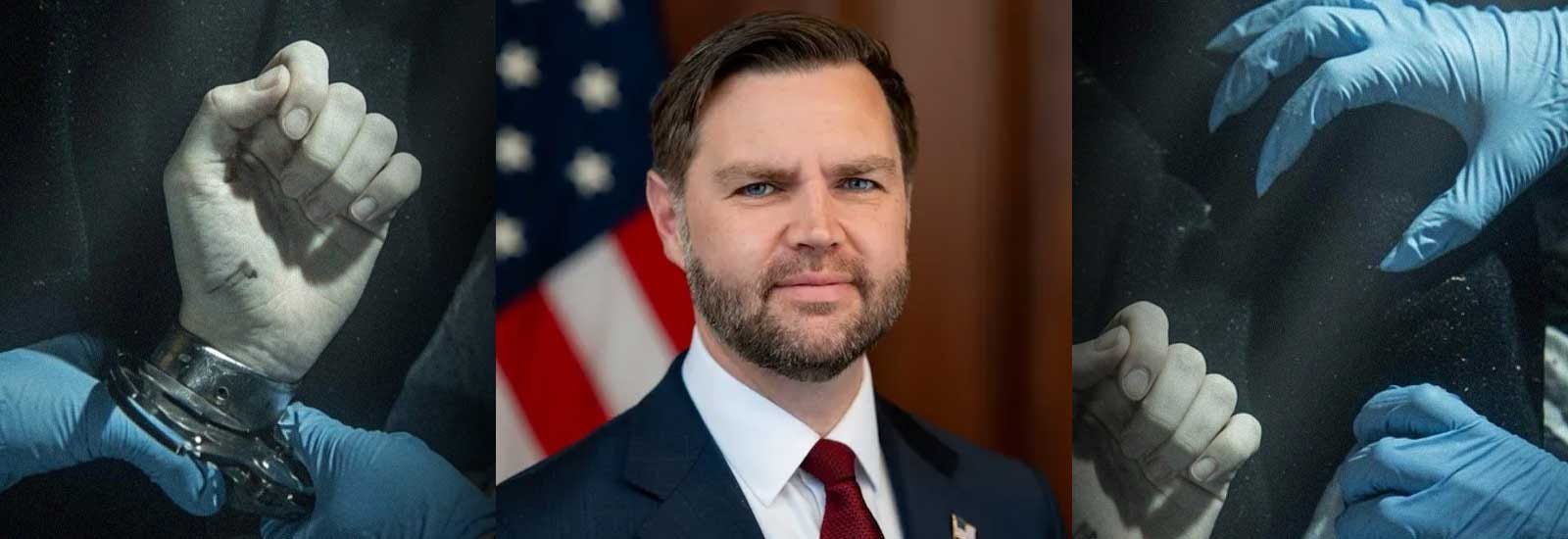
Vance: “Henry Nowak Died the Same Way a Civilization Dies”

United States Vice President J.D. Vance has commented on the murder of 18-year-old Henry Nowak, who died after being handcuffed by police while bleeding from fatal stab wounds inflicted by a man who accused him of racism.

In a post on X, Vance described the circumstances surrounding Nowak’s death as symbolic of a broader civilisational decline.

“Henry Nowak died the same way a civilization dies: abandoned, handcuffed by authorities who neither trusted nor cared for him, and accused of hate crimes he did not commit,” Vance wrote.

“His murder is as tragic as it is enraging. He should still be alive today, and he would be if the last few generations of European elites had stood their ground against the politics of self-hatred and the mass invasion of migrants, many of whom despise the West and the people who love it.”

The Vice President argued that Nowak’s death was not an isolated incident, warning that similar tragedies would continue unless political leaders changed course.

“Henry was far from the first to so needlessly lose his life, and I fear he won’t be the last,” he said.

“Each time a life like his is lost, the proper response—the only response—is righteous anger.”

Vance pointed to the Trump administration’s immigration policies as evidence that governments can take action if they choose to do so.

“One of the most important things the Trump administration has proven to the world is that stopping the flow of mass migration and defending national sovereignty is a matter of political will and leadership,” he wrote.

“Anything else is an excuse.”

The Vice President framed opposition to mass migration as an expression of patriotism and civilisational loyalty.

“It is because we love the West that we want to preserve it,” Vance said.

“We love our civilization. We love our country. We love our children. And nobody—nobody—should ever die the way that Henry Nowak died.

“May God comfort those who loved him, and may God rest his soul,” he said.

  •  

Fundraiser Surges After Comedian Fired Over Comedy Sketch

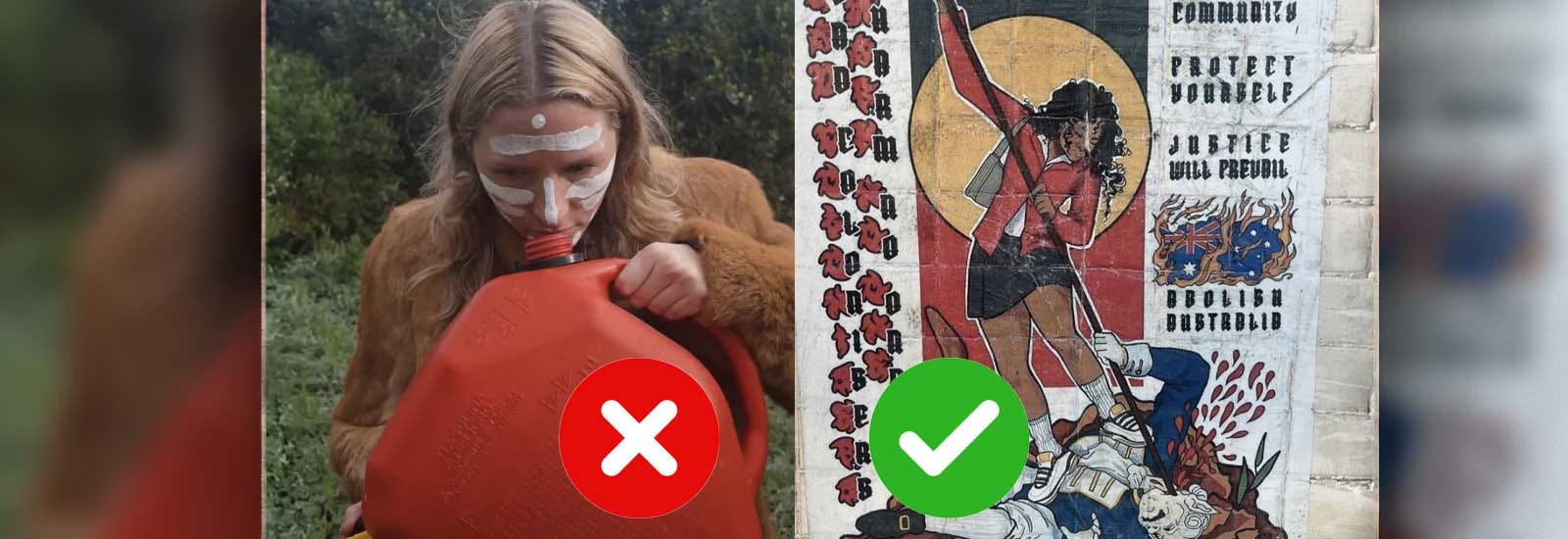
A fundraiser has been launched for Australian comedian Lisa Jane Spencer after she was subjected to an online and media pile-on that escalated into a doxxing campaign, following a short comedy sketch she posted on her social media accounts.

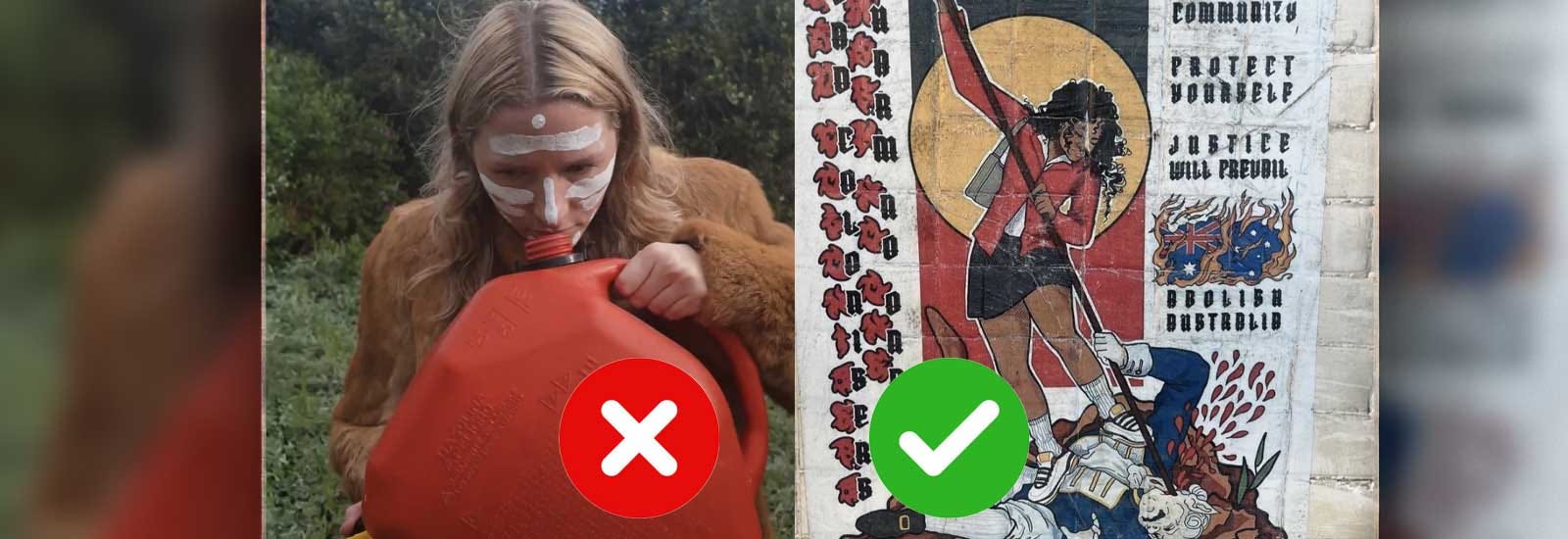
The offending gag, which targeted White Australians who identify solely as Indigenous, briefly showed Spencer sniffing from a petrol can, which left-wing lynch mobs seized on, branding it a “racist stereotype.”

Mainstream news outlets also fanned the flames of manufactured outrage, with virtually every outlet clutching at their pearls. Activists then doxxed Spencer, revealing her workplace and pressuring her employer to fire her. They did.

But it seems like the furore may backfire, as a fundraiser was soon after established, which has since raised more than $26,000 in less than 24 hours, and shows little sign of slowing. The GiveSendGo campaign, set up by a friend of Spencer’s, notes that she relied on her income to live, and urges supporters to “rally behind Spencer to demonstrate that free expression and good comedy cannot simply be cancelled by the far-Left.”

It’s not a question of whether you find the sketch funny. The point is whether people should be financially destroyed over a joke that offended the sensibilities of perpetually outraged online mobs and a mainstream media often willing to throw fuel on the pyre.

But what makes the whole thing all the more frustrating to watch is the obvious hypocrisy and double standard at play in Australia.

Today, it’s not only permitted but often applauded to mock and denigrate White Australians and their history. Remember this disgraceful skit from the taxpayer-funded ABC portraying Australia’s founders as genocidal maniacs?

White Australians are routinely described as murderous, land-thieving colonisers, as inheritors of guilt, and as illegitimate occupants of their own country. Every major event opens with an “acknowledgement” that White Australians don’t belong in the country their ancestors built for them.

Image
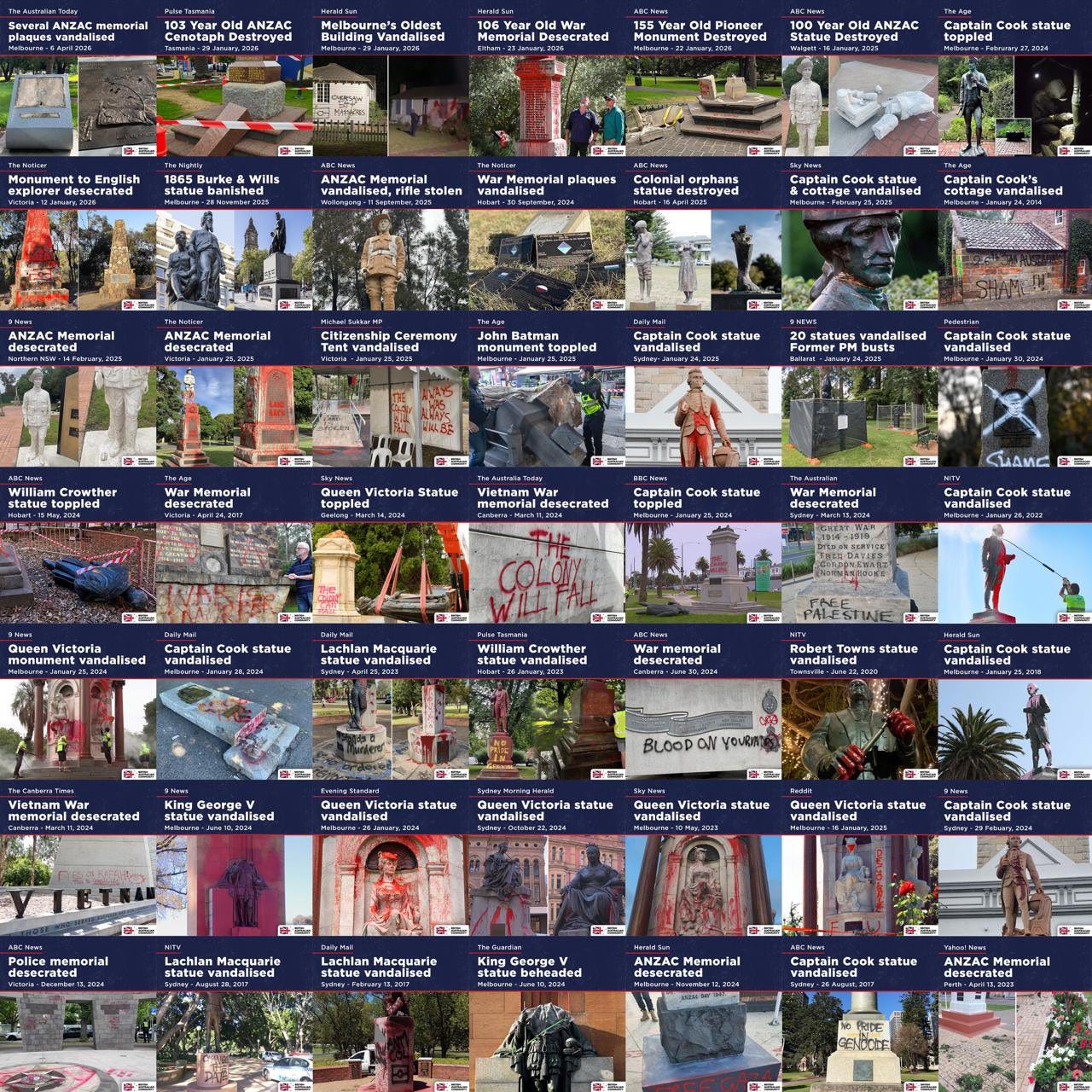
The British Australian Community has documented numerous acts of racially motivated desecrations on Australia’s colonial statues and war memorials.

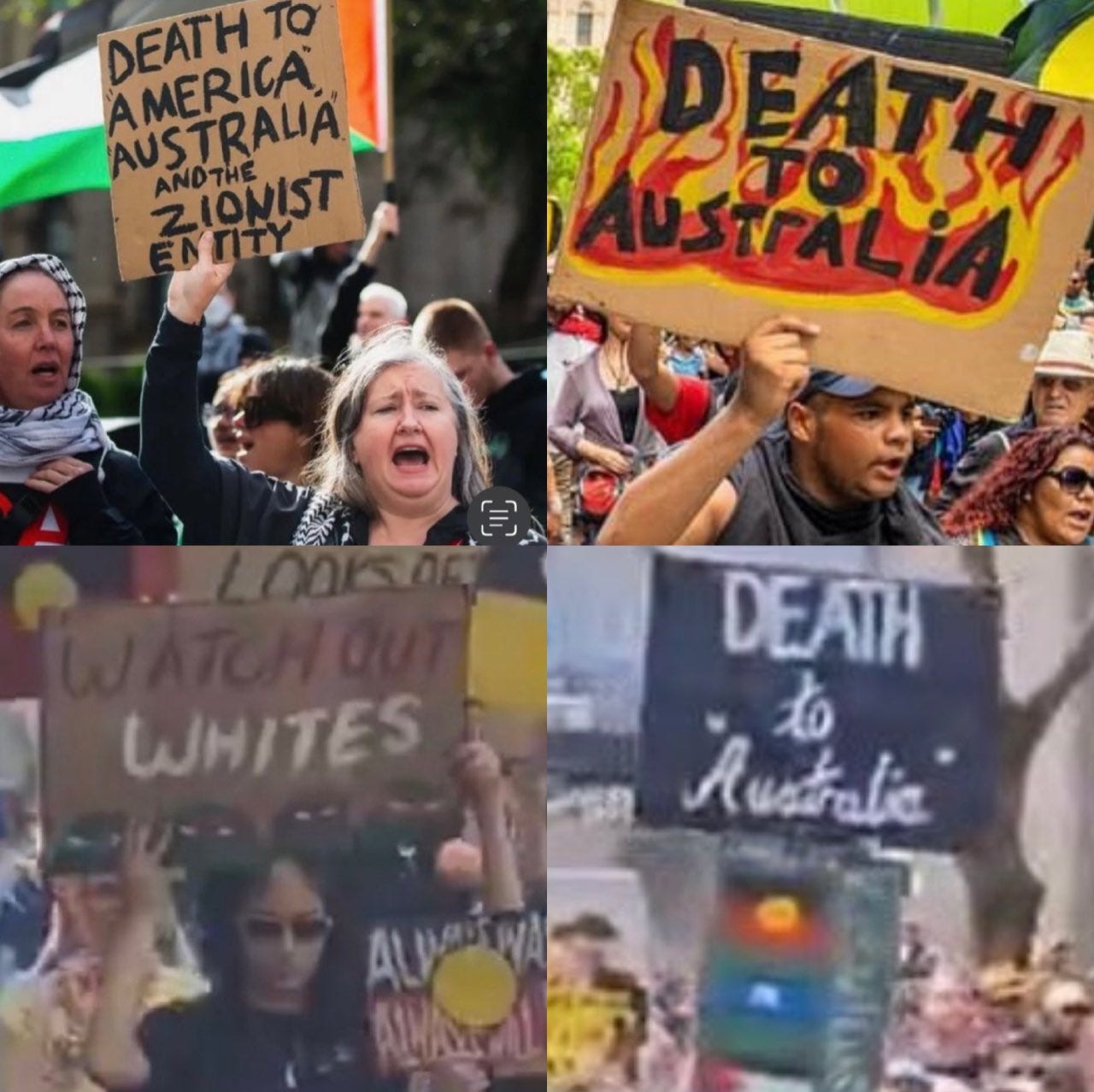
National symbols are vandalised. Monuments are defaced. The flag is burned. Every Australia Day, there are “Invasion Day” marches that feature slogans like “Death to Australia,” “Abolish Australia,” and “Watch Out, Whites”—and this rarely, if ever, gets any media attention.

Image
Signs seen at Anti-Australia Day rallies.

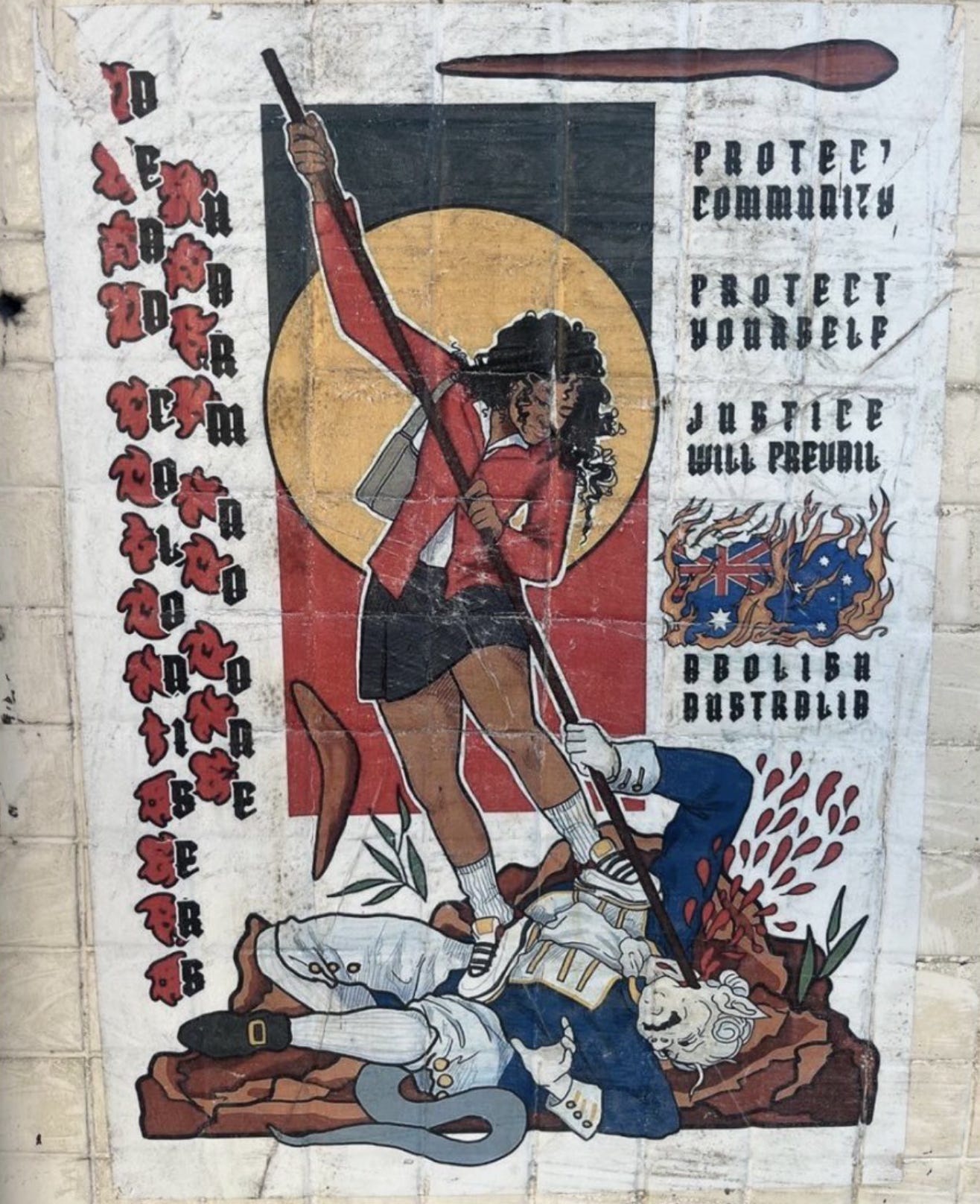
What about the violent anti-Australia posters that were circulating a year or two ago, depicting an Aboriginal woman spearing a White man in the throat with the caption, “Dead coloniser harms no one.”

Poster of an Aboriginal woman spearing a White demon in the throat with the caption, “Dead Colonisers Harm No One. Protect Community. Protect Yourself. Justice Will Prevail. Abolish Australia.”

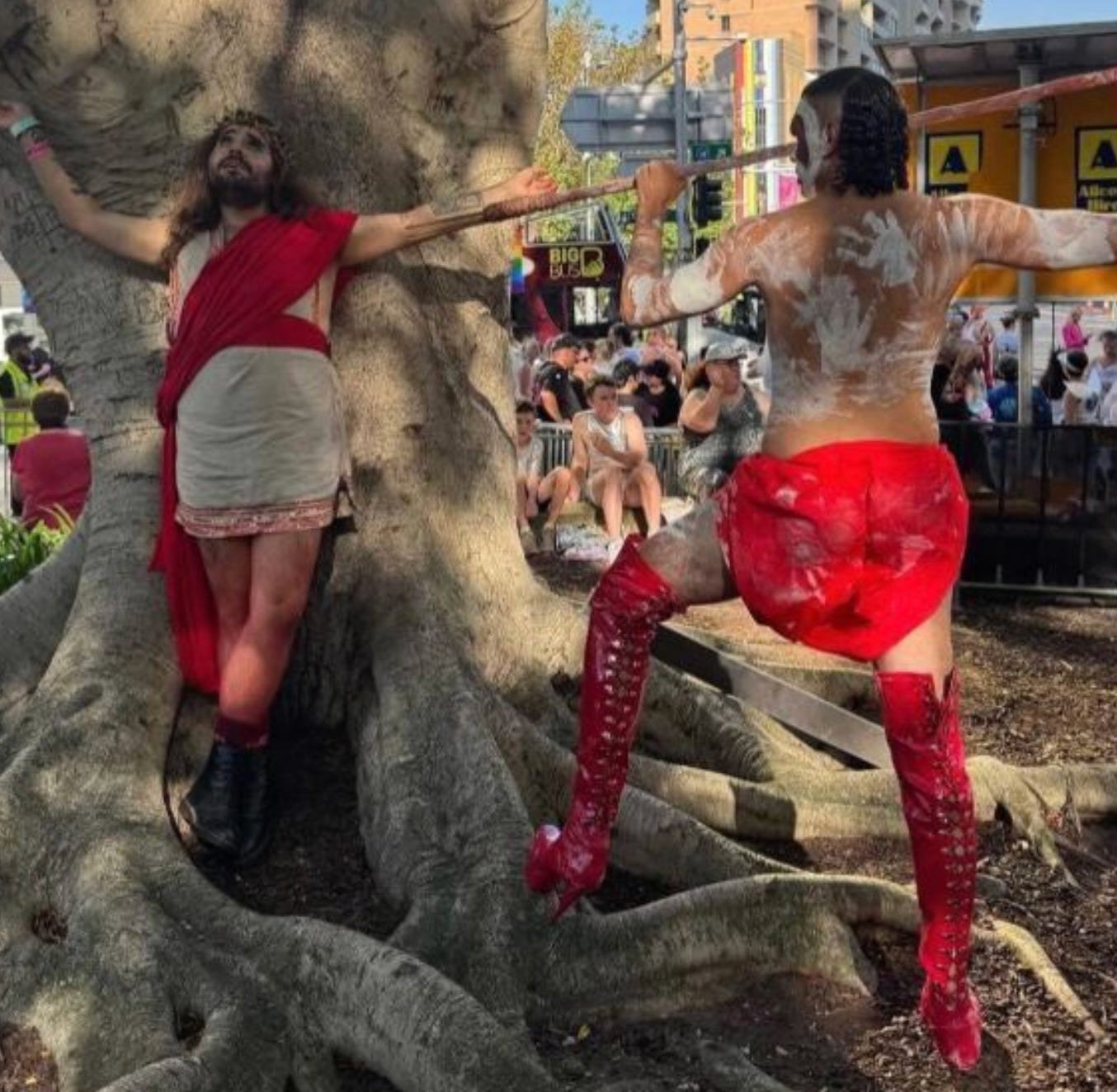
And that’s to say nothing about the anti-Christian parodies on public display at every Gay and Lesbian Mardi Gras Parade. Remember this abomination?

Skit of an Australian Aboriginal murdering Jesus Christ at the Gay and Lesbian Mardi Gras.

It would seem White Australians are fair game. They can be abused, ridiculed, stereotyped, and collectively blamed without provoking the slightest concern. But the moment a White Australian makes a harmless joke involving a recognised stereotype, suddenly, there is national outrage. The perpetrator must be publicly lynched, flogged, and stripped of their livelihood.

What’s tolerated towards White Australia is unforgivable when returned, even if at less than half the force. Of course, the outrage isn’t serious. It’s entirely manufactured and works only as a justification to cancel anyone and everyone who transgresses the bounds of the approved political narrative.

So, as we’ve said before: Do not take unserious accusations seriously. When they accuse you of something, especially if it’s something they’re guilty of themselves, brush it off, carry on, and while you’re at it, why not donate to the Support Lisa Jane Spencer fundraiser?

Let their cancel-culture campaign backfire every single time.

  •  

The Triumph of Christianity Over Paganism

Image

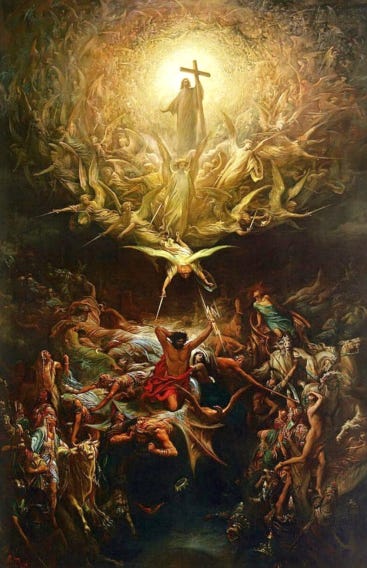
Gustave Doré’s “The Triumph of Christianity Over Paganism” (1868) is one of the most iconic paintings in Christendom.

The artwork depicts Jesus Christ towering above a chaotic heap of powerless pagan deities. It is a portrait symbolising the defeat of the demonic pagan realm through the spread of the Gospel, thus highlighting the supremacy of Christ over the pagan pantheon.

The Triumph Of Christianity Over Paganism (1868), by Gustave Doré

This was not a concept invented by Doré. Indeed, throughout the New Testament, Jesus was portrayed as being superior to the pantheon of Roman deities in a way that would have been unmistakable to the Greco-Roman mind. Below is a list demonstrating this concept, though it is by no means exhaustive, and some instances even overlap.

1. Authority over Poseidon/Neptune: By calming the sea and walking on water, Jesus demonstrated control over the natural elements said to be governed by Poseidon (Greek) or Neptune (Roman). In Mark 4:35-41, Jesus calms a storm on the Sea of Galilee with a word. Later, he walks on water, and in so doing, further shows his superior authority over the realm of the sea and the gods within.

2. Authority over Hades/Pluto: Throughout his ministry, Jesus raised several individuals from the dead, including Lazarus (John 11:1-44), Jairus’ daughter (Mark 5:21-43), and the widow’s son at Nain (Luke 7:11-17). Each of these miracles demonstrated his power over Hades (Greek) or Pluto (Roman), who were regarded as the rulers of the underworld. Jesus’ own resurrection further affirmed his ultimate victory and authority over death itself.

3. Authority over Asclepius: Healing the sick was a central aspect of Jesus’ ministry. He restored sight to the blind (John 9:1-12), cleansed lepers (Luke 17:11-19), and healed the paralysed (Mark 2:1-12). In doing so, he displayed greater power than Asclepius, the Greco-Roman god of medicine and healing.

4. Authority over Demeter/Ceres: When Jesus miraculously multiplied food, feeding the 5,000 (John 6:1-14) and later the 4,000 (Mark 8:1-10), he demonstrated authority over agriculture and abundance. These were domains traditionally associated with Demeter (Greek) or Ceres (Roman).

5. Authority over lesser deities and spirits: In Greco-Roman belief, minor deities or daimones influenced human affairs, sometimes possessing individuals. By casting out demons, as seen in Mark 5:1-20, Jesus demonstrated his dominion over these spirits, rebuking them with a word.

6. Authority over Zeus/Jupiter: Zeus (Greek) or Jupiter (Roman) was revered as the god of the sky, thunder, and storms. Jesus calming the storm (Mark 4:39) demonstrated that he held ultimate power over these elements, thereby demonstrating superiority over the chief god of the Greco-Roman pantheon.

7. Authority over Thanatos: In his resurrection (Matthew 28; Mark 16; Luke 24; John 20), Jesus triumphed over death itself. In Greco-Roman mythology, death was personified as Thanatos. Jesus’ rising from the dead demonstrated that he had complete authority over life and death.

8. Authority over Dionysus/Bacchus: At the wedding in Cana, Jesus turned water into wine (John 2:1-11), an act that directly challenged the power of Dionysus (Greek) or Bacchus (Roman), the god of wine and revelry. Jesus displayed that his creative authority far surpassed that of this widely worshipped deity.

9. Authority over Artemis/Diana and Pan: Jesus’ miracles affecting nature, such as cursing the fig tree (Mark 11:12-14, 20-21), demonstrated his power over Artemis (Greek) or Diana (Roman), the goddess of the wilderness, and Pan, who governed wild places and flocks.

10. Authority over Athena/Minerva: Wisdom was personified in Athena (Greek) or Minerva (Roman). However, Jesus’ teachings, such as the Sermon on the Mount (Matthew 5-7), revealed that he was the true source of wisdom and knowledge, surpassing even these revered goddesses.

11. Authority over Apollo: Jesus referred to himself as “the light of the world” (John 8:12), positioning himself above Apollo, the Greco-Roman god of the sun, prophecy, and enlightenment. Jesus’ claim made clear that he was the ultimate source of truth and illumination.

12. Authority over Ares/Mars: The Greco-Roman world exalted Ares (Greek) or Mars (Roman) as the god of war. Jesus, however, preached peace and sacrifice, subverting the traditional concept of victory. His triumph was not through violence but through self-sacrifice, challenging the authority of Ares/Mars in a profound way.

The list goes on, and yet, this theme of God’s triumph over false deities is not unique to the New Testament. A similar confrontation between battling gods occurred during the ten plagues of Egypt, each of which targeted a significant Egyptian deity.

Exodus 12:12 states, “On all the gods of Egypt, I will execute judgment: I am the LORD.” In this, God declared war on the Egyptian deities, and in so doing, vividly demonstrated that not one of the false Egyptian gods was able to deliver them from the true and living God. These were not random acts of judgement, but a systematic dismantling of the false gods of Egyptian paganism.

Once again, there is overlap, but broadly speaking, the plagues and their demonic counterparts were as follows:

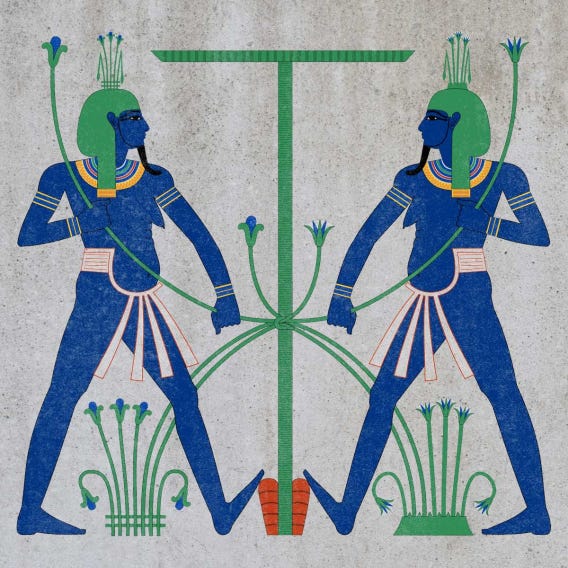
1. Water Turned to Blood (Exodus 7:14-25): This plague demonstrated the Lord’s authority over Hapi, the god of the Nile, and Khnum, the god of the Nile’s source.

Hapi, the god of the Nile

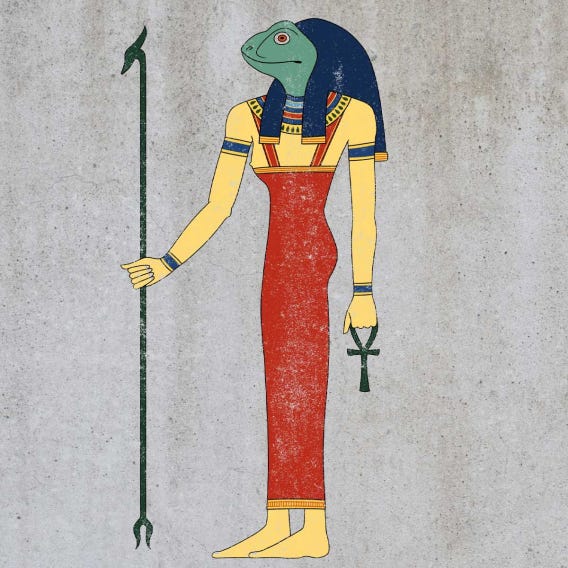
2. Frogs (Exodus 8:1-15): The overwhelming presence of frogs showcased God’s dominance over Heket, the goddess of fertility, often depicted as a frog.

Heket, the goddess of fertility.

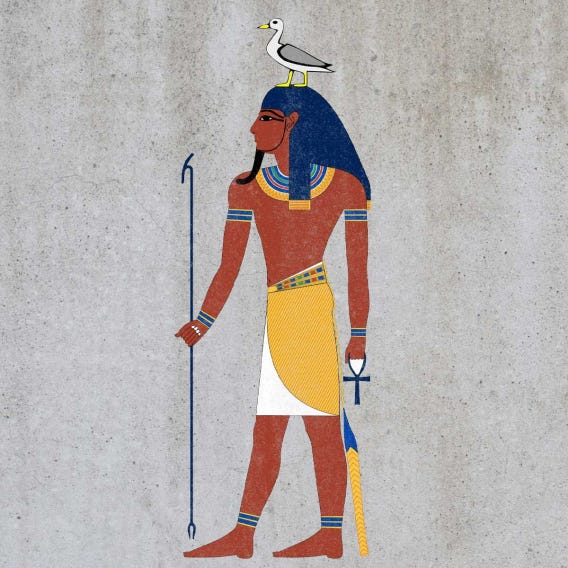
3. Gnats (Exodus 8:16-19): Turning dust into gnats displayed power over Geb, the god of the earth, and Heka, associated with magic, as Egyptian magicians failed to replicate the miracle.

Heka, the god of earth and magic.

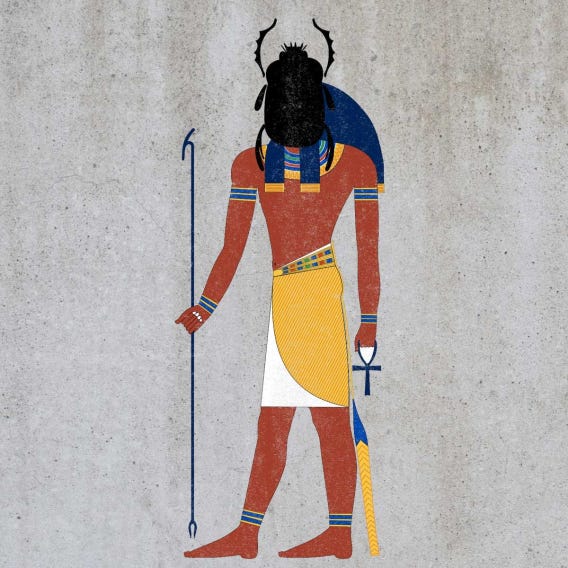
4. Flies (Exodus 8:20-32): The swarming flies demonstrated authority over Khepri, the god of creation, often depicted as a scarab beetle.

Khepri, the god of creation and insects.

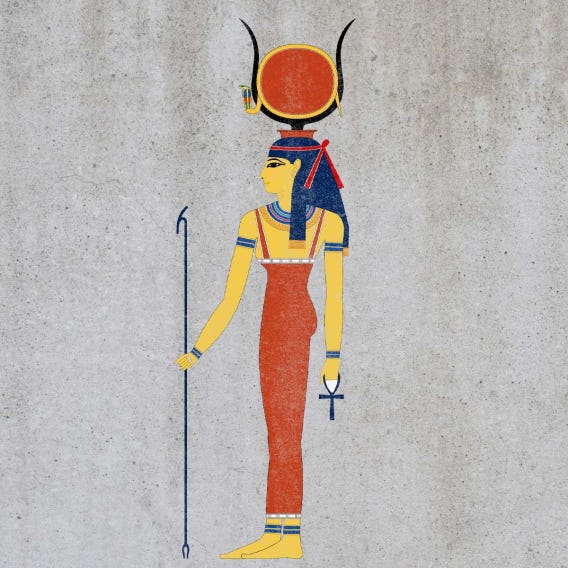
5. Livestock Pestilence (Exodus 9:1-7): The disease striking cattle challenged Hathor, a goddess associated with sacred cows.

Hathor, the goddess of the sacred cow.

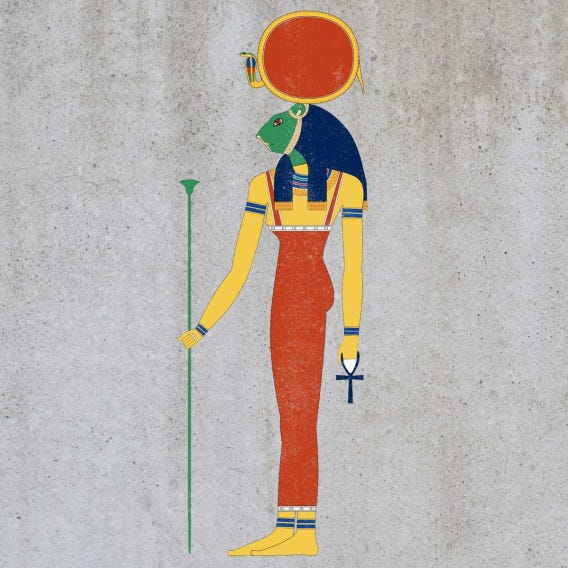
6. Boils (Exodus 9:8-12): The affliction of boils displayed superiority over Sekhmet, the goddess of healing and medicine.

Sekhmet, the goddess of healing and medicine.

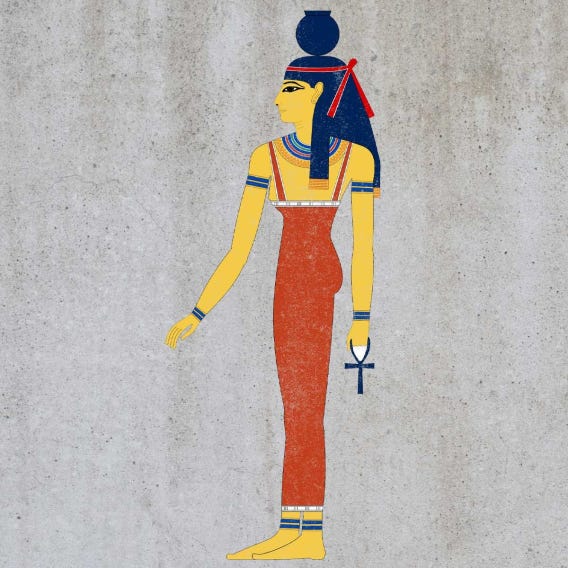
7. Hail (Exodus 9:13-25): The destructive hailstorm challenged Nut, the goddess of the sky.

Nut, the goddess of the sky.

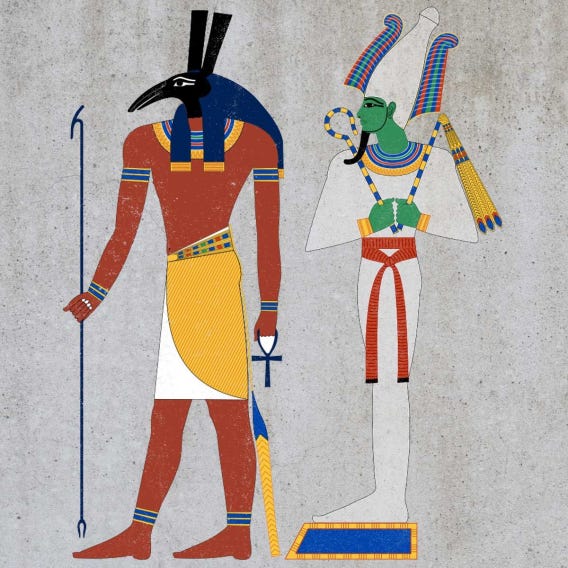
8. Locusts (Exodus 10:1-20): The devastation of crops demonstrated power over Seth, the god of chaos, and Osiris, associated with agriculture and fertility.

Seth, the god of chaos and Osiris, the god of agriculture.

9. Darkness (Exodus 10:21-29): The three days of darkness showed dominance over Ra, the sun god.

Ra, the god of the sun.

10. Death of the Firstborn, Heir to the Throne (Exodus 11:1-10; 12:29-32): The final plague struck at Pharaoh himself, believed to embody Horus, the god of kingship and dynastic rule.

Horus, the god of kingship.

Indeed, as Jeremiah prophesied, “Thus shall you say to them: ‘The gods who did not make the heavens and the earth shall perish from the earth and from under the heavens.’” (Jer. 10:11)

Both the New and the Old Testament accounts highlight a recurring theme: the triumph of the true God over false gods and pagan deities. Truly, Christ alone is Victor, and Christianity has triumphed over paganism.

  •  

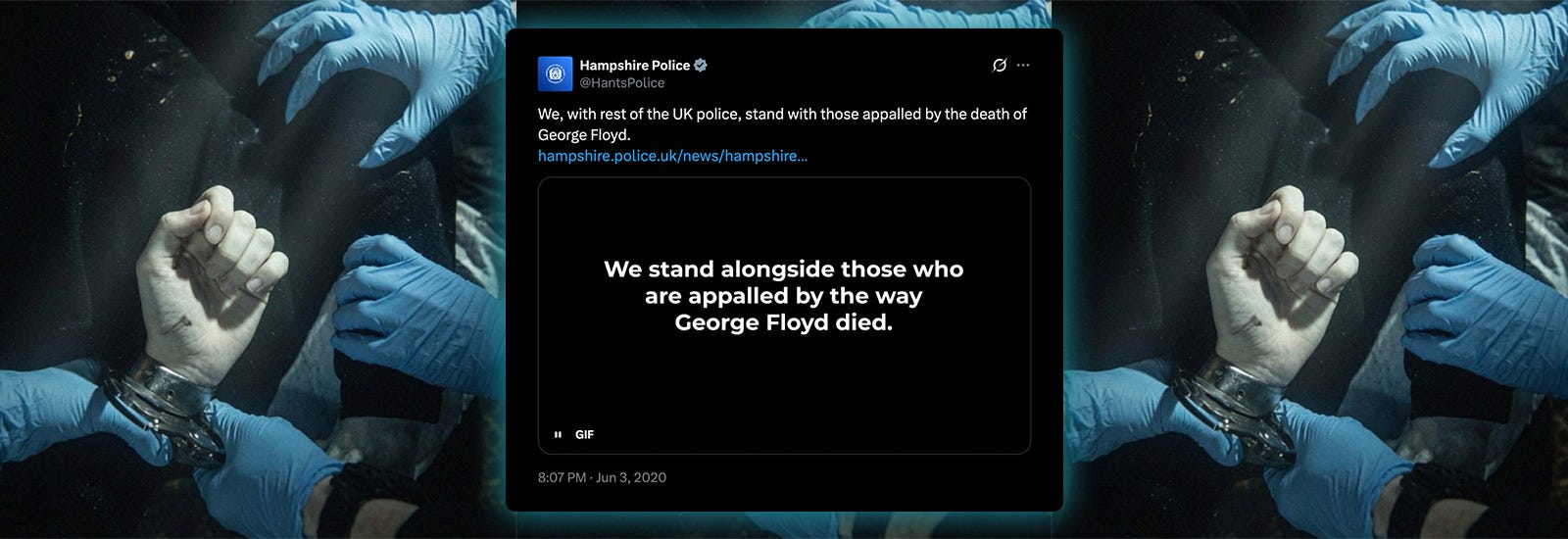
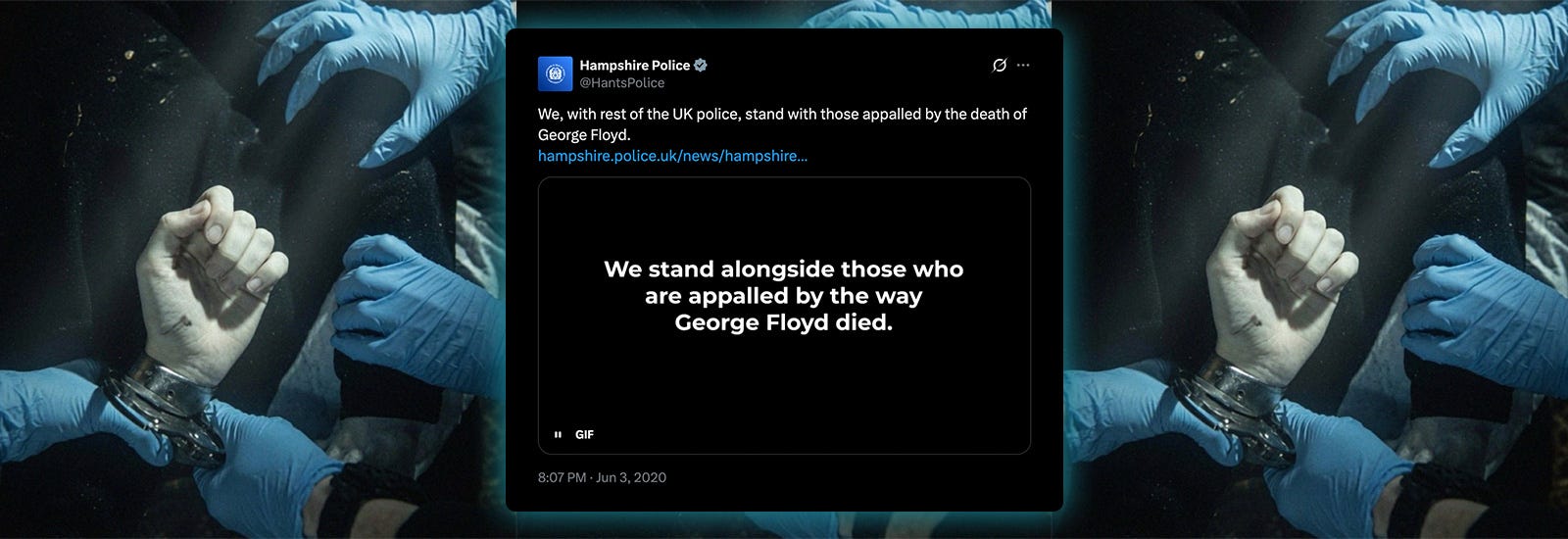
George Floyd Post Comes Back to Haunt Hampshire Police After Henry Nowak's Death

A 2020 Hampshire Police social media post expressing outrage over the death of George Floyd has resurfaced following the fatal stabbing of 18-year-old Henry Nowak and the force’s widely criticised handling of the incident.

Hampshire Police condemned the officers of the Minneapolis Police Department who were arresting Floyd at the time of his death, saying they were “appalled.”

“We, with the rest of the UK police, stand with those appalled by the death of George Floyd,” the post reads. “The relationship between the police and the public in the UK is strong, but there is always more to do.

“Only by working closely with communities do we build trust and keep people safe. We stand alongside those who are appalled by the way George Floyd died.”

The six-year-old post resurfaced after shocking bodycam footage showed officers handcuffing Nowak after he had been stabbed five times by Vickrum Digwa.

According to court proceedings, Digwa accused Nowak of “racism” as officers arrived on the scene. Footage shows the teenager repeatedly telling police he had been stabbed.

One officer responded: “I don’t think you have, mate.”

Despite his pleas, Nowak was handcuffed while lying incapacitated on the ground. He later lost consciousness and died from his injuries.

The footage has sparked widespread public outrage, with critics arguing that officers treated the victim as a suspect while blindly accepting the baseless claims of his attacker.

Digwa was sentenced to life imprisonment with a minimum term of 21 years at Southampton Crown Court on June 1.

Following the verdict, Hampshire Police issued a public apology. Temporary Deputy Chief Constable Robert France described the case as an “unspeakable tragedy” and said he was “deeply sorry” that Nowak had been handcuffed and arrested before losing consciousness.

France said officers had been misled by Digwa, who “continued to divert the blame, obstruct our inquiries, and never admit the serious harm which had been done.”

“The facts heard in court should leave no doubt in anyone’s mind who was lying to officers that night and why,” he said.

Following the release of the footage, Reform UK leader Nigel Farage urged the public to respond with “pure, cold rage,” saying “The fear of being called racist was greater than dealing with Henry Nowak’s murder.”

Restore Britain leader Rupert Lowe went further, arguing that Digwa deserved capital punishment.

“Enough is enough — a deep line needs to be drawn in the sand,” Lowe said. “Talk is weak. Britain needs to say no more, and mean it. A Restore Britain government, with the British people’s approval, would put Vickrum Digwa to death.”

While acknowledging that Nowak’s murder was an “awful, shocking case,” Prime Minister Keir Starmer criticised Farage’s response, saying, “Nigel Farage is completely wrong to use this to try and create division.”

But as Hampshire Police are finding out, the internet never forgets. In 2020, Starmer also commented on the death of George Floyd. Taking to social media at the time, he posted a photo of himself kneeling within an office with the caption: “We kneel with all those opposing anti-Black racism. #BlackLivesMatter”

No knees for Henry—just condemnations for Starmer’s political rivals, it seems.

  •  

Study Finds Prayer Heals Better Than Music

Stories of nurses and doctors facing disciplinary action for wearing a cross at work or offering to pray with patients have become increasingly common. In many healthcare settings, there is a hardline and strict boundaries when it comes to discussions of faith and spirituality. But what if such policies are actually denying patients significant aid in their healing?

Researchers at the University of Maryland School of Medicine have found that just five minutes of in-person Christian prayer can significantly reduce both pain and anxiety, with effects lasting for weeks.

According to the study, prayer proved even more effective than listening to music for the same duration of time.

The randomised trial, conducted by the Department of Family and Community Medicine, involved 180 patients who were divided into two groups: one received five minutes of in-person prayer, while the other spent five minutes listening to music.

Researchers then tracked patients’ self-reported pain and anxiety levels immediately after the intervention, as well as two and six weeks later.

While both groups experienced improvements, the prayer group reported substantially greater reductions in both pain and anxiety. Notably, the anxiety benefits remained statistically significant six weeks after the prayer session.

Dr Katherine Jacobson, assistant professor at the University of Maryland School of Medicine, told Fox News that 97 per cent of participants were either neutral or supportive when asked whether this type of prayer should be available as part of medical visits.

There is little doubt that many churches would gladly send volunteers to nearby hospitals to offer brief prayer sessions to sick and dying patients. The question is whether our institutions are willing to set aside their atheistic bias and allow such care to become a normalised option for those who want it.

The findings, published in the Annals of Family Medicine, add to a growing body of research exploring the role of spiritual care in health and recovery. Yet much of the scientific and medical establishment remains constrained by a materialist worldview—the belief that human beings are nothing more than physical matter, with no soul, spirit, or immaterial dimension.

If that assumption is mistaken—and it is—then the therapeutic value of prayer may be addressing a part of the human person that modern medicine has largely neglected.

  •  

Save Europe Act Nears 100K Signatures as Initiative Demands Reversal of Mass Immigration

The newly launched Save Europe Act is on the verge of reaching its first major milestone after attracting nearly 100,000 signatures in less than two days.

Spearheaded by Dutch political commentator and activist Eva Vlaardingerbroek, the campaign has been billed as the “first patriotic European Citizens’ Initiative,” seeking to unite supporters across the continent behind a platform focused on strengthening border security, restoring national sovereignty, and preserving Europe’s historic cultural identity.

The campaign, which seeks to establish a “sovereign, free, and safe Europe,” has garnered over 98,000 signatures since its launch just days ago, and is likely to hit its 100,000 milestone later today.

“We need one million signatures from European patriots from 27 nations for the Citizens’ Initiative to pass,” campaign organisers said. “As a first milestone, we want to reach 100,000 signatures before officially filing.”

“The Time for Talking Is Over”

Vlaardingerbroek said the campaign was launched because many Europeans believe conventional political channels have failed to address mounting concerns about migration and demographic change.

“The time for talking is over; the time for action is now,” she said.

Vlaardingerbroek argued that preserving Europe’s historic peoples and cultures must become a central political priority.

“Acknowledging the ethnocultural continuity of Europe’s peoples as crucial for the preservation of Europe, we demand an immediate and total halt to immigration and the creation of a comprehensive European Remigration system,” she said.

“To achieve that, we need your help. With a million signatures, the European Commission must meet with us face-to-face and take a stance on remigration and the future of Europe as a whole.”

“We, The People of Europe”

The initiative itself opens with a declaration addressed to the European Commission.

“We, the People of Europe”, are “motivated by a deep love and sense of responsibility for our nations, descendants and shared civilisation.”

The declaration continues by affirming that Europe’s native peoples possess “an inalienable right to preserve their collective identity, heritage and way of life.”

The initiative argues that “replacement migration, both legal and illegal, over recent decades has violated that right by causing significant damage to the social cohesion, public services, security, and ethnic and cultural continuity of the European nations.”

The proposal warns of “the imminent reality that the native peoples of Europe risk becoming minority populations in their own homelands if radical changes to the asylum and migration system are not made.”

The Plan

The Save Europe Act then translates those concerns into policy demands that are aimed at fundamentally reshaping European migration policy for the better.

Among its proposals are a moratorium on new non-European immigration channels, major reforms to asylum procedures, stronger border security measures, accelerated deportation and remigration programs, and the removal of welfare incentives that encouraged further migration.

The campaign argues that Europe must prioritise the well-being of its own people.

“A sovereign Europe must prioritise the well-being, security and demographic continuity of its own peoples above policies that effectively replace and harm the native populations,” the initiative states.

It further rejects the notion that mass immigration is necessary to solve Europe’s demographic and economic challenges, arguing that migration “does not solve the ageing population crisis, but instead places further strain on European welfare systems and worsens the fundamental problem of low birthrates among the native populations.”

A Europe Worth Defending

Campaign organisers say the movement is intended to unite patriotic Europeans across national boundaries around a “Europe worth defending.”

“The Save Europe Act condenses the demands of European patriotic movements and parties into one powerful mandate.”

Organisers acknowledge that the formal legal initiative cannot address every issue they believe is important to Europe’s future, including family policy, demographic renewal, cultural continuity, and constitutional questions surrounding national self-preservation.

“Their absence from the legal text of the initiative does not mean that they are secondary,” the campaign explains. “It means only that the instrument of a European Citizens’ Initiative does not allow every necessary question to be included within one formal submission.”

Momentum Builds

With the campaign now approaching 100,000 signatures within days of launch, supporters believe the Save Europe Act has tapped into a sentiment shared by millions across the continent: that Europe’s future, identity, and civilisational inheritance deserve protection.

The campaign has also drawn the support of prominent political and cultural figures, including Dominik Tarczynski, Member of the European Parliament, and Rupert Lowe, Great Yarmouth MP and leader of Restore Britain.

You can learn more about the campaign by visiting Save-Europe-Act.com

  •  

New Australian Christian Freedom Index Sounds Alarm on Erosion of Civil Liberties

Australia’s Christian freedoms are under quiet but measurable threat — and a landmark new index is sounding the alarm with evidence, urgency, and a 42-point blueprint for action.

Launched last week, the Australian Christian Freedom Index (ACFI) is a much-needed precision smoke detector signalling alarm.

Where there’s smoke, there’s fire.

What the ACFI report does is prove that Australia’s Christians are the proverbial canary in the coal mine.

As the impressively compiled index shows, the slow erosion of civil liberties isn’t a “far-right” conspiracy. It’s a fact grounded in reality.

Australia’s cherished freedoms, poorly protected by assumption rather than hard constitutional law, can no longer be treated as immune to infection.

The luxury of assuming that the reign of terror witnessed elsewhere “could never happen here” no longer exists.

For this reason, ACFI’s content is sharply relevant and articulately well-argued.

Particular standouts included the way the ACFI team utilised Floyd Brobbel’s persecution metre to state that there’s something a little off in what is still a relatively free society.

The first report of its kind also reminds readers of Australia’s Christian history.

This includes a refreshing contribution from Indigenous Australians, without the grievance politics endemic to the far-left’s Marxian Woke industrial race-baiting complex.

When the Process Is the Punishment

By far the most shocking example of the downgrade to freedoms is the persecution of former ADF member and dedicated Christian Bernard Gaynor.

He was left with a $1 million bill because of vilification accusations from LGBTQ+ activists, who misused Australia’s laws in a culture war of attrition.

Gaynor fought and won against every accusation. Yet, because the process is the punishment, the litigation left him with no choice but to sell his family home.

It’s this example, and others like it within the ACFI report, that are sure to grab attention.

The report’s list of 42 recommendations is something else that takes this project to the next level.

It’s proactive and leaves its hearers without excuse for not acting.

In Canberra, Warwick Marsh, CEO of the Canberra Declaration, launched the report alongside Indigenous Australian Pastor James Dargin.

Aptly timed for the conclusion of Reconciliation week, Ps Dargin spoke of forgiveness and Christianity’s essential role in bringing all the tribes together to form one nation under God.

A Sobering Wake-Up Call

Helping with the inaugural launch, Australian Christian Lobby CEO Michelle Pierce described its findings as both “sobering and concerning.”

“Workplaces emerged as one of the most hostile environments, particularly in education and healthcare.”

For example, “only 8% of Christians working in healthcare felt safe to openly share their Christian beliefs.”

In other words, Peirce said, “92% of Christians working in healthcare don’t feel safe to do so.”

“This is not about Christians claiming victimhood. This is about defending the freedoms that allow our society to flourish.”

Such as, the ACL boss said, “Freedom of belief, freedom of speech, freedom of conscience and freedom of association.”

“We constantly hear that tolerance and inclusivity are the highest of Australian values, but increasingly, inclusivity seems to stop at the point of including Christians.”

In effect, Pierce argued, there is something really wrong if Christians cannot speak freely, in a free society, without fear of “intimidation, lawfare or professional punishment.”

Noting the 42 recommendations, Pierce explained that this is why the Australian Christian Freedom Index’s report exists.

As such, she continued, the ACFI is asking for “conscience protections for medical professionals, and the restoration of religious hiring protections for faith-based institutions.”

Pierce added that the coalition is asking for “reforms to anti-discrimination and conversion therapy laws, and positive protections of fundamental freedoms in Australian law.”

This could be through a referendum to attach a bill of rights to the constitution, or through a “freedoms act.”

“Freedom,” Peirce concluded, “is not a threat to social cohesion. It is the foundation of it.”

A Clarion Call, Not a List of Grievances

Lead author of the ACFI report, and Daily Declaration Senior Editor, Kurt Mahlburg, called on Australia’s Christians to “no longer take their freedoms for granted.”

For example, Mahlburg said, since the year 2000, 74 laws have been passed restricting Christian freedom.

“Christianity has always sought to be a public faith,” he added.

“Salt for the world. Salt for the earth. Light for the world, and a city on a hill.”

“Take that freedom away,” the ACFI author warned, “and you have hollowed out Christianity and stripped it of its culture-shaping, life-transforming power.”

The AFCI, he declared, “is not primarily a list of grievances. It’s a clarion call to restore the country we all love.”

Mahlburg then urged Australia’s leaders to read the index and take its recommendations seriously.

Speakers for AFCI’s launch included Professor Gabriël Moens, Citizen Go’s George Christensen, and Justine Sims.

This lineup included One Nation’s Malcolm Roberts, Labor Senator Deborah O’Neill, Lou O’Brien, and representatives from Aid to the Church in Need, FamilyVoice Australia, and Australian Family Coalition.

  •  

Would He Have Cried “Racism” If He Didn't Believe the System Was Against His Victim?

The story of Henry Nowak’s brutal murder is both horrific and revealing for several reasons. But one of the most disturbing aspects — and one that has received far less attention than it should — is the mindset revealed in the killer’s initial response.

After stabbing an 18-year-old student five times, Vickrum Digwa’s instinctive defence was to accuse his dying victim of the one ‘crime’ he likely knew carries unique force when levelled against White men, and White men alone: racism.

It is this accusation that suggests an awareness that, in today’s cultural climate, charges of racism carry extraordinary power — so powerful, in fact, that they can instantly invert perceptions of victim and aggressor.

And evidently, powerful enough that a migrant could stab a White teenager multiple times and still apparently persuade police, at least initially, that the dying victim was the one who posed the real threat.

Thus, the killer’s accusation suggests his belief that the system is biased enough to assume his innocence and his victim’s guilt based on nothing more than their ethnicity. As such, the allegation of “racism” has often become the decisive factor, even before the facts are properly established.

In many Western nations now, this new form of racial politic functions like a secular doctrine of original sin, where Whiteness itself signals inherent guilt and suspicion. The assumption of White guilt is so serious that it can overshadow almost every other consideration.

And it is this poisonous mindset that appears to have influenced the killer’s immediate response. Reports suggest that police initially treated the attacker’s allegation that he had been the victim of racial abuse with greater urgency than the victim’s account that he had been the victim of a stabbing.

As such, White-on-brown racism appears to have been more believable than brown-on-White violence. Whether intentional or subconscious, the presumption appears to have fallen against the White victim first.

And it is that perception that makes this case even more disturbing in the minds of many observers. It creates the sense that the system no longer operates according to equal standards of justice, but according to ideological categories of “White oppressor” and “non-White oppressed.”

But the issue is not only the response by authorities, but also the apparent assumption on the part of the attacker that he could simply cry “racism” as a meaningful defence. It would seem he believed the system was already against his victim, and that was something he could use.

So, what makes this case so chilling is not only the brutality of the crime, but the possibility that the killer understood the moral psychology of the system around him well enough to believe that a simple accusation of racism might shift sympathy in his favour.

And to be completely honest, he wasn’t wrong. The charge did work in his favour—at least, long enough for his victim to bleed to death.

  •  

Police Apologise After Dying Student Was Handcuffed Following False Racism Claim

Police have issued a public apology after officers mistakenly arrested an 18-year-old university student who was fatally wounded in a stabbing attack in Southampton.

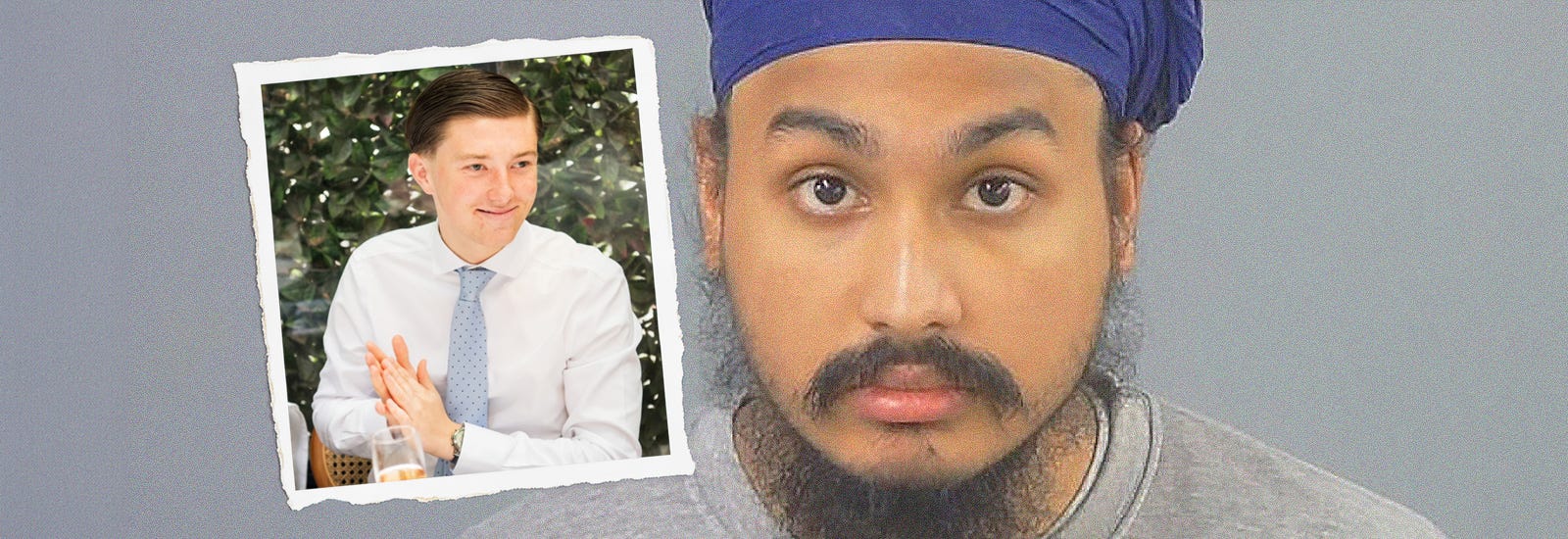
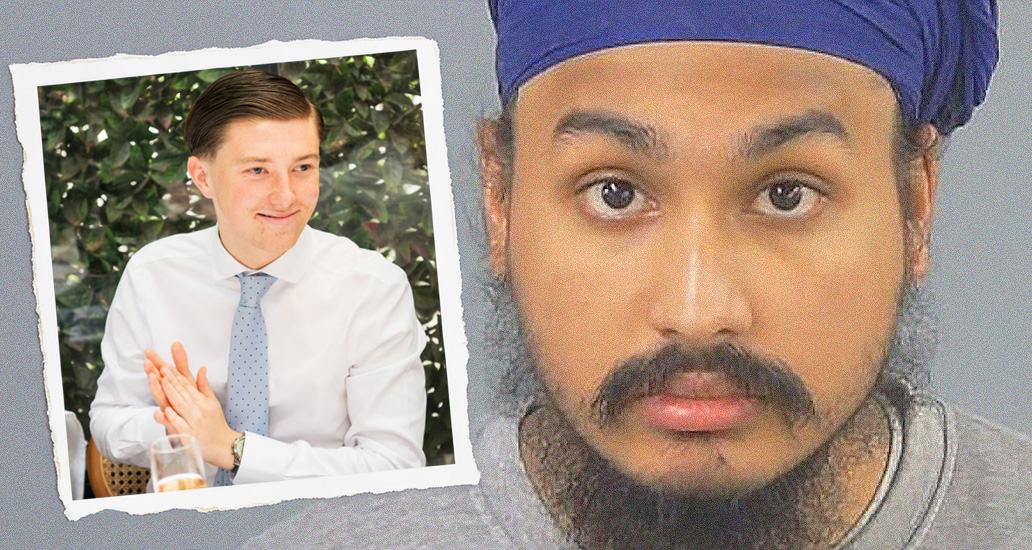
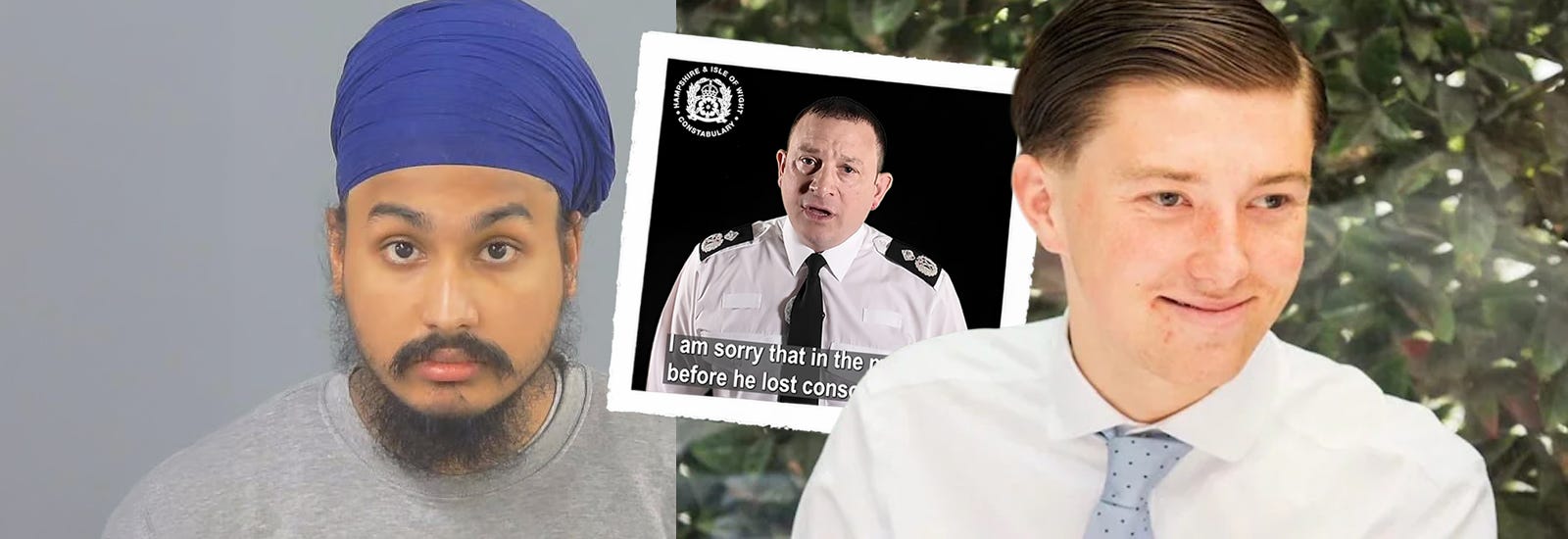
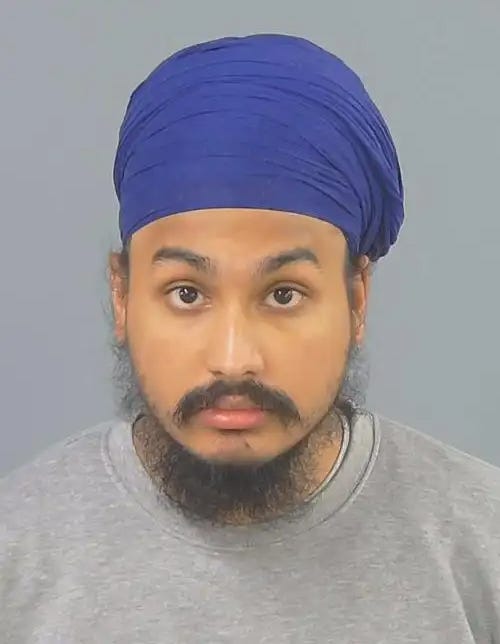
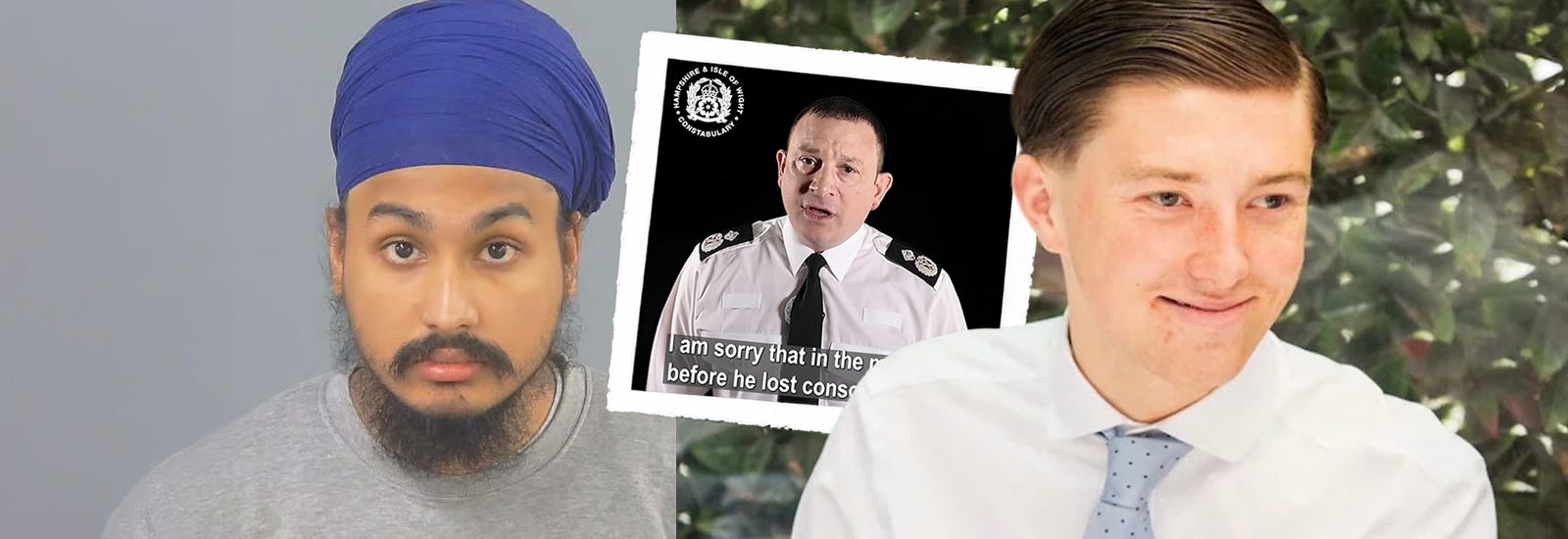
Hampshire Constabulary issued the apology following the conviction of 23-year-old Vickrum Digwa, who was found guilty of murdering first-year finance student Henry Nowak on 3 December 2025 with a Sikh kirpan ceremonial knife featuring an eight-inch (21cm) blade.

During the incident, Digwa allegedly told officers he had been the victim of a racist attack and failed to disclose that he had stabbed Nowak five times. As a result, responding officers initially handcuffed and arrested the teenager while he was suffering from severe internal injuries.

Killer Vickrum Digwa.

Temporary Deputy Chief Constable Robert France said the force was “deeply sorry” for what occurred.

“First and foremost, this is an unspeakable tragedy, and I cannot begin to imagine what Henry’s family have suffered,” DCC France said in a statement released on social media following the verdict.

“I am deeply sorry that Henry could not be saved. I’m sorry that in the moments before he lost consciousness, he had been handcuffed and arrested.”

No photo description available.
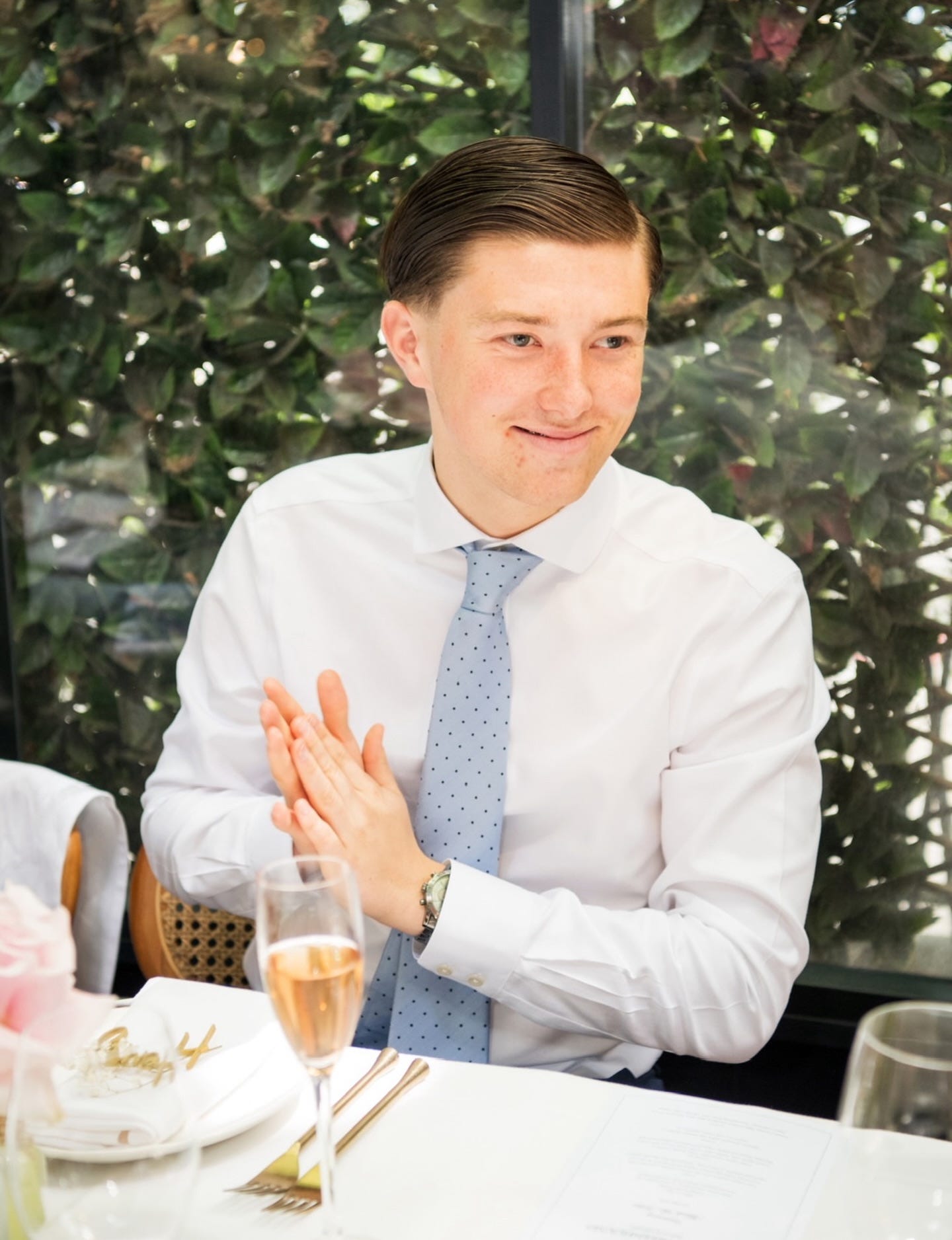
Victim Henry Nowak was stabbed five times before being handcuffed.

DCC France said officers arriving at the scene had been misled by Digwa, who “continued to divert the blame, obstruct our inquiries, and never admit the serious harm which had been done.”

“The facts heard in court should leave no doubt in anyone’s mind who was lying to officers that night and why,” he said.

Police said officers were initially responding to reports of an assault and had been informed that a man was being detained at the scene. Acting on the information available at the time, officers attempted to secure what DCC France described as “a complex situation”.

“The attending officers sought to take control of a complex situation,” he said. “And based on what they had been told, they placed Henry in handcuffs and told him he was under arrest.”

However, when Nowak lost consciousness, officers realised the seriousness of his condition.

“But within three minutes of arriving, they realised the severity of his condition,” DCC France said. “The handcuffs were removed, an ambulance was called, and they started CPR.”

According to evidence presented in court, Nowak’s injuries were largely internal and difficult to detect immediately.

“The horrendous injuries Henry suffered were internal,” DCC France said. “The pathologist evidence at court was clear. Sadly, nothing we could have done that night would have saved him.”

He added that the wound “was difficult to find and had caused a significant amount of internal bleeding.”

Three people were arrested at the scene, including Digwa, while a fourth person was later arrested at a nearby address.

DCC France defended the actions of officers, saying they “responded swiftly to a situation which was confusing and unclear” and quickly moved to provide first aid once they understood the extent of Nowak’s injuries.

The force referred the incident to the Independent Office for Police Conduct the following day, with an independent investigation into the police response still ongoing.

“We are committed to acting on their findings,” DCC France said.

Paying tribute to the victim, he added, “Henry Novak was an 18-year-old who had his whole future in front of him. That future has been cut short through a senseless attack. Today, the person who’s responsible for killing Henry has rightly been convicted of his murder.”

WATCH:

  •  

History’s Horrors Do Not Condemn Christianity but the Deviation from It

“What about the Crusades? The Inquisition? The Salem witch trials?” These are just a few of the accusations commonly levelled against Christianity by its critics.

Figures throughout history who are said to have committed atrocities or acted unjustly are often presented as acting in the name of the Christian faith, as though their behaviour flowed naturally from an overly zealous commitment to biblical teaching. The underlying aim is to appeal to the horrors of history in order to portray Christianity itself as inherently dangerous and immoral.

Today, there is an expectation that the heirs of Christendom ought to be ashamed of their spiritual heritage and even apologetic for the sins of earlier generations of professing believers. Yet this is a standard to which no other demographic is held. As such, it is a game Christians ought not to entertain. Not because Christians shouldn’t acknowledge sins—we should be the first to do that—but because the blame is entirely misplaced.

When an injustice is carried out by a professing Christian, or even in the name of Jesus, it does not follow that Jesus thereby endorses that injustice—any more than a criminal committing a crime in your name implicates you in their wrongdoing.

That is to say, if a professing Christian is out of step with the Bible, they are no longer acting consistent with their professed faith. At its heart, Christianity is a profession that Christ is Lord, and that profession implies the professor is Christ’s obedient subject. Thus, to profess to be a Christian, to profess that Christ is your Lord, while acting inconsistently with the Lord’s commands, is to deny with your actions what you profess with your mouth. It is, in essence, proof that your profession is not genuine and that you are, in fact, guided by another ideology and religion.

As such, whenever an injustice or atrocity is committed by a Christian or in the name of Christ, the question that must be asked is this: Is the injustice or atrocity consistent with the teaching and instruction of the Bible? Of course, those who seek to denigrate Christianity have little interest in honestly asking that question, since the answer would not only vindicate Christianity but also condemn them.

What they would find is that an injustice is only ever committed when one ventures beyond the bounds of Christianity. That is to say, the injustice is not an indication that the perpetrator was too Christian, but rather, not Christian enough.

In that sense, when an injustice or atrocity is committed by a professing Christian, they are ideologically closer to those who reject the Bible as their ultimate moral standard than to Christianity itself, which is defined by and confined to the bounds of Scripture. As such, Christianity doesn’t need to apologise for injustices orchestrated by professing Christians, because every injustice ever committed is carried out contrary to Christianity.

We must make no mistake: The horrors of history, and the horrors of the present, bear witness, not to the cruelty of Christendom, but to the cruelty of humanity when people deviate from Jesus’ commands to love your enemies and do good to those who hate you.

Every abuse and injustice, even those carried out in the name of the Church, is preceded by an explicit rejection of the New Testament.

What this means is that if anyone is to give an account for past acts of injustice, for historical atrocities and acts of cruelty against others, it is not the Christian who calls for stricter observance of Christian instruction, but the non-Christian who dismisses the Bible and attempts to operate outside the bounds and authority of God’s Word.

So it is not Christianity that must answer for historical injustices, but those who seek to live consistently with the ideological assumptions of the perpetrators—not the teaching of the Bible, but the rejection of it, even if it’s only in part.

  •  

Calls Grow for Early Federal Election as Frustration Mounts Across Australia

Pressure is mounting on Prime Minister Anthony Albanese to call an early federal election as growing numbers of Australians express frustration over rising living costs, record immigration levels, the housing crisis, and controversial new tax reforms.

Nationals Senator Matt Canavan has added his voice to the demand, calling for Australians to return to the polls, slamming the Albanese government for introducing sweeping tax changes that were never put before voters at the last election.

Speaking outside Parliament House in Canberra, Canavan said, “The Prime Minister should take his biggest tax increases in a generation to an election.”

The Queensland senator said the government had failed to secure public support for its proposed reforms and accused Labor of avoiding the will of the people.

Posting on X, Canavan said:

Today is a sad day for Australian democracy because Labor has introduced the biggest tax changes in a generation without a mandate from the Australian people.

That’s why The Nationals are today demanding the Prime Minister call an election.

This morning we made that call outside the People’s House, outside the Parliament. Your Parliament should not impose more taxes on you without your consent.

An early election would give the Australian people a real choice.

A choice between a Labor party that wants to impose the biggest ever tax increase on Australians, or the Liberal and Nationals who will cut taxes, scrap net zero and reduce migration.

Canavan issued the challenge despite polling suggesting an early election could prove politically suicidal for both major parties. According to a large-scale analysis conducted by RedBridge Group and Accent Research and published by the Australian Financial Review, Pauline Hanson’s One Nation could potentially secure as many as 59 seats if an election were held today, pushing Labor deep into minority government while devastating Coalition support across most states and territories.

The report described the findings as a “worst-case scenario” for the major parties and suggested the Nationals could be entirely wiped out electorally.

“Unlike the Prime Minister, I and my Nationals colleagues have the guts to be subject to the will of the people,” Canavan said. “Blind Freddy can see right now that it’s tough for us. No doubt it is.

Public dissatisfaction has also extended beyond politics, with several high-profile Australians openly calling for an early election.

Last week, comedian Dave Hughes joined the growing chorus calling for an early election, expressing frustration over proposed changes to property and investment taxation, particularly reforms to capital gains tax.

In a series of videos posted to Instagram, Hughes accused the government of failing to seek voter approval for the changes before introducing them.

“Your bumbling, fumbling, idiotic performance when questioned this week by both Albo and Chalmers, and every other minister in that f***ing stupid government, just solidified the fact that we need another election,” Hughes said.

“You didn’t have a mandate for it. You lied blatantly, so it’s not valid. So let’s go to the polls again. Put it to the people.”

Adding to the pressure on the Albanese government, former federal MP George Christensen recently launched an online petition calling for the dissolution of Parliament and an immediate federal election.

The petition, titled “Albo Must Go,” has attracted over 20,000 signatures and accuses the government of presiding over soaring inflation, record migration, worsening housing affordability, and increasing censorship measures while ignoring the concerns of ordinary Australians.

The campaign also encourages Australians to send formal letters to both the Prime Minister and the Governor-General, urging the immediate dissolution of Parliament and a return to the polls.

The next Australian federal election must be held on or before 20 May 2028 for a simultaneous House of Representatives and half-Senate election. Because Australia does not operate under a fixed-date system federally, the Prime Minister has the flexibility to recommend an earlier election date to the Governor-General.

  •  
❌